Image

The battle that lasted two-and-a-half minutes

Two-and-a-half minutes. That’s how long it took to create history,

immortalise legends, and craft a nation’s destiny.

———— xx ————- 

“The mind wanders, reaches for the stars;

Floats above tepid earthly passions;

Unlocking the inner child’s eye, content;

Seeks higher cause, beyond human fashion.”

A year after I hung my uniform, I went back to my fighter squadron for a reunion, in Nov 2015. Given a decade spent with the Indian Air Force, I was pleasantly surprised to pick out life-lessons during the gathering, many of which I took for granted while in service. Having settled in a corporate setting now, I appreciate the broad applications of these insights, and the value of being a part of this fraternity of fighter pilots.

What follows is a tale of courage, culture and camaraderie – the hallmarks of India’s Air Force. I have kept this close to my chest so far, but, a year down the line, I would like to share these rare pearls, nurtured by the fraternity of a few, for the benefit of the many.

The evening’s pièce de résistance was the recounting of the story of the Boyra Boys and the air battle they fought over East Pakistan in Nov 1971. They were four in all (helped ably by a radar controller on ground), who took on Pakistani Jets in the famous Battle of Boyra over the skies of Jessore, East Pakistan, on 22 Nov, 1971, during the India Pakistan War. They drew first blood for India, and shook the world.

Out of the four legends, two were physically present that evening – Donald ‘Don’ Lazarus and Sunith Francis ‘Su’ Soares. The other two, Roy Andrew ‘Mouse’ Massey and MA ‘Gun’ Ganapathy were very much around, present in spirit, their voices still resonating among us. Their heroics were relived through Don and Su’s narration of the events, and their deep regard for their fallen buddies reverberated in every sentence they spoke.

boyra-boys

From Left: Flight Lieutenant Roy Andrew ‘Mouse’ Massey, Flying Officer KB Bagchi (Fighter Controller), Flying Officer Donald ‘Don’ Lazarus, Flying Officer SF ‘Su’ Soares, Flight Lieutenant MA ‘Gun’ Ganapathy stand in the foreground of the Folland Gnat after the aerial battle.


I had read about their gallantry earlier, but to listen to them personally was a surreal experience, as they described sentiments and passions which no media account or handbook could ever summarise. The search for excellence under pressure, the feeling of intimate loss, or the aspiration of a higher ideal seemed to come alive, taking me back to the environment I had left not long ago.

A life-time of training; history is made, but, within an eye-blink

As Don and Su went about describing the exploits of the four Boyra Boys during the battle (which led to the shooting down of 03 Pakistani fighter aircraft), what struck me was the fact that the actual combat lasted for just over two and a half minutes! As the 20-odd year-old Boyra Boys now step in to their 70s, these precious seconds continue to define a large part of their lives, and creating a legacy for the entire fraternity to partake in, in keeping with India’s finest military traditions.(Incidentally, this aerial encounter finds mention among the 05 top air combat situations in the world)


sabre-kill

Destruction of a Pakistan Air Force F-86 Sabre Jet at the hands of the Boyra Boys.


Age and experience is immaterial; “Every Man a Tiger” 

Besides the time-factor, other significant takeaway was the interchangeable power equations between individuals of the unit. Although the Air Force is hierarchical, in its day-to-day operations there is a lot of free exchange of command and control. Not only is it familiar to see 20-year olds drilling lessons into 70-year old veterans, gladly welcomed, and usually following a few drinks at the bar, but the reverse also holds true.

This ‘leadership equation’ was shared by Su in the form of the complete account of activities of that fateful day, leading to the mission. The first two missions of the day were led by the Commanding Officer of the unit, and reflected a mature and tempered, but ultimately an all too cautious approach. The result being that the aircraft approached the enemy lines too late to engage with the enemy.

Mouse then took over the lead for the 3rd mission of the day, infusing a boost of youthfulness. This change of leadership brought more aggression within the formation, culminating in a high speed low-level dash to the enemy lines, and an approach onto the enemy from the adversary’s side of the border, catching the Pakistani fighters by surprise.

The actual combat, including Don’s quick thinking and fast reflex-action in engaging the enemy, who appeared between him and ‘Gun’ showcased the high level of collaboration and flexibility between the young members of the formation.

Irrespective of their youth, such incidents are hallmarks of the fighter fraternity, which continues to rely on its young leadership to deliver results, irrespective of their relative inexperience (the Commanding Officer had also flown in the 1965 war). In fact, these same qualities have proven worthy in rapidly changing circumstances demanding extreme flexibility and adaptability. Lessons for the modern corporate boardroom are immense!

It’s all about teams; about peer-standing

When prodded about their achievements on the fateful day, none of them mentioned their medals. They only glossed over their team-mates, and on their peer-standing within the brotherhood. I guess it is true that no amount of externally showered accolades can match a one-word compliment from one of the boys.

It is no wonder that ‘Su’ remains the most popular of the lot, despite getting no kills during the battle (although he spotted the adversaries first, his duties within the formation meant that he had to let the others go for the kill, while he watched their backs).

A sip of immortality with the Sabre Slayers*

Distinct from the battlefield action, the most significant lesson was driven home not in 1971, but in Nov 2015….and not by a fighter jockey, but by a lady in attendance. It was absolutely incredible to see Mrs. Massey fill in Mouse’s shoes at the reunion with her now husband – 33 years after Massey’s passing (Massey was martyred in a flying accident in 1983, twelve years after the Battle of Boyra).

Her presence is a testimony to the fact that Mouse continues to live amongst us, in our thoughts and actions. Observing the present generation going to great lengths to take care of Mrs. Massey endorses the strength of these familial bonds, and also the immortal ties within the fraternity. Kudos to ‘Sandy and the boys’ at the Swift nest.


mousey-and-gun

The Gods who departed for home early… way before their time. Massey (left) was martyred in a MiG 23 accident in Nov 1983. Ganapathy (right), beset with personal family problems, called it quits, while still in service.


Realising the power of storytelling; why this evening will live on forever

Recalling such experiences may be extremely personal, but is also crucial in carrying forward the collective esprit-de-corps of the unit, the service, the nation, and its people. Mouse, Don, Su and Gun who flew the air battle in different jets, were hardly separated by a few metres, but their experiences are quite distinctive, each worth its weight in gold.

It is these experiences that drive home the ‘value of each’. And these, in turn, continue to shape the fraternity into perpetuity. Having studied the squadron diaries and war-books, in which each of these experiences have been captured, I can’t help but balk at the oft-repeated ‘none is indispensable’ quip. Moments like these immortalise the characters within and elevate their experiences into legacies, to be passed down through time and across generations. Sometimes, even across frontiers.

Respect, regard is sacrosanct.

“We may be from different countries, but our spirit is the same.” This was a very important lesson driven home by Don that day. For, given the small size of our fraternity, paths tend to cross in mysterious ways. To realise that the pilot whose aircraft was shot down, would head the Pakistan Air Force 26 years later is serendipity indeed!

What a grand gesture it was for Don to pen down a congratulatory message to a one-time foe, Flt Lt Qureshi (who was his victim over Boyra), wishing him the best for his assignment as the Chief of the Pakistan Air Force in 1997. That he received a befitting acknowledgement from the other side was the ultimate icing on the Boyra saga…nobility in its purest form. Probably it is this single virtue that defines the life of a fighter pilot.


flt-lt-qureshi

The then Flight Lieutenant Parvaiz Mehdi Qureshi, taken POW, after being shot down by Don
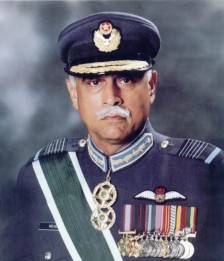
acm-qureshi

Air Chief Marshal     Parvaiz Mehdi Qureshi   The 15th Chief of the PAF, 1997 – 2000


“One for all, All for one”

In this life that seems so full of exuberance and adrenaline, it is sobering to realise that at the end of the day, there is no desire to conquer, but only a craving to excel and soar above earthly emotions. The competition is always with oneself, never really with another. Given a chance, a fighter pilot would prefer to spend an evening with a guy he shot down earlier in the day; complimenting him, quizzing him and also revelling in his returned compliments. For, theirs was not a bloody brawl, but a form of ballet, choreographed by training but executed by pure instinct, and ingrained by a countless lessons of jesting and jousting. This is truly the glue that binds the fraternity, driving home its close knit dependencies on each other. It is emphasized well in the following anonymous quote:

Whenever we talk about a pilot who has been killed in a flying accident, we should all keep one thing in mind. He called upon the sum of all his knowledge and made a judgment. He believed in it so strongly that he knowingly bet his life on it. That his judgment was faulty is a tragedy, not stupidity. Every instructor, supervisor, and contemporary who ever spoke to him had an opportunity to influence his judgment, so a little bit of all of us goes with every pilot we lose”.

After the evening’s festivities got over, and as we prepared to disperse and go our own separate ways, I couldn’t help pausing and breathing-in the moment one last time.


“Dawn peeks from a distance, the revelry has wound down;

The dew glistens, marking out spots on the grass, where Gods trod not long past;

It was a privilege to have walked alongside legends;

To have sipped immortality, even if for a heartbeat;

Collecting memories to last a life-time, rekindling a dying spirit;

Ready to plod among shackled mortals, confined within their shrinking four walls.”


A year on, as the nation debates the civil-military divide in different avatars, there is a tendency to lose bits of ourselves wading through these muddy waters; but for the faith and affection of the fraternity that keeps us pushing hard, lighting up our smiles, and guiding us towards our north star.

                                       — Anshuman ‘Neil’ Mainkar, Swift – 2011/12

    (deeply indebted to Su, Don, Sandy, SWarm and the entire Swift family)


*Sabre Slayers: The F-86 Sabre was a Pakistani fighter jet deployed during the 1965 and 1971 wars with India. It faced off against Indian fighters like the Hunter and the Gnat (pictured here). The Gnat’s impressive record against the Sabre resulted in the moniker, ‘The Sabre Slayer’.


Don and Su’s narrative has been captured in a 15-min long YouTube clip. It provides a visual feel of the evening’s high point, and offers a brief ‘guards-down’ insight into the closeted fraternity. (Some of the jargon is decoded below)

S. No Timeline Description
1 00:01 Fighter Controller is an officer monitoring the activity in air on a ground-based radar scope, and is responsible for directing own fighters towards adversary aircraft


2 00:07 Approach of the adversary is mentioned in terms of ‘clock codes’. For an aircraft flying in the air, a call of 6 ‘o clock would imply a threat coming from the rear of the aircraft. In this case, 1 ‘o clock and 10 nautical miles (18 km), would imply that the adversary was approaching from the front, but slightly offset to the right.


3 00:18 R/T (radio telephony) stands for two-way communication process that links aircraft with each other and with ground controllers (like the radar officer).


4 02:02 Range pattern – is essentially a race-course pattern flown in the air, usually over an ‘Air-to-Ground’ gunnery range.


5 02:28 Scramble – emergency launch of aircraft already ‘prepared and ready on ground’ in response to an aerial incursion by the enemy.


6 05:06 Murder – a call signifying an enemy kill/hit


7 06:15 Switches on – cockpit armament switches to ‘on’ – to make the aircraft weaponry ‘live’ and ready to fire.


8 07:00 That image can be seen above.


9 07:15 a.       10G signifies the gravitational force acting on the pilot – A 02 kg head would weigh 20 kgs at that force.

b.      Dropping Tanks: external fuel tanks impose limitations in manoeuvring, which can be dangerous when engaging with the enemy. The practice, therefore, is to drop them before entering combat.


10 09:24 a.       Pigeons – direction and distance to home-base, usually provided by the ground ‘radar officer’

b.      SU – Surveillance Unit, a ground-based radar unit, which monitors and controls airborne activity.


Featured Image Courtesy: The Week.

Et Tu(,)fail? A rebuttal to Air Cmde Kaiser Tufail’s Pulwama aftermath piece

What follows is a rebuttal to a blog by Air Commodore Kaiser Tufail (Retd), PAF, on the not so recent, and well publicised military exchange between the Indian Air Force and the Pakistani Air Force following the terrorist attack at Pulwama in February 2019. His blog can be accessed at: http://kaiser-aeronaut.blogspot.com. 

Prior to the publishing of this article, the Pakistani narrative with respect to Balakot was marked by a complete absence of any comment or statement from the Pakistan Air Force. To address this gap, Air Commodore Kaiser Tufail (retd) long-winded article explores the entire chain of events starting from the Pulwama attack, through Balakot, till the attempted Pakistani riposte on 27 February leading to the air engagement between the IAF and the PAF. That he represents the PAF’s quasi-official spokesperson is more or less evident from his article. The details he gives out make it quite clear that the PAF has given him complete access to records. The large gaps he plugs, with some creative imagination.

This is obviously an attempt by the PAF to create a narrative as per its requirements and free from the encumbrances of the ISPR, whose credibility has taken a hit after its DG, Major General Asif Ghafoor, faced ridicule for backtracking on many statements made on camera. Evidently, the PAF felt a need to chart its own course, and for this it enlisted the services of its most erudite blogger and historian.

Air Cmde Tufail starts off by eulogizing a ‘young Kashmiri lad’ whose act of hate he more or less justifies as being the product of the ‘torture’ and ‘humiliation’ at the hands of the Indian security forces. It matters not that in his own video, Dar did not ever mention this aspect but only gave out his hatred for ‘cow-piss’ drinking infidels. It is tragic to see a professional airman become a terror apologist. Air Cmde Tufail hints at a falsified Indian narrative of JeM involvement, and that political gain was the real reason for Indian actions. This line is consistent with the long held policy of denial that Pakistan has followed.

Air Cmde Tufail tries to score some points on India’s denial of ‘self determination’ for Kashmiris but displays a complete lack of knowledge, or a surfeit of convenience. Flogging the dead horse of the UN resolutions he omits explaining how Pakistan itself rendered them null and void by ceding the Shaksgam Valley to China.

Air Cmde Tufail then emphatically declares the IAF’s Balakot strike a failure. Though officially the High-Resolution imagery showing weapon hits on designated targets has not been shared by the Indian government, the same has been shown at closed door briefings to various members of the media. But even from open source alone, this is apparent. Sameer Joshi has in a detailed article demolished the denial over the Balakot terror camp using satellite imagery available online (https://medium.com/@sameerjoshi73/debunking-the-isprs-antithesis-of-a-precision-strike-at-balakot-2a4a9e7cc587). Some images of one of the main designated target, the Mujahid hostel at the northern edge of the camp are shown below. These clearly indicate impact of three SPICE 2000 bombs.


Picture2.png


Picture3.png

The pattern of damage was exactly as would be expected from a weapon of this type. This too was adequately explained in another article by the same author (https://theprint.in/opinion/balakot-air-strike-why-iaf-used-907-kg-penetrator-bombs-to-target-jaish-terror-camp/205227/) using logic and scientific reasoning and not hopeful theology preferred by Air Cmde Tufail. A similar pattern of damage has also been seen in Israeli strikes on Hamas. A screenshot of the twitter handle of journalist Vishnu Som who shared those images is given below :-

Picture4.png


For those who have read these pieces and others (such as the one by journalist Francesca Marino which stated the number of those killed as between 130 and 170) which have appeared in the media, would by now be clear as to ‘which’ buildings were actually targeted by the IAF. The Pakistan Army certainly would be as they would have seen the effects firsthand. But, it is also an open secret that the PAF is completely marginalised in Pak defence decision making. The PAF would have no clue as to what happened there, and Air Cmde Tufail, with due respect, wouldn’t fare better either. And of course, he is silent about a number of uncomfortable questions. If indeed the seminary housed ‘children’ studying the Holy Quran, why did it figure in the US dossier? Why did it have a damning signboard with Masood Azhar’s name on it? Why was it removed? Why haven’t Indian intelligence agencies’ photo dossiers been negated? Was the pattern of damage at those so called ‘impact’ sites consistent with a penetration warhead of a SPICE bomb?


Picture5.png


Picture6.png

And finally, why the delay of 42 days? Surely no ‘security concerns’ could have been posed by these kids to visiting journalists. Then why the convenient silence. Isn’t it because the PAF has no idea of what happened on that hilltop. In light of this, can’t really blame Air Cmde Tufail for failing to mention that the journalists were given an exclusive, but carefully controlled and calibrated tour which avoided the buildings actually targeted. This becomes clear from the images below :-

Picture7.png

Picture8.png

Instead, he asks why the aircraft, which could have attacked from 60 km, came so close to release their bombs? Choice of impact trajectory and strong westerlies perhaps slipped his mind. Fighter pilots, after all, also have shelf lives, especially if they are occasionally the victim of ‘joy-rides’ every now and then, maybe? Somewhere along the way he also talks about ‘data link’ guidance of the SPICE bomb which must surely raise an eyebrow with the manufacturers!

Air Cmde Tufail then cites the Australian Strategic Policy Initiative (ASPI) theory about an incorrect terrain elevation model having been used and quotes a PAF expert. Such a fundamental error can happen, especially in countries which do not have advanced space based terrestrial imaging and mapping capabilities and no indigenous satellite navigation systems. So, it is entirely likely that the PAF has faced problems on this count as the PAF expert did admit that ‘such errors were not unusual’. But this reasoning may not extend across the Radcliffe line. Secondly, the shorter range and the near vertical trajectory that seems to have been employed, plus, the mode of terminal guidance of the SPICE munitions (DSMAC), would both eliminate such errors, even if they did exist. DSMAC would give precise guidance to impact based on scene comparison negating errors of height and even minor errors of position. A vertical final trajectory would mean the munition arrives directly above the target (remember, no horizontal errors are being spoken of, only vertical), and then vertically dives into it. A minor height error (33 m is the error cited in the ASPI article) is of no consequence in this. But the graphic shared (from the original ASPI article) shows a shallow oblique trajectory. Again, it’s one thing for satellite data/ OSINT analysts to comment on weaponeering when they don’t have a clue, but for a former fighter pilot who is expected to know better to espouse it, raises questions about the depth of his expertise in contemporary SMART munitions, his error of judgment, or a lack of access to authentic data from that day.

Picture9.png


The PAF’s admission that such ‘errors were not unusual’ read in conjunction with the IAF’s claim of foiling the PAF’s attack the next day probably gives the reason why all PAF bombs missed their targets. It is now fairly clear that the targeting by Su-30s and Mirage-2000s of PAF Mirage-IIIs guiding the H4 bombs caused them to go astray. The PAF’s problems with the terrain modeling caused their Mk-83 REKs to land harmlessly away from intended targets.

Of course Air Cmde Tufail’s summary of the entire action by PAF can be summed up as ‘The IAF did not expect a response from PAF and hence PAF fighters came through unhindered to hit dirt as planned’. The only thing going in favour of this theory is the obvious fear of escalation and of incurring losses that the PAF had. Air Cmde Tufail cloaks this fear by repeatedly mentioning ‘all-out war under a nuclear overhang’ trying to resurrect the dead and buried nuclear bogey.

He further highlights the ‘instant response’ of the PAF, in a kind of proof of resolve. However, it is inconceivable that the PAF had not modeled a plan catering to just such an exigency as the air strike option has been on the table for India since at least 2001. In all probability, this was a much rehearsed plan, and not one evolved in the immediate aftermath. And regardless of what the COAS Gen Bipin Rawat may or may not have said, the Indian Army has been taking offensive action on the LoC as required. It is another matter altogether that infiltration is down to nearly zero.

Air Cmde Tufail’s account of the engagement between the forces makes for entertaining reading. But if he is to be believed, then the PAF has based its entire claim to a Su-30 kill on the range at which the blip was picked up, and how it eventually disappeared.The words ‘the blip vanished from the screens after a couple of tight orbits by the aircraft’ are most interesting. Nine out of ten line fighter pilots would agree that this is how a chaff (mass of thin cut metal foil dispensed by aircraft to give a decoy radar target) cloud appears on radar, more or less stationary, and descending with time, eventually disappearing as it dissipates. This is an admission that Sqn Ldr Hassan Siddiqui, of the ‘elite’ Combat Commanders School actually fired off a $ 400,000 AIM-120 C-5 AMRAAM at a few dollars worth of chaff that was, without a doubt, dispensed by IAF fighters as expected in BVR combat. This failure to discern a ‘chaff cloud’ from a bona fide aircraft by an ‘elite’ pilot should be cause for worry. Not to mention that the state of Pakistan cannot afford this kind of extravagance, with multiple such futile launches observed the day.

But while the PAF lays claim to a Su-30 after killing a chaff cloud, it remains completely silent about the mountain of evidence about its own F-16 loss. Air Cmde Tufail has nothing to say about eyewitness accounts, videos and photographs which have shown two different and distinct aircraft going into the ground, and two distinct and different pilots parachuting down. This is open source evidence generated from the Pakistani side of LoC alone. Add to this the radar picture shared by the IAF, visual sightings by the Indian Army, and communication intercepts between an NLI unit and a Mujahid battalion about two distinct and different pilots, and there remains no doubt that over and above Abhinandan’s Bison, another aircraft went down in PoK on 27 Feb in that engagement. Identities of pilots may take time to be verified in the ‘fog of war’, but counting would not. Specifics like the DG ISPR’s statement that ‘one is in custody while the other is injured and admitted to CMH and being taken care of’ indicate without doubt that there were two pilots, of which one was admitted to hospital.It is inconceivable that a counting error was discovered so late as to allow the Pakistan PM also claim custody of two pilots on TV. Later of course, DG ISPR stated in a telephonic interview that the second had died.

Curiously, the two ‘heroes’ of PAF have not been seen in public since then. Neither have they been exposed to the tightly controlled media, or a limited media interaction been organized. The PAF Chief enjoyed his moment in the sun at the National Day flypast but the two heroes were not honoured. Air Cmde Tufail does not offer any comment. Maybe because he has none to offer? Sadly, even during the Kargil war, Pakistan had disowned its troops who died in battle. They were then given honourable burials by the Indian Army. One can only imagine what the families of those who fall in battle and are then disowned by their country would feel. Something that is unimaginable in India is pretty much national policy in Pakistan. For the country that housed Osama and denied culpability it is unlikely that the loss of an F-16 and its pilot would ever be accepted.

The IAF’s ‘unsporting’ conduct of showing AMRAAM pieces proved the involvement of the F-16s, initially denied by DG ISPR. This was the first of DG ISPR’s lies which he later retracted, and which Air Cmde Tufail now confirms. He further discusses the possible fratricide of a Mi-17 V5 helicopter about which the Indian media has reported extensively. He claims it was monitored by ‘radar and VHF monitoring’. Again, it is difficult to comprehend, how the path of the Su-30 claimed to have been hit is not known to the PAF, but a low flying helicopter flying well below the radar horizon in the ‘bowl’ of the Kashmir valley was monitored in real time. And that despite knowing this, the PAF / Pak Army did not exploit this information at all. Perhaps it was the spirit of sportsmanship?

What follows is a mix of lies, half-truths and convenient assumptions, or possibly poor interpretation of available intelligence. This includes manufactured RT calls, and some deliberately provocative statements about the lack of gumption on account of IAF’s Mirage and Su-30 crew. The PAF seems to be using this opportunity to play some mind games of its own. It is possible that these remarks have been brought upon after the Pakistan Air Chief became the subject of ridicule with his rear seat joy ride in an F-16 trainer at the 23 March National Day flypast.

The ISPR line continues in the article. Now it pertains to the four missile layout, which Air Cmde Tufail says is evidence of none having been fired. But the reality is that the early footage of the wreckage of the MiG-21 taken when it was still burning, shows only one partial missile, attached to a mangled launcher. Subsequent images show a detached seeker head placed by the nose of the wreck which was missing in the earlier footage. The second R73 is nowhere on site.

This second and nearly intact (though broken in four pieces) R73 mysteriously appears, first in a tweet on 17 March 2019 alongside an R77 also mistakenly identified as an R73. For reasons best known to them, the PAF did not show the other R73, the one whose mangled remains along with its launcher were available at the wreckage and are actually seen in the background in the same photo. If indeed both R73s were available at the wreck, why would the first photo be released only more than ten days later? Unless, of course one factors the time taken to ‘manage’ an R73 in lieu of the one that was fired. Any number of places where that could be done from. Travel upstream on the CPEC, or go online on E-bay. The images given below explain this:-

Picture10

Picture11

Picture12

If any further evidence of Air Cmde Tufail’s descent from erudite historian to a manipulated propagandist was needed, he gives it in abundance in twisting Wing Commander Abhinandan’s words. Perhaps what Air Cmde Tufail could have commented on was the ‘sportsmanlike’ conduct of the ISPR who videotaped Abhinandan on numerous occasions even when each and every video became a PR disaster. But perhaps he is currying favour with the Pak Army by parroting Abhinandan’s politeness as a thumping endorsement of the Pakistani Army’s (Not the PAF, mind you, but the Pak Army) ‘professionalism’. He was after all, out of favour after writing a severe indictment of the Pakistan Army’s ill-fated Kargil incursions wherein the PAF had been kept completely in the dark.

He gives puerile arguments about Abhinandan not being received with warmth when the reality was completely different and watched by all on live TV. Comments on his further remarks theorizing about how Indian officials may have reacted to him would be as pointless as the remarks are juvenile.

Finally, adhering to the standard ISPR pattern, he invokes one western author (Lara Seligman), and one US based commentator of Indian origin (Vipin Narang) to seal his opinion of the nature of exchange. Incidentally, the report on the F-16 count produced by the Foreign Policy was immediately discounted by the official spokespersons of the US government. No count up by any American agency was conducted and the entire report was a flight of fancy.

What is very clear is that the PAF is attempting to cement its claim of the ‘valiant few against the odds’ narrative. In addition, it seeks to emphasize the ‘dangers-of-full-fledged-conflict-between-nuclear-neighbours’, theory which Air Cmde Tufail repeats ad nauseam. There is of course a subtle shift in reasoning. From parroting the line that ‘if-you-cross-the-LoC-we-will-nuke-you’, the Pakistani establishment has shifted to ‘if-we-go-to-full-fledged-war-we-may-nuke-you’.

This shift is the result of the first bluff being called. The nuclear red-line has shifted in space, and circumstance. It now lies not at the LoC, but only at the outbreak of full fledged war. And that escalation to full fledged war is something Pakistan has sought to avoid this time. That showed rationalism in thinking. Which also implies that the nuclear threshold lies where it was always thought to lie, basically not at the ‘outbreak’ of conventional war, but rather only if Pakistan faces an existential threat. We may never reach the second stage. Thus, ‘escalation control’ rests firmly with India. And this is the reason why panic has set-in within the Pakistan defence establishment. Air Cmde Tufail’s article is a combination reflecting this panic, and the PAF’s desire to establish some control over the narrative. Hence, his last line, ‘fighter pilots do it best’.

Addendum: I write this not out of spite for Air Cmde Kaiser Tufail, but for my immense admiration for his achievements till date. His writings until now have displayed a rare sense of objectivity and balance, among South Asian military historians. I fear, however, that in this context, he has selectively chosen to embrace, (to paraphrase Brig. Gen. Robin Olds’ words) – ‘a desire to be good, to do well, in the eyes of your peers’. Surely, the need ‘to do good by one’s own mind’ couldn’t have been lost on him.


#Fallout4: The gaming path to ‘Uber’ thrills ?

fallout gore

A still from Fallout 4: (Courtesy: Bethesda Softworks, Reddit)


10 Nov 2015 saw the much awaited launch of ‘Fallout 4’, made by Bethesda Softworks.

Awaited, as in….

1. It raked in $750 mn on the first day of its launch (12 million copies @US $60). In comparison, the biggest opening day movie grosser ‘ever’ was Harry Potter – Deathly Hallows II @US $91 mn). The ‘gaming’ industry is considerably BIGGER than the movie industry, this would suggest.

2. Its psuedo-counterpart (in terms of target audience, distribution), the porn industry reported a 10% drop in traffic on launch-day.

3. Big dividends for the game console industry, valued at upward of $25 bn (in the US alone). Compare this to the ‘mobile gaming’ industry valued at $30 bn worldwide. In fact, it’s mobile app, Fallout Pip-Boy, became the No. 1 game on the iTunes App Store.

4. It became the No. 1 game played on ‘Steam’, an online game platform – with more than 470,000 concurrent players. This pits people against each other, facilitates exchanges of money, encourages online social aggregation (imagine half-a-million people of similar tastes/ages..congregating at a single place at the same time).

Game Attributes:

1. Entertainment Software Ratings Board (ESRB) rating: M for MATURE (blood and gore, intense violence, strong language, use of drugs), meaning that it is ‘recommended’ for ages 17 and over. There is no caveat against ‘selling’. (that requires an ‘AO or Adults Only’ rating)
2. Drinking, drugs, and smoking: 4 out of 5
3. Positive messages: 1 out of 5
4. Positive role models: 1 out of 5
5. Language: 0 out of 5
6. Violence: 5 out of 5
7. Sex: 1 out of 5 (helps in obtaining a universal ‘ESRB’ rating like ‘M’. Also, explicit content, per se, may not provide any added attractiveness – explicit sexual content targets similar ‘neural centers’ as extreme violence does).

A few more attributes, of my choosing:

8. Addiction: 5 out of 5
Since there is much to discover and explore in the world-within-a-world, developers of this game are said to have played ‘400’ hours without discovering all that there is to find out. ‘Peer pressure’ on the online network encourages such behaviour.

9. A not-so-subtle introduction to emotional bi-polarity (real world vs gaming world): 5 out of 5
Role-playing necessitates ‘developing a personality’ for the character in question, one that involves internalising the game attributes – making it an embarrassingly involving experience. It has ’emotional moments’ by the bucketful, which non-gamers may find difficult to comprehend. It is basically ‘melodrama’ of the movies, upped many notches and considerably sophisticated (think $750 mn vs $91 mn). Consider the following:

“It’s the first taste of freedom you get after coming from a location (the real world) with so many rules. You don’t have to care about anything but your personal needs. How you survive is all up to your own wit and skill… No one is looking over your shoulder but you. While you have to drink water out of a bottle, because the rest of it isn’t safe, and shooting on sight is sometimes your only option, there’s an attraction to it. It’s not safe, it’s not fair, but it is free, and people crave that independence. Instead of dread, the player feels somewhat elated, with a sense of uninhibited opportunity….In a world of technological comfort and the unimportant making headline news, it’s a liberating feeling to be put in a place where your only goal is to survive and rise.”

10. Associative ‘coolness’ factor (attractiveness of the medium to non-gamers / groups / agencies): 5 out of 5

1. Two days after the release of the game, the American Chemical Society already released a video discussing the impact of a nuclear holocaust. Convergence of the gaming industry and an academic/professional agency indicates a strange kind of pull that the gaming industry is able to generate over the larger non-gaming world.

2. While it was INCORRECTLY reported by the international media that the Paris attackers communicated using PS4 gaming consoles (citing a statement made by the Belgian Home Minister three days prior to the attacks), this concept of gaming involvement in terrorist attacks follows revelations by Edward Snowden – that the NSA and CIA actually embedded themselves in games like World of Warcraft to infiltrate virtual terrorist meet-ups.

Summary

MMPORPG (Massive Multi-Player Online Role Playing Games) represent an alternative reality that is surely taking over the world…a world blind-sided to non-gamers and a whole generation of adults, gaming consoles and games for their wards, thinking they’re merely satisfying an innocent urge…

This world is addictive, exhibits considerable peer pressure, enables a covert ecosystem – by way of fund transfers, communications, etc. and which converges diverse agenda into a single medium – enabling terrorists to interact with children, with child offenders to track targets…and so on.

Hopefully the above revelations should help break down ‘gaming’ barriers most of us have built around ourselves. The next time you choose to buy that PS4 game for your child, take a pause, at least.

Image

Why India needs to question the workings of its Defence Bureaucracy?

Please browse through the following article: http://www.defencenews.in/defence-news-internal.aspx?id=qh3Mr5Wiedk%3D

The first thought that came to mind was if the Defence Minister was probably mistaking multi-billion dollar tax-payer commitment for a ‘haggling exercise with his neighbourhood grocer’. Pyaaz mehenga ho gaya…nahi chahiye..kaam chalalengey’ – loosely translated as, ‘since onions have become expensive, I’ll manage my household without them’.

The Defence Minister’s statements are not only dismissive of Rafale – a long drawn-out, painfully pursued and heavily invested national effort, but reek of ‘taking the Indian public for granted’. As a tech-sensitive military arm with huge financial burden to the government, why did India ever go in for the MMRCA when it could have stayed content with the Sukhois, as he now contends? After all India has been utilising them since 1997. Rather than ‘making do’, the Indian tax-payer is entitled to the ‘accountability’ facet of this saga.

Defence purchases, especially for an import-dependent country – emerge from years of research, planning and force-structure rationalisation — or so the Indian public is made to believe. This planning (should) also entail taking into consideration escalating costs over the period of negotiation and contract-fulfillment. This is very relevant, considering the fact that India has traditionally faced these problems.

The only logical way to ensure a proper process would be to quantify these concerns in the contract/negotiation documents – which serves to lay out accountability and liabilities caused due to unwarranted delays. (Delays and inadequacies are another Indian defence specialty). Repeated ‘slaps on the wrist’, ‘international embarrassment’ have resulted in a continually evolving ‘purchase criteria’ for our Armed Forces…how has this major issue been omitted?

All this has a cascading effect on our national security and leaves us vulnerable to threats – largely a consequence of our own bumbling policymakers.

Rather than ‘making do’, the Indian tax-payer would like to know ‘who’ is to be blamed for this gross negligence of national security and what action has been initiated. What about the time lost and its consequent impact on defence preparedness ?

Lastly and more importantly, are we a ‘make do’ nation?? Really?? Aren’t our politicians always whipping up popular rhetoric citing us as among the world’s best armed forces and a nation poised for superpower status ??

The Indian Defence Minister needs to come clean on this, now that he has waved his magic wand and dismissed Rafale….We are not watching a Harry Potter movie, after all. The nation’s tax payers, I’m sure, would want an answer to reconcile these concerns!!

(Image Courtesy: ichannel.ca)

Image

Invest in the ‘Global Jihad’ Industry – After all, Wall Street and the White House can’t be wrong ?

A defense authorization bill signed by Obama last week provides for $1Bn in aid to Pakistan on the condition that Islamabad use it to disrupt the Haqqani Network and eliminate safe havens of Al Qaeda and Tehrik-i-Taliban Pakistan (TTP) – essentially activity on its Western Flank. However, it makes no mention of other terrorist proxies in Pakistan, thus making a stark distinction between ‘Good Taliban’ and ‘Bad Taliban’.

The US - pumping money into Global Jihad

The US – pumping money ‘blindly’ into the ‘Global Jihad’ Economy

After the attacks of Peshawar, it was widely supposed that the Pakistani state and the world in general would finally wake up to the ‘broad’ threat to society that terrorism in any form represents. However, Pakistan has chosen to embark on an abstract ‘action’ drive – by announcing mass hangings ‘state-selected’ terrorists, granting bail to Zaki ur Rehman Lakhvi, the 2008 Mumbai attacks mastermind and even blaming India for the attacks in Peshawar through its media mouthpieces. Unfortunately, none of these reinforces confidence in the Pakistani civilian leadership or the military intellectuals. And yet, the US, through the 1,640 page S.1847 – the ‘Carl Levin and Howard P ‘Buck’ McKeon National Defense Authorisation Act for Fiscal Year 2015’ reposes full faith in Pakistani accountability, in spite of a lack of precedence, if recent history is to be believed. By calling for Pakistan to ‘demonstrate a commitment to ensure that North Waziristan does not return to being a safe haven for the elements of the Haqqani Network’, the US seems to go strangely abstract itself, by conveniently forgetting the past ‘accountability gaffes’ of Pakistan – involving AQ Khan and Osama, who conveniently and ‘allegedly’ carried on their activities under the very nose of the Pakistani leadership.

And yet this has a ‘positive’ ring to it. Let’s see what the ‘aid’ episode advises us, based on predictive analysis, something that we can exploit in our business/investment decisions.

— Invest in the arms industry. Only a small part of the US aid is likely to be used in purchasing weapons (largely from the US) to fight extremists that the US wants Pak to fight. I say this because precedence attests to the fact that the last 10 years of aid has produced nothing significant for the US. The ‘Bad Taliban’ fight is an awesome ‘black hole’ opportunity that the arms industry banks on to reap its profits and expand into newer markets. A large amount of the aid is likely to be employed by Pakistan in furthering its agenda – that of domestic confusion and the traditional ‘thousand cuts’ to India, implying that both these states are resigned to the ‘troubled status’ for the foreseeable future. Advise to investors: Don’t invest in Pakistan, let the Chinese do it (with the Pak-Sino bonhomie, you aren’t likely to realise your wild dreams, either). As far as India is concerned, invest in the Indian arms/security sector, national security-centric and domestic security-focused. The latter I believe is especially attractive, since corruption in that sector is relatively unnoticed – implying big opportunities for foreign arms investors.

— Think of the US as part of the ‘Global Triangle of Terror’. Let us not forget that the money is important for the US to pursue its ‘Drone Policy’ for the Af-Pak border. It keeps Pakistani administration quiet, while providing closure to victims of terrorism and violence (abetted by Washington’s decade long ineffective ‘security’ policy) back home. This is quite similar, in fact, to the US policy of quietly approving Saudi Arabia’s appalling Human Rights record for decades, in exchange for fossil-fuel related goodies. The Saudi state, on its on part, has a contract with the ‘Salafists/Wahhabis/Religious supremos’ who export their extremist ideology with government sponsored funds, in exchange for a turning a blind eye to the God-like status enjoyed by the royal family. Finally, the extremest fringe plays havoc in states like Syria, Pakistan and Iraq combating ‘weak central administrations’ that are funded by arms supplied by the US, which tries to keep its relevance in the region alive. A ‘triangle of terror’ in its own right – with the US, Saudi Arabia and vulnerable/rogue states like Iraq/Syria/Pakistan as the three vertices. While none are doing well, it must be admitted that the US, In spite of being heavily invested and interested in the region since the end of WWII, and in spite of winning the cold war, doesn’t exactly command respect or credibility today – a sad truth reflecting its misplaced priorities and its diminishing status in the world.

The US in the Middle-East: A mess of its own doing

The US in the Middle-East: A mess of its own doing (with repercussions extending beyond Uncle Sam)

The rise of the ‘Daesh’ or the Islamic State (ISIS/ISIL) is an excellent example of how unaccounted aid and lack of supervision can lead to self-sustaining mercenary armies armed with the latest weaponry. All talks of gaining weapons from captured states falls flat when one appreciates the ‘hollowness’ of instability-inducing policies like the US-government approved S.1847. On a positive side, the IS threat means brisk business for arms manufacturers, and the more advanced weaponry the militant group captures, the more will be a similar demand from states combating this threat. In spite of the lack of media attention to the Mideast Oil Fields today (owing to languishing price of crude oil), as the IS threat draws near, there will be further demands on arms manufacturers, from the sovereign states in the region and from willing nations – #BritainInBahrain, the US, France…and ??. The fact that almost all these will largely be supported by Western/US arms manufacturers is but obvious.

To conclude, rather than fixate on the instruments of policy – rather than cry over the acts committed by the Peshawar school-monsters, the Australia siege-layers, or the Mumbai mayhem-mongers, it may be time to pull the plug on the long-distance ‘string pulling’ by ‘terrorist-minded but Policeman-suit cloaked’ Uncle Sam. On the other hand, you could wipe the tears and invest in the arms industry.

Any which way you look at it, however, a successful hedging option would be to move away from the US/West which draws chaos closer to our homes, and look for attractive options like other progressives in Europe or even China, combined with disruptive technologies/innovations/means that can prevent this impending ‘jihad tsunami’ from reaching our shores.

To the Indian Government, I say this. This US resolution is nothing short of a ‘fart in the face’ of India. Mr. Modi, as a denizen of the state of Gujarat, you need no introduction to enterprise and business guile. Please keep your distance from the US, while opening the doors to others that can provide a genuine counter-narrative. America’s biased ‘aid policy’ for Pakistan strongly reeks of ‘The enemy of my friend is my enemy (OR ‘of no concern to me’ – in diplomatic speak)’. This being the case, India needs a strong and assertive narrative of its own, even if it ruffles a few ‘turkey feathers’ in Washington. On a positive note, there are quite a few countries that are recognizing this changing tide of ‘power reversal’ – and are successfully moving away from the rotting and reeking American narrative. It is time for India to explore better investment options.

This is not to say that India or for that matter numerous other entities are not complicit in this nexus. India does have its own ‘skeletons in the cupboard’ – arms trafficking wise, the ‘Purulia Arms Drop’ for instance. But I leave that to others to discuss, largely for want of space and to avoid driving away readers from the column – the greedy peddler of words that I am.

Lastly, it is worth mentioning that such irresponsible interventions as S.1847 bring out quite evidently the ‘Power over the People’ Versus ‘Power to the People’ conflict. Rather than reconciling societal issues, we continue to let wounds fester, even worsen, as we let greed blind us from the larger picture – the crime of omission by ordinary citizens is no less blameworthy than the crime of commission by policy-makers. The forces of Globalisation have made it imperative to ask ourselves before every decision we take, ‘How will this impact a kid born 30 years hence on the other side of the planet?’ This may sound abstract, but in fact it embodies the ‘KISS’ principle aptly, without confusing it with ‘superficiality’ that all so-called statesmen of the ‘Democratic’ Developed World prefer to abide by.

AntifragileInterrupted – Air Travel and Beyond

url(Picture Courtesy: Nassimtaleb.org)

“But they never notice the following inconsistency: this so-called worst-case event, when it happened, exceeded the worst case at the time.”
Nassim Nicholas Taleb, Antifragile: Things That Gain From Disorder


The collective ‘MH’ will also be associated with shocking memories. What a year for the seemingly safe mode of ‘air travel’?

For one, it shattered the umbrella of safety rendered by the strictly regulated and controlled global aviation community. The risks involved with air travel when construed as a product of ‘probability and consequence’ seem set to rise – as a result of increasing aberrations beyond the control of contemporary air traffic regulation.

While the Ukraine/Russia spat plays out publicly, what is certain is that this danger is not isolated to the Ukraine/Russia border areas. The post-cold war proliferation of advanced weaponry into numerous battle zones around the world is on an upward trajectory, as recent incidents of aircraft downing in Eastern Ukraine or the firing of rockets in Gaza indicates.

The airlines, predictably, responded by changing their air-route after MH-17 accident. But planes regularly have to fly over other sensitive areas including Afghanistan, the Levant, Eastern Africa, and the like. Other options for airlines include flying higher or equipping themselves with countermeasures – flares and chaff and jammers (to disrupt missile directing radars). Expensive as these measures are, cheaper alternatives like painting the underside of aircraft are not practical because at cruising altitudes of 10000m (33,000′), missile crews don’t rely on visual identification anyway.

Then of course, there are passive means involving interaction with and receiving updates from security experts based in the conflict zones, tracking and monitoring weapons systems by way of human and signal intelligence methods. There are many other options, but it can be safely assumed that these exercises will make flying more expensive in the future. This is the cost of fragility within the system.

A rather rad thinker of our times, Nassim Nicolas Taleb, of Black Swan fame, talks of a new ‘antifragile’ theory in his book of the same name. I agree with him, when he argues that as social interaction, networking, competition for space and resources, in context of dwindling resources and increasing premium on the supply side of things, are likely to increase the seemingly one-off aberrations amidst our daily lives…whether they be related to environmental nature-led events or deliberate acts by human forces (while climate-change is human-led, it is a cumulative change that is not purpose-driven and deliberate to the extent that conflict-related events are).

What is significant is that all these aberrations, from seemingly benign ‘stuck in traffic’ issues to life and death situations have a cumulative impact on society…the result being impatience, intolerance and at the extreme end, fear psychosis.

To counter this fragility that is creeping into our everyday activities, Taleb prescribes an ‘Antifragile‘ approach. Essentially, he wants us to practice ‘defensive driving’ in every aspect of our lives, personal and professional, and get better while we’re at it. And to me, this makes a lot of sense.

The failure of predicting ‘market crashes’ is a case in point that proves human fallibility in the area of predictive analysis, in spite of a great many people hinging on the outcome of market-driven interaction and the huge amounts invested in it. It is my opinion that risk considered primarily as a product of probability and consequence needs to be revised for modern day aberrations that make it very difficult to zero-in on the ‘probability’ of events, for instance in the case where seemingly ‘safe’ air travel can turn into a shocking accident within the blink of an eye.

In fact, a newer definition of risk talks about the ‘effect of uncertainty on objectives’ essentially implying that we need to talk about ‘preventing surprises’ and not try to rationale ‘unwanted events’ because the latter is difficult to define and impossible to manage. Also the latter lulls us into a false sense of security, while the unknown realm of ‘surprises’ keeps us on our toes.

As the 9/11 Commission Report brings out, the hijack-cum-crash was beyond the ‘unwanted events’ scenario of the authorities at the time. Retrospectively, it was universally decided to secure the cockpit doors – an obvious, but unfortunately retrospective afterthought in the aftermath of the tragedy. And that is where Antifragile plays a big part – it makes us think beyond the norm, invest in surprise-prevention – by addressing potential events that have no precedence and encourage a ‘safe yet effective’ culture in spite of illusionary costs.

Internalizing such behaviour in the face of recent events begs the following questions of us:

To what extent are we ready to forfeit individual freedom towards the collective good ?

To what extent are we capable of assessing dangers pragmatically, without letting the psychosis ‘monster’ loose in our minds ?

To what extent are we prepared to skew the cost-benefit dynamic in favour of security as opposed to potentially wasted effort ?

An introspection on the above lines is likely to provide an honest appraisal of our ability to confront future risks and challenges.

— RIP to the departed souls of 9/11, 26/11, MH-370, MH-17……..and to those who are likely to leave our midst while we plod towards the perfect solution.

ElectionsInterrupted – III: Redefining Bipartisanship in Indian Politics

Image(Picture Courtesy: http://www.cartoonaday.com/images/cartoons/2011/01/bipartisanship-political-cartoon-598×334.jpg)

Welcome to the final piece of my 3-part series, where I have attempted to touch base on a few social issues, pertaining to the Indian political scene, in view of the recently concluded elections. It all started with a query posed by a dear friend, Jillaine, and as I end the trilogy of posts today, I must express my gratitude for the incredible responses that I’ve received from all over the world. I write this knowing that the observations I make are not unique to India, but strike a chord in many societies (Brazil being one, as Renato brings out), speaking as they do about basic human qualities and interactions borne out of them. What gives me the greatest satisfaction is the assurance that my voice finds resonance, at least in a small measure, with so many of my friends from all over the world. Thank you for your support.

Having focused so far on a few social and proximal factors shaping the decisions made by the electorate, it is but logical to end with an insight into some aspirations and considerations displayed by the peoples’ representatives. This brings me to the following query, suggested during the first post of this series: “What are the major strategic considerations that go into formulating election strategies by the political parties in fray and what role do social values play in these?”

In hindsight, the latter part of the question seems central to the first, recalling the proximity argument made using Maslow’s pyramid. To sum up, the ‘social factor’ takes centre-stage, given how India is witnessing a centrifugal churn tugging various strata of society away from its central core. And the quality of India’s polity has a lot to do with the way things have turned out, and where they’re headed.

The aim would be to tackle this sociopolitical question, then, without losing perspective on Thane Richard’s take on India’s moral breach, which set the ball rolling in the first place (http://qz.com/178362/india-crosses-the-moral-line-of-no-return-if-narendra-modi-becomes-prime-minister/).

SOCIAL MOBILITY – A RACE TO THE IMAGINARY SUMMIT

Image (Picture Courtesy: http://static.guim.co.uk/sys-images/Guardian/Pix/pictures/2012/5/23/1337796089250/mattkenyon-008.jpg)

In my opinion, there is one ‘over-riding’ concern that connects all Indians without exception, which is true not only of the candidates in the fray but for the entire diaspora – the anxiety over ‘status regression’. The question of Social Mobility is a perpetual cause of apprehension for the average Indian family. The demands of steady social ascendency results in, among other things, the high value placed on education (as a means to greater riches), the need to pick up a better paying secure job, the desire to marry within (at least) or above one’s station, and ultimately the penchant for publicizing accrued social success, however subtly, among social peers. The 3Gs symbolise this rather well – the Gaudy wedding, the Green card and the Greenback (nothing beats the USD paycheck).

On an aside, can this status-fanaticism be associated with the widespread maltreatment of women in Indian society? Domestically, women provide the essential social glue for the family unit to function (this probably explains why ‘working women’ is a relatively recent phenomenon in middle/upper class India). Social pressures on women may be responsible for them playing down acts of domestic violence and other forms of abuse, in the larger interest of family and its future.

SOCIAL MOBILITY AND POLITICS

With ‘hard cash’ steadily supplanting ‘intellectual aptitude’ and ‘ethical propensity’ as the currency of social prestige, it is but natural to see its influence grow in general. This effect has also manifested on the political scene. The statesmen of yore are no longer to be found in the melee. Their criminal backgrounds and their financial records all add up towards a stark observation regarding the quality of intellect and the moral attributes that modern day politicians bring to the table. While my first post in this series presents a statistic on these lines, I present another link that sheds further light on this phenomenon (http://carnegieendowment.org/2014/01/24/crime-but-no-punishment-in-indian-elections/gz9k)

WHAT PROFESSIONAL BACKGROUNDS DO POLITICIANS HAIL FROM ANYWAY ?

The professions generally associated with the political class in India are described below.

Image(Picture Courtesy: http://media.economist.com/images/20090418/CIR048.gif)

  1. The Others – I; their career path usually resembles the following: Students – Youth leadership – Activism – Politics. These have usually risen through the ranks, having achieved basic university-level academic qualifications in, generally, the social sciences – law is a favourite subject as is journalism/media related courses.
  2. Legal Experts; who, over the years have grown close to political parties, and are usually seen in the garb of spokesmen, currying flavour and subsequently occupying political office.
  3. Journalists/media representatives; come next, solidifying the relationships of the political parties with the media houses that pander to their interests, working essentially as PR reps in the media before graduating onto important portfolios.
  4. The Others – II (High status individuals); that contribute to the political cause either financially or via their personal image amongst the populace – corporate barons, film actors, sports stars, and the like.

While categories 2, 3 and 4 are more professionally qualified, they are less in number (in relative terms) and are usually latter-day converts to the political cause – signifying interests beyond pure public service. Category 1, on the other hand, are committed to the cause from the very outset, which has maybe resulted in their ‘burning down the other bridges’ that may have opened up other professional avenues, beyond the political life they seem to be wedded to.

The situation becomes more precarious when one considers a ‘category 5’ not included so far, the ‘Princelings’ of Indian politics. This category largely relies on its familial connections for political survival, and only a few of whom can actually strike it out on their own, in the unlikely event that they need to chart a non-political professional future. The following link signifies how serious this problem is: http://www.livemint.com/Politics/Zhf6XtYVBcHtClvJ7xe91H/The-importance-of-the-surname-in-Indian-politics.html.

You see, there does exist a major contradiction here in terms of professional aptitude versus personal aspirations.

For the majority, the category 1 candidates, an exit from political activity would mean professional hardships combined with a drastic fall in social status. For the others, such an occurrence would still be socially damaging. This fact has been internalized rather well, across the broad political spectrum, an observation made on the basis of the long political tenures enjoyed by the political class. It may be concluded that politics in India is not as much about public service as it is about private gain – as a career, or rather, a family business. And this brings me to THE vital strategic calculation that forms the bedrock of political life – the issue of survival.

On an aside, the Chetwode motto at the Indian Military Academy goes like this: “The Safety, Honour And Welfare Of Your Country Comes First, Always And Everytime The Honour And Welfare Of The Men You Command Come Next Your Own Safety, Honour And Welfare Comes Last, Always And Everytime.”

The essence of these wordings are the sine qua non of public duty, however, many in political office seem to prefer reading it backwards – personal survival, party benefit and finally the welfare of the public. I base this observation on the fact that while India continues to wallow in need and poverty, the lack of improvement in the quality of governance (even alluded to by Modi) seems to have had no visible effect on the political careers of Indian leaders. In fact, their financial health only seems to be improving at the cost of the Indian taxpayer. Here are a couple of interesting links that highlights this privileged life enjoyed by a few while ‘austerity’ is thrust down the throats of other servants.

1. http://infochangeindia.org/governance/features/the-cost-of-indias-mps.html

2. http://indiatoday.intoday.in/story/politicians-enjoying-vip-treatment-at-airports-dgca/1/341021.html

MOTTO FOR POLITICAL LIFE – SURVIVAL

Political survival remains the KEY calculation amongst the Indian political class. And it is through the lens tinted by this inescapable reality that political maneuverings or election strategies need to be studied. All one has to do to make a grand success of a career in Indian politics is to survive. Squeezing all kinds of favours when in power, when out of it, there is only a waiting game to be played, for, the ‘brand’ can survive literally till ‘death do it apart’, and usually even beyond the grave. For dynastic lines have ensured political success for successive generations, as the article referred to above highlights.

To take a recent example, Priyanka Gandhi, who according to (http://timesofindia.indiatimes.com/india/Govt-has-no-plans-to-withdraw-Priyanka-Gandhis-privileges-at-airport/articleshow/36236927.cms), is an individual deserving of the highest level of security in the country, (owing to the fact that she happens to be the daughter of the Congress Party President), along with her husband who is further removed from the political scene. They continue to enjoy privileges bestowed by the Home Ministry (under the control of the political opponents of India’s first family) at the cost of the taxpayer. Reading between the lines, one comes away with the feeling that it is not really the Gandhi clan’s survival that is at stake here, but the security of the public that is of concern, given the violent backlash that India may witness in case something untoward were to befall the first family of Indian politics. (The Congress Party-incited violence that followed the assassination of Indira Gandhi in 1984 comes to mind). In power or in opposition, India’s politicians straddle their dual roles with aplomb – whether as legally empowered leaders, knowingly or unintentionally subverting the political process (PC Pathak, a former Coal Secretary in the Government, in his “Crusader or Conspirator”, provides ample evidence of this) or as mafia bosses controlling vast swathes of territory through mob support.

POLITICAL VICTORIES ARE AT BEST, INCIDENTAL

While the bigwigs control the political machinery, there has also been ample ‘capital’ support from the corporates and other ‘unknown’ entities whose anonymity remains protected under current laws. Industry stalwarts have always curried flavor with political bigwigs. The names are not important; these are replaceable depending on the corporate climate prevailing in India. What is important is the technique of ‘buttering both sides of the bread’.

However, if one were to quote an example, the public spat between the Ambani brothers of the Reliance group (involving lengthy legal battles from 2004 onwards) renders credibility to this theory. After all why would a nation’s Prime Minister and its Finance Minister attempt to encourage a truce between two corporate entities? The argument that the health of Reliance Group was instrumental in affecting the investor sentiment towards India poses a further question – well into the age of liberalization, how did a corporate entity manage to grow into a monopoly in the first place (“Gas Wars: Crony Capitalism and the Ambanis” authored by PG Thakurta gives a compelling account of the corporate-political nexus prevalent in India).

Image(Picture Courtesy: http://lh4.googleusercontent.com/-0ygMnNq3PbY/U2kTs2frPCI/AAAAAAAAEGc/Kl9Q_aj1EuI/w960-h748/Corporate.jpg)

As the above pictorial depicts, ‘money’ recognizes no divisions amongst the Indian polity. The same entities pump money either side of the political divide with grave implications on the value of the ‘vote’. With corporate barons pressing the right buttons as far as ballot politics go, it is but natural for them to trump the vote of the electorate. As is alleged in F1 racing, winning is but incidental – the real actions happens behind the scenes among the people who really matter – the ones with the money.

Image(Picture Courtesy: http://www.business-standard.com/article/politics/87-donations-to-national-parties-corporate-adr-114010801714_1.html)

It doesn’t end here, though. The above figure represents donations made by ‘named donors’, amounting to 8.9% of the total funding made to political parties between 2004-05 and 2011-12. In a land where black is the preferred color for money, 75% of their total funding comes from ‘unknown’ sources. The following report delves deeper into the issue: http://www.livemint.com/Politics/vKaQPbE0TN7SOg3G29mCSP/Political-parties-got-75-income-from-unknown-donors-report.html?ref=dd. Existing law only requires parties to name sources who contribute more than Rs. 20000/- towards party funds. The ‘loophole’ created by this clause enabled the 6 major political parties of India to amass as much as Rs. 3,674.50 crores without any accountability during the mentioned period (It is also interesting to note that 5/6th of the above amount went into the pocket of India’s largest political parties – Congress Party and the BJP, suggesting a bipartisan reorientation of political forces). Further, the refusal by political parties to open up their fund details to public scrutiny (by conveniently placing themselves outside the purview of the Right to Information Act) signifies the ‘big business’ that politics has become over the years. Political Survival needs to be understood in this regard – staying in the game is the actual objective. Everything else – ‘winning’ or ‘losing’ included, is but incidental.

THE SILVER LINING – FOR WHATEVER IT’S WORTH

There may be a positive side as well to this spirit of survival. That irrespective of ‘ideology’, all political parties when voted into power gravitate towards the ‘centre’- this provides the most room for maneuver, permitting the political patriarchs to sway with the sands of time, almost becoming a permanent fixture of the landscape, but never drawing undue attention, never committing to any ideal, irrespective of the interests of the electorate. True, the ‘coalition’ card is worth considering and so is the ‘regionalism’ that is increasingly influencing the Indian Political Scene. But all things said, when a handful of people can derail the political process, as was usually the case with the parties belonging to the ‘left’, the question becomes not of decision-making by ‘consensus’, but of the credibility of the majority power in Parliament. Inaction, or errant action, in such cases becomes a convenient course, which has ultimately led to the astounding mandate given to the BJP this time around.

Not that the BJP is any better, having its ‘Hindutva’ ideology rejected by the voters. But then, that is anti-incumbency for you, in a world of the two-party system (INC and BJP being the only two genuinely ‘national’ parties) that is represented by the Indian Political Scene. All those who believe that there is more variety in the Indian Political scene would do well to refer to the funding patterns described above. The ‘centrist’ view that politicians prefer to take, may in fact be detrimental to society, not only because it showcases a lack of ‘ideology’ but also because it is reflective of ‘apathy’ towards a wide set of issues that India continues to grapple with. Maybe this explains why problems keep languishing over decades, and this brings me to a small observation about the Naxalite case-study I discussed in my first post of this series.

RESOURCE CURSE IN THE RED CORRIDOR – REVISITED

Image(Picture Courtesy: http://www.cpiml.org/liberation/year_2011/april_11/photo/corruption_cartoon_1.jpg)

I had earlier argued that the Naxalite issue is predominantly a socioeconomic one rather than a law-enforcement related one, abetted by decades of exploitation of the indigenous people of the region. The present day manifestation can very well be equated with the ‘resource curse’ that has afflicted so many countries, richly endowed but poorly governed. Corporatization of Indian politics needs to be viewed in this context. This nexus helps one appreciate how people responsible for the various pogroms across India, over the years, and coincidentally from across the political spectrum, manage to get away scot-free every-time. Omission/apathy/lack of capacity is simply not an excuse anymore – especially with redistribution becoming a much-hyped issue in Indian Politics.

SUMMARY – MODI AND THE MORAL LINE

Modi has over-reached once – and having bounced back from the edge of oblivion as many would suppose (I personally don’t think his political future was in any danger, considering how ‘survival’ is ingrained in the political ethos of India), he is unlikely to bloody his hands again, so long as he manages to play to the electorate’s desperate need to ‘believe’… essentially being able to ‘better’ the sales pitch vis-à-vis his opponents, however superfluous it may seem. Considering the amount of impoverishment and discontent around, it is not that difficult to make the public fall in line with the designs of one political party or another, especially when monetary ammunition is available in plenty.

Image(Picture Courtesy: http://www.thehindu.com/multimedia/dynamic/01634/29TH_CARTOON_1634284f.jpg)

Survival trumps performance ….. and the political opposition knows it just as well. The empowerment of the electorate, exercised every 5 years becomes a non-starter. This model has worked brilliantly so far. After all, with problems galore, one can’t expect people to be really in tune with the political shenanigans day in and day out. Short memory of the electorate struggling with the vagaries of everyday life and the politicians’ expertise at obfuscating matters (the media, doesn’t seem to be adept at probing and exposing deficiencies adequately) all play into the hands of the political class, who, once ensconced in their gilded thrones, choose to set about securing their permanent space in the world of Indian politics, constituents be damned.

After all, whether we speak of the ‘Ruling Party’ or the ‘Opposition’, it is all incidental, really. In the search for better governance, a model of corporate-sponsored bipartisanship bridging the political spectrum, as described above seems to go against the essence of democracy – posing more moral, ethical and legal questions rather than solving the basic needs of humanity.

I end this 3-part series with the following quote by Christopher Hitchens:

“The whole point about corruption in politics is that it can’t be done, or done properly, without a bipartisan consensus.”


In La’kech.

← Back

Thank you for your response. ✨

Elections Interrupted – II : The Impact of Proximity

This post flows from the previous one and focuses on the following question.

“How significant is ‘Proximity’, in terms of immediate issues that drive ‘voting patterns’ for a majority of the electorate and to what degree are these at odds with the social values – ethical and moral, that the author of the piece ‘http://qz.com/178362/india-crosses-the-moral-line-of-no-return-if-narendra-modi-becomes-prime-minister/‘ refers to?”

In the first part, I argue that the ‘moral line’ Thane refers to was traversed maybe years ago. India has been a victim of ongoing pogroms against its marginalized for decades now, and that sporadic incidents are but periodic aberrations that spike this steady onslaught on the moral fabric of its society. But what does ‘crossing a moral line’ mean, in the context of the electorate’s voting patterns? This post is my take on the issues that shape people’s choices come ballot time.

UntitledPicture Courtesy: http://www.cartoonstock.com


MASLOW’S HIERARCHY OF NEEDS – EXPLAINING PROXIMITY

The social values that Thane refers to form an essential part of an individual’s community needs, depicted by Maslow’s hierarchy of needs, (refer Picture 1. below). You can read more at: http://www.consciousaging.com/Transpersonal%20Psychology/Conscious%20Aging%20-%20Maslow%27s%20Hierarchy%20of%20Needs.aspx. The bottom two rungs of the pyramid are the absolute basic necessities required to live a healthy life. Belonging and Esteem are the next two steps in the hierarchy, when the individual forms social bonds in order to enhance his acceptance within society, ultimately leaving him and his near ones more secure and satisfied. The top rung is self-explanatory, free from the struggles of everyday physiological needs and basic security, but an essential component nevertheless, contributing attributes and goods that strengthen the social glue. They represent the opportunity that capitalism promises to every individual, offered with an unsaid reciprocal obligation towards society.

Untitled1Figure 1: Maslow’s Hierarchy of Needs (http://changingminds.org/explanations/needs/maslow.htm)


While social/community relationships may not form ‘essential and necessary’ conditions in satisfying physiological and safety needs (as in the case of communist societies), these are crucial facilitators in societies like India where limited government involvement combined with social-sector initiatives have contributed towards social welfare. For instance, India’s joint family concept, extending to the patriarchal influence of the proximate community within the village/town structure has traditionally partnered with the government welfare programs – at various hierarchical levels (Village, District and State), culminating in what can be termed as a comprehensive National social program.

INTERPRETING THE PYRAMID – THE 99%

Lately, while government involvement in welfare programs has been on the decline (a ‘gradual’ therapy, if you may), the portion that still remains directed towards social welfare is by far ineffective (graft and incompetence combined), thanks to institutionalised malpractices, prevalent since independence but honed to perfection over the years. Criticism heaped at the implementation of the Mid-day meal scheme in schools or the questionable benefits of the National Rural Employment Guarantee Scheme are just a couple of examples illustrating this decline.

To add to this phenomenon, disruptive influences pertaining to rural-urban migration, gender issues, nuclearisation of the joint family, quality of education, availability of basic health-care, etc. continue to challenge the social order, in the face of an unyielding patriarchal hierarchy within proximate ‘communities’. A backlash to this can be seen in the form of increasing number of honour killings, violence against women, farmer suicides, unemployability of the diaspora (in spite of the proliferation of degree-donors – the dubious quality centres of learning), urban crime and persistently disappointing mortality (infant, female) figures, amongst other factors. The exceptionally high frequency of heinous crimes against women signifies the fact that we’re dealing with widespread disregard of the law, (leave aside common civility) in major parts of the country.

This gradual severing of the social cord in a country that has traditionally relied on community-led balancing influences is forcing a desperate struggle to grab the benefits of the bottom two rungs of the Maslow ladder, threatening the demographic dividend that the country’s leaders talk optimistically about. These, in my opinion, are the ‘proximate’ values that determine voting priorities for a majority of the electorate. Thane’s concern about the electorate’s disregard for essential humanity needs to be reconciled with this lowest common denominator that continues to rankle the bottom rung of the Maslow ladder.

Modi’s statement about his preference for ‘Toilets over Temples’ is quite significant in this regard. A lack of adequate and appropriate hygiene facilities may be a factor in explaining the prevalence of sexual crime against women. During a conversation with a close friend who had worked in Haiti during the post-earthquake period, it emerged that lack of illumination (electricity) around toilets was a major factor in the prevalence of sexual crimes against women. Once adequate lighting was provided, the frequency of crime came down dramatically. ‘Lighting’ as an important factor in human security was also amplified during the ‘Nirbhaya’ tragedy in Delhi. Modi’s statement on toilets also gives perspective to the magnitude of the problem. ‘Ram Temple’ and ‘India Shining’ don’t hold a candle to the issue of providing basic sanitation – among the most important needs of the other 99%.

With only the ‘vote’ as their bargaining chip, it is easy to imagine the extent of the voters’ faith in the electoral exercise, especially when one places into perspective their disappointing experience with electoral politics over the decades. Thane needs to understand the average citizen’s disillusion with the vote in terms of the larger social reality of India. To simply put down voter attitudes to ‘promise of prosperity’ and a ‘race towards higher GDP’ is a simplistic supposition, largely derived from popular media, political propaganda and the interests of the other 1%, who are at best fringe elements in the social diaspora.

Untitled2Picture Courtesy: http://www.cartoonstock.com

INTERPRETING THE PYRAMID – THE OTHER 1%

Coming back to the cited article, Thane, in his first paragraph, refers to a lady, whose background and seeming nonchalance should place her among the top 1% of the Indian electorate, light years away from the rest. As growing disparity continues to divide the masses from the elite, shared social spaces begin to contract. Call it safety concerns, divergent interests or time constraints, there’s little to draw the country together as a social whole. India’s penchant for status/class/projection makes it unfashionable to be too proximate the rest, most of the times, and this has an adverse effect on social order. For instance, as long as the 1% stay away from public transport or government/public schools, one cannot expect a massive improvement in the quality of services these provide, utility-wise or security-wise.

In all fairness to the Maslow logic, the top 1% is also populated by other elements that contribute their intellectual and financial capital in interest of the community, which gradually transfer social goods down the ladder. In fact, the potential effectiveness of the 1% as a catalyst of social action is not limited, by any stretch of imagination. 26/11 is a case in point. The direct attack on the 1% within their everyday environment was the trigger that brought the entire country on its feet. These are positive social actions that can bridge the divide between the haves and the have-nots by addressing deficiencies in the macro social structure. But, are periodic catastrophes in urban areas the only ways to ensure positive social interaction? That is the question.

In terms of ‘proximity’ shaping the top 1%, safety and physiological needs, ever paramount, are met through personal traits – while community-based social attributes are only sought as aberrations, permitting a degree of non-concern for the social fabric across the various sections of society. This is a routine feature of India and also explains to an extent the lack of civic sense prevalent among Indians in general (at least while they’re within the ‘tolerant’ borders of the country).

I am not ashamed to admit that beyond my chosen profession (which pays me decently for my services), I too have narrow interests towards society, restricted to bettering the lives of the few people that play peripheral parts in my life and occasional contributions towards a few philanthropic causes. In fact, I am not that different from Thane’s lady – well, I don’t go about making remarks like her, but nonetheless, I largely remain a silent spectator.

THE POLITY’S ROLE IN INFLUENCING SOCIAL PATTERNS

Modi’s pitch for ‘Minimum Government, Maximum Governance’ implies the sad state of affairs that has been the norm so far. This top-heavy structure has been largely responsible for the paralysis and vacuum that we associate with so many areas of Indian policy making. The surrender of ‘public interest’ for vested interests, prevalent since the early days of independence has only become refined over time (adequate reference to this has been made by the erstwhile Coal Secretary, Mr. PC Parakh, in the book “Crusader or Conspirator”). This has proliferated into different sectors of government policy-making, and has in the process ensnared all and sundry associated with governance. Over a period of time, such institutionalisation has eroded the integrity of our judicial, law enforcement and regulatory bodies, thanks to manipulation by the powers that be. The previous post’s reference to ‘criminals’ in the polity indicates clearly the steady inroads made by criminals into the political arena. The blatant extent to which the polity has manipulated the system can be observed by the way the Union Cabinet, in Sep 2013, overturned a Supreme Court of India judgment stating that “… an MP or MLA would be immediately disqualified if convicted by a court in a criminal offence with a jail sentence of two years or more.” (http://archive.indianexpress.com/news/cabinet-overrules-supreme-court-clears-ordinance-to-protect-convicted-mps/1173585/).

India is fast turning into a lawless society because of political, bureaucratic and judicial corruption. With senior civil servants crying hoarse over the quality of governance and corruption, even within their own ranks (as Mr. PC Parakh does in his account), it is not difficult to visualize the influence of these developments on the voting patterns of the electorate. The moral line that Thane talks of, regardingwhat is acceptable in a politician’ needs to be studied with this background in mind. The ‘vote’ no longer commands the power and respect that it traditionally stood for. This dilution of standards over a period of time by a polity bent on subverting due process is of greater immediate concern. While I doubt the emergence of a Hitler in India, given the ocean of difference in the cultural and social norms between the two countries, a new type of ‘Chimera’ raising its head cannot be ruled out.

HOW POLITICAL APATHY MARGINALIZES THE COMMUNITY – AN ILLUSTRATION

The polity’s unabashed behavior is made possible by the growing fissures in society between the haves and the have-nots. In fact, to an extent, the polity may even be responsible for sowing some of these seeds of discord/nonchalance. Take the following case for example.

The governing class has never bothered to provide India’s Defence services assured suffrage over the years. By this I refer to the inability of the government to facilitate an easy/convenient process through which members of the Indian Defence Forces can cast vote come Election Day. Not only is the Indian military amongst the largest in the world, but it also is a vital stakeholder in the security and integrity of India. Most importantly, though, it is staffed with motivated and intelligent individuals who enjoy high trustworthiness of the nation’s citizens, a rare and exceptional privilege not usually associated with the other structures of the state. The resignation of the Indian Naval chief a couple of months ago over a spate of accidents (amidst a political culture where such instances have an ET-like aura) lends credibility to this argument. As vital tax-paying stakeholders in India’s future, what is being suggested is simply a system of ensuring their participation in the electoral process, adequate opportunity is available for them to caste vote, with due consideration to their restrictions in terms of connectivity and time. Unfortunately, in the absence of such a process, the uniformed few are resigned to the misplaced perception that their duty to the nation doesn’t require meaningful involvement in the nation’s problems, beyond those pertaining to the written charter. This enforces a sense of entitlement and elitism, contributing to their lack of concern for societal problems. This is not an attempt at rationalization, merely an observation. I’m sure other factors are also at play here.

SUMMARY

What is important is that due to conflicts of interests at various levels of the electorate, it is not pragmatic to expect people to ‘rationally’ evaluate options and voting choices as Thane describes. Unless there exists common social cause as a matter of fact, and not purely as a matter of vested interests, the ‘desperation – intolerance – frustration’ cycles is likely to play out with increasing frequency and brutality at the lower levels in response to the insensitivity-apathy led disconnect at the other end of the spectrum.

This marginalization of the electorate over the decades by the polity is one of the major factors responsible for the eroding social values-based system found in present day India. Under these circumstances, I believe it is way optimistic to expect the voter to relinquish his ‘proximate’ concerns in favour of the bigger picture. Rather than blaming society for its apathy towards the odious episode in Gujarat, adequate focus needs to be paid in ensuring that the political aspirations of the people’s representatives remain in line with the requirements of the electorate. In order to ensure this, adequate regulatory mechanisms need to be ‘implemented and enforced’ to examine the polity’s culpability towards social malaise that is rapidly overwhelming the citizens’ ability to cope. Unless mechanisms for accountability are instituted, errors of omission will continue to conveniently brush social maladies under the carpet.

Where all are guilty, no one is; confessions of collective guilt are the best possible safeguard against the discovery of culprits, and the very magnitude of the crime the best excuse for doing nothing” – Hannah Arendt.

With the knowledge that short-term survival remains the proximate concern of the majority of the electorate, in a social environment shaped by forces beyond their control, the last part of this three-part series will examine the major strategic considerations that go into formulating election strategies by the political parties in fray and the role that social values play in these?

In Lak’ech.

ElectionsInterrupted – I : Electorally Dumb or Socially Numb ?

The election frenzy is over and we’re finally permitted glimpses of the world beyond. As sweeping as the results were, significant events did occur elsewhere. But I guess proximity matters, considering how elaborately cloistered our lives have become. Even so, there are issues like the ones i discuss in this post that are equally relevant to everyone who inhabits this planet, however removed the individual may perceive himself to be.

This post aims to address a critical issue highlighted by a dear friend, Jillaine, through the following piece (http://qz.com/178362/india-crosses-the-moral-line-of-no-return-if-narendra-modi-becomes-prime-minister/) The author makes valid arguments. Like the lady he refers to, I too count myself (although consciously, I may add) among the minority – the top 1% of the electorate shielded from the everyday physiological and security struggles waged by the rest. But then I was also afforded the opportunity to comprehend the struggles of the other 99%, thanks to the nature of my profession as well as my interaction with those around me who have largely been the less fortunate ones.

I would like to add here, that while my perspective of things may appear to be grim I’m only writing about social values-based activism related to mainstream political action. The fact that India continues to be a land of hope for a billion, and that it has tolerated the divisive nature of politics bears testimony to the faith of its people in the ideal of democracy and the semblance of rationality that India’s laudable civil-society, some dedicated bureaucrats, a few clean politicians and certain sections of media have contributed towards social awareness and welfare. The Aam Aadmi phenomenon, the meteoric rise followed by a slow and steady deflation, is one such constructive social development that keeps one’s spirits high. Irrespective of their naiveté, these folks breached a frontier that made people sit up and take notice, the mainstream parties included.

With this background, I choose to divide my take on Thane’s article into three parts, each question flowing to the subsequent point, to be probed in succeeding posts.


1. Does Modi’s victory signify a ‘water-shed’ in terms of our ‘numbing’ as an electorate?

2. How significant is ‘Proximity’, in terms of immediate issues that drive ‘voting patterns’ for a majority of the electorate and to what degree are these at odds with the social values that the author stresses – ethics and morals? Maslow revisited.

3. What are the major strategic considerations that go into formulating election strategies by the political parties in fray and what role do social values play in these?


The subject of this post is the first issue raised above. I am in disagreement with the author’s view on India ‘crossing the moral line’ now that Modi has become the Prime Minister. This is not a justification for Modi’s alleged actions or omissions, but an attempt to highlight the pervasive exploitation of a significant proportion of Indian society which, in my opinion is the major contributor to the social numbing that we continue to witness everyday (beyond the sporadic bouts of violence that capture popular imagination). I think we have crossed the ‘moral line’ some years, or maybe decades ago, but only now are we witnessing its fallout on our social fabric on such a mammoth scale, as the “frustration-intolerance-desperation” cycle driven by political insensitivity moves into high gear, with social media/networking providing greater visibility.

While ‘mass-executions/ethnic cleansing’ remain peripheral catastrophes waiting to pounce on a society, India’s socioeconomic complexities and complicated social equations also make it a home to many ongoing ‘pogroms’ (decades old if not more) that hide silently within the blanket of anonymity that the country offers – its vast size, its rigid class/caste divides and the mayhem concealed within the never-ending struggle to access basic physiological and security needs. These endemic and systemic pogroms have been severing social bonds for generations – voiceless and hidden, but never ceasing. 1984, 1991 and 2002 are three ‘isolated’ incidents that form part of a generations-old systemic campaign of exploitation of the marginalized masses. Mass migrations (rural to urban) and demographic changes are exacerbating these effects further. Eroding community values like those Thane (the author of the piece) describes – morals, ethics and civic sense, though laudable, need to be reconciled with these realities. India is simply too vast and its problems too endemic to permit society to rally consistently behind these ideals – periodic demonstrations do occur, but these are usually in retaliation to gross violations of the most basic of human rights. I’ve chosen to write about a couple of such problems, a recent one from the state of Uttar Pradesh (thanks to the glaring media attention it has received), and an ongoing issue affecting a sizable portion of the country since the late 1960s, remains conveniently hidden from popular discussion.


CASE 1: GOVERNANCE GONE TO THE DOGS

The electorally attractive state of Uttar Pradesh (population-wise it equals Brazil, and is responsible for 80 out of the possible 542 lower assembly seats in the Indian Parliament), recently witnessed a series of heinous crimes against women. In the first case, two women were raped and hanged on a tree, in full public view, just a few days ago. The case is strikingly similar to the one that has repeatedly come to the forefront over the years – low caste victims, higher caster perpetrators and apathy by the police and other administrators. The theme is eerily similar to the one in Mississippi Burning, but with a far more divisive character and abetted by the pervasive culture of caste-politics. It is evident to me that we’re no longer seeing communal divides play out on ‘historical’ and ‘traditional’ lines. We’re witnessing the arrogance of power, through state-condoned lawlessness that has permeated all boundaries of religion, caste and sub-caste (and other invented social divisions that I’m sure have taken shape). This case was followed by another shocking crime, perpetrated against a female Judge. She was gang-raped at her official residence before being left to die. When the upholders of law (the elite) can expect no safety in this country, the situation for the other 99% remains grim indeed. They are likely to continue to face the brunt of pogroms, leaving the electorate marginalized and divided, thanks to the fear psychosis such a situation stokes.

Uttar Pradesh, popularly called UP, seems like ‘Godfather’ territory, without the suits and the ‘Brando’ drawl. The shenanigans of the ruling ‘Yadav’ family do seem to validate this, considering their dynastic control over state politics. And it doesn’t end with UP. Its Chief Minister, under media scanner, was kind enough to highlight to the citizens of India that his state should not be singled out when similar barbarism was rampant in others – Rajasthan, Madhya Pradesh, and so on. Absolute control made possible by dynastic entrenchment, with no larger agenda than to amass power, is largely to blame for such rampant lawlessness and apathy in many regions of the country.


CASE II: ETHNIC CLEANSING VERSUS SYSTEMIC ETHNIC EXPLOITATION

ImageFigure 1– Indian Naxal Affected Districts: 2007

     (Picture Courtesy: http://upload.wikimedia.org/wikipedia/commons/7/76/India_Naxal_affected_districts_map.svg)

      As horrific as the above examples were, sparing life in order to shackle generations into destitution is no lesser crime. I’m talking about the ‘systemic ethnic exploitation’ that continues in India’s Naxalite corridor (refer Figure 1). In April 2006, the Indian Prime Minister declared the Naxalite issue as the main internal threat to the integrity of India, calling for a combination of law enforcement measures and socio-economic development initiatives to tackle it. As the graphics below depict (refer Figure 2), as far as election outcomes go, the PM’s diktat hasn’t produced any discernible changes. In spite of the encouraging official figures, these non-trends are disturbing. In 1984, the Congress Party was in majority (BJP was non-existent) across vast swathes of the country….30 years later BJP enjoys similar spoils (Congress Party being reduced to a never-before tally).


ImageFigure 2 – Electoral outcomes in the Red Corridor of India over the decades

(Picture Courtesy: http://gkdutta.wordpress.com/2014/05/17/result-of-indian-general-election-of-2014-was-held-to-constitute-the-16th-lok-sabha/)

     It is striking to note (please excuse the difference in the ‘legend’ descriptions – the left one denotes constituencies as ‘dots’ while the one to the right denotes the same as ‘geographically shaded’ portions) that while blue has largely given way to saffron, the Eastern regions stretching from the South to the state of West Bengal continue to remain out of the ambit of the main ‘national’ political parties of India, almost ignored. The election results show how wide spread and historic the Naxalite problem is and the scant regard that major political parties of India have shown to the affected region over the decades. Beyond regional calculations and political alliances that have sprung up over the years, the absence of these mainstream political parties raises a big question mark about their commitment to the social welfare of the country as a whole. That this symbolizes the disillusion of the constituents of the affected districts is not lost on the mind. What is striking, though, is the continued disinterest of the country’s leaders to rectify this situation over the years, in spite of the periodic publicity the problem has received.

Eight years in power and a Prime Minister’s personal commitment to the Naxalite corridor was not enough to prevent a leader from his own party, the Congress party from being assassinated in the Naxalite belt during 2013. One reason could be that, discerning the effectiveness of law enforcement operations remains subjective at best (considering the cyclical nature of naxalite violence – the present phase is said to be led by the 3rd generation of fighters, post 1967). While the official government website has revised downward the number representing the Naxalite-affected districts from 183 to 33 over the past 08 years, the reliability of this data is very much in doubt. According to a report (http://www.janes.com/article/35219/naxalite-attack-in-chhattisgarh-highlights-terrorism-risk-in-india-s-red-corridor-ahead-of-april-general-election), the district of Sukma in the state of Chattisgarh (part of the Naxalite corridor), which was the site of the assassination of the Congress Party leader described above, still continues to witness Naxal violence. Surprisingly, it doesn’t find a mention on the government website listing Naxal affected districts: http://tribal.nic.in/Content/ListofnaxalaffecteddistrictsasidentifiedEducation.aspx

On the socioeconomic front, if the PM’s 2006 directive had been taken seriously, one would have expected the takeaways to percolate on to the electoral result sheets. As the above figure indicates, this has not been happening for decades now. The affected population’s disillusion with/ignorance about the whole concept of democratic governance and the election process is evident from the following examples.

1.     An excerpt from the Business Standard (Elections in the shadow of guns, 08 Apr 2014): “In the last election, supporters of a candidate took many villagers away and made them drink all night. They were repeatedly shown talaa and chabbi (lock and key) – the candidate’s election symbol. Next morning, they went to the booth dancing and singing talaa, chabbi, talaa, chabbi and pressed the ballot button,” recounts Anil Kakreti of Karma village.

2.     Echoing the irrelevance that polls have traditionally held in these areas, a colleague of mine, who hails from the corridor, explained in a matter-of-fact way that entire villages still cast their vote in favour of Indira Gandhi, believing her to be still alive and running the country from New Delhi. Talking about numbing, these folks have been in ‘comfortably numb’ territory for a while now. WAIT !! Is it really them, or could it be us who’ve receded into this ‘numbness’, indifferent to their plight. Floyd sheds the light, once again (http://www.azlyrics.com/lyrics/pinkfloyd/comfortablynumb.html)!

I personally consider this ongoing issue to be an elaborate pogrom that started off marginalizing the people of the region and has ended up exploiting them, supported by the government, by the anti-government forces as well as the local mafia (land mafia, timber mafia, mining mafia, etc.) that links these forces to the people, their land and their resources. (An official view: http://timesofindia.indiatimes.com/india/Naxalism-A-Rs-1500-crore-red-corridor-empire/articleshow/4628045.cms). While I do believe the Naxalites to be an anti-social force and their violent cause harmful to the unity and integrity of India, the government’s apathy towards this half-century old problem reeks of the customary “sins of omission” that the governing classes are so often accused of.

Beyond the mishandling of such core issues, the obfuscation of social data, in terms of accurate assessments (as described using the ‘Sukma’ example above) or in the perceived inability to undertake a definitive census on literacy and poverty exposes the ‘hollowness’ in our political convictions that reverberates even beyond the borders of India. It is not surprising that apart from Bhutan, no other neighbor enjoying an ‘evergreen’ relationship with India, not even Bangladesh, for whose liberation India fought a war in 1971. Can we really expect the world to treat us any better, I wonder?

SUMMARY

“Roti, Kapda, Makaan” translated roughly as “Food, clothing, Shelter” started off as a rallying cry in order to rid the country of its basic deficiencies, but IT continues to remain a distant dream to a sizable proportion of the electorate. I think we’re looking at a deeper political malaise that extends beyond Modi and points a finger at all mainstream political parties, who have all been named and shamed at one point or the other, in our post-independence period.

While I consider myself to be an optimist, I wonder what we can realistically expect from our chosen political leaders. For all the optimism that the electoral outcome has generated, this crisis in leadership becomes evident when one attempts to interpret the financial records and criminal histories/backgrounds of the winning candidates (http://en.wikipedia.org/wiki/Indian_general_election,_2014 scroll down to the end, please). With 1/3rd of the winning candidates (185/542) in the largest democracy in the world having criminal cases against them – with 1/5th of the total belonging to the ‘serious’ criminal cases category, one can’t but feel distraught about this deficit in Indian politics. Other links that you may find of interest include:

1. (http://www.theguardian.com/world/2014/apr/02/fifth-india-election-candidate-face-criminal-charges)

2. (http://www.hindustantimes.com/elections2014/election2014-placeholder/maximum-women-mps-ever-in-ls/article1-1220549.aspx)

In my opinion, this muddying of our political processes has incentivized the ‘desperation – frustration – intolerance’ related misdemeanors in society. While statesmen no longer populate the political spectrum of the country, the best one can expect is for an elected leader to develop a few vital qualities once in power. Manmohan Singh deeply disappointed the electorate with his inactions, in spite of his credentials and the potential that he exhibited during his first term in office. With the Sonia-Manmohan ‘dirty dancing’ tango creating a political vacuum after 10 years in power, the electorate was left with very few options.

Come election time, it is the daily struggle that forces society to focus largely on proximate issues, at the cost of other vital issues of national concern. After all, the balanced and philosophical approach that would enable an alignment with Thane’s arguments demands a sufficiency of time, knowledge, etc., restricting its reach to a privileged few. Comprehending these voting patterns and the political parties’ resulting strategies requires some dwell-time on the disconnect between the proximal and the long-term. Interpreting this will form the subject of my next post.

Note: My observations and opinions have been formulated over a period of time from various events, diverse interactions and a rich horde of reading material, stretching across the political divide. However, proximate events do tend to create a bias within one’s mind that shapes thoughts and gives a partisan flavor to ideas. Search for unbiased evidence does sometimes clash with an instinctive resort to vindication, and I do suffer from this malady. I welcome and indeed appreciate conflicting opinions that can help me set my moral compass pointing to the True North. Debate and Dialectics can hopefully counter the devils of obstinacy and intolerance that populate my mind.

For those who are disturbed by reading this account and for those who mistake my concern for cynicism, here’s an interesting quote:

“One cannot be deeply responsive to the world without being saddened very often” – Erich Fromm.

In Lak’ech.

MediaInterrupted – Foxification

ImagePicture Courtesy: Cartoonstock.com

     As the election coverage by the media draws to a close, it is but pertinent to raise questions about the quality of discussion that was on offer on the televised debates (Times Now and Arnab Goswami merit a special mention – replacing NaMo chant in favour of ArGo as counting day drew nearer). Hardly worthwhile, is my assessment, in terms of core issues affecting the country and positively embarrassing in the way the news channels projected their own agendas. ‘Development’ was uttered unanimously, but adequate amplification of policies or strategies put forward by the warring factions in their manifestos, was seemingly lacking. “They did it wrong; we’ll set it right – was the only chant that could be heard from the puppets on display.”

I have a few theories about why this may be so.

1. Hijacking of the ‘intellectual capital’ by the adversary may be one of the reasons – Intelligence and commonsense may be a domain of the few in national polity, but such insecurity is ludicrous. And, if manifestos are indeed ‘transplantable’, then one may conclude that the ‘ideological’ divide is rather superfluous – resting on simplistic assumptions and populist sentiments. It is akin to justifying the ‘lack’ of developmental push during the final years of a government’s tenure on the basis of potential benefits that the opposition may claim if elected to power, owing to the long gestation periods involved in national projects. On an aside, I recollect an earlier incident when a minister, when asked about the poor state of infrastructure development in the Northeast, claimed that, “the better the basic infrastructure is, the easier it will be for the Chinese to invade us”. Astounding logic justifying the zero-sum rationale in developmental politics!

2. Restrictions in directing the activities of the civil servants, the ‘Yes Minister’ phenomenon – This seems to be a logical explanation, considering the observation that irrespective of the political flavor of the governing members (‘left wing’ or ‘right wing’), ultimately everyone tends to gravitate towards the moderate ‘centre’ when in power. This would also seem to justify the hollow ideology of the political parties covered previously. An idea may bring one to power, but maintaining power requires a lot more. The Spoiler is powerful indeed!

3. A general supposition that the Indian public does not need to be exposed to the nuances of policy – Considering the quality of material one is exposed to through the print media, it may be fair to assume that the media houses associate their idiot-box activities to suit the instant gratification needs of a certain quarter of the public. When the ultimate judgment relies on quantity (ratings), any number of reasons can be used to support the argument. Such ‘foxification’ of India’s news media has probably contributed to the sensationalism that pervades most television news networks today. John Oliver describes this aptly at: http://news.scroll.in/article/663108/US-comedy-show-host-John-Oliver-takes-a-dig-at-Arnab-%28and-berates-the-US-media-for-ignoring-the-Indian-polls%29

Earlier, I shared this link on FB with the enjoinder, “That guy reminds me of John Stewart…I don’t care who becomes the PM, but I sure would like to know when we’re getting our own Johns!”. If the present trend continues into the future, as it is likely to, I hope to see John-styled humour introduced at some stage into the discussion.

4. Maybe the media moguls and political pundits don’t have the inclination to pursue a comprehensive analytic line of reasoning – for reasons ranging from lack of politically-connected subject matter experts (so called technocrats with a role of advising the government) or due to concerns about viewership and ratings. Why is this so?

The former could be due to the difficult equation between the political class and the media, and also the narrow subject-matter expertise found in political circles – mainly drawn from the fields of law, journalism and amongst the bureaucracy. Lateral representation by Technocrats is likely to mitigate this to an extent, but it remains to be seen if the incoming government favours this.

In the latter case, the power of ratings is well understood. Yet, given the performance of the electorate in the recently concluded polls, it is evident that the collective conscience of the country knows how to rally behind a powerful idea. That they also recognise rationality and pragmatism is for time to tell. They may not be experts in the sense of the word, but they may be relied upon to reliably distinguish between the relevant and the irrelevant. While there may well be other reasons to justify superficial, irrelevant debates, the media may do well to recognize the phenomenon of erratic mood swings associated with the easily-wearied Indian television surfer.

 Image

     Picture Courtesy: Cartoonstock.com

     Introduction of intellectual variety in the form of comprehensive analytics – whether in the form of formal debates or satirical humour may in fact open the way for an informed national debate passing down the telly-tube to the minds of a revitalized and empowered public. This low-hanging fruit may be on the verge of ripeness. First movers are likely to enjoy enormous advantages if this were to be delivered to the hungry audience.

Lest it be forgotten, this reasoning rests on the supposition that the media is genuinely independent and fiercely competitive as it is made out to be. Whatever the case may be, future developments are sure to enlighten us on the workings of the media and their equation with the political class.

Jillaine, the next one is for you. Looking forward.

← Back

Thank you for your response. ✨