On the Topic of My Middle Name

What is your middle name? Does it carry any special meaning or significance?

The title of my blog is Jake W. Powell. What is that W doing there? The letter is a somewhat exotic middle initial in English, sounding rather like something found in the name of a quirky character from a 1940s comedy. It’s short for Wesley, and it has no special significance whatsoever.

My parents liked the sound of it. I’m not named after anyone called Wesley or in homage to anything. It just sounds nice.

Although, perhaps it does carry a certain amount of meaning in that it serve a purpose. My parents made a point to ensure my initials didn’t spell anything. Some parents don’t consider this when naming their kids, and you end up with gaffes like O.L.D. and B.A.G. and Z.A.P. My parents decided to spare me any potential embarrassment and give me the neutral J.W.P.

I guess it does having meaning, after a fashion.

***

Many thanks for visiting my blog. I post updates on my writing career, I muse over storytelling and fiction, and I reflect on the curious and wonderful things in life.

Image

“Hermes is not having the best time. He walks a fine line, and his duty as messenger of Olympus weighs heavily on him. Being a god in the modern age means living in a world that no longer believes in gods. How much can one deity accomplish when no one respects him anymore? And why do his instincts tell him that he, the son of Zeus, is losing favor with his own family?

Tensions abound. The upstart Young Gods play dangerous games using entire cities as their boards. Formless monsters strike from the nighttime shadows, terrorizing hapless mortals. Agents of rival pantheons scheme to thwart Olympus’ designs. In the thick of it all, Hermes does what he does best: trick, lie, and cheat his way to victory.

Don’t Do It

If you could delete one word from being used, what would it be?

Do.

A two-letter word that has gotten far too big for its britches. A little verb that has become far too self-important. A word that has been fed and fed until it’s grown so fat that it’s smothered the rest of the English vocabulary.

What do we use “do” for? To accomplish, to finish, to work, to perform, to act, to emphasize, to partake, to accept, to think, to engage, to pursue, to execute, to carry out, to give, to pay, to produce, to decorate, to cheat, to travel, to behave, to arrange, to cook, to serve, to mimic, to kill, to suffice, to put, to use, to treat, to get along, to behave, to happen, to function, to fit, to satisfy, to fulfill, to make. And more.

And what is wrong with that, you might ask? Look at that list. Aren’t those words just there for the taking? Why replace a rich tapestry with a boring blank sheet? Why kick out all those words and saddle their many definitions on a single one? In the end, if a word is burdened with so many meanings, then it comes to mean nothing at all.

Don’t do it.

***

Many thanks for visiting my blog. I post updates on my writing career, I muse over storytelling and fiction, and I reflect on the curious and wonderful things in life.

Image

“Hermes is not having the best time. He walks a fine line, and his duty as messenger of Olympus weighs heavily on him. Being a god in the modern age means living in a world that no longer believes in gods. How much can one deity accomplish when no one respects him anymore? And why do his instincts tell him that he, the son of Zeus, is losing favor with his own family?

Tensions abound. The upstart Young Gods play dangerous games using entire cities as their boards. Formless monsters strike from the nighttime shadows, terrorizing hapless mortals. Agents of rival pantheons scheme to thwart Olympus’ designs. In the thick of it all, Hermes does what he does best: trick, lie, and cheat his way to victory.

Cool, Fresh Water

What is your favorite drink?

Water. Just water. Pure, cool and fresh. I don’t want or need juice or soda or milk or any other liquid concoction. Just water.

As boring an answer as that may sound, let us consider the implications of drinking water on the regular. With a turn of the handle, clean water flows freely out of the faucet. Bottles of the stuff are for sale in the store. Water is always available.

Imagine times and places where that wasn’t the case and still isn’t today. Where the most basic building block of life, trusty H2O, is at a premium. Where drinking beer and Pepsi is safer.

So, when I drink water, I should remind myself to be thankful. Something so mundane shouldn’t be a privilege. I must remember that.

***

Many thanks for visiting my blog. I post updates on my writing career, I muse over storytelling and fiction, and I reflect on the curious and wonderful things in life.

Image

“Hermes is not having the best time. He walks a fine line, and his duty as messenger of Olympus weighs heavily on him. Being a god in the modern age means living in a world that no longer believes in gods. How much can one deity accomplish when no one respects him anymore? And why do his instincts tell him that he, the son of Zeus, is losing favor with his own family?

Tensions abound. The upstart Young Gods play dangerous games using entire cities as their boards. Formless monsters strike from the nighttime shadows, terrorizing hapless mortals. Agents of rival pantheons scheme to thwart Olympus’ designs. In the thick of it all, Hermes does what he does best: trick, lie, and cheat his way to victory.

Once Upon a Time, I Broke the Law

Have you ever unintentionally broken the law?

Yes. I cut off a police officer’s vehicle while driving. It was an unfortunate incident, one of those galling moments that ambushes and commandeers an otherwise perfectly fine day.

I was driving home from dinner with some friends. So far, so good. It was after dark, and I was driving back from a part of town I hadn’t been to before, so navigation was a touch difficult. And, since I know some of you are already thinking it, no, I wasn’t drunk. I don’t drink. Anyway, I missed a turn and my sense of direction went topsy-turvy. I pulled into a parking lot to get my bearings, realized I was only a mile from home, and, in my eagerness to reach said home, quickly turned left out into the street.

As these things tend to go, that was the same moment a police officer was driving along. I didn’t see her, and I cut her off. I’ll never know how close it actually was because I didn’t spot her car, but I did spot the flashing lights and pulled over.

The officer also thought I might be drunk. I replied in the negative, she wrote out my ticket, and then, since this was the first (and so far only) driving infraction I had received, she very generously informed me that I could go to the county courthouse and pay to have the ticket removed from my record. And because I am not in the habit of desiring bad things to show on my permanent record, I did so ASAP.

What? Were you expecting explosions and gunfire? I broke the law, I never said it was a scene out of John Wick. I cut off a police officer, got a ticket, paid the ticket off. The end. Always remember to pay attention when you’re driving.

***

Many thanks for visiting my blog. I post updates on my writing career, I muse over storytelling and fiction, and I reflect on the curious and wonderful things in life.

Image

“Hermes is not having the best time. He walks a fine line, and his duty as messenger of Olympus weighs heavily on him. Being a god in the modern age means living in a world that no longer believes in gods. How much can one deity accomplish when no one respects him anymore? And why do his instincts tell him that he, the son of Zeus, is losing favor with his own family?

Tensions abound. The upstart Young Gods play dangerous games using entire cities as their boards. Formless monsters strike from the nighttime shadows, terrorizing hapless mortals. Agents of rival pantheons scheme to thwart Olympus’ designs. In the thick of it all, Hermes does what he does best: trick, lie, and cheat his way to victory.

A Literary Sleight of Hand: Writing Characters Who Aren’t Good People

Work on my third book is, as they say, “proceeding apace.” Third draft is halfway done, and I’m actually somewhat happy with it.

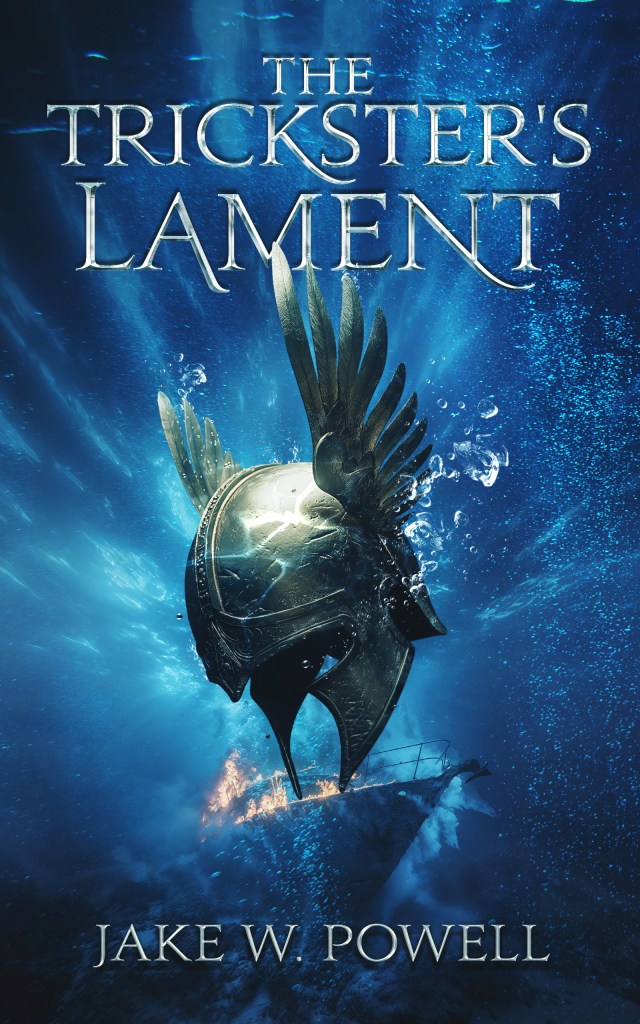
It’s an interesting subject I’ve chosen. My two published works, A God Walks Up to the Bar and The Trickster’s Lament, are urban fantasy following the Greek god Hermes in our modern world. Writing gods is fun and fascinating. When you’re writing a guy like Hermes, and you look at what him and his ilk get up to in mythology, you realize that you can’t really start out the story with him being too likeable.

Hermes is a funny guy, and he’s smart, perceptive and entertaining to write and read about. But he’s not necessarily a good guy. He’s egotistical, vain, manipulative and more than a little callous. Which begs the question: How do you make readers want to keep reading about such a person?

The first step, I find, is character development. Hermes is not a static character. He grows and changes over time, and hopefully he’ll change for the better. The second is the time-honored strategy of comparing and contrasting. Does your story have an awful person as your protagonist? Make their opponents even worse.

Michael Corleone was godfather of a murderous Mafia family, but at least he wasn’t a drug dealer. Darth Vader killed children and endorsed the destruction of entire planets, but at least he wasn’t as sadistic as his emperor and still held love for his son. Peter Pan is a selfish child who never matures and is a nasty little brat, but his nemesis Captain Hook is a bloodthirsty pirate who, you know, wants to kill children.

Maybe it’s a cheap trick. Make somebody bad look good by standing them up alongside people who do worse things. A part of writing is getting inside people’s heads and figuring them out. When writing any protagonist, whether hero or villain or in-between, you have to figure out how to stoke the desire in audiences to keep reading about them. And if they do things that the audience finds … distasteful … then you may want to consider the good old strategy of compare and contrast. Give them lines they won’t cross. Give them a code. It doesn’t have to measure up to the reader’s own personal morals, but give them standards. And then pit them against antagonists who violate those standards.

It is, in many ways, a literary sleight of hand.

But Hermes, at least, isn’t a villain per se. He’s not nice, but he does have standards, fairly strong ones, and he is aware of some of his own vices. And he may even change for the better if he survives this upcoming book.

***

Many thanks for visiting my blog. I post updates on my writing career, I muse over storytelling and fiction, and I reflect on the curious and wonderful things in life.

Image

“Hermes is not having the best time. He walks a fine line, and his duty as messenger of Olympus weighs heavily on him. Being a god in the modern age means living in a world that no longer believes in gods. How much can one deity accomplish when no one respects him anymore? And why do his instincts tell him that he, the son of Zeus, is losing favor with his own family?

Tensions abound. The upstart Young Gods play dangerous games using entire cities as their boards. Formless monsters strike from the nighttime shadows, terrorizing hapless mortals. Agents of rival pantheons scheme to thwart Olympus’ designs. In the thick of it all, Hermes does what he does best: trick, lie, and cheat his way to victory.

Smartphones

The most important invention in your lifetime is…

The smartphone. Not the cellular phone in general, but specifically the smartphone with its advanced computing capabilities, online access and instant information retrieval.

Cell phones have been around a long time, before I was born, but the smartphone came into its own during my lifetime. Funny how science fiction seems to predict these things. Star Trek had those little handheld doodads that could scan anything and tell you if somebody was sick or healthy or mindmelded by Vulcans or whatever, and nowadays we have near-identical gadgets that can scan, measure distances, forecast the weather, monitor health, take pictures, and far too many other things.

Smartphones are interesting devices because few of their features are truly new, but they are devices that can do everything at once. That’s their significance – the number of features contained within one item. All that plus instant communication via phone call, text or email. That sort of versatility and the speed with which one can look up info and immediately apply it to the situation at hand make smartphones into what I consider the most important invention developed during my lifetime.

***

Many thanks for visiting my blog. I post updates on my writing career, I muse over storytelling and fiction, and I reflect on the curious and wonderful things in life.

Image

“Hermes is not having the best time. He walks a fine line, and his duty as messenger of Olympus weighs heavily on him. Being a god in the modern age means living in a world that no longer believes in gods. How much can one deity accomplish when no one respects him anymore? And why do his instincts tell him that he, the son of Zeus, is losing favor with his own family?

Tensions abound. The upstart Young Gods play dangerous games using entire cities as their boards. Formless monsters strike from the nighttime shadows, terrorizing hapless mortals. Agents of rival pantheons scheme to thwart Olympus’ designs. In the thick of it all, Hermes does what he does best: trick, lie, and cheat his way to victory.

Tuesday

Poor, poor Tuesday. What is there to say about you? All the other days are praised or cursed, but what does Tuesday get?

Monday is a day despised, the beginning of the long slog, the harbinger of work and drudgery. Everyone hates Monday.

Wednesday is the halfway point, the glimmer of hope, where everything after is all downhill.

Thursday is the Day Before Friday, or Friday Eve, if you prefer, and ends with the resounding declaration, “One more day until the weekend!”

Friday is the end of the slog, the joyous day of freedom when the weekend is at its longest and moods are brightest.

Saturday is the day of fun and relaxation, a day where one can kick back and catch a breath. Everyone loves Saturday.

Sunday is the day of rest, but it carries the double edge of being the Day Before Monday, when fun is mingled with the imminence of the new week.

But what about Tuesday? What does anyone have to say about Tuesday?

It’s not as miserable as Monday, but not as hopeful as Wednesday or Thursday nor as exciting as Friday. And it’s certainly not a Saturday or Sunday. Tuesday simply … is. There is nothing to say about Tuesday. It is a day ignored, a day to be endured, a day to be forgotten. No one cares about Tuesday.

Poor Tuesday.

***

Many thanks for visiting my blog. I post updates on my writing career, I muse over storytelling and fiction, and I reflect on the curious and wonderful things in life.

Image

“Hermes is not having the best time. He walks a fine line, and his duty as messenger of Olympus weighs heavily on him. Being a god in the modern age means living in a world that no longer believes in gods. How much can one deity accomplish when no one respects him anymore? And why do his instincts tell him that he, the son of Zeus, is losing favor with his own family?

Tensions abound. The upstart Young Gods play dangerous games using entire cities as their boards. Formless monsters strike from the nighttime shadows, terrorizing hapless mortals. Agents of rival pantheons scheme to thwart Olympus’ designs. In the thick of it all, Hermes does what he does best: trick, lie, and cheat his way to victory.

T.S. Eliot on Writing

Whoever said that writing is easy? If you ever feel discouraged or inadequate as a writer, remember that it’s not just you.

What profession is more trying than that of author? After you finish a piece of work it only seems good to you for a few weeks; or if it seems good at all you are convinced that it is the last you will be able to write; and if it seems bad you wonder whether everything you have done isn’t poor stuff really; and it is one kind of agony while you are writing, and another kind when you aren’t.

T. S. Eliot

***

Many thanks for visiting my blog. I post updates on my writing career, I muse over storytelling and fiction, and I reflect on the curious and wonderful things in life.

Image

“Hermes is not having the best time. He walks a fine line, and his duty as messenger of Olympus weighs heavily on him. Being a god in the modern age means living in a world that no longer believes in gods. How much can one deity accomplish when no one respects him anymore? And why do his instincts tell him that he, the son of Zeus, is losing favor with his own family?

Tensions abound. The upstart Young Gods play dangerous games using entire cities as their boards. Formless monsters strike from the nighttime shadows, terrorizing hapless mortals. Agents of rival pantheons scheme to thwart Olympus’ designs. In the thick of it all, Hermes does what he does best: trick, lie, and cheat his way to victory.

The Computers of Yesteryear

Write about your first computer.

The first time I ever used a computer was back in the ancient days of dial-up, GeoCities and flip phones. My parents owned a word processor. No, not a computer. A word processor. As in, an electronic box with a blank, black screen on which you could type sentences and do nothing else. No programs, no Internet, no background wallpaper. This was a simpler time.

So, there I was, a kid not even in the double digits who thought he was going to write his first novel. Never got past the second page, of course. Or I was writing backstories for my action figures and posting them on my bedroom corkboard. Either way, those were the days when I first began cutting my teeth as a writer.

My first personal computer, as in the first I actually owned, was a bigtime birthday gift from my parents. I was in sixth grade, I think. It was a ponderous contraption. Computers weren’t flat back then. Like the word processor, it was a large box filled with many arcane electronic secrets. More importantly, it came with a tower, which was the actual device doing all the processing, because these were the days when the average PC couldn’t contain all that delicious data in just one piece. It needed a second box to actually run the data, and mine needed a whole desk cabinet to be kept in.

And then there were floppy discs and compact discs. Old PCs used to have slots into which you slid the CD or floppy in order to access them. Do computers even still have slots anymore? I have no idea. What with streaming and online gaming and the Internet in general, I doubt they’re needed anymore.

Those were the days. I’m not sure what kind of days, exactly, but those were them. Just turning on a computer felt like an amazing feat accomplished. Before digital phones and instant online access, personal computers were lighthouses of knowledge and wonder. Nowadays, computers are rather mundane and even old-fashioned. But I remember.

***

Many thanks for visiting my blog. I post updates on my writing career, I muse over storytelling and fiction, and I reflect on the curious and wonderful things in life.

Image

“Hermes is not having the best time. He walks a fine line, and his duty as messenger of Olympus weighs heavily on him. Being a god in the modern age means living in a world that no longer believes in gods. How much can one deity accomplish when no one respects him anymore? And why do his instincts tell him that he, the son of Zeus, is losing favor with his own family?

Tensions abound. The upstart Young Gods play dangerous games using entire cities as their boards. Formless monsters strike from the nighttime shadows, terrorizing hapless mortals. Agents of rival pantheons scheme to thwart Olympus’ designs. In the thick of it all, Hermes does what he does best: trick, lie, and cheat his way to victory.

On Writing Unpleasant Characters

Work on my third book is proceeding apace. Slow but steady wins the race, as they say. I’m currently in the third draft and hope to have something ready for editors by the end of summer. Book #3 about the modern day adventures of the Olympian god Hermes is on its way.

I am reminded that it’s been quite some time since I actually talked about my own writing. And as I think over it, especially thinking of those of you who have read my previous work, I ponder over the character of Hermes himself.

He is, I hope, a likeable protagonist. Certainly, I strive to make him interesting. But he is not, I think, a pleasant one.

Why is that? Well, that’s all part of character development. I don’t like to read or write about perfect saints. They have no room to grow. They’re stagnant. But even so, a protagonist who starts out arrogant, presumptuous and selfish can grate on the nerves. We know plenty of people like that in real life, so why read about one?

Thus, I have to make him a little sympathetic. It’s my responsibility to make readers want to read about a fellow with a big ego.

There are plenty of ways to do this. I prefer the method of making my protagonist suffer. Oh, yes, if he is possessed of insufferable character, then make him suffer! We all understand pain and trials. Even if the guy is a jerk, seeing him go through the wringer can squeeze out a few drops of sympathy. Not everyone deserves to go through this and that.

Also, I make his adversaries worse than him. Sure, Hermes can be haughty, but at least he isn’t a bully, a slaver, a callous killer. He still has a conscience deep, deep down. Even if he doesn’t want to acknowledge it.

Speaking of which, my stories are told from a first-person perspective, which offers tons of insight into his thinking process and views. He is a conflicted individual. He feels isolated and uncertain, at times. That’s a human trait. We have all struggled with ourselves, with what to believe, what is right or wrong, our identity, our place in the world, even what to say or not say at any given time. That humanizes him.

It makes an Olympian god a little more bearable if he has flaws. Readers like flaws. It makes for an interesting character to read about. After all, the absolutely worst thing I could do as a writer, far from even writing an unlikeable character, is to write a boring one.

I hope you enjoy reading more about Hermes’ adventures, even if you do want to wring his neck at times.

***

Many thanks for visiting my blog. I post updates on my writing career, I muse over storytelling and fiction, and I reflect on the curious and wonderful things in life.

Image

“Hermes is not having the best time. He walks a fine line, and his duty as messenger of Olympus weighs heavily on him. Being a god in the modern age means living in a world that no longer believes in gods. How much can one deity accomplish when no one respects him anymore? And why do his instincts tell him that he, the son of Zeus, is losing favor with his own family?

Tensions abound. The upstart Young Gods play dangerous games using entire cities as their boards. Formless monsters strike from the nighttime shadows, terrorizing hapless mortals. Agents of rival pantheons scheme to thwart Olympus’ designs. In the thick of it all, Hermes does what he does best: trick, lie, and cheat his way to victory.