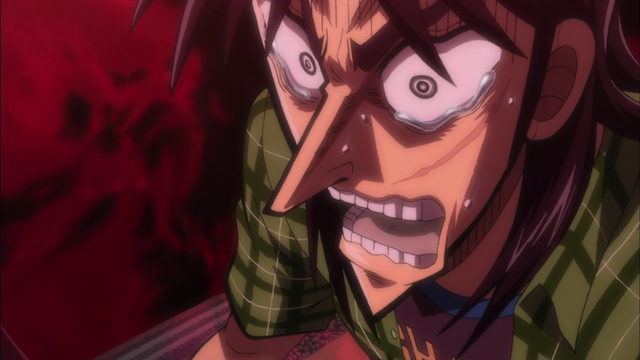
Kaiji is the protagonist I have been the most invested in, perhaps in any series. This is not to say he is my favorite protagonist, but how the show convinces me to care about him in every aspect. I don’t just care about Kaiji in the traditional way of rooting for his triumph, but I wanted him to be good. He faces many dilemmas, but in most of them, he gambles his well-being. Typically he doesn’t make moral decisions involving others. Yet when he does, it’s a moment of claustrophobic tension. Kaiji is walking on a steel beam, massively in debt, and he’s in between two people. The first person to make it to the end wins. Of course, this means that the only way for Kaiji to win is to push the one ahead of him, and if he doesn’t, the person behind him will shove him off the beam to a dastardly fall. I was utterly distraught, I desperately wanted Kaiji to do the right thing, but if he does do the right thing, he will be pushed off the beam to a dreadful fall, greatly injuring himself. I was on the edge of my seat, but why? Why did this dilemma affect me so profoundly? I’ve never cared if a character did bad things or even if a good character began doing atrocities. As long as it fit the character arc, I was content. What’s different about Kaiji? It could be that the characters in Kaiji are humanized a bit more than other mediums. The antagonist is systemic, so the other people Kaiji interacts with are mostly good, except the antagonists who uphold the system or are victims. But there was a moment where multiple characters died, and I only cared about two of their deaths. So there’s something about Kaiji; it’s not just that the other characters are also likable. When good characters do something terrible, it’s typically significant; it’s a vital moment in their character arc. But Kaiji fails, and he falters, he doesn’t always do the right thing, but he wants to. And it’s that relatable drive that makes me root for Kaiji, not just for his victory but for his dignified success. In other media, wrong actions are significant. Kaiji is different, insofar as these ethical dilemmas aren’t character-defining, picking wrong is still sympathetic. If Luke Skywalker has to answer a moral dilemma, it’s definitive, whether he’ll turn to the dark side or continue the path of goodness. But Kaiji is Kaiji, flawed and all. Some may liken it to morally gray stories like Game of Thrones, where characters aren’t good nor bad, but a strange neutral. But Kaiji isn’t morally gray, he’s a decent person, and that’s why I want him to do right. It’s more complicated than ethically gray. In this era where morally ambiguous characters are seen as complex and cool, Kaiji defies this. The show with mastery demonstrates the strife of moral decision making. The balance between survival and doing what’s right. To his credit, the writer realizes how much we want Kaiji to be righteous. He dwells on these moral decisions just as long as he resides on the high-stake gambles. And when Kaiji chooses wrong, he dwells on that just as long as he dwells on Kaiji losing a bet. Kaiji shows us how writers should write ethical characters. I can only hope that I’ll be as invested in a character’s morality as I was with Kaiji.
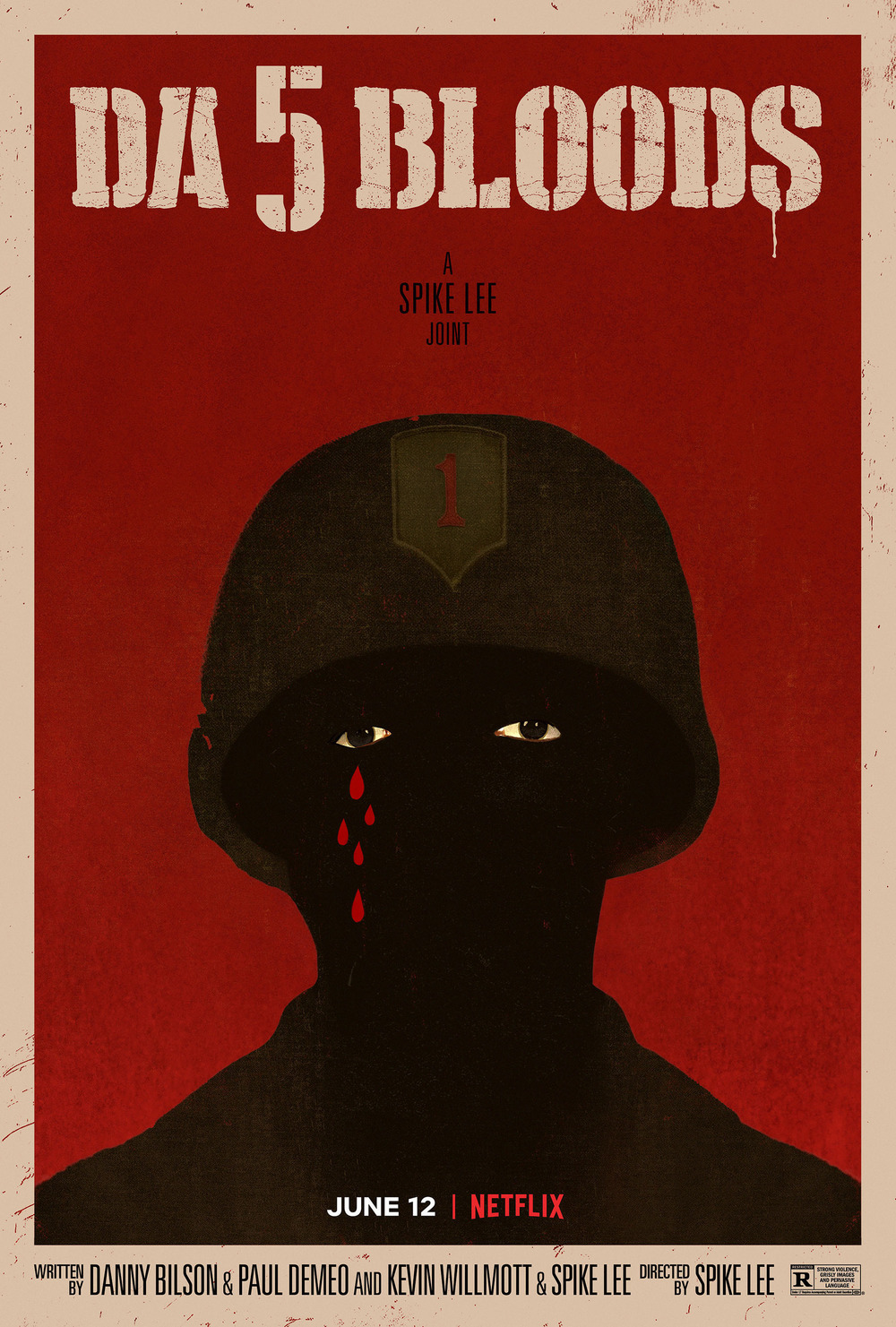
“Da 5 Bloods” is a 2020 drama directed by Spike Lee about 4 veterans of the Vietnam war returning to their former battleground to find hidden gold. It’s a well-shot movie yet nothing exceptional. The same isn’t true of the editing; pictures of historical figures or celebrities were edited into the movie. It shattered immersion in some cases, but it primarily happened in stagnant scenes, so the offense is minimal. The acting was pristine, with an outstanding performance from Delroy Lindo, who played Paul. The actors had great chemistry and delivered dialogue naturally. Especially in the beginning, it felt as if all of these characters were those whom I could meet in real life, none abnormally eccentric, just normal people with normal problems. This sense of normalcy would cease to be present later in the film, which isn’t necessarily bad. My primary intrigue lies in critiquing the story. The powerful moments were scarce, and the subpar instances were abundant. We learn in flashbacks that they plan to recover the gold they had found in their deployment. We have Paul, who is bombastic and unstable after the death of their leader, Stormin’ Norm, played by Chadwick Boseman. Eddie is a wealthy, charismatic person who offers to pay for many of the trip’s expenses. Melvin is kind and forgettable. Otis is the level-headed voice of reason. Alas, most of these descriptions are woeful, barring Paul’s. Not many characters enjoy the development that Paul gleans. Otis has a romantic relationship with a well-connected woman, Tien Luu. Through this connection, he meets a French businessman willing to smuggle gold overseas. Paul snapped at the Frenchman, Desrouche; he made xenophobic and personal remarks as Desrouche demanded a high gold share. We then meet Paul’s earnest son David; their relationship is rocky to be vague. Immediately an issue is the dreadfully slow pacing. An example of this is a long gunfight that takes place in a flashback. This gunfight is a bore. Gunfights offer tension in chaos. This tension isn’t present in flashbacks because when I know four of the five characters survive, chaos is nonexistent. So the very thing that makes gunfights interesting isn’t present in flashbacks. I stopped watching after twenty-minutes assuming the rest of the movie would be slow; I’m rejoicing that I decided to finish it. Yet, I feel that this exemplifies the slow pacing at the beginning. or my childish attention span. The beginning of the story sets the tone. Characters chat about random nonsense. Pretty bad as far as first impressions go. Now, it might seem pedantic the criticism I’m making here; after all, if the rest of the film is ok, complaining about the first twenty minutes is irrelevant. However, beginnings are significant, and I think the lack of a solid foundation led to some problems later. They begin their tour led by their friendly guide Vinh Tran who gives tours to Vietnam veterans. During the tour, a persistent Vietnam salesman is persistent that Paul should buy his chicken. After multiple refusals are unsuccessful and Paul is increasingly more unstable, he calls the salesman a slur. This is why I pointed out Delroy Lindo’s performance as Paul, he gets incredibly anxious, and as his comrades try to calm him down, he admits he has Post-traumatic stress disorder. One thing I love about this scene is how realistic his friend’s efforts to soothe him are. They repeatedly say, “calm down!” and other things that surely won’t help Paul, but they say them nevertheless. It was similar acts of subtly that caused me to enjoy their bonds shared between them deeply. In a bar later, David, Paul’s son, meets Hedy, a Frenchwoman who is allied with an organization that removes old landmines from the Vietnam War. One day later, Vinh drops them off and tells them where he’ll rendezvous with them in a couple of days. It’s at this point that I began to like Vinh; he was incredibly accommodating and understanding. He explains to them if they are early, he’ll be there, and if they’re late, he’ll be there, waiting. And this sort of dedication and reassurance was commendable, and I do wish his character had more of a presence. They found the gold, and seeing their joy was bliss. Especially after empathizing with Paul, a rigid character, seeing his childlike amusement is a wonderful contrast. They also find Stormin Norman’s remains, and they pray over them in a beautifully shot. We learn from flashbacks about Norman’s wisdom and how he was able to appeal to the sense of all of them, even Paul. Norman is one of the few characters I enjoyed, and yet his presence was metaphorical, only existing in spirit or flashbacks. Paul’s attachment to Norman is probably the strongest of all of them. Many of them did the typical human thing of vaguely carrying on their ideals in their lives, yet Paul still had Norman present in his life. When told he should speak to someone (referring to a therapist), Paul responds that he talks to Norm every night. Paul has found gold, his role model’s remains, and his relationship with his son was improving. One thing the writers do very well is to use subtle actions to note the character’s relationship. When Paul and David are on good terms, Paul lets David take his backpack when they sit to rest, when they’re on bad terms. This is just one example of many subtle ways the writers demonstrate the condition of the various relationships. Seeing how the characters interact as their relationship develops is vital in showing the consequence of conflicts that would exist solely in dialogue if not for these slight silent gestures. After retrieving the gold, there’s disagreement with how it should be used, Edie believes it should be used to further black causes as Norman would have wanted, and when asked why he couldn’t do it himself, he said he had spent all of his money. This dialogue is one of greed, and I think this is where Paul’s relationship with Norman is starkly contrasted with Eddie’s. When a person dies, what are we to do? The only way we can keep their essence alive in this world is to remember their ideas. Yet Paul defies this; he sees Norman. Literally, his actions are the antithesis to what Norman would do, yet Norman was perhaps the most important to him. As Eddie is speaking, he steps onto a landmine. This death felt worthless. A character I didn’t care for died to push forward the plot. At the very least, I would think that one of the main characters would have developed, but alas, I was wrong. In essence, many more conflicts ensue, and during these, Paul splits off from the group. His relationship with his son has gone to waste, and he is very insane. He has blatant hate for every one of them and begins to believe they’re out to get him. He wanders off into the forest alone, taking his portion of the gold. It’s here where the movie’s best scene takes place, along dreadful monologue of Paul walking through the forest, rambling starting right at the camera. It’s unclear whom he’s talking to as if everyone is out to get him. And seeing this character you have empathized with thus far essentially begin killing himself as he endures this treacherous hike alone, it’s sad. It feels empty. It’s here when we see what Paul sees, Norman. It’s unclear whether this is a spirit or a figment of Paul’s imagination, but either way, we learn that Paul accidentally shot Norman during combat, and he has carried that guilt with him the entire time. Norman hugs Paul, calming him once again, telling him to forgive himself. The fact that an apparition saves Paul, when nothing has changed for the better, seems odd and forced. At the very least, it’s woefully lazy. It would have been preferable to show Paul having some reason to confront his demons than have the image of Stormin’ Norm comfort him. If this were the case, it would seem much less contrived. Nevertheless, I still love this scene. To see Paul, the character who continued to worsen throughout the movie, finally finds peace is beautiful. He’s found by men who want the gold for themselves. He sings worship songs as he is standing in his own grave, and as he reaches the highest point of that note, he’s shot. This is where the story ends, or rather where I want the story to end. Everything after this is uninteresting, I still “like” the characters, but there’s not enough development to fit the story’s climax. The majority of development has been given to Paul. You could argue that David had a plethora of development; however, all of his development was about Paul, but this was fumbled. At the end of the story, he watches a video of Paul explaining how much he loved David and how he was sorry for how he acted. This felt strange though, the video felt as if the Paul we saw at the end recorded that video, but he didn’t. In the video, Paul spoke with the wisdom and poise of post-development Paul. You could argue that maybe Paul was just manic, and when he recorded the video, he was of stable mind, yet this isn’t the Paul we see. His relationship with David is good as the bond together, but it gets worse as Paul believes David wronged him. Paul consistently responds to outside pressures; his behavior is predictable; he doesn’t have mood swings; his unstable behavior changes are due to external causes. So the last bit of development we had, David and Paul’s relationship, was poorly done as well. It is important to note I still liked the other characters; Melvin was heroic, Otis respectable, and Vinh was kind. Yet all of it didn’t have enough time; However, these likable characters prevented the climax from being a slog like the beginning. The lack of development still prevented it from truly fitting a climax. It would be more apt to describe the end as a generic action movie instead of a complex drama dealing with themes of brotherhood, greed, and death. It is with this that I feel it’s proper to give a disclaimer, I still greatly enjoy this film, and it’s because of the parts of it that I love so much that I wish it wouldn’t have fumbled the ball. Four writers collaborated on this script; perhaps it’s a matter of there being too many cooks in the kitchen. Regardless, I will rewatch Paul’s journey alone repeatedly, yet I doubt I will return to the “Da 5 Bloods”.
 In Critique Of-
