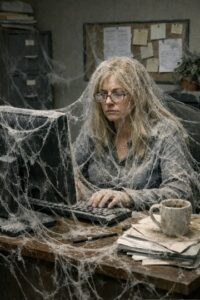
Will AI Eventually Replace Novelists?

By John Gilstrap

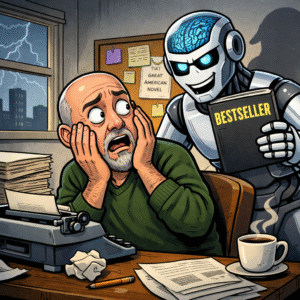
ImageTwo posts ago, I posted some positivity about AI in general, and ChatGPT in particular. The responses were . . . energetic. I think there’s a misperception of what AI is capable of, and what it is not. Without a doubt, there’s never been a worse time in history to be a graphic artist, and entry level coder or perhaps even a paralegal. The days of paying a “professional” for boilerplate documents are over.

With the appropriate prompts, AI is capable of planning trips, managing budgets, and, apparently, guiding bombs to the precise air shaft where it can do the most damage.

But it will never be able to console a child whose heart has been broken. It will never replace that moment with your beloved, sitting by a fire with a glass of wine or staring up at the stars. It will never replace human emotions. And therein lies my disconnect with the TKZ hivemind over the negative impact of AI on what we do.

Novels are recorded humanity, not just words spelled correctly on the page. They are, in fact, emotional experiences–the equivalent of consoling that child. A computer cannot convey that which it has no frame of reference, and that’s why it cannot replace us.

But I could be wrong, so don’t take it from me. For about two months, I have been pumping everything I’ve written into ChatGPT to see if it can learn style. I actually think it can, but I haven’t wrangled all of that piece yet. I know what I think about the long-term impact of AI on the writing world, but I want to hear what the machine had to say about it. So, I asked it this question:

“Using what you have learned from my style, write a 700-word post for a writing blog. Your topic: Will AI ever evolve to the point that it can replace the human voice in writing novels? Cite sources.”

I didn’t want my thumb on the scale to produce the answer I wanted, so I kept it open-ended, and because I’m talking to a machine, I wanted to know how it analyzed the data, so I told it to cite sources. Here’s the response I got after fewer than 5 seconds of analysis:

Will AI eventually replace novelists?

The short answer is no. Not in the way people fear.

Artificial intelligence will certainly become a powerful tool for writers, but replacing the human voice in fiction is another matter entirely.

To understand why, it helps to understand what AI actually does.

Large language models—systems like those developed by companies such as OpenAI, Anthropic, and Google DeepMind—are trained on enormous bodies of text. During training, the system analyzes patterns in language: word order, sentence structure, context relationships, and statistical probabilities of what word or phrase is likely to come next. The result is a machine that can produce remarkably fluent prose.

But fluent prose is not the same thing as storytelling.

According to a widely cited analysis from the Stanford Institute for Human-Centered Artificial Intelligence, large language models operate by predicting the next most likely token in a sequence based on training data patterns. They do not possess intention, memory in the human sense, or lived experience. They generate language by probability, not by understanding.

That distinction matters more than most people realize.

A novel is not merely a sequence of grammatically correct sentences. A novel is the product of perspective—of someone deciding which details matter, which emotions are worth exploring, and which moments deserve attention. Those decisions are rooted in experience. In memory. In the messy accumulation of living.

Machines don’t have that.

When a writer describes grief, fear, betrayal, or love, the power of the scene comes from a human mind recognizing something true. Even when the circumstances are fictional, the emotional substrate is real. The writer is drawing on life—on personal experience or on empathy for experiences observed in others.

An AI system cannot do that. It can simulate the language of grief or love, but simulation and experience are not the same thing.

Researchers at the Massachusetts Institute of Technology have repeatedly pointed out that modern language models lack what cognitive scientists call grounded understanding. They manipulate symbols without direct connection to the physical or emotional realities those symbols describe. In other words, the machine knows the words, but it does not know what the words mean in the human sense.

That limitation shows up most clearly in narrative voice.

Voice is not vocabulary. It’s worldview. It’s the sum of a writer’s instincts about what matters in a scene, how characters behave under pressure, and which truths are worth putting on the page. Voice grows out of the author’s background, personality, profession, culture, and history. Two writers can describe the same event and produce completely different stories because their lives have taught them to see the world differently.

A statistical model can blend styles. It can approximate tone. But it cannot originate a worldview because it does not possess one.

That doesn’t mean AI has no role in writing. Quite the opposite.

Used properly, AI can be a very useful assistant. It can help brainstorm ideas, summarize research, test plot possibilities, or identify structural problems in a manuscript. Some writers already use it as a kind of tireless research intern, capable of quickly gathering background information that might otherwise require hours of searching.

In that sense, AI resembles other technologies that once stirred anxiety among writers. Word processors didn’t eliminate authors. Neither did spellcheck. Neither did online research tools. Each new technology changed how writers work, but none replaced the human imagination at the center of storytelling.

The same will almost certainly be true for artificial intelligence.

The technology will get better. The prose will become smoother. The tools will become faster and more useful. But the essential element that makes novels resonate with readers—the human voice behind the words—remains stubbornly difficult to replicate.

Because fiction isn’t built only from language. It’s built from life.

Readers can sense the difference between words that were assembled and words that were meant. The former may be competent. The latter are alive.

And that difference is exactly why novelists aren’t going anywhere anytime soon.

So, there you have it, folks, straight from HAL’s mouth. Thoughts?

Image

On sale now!

And The Whimper Is…

By PJ Parrish

It’s awards season! Sunday was the Oscars. Won’t give you any opinions on winners and losers here. Just wanted to say I loved Jessie Buckley’s (Hamnet) acceptance speech: “Mom. Dad, thank you for teaching us to dream and to never be defined by expectations.”

Well said.

I’ve been thinking about awards this week because I am gearing up for my annual gig as chairman of the Edgar Awards banquet for Mystery Writers of America. I edit the program book every year, and we always come up with a theme. This year we’re paying tribute to the Best First Novels.

Why? Well, this year is the 80th anniversary of the Edgar. The only category that first year was Best First and the prize was taken home by Julius Fast for Watchful At Night.

Watchful At Night [ Inscribed By The Author]...

Many freshman writers went on to become best-selling authors. Among the big names who hit a homer at their first at-bat are Patricia Highsmith, Ira Levin, Donald Westlake, Jonathan Kellerman, Stuart Woods, Martin Cruz Smith, Gillian Flynn, C.J. Box, Janet Evanovich, Michael Connelly, Patricia Cornwell, Walter Mosley, and Tana French. But if you go back and read all 80 winners (click here), you’ll find many more names that were never lit up in neon. Or those writers whose careers never even made it to cruising altitude.

Such is the capricious nature of winning an award. It can mean everything. It can mean nothing.

For our program book, we asked first novel winners to tell us what it meant to them. What it felt like. What it did for their careers. I wish I could share their answers here (can’t devulge pre-banquet night) because they are poignant and sometimes very funny. What each shares, however, is a humility and very human-ness. As one winner put it, getting that Edgar felt personal and communal all at the same time.

One of my favorite episodes of the TV show Frazier is the one where Frazier is nominated for the Seebee Award, given out to Seattle’s best broadcasters. Frazier tries to be above it all, but he just can’t. He wants to win, dammit! But at the banquet, he finds out he is up against the aging icon Fletcher Grey. Fletcher has been nominated 11 times in a row and always lost. Fletcher’s date is his 84-year-old mother who has flown in from Scottsdale — for the 11th straight year. Fletcher is also retiring. Frazier tells his producer Roz, “if we win, they’ll string us up.” Roz says, “I don’t care. I’d crawl over his mother to win this award!”

Frazier loses, of course. His agent Beebee deserts him. Roz gets drunk on Pink Ladies.

Sounds like a couple award banquets I’ve been to. My sister Kelly and I have been lucky to have been nominated for some awards over the decades, and we’ve won a couple. Yeah, yeah, It is always an honor to be nominated. But I can’t lie — it bites to lose. I once saw a nominee’s wife burst into tears when her husband lost.

In 2002 we were nominated for the Edgar. We went to the banquet at the Hyatt. Got our hair done and put on sparkly dresses. Kelly’s son Robert rented a tux. I stayed stone-cold sober in the bar before. As soon as they didn’t call our name, I grabbed the wine bottle out of my editor’s hand.

Fast forward five years to the International Thriller Writers banquet. I went with no expectations. I sat between my agent and Ali Karem but I was filled with dread. Kelly couldn’t make it, so I felt pretty alone, despite all the good vibes from fellow authors. We might write hardboiled, but I am not. Finally, I couldn’t take it anymore. I bolted for the lobby.

Jim Fusilli was standing there and barred my way and put an arm around my shoulders.  Each nominee was announced by reading the first line of their book. Ours is “The Christmas lights were already up.” I remember thinking, “God, that sucks.”

I heard the title of our book announced as the winner. I started crying. I don’t remember what I said on stage. This is what SHOULD have said:

“Thank you so much for this great honor. First, I want to thank the ITW judges who put their careers on hold for months to read hundreds of books. Second, I want to thank my fellow nominees. I am honored to have my book mentioned among their fine works. Third, I want to thank my editor who….”

This is what was REALLY in my head:

“God, I can’t believe I am crying! How pathetic and needy! Where’s the friggin’ stairs? I can’t see! Who is that man at the podium? Shit, I forget his name! THE LIGHTS! I CAN’T SEE ANYTHING! Do I have lettuce on my teeth? Agent…mention her name. My bra is showing, DON’T PULL AT YOUR BRA!! He’s handing it to me. Jesus, it’s heavy…don’t drop it…don’t drop it…don’t drop it. Say something nice about the other nominees! Can’t…can’t…can’t remember their names. YOU TWIT! You just sat on a panel with TWO of them this morning! Wait, wait…is it Paul LeVEEN or Paul LeVINE??? Forget it…buy them a drink later. I should have gone to the hairdresser before I left home. My roots are showing. JESUS! THE LIGHTS! Stop talking now…you’re rambling, you ass…Okay, leaving now. TAKE THE AWARD! Good grief…I’m here in New York City wearing Nine West because I was too cheap to spring for those black Blahniks at Off Fifth. Dear God, just let me just off this stage so I can get to the john and pull up my Spanx….

I made it off the stage okay. Here is the photo to prove it:

Image

Did it change things for me? Not really. I put the award on my shelf, next to my ribbon for winning an ax-throwing contest in Maine. My career continued on its nice glide path. I wrote more books, I made a little money. But I do remember one thing very distinctly that night. I was at a low point in my writing back then, feeling a little discouraged because the WIP was stalled and I wasn’t getting much joy from the writing process itself. I wasn’t feeling that feeling James wrote about this past Sunday. (click here). The world wasn’t burning through me.

But my peers gave me a gift that night — a nudge to keep going. So maybe that’s what this award thing is — just a kick in the Spanx of simple validation.

Keep going, crime dogs. Get that book out of you and out there. Somebody out there will like you. They will really like you.

We Become the Stories We Tell Ourselves

The idea for this post began with a quote attributed to Michael Cunningham in A Home at the End of the World

We become the stories we tell ourselves”

This is especially true of writers. If you tell yourself, “I’ll never find an agent” or “My writing isn’t good enough to score a publishing contract,” chances are you won’t. Why? Because you’ve adopted a negative mindset.

Same principal applies to, “I can only write on weekends.” If you tell yourself you can only write on weekends, you’re already making decisions about your ability to write Monday through Friday, so if you slip behind the keyboard on a weekday, it’ll be more difficult to write. You’ve handicapped your creativity with a fixed (negative) mindset.

We’ve discussed fixed vs. growth mindsets before. I want to revisit the Mental Game of Writing *shameless plug for JSB* from a different angle, because it’s not discussed enough in writers’ circles.

RAY EDWARD’S THOUGHT EXPERIMENT 

Imagine you’ve been given a treasure. This treasure, like all magical treasures, comes with conditions. While it’s an unlimited treasure, each day you can only take one gold coin. Just one. And every day you suffer from amnesia. When you forget you have this treasure, you lose a day of unlimited value.

How will you remind yourself to take the coin? Leave a note? Set an alarm? Phone a friend and ask them to remind you? How will you remember not to waste a single coin?

You already own this treasure. It’s called life. Consider this your reminder. Each new day offers endless possibilities, in life as well as writing. What will you do with your coin today? Will you squander it by scrolling through social media for hours? Or will you cash it in for its full value?

Look. We’re all guilty of procrastination from time to time. The trick is to prioritize your writing.

Every morning, I watch the sunrise. Not only does it inspire me, it grounds me with a positive mindset for the day. If you roll over and slap the snooze button, dreading the day ahead, you’ll start the day with a negative mindset. Things tend to roll downhill from there.

Have you ever heard a writer complain about being a lousy writer? That’s a fixed mindset. Their mind is made up. They will never write well. Period.

A growth mindset is positivity based. If that same writer said, “I may not be the best writer today, but I will be” they’ve flipped the script. Because now, they know if they continue to show up, they will improve.

See the difference?

The writer with the growth mindset is moving forward. The writer with the fixed mindset would rather complain about writing than study, hone, and implement their craft.

Writers aren’t the only ones who fall prey to a fixed mindset. It’s easy to do.

Do these excuses sound familiar?

  • Too much to do today. I’ll write tomorrow.
  • Can’t write now. I just worked an eight-hour shift.
  • Too tired to write.
  • Not in the mood to write today.
  • I’m not inspired.
  • I have writer’s block.

Every excuse is steeped in negativity, yet this is common rhetoric in the writing community.

Let’s pull back the veil on each one.

TOO MUCH TO DO TODAY — I’LL WRITE TOMORROW

When life shakes the to-do list in your face, it’s easy to avoid the keyboard. The problem is, tomorrow never comes. If you are a professional writer, or striving to become one, then you must prioritize your writing.

Can you carve out thirty minutes in your busy schedule today? How about fifteen? How about five? No one’s too busy to write a paragraph.

CAN’T WRITE NOW — JUST WORKED AN EIGHT-HOUR SHIFT 

Writers all over the world work a full-time day job. Lee Child wrote his first novel during his commute to and from work. If you’re driving, can you dictate into your phone? Hands-free, please! I don’t want to cause any accidents.

Or write on your phone during your lunch break.

Or start supper fifteen minutes later than usual — after you’ve hit the keyboard.

Priorities, priorities, priorities. How bad do you want it? If writing full-time is your ultimate goal, you must continue to show up.

If you train yourself to write for fifteen minutes when you arrive home from work, the word count will continue to grow. An ever-increasing word count leads to confidence, excitement, and joy. There’s no downside. None. If all you have is fifteen minutes, you must protect that time. Tell your family and friends how much writing means to you. The house won’t burn down if you disappear for fifteen uninterrupted minutes, nor will your children starve.

Some days the words will flow. Other days they won’t. That’s okay. You still made progress. Don’t get caught up in evaluating your writing or hitting a certain word count right away, or you’ll backslide into a negative mindset. Celebrate the fact that you showed up.

TOO TIRED TO WRITE

With all the snow blowing I’ve done this winter, it’d be easy for me to use the “too tired” excuse. Battling Mother Nature does wear me out, but I also have multiple writing projects that need my attention. I take time to rest, enjoy a nice hot cup of tea, then hit the keyboard. If my hands hurt from squeezing the handles of my snowblower (a common problem), I may only squeak out 500 words that day — self-care is equally important — but at least it’s something.

NOT IN THE MOOD TO WRITE TODAY 

If we sit around waiting to get in the mood to write, the WIP will languish on the hard drive for months, even years.

“The only way out is through.”

—Robert Frost

Here’s where having a solid writing routine in place makes all the difference. For me, it’s sliding on the headphones. Once I crank the music, the world fades away, my focus narrows on the screen, and I’m transported into my story. It’s a form of self-hypnosis. When I hear that playlist, my creativity soars.

Find a routine that works for you and stick with it. You may be surprised by how quickly you can jump into the zone.

I’M NOT INSPIRED 

Seriously? I’ve never understood this excuse. What are you waiting for, a lightning rod to shoot from the sky? Lemme tell ya, watching cat videos on social media won’t inspire you, either. Stop wasting precious writing time. Slide on the headphones, or whatever works for you, and write something, anything, even if it’s only a paragraph.

If you don’t know what to write, review your writing from the day before. It’ll come to you. If you’re still stuck, go for a walk. Alone. And think about your story.

Planners may have a slight advantage over pantsers in this regard. If I know my next milestone in the story — first plot point, first pinch point, midpoint, etc., etc. — then I’m able to say, “Okay, the MCs need to wind up doing this or that. How do I get there from here?”

The answer may require research. Or the introduction of a new character. Or better yet, kill a character. Nothing kickstarts creativity faster than raising the stakes.

I HAVE WRITER’S BLOCK 

Pah-lease. Writer’s block is nothing more than a negative mindset with a title attached. You’ve convinced yourself you cannot write for whatever reason. Flip the script in your head, and the words will flow like Niagara.

Perhaps, you’re overwhelmed. It happens. Take a breath. You’re okay. Move on.

Or maybe, real life has given you more than your fair share lately. Or you’ve written yourself into a corner. Figure out what the root cause is, but please don’t call it writer’s block.

Burnout is something else entirely — been there, done that, got the scars to prove it — the subject of which has too many variables to discuss now. Want me to cover it next time?

Image

Maintaining a positive mindset takes work and perseverance, but you can do it… if you want to.

Therein lies the rub.

How will spend your treasure today?

The Greatest Feeling

by James Scott Bell
@jamesscottbell

ImageThe other morning I was in my back yard with my laptop, ready to do some writing on my WIP. I was close to the end. I knew what the climax was going to be. I always know (or at least have a good idea about) my endings. This allows me to map out a “shadow story” that gives me all sorts of possibilities that are organically connected to the plot.

The ending is, of course, subject to change without notice. But usually when I’m 3/4 done, it’s pretty much set.

I was at that point. But I needed a few more scenes to get me to the climax. More of what I call “connective tissue,” meaning real scenes with conflict and suspense, not just “filler.”

So I sat sipping espresso, prompting my imagination with possibilities.

I use that word prompting on purpose. For I could have been prompting ChatGPT or Claude or Grok. I could have turned over this brainstorming completely over to the machine. Instead, I was prompting my own brain. I would set up a scene and watch it unfold. I’d tickling it  a bit to get it to improvise, and when I thought, “That’s good!” I’d jot a one-line note about it. Then I did the same with another scene, and another.

And realized, after twenty minutes or so, how much fun I was having.

To play around in your imagination is one of the great pleasures of the writing life. Bradbury describes it this way:

“Let the world burn through you. Throw the prism light, white hot, on paper. Make your own individual spectroscopic reading. Then, you, a new Element, are discovered, charted, named!” – Ray Bradbury, Zen in the Art of Writing.

Now, I’m not going to make this another jeremiad about the deleterious effects of AI. I know many writers use it for various purposes, including as a virtual brainstorming “partner.”

I do issue a warning, however. The more imaginative play we hand over to the bot, the more our own capacity for same atrophies. This, in turn, affects all of our writing. It affects our voice, and our ability to produce delightful surprises in everything from dialogue to characterization to all the sinews of plot. And it’s just not as fun.

Image

Paul Newman, The Hustler

Of course, all play and no work makes Jack a dull writer. Craft is work. But work is fun when you know what you’re doing and how to make good things happen on the page.

It’s like that speech in the great movie The Hustler, where Fast Eddie Felson (Paul Newman) asks his girl Sarah (Piper Laurie) if she thinks he’s a “loser” (like the character played by George C. Scott has called him). Then he explains the exultation he feels when he’s in the flow of a pool game. He tells her anything can be great, even bricklaying, “if a guy knows what he’s doing and why and if he can make it come off.”

“When I’m going, I mean when I’m really going, I feel like a jockey must feel. He’s sitting on his horse, he’s got all that speed and that power underneath him, he’s coming into the stretch, the pressure’s on him, and he knows. He just feels when to let it go and how much. ‘Cause he’s got everything working for him—timing, touch. It’s a great feeling, boy, it’s a really great feeling when you’re right and you know you’re right….You feel the roll of those balls and you don’t have to look, you just know. You make shots nobody’s ever made before. I can play the game the way nobody’s ever played it before.”

Sarah looks at him and says, “You’re not a loser Eddie, you’re a winner. Some men never get to feel that way about anything.”

I love this craft of ours. I love figuring out “when to let it go, and how much.” I love it when I pull something off, when I feel the flow of those words, and just know. I play my game the way I’ve never played it before.

I’m not about to trade that in.

How about you?

In Conversation

“I have this whole book in my head.” Beth (Beth’s fake name) leaned closer to make herself heard over an animated crowd in the hotel bar. “It’s like a movie I can see, all the way down to characters, plot, and even conversations.”

Authors tend to gather at the bar like wildebeests to a watering hole in the Serengeti to discuss writing and the literary world. Folks who spend months alone with their imaginary friends are always looking for conversation.

Image

My new acquaintance at the writers conference drew a long, deep breath to maintain her hold on her our exchange. “There’s this one scene when my main character gives the story an entirely different twist, and that’s where the music in my head starts playing.”

As an author, I’d heard this one before, years ago, from myself. “Have you finished it?”

She rolled her eyes. “I haven’t started yet. That’s why I’m at this conference, to get an agent or someone interested in it.”

“They’ll be more interested in the actual book itself.”

“My husband thinks I’m crazy, especially after I told him about the character who–––.” She looked over her shoulder. “–––is really Merlin.”

“Are you looking for someone?”

“I don’t want anyone to overhear. They might steal my idea.”

“You can’t hear a chainsaw in this crowd. Don’t worry about that.”

“You won’t write this, will you?”

“I want you to do it.” I held up my little finger. “Pinky swear.”

Surprising me, she hooked her pinky with mine. “I just need time to get started.”

“You have this whole conference. Lock yourself in your room and pound out twenty or thirty pages. Go do it now while I get another drink. Talking about it won’t get the book done.”

“I don’t know where to start.”

“At the most compelling scene.”

“That’s when my characters meet on dark night in a hotel lobby while it’s raining. That’s the setup and introduces all the characters at one time.”

“I’d start somewhere else, with some kind of action. What’s your genre?”

“I don’t know. I’m not much of a reader. I prefer movies.”

Before I could respond, she waved. “Oh, look. There’s my new friend. Bill, come over here. This is Reavis. Tell him about your book.”

I caught the bartender’s eye and held up my empty glass. The nice man brought me a double.

Stepping up close, Bill crossed his arms. “Well, I haven’t started it yet, but it’ll be a memoir.”

He looked to be about twenty-two years old. Personally, I figured he needed more life experiences, and a reason for writing memoirs.

Image

“You must have a great story to tell.” I’d hoped to hear he’d been in special forces, the entertainment industry, or law enforcement, or maybe someone who’d grown up under witness protection. You know, not a boring an entertaining story.

“It starts with my uncle. He’s a great character and his stories will become mine.”

He and I had different ideas of memoirs. I hoped his uncle was famous, maybe a singer. “Have I ever heard of him?”

Image

“I doubt anyone has ever heard of Uncle Albert.”

“Then, I’m confused.”

“I’ll use his stories, he’s really funny, and hang some of my own experiences on them.”

“What’s your background?” Still hopeful.

“Well, I grew up with some interesting people in Crouchhop Arkansas, and graduated high school four years ago and worked for Dad roofing houses, then I left to see the country.”

“Oh.” My interest piqued. “Did you hike, or hitch?”

“No, I used Dad’s clunker Mercedes and drove to California. I’m thinking of all the coffee shops and people I met on the way.”

Returning my attention to the Beth, I gave her a grin. “I’d suggest you start writing tonight. Consider it a job and put your rear in the seat every day for a year, for at least half an hour each time, or long enough write a page per day. And Bill, good luck with your memoir. I hope you can find an agent to represent whatever it is when you’re finished, but both of you remember, these have to be killer books. A year ago, I read that around three hundred thousand books are released each month in this country.

Image

“If you figure thousands of books hit the market each day, you’ll have to work hard to get noticed. Find your writing voice, and a subject or genre you want to shoot for, then start building your brand. Do you guys have any knowledge of social media, or a presence with followers?”

Beth nodded. “I have a Facebook account with a hundred friends.”

“Work harder. Establish a brand specifically for your and your books. Find a hook to get people interested.”

“Won’t my agent do all that for me?”

“Agents represent authors when they’re accepted, and they help with editing your manuscripts, to a point.” I could have sworn I heard someone fire up a chainsaw, probably to clear away from a similar conversation. “Their job is to connect authors with publishers. They negotiate contracts and other legal issues. They’re a buffer between authors and publishers. They aren’t PR folks, unless it comes to promoting you with interested publishers.”

Bill raised a finger to get my attention. “That’s why I’m going to self-publish.”

“Then you’ll do all that yourself…after you finish your manuscript. There are a few other steps that follow, too.”

“Can you help us, then?”

“Sure. Go write your book in your own voice, keep at it until you finish and don’t use television as a research source, and then come see me here next year.”

Image

Faithful readers, I’m sure you’ve all found yourselves in similar situations, do you have variations on these conversations?

Reader Friday-Talk To The Animals

Image


I know, I know, it’s Friday the Thirteenth.

But this isn’t about that. Or is it? Read on…


As authors, we sometimes interview folks, or we are interviewed ourselves . . . or, we interview our characters. Let’s flip that on its head for a moment.

Image


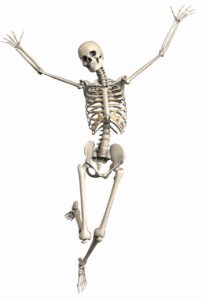
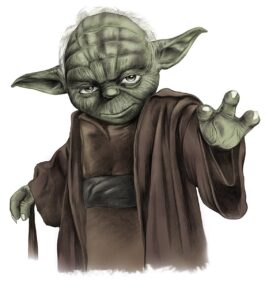
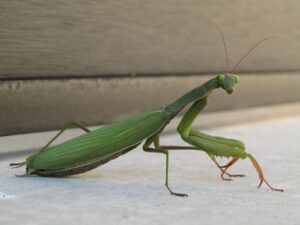
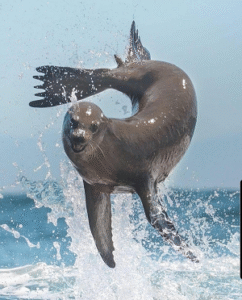
If you could, by some magical wave of your Yoda hand, choose one animal or insect to interview, what would it be?

Image

He just looks like he’s got something on his mind, right?


I can guess which one some of you might choose, like our own Sue Coletta. Crow anyone?


Image


For me, it’d have to be this fellow.  What interesting tales he might tell!


How about the rest of you? Any of these tickle your fancy? Do tell…

Image Image Image


When You’re Happy and You Know It

By Elaine Viets

 Image

What made you happy in the last 24 hours? What about the last three months?

OK, I’ll go first.

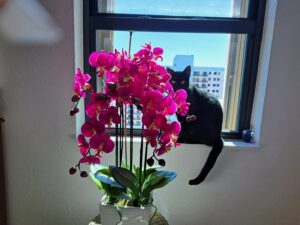
A surprise gift of orchids from a friend. And the silly antics of my cat Vanessa. Both made me happy in the last 24 hours. They’re pictured below.Image

In the last three months, the weekly phone calls from my cousin Lisa made me happy.

These questions are important not only for our well-being, but to understand how  writers create our characters. I read about happiness in a recent article in The Pudding, and if you don’t subscribe to this free newsletter, you’re definitely missing out on happiness.

Writer Alvin Chang’s Pudding article “mapped out 100,000 moments collected as part of a research project on what makes people happy. From sensory pleasure and serendipity to leisure and personal growth, he identified the major themes that emerge when we think about our most cherished moments.”

Here are few that may make you smile, especially the first one:

“My boss was away on business which made my workday very enjoyable and left me with a smile on my face all day.” Female, 36, married, parent

“I went to see my Grandma at the nursing home.” Male, 26, single

“My husband was ignoring me and I laid in bed thinking of funny words with the word ‘sass’ in them to describe him (like Sasquatch) – it amused me greatly.” Female, 26, parentImage

“I got to leave work early on Friday.” Female, 53, single, parent

“I took a day off to enjoy a nice day.” Male, 38, mot a parent

“Enjoyed a Hardboys Peach Country hard cider.” Male, 32, single, not a parent

“I made progress on some household projects.” Female, 22, married, not a parent

“I was able to stay home and work, while my brother-in-law picked up the kids from school by switching his schedule.” Female, 37, married, parent

Image

Scientists used to believe that happiness was U-shaped. “We are happy when we’re young, less happy when we’re middle-aged and then happy again when we’re old.”

Chang mentioned a research article by Arthur Stone that surveyed people between 18 and 85. It said, “Stress and anger steeply declined from the early 20s, worry was elevated through middle age and then declined, and sadness was essentially flat.”

But hold on . . . that U-shape may no longer be true. Another story says, “Pooling Global Minds data across 44 countries, including the United States and the United Kingdom, over the period 2020–2025 we confirm that ill-being is no longer hump-shaped in age but now decreases in age.”

So the middle-age slump is out. The twenties are a rough time. The reason for this is sad: “the deterioration in young people’s mental health both absolutely and relative to older people.”

Once you get through your difficult 20s, your chances of happiness increase.

When Harvard researchers followed people for their entire lives, Alvin Chang wrote, “they found that good relationships were the most important thing for happy, healthy lives.” We need a “meaningful life with a sense of purpose.”

Image

That makes sense. Except social media and smart phones have made us addicted to screens from a young age. “It’s taken a toll on how much time we spend with each other.”

Alvin Chang included a “happy map” with his article. Check it out here. https://pudding.cool/2026/02/happy-map/ he  says it’s “a mirror of the broken world we’ve built, as seen through our most cherished moments.”

What makes your characters happy?Image

Now in paperback: Sex and Death on the Beach, my new Florida beach mystery, is now in paperback. If you read it and like it, you’ll make me happy. https://tinyurl.com/3ut3chuu


Back from Left Coast Crime

Back from Left Coast Crime
Terry Odell

Image

As I mentioned in my last post, Left Coast Crime is a reader conference, where the goal for authors is to make reader connections. There’s very little how to and a lot of this is how I handle (insert panel topic) in my book.

But, before I recap the conference, I want to point out that a gentleman approached me, introduced himself as CR Foster, and said he wanted me to know how much The Kill Zone had helped his writing, and he’d just published his first novel, Dead by Monday. He thanked TKZ, and notably Sue Coletta, who critiqued his first page, in his acknowledgments. Always good to hear that we’re helping writers. image of CR Foster holding his book, Dead by Monday

(If you’re reading this, CR, my husband is enjoying the book.)

And on with my experiences.

I arrived a day early because … travel unpredictability. Actually, a evening and a day early, but I always prefer to have time to settle in before needed to have my brain fully engaged. I took time on that pre-conference day to wander around the hotel and the nearby streets around the Ferry Building. I didn’t bring my camera, just my phone, but I enjoyed taking pictures. If you’d like to take a look, you can find my gallery here.

(Note: someday I’ll learn to take pictures of the conference, but I took very few during the sessions.)

The first panel I was on got off to an interesting start. The moderator’s latest book had released the day before, and things were understandably hectic. She’d already broken one of my moderator “rules” which is not to use the program bio as an introduction to the panelists. Her “reasoning” was that since it was the first day of the conference, attendees wouldn’t have read the program yet.

However, when she got to me (the last one at the table), she was giving information about a book I’d never heard of, calling my writing humorous, at which point I interrupted saying “That’s not me.”

She apologized, and let me introduce myself, which was probably a better marketing ploy. I was now memorable, and I could talk about my two new releases, neither of which was mentioned in my program bio.

Our panel was called “Perils of Small Towns.” Since I don’t write thrillers or anything dark, my small town’s perils are all on the author’s end. Avoiding Cabot Cove/Jessica Fletcher syndrome. Being realistic about crime. (Another pet peeve is why when you say “mystery” everyone inserts “murder” in front of it.) There are other crimes, and in a small town, where everyone probably knows everyone else, they can be just as interesting. Mapleton, my made-up small town is patterned after the one I live in where the entire county has investigated a total of three homicides since 2008: one in 2013 and one in 2011. I’m sure the moderator was frustrated that my answer to many of her “peril-focused” questions was “I don’t deal with that.”

For me, the moderator I actually walked out on was bouncy, peppy, singing, and said, “We’re not going to clap in this panel. We’re going to chant the author’s names as I introduce them.” More than I could take.

My next panel, the one where I was the moderator, wasn’t until the last day, so I was more or less free to choose my panels, mingle, and, as has been pointed out by others here at TKZ, hang out at the bar. Not to meet agents and publishers, but to meet readers.

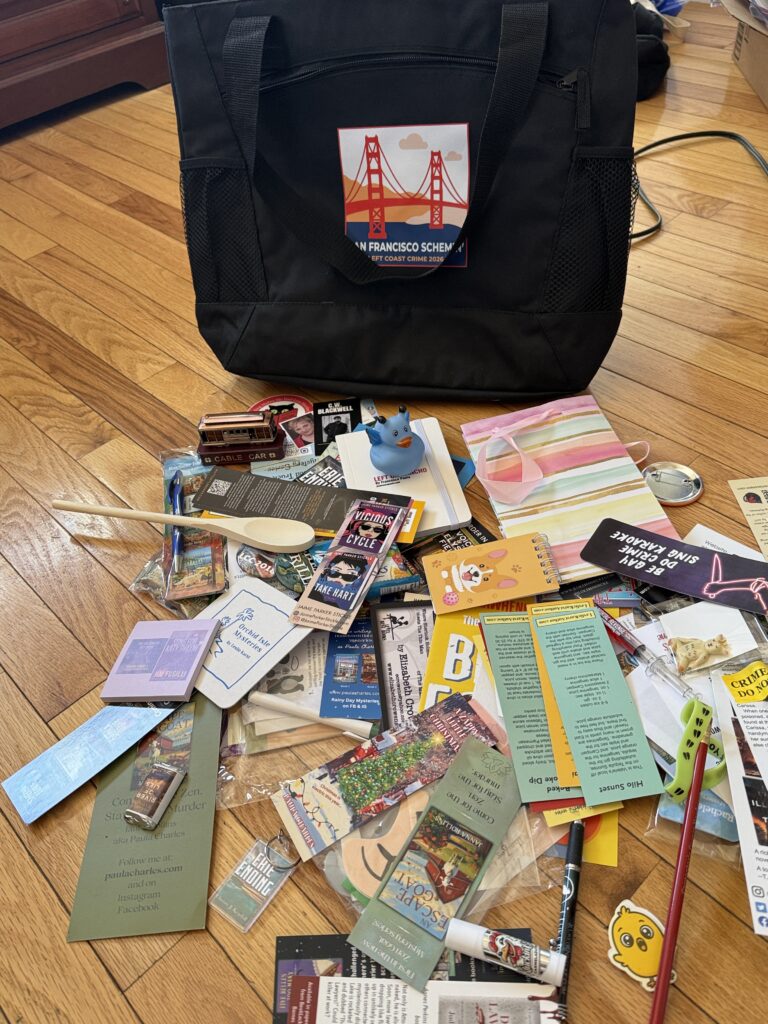
Then there’s the promotional materials table. It’s filled with swag from just about every author in attendance. I talked about good and not so good swag in another post. My offerings were gone before the last day. I brought lip balm (none left; sorry JSB), post-it notes and some copies of my short story collection, Seeing Red. All of those were gone, too, which left room in my suitcase to bring home books (they give away a lot of these) and swag.

Image

The panels I attended included:

  • Rural Settings
  • Knives, Swords, and how to use them
  • Getting the Details Right (lots of tips on things writers get wrong by using television as a reference. Also per DP Lyle, “You can’t kill a drunk.”)
  • Importance of Setting
  • Challenges of Rural Settings (which would have been a better spot for me)
  • Law Enforcement
  • Lawyers, which served as a reminder that the Supreme Court can’t go after cases; they have to be brought to the court.
  • Labels: Cozy, Traditional, Suspense, or Thriller?
  • Liar’s Panel, where author panelists told stories about things that happened to them, and the audience had to choose which one was telling the truth.

“My” panel, Romance, Love, Sex, & Crime was the last panel of the conference. It was Sunday morning, the morning after the awards banquet, and I was pleased that there were more than a dozen people in the room. I followed my own rules, we kept things casual, and based on comments afterward, we did a good job.

Overall takeaways. I still need to work on getting out of my introverted self, but I did manage to meet and mingle at least as much as I retreated to my hotel room.

I like Left Coast Crime. It’s small enough so you don’t feel lost. I’ve already signed up for next year, which will be in Santa Fe—an added perk is that it’s driveable, so I’ll be able to bring more swag, and donate something to the silent auction where the proceeds go to a literacy charity. This year it was the Literacy and Learning Fund, administered by the Friends of the San Francisco Public Library.

Your turn. Any conference tales to share?


Find me at Substack with Writings and Wanderings

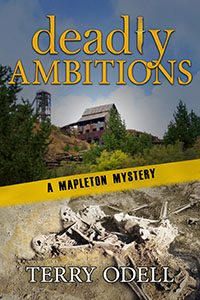
Deadly Ambitions
ImagePeace in Mapleton doesn’t last. Police Chief Gordon Hepler is already juggling a bitter ex-mayoral candidate who refuses to accept election results and a new council member determined to cut police department’s funding.
Meanwhile, Angie’s long-delayed diner remodel uncovers an old journal, sparking her curiosity about the girl who wrote it. But as she digs for answers, is she uncovering more than she bargained for?
Now, Gordon must untangle political maneuvering, personal grudges, and hidden agendas before danger closes in on the people he loves most.
Deadly Ambitions delivers small-town intrigue, political tension, and page-turning suspense rooted in both history and today’s ambitions.


ImageTerry Odell is an award-winning author of Mystery and Romantic Suspense, although she prefers to think of them all as “Mysteries with Relationships.”

Reading and Hearing

Image

OpenStax, CC BY 4.0 <https://creativecommons.org/licenses/by/4.0>, via Wikimedia Commons

by Debbie Burke

We often talk here at TKZ about the importance of reading throughout life.

Reading to young children is well recognized to benefit their early brain development.

Reading instructs us through school. It guides us in our daily lives and careers.

Reading keeps the mind sharp as we age.

I just learned a new reason why reading is important: for hearing.

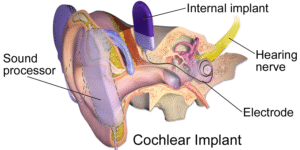
My good friend Dr. Betty Kuffel is my favorite source for medical knowledge. Her husband has profound hearing loss and hearing aids aren’t helping. He will soon have a surgery for a cochlear implant. Betty described the procedure:

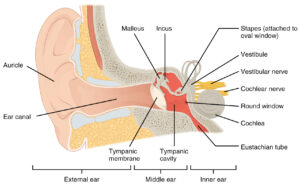
An array of electrodes within a thin wire is threaded through a hole drilled through the outer skull and into the cochlea behind and above the ear. The tiny wire follows inner contours of the cochlea with anatomy resembling a snail shell. It bypasses the damaged area reaching the hearing nerve that carries impulses to the brain. Then the surgeon buzzes out a shallow crater of bone for placement of the magnetized device with a microchip in it. Once secured, the scalp is sutured and after a couple of weeks of healing the device is activated. An external rechargeable sound processor with two microphones is worn behind the ear like a typical hearing aid that connects magnetically to the implant. Amazing technology.

Image

BruceBlaus, CC BY-SA 4.0 <https://creativecommons.org/licenses/by-sa/4.0>, via Wikimedia Commons

However, the implant isn’t plug and play. The brain has to be retrained to use the device. Instead of the normal neural pathways between the ear (which hears sounds) and the brain (which interprets the meaning and appropriate reaction to those sounds), this rewiring makes new connections.

Here’s the interesting part Betty added:

The training consists of reading aloud as the primary trainer. You see the print, read and the brain processes the visual + verbal input.

In this article, audiologist Grace Sturdivant of the University of Mississippi Medical Center explains two crucial connections between hearing and the brain:

One is called Cross-modal Plasticity. Don’t let that term bog you down – it means that when the area of your brain which is purposed for processing sound (the auditory cortex) is not being stimulated adequately (i.e., when hearing loss is present), a well-functioning system like vision will begin to recruit that area to process its own input.

…the second brain change I’ll discuss is Cortical Resource Reallocation. Even in these mild, sloping hearing loss cases, auditory cortex activity is decreased and frontal lobe activity is increased on listening tasks…The frontal and pre-frontal areas are critical for working memory and executive function. When hearing loss is present and you are straining to hearing and understand someone in a challenging environment, your frontal lobe is loaded down with trying to understand what someone is saying in that moment. We call this “effortful listening.” This leaves less ability for that frontal lobe to help you remember what someone was saying after you walk away from the conversation.

In other words, over time as the ear no longer functions as it’s supposed to, the brain also loses those neural transmission pathways.

Sturdivant expands on the health effects:

…People with severe, untreated hearing loss are five times more likely to develop dementia…adults with untreated hearing loss develop cognitive decline 3.2 years sooner than people with normal hearing; or than people with dementia and severe untreated hearing loss have rates of cognitive decline 30-40% faster than dementia patients with normal hearing.

According to this article from Johns Hopkins Medicine:

Getting used to the cochlear implant takes a while. Eventually, the sound quality will change as the brain learns the stimulation patterns that the device provides. Most patients notice improving sound quality during the first three to 12 months.

This article from Alber Hearing Services outlines some steps in auditory rehabilitation:

Listening to these everyday noises and naming them out loud helps your brain connect the new signals from your implant to what they actually are. Watching TV with captions turned on or following along with lyrics while listening to music can also build stronger connections between sound and meaning.

More rehab techniques from Cochlear Implant Help:

Reading and listening to a fully abridged audio book helps the brain to make the connection between the words heard and words seen. By listening and looking at the words the connection can be made. To make this exercise more challenging, remove the visual and focus on the auditory input. This helps build one’s ability to understand what is being stated.

With sound and visual print correlation, the brain adjusts and soon words are clear and
meaningful. Each person is different but over 80% hearing restoration can be accomplished.

However, the National Institutes of Health reports 29-42% of people with implants express some level of regret.

Of course I’m wishing Betty’s husband an excellent outcome with improved function and no regrets.

I have some hearing loss, but the body adapts in amazing ways. Without being conscious of it, I’ve developed a little skill in lip reading.

Also, for about a year, I’ve been turning on closed captioning for TV and online videos. Will this combination of simultaneously reading and listening help keep my brain working? I don’t know.

But I figure it’s worth a try. Can’t hurt, might help.

~~~

TKZers: Do you think reading helps your hearing? Do you read visually (print books or ebooks)? Do you listen to audiobooks? Or both?

Ferdinand Magellan and the Hero’s Journey

Image

“You can never cross the ocean unless you have the courage to lose sight of the shore.” ― Christopher Columbus

* * *

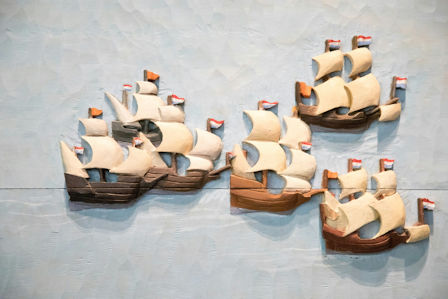
I recently read Over the Edge of the World by Laurence Bergreen. It’s a detailed account of Ferdinand Magellan’s extraordinary expedition that resulted in the first circumnavigation of the Earth. For such an accomplishment, you might expect Magellan’s story to be the quintessential tale of the hero. Let’s see how he did:

* * *

In the typical hero’s journey, the main character is reluctant to accept the call to adventure, but Magellan didn’t fit that model. He wanted to lead an expedition. The goal wasn’t necessarily to sail all the way around the world, but to secure fame and fortune by finding a route to the Spice Islands in Indonesia by sailing west—something earlier explorers had failed to do.

Back then, spices were to Europeans what oil is to the world today, i.e., very valuable. So Magellan, being a reliable seaman with strong credentials, felt his plan was something the nautical powers-that-be should be willing to finance.

Those maritime powers were Spain and Portugal, and they ruled the exploration of the world. Being Portuguese, Magellan pitched his plan to King Manuel of Portugal, who repeatedly refused to fund the journey. A lesser man may have given up, but Magellan instead turned to King Charles of Spain who agreed to bankroll the expedition. After all, if a quick route could be found to the Spice Islands in Indonesia, that would mean valuable cloves would line the king’s pantry and silver coins would jingle in his pocketbook.

Magellan at last had his chance to secure his place in history, following in the watery footsteps of his personal hero, Christopher Columbus.

So far, so good.

* * *

In September 1519, Magellan set sail with five ships, 260 seamen, a chronicler named Pigafetta, and a woefully incorrect map of the world.

Previously, no one had found a waterway from the Atlantic Ocean around or through the large land mass we call the Americas, but Magellan had a plan. The map he used showed a strait, a small body of water that sliced through the southern part of the Americas. Magellan went to sea to seek that strait and find a thruway to the Pacific, and he proved himself a true hero in this part of the journey. He led the expedition through a stormy crossing of the Atlantic, suppressed (albeit brutally) a mutiny, identified the mouth of the strait, and managed to continue with three ships after one was lost to a storm and another was taken over by mutineers and turned back to Spain.

By the time the weather was good enough to enter the strait, Magellan, ever the disciplined seaman, carried on and led his group through the treacherous waterway. This was no small feat. The strait was so circuitous, with winding inlets that went nowhere and weather that worked against the expedition, that some historians call Magellan’s crossing of the strait the greatest navigational feat in history.

To put it in perspective, the waterway that came to be known the Strait of Magellan is 350 miles long, a shorter distance than that from Los Angeles to San Francisco.  It took the expedition over a month to maneuver through it. We can only imagine their delight when one morning they sailed out into a vast ocean—the first time a European vessel had crossed from the Atlantic Ocean to the new body of water Magellan named the “Pacific Ocean.”

So how was Magellan doing on the hero scale? He gets high marks for Leadership, Discipline, Endurance, and Courage. But the journey wasn’t over yet.

* * * 

Using his inaccurate charts, Magellan expected it would take just a few days to cross this new ocean to the Spice Islands. It took over three months until they sighted land.

Up until then, Magellan had shown himself to be up to the task of the hero, but once the expedition arrived in the Philippines, his ability to deal with the nuances of other cultures proved to be far weaker than his skill as a seaman. When a tribal king complained about a possible fight with another tribe, Magellan offered to punish the second king by warring with them. In the skirmish that followed, Magellan and several of his crew were killed.

Without Magellan, leadership was lacking, and progress to the Spice Islands was slow. In the end, only one ship managed to acquire a load of spices and complete the circumnavigation. The Victoria sailed into Seville harbor in September 1522, almost a full three years since it had left. Of the 260 sailors in the original expedition, only 18 were aboard.

Following the magnificent accomplishment of the first circumnavigation of the Earth, other expeditions were sent out to retrace Magellan’s route, but they all failed. It would be fifty-eight years before another explorer, Sir Francis Drake, would complete a circumnavigation of the world.

* * *

Authors will appreciate that one major accomplishment of the expedition was the work of the chronicler, Pigafetta, who survived the journey to publish his personal narrative, one version of which resides in the Library of Yale University. Of Pigafetta’s work, Bergreen notes

“…it is a compilation of events, illustrations, translations of foreign tongues, prayers, descriptions, epiphanies, and bawdy asides… The reader of Pigafetta’s chronicle hears his voice, alternately bold, astonished, devastated, fascinated, and in the end, amazed to be alive in the cruelly beautiful world of his time.”

Although his original goal was to find a route to the Spice Islands, perhaps Magellan’s most heroic accomplishment was to have single-handedly changed the map of the entire world. Bergreen writes

“Although no continent or country was named after him, Magellan’s expedition stands as the greatest sea voyage in the Age of Discovery.”

Maybe no countries were named for him, but Magellan did have a couple of impressive remembrances. The Strait of Magellan was named in his honor a few years after the expedition, and two galaxies orbiting the Milky Way that are visible from the Southern Hemisphere were named the Magellanic Clouds. Not bad to have your name enshrined in the heavens.

* * * 

So TKZers: What do you think about Magellan? Hero? Flawed meddler in someone else’s quarrel? Cruel task master? Or maybe a combination of these qualities. How do you construct the heroes of your stories? Do you have a Magellan-like hero?

* * * 


Image

Heroes come in many sizes and shapes, and the lure of treasure is bound to propel them into adventure.

Join Reen & Joanie as they tackle a treasure hunt with determination and a little help from their friends. Can they fend off the evil Alicia, solve the strange puzzles, and bask in the glory of success? Click on the image to go to the Amazon detail page.