My current blogs are now posted on my website here: http://www.lisajeydavis.com/blog. See you there!
My personal blog has moved!
Reply

My current blogs are now posted on my website here: http://www.lisajeydavis.com/blog. See you there!
Ahhh — the review of a review. I LOVE this! Thank you @seumasgallacher!
… I could never comprehend the urge that my English Literature schoolteachers possessed in constantly imploring we poor numbskull ten-and eleven-year old children to ‘understand’ what the great historic writers were ‘trying to say to us’… in Billy Shakespeare’s King Dickie III, for example, the monarch squeals out , ‘…a horse, a horse, my kingdom for a horse…’… now , ‘Master ten-year old Gallacher’, asks the professor, ‘ what do ye think Shakespeare’s’s REALLY trying to say to us?…’ … is he kidding me, or what?… ‘ … please Sir, it looks like he needs some alternative transport to get his arse to f*ck out of there before he cops a belt in the mouth…’… apparently that particular Govan-bred response was not high on the dominie’s expected deliberations… a smack round the ear was my usual reward for such enlightend ‘interpretation’ of the classical authors and…
View original post 248 more words
My uber connected and talented author friend Elise Stokes has joined a new group of MG authors, called Emblazoners.
Book Bloggers! Here’s an opportunity to share information about a brand new site and maybe win some prizes along the way!
Emblazon is a blog written by a collection of indie and traditionally published authors who care about producing high quality stories for kids. They have a particular focus on ages 11 to 14 (Tweens). The purpose of Emblazon is to celebrate tween literature. They’d like to draw attention to this fabulous genre, interact with other enthusiasts whether child or adult, and encourage new writers.
Emblazon launches its first post on July 10. Please consider helping them spread the word by mentioning them on your blog. You may cut and paste from this post and use the attached logo if you wish. Then tweet your Emblazoners post to @CassidyJonesAdv and include the hashtag #Emblazoners on July 10th (Note: You will not be entered into the drawing without your blog post tweet that includes @CassidyJonesAdv and #Emblazoners). But do NOT tweet it BEFORE JULY 10. @CassidyJonesAdv will confirm you’ve been entered into the drawing by “favoriting” your tweet. If your tweet wasn’t “favorited,” tweet it again. (All bloggers who participate will be entered into their $100 Amazon gift card drawing that will be held the following day).
You can also treat your readers to their upcoming Sizzling Freebies bash that will be hosted on Emblazon on August 1 during which a great selection of ebooks will be free for one day only.
Join them in kick-starting this fabulous new adventure!
Reposted from Albuquerque Journal

Lisa Jey Davis , of Santa Monica, CA, has had a double mastectomy, and poses for a portrait Thursday May 16, 2013. (Pat Vasquez-Cunningham/Journal)
A few days after Angelina Jolie announced she had undergone a double mastectomy to beat the odds of getting breast cancer, Albuquerque native Lisa Jey Davis shared her own version of a very similar story.
And she has no regrets.
Davis, 47, a 1983 graduate of Del Norte High School who now runs a publicity company from her Santa Monica, Calif., apartment, was in town this week to cheer on her son, who will graduate from Manzano High School on Saturday. While here, she wanted to spread a message: For those who have a gene mutation that raises their risk for cancer, getting a double mastectomy is a viable choice.
Davis, the 10th of 11 siblings who grew up near Lomas and Pennsylvania, described the journey that led to her decision. It was connected to her older sister Mimi, the sixth born. Mimi fought ovarian cancer for seven years. There was chemo, there was pain.
“Wretched,” Davis recalled. Mimi Sherwood Larimore died in August 2010.
So Davis got herself tested genetically in 2011. The results: She has the BRCA2 gene mutation. That gave her close to a four-out-of-five shot of someday getting breast cancer, but having her breasts removed would plunge the risk down to the single digits, below that of the general population.
She could wait and see if she was diagnosed with cancer in 10, 15, 20 or 30 years, even though she exercises regularly. Practices yoga. Eats healthy foods. “I’m the first to go after the holistic approach,” she said.
Or, she could have a prophylactic double mastectomy. Near the time she got tested, she’d been contemplating some breast work anyway. After having breast implants in 2001, “I was already going in for breast reconstruction surgery,” she said. “So it was a no-brainer to have a double mastectomy.”
Having the knowledge of her genetics, she was in a position to make a self-empowering decision.
“My thought is, you’ve only got so many road signs in life … for me, this was the correct path,” she said. “Although surgery is a very radical form of treatment, it’s also, I think, a very responsible thing to do.”
Davis, who blogs weekly as Ms. Cheevious (www.mscheevious.com), discussed her options with her family and loved ones. The divorced mother of two sons said her older one had reservations, but he came around with time and more information. “No one tried to persuade me not to have it.”
But some people, she knows, learn they have the gene mutation and take a wait-and-see approach, being open to more traditional treatment down the road if necessary.
“That’s a choice too, and that’s OK,” she said. “I’m not saying this is for everyone … I would be there standing behind any one of my sisters or my best friends,” she said, if they chose to be more conservative.
That wasn’t her choice, and it wasn’t Jolie’s, either. The academy-award winning actress with a BRCA1 gene mutation wrote in a recent New York Times op-ed piece that after prophylactic double mastectomy surgeries between February and April, followed by the wearing of tubes and drains to allow trapped fluids to escape, her children would probably never have to worry about losing her to breast cancer.
Once Davis made her decision, the procedure began at 6 a.m. on Dec. 5, 2011, in a Los Angeles surgery center and took five to six hours. Her surgeon built a natural wall along which her breasts would rest, using a material the body accepts. Her old implants were taken out along with her breast tissue, and a new pair of implants was put in – all in one surgical process covered by her insurance.
Down the road there would be other procedures to naturalize the appearance, but after the initial surgery, she said, she went to a hotel-like recovery center where they fed her filet mignon. She was feeling groggy, but OK. She was swollen and used the drainage tubes as Jolie did. She didn’t have a lot of pain.
A month later, in January 2012, Davis had her ovaries removed, a procedure Jolie has expressed the intention to do as well. Davis said she would warn her that procedure was more painful.
Now, looking back on her choices, she commends herself for making them because they give her peace of mind.
“There’s still that very, very remote risk” of someday developing cancer despite the surgery. Should that happen, she speculated, even after living holistically and having the surgeries, she would just have to accept it.
“If I did all I could,” she said, “I guess I was meant to have it.”
Living for NOW. These are words and a sentiment that capture the essence of our cultural vernacular. But how easy are these words to embody? Not very. Living for now and letting go of all attachments that keep us tethered to the past or wishing for the future must be a life-goal and a focused discipline. These are words that resonate with me. I see their value and hope to excel at executing them one day. Live for Now… and Dr. Luann Robinson Hull expounds on it so well… Read on…
“The only authentic responsibility is toward your own potential, your own intelligence and awareness-and to act accordingly… if you act according to your past, that is reaction… Response is moment to moment. It has nothing to do with memory, it has something to do with your awareness. You see the situation with clarity; you are clean, silent, serene. Out of this serenity, you act spontaneously. It is not reaction, it is action. You have never done it before. And the beauty of it is that it will suite the situation.” (Osho, 2003, p.32).
How can we give up our conditioned worries, fears and insecurities, while allowing ourselves to be with whatever is happening now? Staying focused more and more on this moment, instead of fretting over the past or worrying about the future, you will begin to notice some significant shifting in…
View original post 427 more words
What an encouragement to know that so many of the greatest authors around were rejected — sometimes many times. It merely serves to prove my video blog’s point: “NEVER GIVE UP!” On the other hand, one of the reasons I’ve stated as why I never wanted to truly pursue acting in the land of Entertainment where I live, is because of the horrible rejection factor. I can’t take it.
I suppose I’ve just traded one pitfall for another. Ah well. C’est La Vie! I am WRITING!
This is a reblog of a post I found on http://cristianmihai.net/2013/04/29/famous-rejection-letters-2/ via my friend (and fellow author) on Facebook, Vickie McKeehan.

For any aspiring writer, a rejection letter, regardless of the provenience of said letter, is one of the most dreaded of objects. In this line of work getting rejected is considered a sort of literary murder – people are knowingly destroying something you’ve spent time on, and a lot of it. But the thing is everyone got rejected, more or less. I can think of very few instances when writers found publishers/agents from the first try. Or the second, or the tenth.
Editors/agents are quite human. So they make mistakes. But it’s not just about that, like one publisher wrote Frank Herbert while rejecting Dune ( I might be making the mistake of the decade, but …) It’s more along the line of literary preferences. I know publishing is an industry, and I know that it’s all about business decisions, but editors/agents make those decision on account of their own ideas of how a book should look or what it should do, and they have to be able to sell it. It’s like giving your novel to a lot of random strangers. If you’re unlucky, you might even get a long streak of people who won’t like your story.
Agatha Christie got 500 rejections, and then went on to sell more books than anyone else on the planet, with the exception of Shakespeare.
J.K. Rowling got 12 rejections, before making a billion dollars out of Harry Potter, and breaking all sorts of ridiculous records in terms of book sales.
Dr. Seuss got a rejection letter than went like this, “Too different from other juveniles on the market to warrant its selling.” Of course, he didn’t give up.
“I’m sorry Mr. Kipling, but you just don’t know how to use the English language.” – this is how the youngest writer to ever receive the Nobel Prize for Literature was rejected.
“We feel that we don’t know the central character well enough.”- this is what J.D. Salinger got for The Catcher in the Rye, which is probably famous just because the narrator has such a clear and interesting voice.
“It would be extremely rotten taste, to say nothing of being horribly cruel, should we want to publish it.” – this one was addressed to Hemingway.
William Golding received something like this, “An absurd and uninteresting fantasy which was rubbish and dull.” Of course, he didn’t give up, and his masterpiece, The Lord Of The Flies sold 15 million copies.
It took Gertrude Stein 20 years before getting her first poem published.
As I said earlier, Frank Herbert got rejected 20 times, John Grisham got rejected 25 times, even the very prolific/rich/famous Stephen King got a dozen rejection letters for Carrie.
“Too radical of a departure from traditional juvenile literature.” – The Wizard of Oz
Even notorious bestsellers, like Twilight ( got rejected 14 times) or The Help (60 rejection letters) stand as proof to the fact that rejection is a part of a writer’s life.
“An endless nightmare. I think the verdict would be ‘Oh don’t read that horrid book.” – War Of The Worlds, H.G. Wells.
“Our united opinion is entirely against the book. It is very long, and rather old-fashioned.” – Moby Dick.
Even James Joyce, who some consider to be the supreme literary genius of the past century received 22 rejections for The Dubliners, before it finally got published. He sold three hundred books in the first year, out of which 120 were bought by the author himself.
“An absurd story as romance, melodrama or record of New York high life.”- rejection letter for The Great Gatsby
Alex Haley wrote for eight years before selling his first short story. Eventually he went on to win the Pulitzer. Much like Normal Mailer, who got his fair share of rejection letters before winning the Pulitzer also. Twice.
Jack Kerouac, George Orwell, Mario Puzo, all of them got their fair share of rejections.
To end this post on a positive note, I believe that the only thing a writer can do is write. And he has to persevere at this task. If he starts the day thinking about getting published, about landing that six figure deal, or just finding an agent, if he writes with the thought of having to write something brilliant, because anything short of brilliant won’t impress the agents, he’s just putting unnecessary pressure on his shoulders.
 Recently, I had what might be considered an emotionally challenged episode. I guarantee if I had access to a razor, I would have shaved my legs. There’s nothing funny about losing your mind. Which is why I have to find humor in it, so I can keep it. It started with an MRI gone awry at the tail end of a year of spine surgeries with four children and a husband on-location. Just not on my location. It was the spinal straw.
I laid on the MRI table as the tech prepped me for my last-ditch effort to diagnose the origin of my left sciatic nerve debacle. An issue that worsened after my most recent artificial disc replacement in my L5-S1. I can not bear weight on my left leg without calling for Jesus. So far he hasn’t picked up.
My left foot lilted inward to my right, like a boy left hanging for a kiss. My right foot sat straight up – disinterested. She was not that kind of foot.
The technician noticed the muscle atrophy in my left foot and asked if I would mind if she taped it to my right one to hold my legs in the proper position for them to obtain a clear view of the nerve from my lumbar down to my foot. It’s a long nerve. The procedure would take an hour. I was to stay completely still. With my legs straight.
The tape screeched and snapped around my feet. A sound usually reserved for wrapping presents. My left foot was happy. He got the girl.
Then it was time to position my hands. The tech said I could do one of two things. Hold them above and behind my head, or fold them over my chest. I opted to place them over my chest. I figured I’d practice for my coffin. Cuz this year was killing me. Then my right hand began to slip, my elbow hit the cold metal of the table beyond the cushion. My right hand has similar issues as my left foot. She’s tired. If she were a prostitute, she’d get paid just to lay there. My pinky and ring finger used to at least tingle with aggravated numbness. But now they’re over it. Done performing, they have retired into my palm when at rest. They come out when I make them, but I’m tired too.
I asked the tech if she could tape my hands like she did my feet, accepted the sleeping mask, put in the ear plugs in, held the panic button, and took a breath. Breathing was allowed.
I then asked for a pillow to place under my left knee. This was usually a non-negotiable item for me. In order for my lower spine to be at all comfortable, I need a pillow or leg-riser when laying on my back. She couldn’t give me one. It would have been easier to get a Margherita than a pillow. The leg needed to be straight. And flat.
The tech left the room and entered her cockpit. Her voice came over the speaker. It was time to go deep. My spine and legs were straight as a board. I was ready. The slab moved my body into the one-hour time capsule.
I was at least grateful for the eye mask. If you are at all claustrophobic, MRI’s will send you to the moon. The first time I had an MRI, it was for my neck. They placed me in a Hannibal Lector-type mask. When I entered the tube, I made the great mistake of opening my eyes. For the first time in my life, I understood the power that the mind has over emotions. I realized why they called it the ‘panic button’. In a matter of seconds, my eyes saw the blurred edges of the grate over my face morph with the roof of the MRI just inches above the grate. My breath was magnified, As far as my senses were concerned, I was being buried alive. My heart raced, palms sweat, mouth dried, and fear surged through my body. All logic was gone. I squeezed the pain button. The tech extracted me from the coffin and said, “Oh yes, I forgot to mention, it’s probably a good idea if you don’t look up.” I was hyperventilating. I just experienced my first anxiety attack triggered by an episode of Claustrophobia. Fortunately, the tech was patient with me. I was not her first freak-out. (Although I did pass her on the way out smoking a cigaret.) She gave me a facecloth and folded it over my eyes. I re-entered the tube. I thought soothing thoughts. Like MRI techs dressed in Lady Gaga’s meat dress, hanging over a lion’s den. Like the ones from Siegfried and Roy. That ate either Siegfried or Roy. I could never keep them straight, perhaps because they’re gay.
I now had a coping tool for the MRI. It might be called an “open” MRI, but it doesn’t matter to a claustrophobe if you can’t see the open part at the crown of your head. I learned to dress so I never had to change into the assless-chaps, I mean medical gown. As long as you do not wear metal, you’re good to go. Nothing with zippers, snaps or hooks. Remove necklaces and bracelets. Rings and earrings are usually ok, unless your hand is near your pelvis at which time you should probably wear the assless chaps.
So, considering my vast experience this past year with multiple MRI’s, I assumed this last MRI would be a walk in the park. Until I choked.
My arms were taped over my heart. My feet were in bondage. My legs were perfectly straight. About twenty minutes into the scan, the pain began to light up my lower spine. It felt like a knife, twisting into bone right where the inflammation of my sciatic nerve begins.
There are few words to explain this type of back pain. Which is why God created the F-word. My eyes welled with tears. One by one they trickled down my cheeks, whetting my eye mask until river inlets followed the frame of my hairline into my ear plugs.
If I pressed the panic button, it would mean a longer time in the tube. There was no way out of this one. To calm myself, I imagined a white light traveling through my body protecting me from the invisible knife-wielding pain holding court at my L5-S1. After the hour, I was spent. My mascara coiled beneath my Forever Shimmer highlight blush. I don’t know why I continue to put makeup on prior to medical tests or procedures. Maybe it’s my war paint.
I gathered what composure I had left and entered the hallway to the waiting room. My head fell onto the shoulder of my mom’s neatly ironed white jacket. It had been almost a year since my journey of spine surgeries, procedures, injections, diagnosis, torture began. My mother held me. My whimper gradually evolving into a guttural moan. Waves of feelings ached into a silent cry; the kind of cry when your heart hurts so much that God decided its tears should never be heard. I slumped deeper into my mother’s chest, crumbling, a remnant of what I used to be. The year had finally caught up with me. The months of recovery from multiple surgeries only to find out there is more to be done. I finally had a taste of what some of the wounded I work with have gone through. This was my own kind of war. I just didn’t wear camo, go to the Middle East, get shot at, fly helicopters,step on an IED, miss the birth of my first child ~ that would be especially odd ~come to think of it, I know little about the pain our wounded go through. But I do know pain. And I see how people might stare at that ‘something’ about us that makes their subconscious mind chime in with “Not normal…” I see the doors with the handicapped sign that I cannot open. I enter a public bathroom when the handicapped stall is taken by a child who just didn’t know. I notice that well-meaning people will stand when we talk at a party, instead of sitting at my level, leaving my neck strained.
The inability to sit on a park bench, get my kids from school, walk with my husband, love him like I was healed. The fact my car needs a lift for my scooter, there are two wheelchairs in our garage, I have a handicapped placard, our bedroom has a fridge and coffee maker and a leg wedge, a cane and crutches. I am forty-three.
I thought about the MRI. How I held my hands across my heart. How it felt like a coffin. How I felt a part of me die that day. So many times I had listened to one of our troops explain how they felt like a part of them was missing after their incident. I realized I was listening, but I wasn’t understanding. They spoke of having to find their ‘new normal’. Now I had to find mine. But how.
A nurse brought me a wheelchair and helped us to the car.
I buckled my belt and the feelings built. The heaves of tears and then without warning or any control on my part, a guttural scream erupted from the depths of my soul. The scream of a mother who just lost her child. I had lost myself. It hit me all at once that my world as I knew it was over. The crying increased. My mother’s tears fell into mine as she held onto my arm. We were almost home. My body writhed. Waves, oceans thrust thru my chest, a vice churning a year of fossilized pain and denial into a kaleidoscope of agony.
Mom pulled into my driveway. I could not move. My arms and legs were lead. Every ounce of energy was going up into breaking down. It hit me that I was having a breakdown.
Mom stood outside my passenger door. Helplessly. She kneeled on the cement. Her hand on my knee. Her fingers wiping my tears as they fell. For the first time in our life, we didn’t care what the neighbors might think. I had earned this right to break all social rules. I could not look in her eyes for fear that I would see her pain and hear her wondering: If she could just get me to bed. If she could just rub my back. If she could just make it all go away. But this was too big for her to handle alone. It was a helplessness only God could touch.
Mom guided me into the house and to the stairs. My daily Everest. My tears fell on each step. My dog by my side, my shadow, refusing to take the lead. I crawled onto my bed. The sheets were cool and familiar. I could put pillows between my leg or a wedge underneath. My daughter’s stuffed animal from the night before stared at me. I wanted my children. I wanted my husband home. I wanted I wanted I wanted. I curled sideways into the center of the bed, pulling the sheets and bedspread around me as I curled into a fetal position. My fingers anchored into the pillows, sealing them around my face. I was morning my own death.
I felt sad, angry, guilty that my condition had affected the lives of my family and everyone around me.
I pulled tissue after tissue. My mother held her phone close to her ear, she was using a lifeline. She called my doctor who wasn’t there.
It wouldn’t stop. I could not control my tears. Over and over I said ” I feel like I’ve died.” And I did. I felt exactly like I had died. I now knew what that feeling was. And it scared me. It was as though God allowed me to venture to the edge of sanity because he knew I would return.
The waves became smoother. My mind slowed. I passed out for almost five hours.
My breakdown that day taught me how emotions can take over due to pressure whether it’s physical or psychological. I had both. Breaking down was the best things I have ever done, because it is the most human I have ever felt. It was the lowest I have ever been, and one of the most spiritual experiences of my life. Without it, I would never know how much the heart can take before it needs to release. How important it is to realize that being different than you once were can possibly be the greatest blessing of your life.
I hope to connect with our wounded more deeply than before. I will see people in chronic pain and wish I could take it away. I understand how powerful the mind can be, and imagine what it could do if I used it as a tool in my healing. My shadow, Reggie, is now registered with the US Service Dog Registry as a Therapy Dog. He can now bring as much joy to others as he brings to me. Even on an airplane.
Ironically, the following day was my Cognitive Behavioral Assessment with my insurance company’s psychiatrist to assure I was of sound mind so they could approve the implantation of the Electro Spinal Cord Stimulator Implant. I passed with flying colors. Timing is everything.
I don’t know what my new normal will be; If it will include a cane, a chair, a shoulder filled with tears. But I do know that whatever it is, it will be mine to shape and know that whatever it looks like, it will be beautiful, because it is above all else touched by the hand of God, as real as life could possibly be. And for that, I am forever grateful.
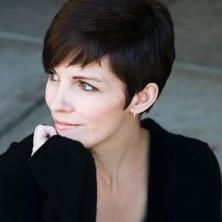 Micaela Bensko is a photographer and blogger whose work has been seen in national publications such as Conde Naste as well as on Martha Stuart Living. She has been featured as a leader in her field by Professional Photographer Magazine. Bensko is VP of Rebuilding America’s Warriors, providing free reconstructive surgery to our troops returning from war. She and her family currently live between Los Angeles and Nashville as her husband is Production Supervisor on the show “Nashville” on ABC. She also has a very short dog named Reggie.
I love my family. Those who rub me the wrong way, those who don’t “get it”, and even those who embarrass me. They’re my blood, and I’m lucky to have them. Think about that — and enjoy this post!
My Take
DiVoran Lite
Our son and daughter-in-law are empty nesters, so we all make an effort to get together with the grandchildren several times a year. Since our granddaughter and her young man are theater majors, a show is our favorite place to go. We have supper before or after of course.
Yesterday we parked four cars in the lot at the Bob Carr Auditorium in Orlando because we were heading out in different directions afterwards. We walked the mile to Church Street for supper in a bitterly cold wind. We knew it was going to be cold, but none of us believed it could ever be that cold. That’s the way we are in Florida, cold takes us by surprise. No one was truly dressed for it.
After supper at the restaurant, we decided to take the free bus back to the theater so we walked to…
View original post 275 more words
How many of us will read or watch something like this, and be inspired to ACT? That is my desire, that things I share and post inspire you and others to ACTION. Enjoy this post.
I discovered TEDxTeen last year and posted several of the talks from it on this blog, not only because the young people who gave those talks had done extraordinary things, but because by seeing them, they might inspire someone else watching to do extraordinary things themselves. I eagerly awaited this year’s edition of TEDxTeen so that I could see more outstanding young people and the ideas they had, and share them with you.
The Audacity of whY was this year’s theme. Too many things in life we take for granted and it takes a child’s curiosity and innocence to ask: why? Not only questions like, “Why is the sky blue?” but also things like, “Why do some people not have enough to eat?” or “Why do people get sick?” As adults, we often stop asking asking these types of questions, but it is those very questions which can lead to…
View original post 290 more words


 Lisa Jey Davis