
Well it’s been a crazy year for weather so far. We began the month thoroughly in winter and we are in the midst of Spring happening now. In between there has been extreme thunderstorms, threats of tornados, and 80 plus degree days. So I will share our blooms but bear in mind that nothing normal is going on in Maryland for this GBBD.
Though I could easily begin with the daffodils and other outside bulbs what is particularly striking is the Clivia which is having an all mass of blooms.

Clivia in full bloom
Many other good flowers are in the house at the moment.

Hellebores in the house

Daffodil ‘Jack Snipe’ on the dining room table.
Two other imports from the greenhouse are particularly striking.

Freesia

Sparaxis
In the greenhouse I have one of the exotics that you could never grow outside here.

Ferraria divaricata
In the greenhouse there is also a very nice Scilla peruviana coming into bloom.

Scilla peruviana
I have a couple of these Scilla planted in the ground but they only rarely flower in our climate. Other outdoor plants include the Edgeworthia at the front of the yard.

Edgeworthia at the edge of our property
Another item up front is the flowering Apricot, first of our fruit trees to bloom.

Prunus mume ‘Matsubara Red’
One of the flowers I like most at this time of year are Hepatica.

Hepatica nobilis Pink
They are hardy enough that I have some planted in the woods as well.

Hepatica nobilis in the woods
Nearby to the Hepatica in the yard is a particular Jeffersonia dubia just coming into bloom.

Jeffersonia dubia ‘Dark Centers’
One of my discoveries this year is that I had misnamed this plant when I put it in years ago and called it ‘Dark Eyes’. What I realized is that if you search for Jeffersonia dubia ‘Dark Eyes’ you will only find references to my citings on MacGardens and not to the original plant from Garden Vision Epimediums where I bought it.
Another plant with a little story to it is the planting of Scilla siberica ‘Alba’ in the forest. I planted a number of these bulbs next to the forest path years ago and the bulbs slowly moved themselves from the forest into the pathway where they were apparently much happier.

Scilla siberica ‘Alba’
Also in the woods for years now are a couple of patches of small Daffodils that are apparently quite happy being just visible from the path.

Daffodil ‘Jack Snipe’ in the woods
One of the things I relish about planting in the woods is that there is little upkeep. Either the plants succeed and enjoy their space or they don’t. A new planting for the woods are three large bulbous plants that I imported this year from Japan

Cardiocrinum cordatum var. glehnii
The large green leaves are already quite striking.
Not only in the woods but everywhere on our property we have Glory of the Snow. It grows abundantly and is absolutely lovely in flower.

Glory of the Snow (Chionodoxa forbesii)
Another vigorous grower for us is the same Primula that is a wildflower in England.

Primula vulgaris
I am often surprised that these are not more commonly grown in the U.S.
Of course Hellebores are abundant for us right now. They are happy in the woods and the yard. This is one of my favorites.

Helleborus x hybridus ‘Cotton Candy’
One item to share is a very unusual Fritillaria. Most Fritillaria do not share this flat open blossom.

Fritillaria stenanthera
And let me close with a final look at the Adonis which are reaching the end of their blooming cycle. What a joy they are!

Adonis amurensis ‘Fukujukai’
Garden Bloggers Bloom Day February 2026

Backyard on return home
Well we arrived home from California vacation on February 13th and found the remains of three weeks of icy weather in Maryland. So this Garden Blogger’s Bloom Day has only limited flowers to share. I suppose I should be grateful that the snow provided insulation for the plants during some of the coldest weather Maryland has had in years. The snowdrops were visible in the grass.

Galanthus nivalis in the grass
There were just a few bare patches of soil showing up. And in one of them the Adonis were demonstrating why you should plant Adonis.

Adonis in the early morning
And then when the sun came fully out

Adonis amurensis ‘Fukujukai’
The Adonis have long been one of my favorite flowers and over the next few weeks some of the other varieties will showing up after the snow melts.
I can also see some color on the Witch Hazels but they are behind their normal performance at this time of year.

Witch Hazel ‘Diane’

Witch hazel (Hamamelis mollis)
Otherwise we need to go into the greenhouse to enjoy the flowers. The greenhouse survived the cold temperatures quite well and several of the flowers will come into the house.

Geum ‘Pink Frills’

Lewisia ‘Little Raspberry’

Nerine ‘Masonorium’

Cyrtanthus breviflorus

Cyrthanus hybrid

Veltheimia

Veltheimia flower
I think a lot of flowering will be evident in the next few weeks as the snow melts. In particular the daffodils should be ready to go from the buds showing now to full open flowers…
I should mention in closing that we had a great time with flowers on the west coast with visits to Huntington and the UCR Botanical Garden. In particular I will share a short video of our visit to the Ventura Botanical Garden

Short walk in Ventura Botanical Garden
Garden Bloggers Bloom Day January 2026

Camellia japonica
Well, for this GBBD it’s going down to 18 degrees tonight but this Camellia japonica doesn’t seem to mind. We have a fair number of Camellias but this particular Camellia has two parts, one which blooms early and the other half comes in the normal Spring blooming for Camellia japonicas. Here’s another view of the same plant.

Camellia japonica blooming early
Most of the other japonicas have lots of buds but no blooms as in this example.

Camellia japonica
It’s hard not to want to plant more Camellias since they have such an extensive blooming season and look good even when they are not in bloom. Here’s the last flower on the fall blooming Camellia sansanqua.

Camellia sasanqua
And then there is the very lovely little hybrid Camellia ‘Yume’ which manages to flower extensively across the late Fall to early Spring.

Camellia ‘Yume’
Other than the Camellias, flowering is still pretty limited. We are seeing the first snowdrops appearing in multiple places including the lawn.

Galanthus elwesii in the lawn
And I can now see the first flower buds on the Cyclamen Coum.

Cyclamen coum first bud
Otherwise my morning garden walk is more focused on the various ways that green contributes to the garden. Here’s the Cyclamen hederifolium for example.

Cyclamen hederifolium
I find the winter is much more tolerable when there is lots interesting greenery. Here are some other green points.

Japanese Holly Fern (Cyrtomium falcatum)

Mahonia ‘Soft Caress’

Mahonia japonica

One of many Hellebores in the woods

One of many Epimediums in the woods
I also have been tracking the Pussy Willow on the hillside as this is the first year we’ve had buds.

Pussy Willow
Of course for every winter’s day my real focus is on the Adonis and wondering when they will first show up. Here is their status.

Adonis ‘Chichibu Beni’

Adonis ‘Fukujukai’
Lastly let me note that the greenhouse has been a constant joy. Here is one of the current flowerings.

Freesia fucata
Garden Blogger’s Bloom Day December 2025

Our winter gardens
Well we went from buds creeping into the yard to a snowfall yesterday and super cold temperatures for this GBBD. It went down to 15 degrees last night. Despite the cold I thought it was worth noting that one of the Camellias seems to have cold resilience built in as the flowers are still showing on the Camellia ‘Yume’.

Camellia ‘Yume’
All the other Camellias have lost their flowers or are patiently waiting for Spring.

Camellia japonica (this one has had a few early blooms already)
I did notice that the flower buds on the Mahonia in the forest are still there, though whether they will actually open is a matter of question.

Mahonia in the forest
Otherwise I thought it was worth noting that, like the Mahonia, some plants are just as noteworthy for there beautiful green leaves.

Cyclamen hederifolium
And there are a number of perennial plants putting their early shoots out of the ground.

Adonis ‘Chichibu Beni’
For flowers we turn to the greenhouse which is benefiting from my thorough cleaning this Fall.

Freesia

Lewisia longipetala ‘Little Raspberry’

Princess Flower (Tibouchina urvilleana)
The Princess Flower is about ten feet tall in the greenhouse and has been flowering since June. I really don’t know why more people don’t grow these.
I thought I would also share the leaves of a new Hydrangea in the greenhouse that is a birthday gift for Beth.

Hydrangea macrophylla ‘Inspire’
The mahogany coloring is inspiring…
This Hydrangea is from Juniper Level Botanic Garden. If you haven’t visited Tony’s website, I encourage you to check it out.
Garden Blogger’s Bloom Day November 2025
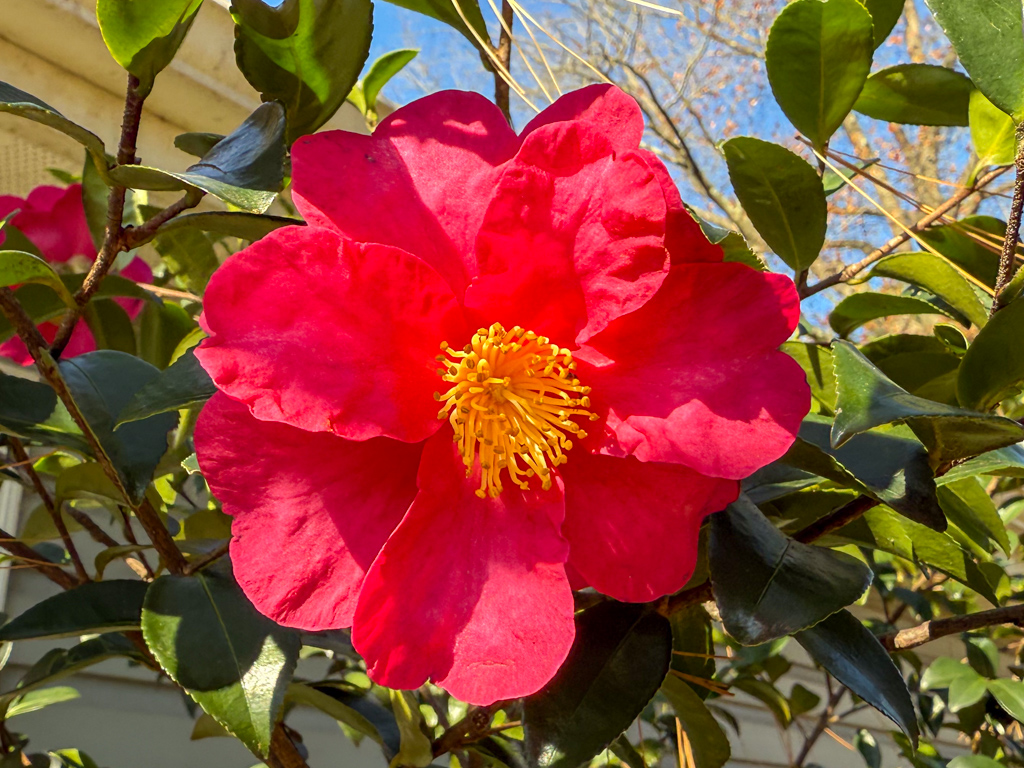
Fall Camellia (Camellia sasanqua red)
Well it’s GBBD and it’s hard not to look at the Camellias as the main focus for this time of year. They just seem relish the colder temperatures even though they are just barely hardy here. This particular C. sasanqua actually died back to the ground one year and I was ready to take it out but instead it began growing again and now goes up to the roofline.
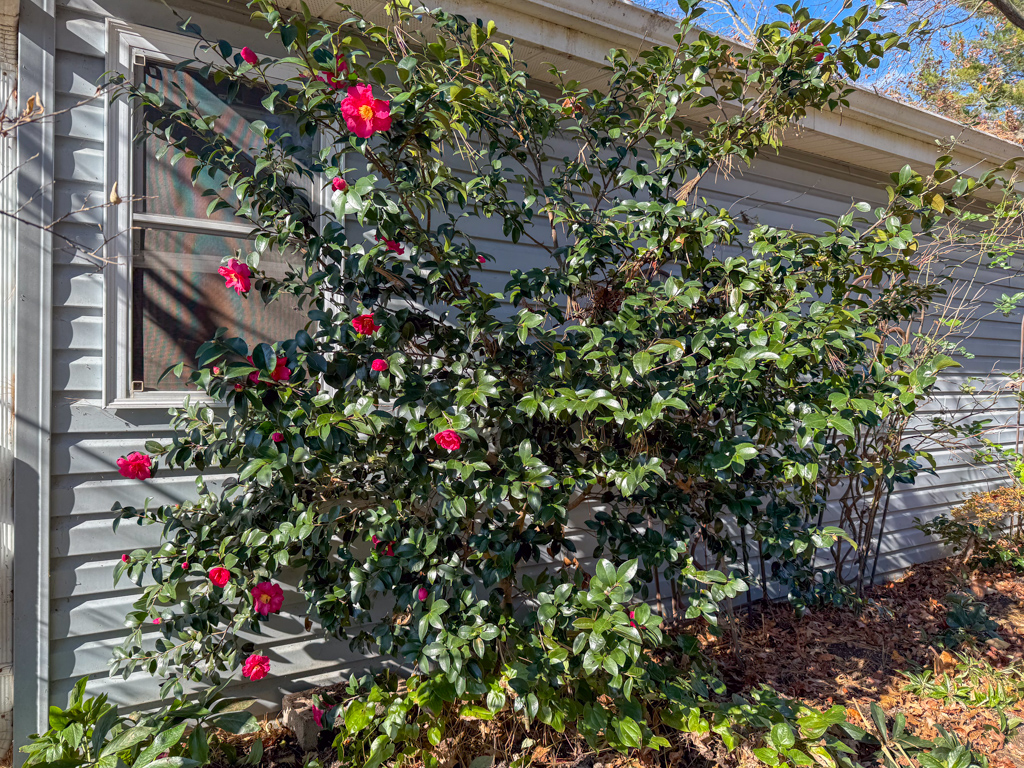
Fall Camellia (Camellia sasanqua red) shrub.
Its companions for Fall weather are another C. sasanqua and a very long blooming hardy hybrid.
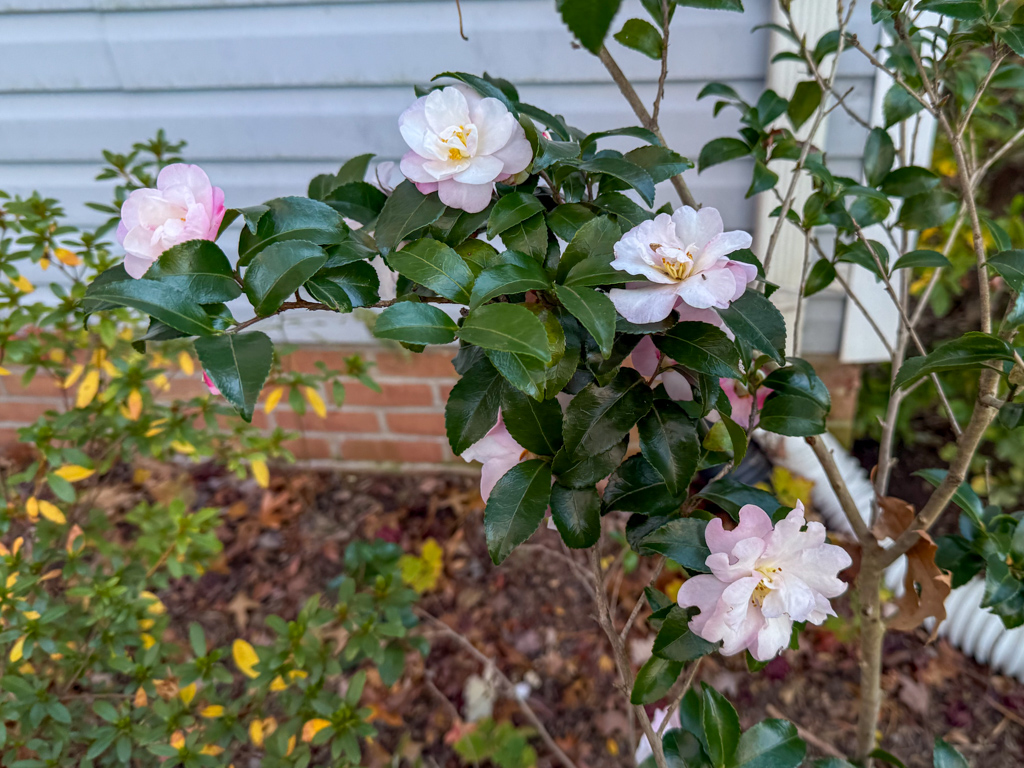
Camellia sasanqua ‘October Magic Orchid’
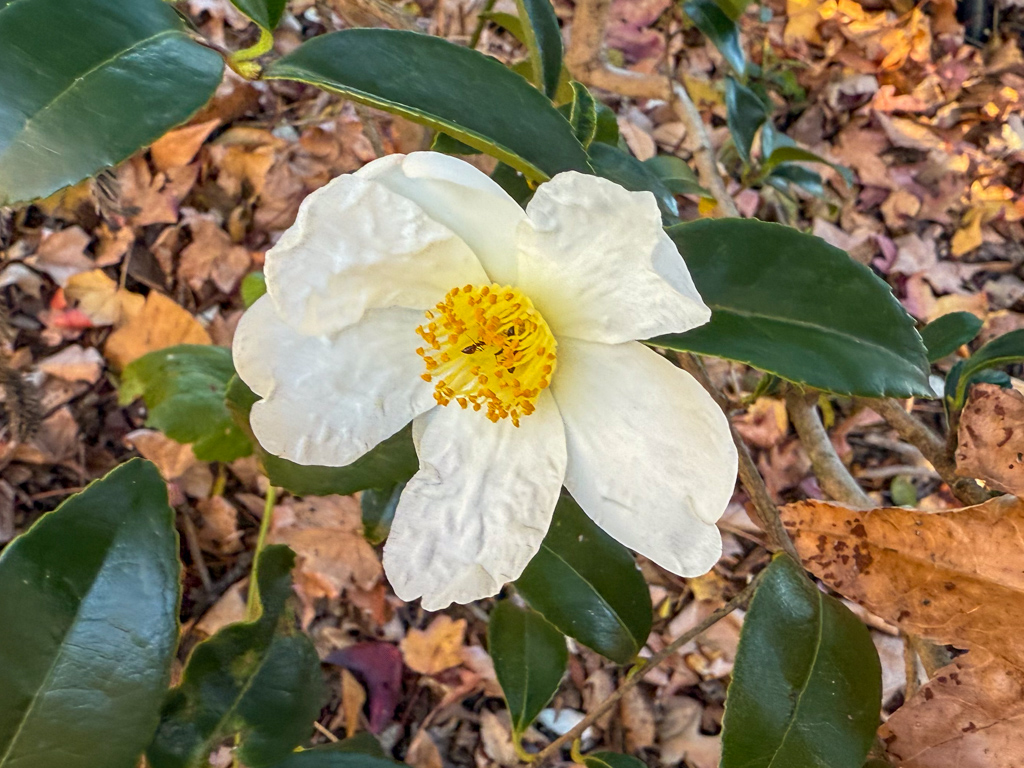
Camellia ‘Survivor’
But surprisingly there were a couple of unusual flowers showing up despite the fact that we have been below thirty degrees on a couple of nights.
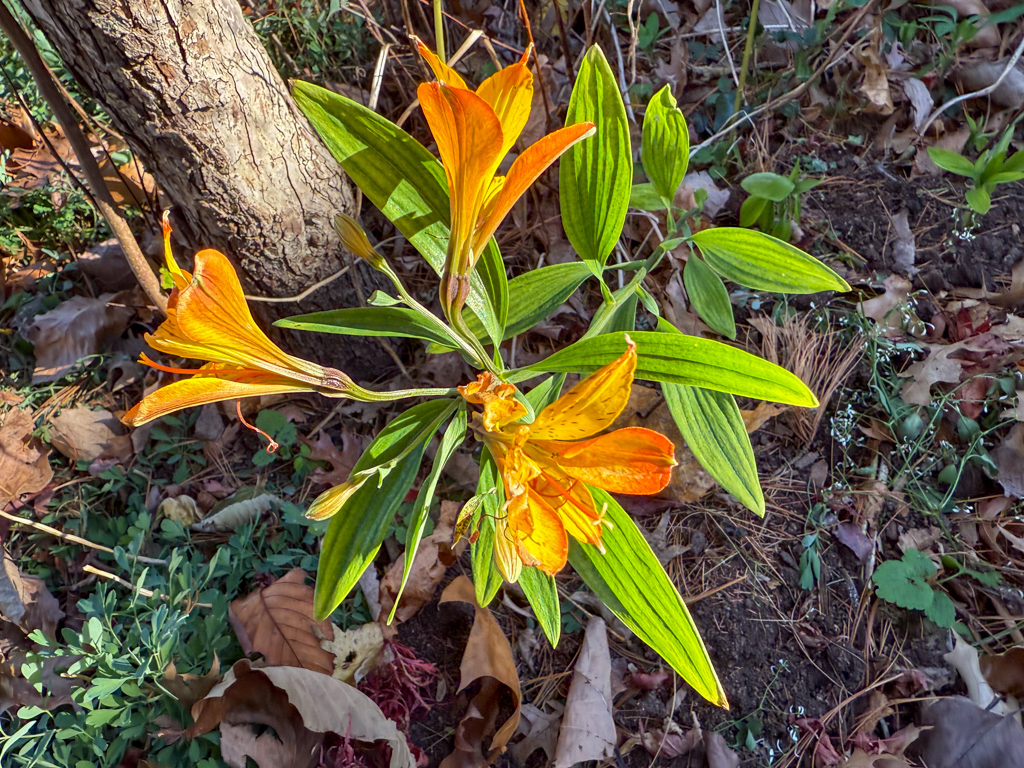
Alstromeria ‘Sweet Laura’
There was also an azalea that yielded a flower and then this morning I noticed that the Loropetalum had a single blossom wanting to bloom.
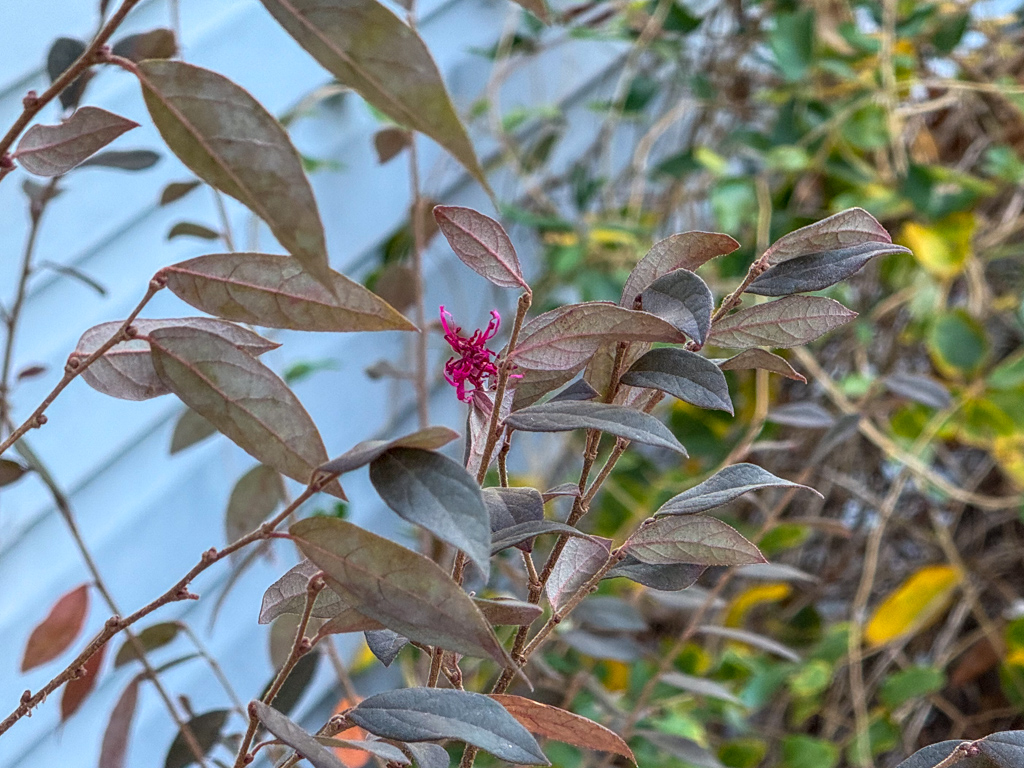
Loropetalum chinense var. rubrum ‘Zhuzhou Fuschia’
Perhhaps the Loropetalum was not aware that it is barely hardy here.
Of course there are lots of things in the yard that are getting ready for spring like the Edgeworthia.
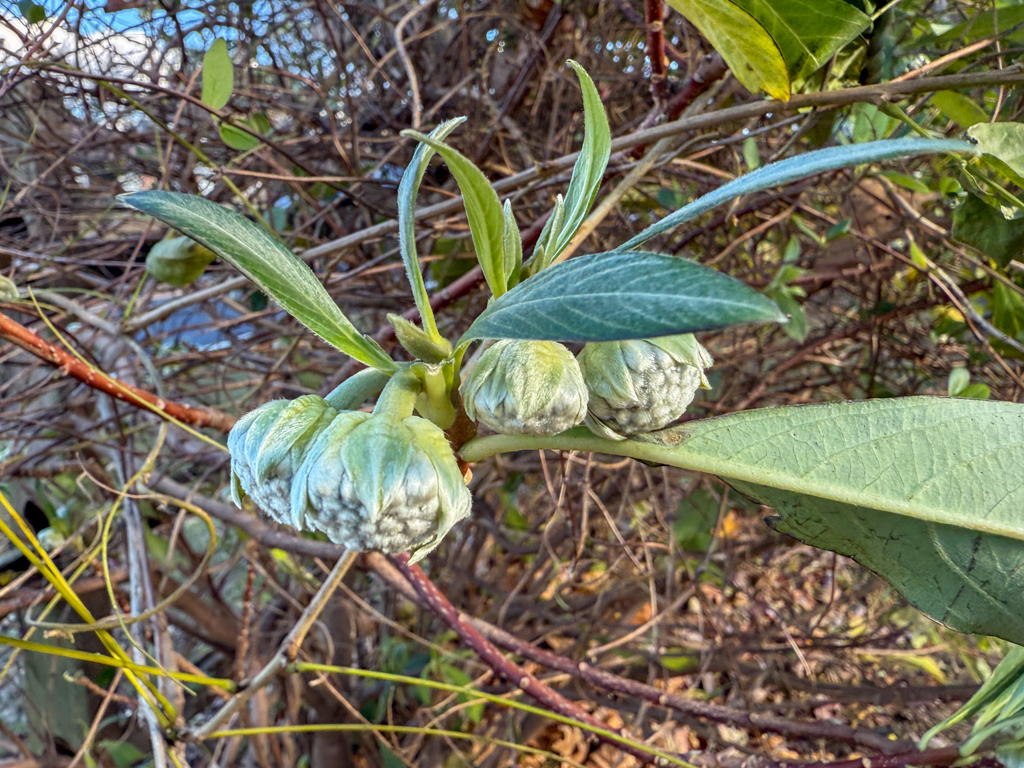
Edgeworthia chrysantha
As we look forward to winter actually arriving (they are calling for over 60 degrees next week), we have cleaned out the greenhouse to make it fully usable for the citrus and various small pots for South African and South American flowers.
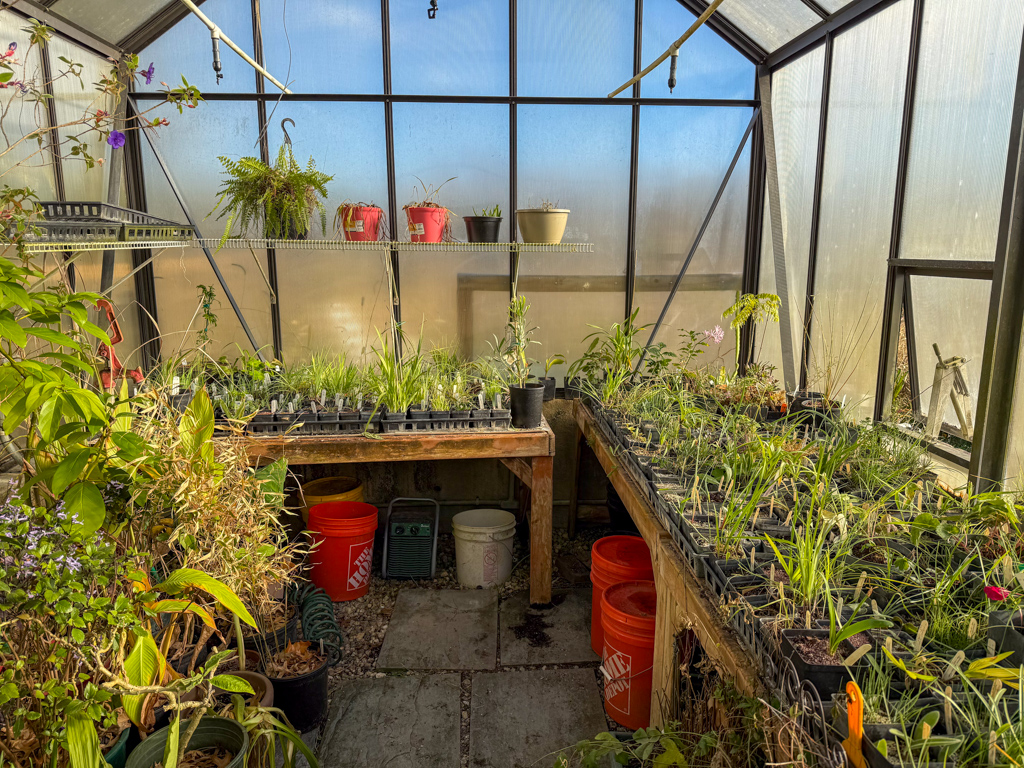
Greenhouse in order…
You can get some appreciation for why I do this with close up images from the right side and upper left of the greenhouse image.
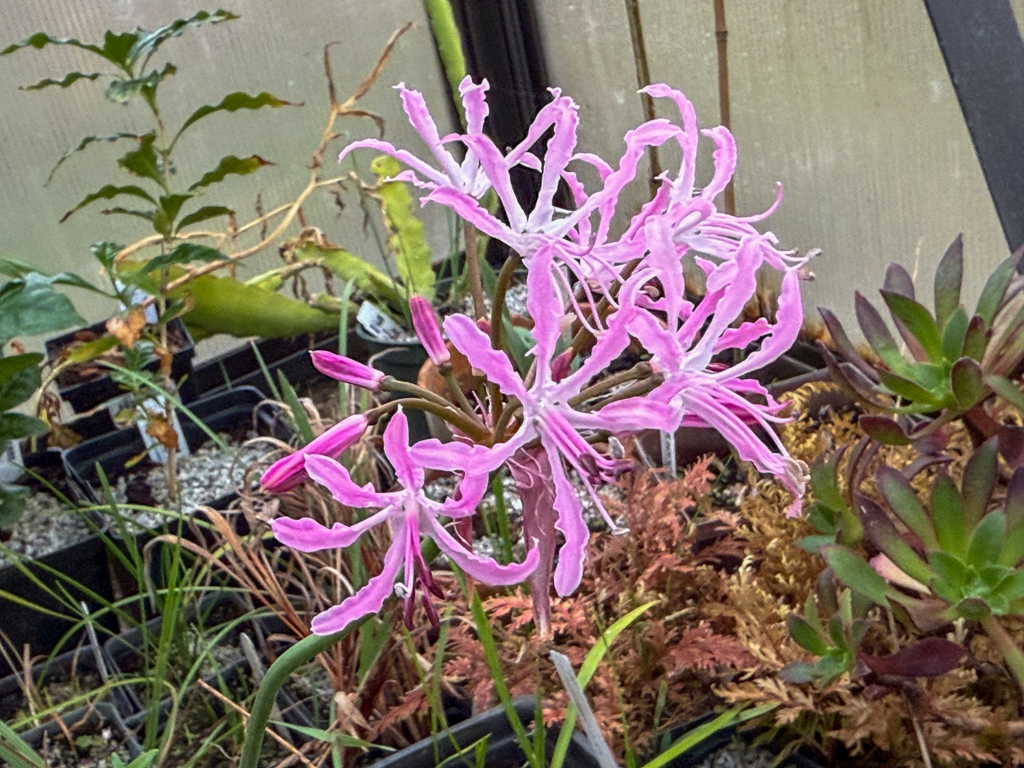
Nerine undulata
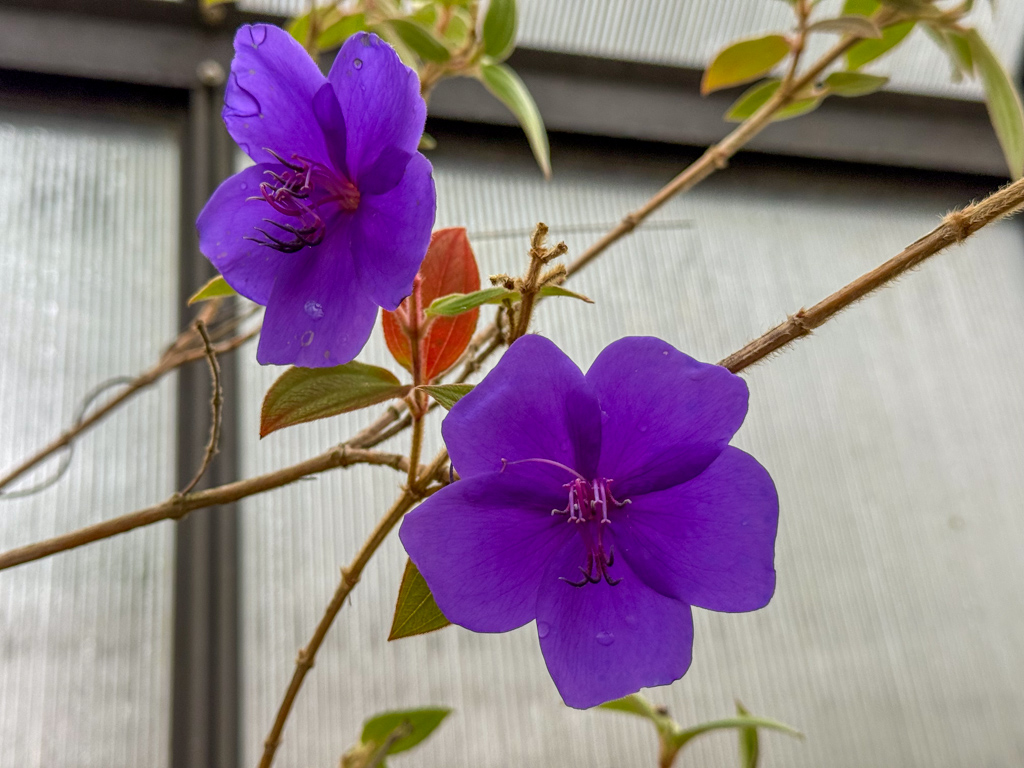
Princess Flower (Tibouchina Urvilleana)
The other thing that struck me as I wandered the grounds over the last couple of days is what marvelous color we’ve had this year. There are just so many ways in which fall colors make the days seem special, sometimes from trees you wouldn’t think of for color..
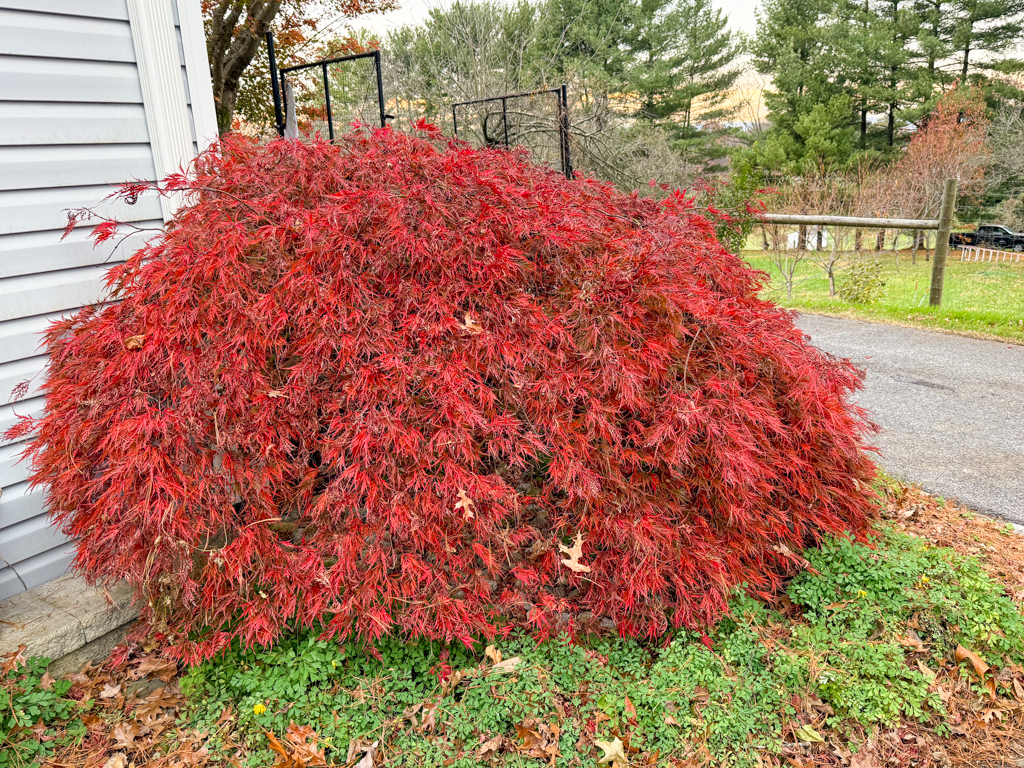
Threadleaf Japanese Maple
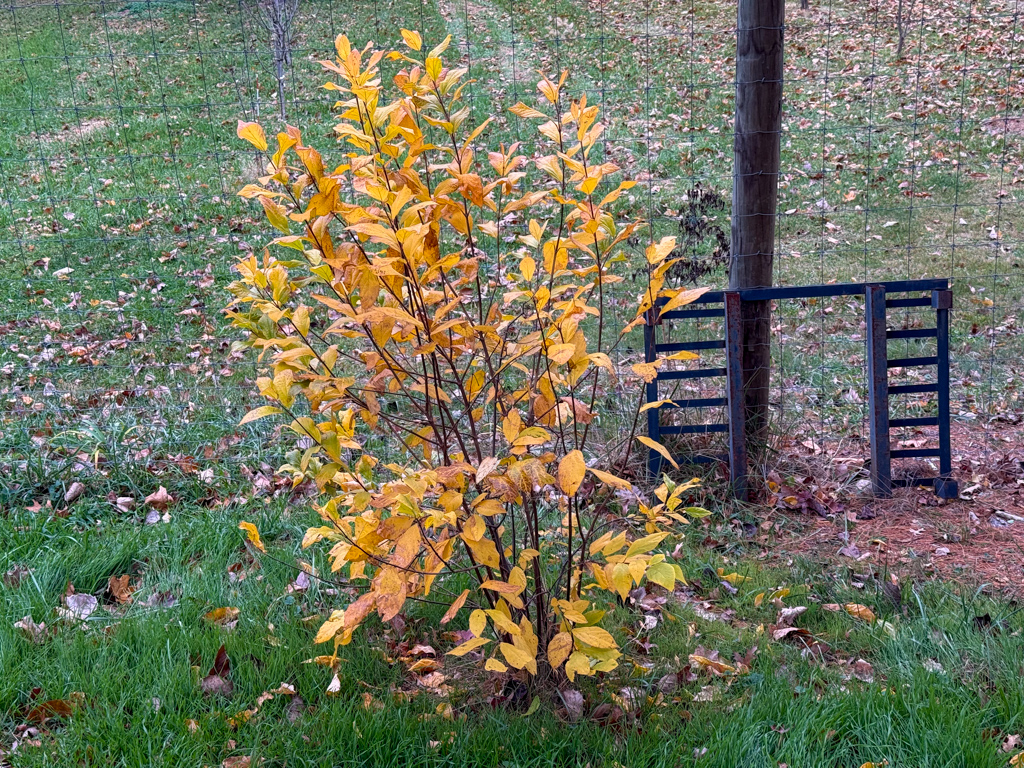
Carolina Allspice leaves
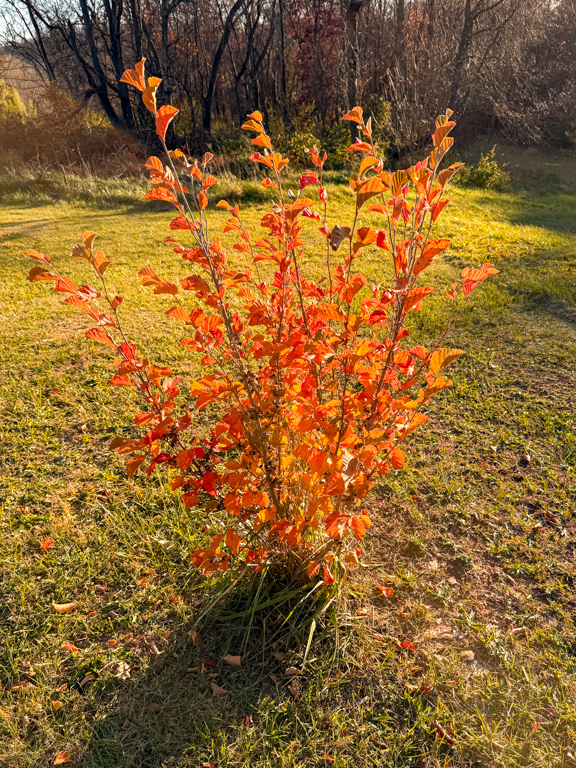
Hybrid Witch Hazel (Hamamelis x ‘Amethyst’)
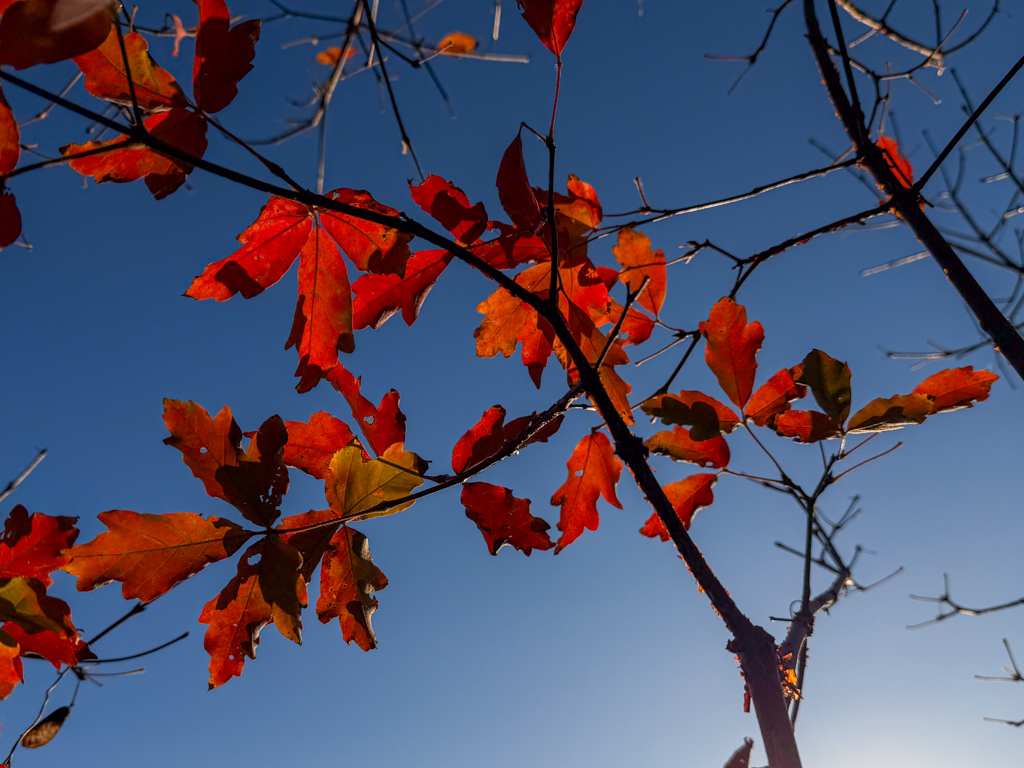
Paperbark Maple
And then me close with another sort of color
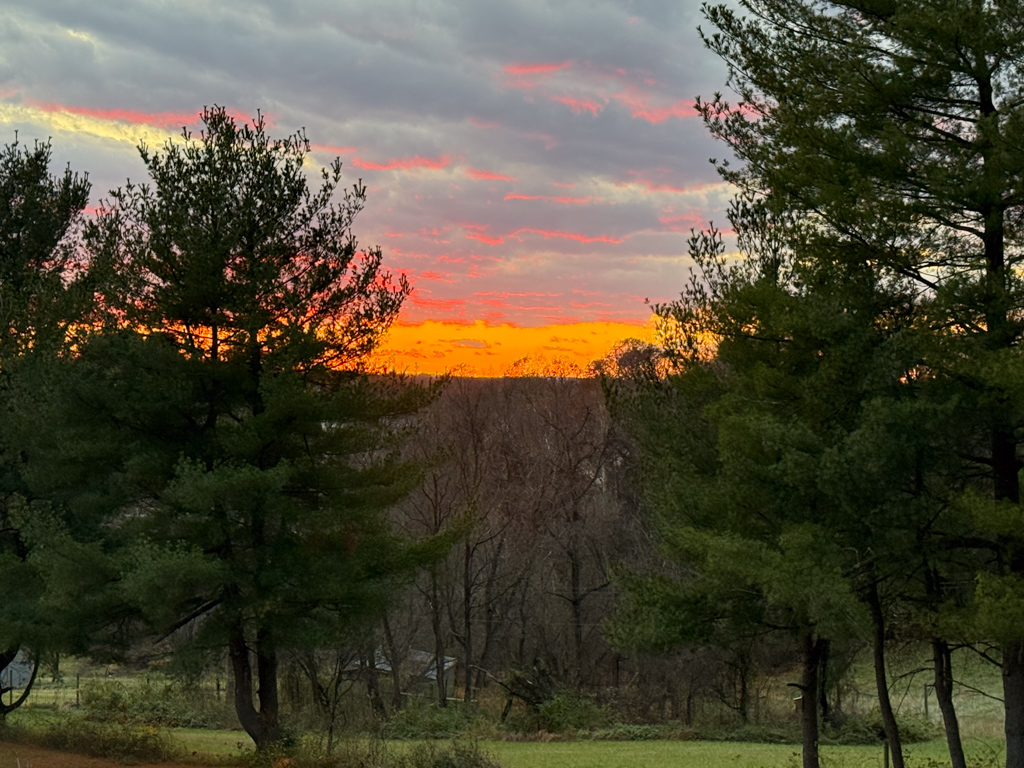
Sunset on the hillside
Garden Blogger’s Bloom Day October 2025

Dahlias from the garden
I thought I should start out this month’s GBBD post with the Dahlias that have been so glorious for us this year. Mostly they come from Swan Island and they have never been so large and productive as this year. I think part of the credit goes to son Josh for rigging up the watering system. They look wonderful in the house.
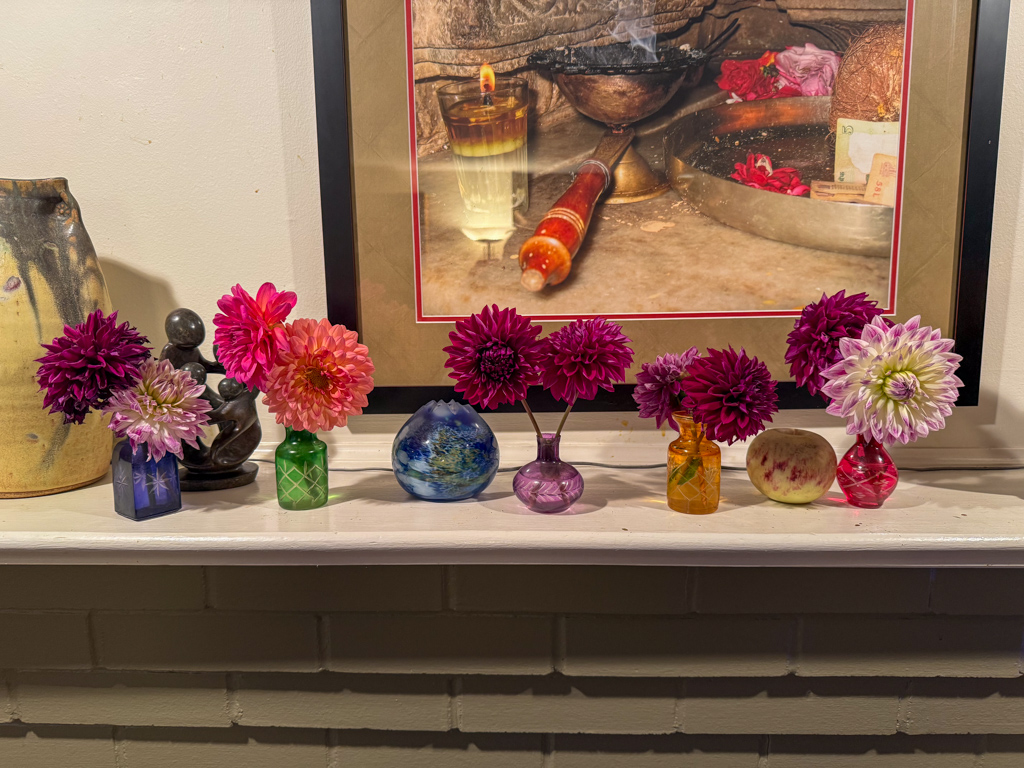
Dahlias brought inside
We have also gotten wonderful production from the Bishop of Llandaff which stay outside in the wintertime.
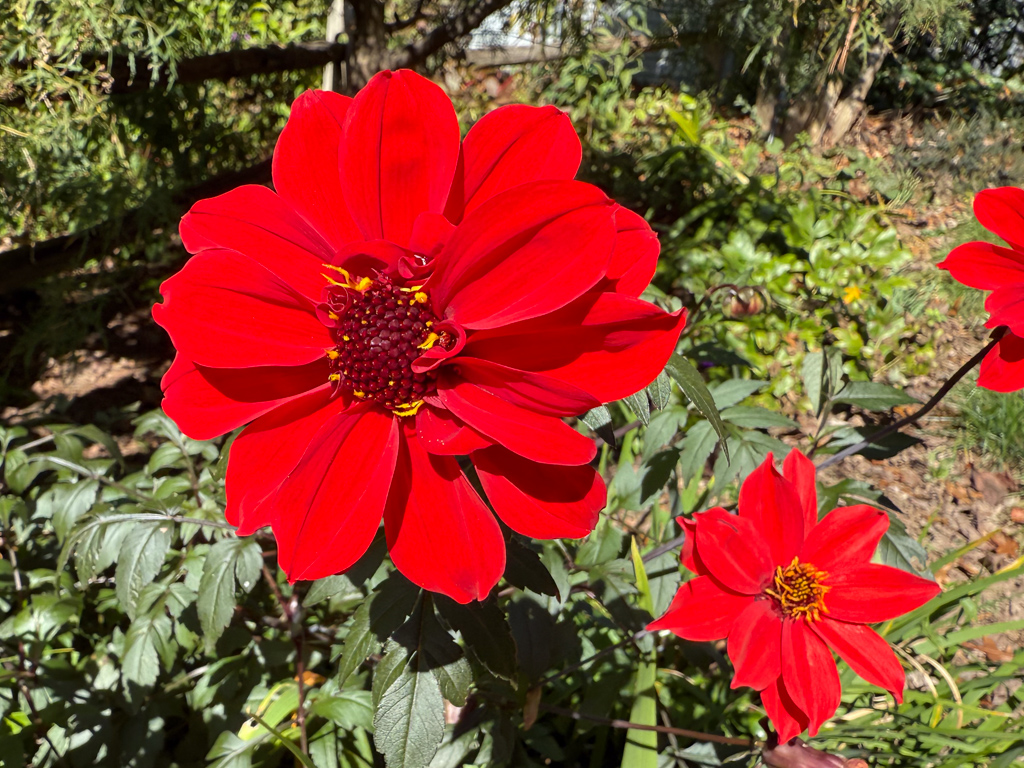
Dahlia ‘Bishop of Llandaff’
I’ve noticed that the bees and monarchs are very fond of the Bishop.
We are also harvesting the first of the fall camellias.

Camellia x ‘Survivor’
In the yard the Cyclamen hederifolium are nearly done flowering but the leaves remain with their lovely patterns.

Cyclamen hederifolium leaves
In the front yard we have a lovely Aconitum specimen that stands out at this time of year.

Aconitum carmichaelii (Arendisii)
In the backyard are a couple of fall crocus that delightful in detail.
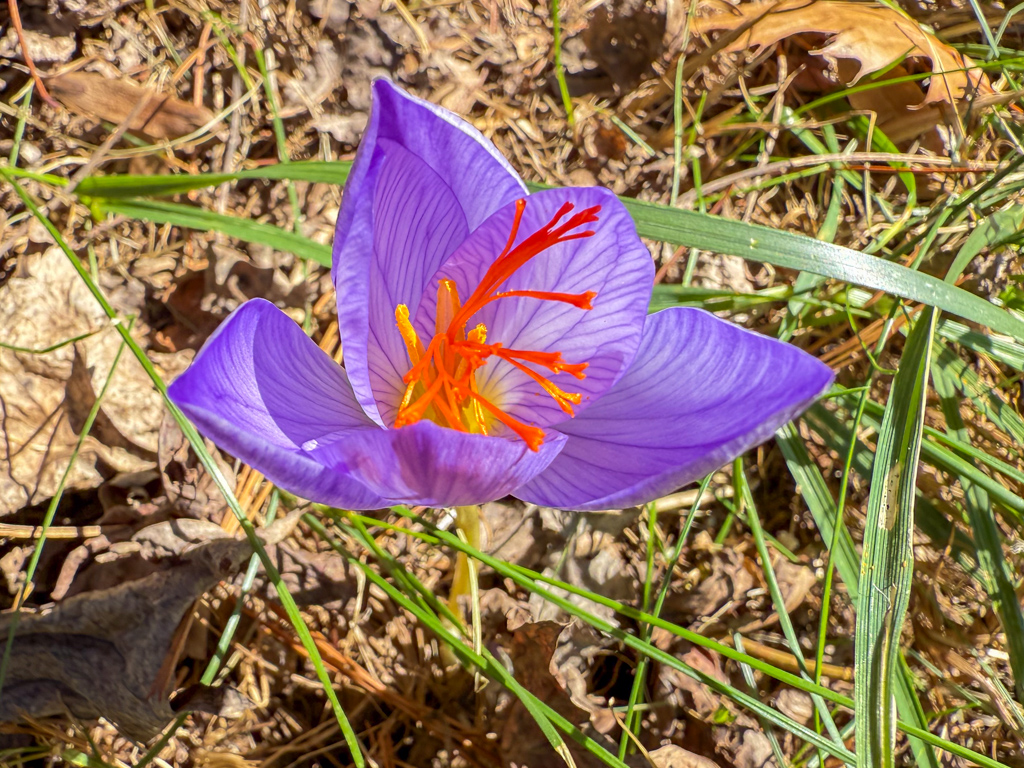
Crocus speciosus ‘Conqueror’
Also the backyard we have a nice patch of toad lillies that are sharing their flowers.
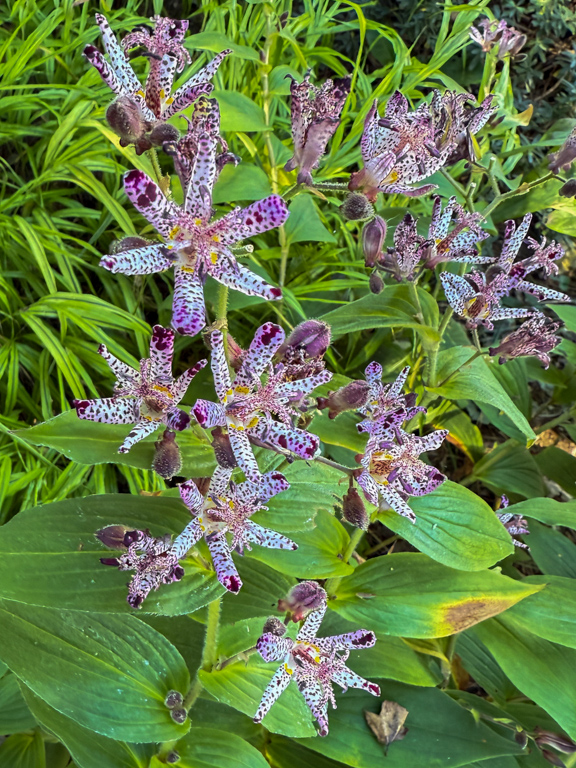
Toad lily (Trycyrtis hirta) in the garden
And there is even one flowering in the woods at this point.
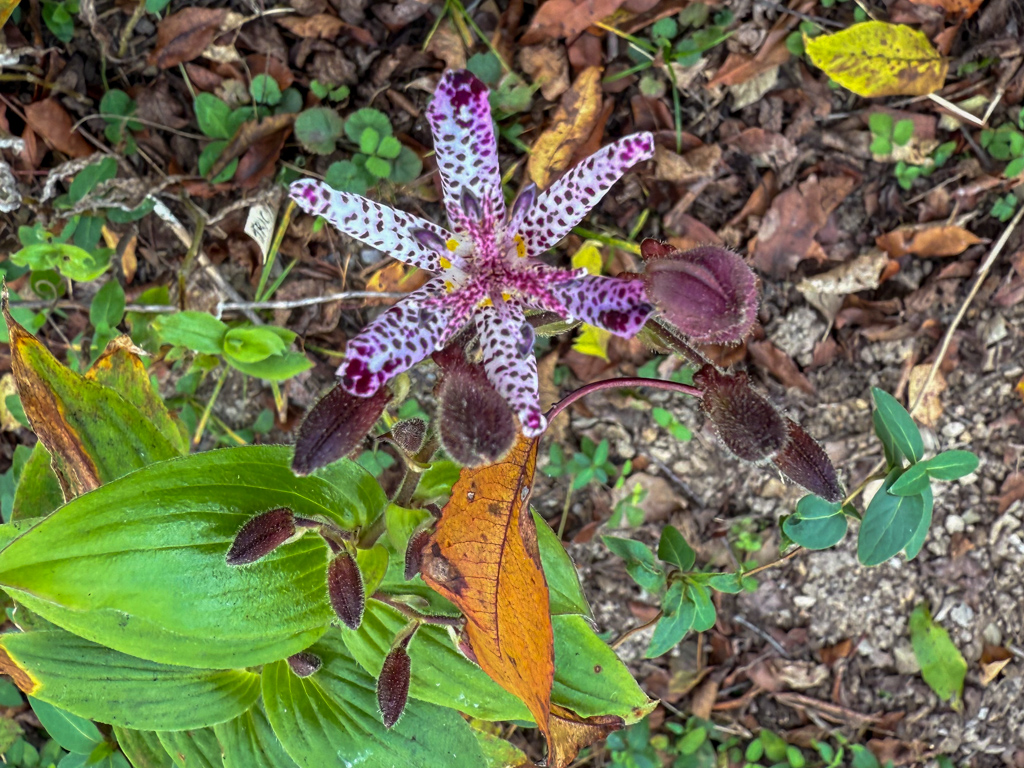
Toad lily (Trycyrtis hirta) in the woods
As we exit the backyard the Cestrum at the gate continues its flowering.
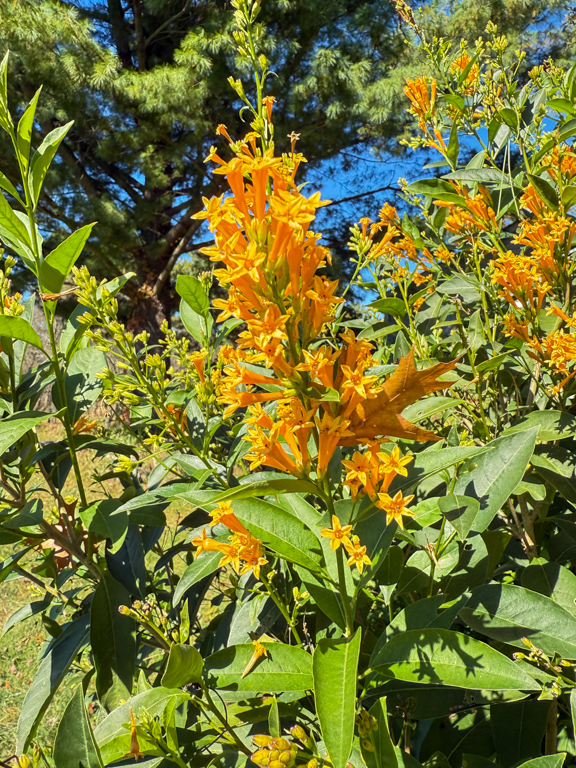
Cestrum ‘Orange Peel’
I should probably share a picture of the whole plant to give some idea of how remarkable it is that this plant dies back to the ground each winter.

Cestrum ‘Orange Peel’ whole bush
Right next to it are many Black and Blue Sage flowers which were said to be marginally hardy in our area but which continue to spread every year.

Salvia guaranitica ‘Black and Blue’

Salvia guaranitica ‘Black and Blue’
The greenhouse has also been sharing flowers with the house this month.
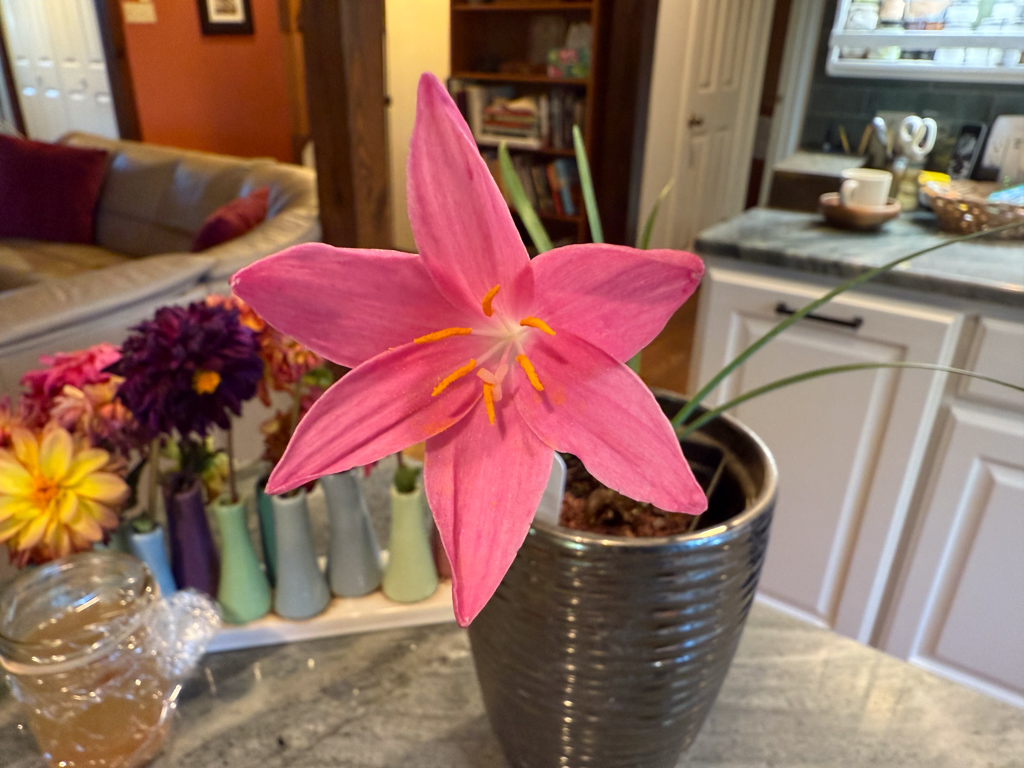
Zephyranthes fosteri
This is one of the nicest of the rain lillies.
I also found a nice Nerine in Flower this week.

Nerine Zinkowski hybrid
I will close with one of very nicest developing shrubs on the property. This is the Temple of Bloom that we got from Nurseries Caroliniana a couple of years ago.
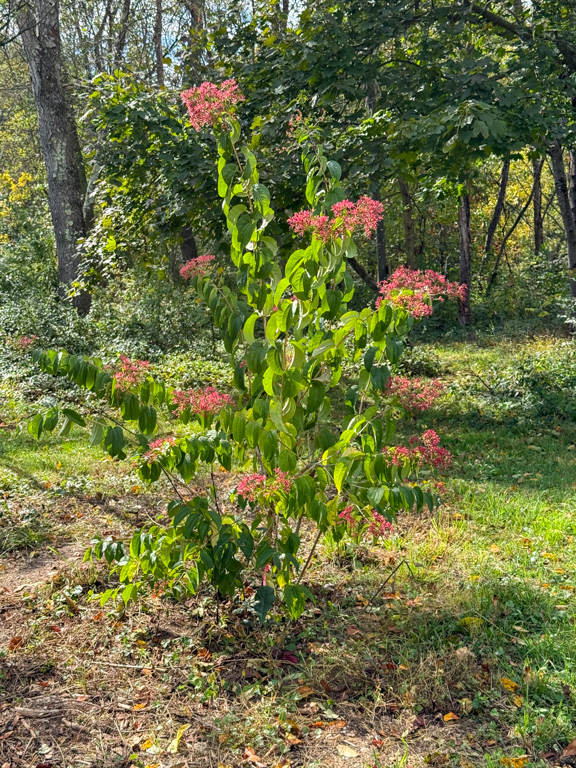
Hepticodium miconioides ‘Temple of Bloom’
When it’s white flowers are done in the fall it ends up with beautiful red bracts that are like flowers as well.
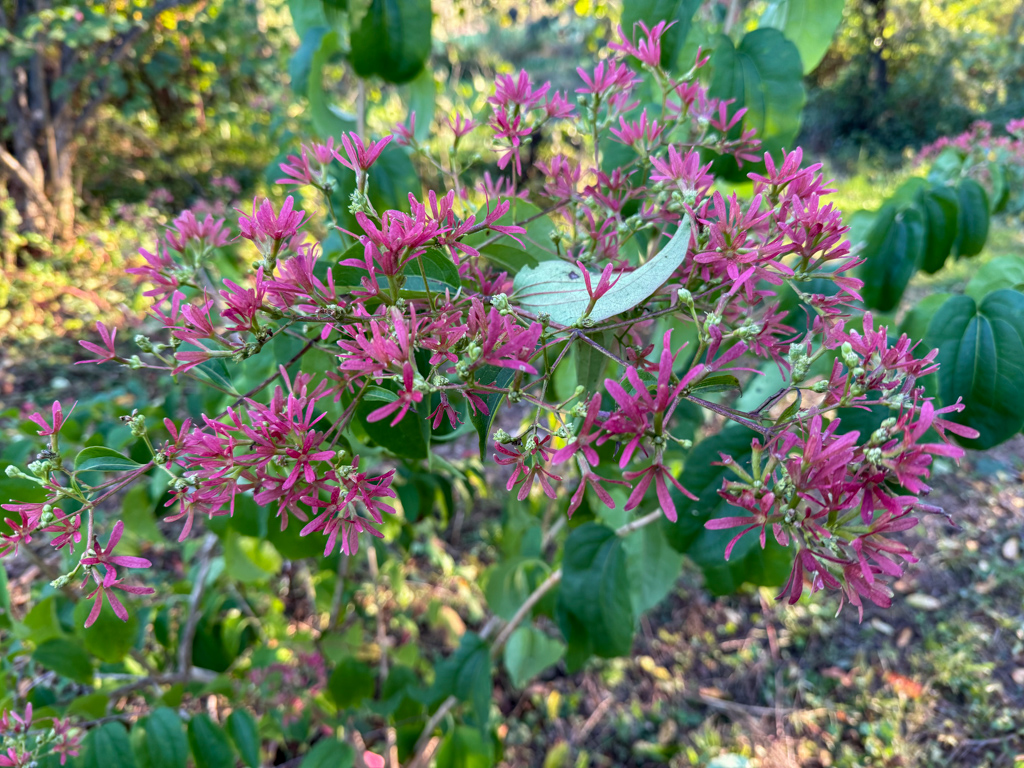
Hepticodium leaf bracts
Birds of South Africa
So I have put together a post of the birds we encountered in our three week visit to South Africa with the American Horticultural Society this year. Although my original focus on the journey was the many plants we would see I was overwhelmed by the colorful bird species in South Africa. Altogether I have about 50 species from our short visit and the experience will stay with me for a long time. I’ve put them below in basically the order that we saw them as we journeyed around Cape Town, then the western Cape regions and finally over to the Eastern Cape near Kruger. I’ve duplicated some of the most beautiful and the names are under the pictures of the birds. Please enjoy.

Orange breasted Sunbird
The Sunbirds were astounding, think of big hummingbirds…

African Penguin

Egyptian Goose

Hadada Ibis

Helmeted Guineafowl
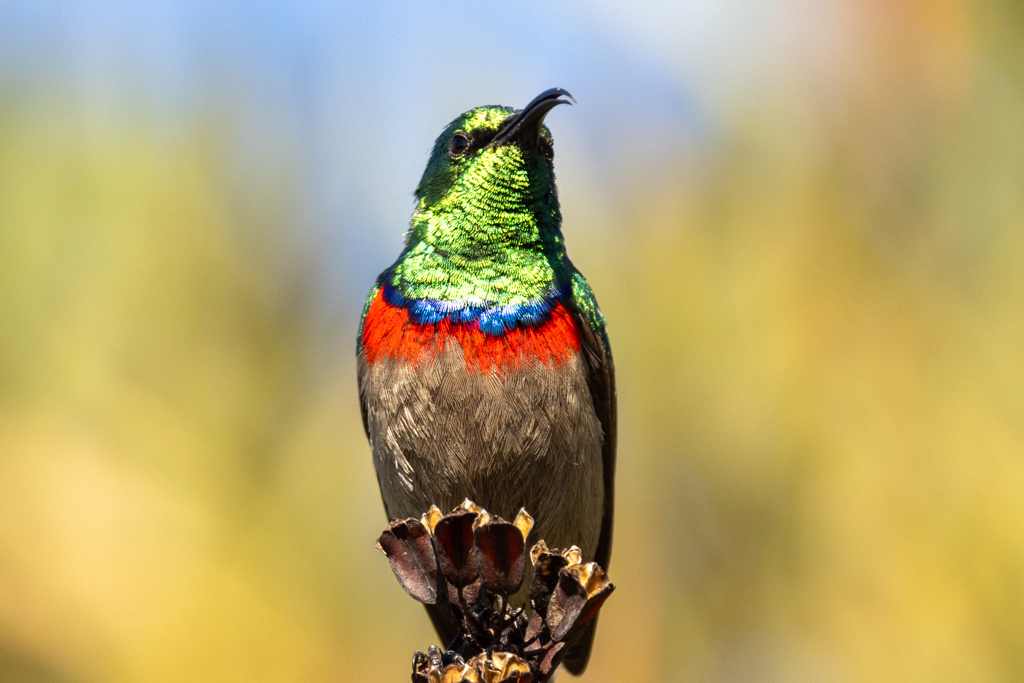
Southern Double-collared Sunbird

Cape Canary
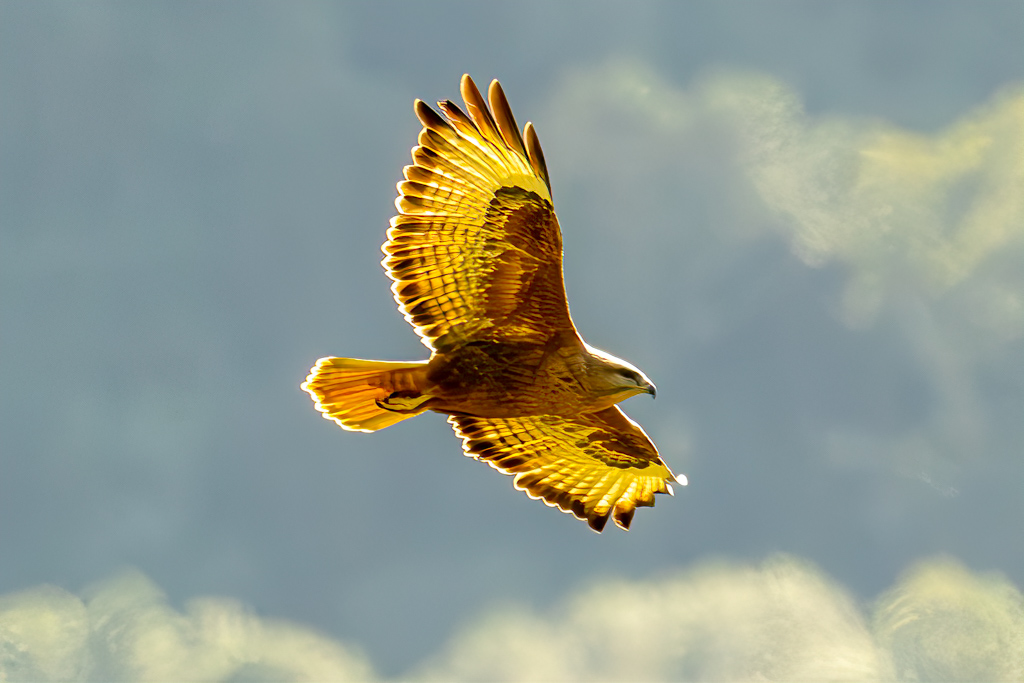
Common Buzzard
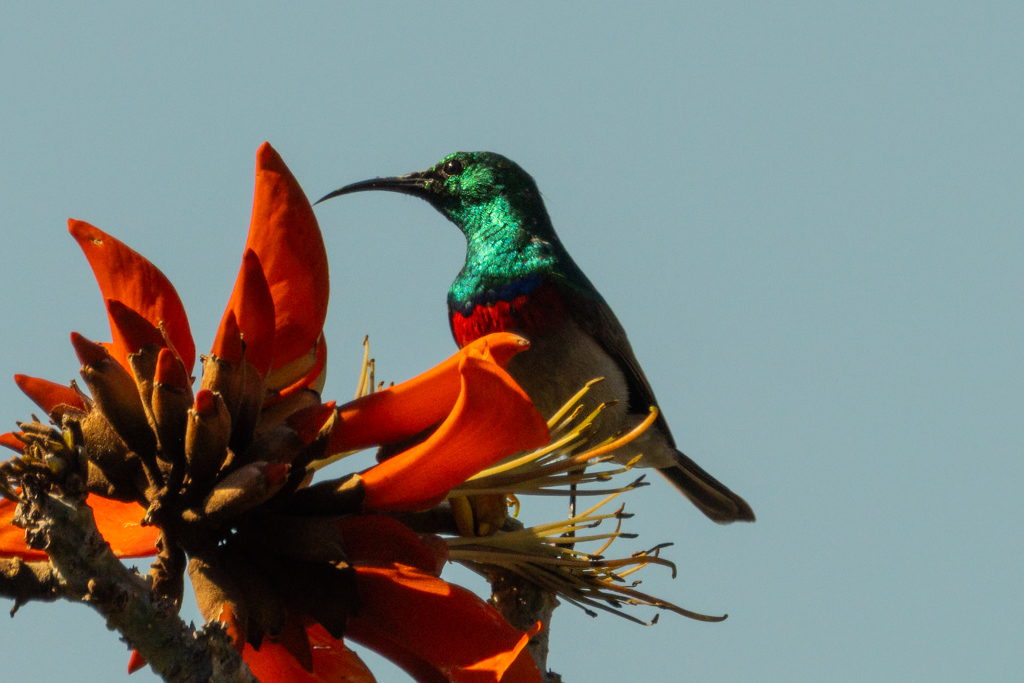
Greater Double-collared Sunbird

Cape Weaver

Southern Fiscal

Familiar Chat

Rock Kestrel

Malachite Sunbird female

Malachite Sunbird

Karoo Prinia

Fiscal Flycatcher

Malachite Sunbird

Olive Thrush

African Harrier-Hawk
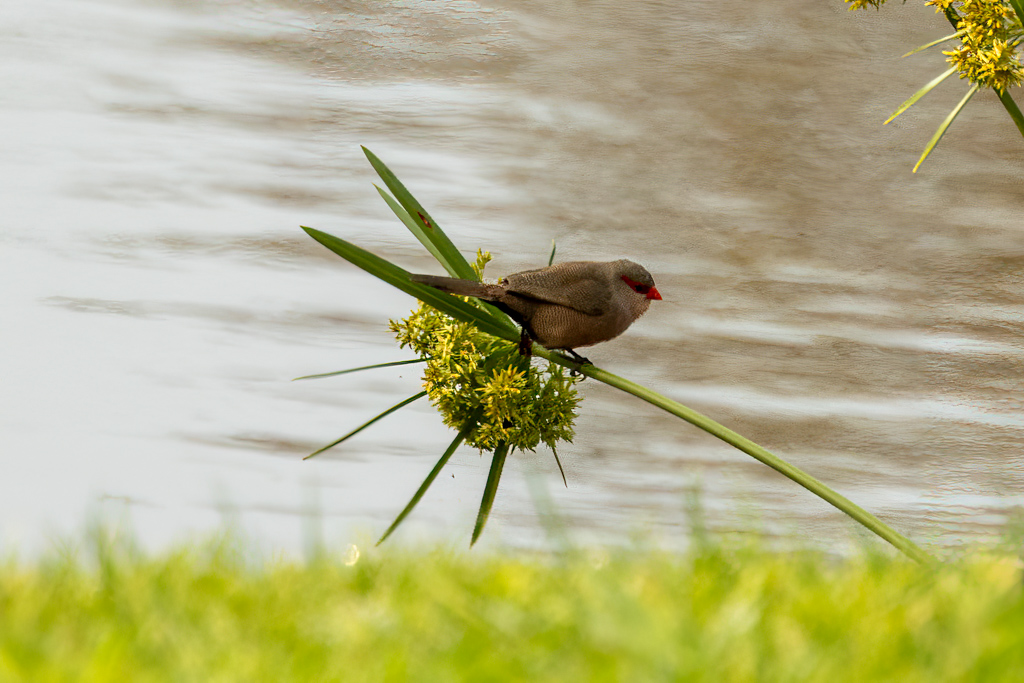
Common Waxbill

Cape Robin-Chat

Cape Bulbul
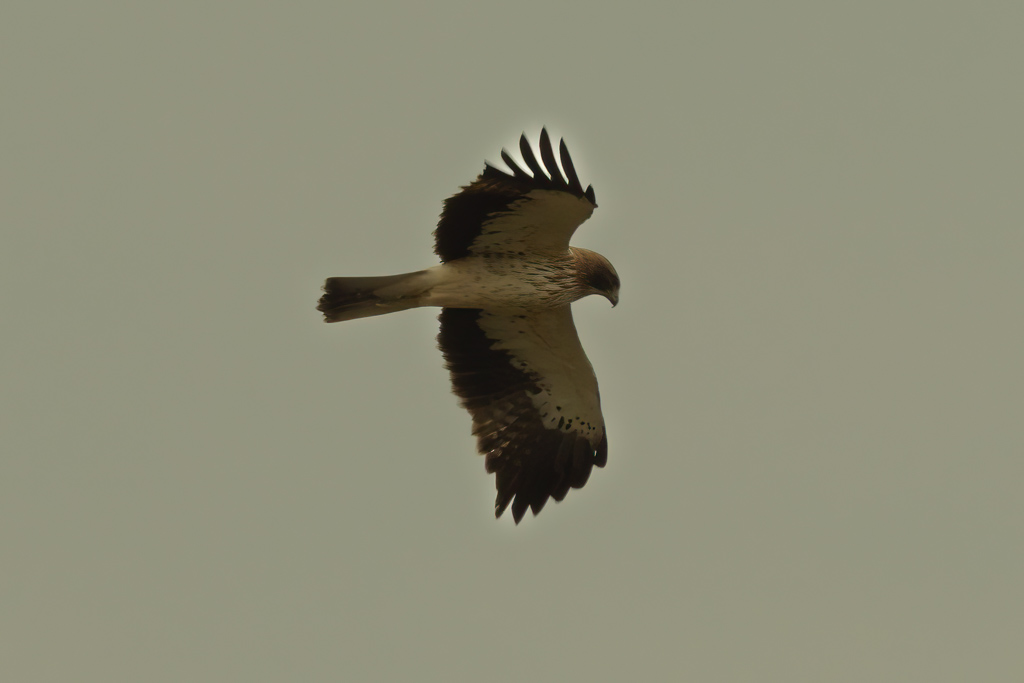
Booted Eagle

Yellow Bishop

Cape White-eye
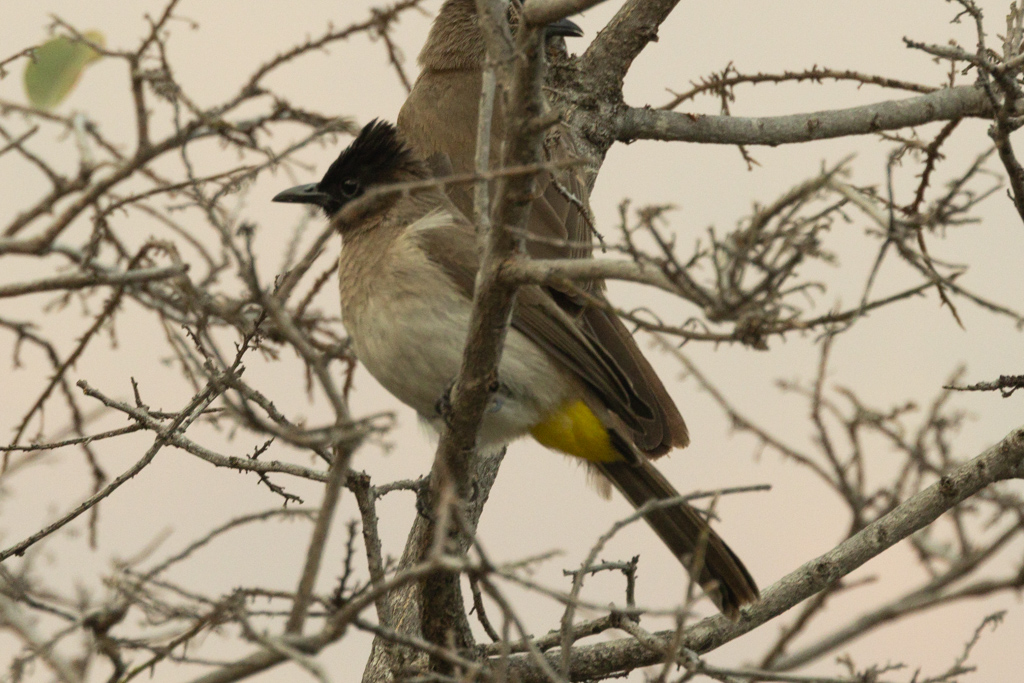
Common Bulbul
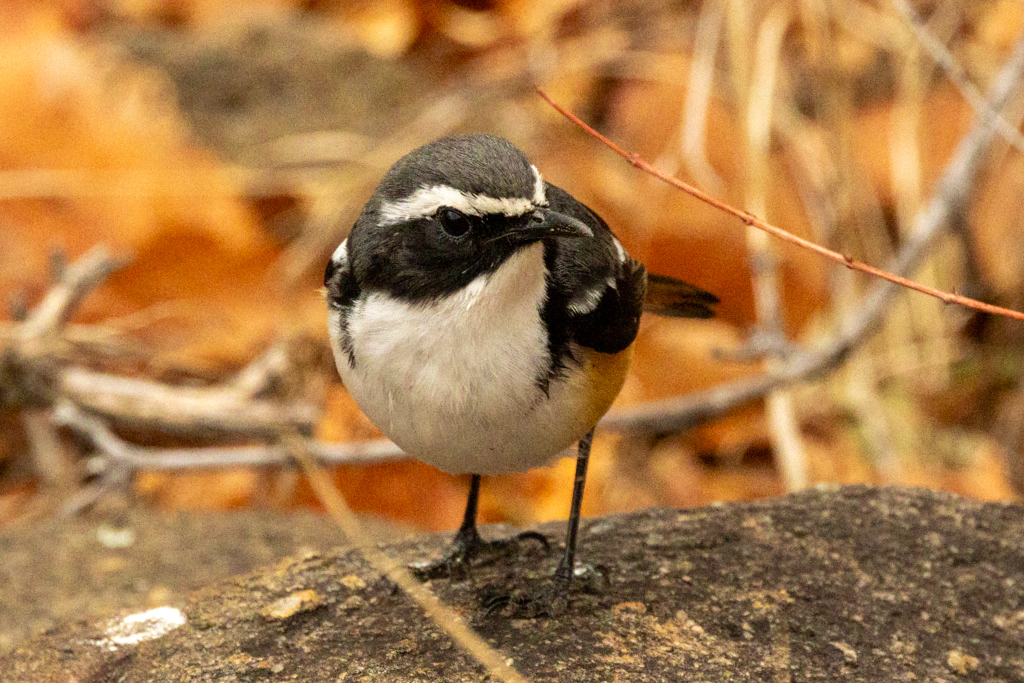
Kittlitz’s Plover
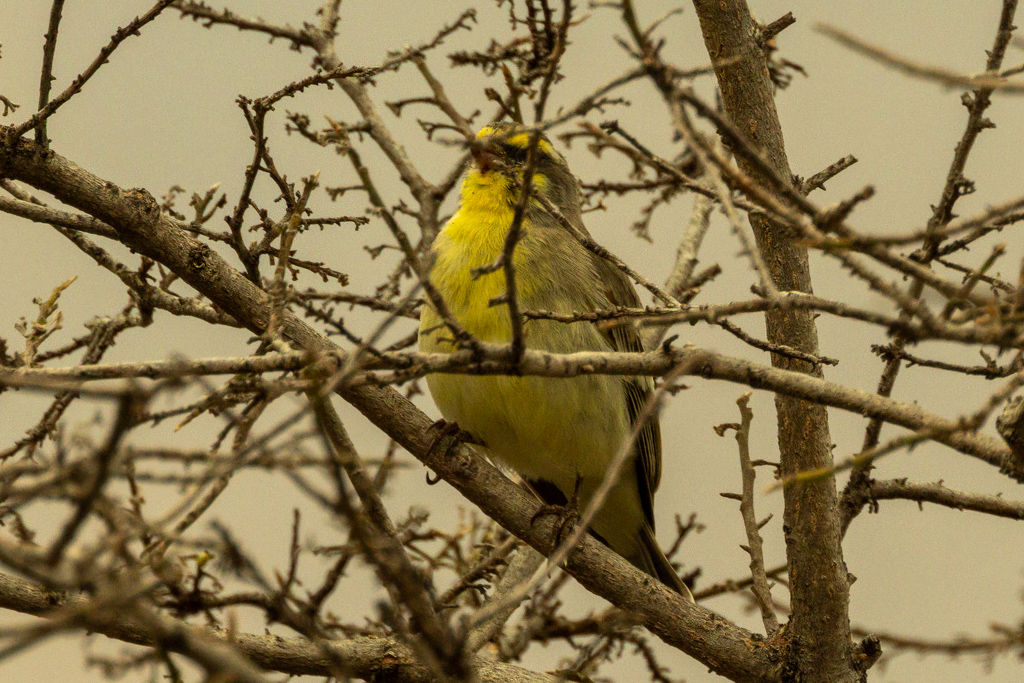
Yellow -fronted Canary

Golden-tailed Woodpecker

White-bellied Sunbird

Black-collared Barbet

African Darter
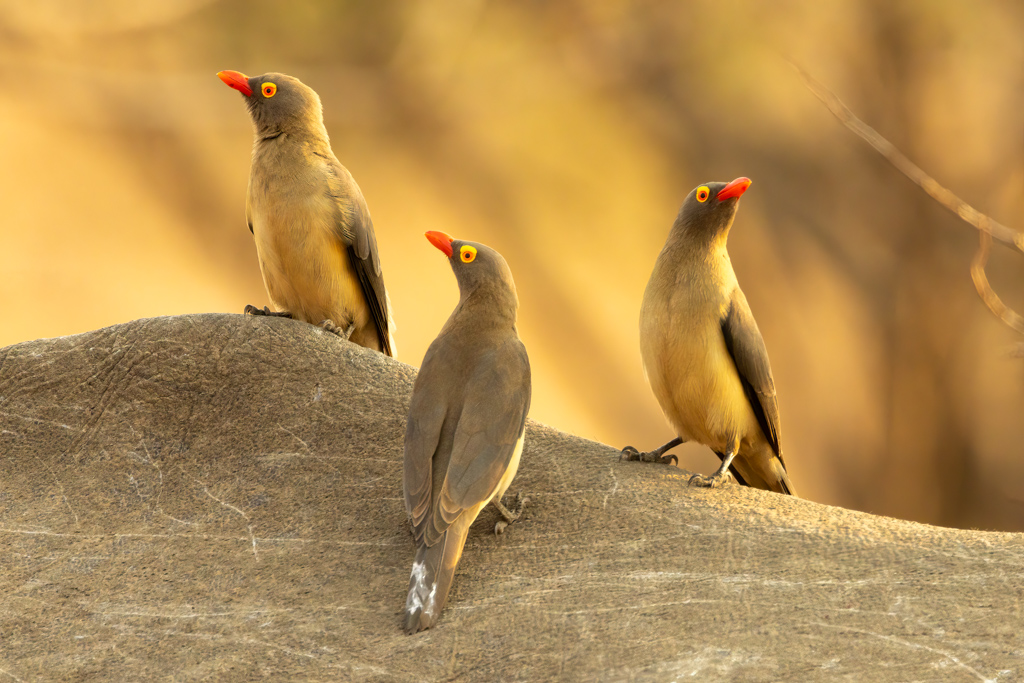
Red billed Oxpeckers on Rhino

Southern Red-billed Hornbill

African Green-Pigeon

Cape Griffon

Lilac-breasted Roller

Lilac-breasted Roller

Lilac-breasted Roller

Hadada Ibis

Crowned Hornbill

Cape Starling

Gray Go-away-bird

African Black-headed Oriole

Emerald-spotted Wood-Dove

Hamerkop

African Fish Eagle

Black-collared Barbet

Striated Heron

African Paradise-Flycatcher

African Barred Owlet

African Fire Finch

Yellow-breasted Apalis
Garden Blogger’s Bloom Day September 2025

Colchicum bivonae
Well a relatively brief statement this month just to catch up for Garden Blogger’s Bloom Day. We are just returned from almost three weeks in South Africa and I can assure you that of the many flowers we saw there, Colchicum are non-existent. It’s their Springtime, not their Fall. We got home to find that Colchicum are happily flowering away (which is what to expect in mid-September).

Colchicum (of unknown variety)

Colchicum x byzantium ‘Innocence’
At the same time the usual winners for September were happily flowering despite the terrible dryness Maryland has been experiencing.

Cestrum ‘Orange Peel’
I was happy to see that the Dahlias were spreading their usual joy. Not only the Bishop in the perennial bed but also several other varieties in the vegetable garden courtesy of Swan Island Dahlias.

Dahlia ‘Bishop of Llandaff’

Dahlia from Swan Island

Dahlia from Swan Island
I’ll have to research the names when I get time. And we have a lot sunflowers and other annuals in the vegetable garden.

Annual Flowers in the Veg garden
But I do want to share that our exposure to South African Flowers was wonderful. This was all via a trip arranged by the American Horticultural Society. We’ve been a member since forever but this was our first travel experience with AHS and it was memorable. The arrangements were excellent and breadth of exposure to South African culture and plant life will stay with us for a long time. I’ll try to see if I can put together a more detailed summary at some point but here is just a glimpse of what we saw.

Candelabra aloe atop Table Mountain in Cape Town
An absolute must for Cape Town visitors is Kirstenbosch, one of the world’s outstanding Botanic Gardens. Kirstenbosch National Botanical Garden

Looking at the mountains that are part of Kirstenbosch
We happened to be there for the first annual flowering of the Crimson King Protea which was a celebration for even the curators.

Protea cyanoides (King Protea)
Driving through the countryside there were lovely vistas of wildflowers and wonderful opportunities to explore.

Dimorphotheca sinuata (African Daisy)
And although horticulture was a major interest it turned out that I spent a lot of time photographing birds which are every bit as beautiful as the plants.

Orange-breasted Sunbird on Table Mountain
