ImageImage
  • Features
  • Videos
  • Podcasts
  • Specials
  • Articles
  • Shorts
Donate
  • English
  • Español (Spanish)
  • Français (French)
  • Bahasa Indonesia (Indonesian)
  • Brasil (Portuguese)
  • India (English)
  • हिंदी (Hindi)
  • বাংলা (Bengali)
  • Swahili
  • Videos
  • Podcasts
  • Articles
  • Short News
  • Feature Stories
  • The Latest
  • Explore All
  • About
  • Team
  • Contact
  • Donate
  • Subscribe page
  • Submissions
  • Privacy Policy
  • Terms of Use
  • Advertising
  • Wild Madagascar
  • For Kids
  • Mongabay.org
  • Reforestation App
  • Planetary Health Check
  • Conservation Effectiveness
  • Mongabay Data Studio

Latest

Frozen tuna are transferred from the Hung Hwa 202, a Taiwanese longliner, to the Hsiang Hao, a Panama-flagged reefer operating out of Tokyo, Japan, in the middle of the Atlantic Ocean. The Greenpeace ship Arctic Sunrise and crew are investigating distant water fishing fleet practices in the Mid-Atlantic during September and October 2019. Photo credit: © Tommy Trenchard

The hidden cost of fisheries subsidies

Rhett Ayers Butler 17 Mar 2026

Pharmaceutical companies move away from horseshoe crab biomedical testing

David Brown 16 Mar 2026

Glyphosate found in South African baby cereal; watchdog group calls for ban

Elodie Toto 16 Mar 2026

Cambodia’s Supreme Court denies release of five imprisoned environmental activists

John Cannon 16 Mar 2026

How a community defended its ancestral forest from logging

Rhett Ayers Butler 16 Mar 2026

An ancient fishing tradition in Indonesia could help build a more sustainable fishery

Naina Rao 16 Mar 2026
All news

Top stories

Collage of a red-bellied toad and a bridge broken by flood

In search of the tiny toad that stopped a dam

Wood pellets for biomass energy. Image courtesy of Dogwood Alliance.

Forest advocates accuse EU energy firm of Dutch biomass certification fraud

Justin Catanoso 13 Mar 2026
Sea turtles, another migratory species, need safe ocean passageways to move between feeding grounds and nesting beaches.

Outlook for migratory species worsens amid habitat loss & avian flu, report finds

Gloria Dickie 12 Mar 2026
The construction site of Bridge Data Centre's 0.2 GW QHI01 data center in Khlong Tamru subdistrict, Chonburi province, Thailand. Photo by Andy Ball/Mongabay.

Thai data center boom sparks fears of water shortage, air pollution

Gerald Flynn 11 Mar 2026
With striking orange and black streaks on their wings, painted woolly bats are one of the most colorful bats in the world.

U.S.’ hunger for Halloween trinkets is killing Vietnam’s painted woolly bats

Spoorthy Raman 9 Mar 2026

Subscribe

Stay informed with news and inspiration from nature’s frontline.
Newsletter

We’re a nonprofit

Help us tell impactful stories of biodiversity loss, climate change, and more
Donate

News and Inspiration from Nature's Frontline.

Collage of a red-bellied toad and a bridge broken by flood
Videos
Frozen tuna are transferred from the Hung Hwa 202, a Taiwanese longliner, to the Hsiang Hao, a Panama-flagged reefer operating out of Tokyo, Japan, in the middle of the Atlantic Ocean. The Greenpeace ship Arctic Sunrise and crew are investigating distant water fishing fleet practices in the Mid-Atlantic during September and October 2019. Photo credit: © Tommy Trenchard
Articles
Image
Podcasts

Special issues connect the dots between stories

The Dutch Nitrogen Crisis

Image

The Netherlands weighs up its future amid farmer protests and dying ecosystems

Ashoka Mukpo, Sandy Watt 13 Sep 2023
A dairy cow in a farm in the Netherlands.

In the clash over Dutch farming, Europe’s future arrives

Ashoka Mukpo 8 Sep 2023
Image

In the Netherlands, pitchforks fly for an empire of cows

Ashoka Mukpo 7 Sep 2023
cow in the netherlands wagenigen university dairy campus research facility

How manure blew up the Netherlands

Ashoka Mukpo 6 Sep 2023

What happens when biodiversity conservation and food systems collide? As the top meat exporter in the European Union, the Netherlands has become a case study in the ecological limits of industrial farming. When courts forced action to protect fragile ecosystems, it set off mass farmer protests, political upheaval, and a tug-of-war between regulation, technology and […]

The Dutch Nitrogen Crisis series

More specials

Image
9 stories

Mongabay Explains

Trekking through the Cardamom Tented Camp concession in Botum Sakor National Park Photo by Gerald Flynn
0 stories

Carving up the Cardamoms

Image
9 stories

Can anyone save the Sumatran rhino?

Free and open access to credible information

Learn more

Listen to Nature with thought-provoking podcasts

Image

How elephants experience time, and what this tells us about protecting them

Mike DiGirolamo 10 Mar 2026

Watch unique videos that cut through the noise

Collage of a red-bellied toad and a bridge broken by flood

In search of the tiny toad that stopped a dam

Collage featuring cockfighting and a largetooth sawfish

Why is cockfighting a risk to Peru’s rarest fish?

Romi Castagnino 25 Feb 2026
Collage featuring a white-rumped shama (Copsychus malabaricus) and a poacher

The most desirable songbird in Indonesia is disappearing from the wild

Rizky Maulana Yanuar, Sandy Watt 18 Feb 2026
Collage featuring Jeffrey Lendrum

The man who risked everything to steal bird eggs

Sandy Watt 11 Feb 2026
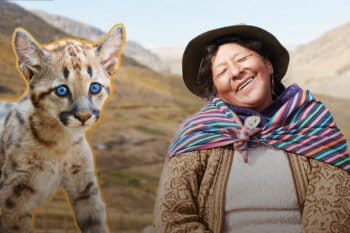
Collage featuring a puma and Ida Isabel Auris Arango, shepherd and Quechua woman

Women secure a future with pumas in the Andes

Romi Castagnino 28 Jan 2026

We’re a nonprofit

Help us tell impactful stories of biodiversity loss, climate change, and more
Donate

In-depth feature stories reveal context and insight

Image
Feature story

Across South America, canopy bridges evolve as a lifeline for tree-dwelling wildlife

Luís Patriani 4 Mar 2026
Image
Feature story

Cameroon’s decade of conflict leaves apes and conservationists in peril

Orji Sunday 3 Mar 2026
A fisherman is silhouetted as he casts his net into the Tapajos River in Santarem, Para state, 2020.
Feature story

Concern among Indigenous leaders, relief for a few, as Amazon Soy Moratorium falters

Rubens Valente 3 Mar 2026
Turnbull NWR - Waterfowl Surveys.
Feature story

‘An epidemic of suffering’: Why are conservationists breaking down?

Jeremy Hance 2 Mar 2026

Quickly stay updated with our news shorts

Pharmaceutical companies move away from horseshoe crab biomedical testing

David Brown 16 Mar 2026

Horseshoe crabs were crawling along the shallow sandy bottoms of Earth’s oceans 200 million years before the first dinosaurs came on the scene. But some populations have declined dramatically with the rise of humans, raising concerns they may be headed toward extinction. One of the biggest drivers of their population collapse is their unsustainable harvest for their blood to be used in pharmaceuticals. Now, two major pharmaceutical companies, Amgen Inc. and Abbott Laboratories, have publicly announced they will shift toward synthetic blood instead.

The copper-based blood of horseshoe crabs contains an enzyme called limulus amebocyte lysate (LAL) that can help detect bacterial endotoxin contamination in vaccines, injectable drugs and many other pharmaceutical products. To maintain the safety of those drugs, thousands of horseshoe crabs are captured from the wild annually for their blood. The animals, which are more closely related to spiders than to crabs, are returned to the sea after their blood has been drawn, but many don’t survive the ordeal. Coastal development and habitat degradation are also taking a toll.

Synthetic replacements for LAL were developed in 2016, but not widely adopted by pharmaceutical companies — until now. Amgen and Abbott Laboratories announced in February 2026 that they’re transitioning away from horseshoe crab blood for biomedical testing.

Kendyl Van Dyck is a biodiversity associate with As You Sow, a nonprofit that promotes corporate responsibility. She told Mongabay in an email that the pharmaceutical industry was slow to move away from harvesting horseshoe crabs, “because endotoxin testing is highly regulated, pharmaceutical manufacturers have been inclined to follow known methods even when there is an opportunity to innovate.”

Van Dyck noted that there’s no fixed end date for either company to completely cease horseshoe crab-derived testing, nor is there an independent third-party monitoring program.

Still, conservationists have welcomed the pharmaceutical companies’ announcement. Atlantic horseshoe crabs (Limulus polyphemus), which are the most targeted species for their blood, lay massive amounts of eggs that fuel migrating shorebirds along the Atlantic coast of North America.

In an interview with NJ Spotlight News last year, David Mizrahi, vice president of research and monitoring at the New Jersey chapter of bird conservation nonprofit Audubon, said a shift toward synthetic blood “will save thousands of horseshoe crabs a year, protecting shorebirds and coastal ecosystems, while also providing supply chain stability and ensuring patient safety. It’s a powerful and responsible step forward for all concerned.”

Banner image: A horseshoe crab in the sand. Image by Perry Bill, U.S. Fish and Wildlife Service via Wikimedia Commons (Public domain).

Image

Glyphosate found in South African baby cereal; watchdog group calls for ban

Elodie Toto 16 Mar 2026

In February, the African Centre for Biodiversity (ACB) released a report documenting concentrations of glyphosate in wheat and maize that exceeded default maximum residue limits. ACB also found traces of the herbicide in bread and baby cereal.

“Finding glyphosate in baby cereal was very disturbing. Babies are the most vulnerable. It shouldn’t be there. We know that glyphosate is an endocrine disruptor, so if young babies are being fed this every day, that is highly problematic. It can affect their physical health and development,” Zakiyya Ismail, research coordinator at ACB, said in a phone call with Mongabay.

Following its discovery, ACB formally requested that South Africa’s agriculture ministry deregister and ban glyphosate and glyphosate-based herbicides (GBHs). So far, the request has not been acted upon.

Glyphosate, the active ingredient in Bayer’s Roundup and other widely used herbicides, is South Africa’s most-used herbicide and is commonly applied to Roundup Ready genetically modified crops.

“Glyphosate is not approved for use on wheat here in South Africa, yet we found it in wheat flour and in baby cereals made from wheat. Why?” Ismail asked before adding that ACB is looking for answers.

Mongabay contacted both Bayer and South Africa’s Department of Agriculture for comment but did not receive a response by the time of publication.

Glyphosate works by blocking a plant’s ability to produce certain amino acids, which prevents them from growing. However, glyphosate can also enter the human body through food, contact with contaminated surfaces or inhalation. Research has linked GBHs to a wide range of human health concerns, including neurodegenerative diseases such as      Alzheimer’s and Parkinson’s.

In 2015, the International Agency for Research on Cancer, with the World Health Organization, found that glyphosate is a probable human carcinogen. Bayer, the current maker of Roundup, is facing class-action lawsuits in the United States and Canada alleging that exposure to the chemical can cause non-Hodgkin lymphoma. The U.S. case just got the greenlight for a $7.25 billion settlement for some 65,000 claims against the company.

In February, U.S. President Donald Trump issued an executive order aimed at boosting glyphosate production, a development ACB says it hopes to avoid in South Africa.

“When glyphosate is used, the nutritional profile of plants declines. They contain lower levels of micronutrients such as manganese, zinc and magnesium. We already have a stressed population here, where food security is fragile,” Ismail said.

In South Africa, the right to sufficient food and water is enshrined in the Constitution, yet an estimated 15-16 million people are food insecure. Still, Ismail says glyphosate is not the answer. “We should keep glyphosate off our plates to be safe.”

Banner image: A family eating bread and cereal, they type of products found to contain glyphosate in South Africa. Image courtesy of Katrin Bolovtsova via Pexels.

Image

An ancient fishing tradition in Indonesia could help build a more sustainable fishery

Naina Rao 16 Mar 2026

In the remote coastal areas of eastern Indonesia, a centuries-old tradition is providing a contemporary blueprint for sustainable development. The practice, known as Sasi Laut, imposes temporary fishing closures of six to 12 months to allow sedentary marine species such as sea cucumbers and shellfish to replenish.

A new study published in Marine Policy reveals that these traditional marine management systems near the islands of Maluku and Papua mirror Indonesia’s Blue Economy Roadmap 2023, a national plan to boost the maritime sector’s GDP contribution to while maintaining healthy oceans.

Sasi is more than just a conservation tool, according to study author Arnoldus Ananta of James Cook University in Australia; it’s a powerful governance system. “Decisions about when to close fishing areas, which species to protect, and when and how to harvest are made collectively by the community through customary institutions,” Ananta told Mongabay. “This collective control creates a structural barrier against the risks of privatization and industrialization associated with Blue Growth.”

“Blue Growth” refers to the industrial and commercial expansion of the maritime economy, which often prioritizes large-scale development. Remote communities frequently face the greatest risk from such development, the study notes.

But Ananta said a practice like Sasi leaves “no open access windows for exploitation” when outside commercial actors, like large fishing companies or tourism investors, seek access to marine resources. Instead, they encounter a community with recognized control rights over closure periods and harvest events.

Co-author Reniel Cabral cautions that such temporary closures are not enough to stop the negative impacts of blue growth. She said what’s needed “is the formal recognition that Sasi is an integral part of the blue growth portfolio that will enable the sustainable growth of the blue economy in Indonesia.”

Such a legal foundation does exist. Indonesia’s 1945 Constitution and the 2014 Village Law provide a basis for that recognition. Ananta said the real work must happen at the local level.

The 2024 Fisheries Law emphasizes the participation of Indigenous communities in conservation, providing, as Ananta called it, a “critical tool” for active integration.

The most urgent step, according to the study, is for provincial governments to enact regional regulations that officially weave Sasi boundaries into formal coastal zoning maps. Ananta said this would grant Sasi-practicing communities the legal standing to exclude external actors and access village funds for patrols.

Still, the study warns of a “critical disconnect.” Most research focuses on success stories, potentially ignoring struggling practices in more remote areas. Furthermore, because closures can cause short-term income loss, the authors recommend that maritime development policies include targeted micro grants to support fishers while their fishing resources recover.

Banner image: Women fishing at low tide at a beach in Rebi village, southern Aru, Maluku. 

Image

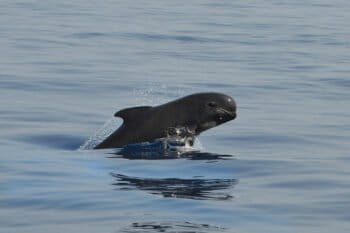
Mass pilot whale stranding in Indonesia raises questions about ocean health

Mongabay.com 14 Mar 2026

Villagers in central Indonesia rescued 34 short-finned pilot whales following a mass stranding on March 9, but despite their overnight efforts were unable to save 21 others.

Mongabay Indonesia’s Ebed De Rosary reports that residents first discovered the pod in the shallow waters off Deranitan village, in East Nusa Tenggara province, at approximately 3:30 p.m. local time. Local police coordinated with the local naval garrison and representatives from the fisheries ministry to launch a joint rescue operation.

Working past midnight, teams of officials, security personnel and residents using boats managed to guide 34 of the whales back out into deeper waters. Of the 21 whales that perished, authorities identified The largest was a male measuring 5.1 meters (16.7 feet). The species, Globicephala macrorhynchus, is not considered threatened on the IUCN Red List.

Imam Fauzi, head of the marine conservation area agency in Kupang, the provincial capital, said necropsies were conducted immediately to determine the cause of death. While the fisheries ministry is investigating the incident, local environmental NGOs like Walhi NTT are urging the government to expand the scope into a “thorough scientific investigation” to identify the root ecological triggers.

Christofel Oktavianus Nobel Pale, head of the aquatic resources management program at Nusa Nipa University, said the region’s unique topography, characterized by shallow waters, narrow bays and steep gradients, can disrupt the sensitive echolocation systems pilot whales use to navigate.

“Pilot whales have high social cohesion; when one individual, perhaps sick or disoriented, enters shallow water, the rest follow even into danger,” Pale told Mongabay Indonesia.

Yuvensius Stefanus Nonga, executive director of Walhi NTT, said the stranding is a “signal that must not be ignored,” suggesting it may indicate broader ecological disruption linked to climate change, shifting prey distributions, or human-caused ocean noise.

Indonesia’s waters serve as a critical migratory route for dozens of whale and dolphin species, yet, as Mongabay previously reported, the country’s Ocean Health Index, a framework that measures the health and sustainability of regional oceans, remains relatively low at 65 out of 100.

Experts emphasize that understanding the root causes of these frequent whale strandings is essential for improving national marine conservation policies.

Banner image: long-finned pilot whale Alexandre Roux’s photo, licensed as CC BY-NC-SA 2.0

Image

Indigenous knowledge confirms what scientists observe: Large birds are disappearing

Bobby Bascomb 13 Mar 2026

Many Indigenous peoples and local communities live in close contact with nature and learn to identify the wildlife around them from an early age. New research published in the International Journal of Conservation draws on that knowledge to better understand a scientifically documented trend: large bird populations are shrinking.

Álvaro Fernández-Llamazares, an ethnobotanist with the Autonomous University of Barcelona, Spain, and lead author of the study, first noticed that trend as a graduate student doing field work in the Tsimane’ Indigenous community in the Bolivian Amazon.

“Many elders told me that the large birds they had grown up seeing in the forest had become much rarer. Species that were once common in their childhood were now difficult to encounter,” Fernández-Llamazares told Mongabay in an email.

He cited similar accounts from Indigenous peoples and local communities in other parts of the world and from very different ecosystems. Large birds from their youth were disappearing, while smaller species seemed to be on the rise — a pattern scientists were also finding. “What had not been explored before was whether these global patterns were also reflected in the long-term ecological memories of people who interact with birds on a daily basis,” he said.

So, researchers surveyed 1,434 people across three continents and 10 sites as part of a broader Local Indicators of Climate Change Impacts (LICCI) project, an international research initiative to understand how Indigenous and local communities observe the changing climate in their territories.

Respondents were asked to name three birds that were most common when they were 10 years old, and the three most common species today. They collected nearly 7,000 individual bird reports belonging to 283 species, spanning roughly 80 years.

While memories can fade or birds can be misidentified, Fernández-Llamazares said the study was measuring an overall trend — and the trend was stark. The average body mass of birds in the surveyed areas is roughly 70% smaller today than it was 80 years ago. The pattern held across all study sites, from the tropical forests of Bolivia to the grasslands of Senegal and the arid deserts of Mongolia.

The report quoted a Daasanach elder in Kenya who summed it up well: “All the big birds are now gone.”

Fernández-Llamazares said there are several explanations for the trend. Larger birds tend to reproduce slowly, making them more vulnerable to population collapse. Also, they’re prime hunting targets since they can provide more meat per bird, and they often require larger tracts of intact habitat, which makes them sensitive to land-use change.

“This study is a great example of how Indigenous science and knowledge and Western science can be woven together to provide clearer answers to questions,” Pam McElwee, with Rutgers University, U.S., who wasn’t involved with the study, told Mongabay. “Each knowledge system stands on its own, but together they give us a more complex picture.”

Banner image of a toco toucan (Ramphastos toco) courtesy of Basa Roland via Wikimedia Commons (CC BY-SA 3.0).

Image

A fish a day: More than 300 freshwater species described in 2025

Spoorthy Raman 13 Mar 2026

Taxonomists described 309 new species of freshwater fish in 2025, according to a report released by SHOAL, the IUCN Freshwater Fish Specialist Group (FFSG) and the California Academy of Sciences (CAS). With nearly one new description each day of the year, the tally is the highest since 2017, and the third-highest since 1758, when scientists began keeping records.

The new fish species come from five continents and a diversity of habitats, including limestone caves, peat swamps, wetlands and rivers. Most are endemic and some are already at risk of extinction. Asia topped the list with 165 newly described fish species, followed by South America with 91, Africa with 30, North America with 20, and Europe with three.

“If there’s one thing this report shows, it’s that our planet’s rivers and wetlands are still full of surprises,” Michael Edmondstone from SHOAL told Mongabay in an email. “We hope this report sparks curiosity about freshwater life.”

Some of the intriguing new species include two cave-dwelling fish in China — Yang’s plateau loach (Triplophysa yangi) and the Sichuan mountain cave loach (Claea scet) — both of which are adapted to permanent darkness.

Museum specimens stored in Germany revealed two new species from East Africa. From the Democratic Republic of Congo, scientists described four new killifish (Nothobranchius spp.) species. They live in wetlands where the fish hatch, grow and reproduce in rain puddles all within a few weeks. When the water dries up, drought-resistant embryos stay buried in mud, waiting for the next rains before the cycle begins again. Their short lives in ephemeral pools mean they are vulnerable to disruptions in rain patterns. Of the 100 Nothobranchius species listed on the IUCN Red List, nearly three-quarters are already threatened with extinction.

A 60-centimeter (24-inch) sicklefin redhorse (Moxostoma ugidatli), from the Appalachian Mountains in the U.S., is possibly the largest fish described in the last century from North America. It derives its name from the Cherokee expression for “wearing a feather,” referring to its feather-like, sickle-shaped dorsal fin.

Freshwater fish are one of the most threatened groups of vertebrates. Their habitats are disappearing due to pollution, overextraction of water, invasive species, changing weather patterns due to climate change, and overharvesting. One of the newly described species from Kenya, Nothobranchius sylvaticus, is already critically endangered.

“There is a risk that many freshwater fish species will disappear without us knowing about them,” Richard van der Laan from CAS told Mongabay by email.

A formal scientific description is necessary to assess extinction risk, regulate trade under wildlife trade agreements such as CITES, and develop management plans. “Until species are formally identified and named, they remain largely invisible from a conservation perspective,” Edmondstone said. “Recognising them scientifically is the essential first step toward protecting them.”

Banner image: The rainbow killi (Nothobranchius iridescens), although identified in 2013, was only described in 2025 from the DRC, as there was no road access to collect specimens until recently. Image courtesy of Béla Nagy.

Image

Share Short Read Full Article

Share this short

If you liked this story, share it with other people.

Facebook Linkedin Threads Whatsapp Reddit Email

Subscribe

Stay informed with news and inspiration from nature’s frontline.
Newsletter
ImageImage

News formats

  • Videos
  • Podcasts
  • Articles
  • Specials
  • Shorts
  • Features
  • The Latest

About

  • About
  • Contact
  • Donate
  • Impacts
  • Newsletters
  • Submissions
  • Terms of Use

External links

  • Wild Madagascar
  • For Kids
  • Mongabay.org
  • Reforestation App
  • Planetary Health Check
  • Conservation Effectiveness
  • Mongabay Data Studio

Social media

  • LinkedIn
  • Instagram
  • Youtube
  • X
  • Facebook
  • Tiktok
  • Reddit
  • BlueSky
  • Mastodon
  • Android App
  • Apple News
  • RSS / XML

© 2026 Copyright Conservation news. Mongabay is a U.S.-based non-profit conservation and environmental science news platform. Our EIN or tax ID is 45-3714703.

you're currently offline

Advertisement