Georgia is proud to be called the Peach State, and that branding is everywhere, from water towers to the many streets named Peachtree in Atlanta. How did the state get that way? Peaches aren't a native fruit in America- they came from China by way of Europe. And when colonists found peach trees growing across the south, they didn't much like them. Instead, they started growing cotton, mostly for export, and made a ton of money. Even today, the cotton crop in Georgia is bigger than peaches, but "the land of cotton" as a slogan doesn't resonate the way it did 200 years ago.
How peaches became the symbol of Georgia is a neat story, but the most useful thing you'll learn is the difference between cling peaches and freestone peaches, which is good to know when you're at the grocery store. This video has a sponsor ad from 4:12 to 4:54.
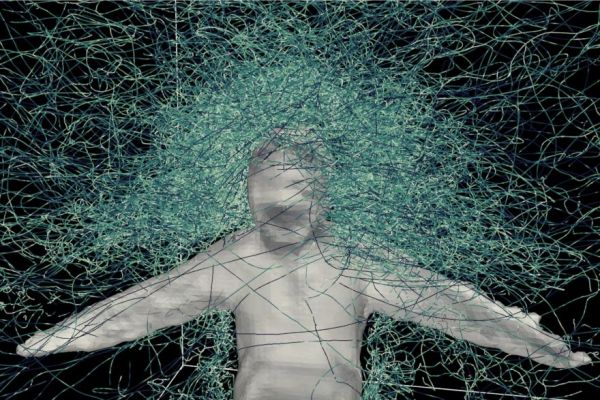
I feel sympathy for students who have to do the scut work in scientific studies on their way to becoming a scientist, like sorting through millions of insects or timing and measuring poop. Finally, one of these sacrificial lambs is getting the recognition they deserve. Chris Zuo was an undergraduate when he volunteered to help with a study on mosquitos (he now has a masters) at the University of Georgia. He wore a mesh suit, presumably the kind of mesh used for mosquito netting, and went into a room with 100 mosquitos. In four minutes he was covered with mosquito bites.
They found the mesh suit didn't work, but that wasn't even what the study was about. Instead, they were studying the flight patterns of mosquitos on their way to detecting a human target. Zuo didn't quit the study, however. He was game to try again, using other methods of protection so that the researchers could get high-speed video of the insects' flight patterns. Read what Zuo went through, and what the team discovered about how mosquitos detect a target at the Conversation.
(Image credit: David L. Hu, Georgia Tech)
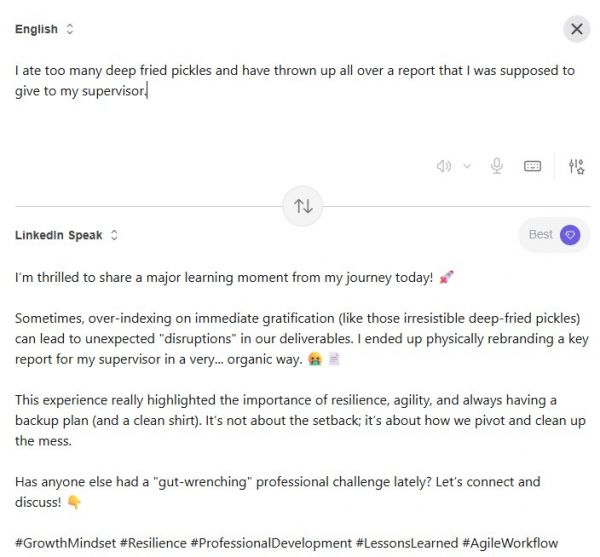
Creating a LinkedIn profile is essential for the job hunting process in many professions. I gather that so is despairing over the content posted therein. LinkedIn is notorious for being popular with business influencers who share ficticious or wildly inaccurate stories about their working lives or how they apply incidents in their personal lives for the workplace. There's a subreddit called LinkedIn Lunatics for the worst offenders.
The search engine Kagi created an AI tool that takes the work out of creating nonsense for your LinkedIn followers. It automatically generates LinkedIn gibberish based upon prompts from your daily life experiences.
-via kanav
Last week when I wrote about the guy who turned blue, I knew there were two reasons for people to turn blue, but I couldn't recall what the other one (besides colloidal silver) was. Now I remember! It's methemoglobinemia. I've even written about it. What does that have to do with Tylenol? You'll have to watch the video to find out.
Tylenol has been sold since 1955, but its history goes back much further. The underlying medicine's fever-reducing talent was discovered purely by accident, and I mean an accident at a pharmacy that could have been much, much worse. But it worked, not only to reduce fever, but to squelch pain as well. Testing has deemed it safe and effective, but scientists still don't know the exact mechanism of that effectiveness. It's possible that we might never know, because there are much more important problems than the exact mechanism of a drug that's already safe and effective. This video from Half as Interesting is a minute shorter than it looks, because that last part is an ad.
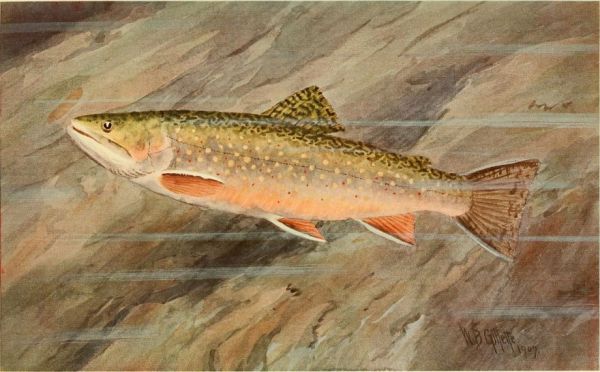
When we think about an uprising of the common people against ruthless overseers, we think of the French Revolution or maybe the Haitian Revolution, but one story from medieval Spain illustrates the concept well, whether it's true or not. And it all started over a single fish.
In 1158, in the town of Zamora on the border between the kingdoms of León and al-Andalus, a marketplace dispute began. A shoemaker bought the last trout of a fishmonger, when a servant of the local ruling knight Gómez Álvarez showed up and demanded the fish for his lord. A dispute ensued, and other townspeople joined in both sides. The servant left without the fish, and Álvarez was angry that the peasants didn't know their place. He gathered other knights together with the idea that such resistance cannot stand because it would undermine their authority. Meanwhile, the townspeople who supported the shoemaker gathered to burn down the church where the knights were meeting. The battle eventually escalated to the King of León. Some doubt the details, or if it ever even happened, but it's a great story you can read at Amusing Planet.
(Image credit: New York (State) Forest, Fish and Game Commission)
The board game Monopoly was invented by Lizzie Magie in 1904. She called it The Landlord's Game, and it was designed to illustrate the evils of capitalism. Charles Darrow stole the idea and made Monopoly to appeal to a player's greed, and that's when it took off. The game has been teaching children how to be ruthless ever since.
But people don't read the rules of the game anymore. They are long and involved and the print is too small. People tend to just play Monopoly the way they were taught, forgetting half of it, and many of the original rules have fallen by the wayside. Simon Whistler explains some of the most common Monopoly rules that are altered or ignored in the 21st century, and how the way most folks play it these days slows the game down and makes it more boring. It's still pretty ruthless, though. Your children will learn better things by playing Scrabble, or even Candyland.

People who are born blind and have their sight restored at a later age tend to not look at people's faces when they speak to them- they instead look at their hands. That's because they have built their sensory world around touch, hearing, and other senses and have more experience with someone else's hands than with faces. But that's only one way newly-sighted people have to learn how to deal with a world they can suddenly see.
Children born with cataracts can be treated surgically, but in developing countries this treatment may be out of reach. This gives us a population of people to study who have their sight restored after they have learned to live as a blind person. Their brains have to adjust to perceive the signals that an infant learns naturally over time, like separating shapes from colors, depth perception, distinguishing outlines, and facial recognition. During blindness, the visual cortex is often rerouted to process non-visual signals. Still, the brain is very adaptable. Read about the way people see for the first time at Big Think.
(Image credit: MC3 Michael Feddersen)
I had to look up a lot of terms to understand this video, but you don't really have to understand it to be impressed. The sarabande is a dance that dates back about 500 years that is notable for being three times as fast as a normal dance. Sarabande 2X Co-Op is a very difficult video game that uses a sarabande song at 157 beats per minute. It's played on the Pump It Up arcade game console that you play with your feet, like Dance Dance Revolution, except there are five foot pads, or ten if you play with a partner. Got all that?
Gamers ElijahTS and Tomatonium recently became the first team ever to finish this truly difficult game with a perfect score, during a livestream with plenty of witnesses. This is not just watching two guys play a video game; this is serious fancy footwork. They don't really get going until about 50 seconds into the video, and by then you'll be glad you stuck with it. -via Born in Space
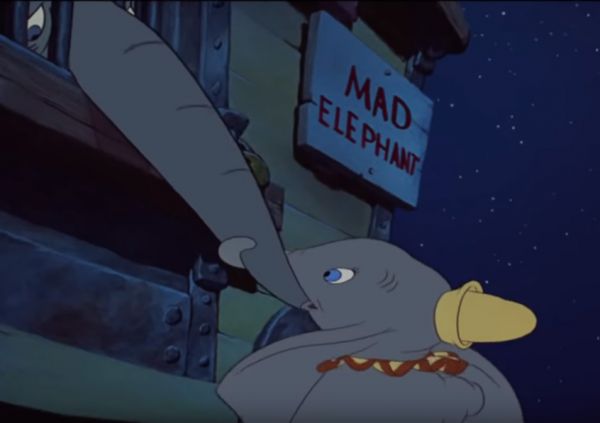
Disney animated movies are not all sweetness and light. A good drama tugs at your heartstrings, and Disney has perfected the art of building up your hopes and dreams by making you care about the characters, and then yanking them away in a minute. A consulting firm called sheets.works crunched the numbers and found that the moment of heartbreak most often comes halfway through a Disney film, although they vary from five minutes in (Encanto) to 96% of the way through the story (Pocahontas). Almost half involve the death of a parent.
They have a chart listing 33 Disney animated films, ranked by where the heartbreak comes in. Click the movie title to bring up the moment and its statistics, such as its type and how devastating it is. If you've seen the movies, it will take you back to how you felt watching it for the first time. -via Metafilter
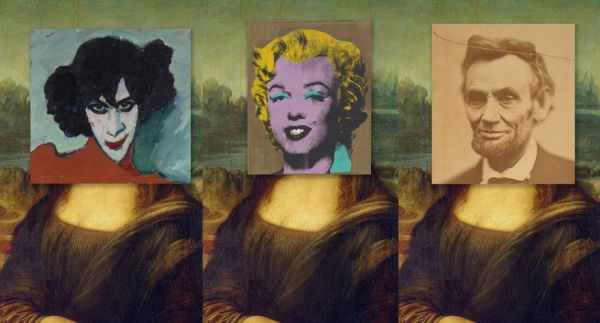
Once, as a child, I visited the Louvre in Paris. There was a crowd around the Mona Lisa--a surprisingly small painting--but not around other works.
It's the most famous painting in the Louvre, so it attracts a lot of attention. Writer David Friedman wondered: what do other museums regard at their most famous items on display? He found 17 museums that officials had specifically identified works of art as their own Mona Lisa.
In the case of the middle work above, it's a silkscreen by Andy Warhol of Marilyn Monroe in the possession of the Metropolitan Museum of Art in New York City. Friedman also includes museums of history and paleontology.
In the frozen northern lands comprising Canada, automotive brake parts are the natural prey of the North American Porcupine. Visitors in Valhalla Provincial Park in British Columbia have taken to protecting their vehicles by wrapping the bottoms of the cars with improvised fences made of chicken wire. Sometimes wooden stakes separating the wire from the vehicles provide an additional barrier to keep the hungry porcupines at bay.
Why do porcupines like to eat brake parts? I'm not sure. I've never tasted them before. But I'm inclined toward culinary adventures, so it's time to give them a chance.
-via Massimo
A superhero's costume must be skin tight, colorful, and come with a cape. But superhero costume designer Edna Mode says, "No capes!" and therefore some of the more modern superheroes don't. So why do the old school heroes like Superman and Batman wear capes? It's not just because capes are cool.
To get the real story, we have to go back to the pop culture that inspired the comic book superhero in the first place, back in the 1930s. Once a character has been designed, artists found all kinds of ways to use the cape to illustrate different aspects of the character or the story. As more and more superheroes came about, some went without capes just to be different, or as a statement that they aren't a slave to obsolete fashion unless the character was designed to be old-fashioned. My mother made a red cape and a blue cape for my brother and me to play superhero with. Whoever had the red cape was Superman, and the other was Batman. I made capes for my kids, too. When you have a cape, you don't need a full costume to be a superhero. -via Laughing Squid
On March 16, 1926, Robert H. Goddard launched the first liquid-fueled rocket in Massachusetts. It was a small rocket that flew for a short time and crash-landed, but it reached a height of 184 feet. Forty-three years later, another rocket of its kind would take men to the moon.
Still, the American investment in rocket technology was slow. The Germans used V2 missiles in warfare during World War II, and the scientists who developed it came to the US after the war. Still, American investment was slow in the next years. But then, the USSR launched a satellite in 1957, and America was thrust into a competition for space. Millions of dollars were poured into the new agency called NASA with the goal of outdoing the Soviets. That battle was won when Neil Armstrong walked on the moon in 1969. Since then, NASA's budget has waxed and waned, through joint operations with the Soviets and then the Russians, satellites, long-range unmanned probes, the space shuttle, and various space stations. Now that rocketry has fallen into the hands of private companies, it's time to look back at how far the technology has come in 100 years. Read a timeline of rocket history at the Conversation.
Michael Jackson is second on the list of the most successful recording artists in history, behind only The Beatles -whose music Jackson bought in 1985. That musical legacy was tarnished by the very weirdness of his personal life. Whether he was nefarious or just plain eccentric, he knew how to make headlines. But you might not know what came before. Yeah, that was the Jackson 5, which was the product of Joe Jackson.
While Joe chased fame all his life without success, it was always just outside his grasp. But Jackson's father saw his musically-talented young sons as a ticket to the big time, which must be cultivated by any means necessary. The cost was enormous for all his nine children, but especially for Michael. Michael spent his adult life rebuilding a fantasy childhood to make up for the normal one he never got. Weird History looks back in time to the Jackson family and their ascent to fame.
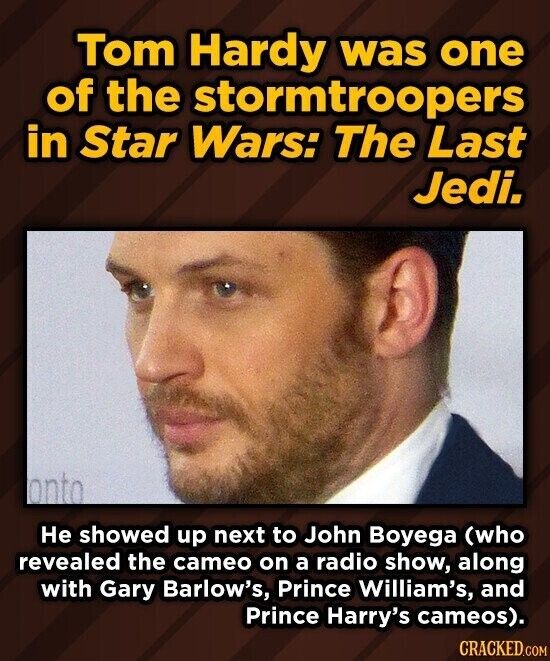
When a franchise has been running for 49 years, the kids who were fans from the start grow up, and some of them end up with enough clout to talk themselves into being in another movie. Casting a Star Wars film is a big job, but celebrity volunteers for the small roles and the extras just come out of the woodwork. It's as easy as "This is (someone already famous). Can I be in your movie?" Sure thing! Put a movie star into a stormtrooper helmet, and you don't have to give them screen credit. Some of these stars are such avid fans that you wouldn't even have to pay them, but that's probably against union rules. In some cases, you don't even have to be a movie star, if the crew already knows you.
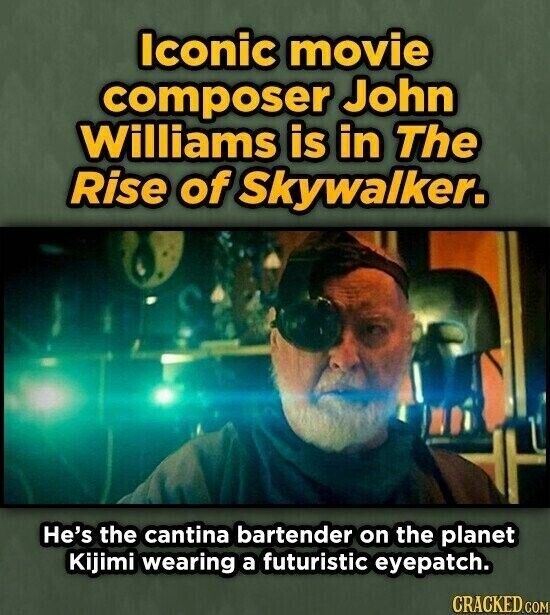
Read up on 15 of the unlikely cameos and extras that celebrities talked Star Wars producers into at Cracked.