This article explains the syntax of SWHIDs, describing how the core identifier and optional qualifiers are structured. It shows how SWHIDs can reference software artifacts such as files, directories, revisions, and releases, and how their design enables precise comparison of software
An amazing journey of 8 weeks full of code, new experiences, and interactions.
I had an amazing time at the Season of KDE 2026. All the guidance from my mentors, Benson Muite and Srisharan VS, really helped me work on Mankala and also helped me learn new skills.
So, lets summarize things a bit, what I was able to achieve during the span of these two months at KDE.
Complete GUI redesign
I have made major changes in the MankalaNextGen GUI, introducing Kirigami to have different light and dark themes. Improved the design for different pages, MainMenu, Rules, About, Profile, and much more, where I worked to introduced better colors and geometry to the shapes, like buttons or display boxes.
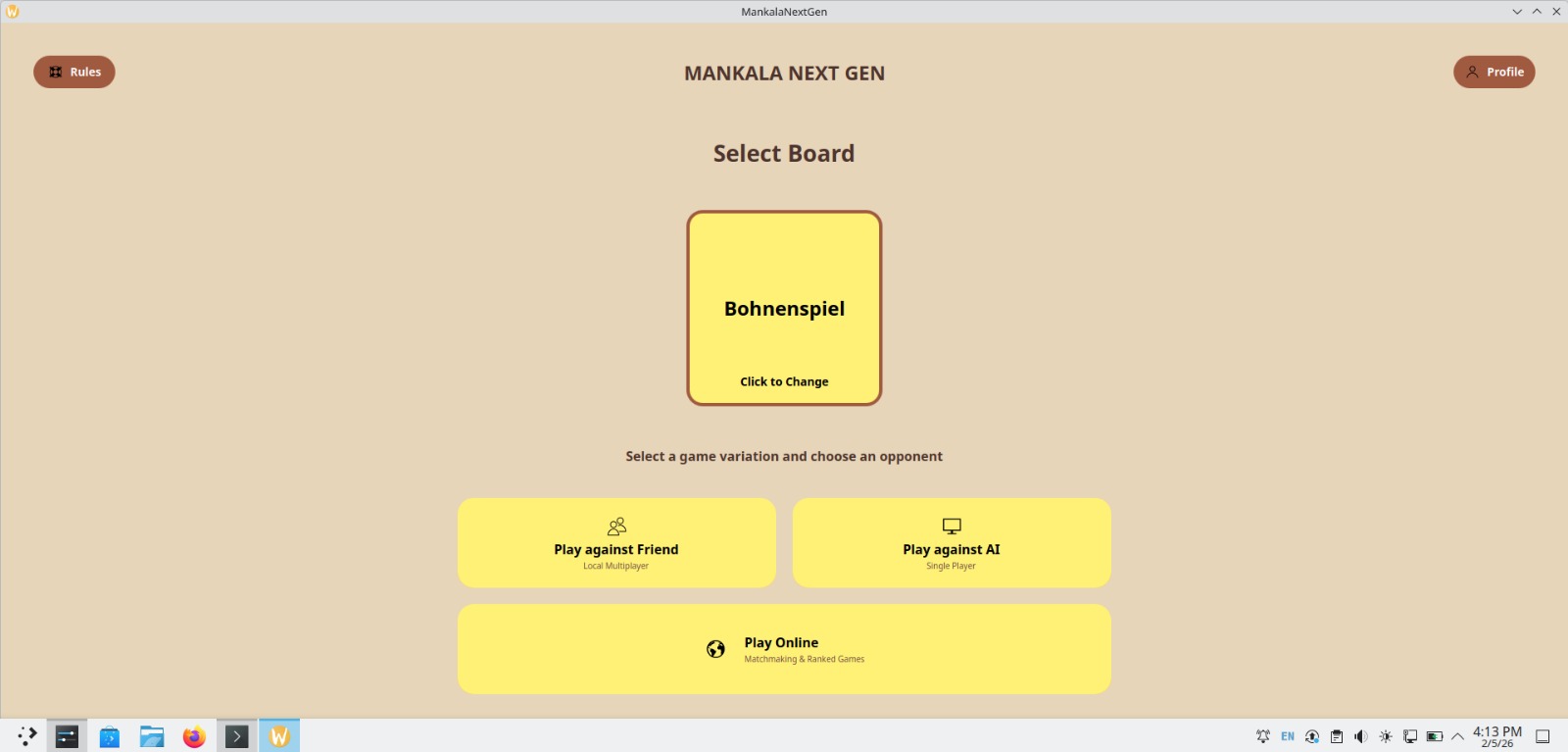
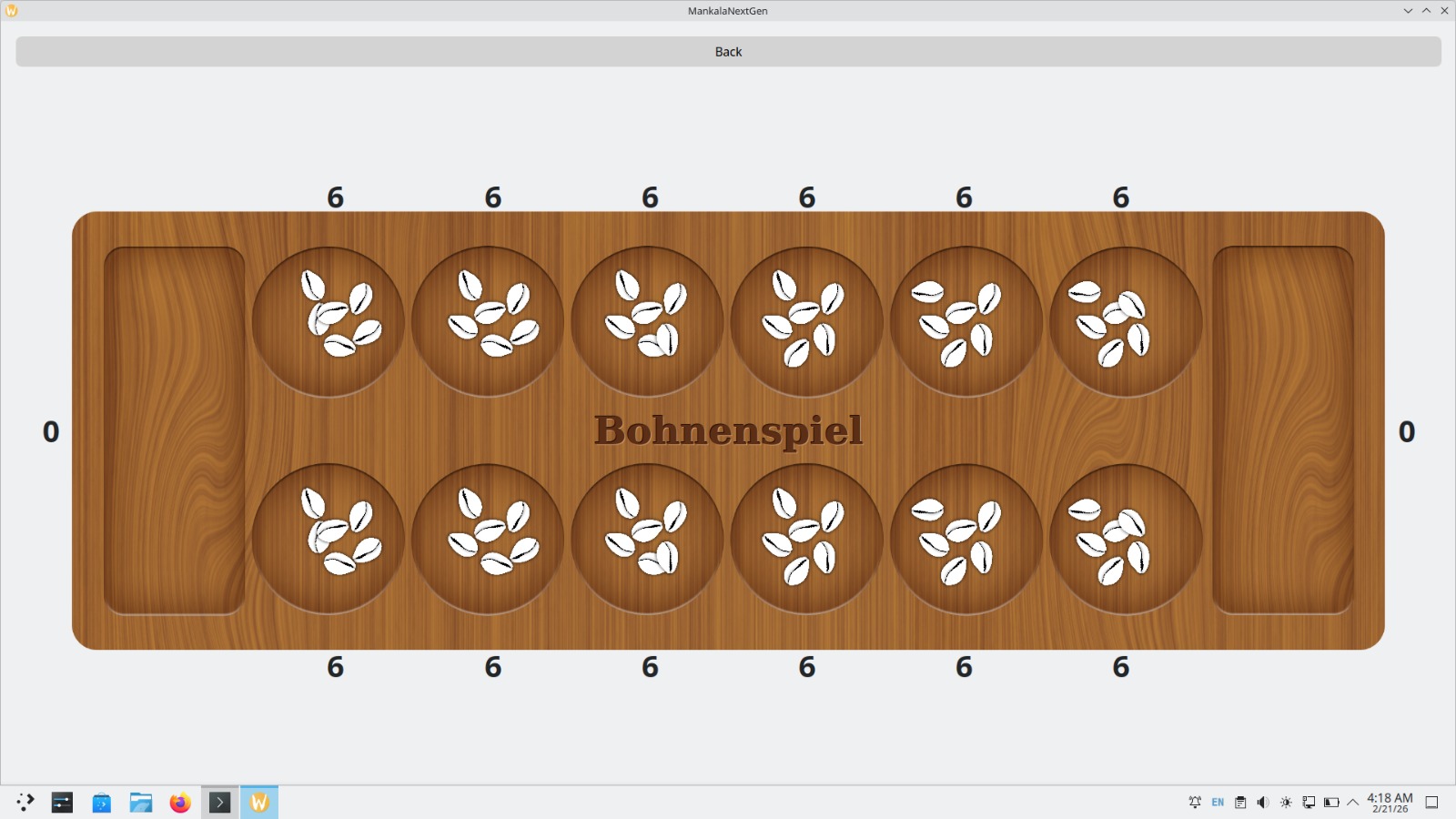
For the main Game interface, we made new boards and shells. I worked on integrating the logic for displaying the shells and fixing the Board based on the exact numbers shown from Mankala.
I tried generating a board using Perlin noise, which can be later integrated into MankalaNextGen to design the boards more efficiently based on variants. Added new code to generate a calm background music and a wooden click sound to make it look more authentic.
Translations and Localization
I started learning about Lokalize, KDE’s own translation software. I had successfully made translations for Mankala Engine and MankalaNextGen in Tamil and Hindi using Lokalize.
Artworks and KDE review
I have started working on the KDE review tasks and started with the fix to correct GitLab CI Build pipelines.
In the last few weeks, I started learning about Krita and made cover images for the three variants Bohnenspiel, Oware, and Pallanguzhi using their cultural Mankala boards and traditional motifs.
The journey doesn’t end here. Season of KDE has been a much-needed experience to improve my commitment towards projects and open-source. I plan to work with Mankala Engine and the KDE Community much more and make many other contributions.
Thanks to my mentors, my fellow contributors, and to the entire community for helping me so far. 🚀
It’s been an eon since I’ve had anything meaningful to talk about in the world of Open Source, so maybe it’s time to post about some nonsense I’ve been working on!
I have a love/hate relationship with progressive web apps. My job these days is in a corporate environment, and there are some things you can’t escape. Outlook. Teams. Other web-based applications. Be it Chrome or Firefox, there’s just so many things PWAs don’t do well. No persistent system tray icons. No break-away from the browser. Odd menu entries. What’s worse is that the PWA standard itself is limited in a lot of ways, and it really does feel like an afterthought by every browser vendor. Also, you can’t exactly get PWAs easily listed in app stores.
There’s Linux-y solutions. Electron-based apps. But those are an incredible time investment to maintain, and there’s about a dozen apps they don’t cover.
My C++ fu has atrophied, having been replaced with Java as my daily working language, and I haven’t kept up with KDE frameworks and Qt… But this itch was driving me crazy, and I just wanted to see some proof-of-concept that the entire situation could be just a little bit better!
Here’s the moronic idea: We split the difference between browser-based PWAs and hyper-tailored Electron apps. We just have… A pure “PWA Browser.”
So, this weekend I decided to give this “Vibe Coding” thing a try, see if this idea is viable. After hacking with Claude over the weekend, I did manage to get some decent results… So, see for yourself!
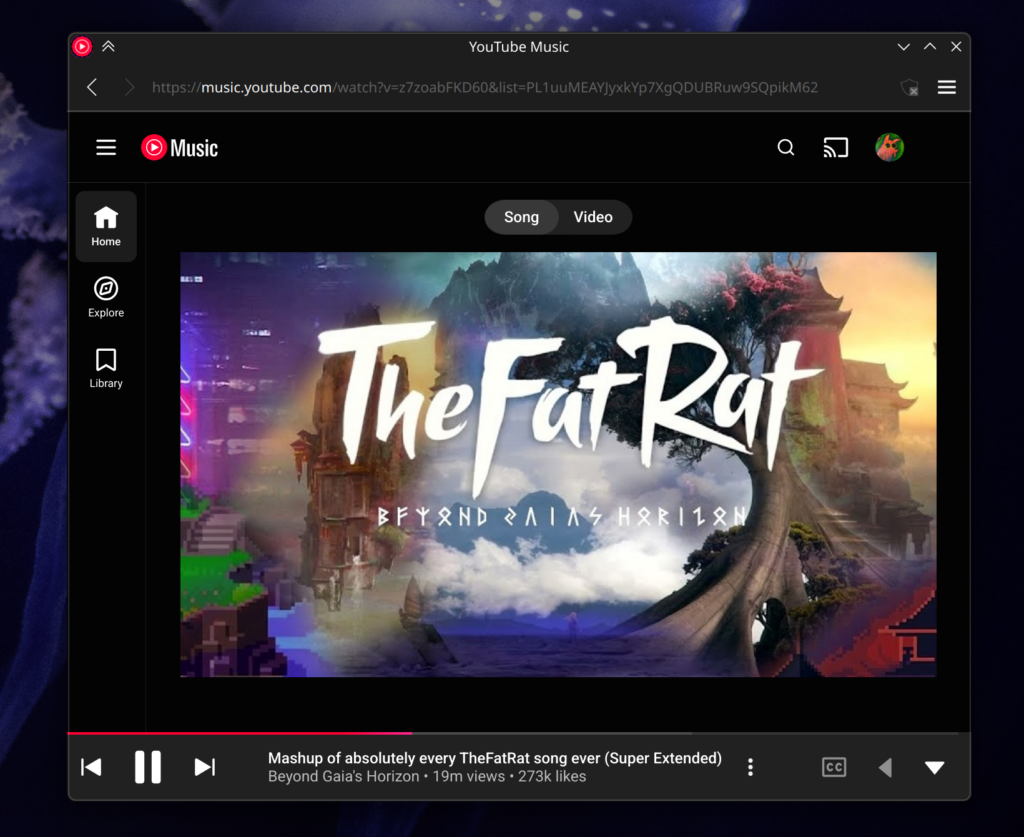
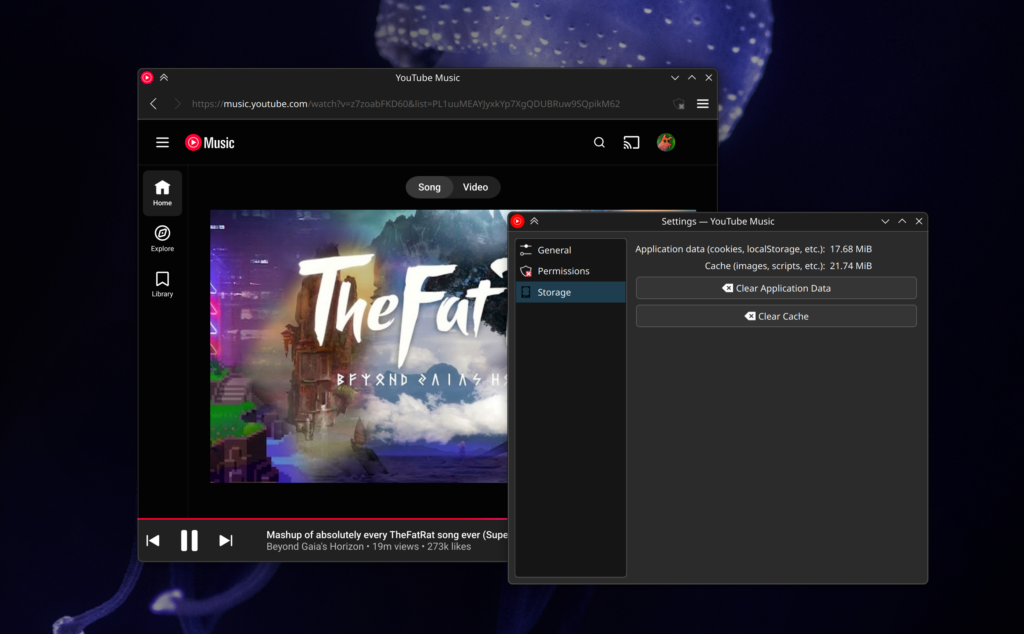
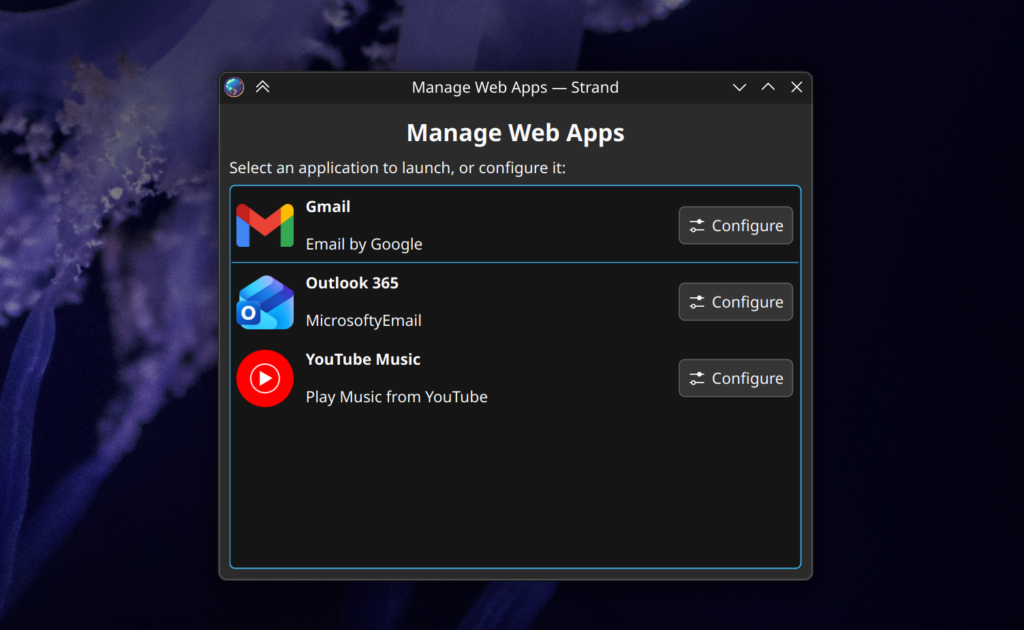
YouTube Music running as a PWA outside of a browser, no Electron wrapper.
The result is something I’m calling “Strand Apps”, because if you can’t have the whole web, maybe you can have a Strand of it.
Everything needs an icon.
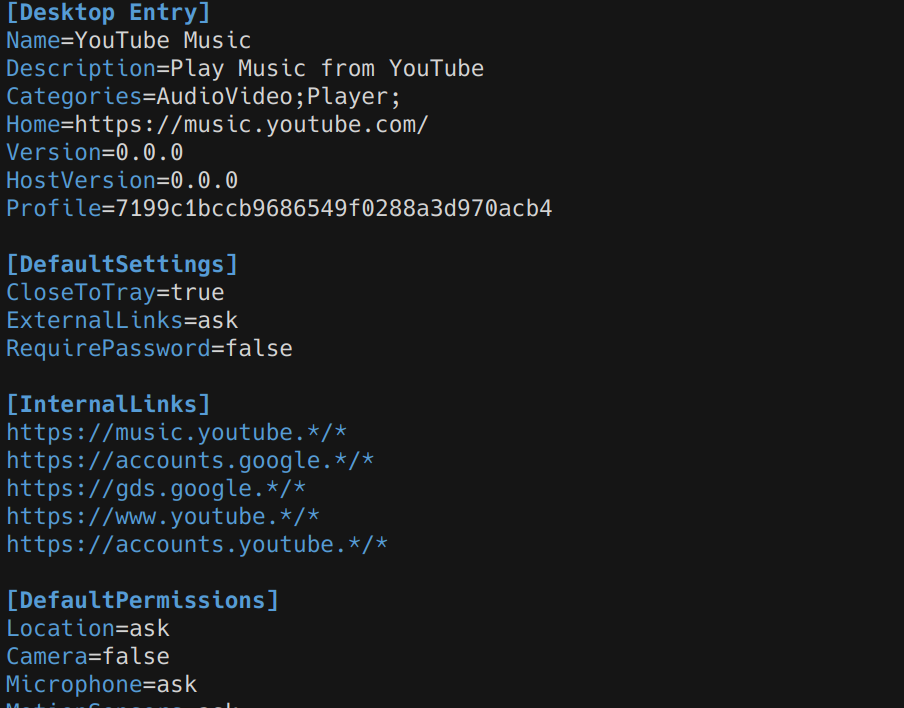
How does it work? “Strand Apps” are basically just .desktop files that live in your .local/share/strand-apps folder. These simple manifests gives you the basics like name, description, home location, a few safe links the app should trust, default permissions, and a couple behaviors… Like so!
Don’t worry, the wildcards are built to be safe, but ownership of code is still key; Claude was ready to let wildcards resolve into vulnerable domain patterns.
Ideally we simply define what would be “natural” for the application in a configuration file, and let the host provide exactly that. Would the app be persistent in the background? Sure. Turn on the tray icon. Does it need a toolbar? If not, turn it off. We get that “Near native” behavior, but without forcing people to maintain an entire electron container. Once we have that configuration then anyone with that config gets a top-tier experience.
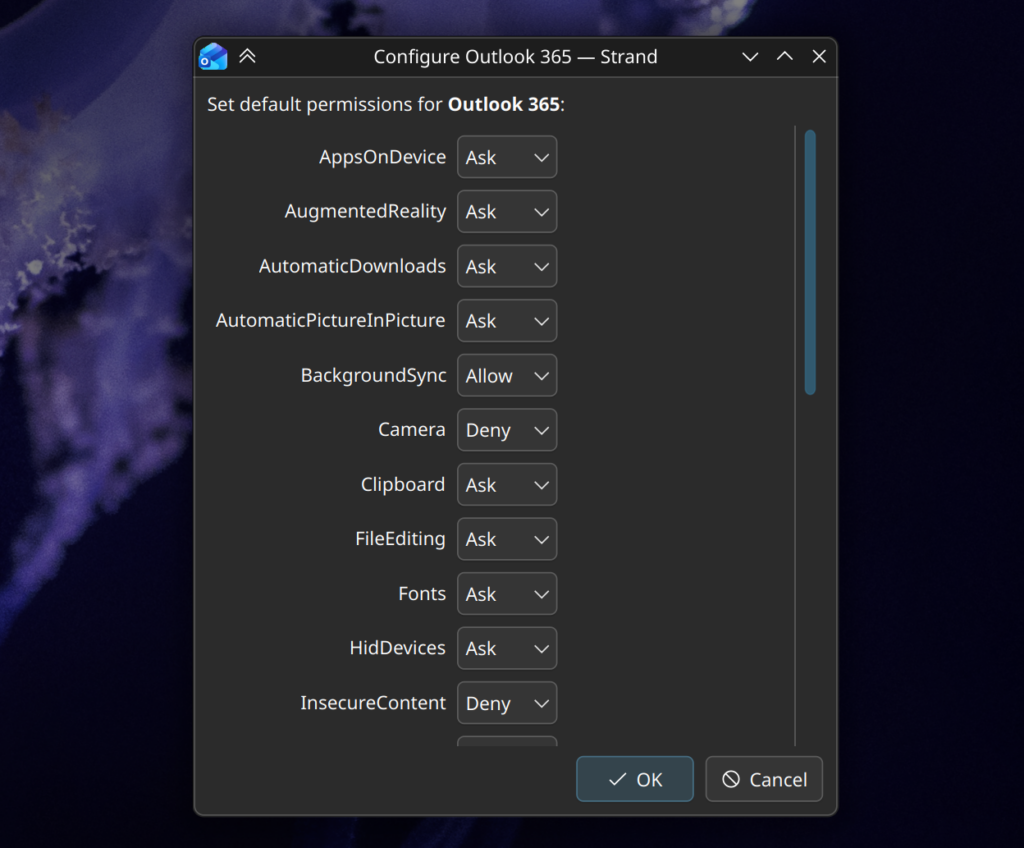
The first time you launch a strand, you’ll get onboarded for that app. Pictures below is the Outlook 365 Strand…
It’s not pretty, but for now it lets you see what the app wants, and you can choose what you give it. There’s a lot to do with this to improve the onboarding experience, but it’s a start. Before I even get into it – no, basically none of these do anything. Don’t read too much into it, I just looked at what Chrome gives PWAs and ripped off that list.
Another thing on my todos is having it create launcher .desktop files in the menu as an option in the onboarding window. I have the ingredients there, just haven’t put em’ together.
That’s not to say it’s all wall-dressing. The applications each run in their own little silos, unable to read or see what the others are doing, the host system separating their browser persistence completely. I can be signed into an alternate Google account for my Gmail strand, and my main account on my YouTube strand. Each application can also manage its cache and storage separately, kinda like Android apps.
Apps using this don’t share settings. If you need to tweak one strand app, you don’t need to commit everywhere. This was a major problem I had with traditional PWAs, because I explicitly needed to disable hardware acceleration on one app (can’t remember why), but everything followed the parent Chrome installation. I remember I had Chromium installed just for that one specific PWA.
One of the key motivations I had was something small – tray icons and background persistence. Question: How do you get a fully functional Outlook app on Linux? I’m sure someone has a solution, but I never found a satisfactory one myself. Ultimately, I had a webview widget in my system tray purely for the icon and persistence, and a Chrome PWA for an actual app window that wasn’t locked to the corner of my screen. I’d use both interchangeably, but I was always annoyed by the solution – and resource usage.
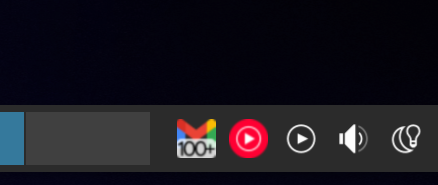
This fixes that problem. That manifest snippet you saw has a “CloseToTray” value. Tells the app that it’s goanna persist. It does. These are the sorts of integration features I’m focused on. Here’s Gmail showing its proper indicator count in the tray:
My vast number of unread emails, hanging out with my lovely music strand. Plasma has a fix for Electron coming because its tray icons could not be toggled independently. Luckily, this doesn’t have that issue.
Beyond the tray, I’ll be thinking about what other behavior settings an app might have, such as the config that removes the toolbar for “safe” apps, or for apps to specify if they’re single-window or multi-window by nature. What I really want is a solution where you can easily distribute apps that behave “as you expect”, and not like something with one foot in the browser.
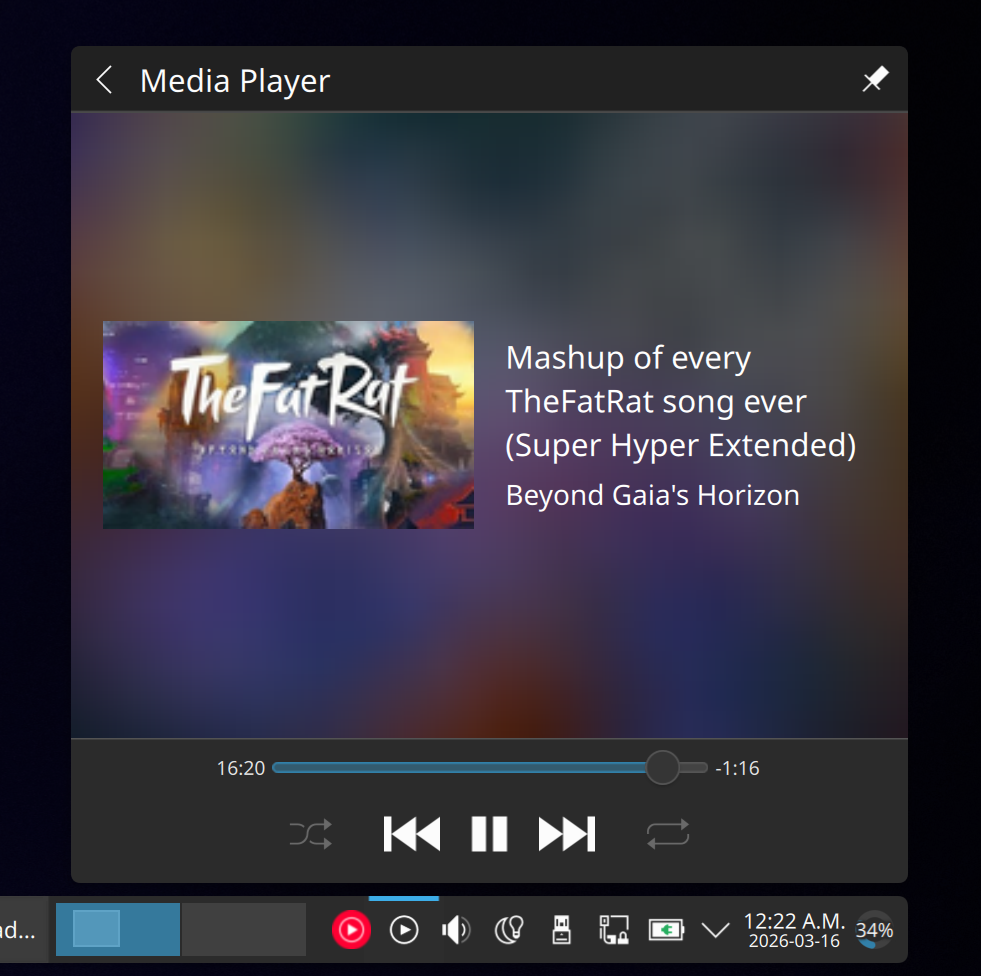
Speaking of the tray… MPRIS works. Interestingly, navigation was borked in Chrome proper but somehow it “just works” with the strand. I didn’t even mean for that to happen.
Right now I have 3 Strand Apps; Gmail, Outlook, and YouTube Music. If I launch Strand without specifying a profile, it’s kind enough to give me a basic list of my installed apps. It also lets you launch the config for them before running, so if you break a web application profile you can recover. E.g. something has freaky WebGL that crashes the renderer.
This needs serious visual TLC.
The code is QT/KDE Frameworks. I didn’t wind up using Kirigami, ideally these apps won’t have much interface to them anyway, and I also wanted to use the fastest path from launch-to-application.
So… Perfect, right!?! NOTHING wrong with this setup? Push it up tomorrow?
This is where I get real about AI. Claude is pretty good, but it’s still an amateur chef in a professional kitchen. Even by my substandard C++ skills it’s apparent. At best I’d describe this work as wonderful scaffolding, but it’s still in need of a serious audit. I caught no less than 3 significant security risks it tried to give me, and it needs serious organization at minimum. Progress-wise none of the permissions are hooked up, and I want to dive into the PWA spec “proper” because I basically ignored it, and it might be able to streamline things. There’s also a lot of UX work to be done.
Beyond even that, there’s also the core design. The .desktop manifest format I designed is built around the concept that someone will make a bespoke configuration file for every app worth having. This has the strength that a properly configured strand will be a stellar out-of-box experience, and with YouTube Music as my dog food it almost feels nicer than the Electron version… But how do we distribute these weird files? Does someone even want to distribute them? Is my silly little experiment giving people reading this headaches because infrastructure and distribution is always the bigger problem? Who makes them? Is my flagrant disregard of the .desktop file spec going to cause problems? Should I brace myself for the lynching that using AI has earned me? No matter what, the one thing I know is that, somehow, these can be distributed.
This is something I’m going to futz with for a while. I figure I’ll do a serious code review next weekend, maybe re-org it, then get it into a git repo somewhere when I’m satisfied it won’t eat anyone’s cat.
KDE Gears 26.04 hit beta phase just a few days ago, so it is time to give an update on the new features in KJournald.
For 26.04, the main release goal was to have a natural integration of systemd user services and system services in the log view workflow. This means:
When opening a journald database on a system, from now on per default both the system and user service log records are opened and both will be displayed in a joint view. — If you do not like this, got to “Current Journal” -> “Limit Accessed Logs” and choose your preference. That configuration then is also stored persistently over several boots.
Revisiting the overall UI with this feature in mind, we need few more changes to really make it fly:
User units often are templated systemd services. This means, there is a single service definition but multiple instances of the service template with different parameters can be created. Using the traditional way to list every unique service in the filter criteria view (left side view) makes the filtering hard to use due to the number of services. So, as a new (opt-out; enabled per default) feature, templated services are grouped. So, for example, all my “app-org.kde.dolphin@[…].service” services can be enabled/disabled at once in the filter view. In the service name hover-info in the log view however, they still are displayed as full service names.
Typically, due to user units being user workflow specific, there are a lot of systemd services that are not started in every boot, because a user can control their startup individually. For this reason, services and executables are now being pre-filter according to the selected boot. Log priorities are not (yet) taken into account for this pre-filtering, but at least only useful filter entries are shown, which should be a major usability gain on its own.
If you interested in the features, try out the KDE Gears beta release or just install the latest nightly build of org.kde.kjournaldbrowser from the KDE Flatpak nightly CI.
Another month has gone by since the last time I wrote about KDE Linux, KDE’s upcoming new operating system. The project hasn’t stood still! Here’s an assortment of what’s gone on recently:
Real sizes for system updates
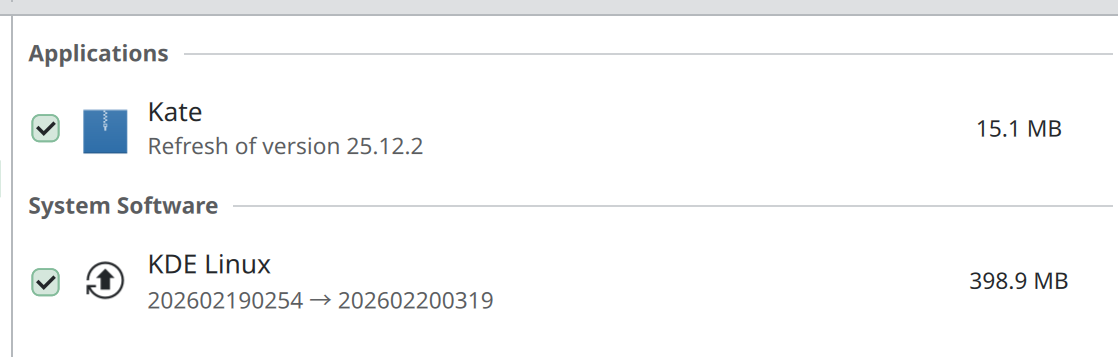
Aleix Pol Gonzalez and Harald Sitter built the machinery to allow update sizes to be calculated for delta updates. This means the sizes listed in Discover are no longer “Unknown”. Instead, you’ll see a real number:
Better tools for extending the OS
Lasath Fernando started building out the new Kapsule system, which is a tool for installing software in long-lived containers with great integration with Konsole and the rest of the OS. Before this, we experimented multiple options for experts to extend the system — including Homebrew, Distrobox, and Nix — but none really hit the sweet spot. They were too limited, too dangerous, too complex, too ephemeral, or too something else.
Kapsule deeply integrates with Konsole, which makes sense because a terminal window is a major interface for touching or extending the system in this way. Integrations with Kate and Discover are planned, too. In other words, we want to go all in on this promising new technology for the “extending the system” story for experts and software developers.
Harald did a lot of work to upload KDE Linux images to a better location, in preparation for far higher server loads in the future as the OS gains users and rolls out a user-focused edition.
Hadi Chokr turned on support for reading from and writing to disks formatted with Apple’s APFS filesystem.
Safer Homebrew, ydotool, and AMD GPUs
renner03 put in place a safety mechanism that prevents Homebrew packages from breaking the system in case you install Homeberew and any of its packages would otherwise conflict with system files. Now, the Homebrew packages break instead.
Note that we still don’t recommend Homebrew. But now you can use it without endangering the rest of the system.
KDE Linux is still an alpha product with lots of bugs and rough edges. We had our second dev call yesterday and discussed the road to a beta release, which will include user builds. We’re going to be focusing on a number of high priority issues and will consider the other beta-milestoned issues to be done on an “if we can” basis.
Get Involved!
Progress on KDE Linux is steady but nonetheless rather slow. Help is greatly appreciated. In addition to installing it and reporting issues, there are lots of development task that need doing:
There is a lot of talk about digital sovereignty. Being able to act as a state or as a company is obviously important. But there are real dependencies, and given the current geopolitical dynamics, there are real risks. Unfortunately, there are no easy answers. Digital sovereignty matters, but so do stability, efficiency, and innovation. Fortunately, there are options and some good examples of how to deal with it. I collected some material in an awesome list on digital sovereignty.
While it is complex at the state level, it is merely complicated at the personal level. Reaching something like personal digital sovereignty is possible. If you are informed about the technical landscape, you probably already have a good intuition about it. You feel the pain of having to stop using a service because the provider decided to discontinue it without you having a say. You can decide whether it feels right to upload your personal diary to a server in a jurisdiction you do not control.
Free Software provides a path
There is a clear path to personal digital sovereignty. The goal is nicely expressed in KDE's mission: "A world in which everyone has control over their digital life and enjoys freedom and privacy." The path is provided by Free Software. The freedoms to use, study, share, and improve give you exactly what you need to be in control.
For software you run yourself, this works well. Running Free Software on your personal computer gives you control. It feels good. It becomes more complicated when you use services you do not and cannot run yourself. The software freedoms do not transfer easily. There are a lot of services, which are mostly based on Free Software, but only the service providers enjoy the freedoms, not their users. I have written about this before when working on my Fair Web Services project.
A good testament to personal digital sovereignty is the Blue Angel for software. Its focus on resource and energy efficiency is one side of responsible software use. Maybe even more important is its emphasis on user autonomy: being able to use software without ads being forced on you, being able to choose what to install, and having transparency about what you run. These are the ingredients of personal digital sovereignty.
Finding the balance
Freedom is one side, but convenience is another. Sometimes it is easier to just use something a vendor has invested heavily in providing, even if you pay with your data and some independence. It is also a question of where you spend your time: do you build something for yourself, or do you use something that already exists? And sometimes it is about the limits what you can do yourself. Powerful tools can give you leverage so you can focus on your actual mission.
So it is also about compromise. One very important aspect for me is that I am still able to choose. That is the core of personal digital sovereignty. Sovereignty does not mean doing everything yourself. It means preserving the ability to leave, even if you choose not to.
Federated services make it easy to migrate. For git, for example, it does not matter so much where the server is or who runs it, because switching is as simple as changing the remote. For a proprietary note-taking service, this looks different. You may need special exports, format conversions, and you might lose functionality because it is not based on open standards. Choose your dependencies wisely.
It is important to remember that dependencies are not bad per se. We know this from Free Software. We know what it feels like to stand on the shoulders of giants. We rely on the collective strength of a global community. It is not about rejecting all dependencies or doing everything on your own. It is about creating alternatives and shaping an ecosystem based on openness, so that we can choose and act on our own terms.
My personal stack
I am quite happy with my personal stack, which gives me the control I need. My 12-year-old desktop runs Linux and KDE. I pay to host my own email, Nextcloud, and git services. One project I particularly like is GitJournal, which gives me control over my note-taking across all my devices. This covers the core of my computing needs, with my family, my friends, and what I decide to keep private.
To stay connected to the wider world, there is no way around being present on large networks. GitHub and LinkedIn are the compromises that give me reach without requiring me to abandon all my principles. I would not publish my writing only on LinkedIn, though, because I want to own what I produce.
AI is a difficult question right now. It is easy to switch between services, and with rapid development it is changing quickly what the best choice is. And it can provide tremendous leverage. So it remains an evolving compromise. An ideal future would offer open models powerful enough to serve your needs and that you can run locally.
Building digital sovereignty
On a personal level, you can decide for yourself. There are limitations, and you will have to build on the environment available to you. But there are alternatives, and you can choose to build your personal digital sovereignty.
At the corporate and state level, it is more difficult. The systems are more intertwined, but the pain of dependencies you cannot control and the risks of others making decisions for you are just as real. Alternatives exist there as well, often the same ones available on a personal level. It can be worth taking bold decisions.
Digital sovereignty at the state level is about national security. At the personal level, it is about personal freedom. Free Software provides a powerful path to maintaining control over our digital lives.
I am not arguing for tools. I am arguing for agency.
This week something very special landed for Plasma 6.7: the ability to type characters not on your physical keyboard by pressing-and-holding the keys that it does have:
The feature lives in the plasma-keyboard module, so you’ll need to have that installed and turned on in System Settings > Keyboard > Virtual Keyboard. After that, just press-and-hold keyboard keys!
But that’s not all! We’ve got some more features, a lot of user interface polishing, and some bug-fixing and performance work. All in all, a good week!
Other notable new features
Plasma 6.7
You can now install custom sound themes from downloaded files. (Sam Crawford, plasma-workspace MR #6115)
The Global Menu widget now shows menus for the active window even if it’s on another screen. This is configurable and can be turned off if you preferred the old behavior. (Trevor Jex, KDE Bugzilla #420418)
Notable UI improvements
Plasma 6.6.3
Did a round of polish on the “Add Widgets” sidebar to make sure the widget count numbers are always correct and the on-demand delete button disappears the moment it’s no longer useful. (Tobias Fella, plasma-workspace MR #6378)
The “Configure” button on an unconfigured desktop widget now always fits within it, even if it’s very, very small. (Tobias Fella, plasma-workspace MR #6374)
The Clipboard widget no longer shows you QR codes for non-text items, for which they didn’t actually work. (Tobias Fella, plasma-workspace MR #6392)
Browsing through categories in Discover now highlights the active one in the sidebar as expected. (Akseli Lahtinen, discover MR #1280)
Made Spectacle’s magnifier better at being pixel-aligned. (Noah Davis, KDE Bugzilla #517274)
Plugging in a USB printer now shows only one notification about it, not two. (Mike Noe, print-manager #312)
The “Kate Sessions” KRunner plugin no longer advertises results if Kate isn’t installed or is installed as a Flatpak where its functionality doesn’t currently work — though that could change in the future. (Nicolas Fella, kdeplasma-addons MR #1018)
Quick tiling two adjacent windows now centers them in the available area excluding any panels, rather than squeezing the window closest to the panels. (Anthony Flammia, KDE Bugzilla #484975)
Notable bug fixes
Plasma 6.6.3
Fixed an issue that could prevent the system stats collector from working properly on Raspberry Pi devices. (Ben Murdoch, ksystemstats MR #127)
Fixed a few sources of glitchy behavior when resizing widgets on the desktop. (Tobias Fella, plasma-workspace MR #6373)
Worked around a bug in Samsung LS24D60xU monitors (yes really, a bug in the monitors themselves) that made them turn on and off again in a loop. (Xaver Hugl, KDE Bugzilla #516605)
Fixed a stubborn issue causing the Arch/CachyOS updaters’ System Tray context menus to sometimes be mis-positioned. (Vlad Zahorodnii, KDE Bugzilla #517093)
It’s now possible to change the keyboard shortcut used for KWin’s Mouse Mark effect. (Nicolas Fella, KDE Bugzilla #501537)
The reset button in System Settings’ SDDM configuration page now resets a few more things it had missed in the past. (Chandradeep Dey, sddm-kcm MR #103)
Plasma 6.7
Implemented a fix in Plasma code to prevent Electron apps’ System Tray icons from all following each others’ settings. This is an upstream bug in Electron which has been fixed, but most Electron apps haven’t yet been updated to include the fix, so for them, this new Plasma-side fix should also stop the issue from happening. (Nekto Oleg, plasma-workspace MR #6400)
wxWidgets 3.3.3
Fixed a bug in the wxWidgets library that broke certain copy-paste operations in wxWidgets apps, such as KiCad and Audacity. (David Edmundson, KDE Bugzilla #514317)
Notable in performance & technical
Plasma 6.6.3
Reduced CPU and GPU load for full-screen windows (also known as “direct scan-out”) for screens using more fractional scale factors. (Błażej Szczygieł, KDE Bugzilla #517264)
Plasma 6.7
Improved the robustness with which sandboxed apps can initiate screencasting and remote desktop requests. (Gabriel Maizo, xdg-desktop-portal-kde MR #526)
If you happen to have multiple GPUs and any of them don’t actually support OpenGL 3D acceleration, this no longer prevents the more capable ones from providing 3D acceleration. (Xaver Hugl, KDE Bugzilla #441409)
How you can help
KDE has become important in the world, and your time and contributions have helped us get there. As we grow, we need your support to keep KDE sustainable.
Would you like to help put together this weekly report? Introduce yourself in the Matrix room and join the team!
Beyond that, you can help KDE by directly getting involved in any other projects. Donating time is actually more impactful than donating money. Each contributor makes a huge difference in KDE — you are not a number or a cog in a machine! You don’t have to be a programmer, either; many other opportunities exist.
You can also help out by making a donation! This helps cover operational costs, salaries, travel expenses for contributors, and in general just keeps KDE bringing Free Software to the world.
To get a new Plasma feature or a bug fix mentioned here
It’s been a busy few months for the development team! We’ve been focusing
heavily on turning Marknote into a much more robust knowledge base while
keeping the interface as clean and distraction-free as possible. Today,
we're releasing version 1.5, and it’s packed with major additions and
quality-of-life improvements.
Here is a rundown of what we’ve added to this release.
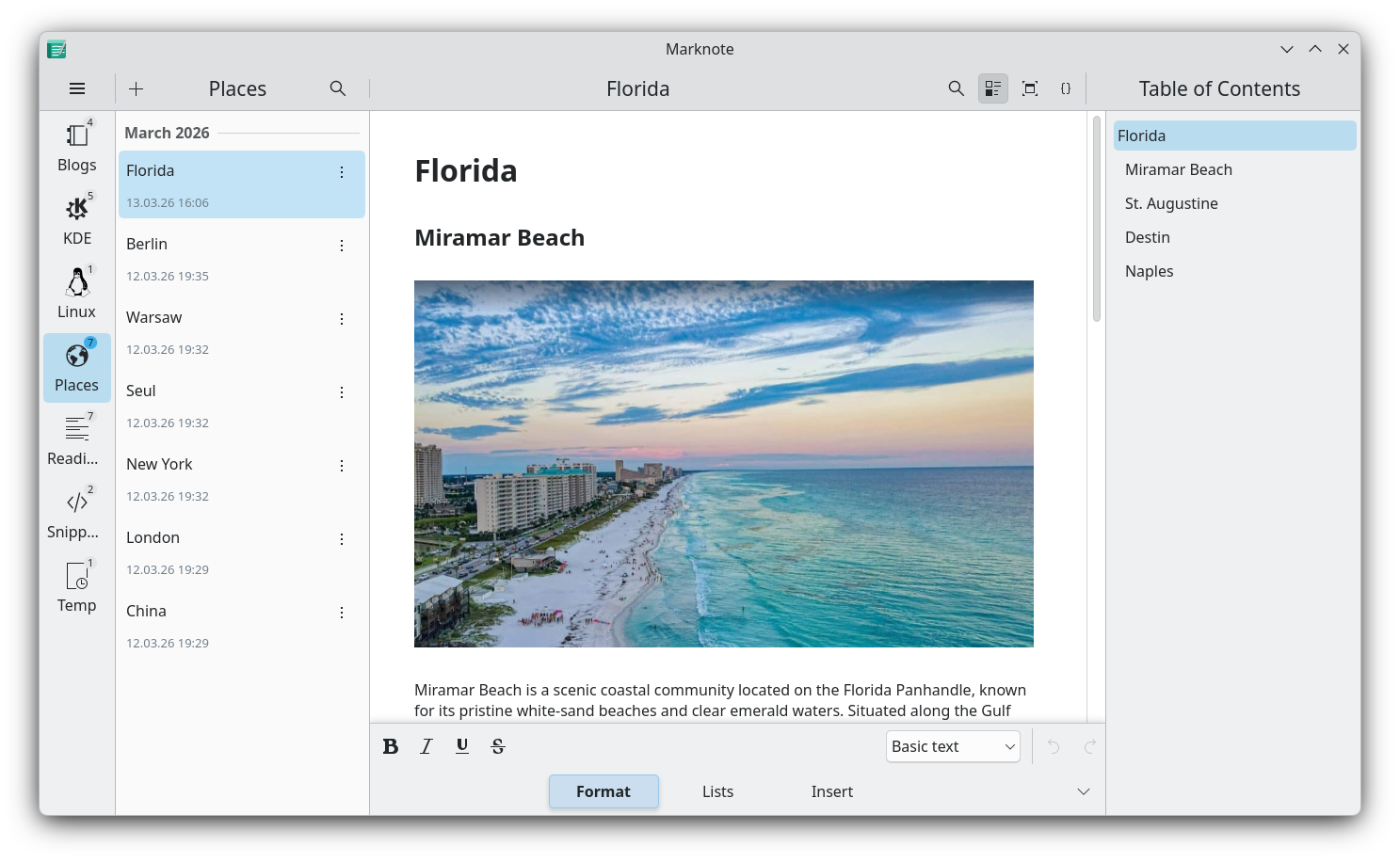
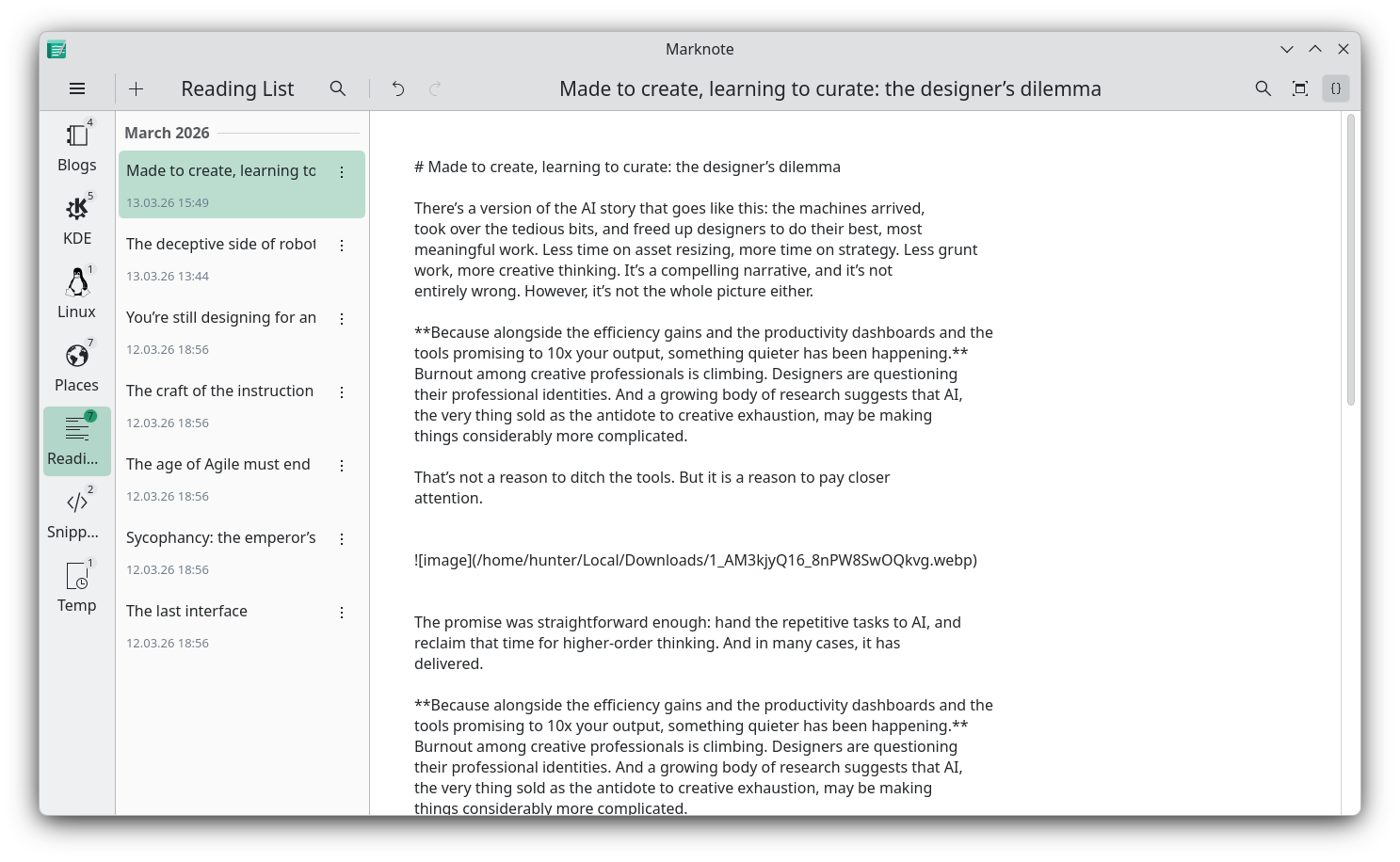
Source Mode
One of the most highly requested features is finally here: Source Mode.
Thanks to some fantastic work from our Season of KDE (SoK) contributor,
Siddharth Chopra, you can now bypass the rich-text WYSIWYG interface
entirely. If you’re the type of person who prefers looking at the raw
Markdown syntax while structuring your thoughts, you can now seamlessly
toggle into a dedicated source editing view.
Note links
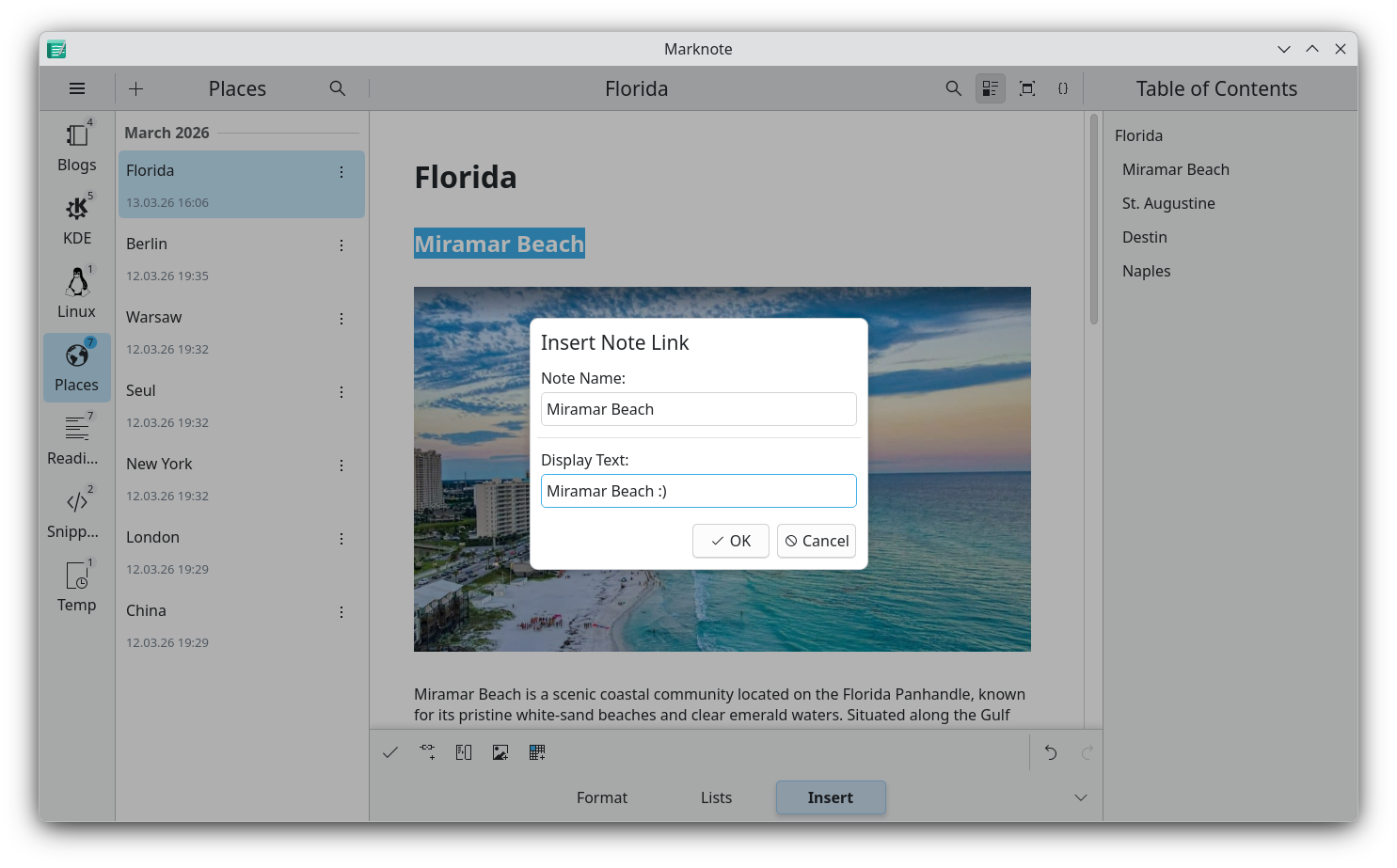
Notes are rarely isolated thoughts, so we’ve added internal wiki-style links with
cross-notebook lookup. You can now easily link documents to one another,
making it much simpler to build out a connected web of ideas.
Note management
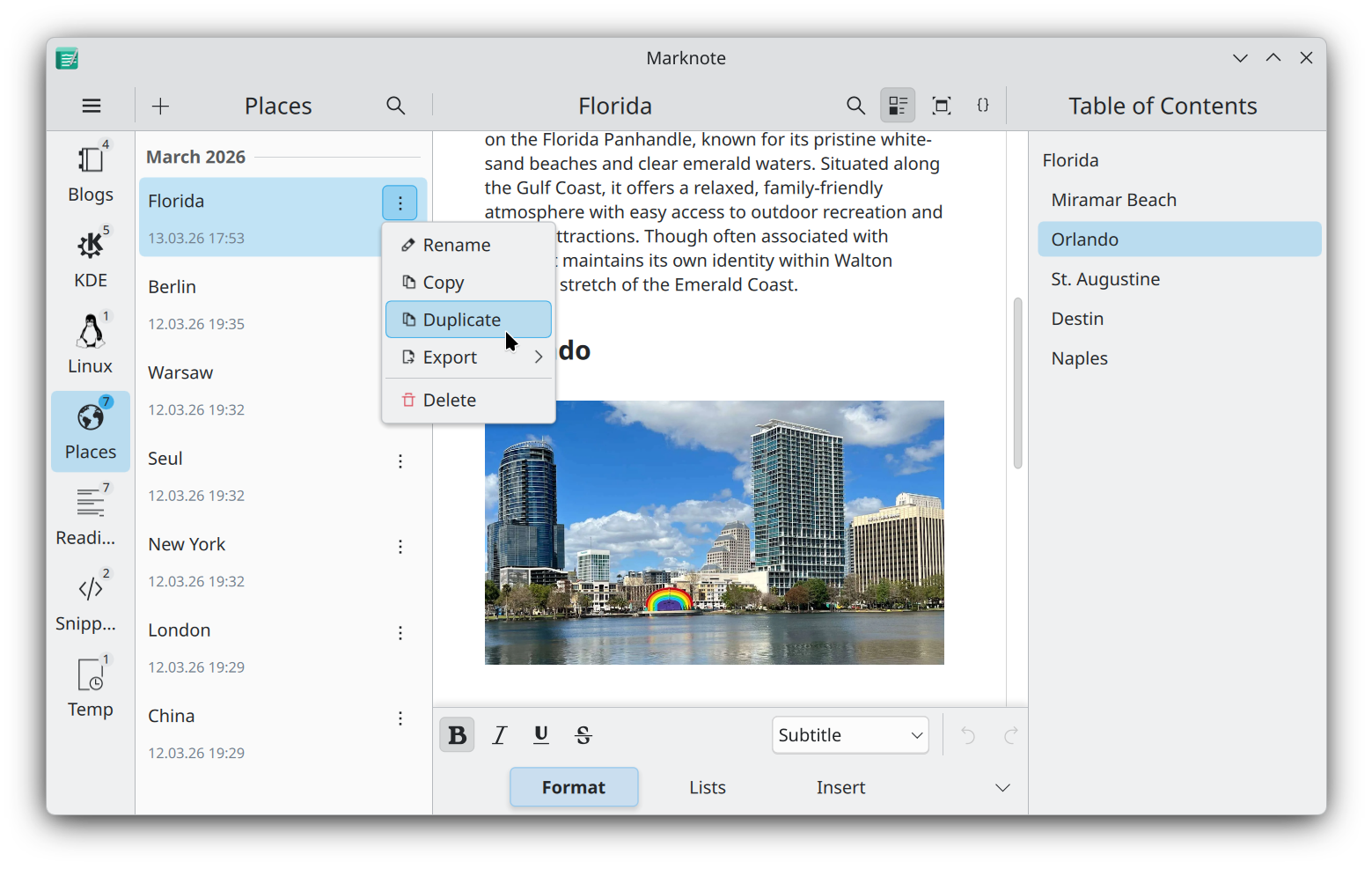
We made it easier to manage your growing number of notes. Each notebook will now show you how many notes it contains. If you need to move notes between notebooks, it is now easy to do that via drag and drop. And finally, we added a new “Duplicate Note” action to make it simple to create templates and copy existing notes.
KRunner plugin
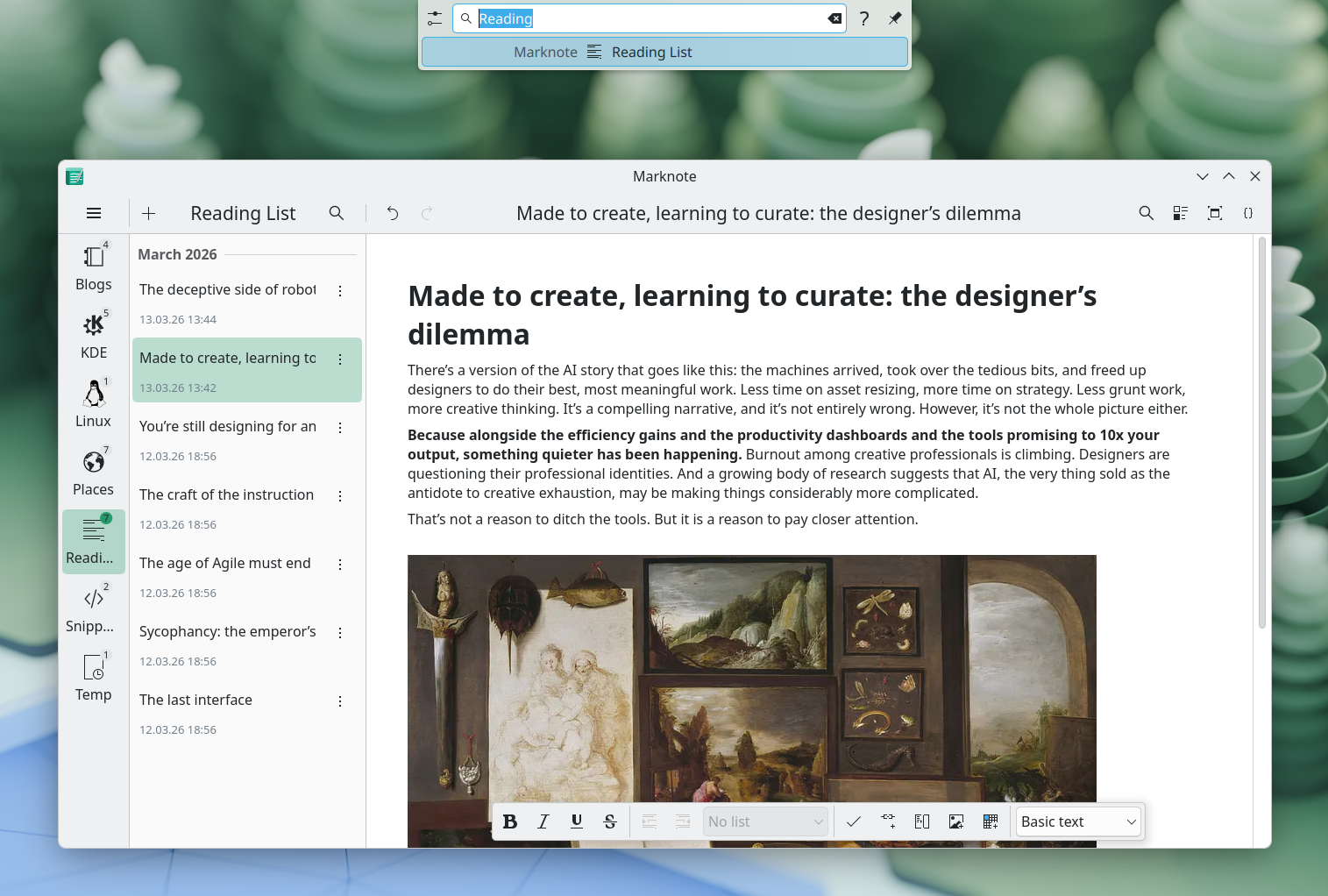
To help you get to those ideas faster, we also added a KRunner plugin.
You don't even need to have Marknote open—just pull up KRunner on your Plasma
desktop, type what you’re looking for, and jump straight into your note.
Search and replace
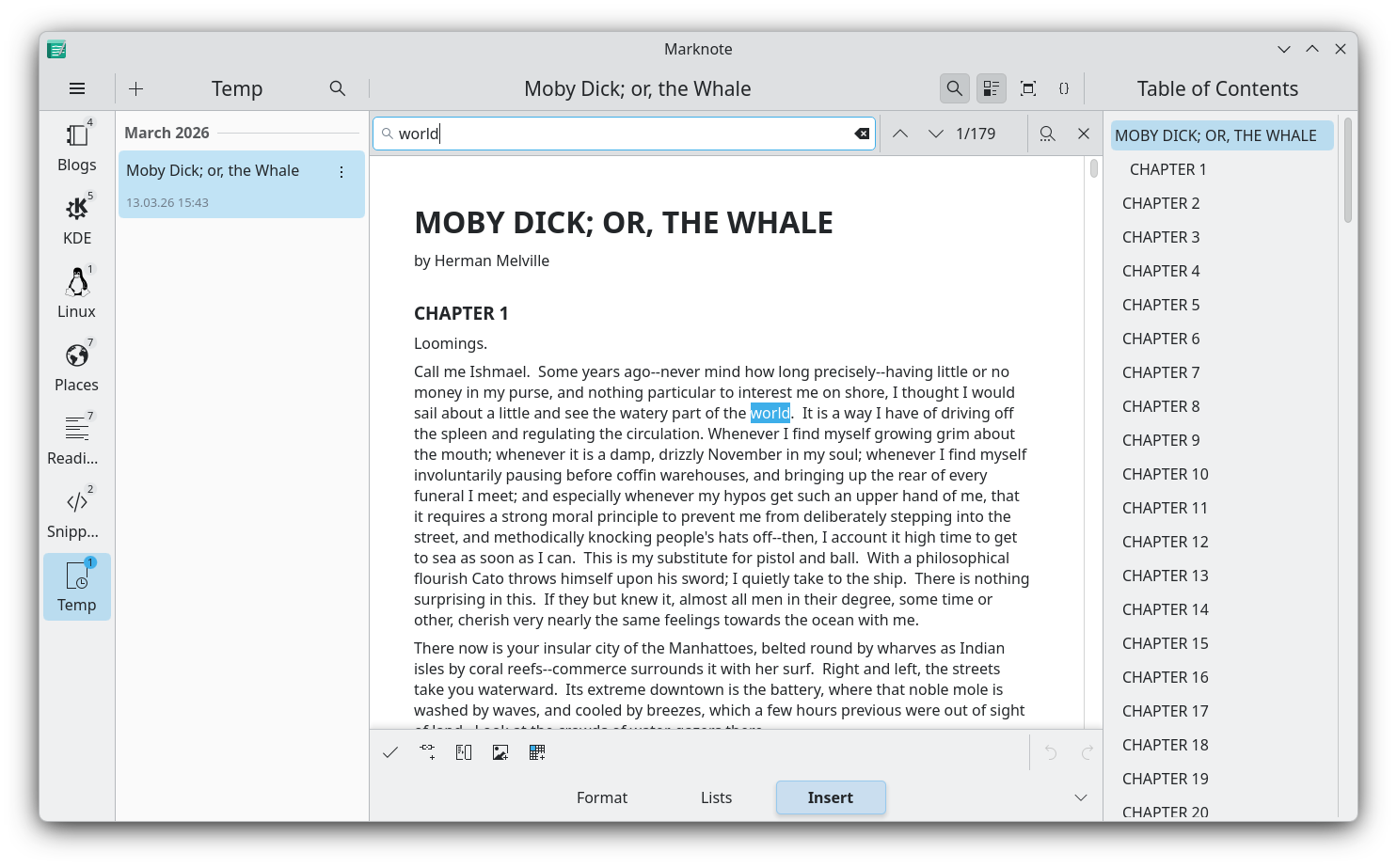
Full-text search and replace functionality is also here to make your life much easier.
UI polish and under-the-hood work
We added beautiful, all-new animations for note and notebook items, for the search bar, and brought back the smooth sidebar transitions to make navigation feel dynamic.
We added full Undo/Redo functionality to the Quick Sketch dialog.
We added several improvements to table formatting and actions to make managing grids much less frustrating.
On the technical side, we bumped our Kirigami Addons dependency to 1.11.0, fixed an annoying issue where opening a note updated its modification timestamp, and resolved a Flatpak bug that prevented notes from opening via file managers.
Try it out
Marknote 1.5 is rolling out now! You can grab it on Linux via Flatpak and Snapcraft. A massive thank you to everyone who contributed code, translations, and bug reports for this cycle. Happy note-taking!
Joint statement of scientists and researchers on Age Assurance
Tags: tech, law, surveillance
This is (IMNSHO) a very important open letter. This confirms to me that the whole set of age verification laws we’re seeing popup everywhere is severely misguided. Had my suspicions before of course but it’s getting clearer with this one. We should stay clear from those laws as a profession, it’s important to not comply, it’d be a disservice to our users.
Is legal the same as legitimate: AI reimplementation and the erosion of copyleft
Tags: tech, foss, ai, machine-learning, copilot, values, commons, law
Excellent piece, indeed legal is not the same as legitimate. More often than not the law is lagging behind and things might be wrongly “fixed” at a later date. In that interval that’s when our communities need to build its own tools to protect the commons. We’re clearly reaching such an inflection point. Interestingly, I think there’s is a difference of reaction between the people with a Free Software culture and the ones with an Open Source culture.
Obviously the essay from Peter Naur keeps popping up lately. It feels like an important piece, especially in the current atmosphere of vibe coding. This article lays out quite well why vibe coding is the opposite of what we should be doing.
An initiative to monitor I guess. There’s clearly a need for a more “opinionated” setup for Yocto based embedded systems, this is going in that direction.
How to stop fighting with coherence and start writing context-generic trait impls
Tags: tech, rust, type-systems
Looks like an interesting approach to lift some of the limitations around the Rust trait system. The learning curve doesn’t look too great though, clearly requires effort to get into.
Interesting look at Zig’s comptime feature. It’s not a purely Zig post though, does a good job of explaining parametricity and the implications of loosing it.
SPA vs. Hypermedia: Real-World Performance Under Load
Tags: tech, web, frontend, complexity
Probably somewhat self serving so the numbers would need to be confirmed with other experiments. That said that case gives a good idea of the price in terms of complexity and resources when choosing to go for an SPA.
In praise of code reviews. This article does a good job showing all the advantages if properly managed. Teams have to pay attention to latency but otherwise you get lots of benefits for not so much time spent.
Yes, we have lots of layers nowadays. But you can read them to figure out when something doesn’t work like you expect. This is one of the most important skills of the trade.
There’s always an interesting lesson in this kind of failures. Here clearly it is in part a story of unchecked trust, and not planning for a bigger system. It came with real consequences too.

 toscalix
 @devsam:matrix.org