
You heard right, it’s the time of year again: the 24 Hours of LeMons is back in full force!
If you haven’t heard of the series, well, shame on you. I’m here to help, though.
Many moons ago, LeMons Chief Perpetrator Jay Lamm decided to take all of the glitz and glamour of the classic 24 Hours of LeMans endurance race… and flush it down the proverbial shitter. Just like LeMans, this is a 24-hour endurance race, testing not only the drivers’ skills but also their pace, their stamina, and their ability to keep a car running for an entire day.
Except that these cars can’t cost any more than five hundred dollars.

The result, of course, is a race filled with miserable clunkers festooned with hilarious decoration. Combined with two badass judges with even badasser facial hair and with a penchant for hilariously humiliating penalties, it makes for an utterly hilarious weekend.
In the words of the LeMons perps—and I may be paraphrasing: “Racing isn’t just for rich idiots anymore. Now it’s for all idiots.” Well, if these “idiots” are anything like the Cajun Jihad team from last year, pictured below, then I say let ’em run wild!

I bought a fancy 3G plan for my fancy new iPad, and my friend Derek is bringing his fancy camera. I’ll be covering the race, from the race, all weekend, and I’ll be doing so over at The Hooniverse.
See you there!


 There was a time at which much of the common man’s life, aspirations, and disposition could be determined simply on the basis of which Chevrolet he owned. Before the days of meaningless trim levels like ST and GLX (grand luxury excitement?), a car’s equipment level and often its bodystyle were directly affected by the name carried on its flank.
 I’d venture to say that everyone’s pretty familiar with the sedans by now. The Bel Air had been the name of GM’s full-size car since 1950; in ’58, the lesser Biscayne was first offered for the budget-conscious, and in that same year the Impala name came to represent their halo model, complete with the six-taillight design that would come to represent the Impala for years. 1965 brought the Caprice, an even more high-zoot model than the Impala, and a nameplate that would stick around, for better or much worse, until 1996.


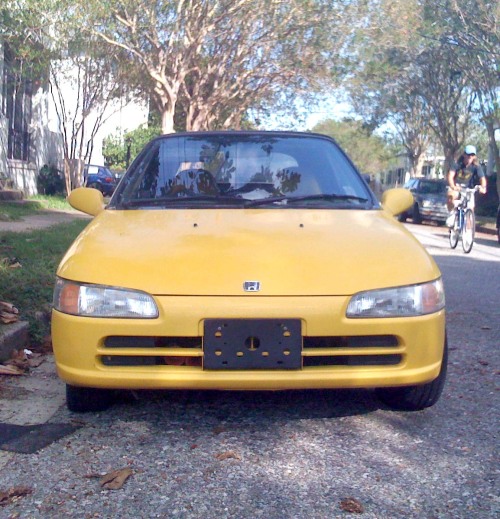 Me and the Beat, we go back a long way. Ever since that giant book of convertibles I had in something like first grade, I’ve remembered the Beat because it stood out from the ’56 Cadillacs and ’64 Continentals and whatnot.
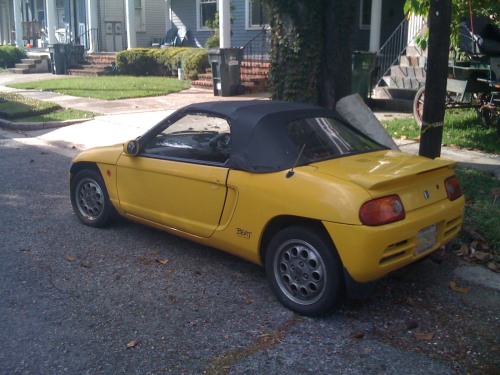 Japanese automotive taxes are quite strict: very specific size, displacement, and power regulations group cars into categories determining the road tax they must pay; Japanese cars are more often than not designed to fit snugly into these categories to make them more attractive for potential customers. Japan’s Camry, in the ’90s, was an entirely different car from the one all the export markets were given simply so theirs could be small enough to fit into a lower bracket than the export car.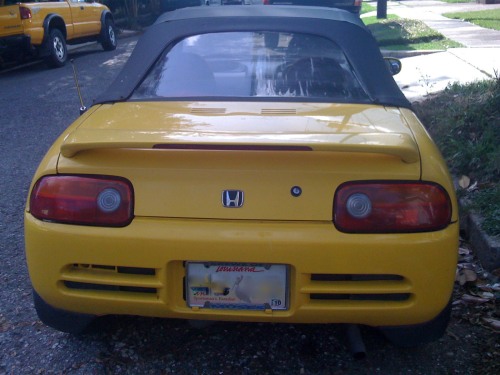




 More importantly, ’41 was Cadillac’s return to a “One Make One Engine” policy. After discontinuing production of the Series 90 (or Sixteen), the 346 cid V8 powered everything they made. Mated to that engine was perhaps Cadillac’s most pivotal development yet, and one that would arguably ruin the automobile for decades to come: Hydra-Matic.




 the sketchpad
