0

Book reviews of The Language of Trees and The Bedlam Stacks

I have recently read The Language of Trees: How Trees Make Our World, Change Our Minds and Rewild Our Lives by Katie Holten and The Bedlam Stacks by Natasha Pulley. I borrowed both of them from the library.

The Language of Trees

Cover of The Language of Trees

The Language of Trees: How Trees Make Our World, Change Our Minds and Rewild Our Lives by Katie Holten

My rating: 4 of 5 stars

In The Language of Trees, Katie Holten has produced an anthology of writing about trees. At first I found the green print a little difficult to read. There is an alphabet made up of the silhouettes of trees beginning with each letter of the alphabet. At least part of each article has also been printed in the tree alphabet, so there is less reading than would appear from the number of pages. Pieces by well-known authors such as Robin Wall Kimmerer, Robert Macfarlane and Robert Powers appear as well as many other authors, who were previously unknown to me. There are stories from around the world, including creation stories and reports of research. Robin Wall Kimmerer’s article considers how languages develop differently depending on the culture of the speakers.
It is a book to enjoy a little at a time.

The Bedlam Stacks


The Bedlam Stacks by Natasha Pulley

My rating: 5 of 5 stars

Image


The Bedlam Stacks is the third novel by Natasha Pulley that I have read. The others were The Watchmaker of Filigree Street and The Lost Future of Pepperharrow. These books are all in the same series, although I wasn’t aware of that when I chose to read The Bedlam Stacks. It is an exciting adventure story set in the past. There is travel with the main protagonist on a quest to find a rare plant in Peru. There is mystery, fantasy and interesting observations about language. The backstory of the watchmaker is revealed.
This is a page-turner.


View all my reviews on Goodreads. All my reviews on my blogs are here.


Once again I am taking part in the Blogging from A to Z in April Challenge. Would you like to join in? If you do, it could help me win a guest blogging spot!

Details of how A to Z Bloggers may win a guest blogging spot by referring newcomers to the challenge. they must create at least 5 challenge posts in April.
22

Theme Reveal #AtoZChallenge

Theme reveal badge for the blogging from A to Z Challenge 2026 a-to-z-challenge.com

For this year’s A to Z Challenge I am writing about words. I hope my posts will interest readers, who are fascinated by words as I am. A few years ago I began to compile a list of homophones. I’m not the only person, who has done this – other lists of homophones are available online. I haven’t found homophones beginning with every letter of the alphabet, so for some letters I am only including anagrams. In my other posts I’ll also include at least one anagram.

Homophones are words, which are spelled differently, but sound the same.

They are popular with crossword compilers, who give clues such as ‘sounds’ or ‘we hear’.

However, as someone who has lived in a variety of places in the UK and visited others, I am aware that regional accents affect pronunciation and one person’s homophones may be two distinct words to another.  For example, people from the south of England do not make a distinction between pore and poor, whereas some in the North and almost all in Scotland do.

My reason for this series of posts is that I have noticed that many people do not always choose the correct spelling for words where the sound may be correct. The use of speech to text software and online spellcheckers perhaps increases the likelihood of spelling mistakes being made or missed.

For example, I have seen sync spelled sink, whet spelled wet (again some people pronounce ‘wh’ distinctly).

I have even caught myself spelling one of the triplets, your, you’re and yore incorrectly.

Anagrams are words using the same letters in a different order. These are also popular in crosswords, with cryptic clues suggesting mixing of letters; the puzzler has to work out which words are to be mixed and which word or phrase is the definition.

In my opinion many misunderstandings between people are due to failure to use words in the same way as one another. Thus learning the meaning of words, how to express oneself and above all how to listen to others, can promote harmony and understanding between people with different backgrounds.

My posts are not going to be preachy. After Easter it will hardly be noticeable that I write from a Christian viewpoint. The Bible begins with God speaking everything into being. (Genesis Chapter 1).  Jesus Christ, who came to earth to show us what God is like and to become our Saviour, is known as The Word. (John Chapter 1) The Holy Spirit’s arrival at Pentecost gave people of all nations and languages the ability to understand what Jesus’ followers were saying. (Acts Chapter 2) So words are important.

8

Books I read early in 2026

This post consists of reviews of two nonfiction books – Our Woodland Birds by Matt Sewell and So you’ve Finished Writing. Now What? by Fay Rowland. (I am currently preparing for the Blogging from A to Z in April Challenge and working on other writing projects, so my posts here are less frequent than last year.)

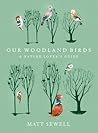
Our Woodland Birds: A Nature Lover's GuideOur Woodland Birds: A Nature Lover’s Guide by Matt Sewell
My rating: 5 of 5 stars

Our Woodland Birds is a delightful book with stylised pictures of birds perching on identified trees. There is a small amount of helpful text. I read it in the library, while I had some spare time. Most of the birds included may be seen or heard in Britain, but some are occasional visitors. There is some humour in the descriptions. All the birds are pictured in a section at the end, with check boxes for bird spotters to complete, if they so wish.
I’ll be looking out for other books by Matt Sewell.


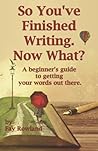
So You’ve Finished Writing. Now What?: A beginner’s guide to getting your words out there.So You’ve Finished Writing. Now What?: A beginner’s guide to getting your words out there. by Fay Rowland
My rating: 5 of 5 stars

In So you’ve Finished Writing. Now What? Fay Rowland covers all the stages from finishing writing an article, a book or any other piece of writing to its publication as the best it can be.
Various aspects of editing are discussed in Section A. Section B is about the various ways it is possible to publish or have one’s writing published. All the technical terms are explained in section C, the Glossary.
There are literary references and a great deal of humour making this a very readable book. It is also a handy reference guide.

View all my reviews on Goodreads

All my reviews (on Sue’s blogs and Goodreads) are here.