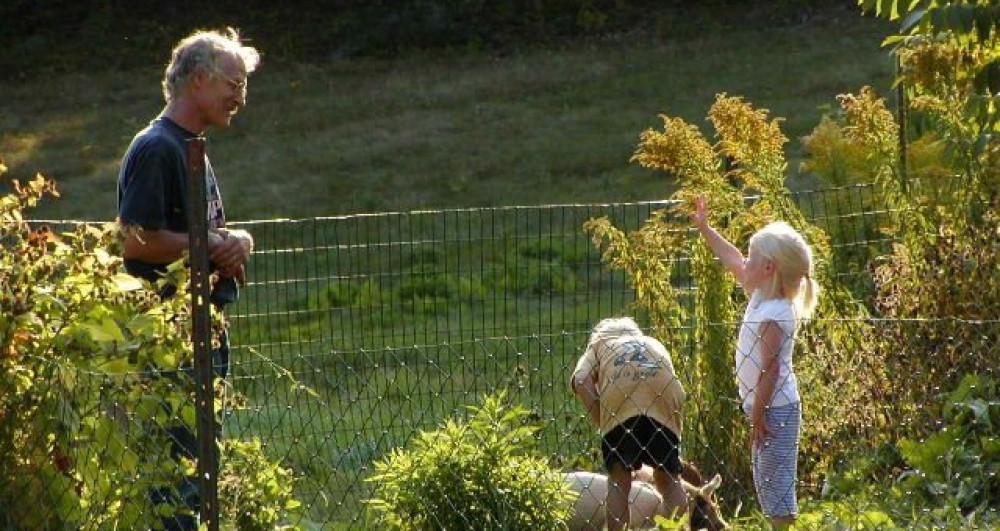
I apologize for being tardy when it comes to posting. I blame rehab, which is actually going well, but leaves me so exhausted I can’t seem to muster the energy I formerly had, which once enabled me to, if anything, be way too wordy. Where I once could cheerfully post fifteen paragraphs about next to nothing, now I find it hard to start up my laptop about anything. Then, when I do begin, I get lost in my thoughts. Call it research. But, where I once dragged readers along with me on my researching sidetracks, now I gaze out the window.
I do have quite a collection of half completed posts. Hopefully they will abruptly all be finalized and appear, and give people the sense I’m writing a mile a minute, but I’m not. If anything, I’m idle, and have to battle a yakking inner voice that accuses me of sloth.
Why is sloth a sin?
I'd let that sin grow:
A cat that gets to sleep
In a sunny window.
No more stinking alleys
Or slinking down the street
Or yowling in the dead of night.
No more damned defeat.
Nope. Just purring in the sun
With golden all around.
Damned be those who call such peace
The devil's playground.
Despite the definite progress rehab has had, I’m not the man I used to be, and simply can’t do the work I once relished, or at least relished griping about. Now it is my wife who dashes off to open the Childcare, while I stay home and make the bed. And even making a bed leaves me winded. Doing the dishes leaves me winded, especially scrubbing a pot, but there is something in my nature that refuses to be defeated by a crusted pot, and I scrub until a certain ringing in my ears warns me I should click my oxygenation-gizmo from level three three to four (which I think raises the level of supplemental oxygen from three liters (a minute?) to four.)
I should think that by now I’d be good at gauging how semi-suffocated I am at any given moment, and which way I should spin the dials of the modern gizmos that keep me alive, but I am not. And the proof is provided by my cheerful grandchildren who explode into my home from time to time and, among other things, detach the hose from the oxygenation-gizmo to my nostrils. The consequence is that rather than at level three or four, I am actually at level zero, and am an ordinary mortal. I do notice I’m especially crabby, and leaning against the wall a lot, but its surprising how long I can go before it occurs to me to check to see if any hissing air is coming from the repulsive plastic tubes in my nostrils. And when I discover there is no air coming out at at all, and trace the tubing back to where it is detached from the annoying chug of the machinery, it seems a good joke. Also it seems encouraging, for it hints that even without this paraphernalia I won’t immediately drop down dead.
This seems especially true when I am not heaving about quilts, making beds, or scrubbing pots doing dishes, or chasing grandchildren, but instead just sitting and attempting to write. My favorite part of the day is my first coffee, which I call, “my coffee with God”. Ever since I nearly died last summer it has seemed especially remarkable I’m not dead, and every daybreak has seemed an extra, and a blessing, and I find myself wondering out loud (to the Lord, for who else could I be talking to,) why on earth I’m still kicking.
It's a gray dawn. I'm leaving lights off
To allow subtle silver into the room
From the mute November landscape, made soft
Because I don't grit out in that gloom
And instead witness from warmth by a stove.

A few frail flakes, as if inspecting
Changes we've made to woods since last they rove
Bare branches, checking and correcting
Some wintry plan, never alighting,
Float about in the darkened daylight
Promising peace. Is it worth fighting
Such serene scouts? And can a mere man's might
Defeat a snowflake that doesn't fall hard
And instead floats inquisitive over our yard?
It is nice to just watch out the window, as all the signs of the onset of winter appear. It is not so nice when the view is abruptly blocked by the back of a looming dump truck which squeaks to a halt, and then groaningly tilts, and then with a rumble spills two cord of firewood in a heap by my door.
With a sigh and sad glance at my unfinished coffee I hoist myself upright and go out to greet my old friend Phil, who runs a business cutting wood. He’s made a little uncomfortable by the tubing in my nose, but we swiftly gravitate to subjects we agree upon, (such as the fact firewood is “sustainable”, and solar panels are not.) Then I write him a check, telling him how badly I miss the days I didn’t need him, and could cut my own wood, but how thankful I am he is here when I need him. Then he departs with a grin, and I am left with an ugly pile of wood dumped by my door.
It needs to be neatly stacked and then covered with a tarp before the first heavy snow, and back in the day I’d just do it. In fact I’d be done by now. But now I’m pathetic. One armload up the steps onto the porch and I’m huffing and puffing and need a break. I have a little “oxymeter” I can clip to a fingertip which shows me how that one piddling armload has overwhelmed my body’s ability to supply enough oxygen to working muscles. I can crank up the oxygenation-gizmo to peak level-five, and still run short of air. But what can I do? I catch my breath. That’s all I can do. Then get the next armload. Then alert my son, via text message, to the fact my heap of firewood spills out and blocks his driveway, and that it will take me a long while to clear the path.
This brought immediate help, a veritable cavalry riding to my rescue. Partly this was because my son had two guests at his house for some sort of meeting, and they had to work simply to depart. Also his wife had been keeping the four kids under control during the meeting, and needed a break, so the kids came along to help. Then, from the other direction, came a daughter, and my oldest son with a strong teenaged grandson. In less than an hour my porch was stacked with wood and the driveway was cleared.
Of course, the wood below the porch wasn’t stacked correctly. Over the past fifty years I’ve honed my stacking skills to a degree where my woodpiles could withstand a force-five earthquake. I fear the woodpile now heaped by my door (not the wood on the porch) won’t withstand the first frost heave. But I was in no mood to be critical. The fact is: I felt serenely happy in a way I didn’t expect. Some sort of affirmation occurred which my mind is a bit retarded at registering, and I am only now attempting to intellectualize about. But my heart recognized it immediately, and my smile was ear to ear. That was why it didn’t bother me that the stacking was all wrong.
One image sticks in my memory, making me chuckle. It is of my twin, four-year-old granddaughters becoming competitive, and dashing up and down the steps, over and over. These are the same steps I needed to rest after climbing a single time. But they never tired. In fact, for some reason it occurred to them that to carry a single log was not enough, and they had to carry an armload of two, and then three logs. But they couldn’t carry the bigger logs, which necessitated their dad frantically splitting the bigger logs with a maul, to supply his twins with their armloads. As I leaned against the wall at the top of the steps, watching this play out, I became aware I was chuckling.
Sometimes you are happy and don’t know why.
Or maybe you know, but it is not intellectual knowledge.
I became aware of this distinction when I was eighteen and studying economics under a brilliant teacher who could actually make the dismal science shiny. He could show the various processes of supply and demand, from basic goods to specialized expertise, as two basic circular flows, one clockwise and one counterclockwise, action and reaction working together in an amazing harmony and oneness, as if everyone was like a tiny gear in a giant watch. I was very into the ideas he was so enthusiastic about, however became troubled. It is a good story for some other night, but I became so troubled I considered suicide. Something about the ideas robbed life of its purpose. We were all wheeling and dealing for stuff that had no lasting value. Something was missing.
Under the theory I was attempting to assimilate into my psyche, even a nursing mother is a supplier, and the baby is the demand. A mother might as well have a meter like a taxi cab protruding from her breast, in the eyes of supply and demand economists. Either that, or there was a higher thing the dismal science didn’t consider. A great thing. Love.
Winston Churchhill suggested that greatness is something one must “dare” to be. Perhaps this is true for men, who tend to dismiss Love as mere mush, and become nasty communists who deem Love “the opiate of the masses,” or psychiatrists of the sort who believe belief in Love is like belief in Santa Claus. In the face of such sneering cynicism, (and often acts of brutality), men do need to have bravery to be great, and to love. But is this true for women? I think the answer is actually, “Yes.” The courage may not be obvious when a mother is cooing over her baby, but it takes guts to be a mother, and some women who think they are “liberated” are actually afraid. They don’t dare to be great. But what about poets?
One thing that “pissed me off” as a young poet was that poets tended to be seen as sissies. I myself was overly sensitive, but I had learned I was also tough. At the movies I was easy prey for a tearjerker, but I could survive storms at sea in small sailboats. I might be a sucker and chump, prey for con-artists, but I could survive such humiliations. Poets often die young, but not me. Poets are often too poor to marry and raise children, but not me. And now I’m getting old, and seeing Katherine Hepburn was correct when she said, “Old age is not for sissies,” but I am no sissy. On my porch, watching grandchildren carry wood up the steps and rush back down, up the steps and rush back down, I feel like I dared to be great, and now witness the grandeur.
The irony is that I've dared be great
Unrecognized. Does it need to be seen?
I don't think so. It may just be your fate
To be royal without being king or queen
Or having a blast of fanfare each time
You enter a room; not even one fan
Is necessary. You don't need a dime
To be great. You are, and therefore you can,
Because God is in all; yes; even you.
What makes me great is I'm able to see
Even in your hovel, if you are true,
You wear a halo of divinity.
Even a hurricane has a calm eye.
It's so great to walk under that sky.
Despite the sense of grandure I felt, I also felt the opposite of great. I felt pathetic and useless. There was actually a segment of my rehab devoted to such depression, and how you should be wary of depression and suicidal thoughts and make psychologists rich by seeking help. But I didn’t want help; I wanted to be helpful.
One thing I discovered rescued my ego from the sense of being a sort of welfare queen, utterly dependent on the help of others, was to be a sort of taxi. It is surprising how many people need a ride from a garage where their car has been dropped off to be worked on, and a ride back to the garage later, to pick their car when it is fixed. But who is not working, and is free to do such a task? Ta-dah! The one and only me! My ego could puff back up like a fixed flat tire, and my elevated mood made the grandeur all around me more obvious.
The leaves are gone. The wan light draws shadows
That are all straight lines. No dappling
Softens the scene, and yet my vision knows
A softness my intellect's grappling
To understand. It is like an aroma
That brings a lover's face vivid to mind,
But this perfume makes me sigh out awe
Over an entire landscape. I can't find
The words. The words are gone like the leaves.
But just as a youth can sniff their handkerchief
And see a lover smiling, a scent deceives
My  intellect. and brings me blessed relief.
Thank you, Creator, for revealing to me
The perfume behind the Ninth Symphony.
I was thankful as thanksgiving approached, but then it turned out one of our children wasn’t going to make it, and my wife was abruptly inspired to drive herself and a daughter and two grandchildren down to Brooklyn, New York, to spend the required time doting on two other granddaughter, and to allow cousins to get to know cousins. At first I was going to be left behind, but neither my wife nor daughter is highly skilled when it comes to finding their way in a big city, and in the end I went along as a navigator.
It was a real test for my rehab skills, as my son has a third story apartment in a brownstone with no elevator. I cranked my portable oxygenation-gizmo up to level five, and still spent around five minutes just sitting on his couch slightly pop-eyed, catching my breath, each time I climbed up there. My five and two-year-old granddaughters found me a very interesting spectacle, and were a bit shy at first, but by the end of the weekend were crawling up into my lap without introductions. That alone was good for my ego, but also the weather relented, and it was a brief balmy spell in a frigid fall, and while the trees had gone leafless in New Hampshire, the foliage was gorgeous in the Big City. I could walk roughly a half hour before I needed to recharge my portable oxygenation-gizmo, so I wandered about gawking at the brownstones in one of the prettiest parts of Brooklyn, and though my thighs ached I could hear my mind shifting into its inquiring mode, and it occurred to me that as long as I’m learning, life isn’t over. There are new worlds to wander in. And sure enough, after the grandchildren fell asleep I could shift from a world where rabbits wore Victorian clothing to a New York City before conctrete was invented, when brownstone was quarried to the north.
The ride back north proved interesting, as I was relegated to the back seat with the grandchildren, because my daughter is prone to getting car sick when travel involves jerks and swerving. We planned to switch seats at the first rest area, once we were out on the smoother highways, but the switch took longer than expected, as traffic was heavy and involved a lot of jerking and swerving, and even when it became smoother my wife and daughter were so busy chit-chatting they inevitably were in the wrong lane and sailed by rest area after rest area without pulling over. Stuck in the back with two grandchildren in quarrelsome moods, I began to suspect a conspiracy was afoot.
Perhaps hardest was to retain my dignity as chief navigator, from such an inferior position. However I needed to assert my authority right from the start, because 500 yards into our journey we ran into gridlock, and the girls up front, utilizing some computer tool such as “MapQuest”, were contemplating some ridiculous rerouting. I rather gruffly said, “Just go one block down, two blocks further, and one block back, and we’ll be around the gridlock.” And I’ll be danged if I wasn’t right. From the back seat.
Not that I wasn’t looking over my shoulder, curious about the gridlock we were leaving behind. One fascinating thing about the modern city is all these electric scooters and bicycles whizzing about at dangerous speeds, and the gridlock seemed to be due to a bicycle taking on a Mac Truck, but….I shall never know the details.
However I did know details, more than I wanted to know, about my grandchildren’s quibbling. Big brother asks little sister to stop leaning on him, and she continues leaning on him, so he shoves her away, so she screeches and mother, from front seat, warns big brother it is wrong to shove little sisters. Hmm. Do I want to know these details? Or do I hope we pull over at a rest area, and I get to sit up front?
I don’t want to know the details, and especially don’t want to be one of those busybody know-it-all who smiles at your face but connives behind your back. So, from the back seat, I am gently up front. I murmur that it might be wrong for little sisters to lean when big brother politely asked them to cease, and perhaps it is little sister and not big brother who deserves the rebuke.
This observation flies like a lead balloon, because, first, my wife and daughter were busily chitchatting about whether or not a dietary supplement might have helped a person I don’t know, and I’m miles off topic, and, second, I am a lawyer arguing for big brothers because I once was one, before a judge who is a mother who once was a little sister. Prejudice is involved, as is the fact my legs are stiff from much climbing of stairs, and also we are again in the wrong lane and flying past another rest area. I add to the discomfort by noting we missed the rest area, and concluding the kids don’t really need to use the rest area, and can “hold it” another hour or so until we get home. Bringing this subject up allows the grandchildren to agree about something. They both agree they definitely can’t “hold it.” I get glances of displeasure from the front seat. Apparently they feel the children wouldn’t have complained if I hadn’t brought the subject up.
If you are an experienced observer you likely can see I am enacting the behavior of a typical backseat bad boy, and ruining the ability of the front-seaters to remain focused on the topic of gluten in their diets. I am sabotaging the tranquility of the ride. Surely some selfishness is involved, because I just don’t like being stuck in the back. It does not seem a proper way to honor your elders. But some selfishness is involved in the front seat as well, and which I draw out as an irritant. Sometimes, if grandpa’s not happy, nobody’s happy.
The gloom of an early winter evening grows, and an abrupt smattering of raindrops strikes the windshield. Instantly the highway ahead becomes shiny, a mirror of taillights. The wipers start squeaking as we delve through the spray of cars. “At least there’s no spray from trucks,” my daughter mentions. “No trucks?” I inquire. “Oh, we took the parkway because Mapquest said it would avoid traffic.” “Hmph!” I interject. “parkways have no trucks, but also no rest areas.”
A quick, slightly frantic search reveals there are no rest areas within a half hour ahead, and we must leave the highway and seek a gas station off an exit ramp. Our dashboad informs us we only have gas for ninety-nine miles but are 132 miles from home. So off we go.
I’d thought Connecticut was solid suburbs but we seem to have found a surprisingly rural area, and it seems much quieter as we hiss into the brightly lit station. The children are herded off to use the woman’s room, as the boy says nothing but walks in a slouched way that expresses loathing. His Mom feels he’s too young and times are too dangerous for him to use a boy’s room alone. Meanwhile Grandpa gets to pump the self-serve gas, which seems a bad deal, for by the time I go use the bathroom they should all be back in the car and then I’ll have to make a big deal of claiming the front seat. Drizzle blows down the back of my neck, and I glance about and say to myself, “OK Mr. Poet; Make a sonnet of this.”
God is even in the wet gas station
I've pulled into with snarling children late
At night, my weekend shot and the station one
They call a "plaza". It's brightness will grate
At any idea of rural rest. "Stay awake!"
Is the one goal. Or is the one real goal
The bathroom? Not for me. Although I ache
Grandpa's left to pump gas. I don't control
These things. I pay a screen with a card
And only then do I shuffle off to pee,
The lone man in a room so lit it's hard
Not to wear sunglasses, but soon I can see
I'm first back. Candy kids shouldn't eat
Slowed the snarling. God gives Grandpa the front seat.
Safely ensconced in the front, my first deed as navigator was to veto the MapQuest rerouting. For some reason the minute we pulled off the highway to seek an exit-ramp gas station, the brain in our dashboard discovered a bunch of back roads which theoretically could shave five minutes off the time it would take us to drive home. If it was summer and the sun set at nine, and I was driving alone with my wife, I’d love such a back way, but I am not alone, and such a way involves much swerving left and swerving right, and ups and downs, and bumps and jolts, and if you have someone prone to car sickness aboard grandpa may wind up back in the back seat again. This alone provided me with a reason for a veto, though of course I did not mention it.
What I did mention is that we were near the winter solstice and it was already dark at five, and wisps of fog were streaming by the headlights. I warned that the advancing cold front might lead to showers turning to snow squalls on those back roads, and rather than saving five minutes we might add twenty or, in a worst case scenario, wind up stranded with two small children in the back hills of New England. There were no complaints as we headed back up the exit ramp to the busy highway.
And then we are suddenly part of an amazing flow. Mapquest showed the route as orange, which suggested the traffic was heavy and slow, but in fact it was heavy and fast. If it had slowed it had slowed from seventy to sixty, and not seventy to thirty, but such distinctions are beyond the grasp of artificial intelligence at this point, and a self-driving car would be automatically rerouting into the foggy hills and whatever the back-roads might hold. My actual intelligence scanned the ribbon of red taillights ahead, and saw few brake lights. We were part of a collective cooperation which was working amazingly well. Traffic was speeding along without hitting yhr brakes. All it would take is two uncooperative people, and a fender bender, and there would be an abrupt traffic jam many miles long, but no such thing happened. Amazing.
This is all the more amazing when you consider who is likely to be driving all these cars. Likely it isn’t grandpas. So who might be rushing back to Boston on a Sunday night? My guess is that the traffic largely consists of students who didn’t do their homework over the weekend. Instead they sought to study stuff outside their college’s curriculum, alone like specks of dust but together part of a mysterious Oneness whom teachers and politicians only dream they control.
What could show greater cooperation
Than this stream of taillights speeding sixty-five:
Red river rushing towards a great Ocean,
Yet each soul thinking that it is alive
For itself, and not part of a Oneness.
Do red blood cells deny the pulsing heart
That powers them? Heaven's powers bless
The students on the freeway, who must start
Homework undone all weekend, for who goes
To college to take those boring classes?
The real lesson's that love is like a rose
Grown in thorns midst dangerous morasses.
And now all speed back to school through the night
Creation enacting the Creator's delight.
I myself could never see much sense in paying for classes I then would get in trouble for skipping. Without really knowing why, I simply skipped college, though I didn’t skip the skipping. In a way I lived a weekend without end, studying the stuff that really matters when you are eighteen. Or twenty-eight. Or even seventy-two. On a highway at night, upon a river of taillights, I am still part of a student body made of countless small souls, though my hair has gone silver.
And then we veer off the river of red, onto the interstate heading north to New Hampshire, and depart from the stream of taillights heading towards Boston. Instead we head north through Worcester, which seems asleep. Apparently students are more sensible in Worcester, for the highway is all but deserted on a Sunday night.
I’m just a lone grandpa heading home with his crew. The hissing highway is still wet and shiny, but the front is pressing by, with the rain turning to a brief flurry of flakes from a clearing sky holding a flurry of stars. And then we are off the highway, on country roads through dark pines, leading to headlights like the spotlights of a stage, and crossing the stage of a front yard is a mother walking two sleepwalking grandchildren to her front door, and after that it’s but a mile further and my wife and I are home.
Being home brings me back to earth, for I need to disconnect my portable oxygen condenser from the cigarette lighter and head up the steep front steps and switch to the stationary condenser in the entry. On the highway I could forget what a cripple I’ve become. Now I remember.
It irks me. Out of sheer male-stubborness I refuse to allow my wife to do all the work, and insist upon lugging a heavy suitcase up the front steps, but it leaves me gasping, and I then cheat a little. I stuff the ugly little nostril tubes from the stationary condenser into my nose before removing the portable tubes, giving myself a double dose of oxygen for a while. I have learned this strategy reduces my panicky sense of suffocation with surprising speed. I mutter to myself that the nurses at rehab likely would scold me, as some degree of overdosing is likely involved, but I don’t have rehab until the morning. The scolding can wait. .
Or maybe it can’t, for I seem to be doing a fairly good job of thinking what the nurses may say, and how I should respond. I suspect that I’ll be scolded for not alloting enough “recovery time” after exertion. Rehab nurses need to enact a splendid hypocrisy, where on one hand they must pry the lazy old loafers from their armchairs, and on the other hand must get the geezers to sit down and rest. However this dichotomy is old hat to me. Why? Because my father was a surgeon and my mother a nurse, and this meant they were often arguing about my treatment; my Dad felt I should be booted from bed and run five miles, while my mother felt I should rest and recover and sip chicken soup. Neither actually related to me, for they were all about physical, medical stuff, while I was addicted to poetry, which is basically “out of the body.”.
But what is poetry? Even after all these years I can’t say, but I saw it within a river of taillights, when I felt like one red blood cell within an artery powered by a pumping Heart. And then, even as a new day dawned and I drove through a brown winter, I cherished the sense I retained from that traffic, even when I was the lone car on a country road. It is the sense one is not alone, but part of a bigger body. We are surrounded by a Grandeur which, if only we allowed It, would make life rich and beautiful. Poetry is the attempt to point this out.
It seems strange that I should ever feel fond
Of these days of long shadows, yet I drive
Through a sunny melancholy beyond
Description. I wonder if I'll survive
To see these days again, with the sun low
At noon, and some north slopes in chilling shade
All day, which makes south slopes places to go
For they cup the sunshine. This landscape's made
To test men's mettle with bitter cold and storms
And powder snow that drifts snakes and hisses
But I stay toasty. My car's heater warms
Without a woodstove, and I find bliss is
Learning my love of this land's grown so strong
That I'm smiling, even though shadows get long.
Of course, one knows the brown winter can’t last. Even the coming holidays are taxing to many, and it is after the solstice that winter really gets down to business. The old-timers used to rhyme, “When the days begin to lengthen then the cold begins to strengthen,” and one can then expect even our cleverest machines to develop glitches: Dead batteries; frozen pipes, spinning tires, the space shuttle Challenger exploding. Poetry seems far away, and one seeks new obscenities to utter to express our contempt.
But in a way, through contrast, this dire future just makes the brown winter all the more beautiful. The future will be a new chapter, “Rehab Update: Part Two”, and I hope to produce sonnets even in storms, But that is not my job now. Now I celebrate the brown winter, even as it ends.
Heavy snow warning, and I'm driving
To the market for a few things I won't want
To drive through snow to get, but I'm eyeing
The brown landscape which soon will grow gaunt
And hollow-eyed; already far hills fade
And look there! A first flake! And over there!
Another! How quickly the world is made
Different; the open winter closed; the care
Increased. The car in front of me swirls flakes
On the cold, dry tar like exotic plumage
And...I'm at the market. Be gentle, brakes.
A gaggle bursts out so excited I laugh
And, inside, the keeper rolls eyes towards that door:
"You would think they'd never seen snow fall before."


 Sunrise's Swansong
