

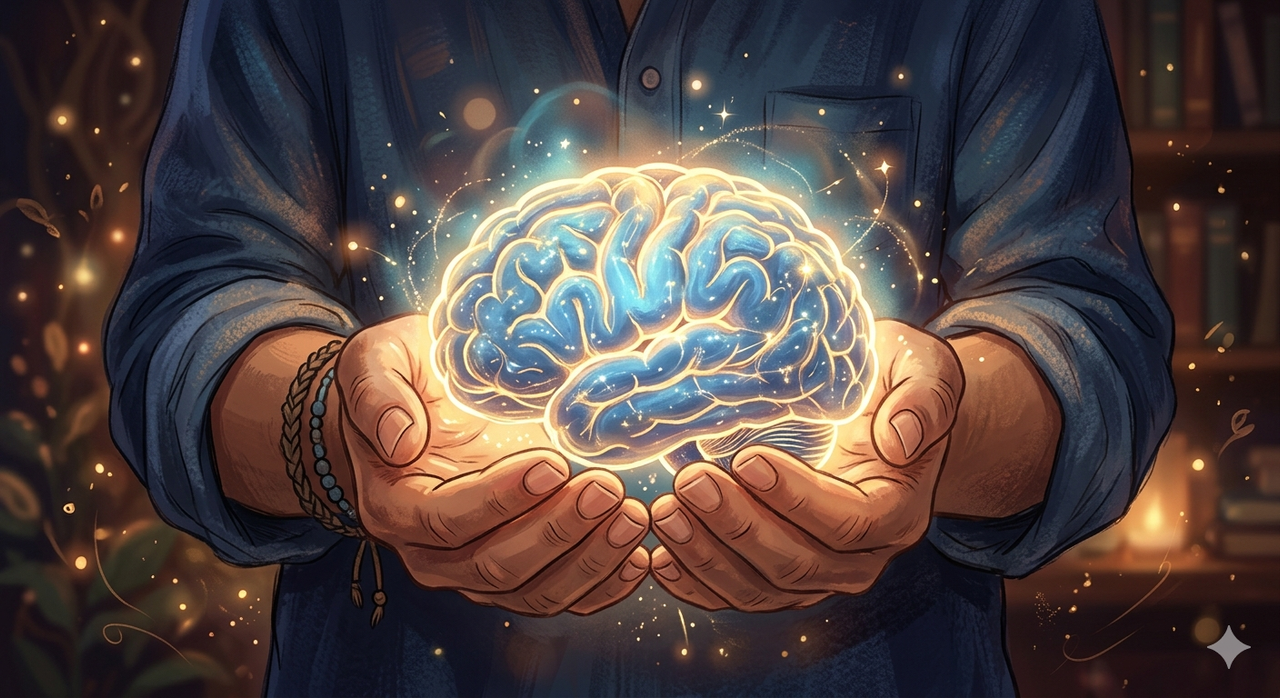
Why This Topic Is On My Mind
I have quite the database of ideas I’ve thought up to write about. And after sharing my ALS post last week (The Family Curse: Growing Up in the Shadow of ALS), I thought I’d continue with more “health” related topics.
Traumatic brain injuries have been on my mind for a while because of some personal, but secondhand, experiences.
TBIs affect more people than many realize. Their effects can be subtle, confusing, and sometimes misunderstood.
And one thing I’ve learned over the years is that brain injuries definitely don’t follow a rulebook…
There Is No “One Size Fits All”
Brain injuries vary widely, and the symptoms can vary just as widely depending on the location & severity of the damage. Even still, two people with similar injuries may have very different experiences.
Symptoms may seem nonexistent for a time & then appear years later. For some, symptoms can be intermittent.
I think part of the reason for this is one of the most beautiful things about our brains – neuroplasticity. See, the neurons themselves don’t re-generate; once they’re damaged, they’re damaged. However, other neurons can gradually branch out & compensate for the damaged neurons, though sometimes this adaption can cause some problems while fixing others.
The Brain Is Just an Organ (But an Important One)
No different than your liver or heart, your brain is technically nothing more than chemicals and electricity. Personality, memory, and knowledge ultimately boil down to chemistry and electrical activity inside brain tissue. When that tissue is damaged, the effects can ripple through every aspect of life.
The most famous example is that of Phineas Gage (to the point that he’s often covered in basic Psych 101 classes) – working as a construction foreman in the mid 1800’s, a tamping iron shot through his skull, which annihilated a huge chunk of his brain’s frontal lobe. His survival after such an extreme injury is remarkable, but it was due to the fact that nothing that controlled his autonomic nervous system sustained damage – the frontal lobe is largely responsible for an individual’s personality, emotion, and social behavior. Despite his survival, his personality changed. Drastically. He went from being a meticulous leader, to being…well, by most accounts, kind of an asshole. Interestingly enough however, he hated animals before the accident; after the accident, he loved animals so much he became a stagecoach driver.
What Brain Injuries Can Affect
Again, symptoms vary widely depending on the severity & location of the injury, and many symptoms aren’t always obvious.
For example – the magnitude of cognitive and memory changes can be surprising.
Common physiological symptoms
- migraines
- neck pain
- dizziness
- exhaustion
- coordination issues
Common psychological / cognitive symptoms
- anxiety
- anger
- depression
- memory loss
- confusion
- rumination
- paranoia
- irritability
The Night My Husband Hit His Head
A couple months before we met, my husband had a barn party at his place – lots of people, lots of stuff going on.
Probably a dozen shots in (I wasn’t there, but I know he was a party monster), he decided to use the porta potty in the barn. When he came out, he tripped on a rug & fell back, whacking his head on the concrete & effectively knocking himself out cold for a few minutes.
His friends thought he was dead. Yet they didn’t bother calling for an ambulance for some insane reason. (After working in an ER, I know that the standard operating procedure for such an injury is an ambulance ride with a neck brace on, & an immediate CT scan to check for internal bleeding.)
He was significantly concussed for nearly a week – throwing up, massive headache, dizzy, couldn’t hardly stay awake.
Eventually (as in after we met & I yelled at him), he went to a doctor and had MRIs done on his head & neck. Come to find out he’d slipped two discs in his neck. He also retrospectively remembers being told he has “black spots” on his brain, though I just recently found the imaging discs they’d given him & I’d like to review them myself (not that I think I’m a doctor, but I do have enough medical education & experience to be able to tell if that was a false memory of his, or if there’s some truth to it).
When Symptoms Show Up Years Later
For a few years after, he was “normal” – well, he’s always been a little weird, & that’s why everyone loves him, but he was normal for him.
Then things changed. To me at the time it seemed to be out of nowhere, but now I know it was because of the stress of trying to sell his barns to someone he shouldn’t have been selling them to, combined with working too much and not getting enough sleep.
It seemed to me like he was having a nervous breakdown – extreme paranoia, anxiety, rumination and memory confusion. After a couple years, things settled down for a few months.
Then they started back up, though less extreme. The second time around I realized what was happening — he was confusing dreams with real events.
He’s always slept like shit. He’s always been an “I’ll sleep when I’m dead” kind of guy. Unfortunately, that’s making his life hell these days because it’s just exacerbating other symptoms.
These days, he’s often very irritable, struggles with wanting to try new things, and sometimes he even gets lost when he’s driving around the neighborhood (luckily he was a truck driver & knows not to panic when he doesn’t recognize where he is). He also says that he feels like he “never fully came back into his body” after the concussion, which kind of sounds like a sense of perpetual brain fog.
A lot of these symptoms tend to come & go. But they’re there.
A Scary Moment
One night a few months ago, he was irritable for no apparent reason and we ended up getting into an argument. He eventually got so upset after ruminating for hours, he seemed like he was having a stroke – slurred speech, a little droopy on one side. I insisted I call 911 because it really freaked me out – I’d never seen that happen to him before. He insisted I wait (which is always a terrible idea if someone is actually having a stroke, by the way!!!) But once he calmed down, he was fine.
I’m not trying to diagnose anything here – just sharing what I’ve observed. And that incident showed me that brain injuries can sometimes manifest as stroke-like symptoms.
We’re currently awaiting further testing at a local neurological institute (the one I always envisioned myself working at, actually).
A Similar Story
My “old friend” that I mention occasionally told me back when we were friends that he’d suffered a TBI at some point – I don’t remember much of the story, but then again, neither did he.
I can’t recall the circumstances under which he said it happened, but I know he said he had no clue what the fuck happened. He had no recollection of it actually happening.
He also said that he’d sometimes experience symptoms of a stroke. He’d had an MRI done, which showed nothing at the time, so doctors were having trouble giving him any answers as to why this was happening.
Sometimes he’d get really irritable, and withdrawn, and then sometimes be super apologetic afterward.
In retrospect, after seeing what my husband’s been dealing with, I can’t help but wonder if this old friend is on my mind lately because I feel like I can understand him even better now than I did then. I mean, I don’t know if all of his symptoms (or my husband’s) are from their concussions, which I’m sure they’re not all, but… I guess it helps some things make more sense.
How Brain Injuries Can Affect Relationships
Brain injuries don’t only affect the injured person.
They can influence:
- communication
- emotional regulation
- conflict
- memory of events
I realized a while ago that sometimes the best response to these reactions is to just breathe, let us both cool down, and approach the situation with quiet compassion.
I struggle with that sometimes, I’m not gonna lie. When certain buttons of mine get pushed, I can get very defensive.
But that really is the only way to deal with it – quiet compassion, on both our sides.
Aging and Brain Health
My husband & I were recently talking about Bruce Willis, who is currently suffering from advanced frontotemporal dementia.
Granted, dementia is very different than a TBI – it’s a progressive neurodegenerative disorder which causes significant declines in language, memory, and behavior.
My husband was upset & said he didn’t understand why Bruce Willis’ family put him under someone else’s care.
As a caregiver for most of my life, and as someone who’s worked in an ER with more than my share of dementia patients… I explained that the decision could’ve been made as a result of caregiver burnout, arrangements due to his wishes before this point, or his current condition (don’t know if he’s violent or wandering out to the streets naked in the middle of the night, etc).
Brain conditions in general can become pretty complex.
So can anything that affects your body’s hormones & neurotransmitters in general (stay tuned for a thyroid story in next week’s post!)
Staying Proactive
There are definitely some activities that can support neuroplasticity & mental regulation, for everyone.
For example:
- Yoga helps ground me in the present moment. It helps me to focus on what’s going on within & around me while I pull apart all the physical tension in my body.
- Tai chi I’ve found to be especially helpful when my brain is extra busy because of the constant movement involved.
- Any exercise you enjoy, that keeps your attention is great for your brain!
- Meditation trains your brain to let go of fleeting thoughts – it’s helped me get through many a dental procedure, as well as just stay calm in chaotic moments.
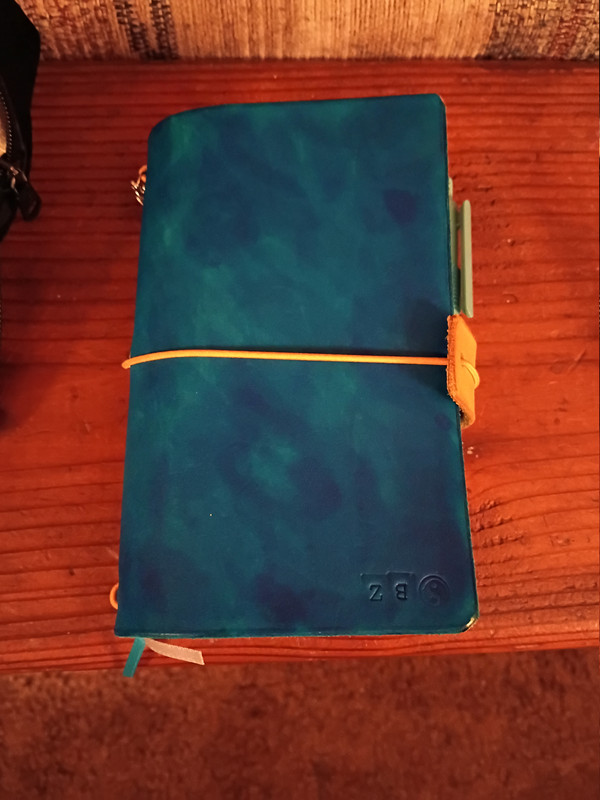
- Journaling. I can’t recommend journaling enough (brace yourself for a series coming soon lol!) It can help you work through tough situations & feelings, make plans for a brighter future, remember things as they happened, and so on. Especially analog journaling – the brain loves novelty & tactile sensations!
The “Thinking Notebook”
I’ve been journaling for about 30 years now, and I’m definitely an advocate for analog over digital.
Handwriting forces you to slow down & focus on what you’re actually thinking – The tactile experience literally engages your brain differently than typing.
I often think of my journal as a “thinking notebook” – a place to let my brain vent onto paper, so that it can all be easier to manage.
Closing Thoughts
The brain is resilient in amazing ways. But it’s also fragile – and sometimes the effects of injury don’t show up until years later. The more we understand that, the more compassion we can bring to ourselves and each other.
If someone suspects they may have experienced a head injury in the past, please –
- talk with healthcare professionals
- seek medical imaging
- stay proactive about your brain’s health
If you liked this post, please give it a “like”, share it with friends, and subscribe if you’re new.
Stay real. Stay loud. And rock the fuck on. 💚🤘🏻













 zen BLITZ
