
Be a community of one

Community is a term I’ve grown to despise. I’m not sure when this happened, but it must’ve been when everything started to be a community of sorts. Best example would be Fighting Game Community. There isn’t one. It’s just a catchall term for “people who play fighting games.” The whole community bit would indicate there’s this one massive blob of people who are categorized into one fitting slot, something that describes the bottom-most common point between these players, massively devaluing individuals and their own circles all the while dehumanizing all but the biggest names that supposedly represent some sort of leadership.

It’s a damn marketing move, easily putting people into categories of Us and Them, the true believers who support whatever your fandom circles around and the people who are detrimental to it. Companies love to stoke this fire, as it creates emotional connection with the brand they’re selling.

Everybody innately knows this, but it’s so easy to just to say community as it’s supposed to have a much better ring to it than fanbase or target consumer group or whatever past buzzwords the marketing teams used to have. Every customer group have always spit into uncounted smaller groups, which function differently from one another. Some fans of Star Wars have never played the role-playing games, while some of the tabletop players have never touched the Rogue Squadron series. These two groups supposedly belong into this massive umbrella of Star Wars fan community and that is outright stupidity. These two supposed groups don’t even play via the same medium, probably have very different view on Star Wars in general.

The split is like saying PC and console players belong into a same category, and the moment that’s stated some PC-only consumer will have their hair raised and spouts about the superiority of the PC hardware to never-changing console hardware. It’s still easy, because it still creates the image of wholesome community of likeminded people coming together to celebrate a brand, or in other words, to give free public PR and to consume whatever it is sold to them.

Companies don’t exactly like to count detractors and heavy critics as part of the community they like to sell to. Nowadays its not too uncommon to see social media manager to say that their brand community doesn’t need certain kind of people, or are not welcome in it despite these shunned people are just as valid customers. Message be damned, the whole term is confusing the marketers and people trying to manage the brands, causing readily splintered fandom to be at odds with itself even more.

Community implies participatory actions as well, requiring the fans actively take part of events, streams and whatnot. The whole shitshow sounds like a cult circulating around brands, but that’s the best outcome for these companies. They get fully loyal and fanatic consumers who build majority of their self-identity and interests around their brand, yielding a zealot defender whenever things change. At the same time, there will be a countering factor that will openly and loudly denounce the brand, often continuing to criticize the brand and the company, or keeping the brand in the minds the shunned and outcasts. Even bad PR will keep the brand relevant, hence the only way to kill a brand is to ignore it wholesale and make it irrelevant. Worst things you can do is to move unto greener fields.

There’s no reason for companies to silence their media critics, because that’s part of the PR now. On top of that, yelling at the top of the soapbox is now someone’s job on Youtube, raking in money by spouting the same shit the Nth time. When South Park made that episode about culture wars, some latched on the whole Put a chick in it and make it gay bit while ignoring the episode also criticizing the people yelling about it and promoting it. That said, the Message and diversity has always been the least of the issues with e.g. Disney era Star Wars. The issue is that they have nothing but sloppy writing and no plans where to take things. Everything else is just a symptom of this.

On the opposite side of the isle are the leaders of the community. Million subscriber Youtubers and influencers of whatever social media you have. These are the people communities circle around and build up. They get all the connections with the companies and trickle down information other forms of media don’t necessarily get. They might have their own groove going on, but ultimately have to tow the line in order to be good buddies with the companies. That’s their job; being a sort of freelance PR face that’s an arm length’s away from the company. There’s plausible deniability when products are showcased, yet they get all that stuff through sponsors and get early codes for free or get invited for special events for more PR content. In old parlance, they’d be called sellouts.

For companies, both sides are important regarding longevity and relevance of the brand. As long as they can keep things at the top of customers’ heads, they’ll make money somehow.

However, when the mass market, the mainstream consumers or the general public loses interest in your particular product, that “community” had better be full of whales large enough to keep these brands afloat. When the mainstream grows tired of the PR heads and critics as well, the game is already lost.

Frankly, I find the constant potshots and political war-ticking in articles and videos I go through distasteful. The whole culture war mindset hasn’t just poisoned the well, but also the brains and mindsets of people who used to do direct, objective commentary. All of it is so tiresome, and I’ve seen movements in the mainstream feeling the same. If the mainstream media were not worth consuming, neither would the criticism of it be either. There are better pastures, better media to see and hear.

Hence the title. Detaching from the whole media war that’s raging on social media seems to be the only healthy thing to do nowadays. We all are responsible on the media we consume. You don’t need to be a part of some larger community, especially if it is corporate driven. Influencers should be background noise at best, giving variety of different points of views. Ultimately, there’s only one you and its your call how you’re going to spend your limited time on this Earth. Unless its your job, or for entertainment while waiting things to happen, flamewars on social media might not be the best way to spend time. Let someone be wrong on the Internet, you’ve got better shit to do.
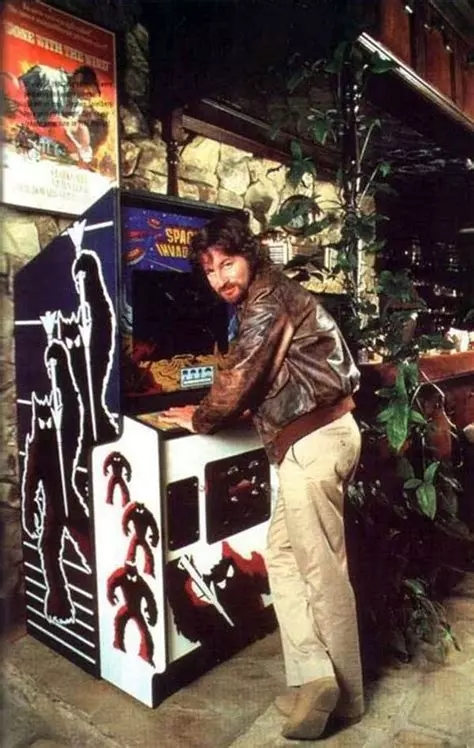
Vidkids never change

What’d you do in order to play your favourite game? Would you steal your father and grandmother’s savings in order to buy the game no matter of the consequences? Would you sell yourself for two bucks at a local carpark? How about going to a bank with a shotgun and demand coinage? Space Invaders might seem like a relic, an irrelevant little game compared to the mammoth works of today, but that’s just a handful of desperate things people did to get few more runs on the arcade machine.

The vidkids have everything on streaming services and always-online storefronts. There’s a generation brewing who don’t know how to use .torrent files or the even have the hardware to make copies of library-leased music CDs. Just hit Youtube and put a playlist on. No need to rig homemade appliances to trick the machines for more lives and free quarters. Target of cheating has gone from messing against the computer to upgrading the player’s aim and life in multiplayer for unfair and artificial advantage.

As much as playing games has changed, people still do desperate things to fulfill that want all the while laying out methods to win against the odds.

All this is a story that’s just as much about Space Invaders as a game as it is as a phenomenon. The exaggerations of Japan running out of coins because of the game adds to its lore, when in reality it was mostly due to materials in the coins changing. If you ask stories from people who frequented local arcades and pinball parlors in their teenage years, the stories would make great summer blockbuster plots.

Players discussing tactics and tricks among each other at seedy and dark arcades turned into kids talking about secret tiles in Super Mario and Metroid, and now we have shattered communities and closed circles discussing the same things on forums and chat groups. The sanitation of electronic gaming was an integral part of it going mainstream, of if becoming the biggest form of entertainment we have.

The criminal activity of entertainment salons have transformed into legal actions of preventing customers from owning their purchases all the while splitting games into smaller sections to be sold at a later date. As much as the gaming industry protests how development has changed and become more expensive, intending to justify nickeling and diming the customer with horse armours and whatnot, the industry doesn’t seem to be wanting to fix these issues. Just like recycling and plastic, the fault has been put on the player rather than on the manufacturer.

We really should never have abandoned the glass bottle for plastic.

Electronic gaming has always had an interesting dilemma with adults and kids. I should not find it strange how gaming has been associated with children, treating arcades and consoles as children’s toys. The reality, even in the fifties, was that it was young adults and other rebels who went for pinball parlors. While the arcades of the late 1970s and 1980s were filled with kids, adults were no stranger to attractive blinking lights and cacophonic sounds of the time. When the first home consoles were brought homes, it was the whole family that got addicted to these simpler games. Whole house block parties would circle around these consoles much like how people did gather around to see the first picture radios.

The demographic of play has never changed. The generations and people for sure, as have what’s currently popular. People who claim Computer games are for children! probably never noticed the difference between arcades, consoles and computers. They never noticed the piano player next door getting addicted to Breakout to the point of mapping out the variety of functions the bar had. Nor would they notice how he went out to find the people who worked on the game to ask about its more hidden functions.

If gaming has always been passion of everyone, then technology has allowed that passion to be expressed and acted upon without checks. From a salaryman playing with a calculator on airplane to kill to having a powerful computer with a screen in your pocket, we’ve come a long way just to play and entertain ourselves.

The English language suffers for not having a distinction between playing (a game) and playing (with toys.) Perhaps that’s why it is so easy to brand electronic games as toys as the mental association between the two forms of play is easy to do. Sports exists simply to divide itself from other forms of play despite it being no different from playing e.g. Street Fighter at the base sense.

And a game it has to be. A set of rules all participants have agreed to and governed by. Playing is always participatory, requires intentional action and decision-making. It may be practice for adult life when we are children, when there are actual stakes at hand and the end result matters, but playing for fun doesn’t die.

Everyone likes to play. The games are just different. We won’t ever again see the massive boom Space Invaders caused because of the sheer amount of games being released every week is staggering. Each of these games are magnitudes more complex and richer in visuals than the humble Taito game, but we don’t see the mainstream going haywire over any game in any significant manner. Only the hardest of the core enthusiasts bend themselves backwards for the latest big titles release the gaming media has advertised.

Society has gone increasingly analog, and even the jaded people are thinking back how media used to gather people together. Digitally, we are present only in voice, connected by the Information Highway. We may be playing the same games and watching the same shows, but that tangible presence of another person is missing.

Electronic games keep fascinating people as a social thing. Even when the lone enthusiast champions their favourite Triple A disaster, they do so because of emotional connection to the game and the corporation it represents. There’s no cold logic in play, just boiling hot emotions thrusting to the surface. Perhaps shilling Starfield nowadays would be the modern equivalent of whoring yourself out in the carpark to get some coin for more Space Invaders.

Console hardware design matters more than the iron

For whatever reason video game consoles are often categorized as toys despite things like 52-standard card decks aren’t. Their overall function, and cultural lineage, are largely the same; their reason to exist is to facilitate play. Thus, a console hardware must always facilitate an easy access to playing games. This is where console hardware matters, but not in terms of raw power. A simple thing as extended battery life is part of the design that allows more play on one charge.

There are two major points in the history of video game consoles that repeat each generation. Long-time readers know these two be a) the console with largest library sees the most hardware sales and b) the least powerful console in each generations has “won” the generation, so to speak.

There really aren’t any anomalies when it comes to this. The Switch is almost decade old, yet its success has left its later Ninth generation competitors in shadow in terms of sales. The comparatively weaker hardware and the use of matured technology also often ensures a lower entry price compared to the competition. Generally, customers hate buying new and expensive hardware. The longer they can play on their existing consoles, the better it is for them.

Much like bleeding edge tech enthusiasts, only brand fans buy consoles at launch. They are purchasing the console for potential, not for the games that are already exists. The hardware itself doesn’t have much value. Its value is in the games. Hence, for the console business to see good sales, the system is required to have as many high-value titles as possible. Out of these high-value titles, most of them should be exclusives. All of them, if possible. They are the lifeline of consoles. If these high-value games were multiplatform, the console’s success would suffer. It would also mean there’d be no reason for other console companies to compete with a similar product, or even care about competition per se. It would lead to a market, where console providers aren’t competing with each other and neither would third parties.

Some consider every game going multiplatform being the ideal position for consumers, though I consider this a monkey’s paw wish. If this were to happen, then there’d be no reason to have multiple systems, and all development would end up on one platform, which most likely would be Steam. I don’t want any developer or publisher to have that sort of position, as that breeds lack of competition and births anti-consumer practices. In order for gaming to stay healthy in general, there must be multiple tiers of access point for gaming, all competing with their own unique software libraries for the customer’s attention. The gaming market must expand in order to compete as well, otherwise it’ll stall and quality will fall.

Hardware’s price point is always relevant regardless of what economic situation the world is. However, it’s doubly more pronounced during falling economy, when justifying expenditure for several hundreds of dollars becomes harder. While the 1990s wasn’t exactly bad time in terms of macro-economics, Sony cutting PlayStation’s price point just before release to challenge Sega’s Saturn underlines how important even a hundred bucks can be. On one hand, a console must have a strong third party support to have a good library. One another, the first party must show their console has value with their own games. Simply offering the system isn’t enough.

There are some other tangible examples how hardware matters with consoles. Famicom contoller’s form factor, while not new in itself, had a better design than contemporary joysticks. The Game Boy might’ve had a worse green screen than its competitors, but its battery life was much longer without the colour screen. This allowed more play time, and Tetris alone made the console worth it. Competitors didn’t exactly have a library of similar caliber.

 A lot of the hardware that matters to gaming comes in form of how the game’s controlled. If your controls design doesn’t facilitate playing neutrally, it’ll always have issues. The DS is a great example of this, where Nintendo insisted developers kept using the touch screen in their games as much as possible. It’s no surprise the DS saw much better games after Nintendo loosened their ruling on this. The DS’ library is terrific, but failing touch screens will forever be an issue. Dual Shock controller’s twin-stick setup may not have been new in arcades, but it facilitated overall better camera controls and some new types of play. This too has become a standard the industry follows, staggered or not.

An example of a controller that stupidly fucks the player up and does stupid shit is the Atari Jaguar controller. Not only it had bad design, its nonsensical layout didn’t exactly support neutral play philosophy. It didn’t help the D-Pad and buttons themselves had lousy design.

What the iron under the hood needs to facilitate is not as straightforward. With the current paradigm of using dumbed down PCs as media center that double as game consoles with HDR twins, the console hardware is barely unique among gaming hardware. Nintendo’s Switch is unique how the hardware can be in either handheld mode or docked to a TV. While the Switch facilitates neutral play, I don’t think any developer has taken any advantage of switching between the modes mid-play in any capacity.

A console being a media center is a tacked-on idea, which has outlived itself. Smartphones are just as good a media center than current PlayStations and Xboxes. We all have a screen in our pocket. Though neither the PS4 or the PS5 support audio CDs, so even Sony is recognizing how people have moved to full-digital entertainment environment with audio, or have a LP player. However, the media on which games are on does matter as part of the hardware. The Switch using game cards is a necessity, as optical media would skip if the console would bounce any.

As for the rest of the iron, CPU, RAM, and whatnot, it’s a balancing issue. We haven’t really seen much technological advancements when it comes to new tricks the hardware could pull off that would significantly affect play. HDR and raytracing may make games look nicer, but they have little to no impact on the play or designing a game. Neither is a standard either, with many customers still rocking a standard HD television. 4K gaming is still something PC players do mostly. Mode 7 at least allowed sprite scaling and rotation, something previous console generations couldn’t do. I’d almost argue that console hardware across the board is so standardized that the design of the thing have started more. Hence, the hybrid nature of the Switch.

As the iron is a balancing issue, it still has to meet certain standards. Targeting a certain sales price point is important, as console providers should want their machine to be in as many homes as possible. Hopefully multiple times over. Thus, the whole using mature technology philosophy Gunpei Yokoi championed and made gold with. PlayStation couldn’t have found its success without CDs and drives coming down in price by 1994. The PS2 is an interesting anomaly, where its status as a cheap DVD player manifested the Japanese DVD market in general, which attracted all sorts of customers who weren’t even interested in gaming. Sony’s attempt to repeat this with the Blu-ray format and PS3 wasn’t exactly successful. You can’t build your console on its media capabilities, that’s not what it should be for.

Even if the hardware was cutting edge, it’s not worth its weight if there is no incentive to develop for. The balance is found between cheap but potent hardware, which developers can make use. Nintendo’s failure with the N64 was to intentionally make it hard to code for, which is part of the reason Yamauchi stepped down from his presidential position. The idea was to have a system that would attract the best developers while keeping the worse ones out. Didn’t really work out, which is why the GameCube was philosophically its predecessor’s opposite, having a more standardized controller and was very easy to develop for. However, the PS2’s success meant porting PS2 games to the GC was a rather daunting task as the two weren’t exactly similar. More often than not, devs would drop GC ports instead of spending extra resources to make it properly.

Hardware race isn’t exactly part of the console consumer culture thought. The history of most sold consoles makes this evident. You can’t fix developers the same way though. Consoles have always had a target hardware for what games are developed for. Nowadays things are largely left uncompressed and unoptimized in hopes for the hardware doing the hard task. Readily made engines are just downgraded in their settings to make games run on different platforms. Sometimes developers make special event settings just to showcase the graphics of their game only to take them away or turn off on when released. Unless the game is an exclusive to a system, it seems there is very little effort to none to make the game work properly on alternative, less powerful systems. The dilemma is how hardware prowess goes hand in hand with developer expectations and skill necessity as well as with intended price point.

Electronic gaming is the most popular form of entertainment on the planet. Adults who have tons of income probably go for the more expensive options, while families with children probably find more value in less expensive options. There are multitudes of markets between and beyond these two, and expanding to those markets is lifeline of gaming in general. Mothers, who never before were into games, buying a Switch because they saw something appealing in Animal Crossing. Grandmothers buying a DS because Brainage their grandkids had suddenly peaked their interest because of the brainteasers. Fathers finding all the motion sports games the Wii came with. I use these examples because they are needed even more nowadays. The hard ore gaming the enthusiast champion isn’t going away, but other avenues gaming could deliver is largely killed by this Red Ocean market. Competition in already crowded market ends in slow deterioration of goods and companies.

Console hardware must be competitive, but not in how technically impressive it is. How cheap the console price is, how easily developers can make use of it, and how its design facilitates play all matter more than how many gigaflops it has or how many polygons it shits on the screen.

Games cost too much (to make)

Back when the HD Twins were new and shiny, before the economy took a dive in 2008, I said that games had gotten too expensive to make. Making games has gotten more expensive since then and the industry is feeling this in their bones. Video game industry has gone Hollywood, where almost every mainstream title has to make stupid amounts of money to get the publisher and developer into black. Every AAA game needs to be a massive event. The sales must make back all the time and money spent on them, and more often than not, they’re large titles with tons of hot air. Hype is manufactured in order to make these games see big initial sales. PR and sales directly lie to the customer either directly or through omission. Fanatics join this manufactured hype in order to fellate these corporations some more. Often it takes a short while for the common customer to realize that what they have in hand is a mediocre product, a polished turd. A year from the release the media will turn their boat, when they can’t damage the game’s initial sales anymore. A cycle keeps repeating far too often. Sometimes you got games like Starfield, which gets all the hype despite being rather shit game. Sometimes you get things like Suicide Squad, which took too much time and money not to be released and everyone hating it.

What is a company to do when they’ve sunk tons of money? They sink more money next time around, and then ask the same thing again. Monetization of video and computer games is the word of the day, which we can thank all the whales who have dropped millions into mobile games’ gatcha and lootboxes elsewhere. I don’t like it, but sadly, these are an accepted element of games now, and only two things can change them. First is changing the law and making this kind of gambling illegal, but we really don’t want government control in gaming like that. The second would be customers simply making these games inviable, but that won’t happen due to the addicting nature of gatcha. Putting advertisement into games isn’t anything new, though traditionally this has been done via licensed material in-game. However, nowadays publishers are considering putting actively intrusive advertisement into games, where you’d get a pop-up ad somewhere during the game. Imagine having an ad during a load screen about whatever shit you were browsing on Amazon, or pausing the game, the game recognizing this, and then popping a Coke ad. Not only you should be paying for the live-service model, but also your info is being gathered for this targeted advertisement.

Netflix for gaming is something certain section of the industry seem to glamour for, but it’ll never be truly sustainable. Gamepass is already showing that while Microsoft is seeing success with it, most games aren’t seeing profits through it. The model promotes more in-game purchases and lootboxing, forcing developers to turn for the predatory monetization. The only one profiting from Gamepass is Microsoft themselves and nobody who worked on the games offered there. When you have a broken model like this, the games and customers are the ones who will suffer. As much as some people love getting all these games cheap, all this is doing is devaluing games as goods. If games are devalued, the publishers and developers will have to meet those lowered values in the quality of the games. The gaming industry has been playing things stupidly safe for a long while now, so you’ll most likely see them following that and devaluing the games themselves as well.

It’s sad to think gaming as a sort of casino, but that’s already a reality. Nickeling and diming, gatcha and lootboxes are a symptom of the gaming industry being at an unstable sustainability point, teetering being completely unsustainable and absolutely consumer abusing.

I’d say buying games at their standard retail prices would be the most beneficial thing for the hobby as a whole, for both the customers and the industry, if not for the existing micro transactions and constant DLC’ing. Once an industry finds a way to abuse the customer, it won’t stop until something significant causes a some sort of crash that requires rebuilding customer trust and cutting back from excess. The industry won’t crash by itself though, gaming is the most popular form of entertainment on Earth, so something like a massive crash of the global economy might do the trick.

If we rewind back a bit, I’ve written a few times how exclusivity is the lifeline in the console business. That business doesn’t survive unmitigated growth. You can’t dish out an expensive hardware and hope that alone drives business. It’s the job of the first party developers to make that hardware valuable through exclusive games. The less exclusives a console has, the less value it has. This applies doubly to third party software, where exclusive titles further value a console, while multi-platform titles are just an extra as general library additions.

A large section of the core gaming market holds the belief that it is a pro-consumer stance to have as many games on as many platforms as possible in order for the customer to choose on what platform they play games on. I reject this notion. Exclusive games force competition, which forces making games with value as long as they stand as individuals against others. Gamepass does the opposite, putting all the games on the service under one payment umbrella.

This is part of the reason why customers go for older games nowadays more, as they have more value. Remakes are a no-brainer for publishers and developers, as past games with proven track record already have an installed audience. This means less original creations, less remakes of games that could actually use it. The lack of quality in current gaming is also the reason why there is a vocal section of the market demanding older games being playable on newer platforms.

The current gaming industry has failed terribly. Older games should be obsolete, useless relics of the past with much lower value than what the industry is currently delivering. Yet the opposite has happened despite ballooning budgets and increasing staff numbers. As it stands, AAA games can’t possibly meet the fantastic expectations from the publishers, which means studios being closed down and people fired for lack of proper leadership. Gamepass games miss those sales goals by the truckload. Worst of all, Gamepass subscription numbers have slowed down and the latest big names have largely been duds, especially Redfall.

When Bethesda and Activision were bought under the Xbox umbrella, they spent tons of money, in the billions. Microsoft needs to see profits churned out from their gaming section, and hence spending has to be cut down and everything has to be played safe. I still think buying these studios hasn’t changed gaming as media liked to portray it as. The Xbox division’s stupidity though just might if they’re crashing under their own weight. Microsoft can’t have Xbox brand net them no profits now that so much money is tied into these studios. They can’t afford to have the same position as Disney with Lucasfilm.

If Xbox wants to survive properly without hanging too much from their parent’s teat, they might as well kill console business and go full third-party and fulfil their role as Sega’s successor. The whole brand has been mismanaged to badly throughout these years. The worst that could happen is to kill Xbox as a brand wholesale and integrate everything into Windows. Have these studios under Microsoft games label or something like that while publishing games in Sony’s and Nintendo’s consoles.

I really would hate this, as a race between Sony and Nintendo wouldn’t be pretty, if the history of both companies are anything to go by. We need more than two or three consoles on the market in order it to be healthy, but that’s what the status quo has been for a good number of years now. We need more head-to-head competition between first-party developers and hardware providers as well as in third-party software.

The market has to expand to new customers in order to survive, not leech blood out of the existing market with higher cost productions at lowered costs and devalued games. Otherwise, gaming will implode.

If you’re wondering what the hell the top image is about, I implore you to read David Sudnow’s Pilgrim in the Microworld.