Three for the First Day of Spring: Renkl, Sukegawa and Tucker
I suppose the best kind of spring morning is the best weather God has to offer.
~I Capture the Castle by Dodie Smith
Happy spring! (Although the blossom is fading and, going by the temperature the past few days, you might think it was early summer here.) When I borrowed the psychological thriller The First Day of Spring from the library, I decided to consider that my built-in review deadline. As is my wont, I’ve turned it into a trio with two books more laterally related to spring: a lovely book of miniature autobiographical essays about interactions with family and the natural world, and a short Japanese novel about misfits who find belonging at a pancake restaurant.
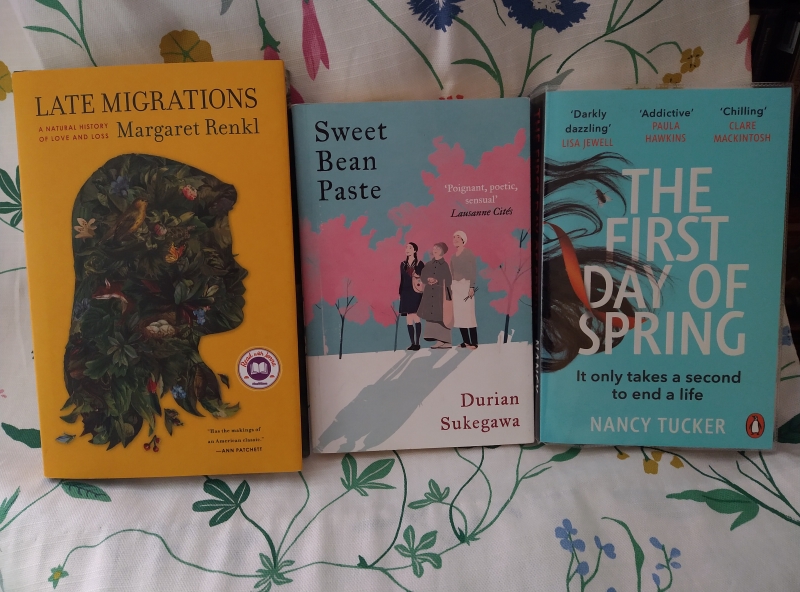
Late Migrations: A Natural History of Love and Loss by Margaret Renkl (2019)
My favorite season is spring—until fall arrives, and then my favorite season is fall: the seasons of change, the seasons that tell me to wake up, to remember that every passing moment of every careening day is always the last moment, always the very last time, always the only instant I will ever take that precise breath or watch that exact cloud scud across that particular blue of the sky.
 The memoir in flash essays is one of my favourite niche forms. (Beth-Ann Fennelly and Abigail Thomas also do it exceptionally well.) It took me a long time to promote this book from occasional bedside reading pile to daytime stack, but at a certain point it became impossible to let it out of my hands for very long. I had to smell it and browse her brother Billy’s collage artworks. Each piece is somewhere between a paragraph and several pages long, and they make up a rough chronology of a life, from her grandmother’s memories of the 1930s onward (the passages in italics are interview transcripts) through to the present day.
Renkl grew up in Alabama in the 1960s–70s, in the sort of mildly dysfunctional family that most of us probably have. She contrasts what she knew as a child with what she didn’t. It was a happy childhood but. (Her mother’s recurring mental health problems and racial tensions in the South would be two ways to finish that sentence.) There were hounds and porch seats and three kids in the backseat on vacations. There were funerals and old love songs and Bible verses and playing in the woods. Grandmother tells of births and deaths, and Renkl remembers life’s transitions: getting her first period, being so homesick that she couldn’t finish college in Philadelphia, adjusting to early motherhood and then to an empty nest – an appropriate metaphor because many of the essays are about birds Renkl watches feeding and nesting. She isn’t naïve; she knows nature is cruel. Not every fledgling will survive and majestic hawks will kill equally beautiful songbirds. She realizes how dire the situation is for monarch butterflies, too, but keeps planting milkweed at her Nashville home.
This balancing of appreciation for life and acceptance of death is at its finest in the late pieces on her parents’ death. Her mother, like mine, died suddenly after a stroke, and her words on that loss are exquisite as well as painful. Still, she asserts, “Human beings are creatures made for joy. Against all evidence, we tell ourselves that grief and loneliness and despair are tragedies, unwelcome variations from the pleasure and calm and safety that in the right way of the world would form the firm ground of our being.”
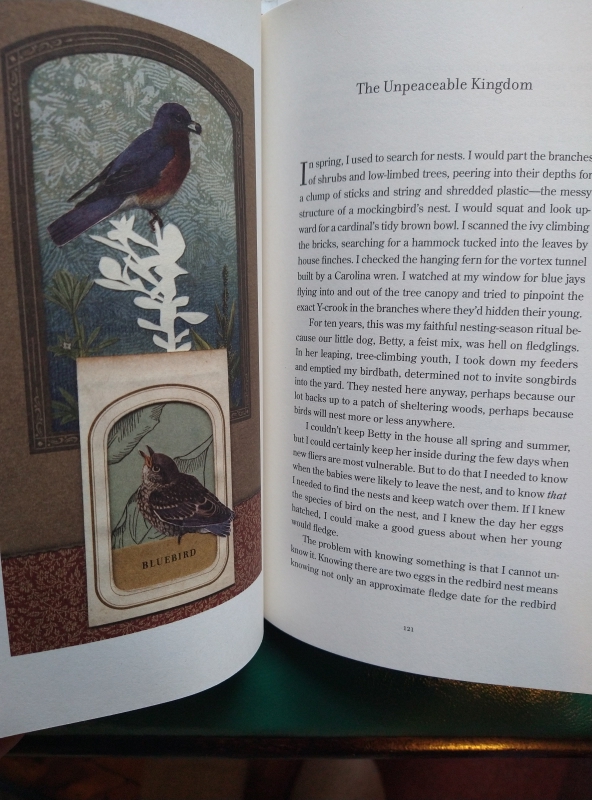
Like Ross Gay and Aimee Nezhukumatathil, Renkl brings a poet’s eye for language and an amateur’s awe at the natural world to her micro-essays. She calls a cedar waxwing “An operatic aria of a bird. A flying jungle flower. A weightless coalescence of air and light and animation.” This is a book to cherish and learn from and reread. (Birthday gift from my sister from my wish list) 
{SPOILERS IN THESE NEXT TWO REVIEWS}
Sweet Bean Paste by Durian Sukegawa (2013; 2017)
[Translated from Japanese by Alison Watts]
 It was the colours (especially that wash of cherry-blossom pink) that first attracted me to this book, and the foodie theme that kept me reading. Sentaro manages a small shop on Cherry Blossom Street, Doraharu, which sells dorayaki – pancakes filled with sweet bean paste (“during cherry-blossom season petals sometimes drifted in, falling into the pancakes as they cooked”). He takes little pride in the work; it’s just a way to keep busy and pay off his debts from the time he was in prison for drug-dealing. When an elderly woman named Tokue offers to make the sweet bean paste for a pittance, he decides to give her a trial even though he usually orders it in bulk. Tokue’s homemade is so much better that the shop is soon making record profits. She trains Sentaro up in the art of making the perfect paste, which to her is a mystical process that involves listening to the beans. Not only does Tokue have new ideas for the menu, but she also makes troubled teenage customers such as Wakana welcome with friendly conversation. Along with Marvy the canary, these three form a fragile little family.
But then rumours start spreading about Tokue and her health, and Doraharu’s owner threatens to shut the place down if Sentaro doesn’t let her go. It turns out that she had Hansen’s disease (the preferred term for leprosy) and lives in a sanatorium. Even though she has long since been cured, there is still a stigma, and when she was young she could only find love and community among her fellow patients. In an Author’s Note, Sukegawa explains that the legislation keeping Hansen’s patients isolated was only repealed in 1996. His philosophy, made explicit in the letters Tokue writes to Sentaro after leaving the shop, is that one doesn’t have to be useful to have a meaningful life; simply being alive and observing is enough. I found Tokue saccharine: too wise, good and all-forgiving. This is easy reading, yet the dialogue felt stiff, the characterization thin, the letters unsubtle, and the detail of confectionery-making too technical. Secondhand – public library book sale) 
The First Day of Spring by Nancy Tucker (2021)
I’d very much admired Tucker’s first two books – The Time in Between, a memoir of her childhood anorexia; and especially That Was When People Started to Worry, case studies of young women’s mental health – so asked my library to purchase her debut novel. Tucker is a trainee clinical psychiatrist. The psychological insight she’s developed professionally and through writing about herself and others served her well in crafting this portrait of a deprived girl who murders other children. I could have included it in my Mother’s Day post because, as in the similarly dark Like Mother (by Jenny Diski), it’s the lack of a mother’s love that leaves the protagonist numb and unsure of how to bring up her own daughter.
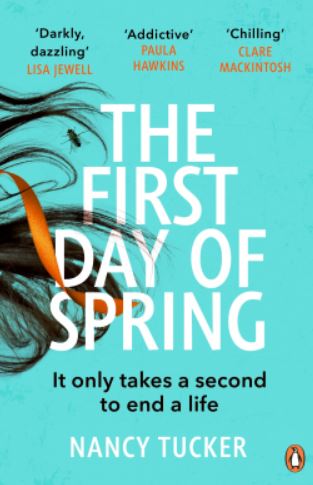 It’s no whodunit because eight-year-old Chrissie admits in the novel’s first line, “I killed a little boy today.” The mystery is why, and how she’s ultimately caught. It’s the first day of spring when she commits that first murder, of a toddler who lives on the same rough housing estate. Her house isn’t much of a home with no money for electricity, no food in the cupboards, an emotionally absent mother and a father who comes and goes without warning. Chrissie is always hungry, always craving. She couldn’t stand that Steven was loved and coddled while she had nothing. Harbouring “a delicious secret” gives her a “belly-fizzing feeling … like sherbet exploding in my guts. … That was all it took for me to feel like I had all the power in the world.” She wants to tell people what she’s done, but knows she mustn’t.
It’s also the first day of spring when five-year-old Molly falls from a seawall and breaks her wrist. Her mum, Julia, panics when she gets a call from child social services. It becomes clear by the second chapter that Julia is the new name Chrissie was given when she left the residential home for child offenders to start a new life. Sure that they’ll blame her and take Molly away, she gets on a train back to her old neighbourhood to see Mam and her childhood best friend, Linda. “I remembered this in Mam – the pull and push, cling and reject.” The subject matter might have become unbearable had Tucker emphasized the salacious details. Instead, she casts a compassionate eye on generational patterns of neglect and incompetence – patterns that can be broken through hard work. It’s riveting reading, and Julia’s love for Molly and Linda’s enduring friendship brought tears to my eyes. (Public library) 
The 2019 Wellcome Book Prize: Shadow Panel and Wish List
On Tuesday the longlist for the 2019 Wellcome Book Prize will be announced. For the third year in a row I’m running a shadow panel, and it’s composed of the same four wonderful book bloggers who joined me last year: Paul Cheney of Halfman, Halfbook, Annabel Gaskell of Annabookbel, Clare Rowland of A Little Blog of Books, and Dr. Laura Tisdall.
This year we’re going to do things slightly differently: we plan to split up the longlist, taking two to three titles each, so that between us we will have read them all and can announce our own preferred shortlist before the official shortlist is announced in March. At that point we’ll catch up by (re)reading the six shortlisted books, each reviewing the ones we haven’t already. Essentially, I’m adding an extra stage of shadow panel judging, simply because I can. I hope it will be fun – and also less onerous, in that we should get a leg-up on the shortlist and not have to read all six books in March‒April, which has proved to be a challenge in the past.
My Wellcome Prize hopefuls are all the fiction or nonfiction titles I’ve read on a medical theme that were published in the UK in calendar year 2018. I have put asterisks beside the 12 books in this post that I predict for the longlist. (The combination of wishful thinking and likelihood means that these are not exclusively my personal favorites.)

Below is a list of the books I’ve already featured on the blog in some way, with links to my coverage and a few-word summary of their relevance.
Nonfiction
Gross Anatomy by Mara Altman: Female body woes
*Beneath the Skin: Great Writers on the Body: Essays on organs
*All that Remains by Sue Black: Forensic anthropology
Everything Happens for a Reason by Kate Bowler: Living with advanced cancer
Heal Me by Julia Buckley: Tackling chronic pain
*The Unmapped Mind by Christian Donlan: Adjusting to life with MS
From Here to Eternity by Caitlin Doughty: Funerary rites around the world
This Really Isn’t About You by Jean Hannah Edelstein: A genetic disease in the family
Natural Causes by Barbara Ehrenreich: Questioning the wellness culture
On Smaller Dogs and Larger Life Questions by Kate Figes: Pondering breast cancer
Shapeshifters by Gavin Francis: Instances of bodily change
The Reading Cure by Laura Freeman: Healing from an eating disorder
Nine Pints by Rose George: The story of blood
Waiting for the Last Bus by Richard Holloway: Ageing and death
*Heart: A History by Sandeep Jauhar: Heart disease and treatments
Sick by Porochista Khakpour: Chronic Lyme disease
Human Errors by Nathan Lents: Flawed bodies; evolutionary adaptations
Skybound by Rebecca Loncraine: Breast cancer; flying lessons
Amateur by Thomas Page McBee: Memoir of F2M transformation
*Face to Face by Jim McCaul: Tales of facial surgery
*Somebody I Used to Know by Wendy Mitchell: A firsthand account of early Alzheimer’s
*That Was When People Started to Worry by Nancy Tucker: Mental illness from the inside
*The Language of Kindness by Christie Watson: Nursing as a vocation
Fiction
Little by Edward Carey: Anatomical models in wax (thanks to Clare for the reminder!)
Orchid & the Wasp by Caoilinn Hughes: Non-epileptic seizures
*The Winter Soldier by Daniel Mason: Neurology, surgery during WWI
The Way of All Flesh by Ambrose Parry: Medicine in 1840s Edinburgh
Other eligible books that I have read but not happened to mention on the blog:
 In Shock by Rana Awdish: The doctor became the patient when Awdish, seven months pregnant, was rushed into emergency surgery with excruciating pain due to severe hemorrhaging into the space around her liver, later explained by a ruptured tumor. Having experienced brusque, cursory treatment, even from colleagues at her Detroit-area hospital, she was convinced that doctors needed to do better. This memoir is a gripping story of her own medical journey and a fervent plea for compassion from medical professionals.
 Doctor by Andrew Bomback: Part of the Bloomsbury Object Lessons series, this is a wide-ranging look at what it’s like to be a doctor. Bomback is a kidney specialist; his wife is also a doctor, and his father, fast approaching retirement, is the kind of old-fashioned, reassuring pediatrician who knows everything. Even the author’s young daughter likes playing with a stethoscope and deciding what’s wrong with her dolls. In a sense, then, Bomback uses fragments of family memoir to compare the past, present and likely future of medicine.
 A Moment of Grace by Patrick Dillon [skimmed]: A touching short memoir of the last year of his wife Nicola Thorold’s life, in which she battled acute myeloid leukemia. Dillon doesn’t shy away from the pain and difficulties, but is also able to summon up some gratitude.
 Get Well Soon: Adventures in Alternative Healthcare by Nick Duerden: British journalist Nick Duerden had severe post-viral fatigue after a run-in with possible avian flu in 2009 and was falsely diagnosed with ME / CFS. He spent a year wholeheartedly investigating alternative therapies, including yoga, massage, mindfulness and meditation, visualization, talk therapy and more. He never comes across as bitter or sorry for himself. Instead, he considered fatigue a fact of his new life and asked what he could do about it. So this ends up being quite a pleasant amble through the options, some of them more bizarre than others.
 *Sight by Jessie Greengrass [skimmed]: I wanted to enjoy this, but ended up frustrated. As a set of themes (losing a parent, choosing motherhood, the ways in which medical science has learned to look into human bodies and minds), it’s appealing; as a novel, it’s off-putting. Had this been presented as a set of autobiographical essays, perhaps I would have loved it. But instead it’s in the coy autofiction mold where you know the author has pulled some observations straight from life, gussied up others, and then, in this case, thrown in a bunch of irrelevant medical material dredged up during research at the Wellcome Library.
 *Brainstorm: Detective Stories From the World of Neurology by Suzanne O’Sullivan: Epilepsy affects 600,000 people in the UK and 50 million worldwide, so it’s an important condition to know about. It is fascinating to see the range of behaviors seizures can be associated with. The guesswork is in determining precisely what is going wrong in the brain, and where, as well as how medicines or surgery could address the fault. “There are still far more unknowns than knowns where the brain is concerned,” O’Sullivan writes; “The brain has a mind of its own,” she wryly adds later on. (O’Sullivan won the Prize in 2016 for It’s All in Your Head.)
 I’m also currently reading and enjoying two witty medical books, The Mystery of the Exploding Teeth and Other Curiosities from the History of Medicine by Thomas Morris, and Chicken Unga Fever by Phil Whitaker, his collected New Statesman columns on being a GP.
Four additional books I have not read but think might have a chance of making the longlist:
Primate Change: How the World We Made Is Remaking Us by Vybarr Cregan-Reid
 The Beautiful Cure: Harnessing Your Body’s Natural Defences by Daniel M. Davis
Because I Come from a Crazy Family: The Making of a Psychiatrist by Edward M. Hallowell
*She Has Her Mother’s Laugh: The Powers, Perversions, and Potential of Heredity by Carl Zimmer
Look out for the announcement of the longlist on Tuesday afternoon! I’ll report back, perhaps on Wednesday, with some reactions and the shadow panel’s reviewing strategy.
Have you read, or are you interested in, any of these books?
Can you think of other 2018 releases that might be eligible for the Wellcome Book Prize?
Best Nonfiction Books of 2018
Below I’ve chosen my 12 favorite nonfiction books published in 2018. You’ll be unsurprised to learn that half of them have a medical theme. Many have already featured on my blog in some way over the course of the year. To keep things simple, as I’ve done in previous years, I’m limiting myself to two sentences per title: a potted summary plus why you should read it. Let the countdown begin!
 12. The Line Becomes a River by Francisco Cantú: Francisco Cantú was a U.S. Border Patrol agent for four years in Arizona and Texas. Impressionistic rather than journalistic, his book is a loosely thematic scrapbook that, in giving faces to an abstract struggle, argues passionately that people should not be divided by walls but united in common humanity.
 11. Bookworm by Lucy Mangan: Mangan takes us along on a nostalgic chronological tour through the books she loved most as a child and adolescent. No matter how much or how little of your early reading overlaps with hers, you’ll appreciate her picture of the intensity of children’s relationship with books – they can completely shut out the world and devour their favorite stories over and over, almost living inside them, they love and believe in them so much – and her tongue-in-cheek responses to them upon rereading them decades later.
 10. Everything Happens for a Reason: And Other Lies I’ve Loved by Kate Bowler: An assistant professor at Duke Divinity School, Bowler was fascinated by the idea that you can claim God’s blessings, financial and otherwise, as a reward for righteous behavior and generosity to the church (“the prosperity gospel”), but if she’d been tempted to set store by this notion, that certainty was permanently fractured when she was diagnosed with stage IV colon cancer in her mid-thirties. Bowler writes tenderly about suffering and surrender, about living in the moment with her husband and son while being uncertain of the future.
 9. Gross Anatomy by Mara Altman: Through a snappy blend of personal anecdotes and intensive research, Altman exposes the cultural expectations that make us dislike our bodies, suggesting that a better knowledge of anatomy might help us feel normal. It’s funny, it’s feminist, and it’s a cracking good read.
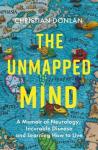 8. The Unmapped Mind by Christian Donlan: Donlan, a Brighton-area video games journalist, was diagnosed with (relapsing, remitting) multiple sclerosis in 2014; he approaches his disease with good humor and curiosity, using metaphors of maps to depict himself as an explorer into uncharted territory. This is some of the best medical writing from a layman’s perspective I’ve ever read.
 7. Skybound by Rebecca Loncraine: For Rebecca Loncraine, after treatment for breast cancer in her early thirties, taking flying lessons in an unpowered glider (everywhere from Wales to Nepal) was a way of rediscovering joy and experiencing freedom by facing her fears in the sky. Each year seems to bring one exquisite posthumous memoir about facing death with dignity; this is a worthwhile successor to When Breath Becomes Air et al.
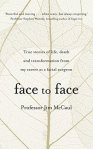 6. Face to Face by Jim McCaul: Eighty percent of a facial surgeon’s work is the removal of face, mouth and neck tumors in surgeries lasting eight hours or more; McCaul also restores patients’ appearance as much as possible after disfiguring accidents. This is a book that inspires wonder at all that modern medicine can achieve.
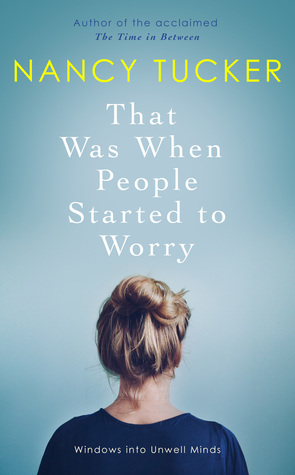
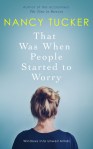 5. That Was When People Started to Worry by Nancy Tucker: Tucker interviewed 70 women aged 16 to 25 for a total of more than 100 hours and chose to anonymize their stories by creating seven composite characters who represent various mental illnesses: depression, bipolar disorder, self-harm, anxiety, eating disorders, PTSD and borderline personality disorder. Reading this has helped me to understand friends’ and acquaintances’ behavior; I’ll keep it on the shelf as an invaluable reference book in the years to come.
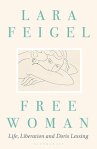 4. Free Woman by Lara Feigel: A familiarity with the works of Doris Lessing is not a prerequisite to enjoying this richly satisfying hybrid of biography, literary criticism and memoir. Lessing’s The Golden Notebook is about the ways in which women compartmentalize their lives and the struggle to bring various strands into harmony; that’s what Free Woman is all about as well.
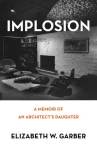 3. Implosion by Elizabeth W. Garber: The author endured sexual and psychological abuse while growing up in a glass house designed by her father, Modernist architect Woodie Garber – a fascinating, flawed figure – outside Cincinnati in the 1960s to 1970s. This is definitely not a boring tome just for architecture buffs; it’s a masterful memoir for everyone.
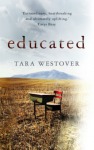 2. Educated by Tara Westover: Westover writes with calm authority, channeling the style of the scriptures and history books that were formative in her upbringing and education as she tells of a young woman’s off-grid upbringing in Idaho and the hard work that took her from almost complete ignorance to a Cambridge PhD. This is one of the most powerful and well-written memoirs I’ve ever read.
It was a real toss-up between Westover and this one, but since Educated has already gotten a ton of attention this year, I’ve awarded the title of nonfiction book of the year to:
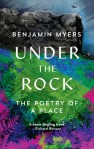 1. Under the Rock by Benjamin Myers: A spell-bindingly lyrical book that ranges from literature and geology to true crime but has an underlying autobiographical vein. Its every sentence is well-crafted and memorable; this isn’t old-style nature writing in search of unspoiled places, but part of a growing interest in the ‘edgelands’ where human impact is undeniable but nature is creeping back in.

My 2018 nonfiction books of the year (the ones I own in print, anyway).
What were some of your top nonfiction reads of the year?
Upcoming posts:
27th: Best fiction of the year
28th: Runners-up
29th: Best backlist reads
30th: Other superlatives and some early 2019 recommendations
31st: Library Checkout & Final statistics on my 2018 reading
That Was When People Started to Worry by Nancy Tucker
Nancy Tucker’s first book, The Time in Between (2015), was a wrenching and utterly absorbing eating disorder memoir told in an original blend of forms: cinematic scenes of dialogue and stage directions, schedules, tongue-in-cheek dos and don’ts, imagined interrogations, and so on. She’s recreated that experimental/hybrid style here to capture the experiences of young women with mental health challenges.
At a time when she was still struggling with anorexia and suicidal thoughts, bouncing between her uni room and a psychiatric ward, Tucker felt the need to get beyond her own pain by engaging with others’ problems. She interviewed 70 women aged 16 to 25 for a total of more than 100 hours and chose to anonymize their stories by creating seven composite characters who represent various mental illnesses: depression, bipolar disorder, self-harm, anxiety, eating disorders, PTSD and borderline personality disorder.
Each chapter follows a similar format, focusing on a first-person narrative from the invented character but also interspersing other documents like e-mails, instant messages, conversations with a therapist, a video interview transcript or a self-interrogation. A different font then sets out a few-page section that, in a sardonic tone, suggests the problem really isn’t that serious and is easily solved with a handful of simple tips. After this point Tucker steps out of character to give statistics and commentary on the particular mental illness, as she heard it described by her interviewees. She returns to the character’s voice to close with a “What I wish I could tell you about my [depression, etc.]” section, a heartfelt plea for sympathy.
 These stories overlap with each other – anxiety and depression commonly co-occur with other mental illness, for instance. Yasmine’s bipolar means that sometimes she feels like she could run a marathon or write a novel in a few days, while other times she’s plunged into the depths of depression. Neither Abby (depression) nor Freya (anxiety) can face going to work; Maya (BPD, also known as emotionally unstable personality disorder) exhibits many of the symptoms from other chapters, including self-harm and feelings of emptiness.
Tucker is keen to emphasize how complex these disorders are: it’s never just a matter of being sad, having mood swings or seeking attention. She is sensitive to the way that certain ones might be belittled, such as binge eating disorder, which, because it isn’t as clinically recognized as anorexia or bulimia, can be equated with poor self-control. Also, mental health conditions exist on a continuum, so it’s hard to definitively announce a cure. In any case, “A binary perception of mental illness benefits no one,” Tucker explains: “the ‘insane’ may find themselves held at arms’ length, but the ‘sane’ may be denied rapid treatment, or accused of melodrama.”
The details of these narratives can be painful to read, like Georgia and friends browsing Tumblr for ideas of how to cut themselves with razors and take not-quite-overdoses of paracetamol, and Holly’s post-traumatic stress after not-quite-consensual sex with her boyfriend. But the voices are so intimately rendered, and the chapters so perfectly balanced between the general and the fictionalized particulars, that they illuminate mental health crises in a uniquely powerful way.
Reading this has helped me to understand friends’ and acquaintances’ behavior. I’ll keep it on the shelf as an invaluable reference book in the years to come. Based on what I’ve read thus far, this is my frontrunner for next year’s Wellcome Book Prize, which “aims to excite public interest and encourage debate around [medical] topics.” That Was When People Started to Worry seems to me to be just what the prize is looking for, as “Books that find stories in those brushes with medicine are ones that add new meaning to what it means to be human.”
My rating: 
That Was When People Started to Worry: Windows into Unwell Minds was published by Icon Books in May. My thanks to the publisher for a free copy for review.
The Reading Cure: How Books Restored My Appetite by Laura Freeman
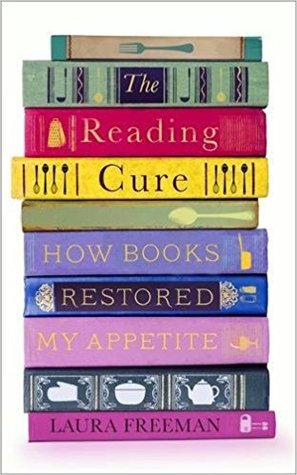 A debut memoir with food, medical and literary themes and a bibliotherapy-affirming title – this book ticks a whole lot of boxes for me. The very day I saw it mentioned on Twitter I requested a copy, and it was a warming, cozy read for the dark days of late December. As a teenager, freelance journalist Laura Freeman suffered from anorexia, and ever since she has struggled to regain a healthy relationship with food. This is decidedly not an anorexia memoir; if that’s what you’re looking for, you’ll want to pick up Nancy Tucker’s grueling but inventive The Time in Between. Instead, it’s about the lifelong joy of reading and how books have helped Freeman in the years that she has been haltingly recovering a joy of eating.
If asked to name a favorite food, Freeman writes that it would be porridge – or, if she was really pressed, perhaps her mother’s roast chicken dinner. But it’s been so long since she’s thought of food in terms of pleasure that written accounts of feasting from the likes of M.F.K. Fisher or Parson Woodforde might as well be written in a foreign language. When in 2012 she decided to read the whole of Charles Dickens’s oeuvre in his bicentenary year, she was struck afresh by the delight his characters take in meals.
While I was reading Dickens something changed. I didn’t want to be on the outside, looking at pictures, tasting recipes at one remove, seeing the last muffin go to someone else. I began to want to want food. To share it, savour it, to have it without guilt.
This nascent desire for a broader and more sumptuous food repertoire fuels the author through her voracious reading: of war writers like Siegfried Sassoon and Robert Graves with their boiled eggs and cocoa; of travel writers Laurie Lee and Patrick Leigh Fermor and their enthusiastic acceptance of whatever food came their way on treks; and of rediscovered favorite children’s books from The Secret Garden through the Harry Potter series with the characters’ greedy appetite for sweets. Other chapters are devoted to Virginia Woolf, whose depression and food issues especially resonate for Freeman; food writers; famous gluttons; and the specific challenge of chocolate, which she can’t yet bring herself to sample because it’s “so tangled up in my mind with ideas of sin, greed and loss of control.”
It’s these psychological and emotional aspects of food that Freeman is so good at capturing. She recognizes a tendency to all-or-nothing thinking that makes her prey to clean eating fads and exclusion diets. Today she still works to stifle the voices that tell her she’ll never be well and she doesn’t deserve to eat; she also tries to block out society’s contradictory messages about fat versus thin, healthy versus unhealthy, this diet versus that one. Channeling Dickens, she advises, “Don’t make a Marshalsea prison of rules for yourself – no biscuits at tea, no meat in the week, no pudding, not ever. Don’t trap yourself in lonely habits.”
Freeman’s taste in both food and literature seems a trifle old-fashioned, leaning towards jolly ol’ English stuff, but that’s because this is about comfort reading as much as it is about rediscovering comfort eating. Her memoir delicately balances optimism with reality, and encourages us to take another look at the books we love and really notice all those food scenes. Maybe our favorite writers have been teaching us how to eat well all along.
My rating:
The Reading Cure: How Books Restored My Appetite is published in the UK by Weidenfeld & Nicolson. My thanks to Virginia Woolstencroft for the review copy.
Reviews Roundup, March–April
One of my goals with this blog is to have one convenient place where I can gather together all my writing that has appeared in disparate online locations. To that end, once a month – or maybe more often – I’ll provide links to all the book reviews I’ve published elsewhere, with a short taster and a rating (below) so you can decide whether to click to read more. (A couple of exceptions: I won’t point out my Kirkus Indie or BlueInk reviews since I don’t get a byline.)
BookBrowse
 The Animals by Christian Kiefer [BookBrowse is a subscription service, but an excerpt is available for free on the website]: Kiefer’s second novel contrasts wildness and civilization through the story of a man who runs an animal refuge to escape from his criminal past.

The Bookbag
 The Sunlit Night by Rebecca Dinerstein: A debut novel as charming as it is quirky. Two young adults from Brooklyn meet in the far north of Norway, where one is an artist’s apprentice and the other is burying a beloved father. Bittersweet family backstories and burgeoning romance make this a winner.

Beauty and Chaos: Slices and Morsels of Tokyo Life by Michael Pronko (& interview): The pleasant and diverse travel essays in this collection draw on Pronko’s 15 years living in Japan. A long-term resident but still an outsider, he is perfectly placed to notice the many odd and wonderful aspects of Tokyo life.
The Blind Man of Hoy: A True Story by Red Szell: Red Széll started losing his sight at age 19. In 2013 he became the first blind person to climb the Old Man of Hoy, off the Orkney Islands. An inspirational rock-climbing adventure.

 Adeline: A Novel of Virginia Woolf by Norah Vincent: Set in 1925–1941 and focusing on Virginia Woolf’s marriage and later career, this is a remarkable picture of mental illness from the inside. For the depth of its literary reference and psychological insight, this is my favorite novel of 2015 so far.
Nudge
On Immunity: An Inoculation by Eula Biss: This wide-ranging work of nonfiction explores the facts, myths and metaphors of vaccination. Biss powerfully captures the modern phenomenon of feeling simultaneously responsible and powerless.
Chaplin and Company by Mave Fellowes: An aspiring mime buys a London canal boat and finds her father in this debut novel. Fellowes writes good descriptive passages and handles past and present capably. However, I was unsure whether Chaplin and Company overall has much narrative verve. What I will take away is an offbeat, bittersweet coming-of-age story.

 Gorsky by Vesna Goldsworthy: An updated version of The Great Gatsby set amongst contemporary London’s über-rich Russians. The novel is wise about the implications of class and immigration. However, as a whole it doesn’t work as well as some updated classics, such as The Innocents (Francesca Segal). In a sense, Goldsworthy’s literary debt is too obvious.

Quite a Good Time to Be Born: A Memoir, 1935-1975 by David Lodge [more personal musings and an overview of the book’s content]: David Lodge, one of Britain’s most celebrated comic novelists, surveys 40 years of personal and social change.
Better Than Before: Mastering the Habits of Our Everyday Lives by Gretchen Rubin: The author of The Happiness Project returns with a thorough guide to making and breaking habits, offering different strategies for different personality types.
 Dear Committee Members by Julie Schumacher: A very funny epistolary novel in the form of letters of recommendation written by a grouchy English professor. English graduates and teachers in particular will get a kick out of this, but I daresay anyone who has ever been fed up with bureaucracy at work will sympathize with Fitger.
The Last Asylum: A Memoir of Madness in Our Time by Barbara Taylor: Taylor was once a mental patient at Friern Hospital. This is an arresting vision of madness from the inside, as well as a history of England’s asylum system.
We Love This Book
 It’s What I Do: A Photographer’s Life of Love and War by Lynsey Addario: Photojournalist Lynsey Addario remembers a decade on the frontline of conflicts in the Middle East and Africa and strives for balance in her work and personal life. Journalists face real danger every day. It’s all here: bombs, car accidents, dehydration, beatings, and sexual assault. Yet all the risks over the years have been worth it “to convey beauty in war.”
Hausfrau by Jill Alexander Essbaum: Essbaum’s arresting debut novel reads like a modern retelling of Madame Bovary, with its main character a desperate housewife in Zurich. As deplorable as Anna’s actions may be, she is an entirely sympathetic tragic heroine. Watch her trajectory with horror but you cannot deny there is a little of Anna in you.
 The Wild Beyond by Piers Torday: the suspenseful finale to “The Last Wild,” a fantasy trilogy for younger readers. The environmentalist message is not subtle but it is powerful and should inspire older children. Blending hints of Pullman and Tolkien with up-to-the-minute dystopian themes, this is an inventive take on the classic quest narrative.
The Time in Between: A Memoir of Hunger and Hope by Nancy Tucker: Nancy Tucker suffered from anorexia and bulimia for nearly a decade. Written in an original blend of styles, her eating disorder memoir is wrenching but utterly absorbing. You won’t find epiphanies or happy endings here, just a messy, ongoing recovery process – but 21-year-old Tucker narrates it exquisitely.
Quadrapheme literary magazine
 Quite a Good Time to Be Born: A Memoir, 1935-1975 by David Lodge [more of an essay about the context and sociological themes]: Even readers less familiar with Lodge’s work may be interested in the book’s insights into the social changes of post-war Britain. Lodge has not had a conventionally exciting life, and he knows it. From the title onward, his focus is more on his time period than his own uniqueness. He appears as an Everyman who superseded his working-class origins and expectations through hard work and luck.
Shiny New Books
 Reading the World: Confessions of a Literary Explorer by Ann Morgan: Not just another bibliomemoir. A better balance could have been struck between recycled blog content and academic musings on postcolonial literature and censorship. An interest in the politics of literature in translation would be a boon to anyone attempting this.
Foreword Reviews (self-published titles)
 The Woman in the Movie Star Dress by Praveen Asthana: In this carefully plotted novel, a young Native American finds self-assurance and explores her sexuality by trying on the clothing – and personae – of Hollywood actresses. Spirited characters and dialogue make this an enjoyable read for classic film lovers.
Silence by Deborah Lytton: Lytton’s second novel for young adults concerns the unlikely match between a Broadway-bound singer who experiences temporary deafness after an accident and a pianist with a speech impediment and a traumatic past. It is a touching story about the forces that so often threaten us into silence and the struggle to find a voice anyway.
 Woody Allen: Reel to Real by Alex Sheremet: Woody Allen fans will prize this comprehensive, readable rundown of his oeuvre. This is an exhaustive study, ideal for established Allen enthusiasts and film students rather than the average moviegoer looking for an introduction.
I also post reviews of most of my casual reading on Goodreads.
The Mermaid’s Child by Jo Baker: This was Baker’s second novel, originally published in 2004. It doesn’t nearly live up to Longbourn, but it’s a fairly intriguing blend of historical fiction and fantasy. Malin’s father was a ferryman; her absent mother, so he swears, was a mermaid. Curiously timeless and placeless.
 The Dream Lover: A Novel of George Sand by Elizabeth Berg: This historical novel about George Sand is a real slow burner. Berg makes the mistake of trying to be too comprehensive about Sand’s life; it would be better to just choose illustrative vignettes or representative love affairs (e.g. with Chopin) rather than include them all. There are two different timelines, 1831–1876 and 1804–1831, but together they’re still just a chronological slog.
 The Year My Mother Came Back by Alice Eve Cohen: There’s some gentle magic realism to this mother-daughter memoir. In the difficult year that forms the kernel of the memoir, Cohen’s younger daughter, Eliana, had a leg-lengthening surgery; her adopted older daughter, Julia, met her birth mother, Zoe; and Cohen herself underwent a lumpectomy and radiation for breast cancer. During radiation sessions, when she had to lie face-down, perfectly still, for 10 minutes at a time, her mother – dead for 20 years – would appear and talk to her.
A Sting in the Tale: My Adventures with Bumblebees by Dave Goulson: A wholly engaging tour through everything we know and are still trying to learn about bumblebees. I saw Goulson, founder of the UK’s Bumblebee Conservation Trust, speak at a nature conference in November and found him to be just as enthusiastic and well-informed in person. His occasional anthropomorphisms are unfailingly endearing.
 Black River by S.M. Hulse: Back in the town of Black River, Montana after his wife’s agonizing death, Wesley Carver must face the trauma he experienced as a prison guard when he was held hostage and tortured during an inmate riot. Now his attacker is up for parole, and Wes plans to attend the hearing and discourage the jury. At first you might think you’re reading a revenge story, but this is something subtler and sweeter than that. (What a shame that Hulse had to go by her initials, rather than Sarah, to be taken seriously in this genre, even though she’s on a level with Philipp Meyer.)
Trumbull Ave. by Michael Lauchlan: I didn’t like this quite as much as the other Made in Michigan books I’ve read, but Lauchlan does a good job of contrasting pastoral and post-industrial views of Detroit through free verse, as in “Detroit Pheasant,” the poem that gives the collection its cover image.
What Ridiculous Things We Could Ask of Each Other by Jeffrey Schultz: I enjoyed these poems set in a seemingly post-apocalyptic urban wasteland. They’re full of black humor, sarcasm and realistically pessimistic views of the American future. They’re very densely structured, usually in complete sentences of free verse.
 Bookish Beck = Rebecca Foster. American transplant to England. Freelance proofreader and book reviewer.
 Bookish Beck
