
The International Space Station is a remarkable achievement of technology and international cooperation. It has been inhabited nonstop since November 2, 2000; put another way, it has been more than fourteen years since all humans were on the Earth at once. It is by far the longest-inhabited structure in space and has been visited by more than two hundred people from sixteen nations. It’s the largest peacetime international project in history. (pg 23)
 This is the book. This is the book I’ve been reading over the course of the last month that I didn’t want to finish because I loved it so much. This is the book that has given my perspective a whole new sense of balance. This is the book that has helped me step back from my frenzied parenting and allow things to flow more naturally again. This is the book that spoke to the part of me from seventh grade that desperately wanted to go to space camp, even though I believed then (and still do now) that I didn’t have the right kind of brain to be an astronaut. This book is everything to me right now, and I know we’re only a few weeks into 2018, but I’m not sure there’s going to be another in the next eleven months that moves me as deeply as this one did.
What is it worth to see two former bitter enemies transform weapons into transport for exploration and the pursuit of scientific knowledge? What is it worth to see former enemy nations turn their warriors into crewmates and lifelong friends? This is impossible to put a dollar figure on, but to me it’s one of the things that makes this project worth the expense, even worth risking our lives. (pg 22)
Every night since the beginning of December, I’ve been portioning out this book for myself. I never let myself read too much at one time because I wanted the details, the danger, the scent of space to soak into my consciousness. I was feeling especially overwhelmed when I picked it up, and I needed to take a look at real worthwhile risk to reevaluate some of my own concerns. Yes, my kids have colds, but this man is taking an eleven hour spacewalk. Yes, I have to get everyone packed up for our Christmas travels, but what about the astronauts who were putting their lives in danger in order to for me to understand more about the universe, who were doing all this in hopes that one day, more people could fly among the stars, fulfilling one of my deepest dreams of childhood?
Today I am doing a Twitter chat, answering questions from followers “live.” Because my internet connection can be slow, I’m dictating my answers to Amiko and another public affairs person, and they are typing them into Twitter almost in real time. I’m answering the usual questions about food, exercise, and the view of Earth when I receive a tweet from a user with the handle @POTUS44, President Obama.
He writes, “Hey @StationCDRKelly, loving the photos. Do you ever look out the window and just freak out?”
Amiko and I share a moment of being pleased that the president is following my mission. I think for a moment, then ask Amiko to type a reply: “I don’t freak out about anything, Mr. President, except getting a Twitter question from you.”
It’s a great Twitter moment, unplanned and unscripted, and it gets thousands of likes and retweets. Not long after, a reply appears from Buzz Aldrin: “He’s 249 miles above the earth. Piece of cake. Neil, Mike & I went 239,000 miles to the moon. #Apollo11.”
There is no good way to engage in a Twitter debate with an American hero, so I don’t. In my mind, I reflect on the fact that the crew of Apollo 11 spent eight days in space, traveling half a million miles; by the time I’m done I will have spent a total of 520 days in space and will have traveled over two hundred million miles, the equivalent of going to Mars and back. Only later, when the Twitter chat is over, do I have the chance to reflect that I just experienced being trolled, in space, by the second man on the moon, while also engaging in a Twitter conversation with the president. (pg 189)
It was impossible to stay angry or frustrated or anxious for very long when reading about Kelly spending a year orbiting the earth. Daily annoyances don’t compare to the wonder I feel when considering what that experience meant for Kelly, his family, and the world. (Before reading this book, I wasn’t aware of several facts: 1. Scott Kelly and his identical twin brother, Mark Kelly, are both astronauts. 2. After spending a year in space, Scott has provided scientists with invaluable information that is used to compare the effects of long term space flight down to the genetic level between himself and his brother. 3. Mark Kelly is married to Gabby Gifford, and the shooting which fortunately did not end her life took place while Scott was in space, which gave me a vastly different perspective on that event, as well as how intensely painful it must be – how huge a sacrifice is made on a personal level – by every person who goes into space.)
I received about twelve books for Christmas – books that I’ve been wanting to read for years – and yet I’m finding it difficult to start any of them. I keep going back and rereading portions of Endurance (the fact that this book shares a title with another I’ve been meaning to read, Endurance: Shackleton’s Incredible Voyage, is not lost on me). I find it grounding to read about the challenges and adventure of space travel and also find it comforting to think that, when spending a year orbiting the earth, there is also the mundane to consider. There are toilets to fix, repetitive menus, minor squabbles between crew mates. Space is magnificent space, and humans are, well, human, no matter where we go. That combination of the extraordinary and the flesh are unbelievably compelling. This is the book. This is my book of the year.
Dressed and ready for breakfast, I open the door to my CQ. As I push against the back wall to float myself out, I accidentally kick loose a paperback book: Endurance: Shackleton’s Incredible Voyage by Alfred Lansing. I brought this book with me on my previous flight as well, and sometimes I flip through it after a long day and reflect on what these explorers went through almost exactly a hundred years before. They were stranded on ice floes for months at a time, forced to kill their dogs for food, and nearly froze to death in the biting cold. They hiked across mountains that had been considered impassable by explorers who were better equipped and not half starved. Remarkably, not a single member of the expedition was lost.
When I try to put myself in their place, I think the uncertainty must have been the worst thing. The doubt about their survival would be worse than the hunger and the cold. When I read about their experiences, I think about how much harder they had it than I do. Sometimes I’ll pick up the book specifically for that reason. If I’m inclined to feel sorry for myself because I miss my family or because I had a frustrating day or because the isolation is getting to me, reading a few pages about the Shackleton expedition reminds me that even if I have it hard up here in some ways, I’m certainly not going through what they did. (pg 76)
 It’s easy to turn a blind eye to our communication weaknesses; we tend to make exceptions and excuses for our mistakes, and sometimes even go so far as to recast our weaknesses into strengths. For example, you may not enjoy making small talk with your neighbors at the end of a long day, but you tell yourself that the reason you avoid eye contact with the guy next door is because you respect everyone’s privacy. Or let’s say you’re reluctant to engage with your colleagues at the office. You may tell yourself it’s because you don’t want to interrupt them when they’re working or because you’re too focused on your own work to waste time, but the truth is you may not care what the person in the adjacent cubicle did over the weekend.
 Love is hiding in the lounge at assisted living and writing your mother-in-law’s name on her underthings so they can be sent to the laundry.
  For Lawson, her anxiety and depression are so severe that she often must keep her hands busy to prevent them from, in her own words, destroying her. She recognizes that she is her own most dangerous and unpredictable foe, and to combat her body’s desire to hurt itself, she draws. Her pen and ink sketches are as intricate and lovely as they are inspiring. In the year before this book became a reality, Lawson had shared a few of her drawings with her online audience and was surprised by how well-received they were. People were coloring them in and then sharing them back to the community, and each individual take on the original was a mini masterpiece in its own right – a whisper into the void of mental and physical illness that declared I am (still) here.
 He’s that kind of friend – a person I see at birthday parties and on Halloween, or occasionally when he’s picking up his kids from his mother-in-law, who lives just three houses down from us. I probably know her better than him now, since she often welcomes my wandering son into her home, overflowing, as it is, with her easy-going love and an abundant collection of dump trucks and stuffed animals. We don’t share close confidences or go on vacations together, but I enjoy both the John I see at the park or in an overcrowded kitchen and the one I encounter on the page. The one is boisterous and quick-witted, the other, neurotic and searching. When we stop to chat, he is confident – simultaneously the brilliant Stanford lecturer and the father of three bright, energetic boys. He is only overshadowed by his wife, who is one of the most straightforward people I’ve ever met. It’s hard to imagine her functioning at any level below excellence, and yet she makes me laugh and feel immediately comfortable and happy, a genetic disposition I envy, since I’m more likely to identify with the pen and ink sketches of John’s anxiety than with Cait’s welcoming competence.
 There is no day, holiday or otherwise, with the overarching power to bring joy to all. Life isn’t like that. It isn’t fair. It doesn’t dole out goodness because the calendar demands it. That’s why – regardless of circumstance – we can all use a little of Glennon Doyle Melton’s wisdom today.
 I grew up with several Mormon friends (the Church of Latter Day Saints shared a parking lot with my high school, so we had maybe more than the average number of Mormon students for a small town in New Hampshire). Every single one of them could be described as the nicest person I ever met. Unfailingly friendly, kind, and considerate, I was never prosthelytized to or even subject to any conversation about God while with them.
 Written in free verse, Woodson’s perfectly paced memoir is exquisite. Having put together my own memoir in verse a few years ago, I recognize how difficult it is to make every piece as strong as the previous one, and she puts my meager efforts to shame. How she does it – I can only imagine how much work went into telling this story. How she must have agonized and organized and overwritten in order to eventually prune down to this one exceptional volume.
 I very rarely review books here before I’ve finished them. A couple of years ago, I read a few novels and posted multi-day reviews of them, but in general, I make it a practice to read first, review later. This isn’t particularly difficult to accomplish because I derive an almost obscene pleasure out of completing tasks before the deadline. It satisfies a part of me that is just on the edge of obsessive compulsive to do so, and writing about Desert Solitaire before I’ve finished it has the opposite effect. I’m antsy, frustrated, distracted by the fact that I don’t have time to finish one item on my agenda before moving on to the next.
 Reading it immediately transported me back to my own trip down the Colorado in 2008. In my life, there has been nothing that compares to the experience I had rafting down the Grand Canyon for three weeks. Having a child changed my life by magnitudes, but I was expecting that. People have babies. It’s a thing that’s done, and it is unquestionably one of the best things I’ve ever experienced, but being a parent connects to me to, well, just about everything. I’m part of a web of humanity, past, present, and future, and I feel that connection to other people in ways I had only dreamed of. Rafting through the Canyon, on the other hand, exposed me the natural order, and to a primal version of myself that I never even imagined existed.
 Now, that we’ve settled in, I have to admit I’ve been on a little break from novels the last two months. During November, I was doing my own new-mom adaptation of National Novel Writing Month, where, instead of writing a completely impossible 50,000 words, I was trying to finish the first draft of the cozy mystery started last summer. Spoiler alert: I failed. I did get five chapters written, which was certainly better than nothing, but I had to extend my deadline to December 31 (which fortunately, I was able to meet).
  It wasn’t until I was firmly ensconced at my parents’ house and they were able to take the baby for a few hours that I was able to even get started. I’d had a number of false starts back home in the evenings when my husband was available, but what I really needed was to hide away in my childhood bedroom and reflect. That sort of proposition required the kind of doting only accomplished by new grandparents. Once I’d managed to arrange that, I had only three or four more (very badly written) opening paragraphs before I pulled out a book that I read earlier this summer and began to look at sections I’d highlighted. This passage jumped out at me, and I was on a roll:
 I wasn’t sure it was necessary to start reading up about this topic so early, of course, but as soon as I started Lieber’s book, I was completely engrossed. Here was practical advice about how to approach the topic of money with children as young as three or four years old, as well as how to keep the conversation going until children are out in the world making their own financial decisions. As I was reading though, I had a powerful realization that of all the strengths my parents instilled in me, financial savvy was not one of them. Do I know how to be generous? Yes. Do I understand the basics of budgeting and taxes? Yes, after many years of guidance from friends (and my very patient husband), I have workable knowledge. Do I feel comfortable comparing investments, the stock market, or retirement plans? Not really. More importantly though, having grown up in a family (to be clear – one like almost every other I knew when I was a child) where money was a completely taboo subject, I recognize that my spending priorities are not always what I want them to be, and they certainly aren’t as astute as I hope my own children’s will one day be.
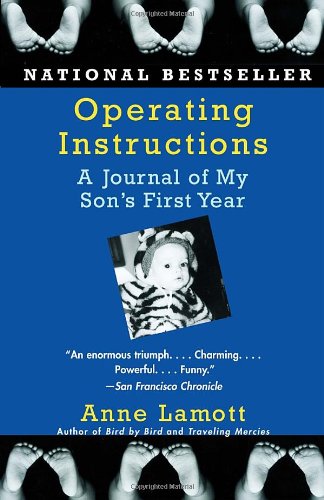 Of course I was crying by the time I’d finished the introduction and had to put the book down to email and scold her for telling a hormonal pregnant woman to read such a thing. She was appropriately amused by the situation and pointed out that when she read it, parenting blogs didn’t exist and it was books like this one that kept her sane after she had her first baby. I tried (and failed) to imagine how much harder that would have been. I’ve followed at least five parenting blogs for years, all written by mothers who are willing to be honest about the shit storm that is parenting – how it can be the most precious gift in the world and still completely miserable at the same time. These women write about situations that don’t always pop up in that stream of adorable kids pics on Facebook or Instagram, giving hope to all the struggling parents out there that, yes, this insanity is completely normal, and no, you’re not a terrible person if you sometimes have to lock yourself in the bathroom with a handful of gummy worms and an episode of Orange is the New Black streaming on your phone.
 Books, j'adore
