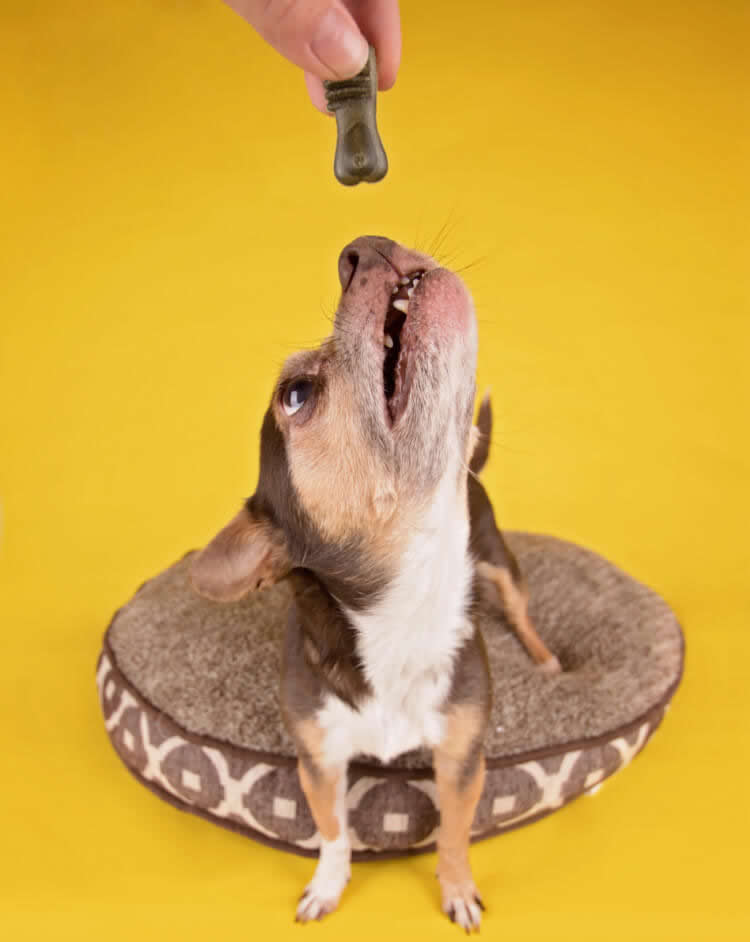
Here you’ll find a wide variety of Chihuahua harnesses for sale. Some of the most popular types are no-pull, slip-on, vests and even shirt harnesses.
*As an Amazon Associate, Chihuahua Wardrobe earns from qualifying purchases.
If you’re Chihuahua is constantly pulling and tugging when you try to walk them on a leash and collar, then perhaps you need to make the switch to a harness. While there are many different types of harnesses available for sale, they all have the same basic purpose – to keep your Chihuahua securely attached to a leash without having them choke themselves. This will allow you to continue walking them safely and securely with none of the strain places around the neck. If this sounds like something you are interested in, check out our selection.
What Are Harnesses?
Because they aren’t used as much as traditional collar and leash combinations, many people are confused about the purpose of harnesses and how they work. Even if you don’t know what a harness is, chances are you’ve seen a Chihuahua or some other dog wearing one at some point or another. From far away, it’s easy to mistake one for a regular collar, especially on small dogs. So, what exactly is a harness? If you’re wondering what these devices are and what benefits they provide, keep reading.
Basically, a harness is a strapped piece of equipment that wraps around a Chihuahua’s body to provide a secure area for a leash attachment. Instead of hooking a leash up to their collar (which can be painful), you can attach it to the harness. This allows you to walk them safely around the yard, park or anywhere else you please without the threat of them running off. While some owners may simply allow their Chihuahuas to run free without a leash, this isn’t recommended simply because there are too many potential predators and threats that may harm them. Besides, there are leash laws in a number of jurisdictions throughout the country. The bottom line is that you need to keep your Chihuahua on a leash when you aren’t in a fenced-in area, and a harness provides a safe and effective way to accomplish this.
Sled dogs almost always use harnesses to gain more leverage and pulling power. Wearing one naturally lowers their center of gravity and gives them more power when pulling a load behind them. Harnesses for sled dogs are usually broken down into three different categories – H-back, X-back and freight harnesses. While there are some notable differences between them, they all serve the same basic purpose of keeping the sled dog securely attached without straining their neck.
Benefits of Using a Harness
There are several benefits to using a harness over a collar, but unfortunately, many owners overlook this option. Before making the decision to use a collar on your Chihuahua, you should familiarize yourself with some of the benefits associated with harnesses. Let’s take a look at a few of the reasons why you should use a harness…
Harnesses allow you to safely control your Chihuahua without the risk of them injuring their neck. Some Chihuahuas tend to pull and tug when they are being walked on a leash and collar. While this may not seem like a big deal, the excessive force placed on their neck can damage their neck and throat. Harnesses are perfect for Chihuahuas exhibiting this type of behavior because they spread the pull force throughout their body instead of it being concentrated on their neck.
Another advantage that harnesses have over collars is that they tend to stay more securely around a small Chihuahua’s body. I think most owners have experienced their Chihuahua slipping out of their collar. If the collar is too large for their neck, it’s naturally going to slip out when they begin to pull on it. Thankfully, this isn’t a problem with harnesses, as they connect around their body and (usually) two front paws.
A lesser-known benefit that comes with using a harness is the additional element of style. After shopping around for clothes and harnesses to add to your Chihuahua’s wardrobe, you’ll probably notice how some harnesses are built directly into shirts or sweaters. This allows your Chihuahua to look cute and adorable while giving you the ability to keep them securely attached to a leash.
Chihuahua harnesses are generally more comfortable to wear than regular collars. The fact is that Chihuahuas can’t talk to tell us when they are uncomfortable or in pain, so it’s up to us as their owner to look out for the signs. As you can expect, wearing a tight collar wrapped around their neck all the time can become quite uncomfortable. Removing it and replacing it with a harness, however, is a more comfortable alternative that will still allow you to keep your Chihuahua attached to a leash.
Choosing a Chihuahua Harness
It’s easy to feel overwhelmed when confronted by such a wide variety of Chihuahua harnesses. However, you should take the time to choose the one that’s most tailored to fit your Chihuahua’s specific needs. Every Chihuahua is unique and different in his or her own way; therefore, some harnesses will work better than others. So, how do you know which harness to choose? Start by identifying the needs of your Chihuahua. If they tend to pull aggressively when you are walking them, then it’s a good idea to stick with a no-pull harness. If you’re just purchasing a harness for the style factor, then you’ll want to choose one with a sleek design that will naturally say something about your Chihuahua. Take these factors into consideration when shopping for a new Chihuahua harness to help find the one that’s right for your canine.
Canine microchipping has become more and more popular in recent years with roughly 10 million dogs receiving the implant. If you own a Chihuahua, chances are you’ve at least considered microchipping them before. However, any smart and caring owner should weigh the advantages and disadvantages associated with this procedure before jumping into it. The fact is that there is a lot of bad information out there regarding canine microchipping, and as a result, some owners may make the wrong decision.
The grim truth is that over 1 million dog stray dogs are picked up by animal shelters throughout the U.S. each year. Of those million-plus dogs, only 10-15% are ever returned to their original owner. The rest are either sent to no-kill rescues, adopted out to willing owners, or they’re euthanized. No one likes to think about their Chihuahua running off and getting picked up by the pound, but it’s a situation that happens more frequently than you may realize. Thankfully, however, microchipping could offer a solution to set your mind at ease; here’s how it works:
Overview Canine Microchipping
Microchipped Chihuahua Sunning
Canine microchipping is a simple procedure in which a small rice-sized microchip is implanted directly underneath the dog’s skin. Contrary to popular belief, most traditional microchips do NOT actually track your dog’s location via GPS or any other type of locational service. Instead, the microchip contains specific information regarding who the dog’s name, health conditions, breed and most importantly, their owner’s phone number and address. Let’s hope this never happens, but if your Chihuahua is microchipped and runs away, a pound or shelter can run a remote scanning device over their body to locate the chip and the information it contains.
Typically, in order for most microchips to function as they should, the owner will need to register their dog’s information with the veterinarian performing the procedure. If they don’t or if they give incorrect information, scanning the chip might not reveal anything; therefore, it would then make it useless. If you plan on getting your Chihuahua microchipped, talk to your veterinarian to find out what you need to do to register their information.
How Are Chihuahuas Microchipped?
On the surface, the thought of having a microchip implanted into a small Chihuahua’s body might sound like an invasive and downright painful process. After all, the procedure involves placing a foreign object under their skin, so most people would assume that it’s painful. The fact is, however, that microchipping is a simple procedure that takes less than a minute. The Chihuahua is placed in a comfortable position and a gun-like device shoots the microchip directly underneath their skin. As long as it’s done right, most Chihuahuas won’t even flinch during the procedure.
Advantages of Microchipping Your Chihuahua
Allows shelters, pounds and animal control officers to contact you in the event your Chihuahua is lost or runs away.
Notifies those who find your Chihuahua of any important health conditions.
Contains medical history, vaccination records and a list of any current medication your Chihuahua is taking.
Inexpensive procedure that usually costs between $20-$50 bucks.
Never needs to be replaced or repaired.
Doesn’t hurt or harm your Chihuahua.
Disadvantages of Microchipping Your Chihuahua
Some shelters may not have the scanning tools necessary to read microchips.
Some owners may forget to register their Chihuahua’s information in the database.
Although it’s extremely rare, there have been a few known cases of the microchip moving underneath the dog’s skin. This doesn’t hurt the dog, but it can make it more difficult for shelters to locate.
How Do I Microchip My Chihuahua?
There are several different methods which allow you to have your Chihuahua microchipped. If you’re looking for an inexpensive, safe and effective way to microchip your Chihuahua, you can call up some of the veterinarian offices around your area to ask if they perform the procedure. Most veterinarians will do it for a relatively low fee, and it’s nice to know that the procedure is being done by a professional. There are also mobile vans that travel the country to perform canine microchipping. The problem is that it’s oftentimes difficult to find out when they come through your town. The best thing to do is ask some of the pet stores around your area if they know of any microchipping vans coming through.
Another option you have for microchipping your Chihuahua is to purchase a do-it-yourself kit from the American Kennel Club (AKC). These kits are simple and easy to use, but some owners may be afraid of hurting their Chihuahua. For this reason, it’s best to leave this procedure up to a professional, especially considering how inexpensive it is.
Vaccines greatly reduce the risk of many common and potentially fatal infectious diseases in Chihuahuas. Whether it’s a dog park, pet store, veterinary office, grooming salon, or even your own backyard, disease-causing germs are lurking everywhere. If your Chihuahua hasn’t been vaccinated or kept up to date on his vaccines, he could catch rabies, canine parvovirus, distemper, canine adenovirus, or other serious viral and bacterial infections.
Owners must know what vaccines their Chihuahua needs and when. If your Chihuahua has a low risk of infection for a “non-core” disease, vaccination isn’t necessary. Like pharmaceutical drugs, vaccines carry their own risk of adverse side effects (we’ll get to that later). Nonetheless, veterinarians agree that healthy dogs, particularly puppies, should be vaccinated for several common viral and bacterial diseases. Follow the schedule and advice below to keep your canine companion healthy and disease-free.
How Vaccines Work
While no vaccine is 100% effective, vaccination is the single most important form of preventative medicine for dogs. Once administered, it triggers a response by your Chihuahua’s immune system, reducing the risk of future infection from the viral and/or bacterial strains for which it was developed. Some vaccines protect against a single disease, while others protect against multiple diseases (known as a combination vaccine).
When scientists create vaccines, they kill or chemically alter the original pathogen so it no longer causes illness. This is a methodical process, as the virus or bacteria must still contain its original protein molecules (antigens) to trigger a response by the dog’s immune system. If the pathogen is too strong, the vaccine could cause the disease rather than prevent it. If it’s too weak, it won’t offer adequate protection.
Core vs Non-Core Vaccines
Canine vaccines fall under one of two categories: core and non-core. Core vaccines are generally recommended to all dogs because they are highly effective at preventing many common and potentially life-threatening viral and bacterial diseases.
Non-core vaccines are optional, depending on your Chihuahua’s risk of infection. Factors such as geographic location, overall health, contact with other animals, and expected travel to other regions will affect your Chihuahua’s risk of infection. If your Chihuahua has a high risk for a non-core disease, your veterinarian may recommend vaccination. If he has a low risk for a non-core disease, vaccination typically isn’t necessary.
In 2017, the American Animal Hospital Association (AAHA) revised its list of core and non-core canine vaccines. Core vaccines now consist of the following:
Canine parvovirus
Canine distemper virus
Canine adenovirus type 2 (cross-protects against both adenovirus type 1 and type 2)
Rabies
Non-core vaccines include the following:
Leptospirosis
Parainfluenza (kennel cough)
Bordetella bronchiseptica (kennel cough)
Lyme disease
Canine Influenza Virus (CIV)
Why Puppies Need Multiple Vaccinations
Puppies are more susceptible to infectious diseases than adult dogs because their immune systems have not yet fully developed. When nursing, they receive disease-fighting antibodies from their mother’s milk. But this protection is only temporary, with the puppy’s immune system weakening as he transitions from milk to dog food. Vaccination offers protection during this sensitive time by significantly reducing the risk of common viral and bacterial infections.
While there’s no one-size-fits-all vaccine schedule, you can refer to the following chart for a typical Chihuahua’s vaccination needs.
Chihuahua Vaccine Schedule
Chihuahua’s Age
Recommended Vaccine
5 Weeks
Parvovirus
6 Weeks
*Combination vaccine (parvovirus, distemper and adenovirus type 2).
Parainfluenza, bordetella bronchiseptica, for puppies at risk for kennel cough.
9 Weeks
*Combination vaccine (parvovirus, distemper and adenovirus type 2).
12 Weeks
*Combination vaccine (parvovirus, distemper and adenovirus type 2).
Rabies (administered by a licensed veterinarian; vaccination age requirements vary by state).
Parainfluenza, bordetella bronchiseptica, for puppies at risk for kennel cough.
Lyme disease, where Lyme disease is a concern or if traveling to a region in which it occurs.
15 Weeks
*Combination vaccine (parvovirus, distemper and adenovirus type 2).
Parainfluenza, bordetella bronchiseptica, for puppies at risk for kennel cough.
Lyme disease, where Lyme disease is a concern or if traveling to a region in which it occurs.
Adult **Booster Shots (Every 1 to 3 Years)
*Combination vaccine (parvovirus, distemper and adenovirus type 2).
Parainfluenza and bordetella bronchiseptica, for dogs at risk for kennel cough.
Lyme disease, where Lyme disease is a concern or if traveling to a region in which it occurs.
Rabies (administered by a licensed veterinarian; re-vaccination requirements vary by state).
*Some combination vaccines may also protect against coronavirus and/or leptospirosis. See below for more information on these vaccines.
**According to the American Veterinary Medical Association (AVMA), dogs at low risk of exposure may not need annual booster shot vaccinations. The AAHA now recommends 3-year vaccines for core diseases, with the exception of rabies which is either a 1-year or 3-year vaccine depending on the state.
Most states legally require all domesticated dogs and cats (and sometimes ferrets) to be vaccinated for rabies. In New Mexico, for instance, owners must vaccinate all dogs and cats at 3 months for rabies, following up with a booster shot within 1 year of the first vaccination and subsequent boosters every 1 to 3 years, depending on the vaccine used. In Iowa, all dogs must be vaccinated for rabies at 6 months, with follow-up booster shots according to the Compendium of Animal Rabies Prevention and Control. You’ll also notice that many states require rabies vaccines to be administered by a licensed veterinarian, whereas other vaccines can be administered by the owner.
For a complete list of rabies vaccination laws by state, check out the AMVA’s rabies guide.
There’s a good reason for the legal requirements surrounding rabies vaccines. Spread through the saliva of an infected host, rabies is nearly 100% fatal in dogs and can also be transmitted to humans. Therefore, vaccination not only protects our canine companions; it also protects us from the virus.
What About Coronavirus and Leptospirosis Vaccines?
The AAHA Canine Vaccination Task Force no longer recommends the canine coronavirus vaccine, citing two specific reasons:
The vaccine offers limited-to-no protection from the coronavirus.
The coronavirus is a relatively mild disease, with many infected dogs showing no symptoms at all.
It’s also worth noting that only puppies under 6 weeks of age show symptoms of the coronavirus disease, meaning there’s no benefit in having an older dog vaccinated.
Owners should also think twice before having their Chihuahuas vaccinated for leptospirosis. Caused by the bacterial pathogen Leptospira, leptospirosis is transmitted to dogs (and people) by direct contact with contaminated urine, water or soil. It attacks the kidneys, causing inflammation and organ failure.
Current leptospirosis vaccines don’t protect against all 200+ versions of the pathogen. For the few versions that it does protect against, the vaccine has a 50 to 75% effectiveness rate for about one year. The World Small Animal Veterinary Association (WSAVA) even says it’s the least likely vaccine to provide adequate protection. Furthermore, toy breeds like the Chihuahua have the greatest risk of a severe reaction from the leptospirosis vaccine, including anaphylactic shock.
If you’re concerned about either the coronavirus or leptospirosis, talk with your veterinarian to discuss the effectiveness of vaccination and its associated risks.
Vaccine Risks and Side Effects: What Chihuahua Owners Should Know
While effective at reducing the risk of disease, vaccines don’t come without their own risks and side effects. Most of these side effects are mild, appearing within a few hours of vaccination and going away within 1 to 2 days. If your Chihuahua experiences any of the side effects listed below for longer than two days, contact your veterinarian.
Mild side effects include:
Redness and swelling at the site of injection
Mild fever
Loss of appetite
Low energy
Runny nose
Sneezing
Local soreness
Mild side effects can typically be treated at home using the antihistamine diphenhydramine (Benedryl). Dosage varies depending on the Chihuahua’s weight, but a rule of thumb is to administer 1 mg diphenhydramine for every 1 pound of your dog’s body weight. If your Chihuahua weighs 6 pounds, give him 6 mg of diphenhydramine to relieve mild reactions.
There are also more severe side effects associated with vaccines, any of which should prompt immediate veterinary care.
Moderate-to-severe side effects include:
Anaphylactic shock
Persistent vomiting
Persistent diarrhea
Trouble breathing
Seizures
Hives
Severe itching
Swelling around the neck or face
Chihuahuas Have a High Risk of Reaction to Vaccines
According to a report by Chihuahua Club of America, Chihuahuas and other toy breeds — Pugs, Boston Terriers, Dachshunds and Miniature Pinschers — have a higher risk of adverse reaction to canine vaccines than medium and large breeds. After analyzing the vaccine records of 1.25 million dogs, epidemiologists at Purdue University found the risk of vaccine-associated adverse events (VAEE) decreased as a dog’s weight increased. George Moore, DVM, Ph.D., Director of Clinical Trials and Professor of Epidemiology at Purdue, explained by saying “Dogs weighing 22 to 99 pounds had about half the reaction risk as dogs weighing 22 pounds or less.”
Researchers also found that for every additional vaccine a dog received during the same visit, the risk of VAEE increased by 25%. This is another reason why owners should avoid combination vaccines containing leptospirosis and coronavirus, especially if their dog isn’t at risk for these diseases. A combination vaccine for the core diseases plus leptospirosis and coronavirus is 50% more likely to trigger an adverse reaction than a combination vaccine for only the core diseases, according to the study.
These findings were also reflected in the 2011 AAHA Vaccination Guidelines, which now recommends non-core vaccines be administered two or more weeks after core vaccines in toy breeds.
To reduce the risk of adverse side effects, let your veterinarian know if your Chihuahua is currently taking any medication before vaccination. You can also wait 30 to 60 minutes before leaving the office, so if a reaction does occur, the veterinarian can provide immediate treatment.
Because the risk of adverse reaction is higher in toy breeds, many Chihuahua owners use titer tests as an alternative to mass vaccination. Titer tests don’t protect against infectious diseases. Rather, they reveal the strength of the dog’s natural immunity toward a specific viral or bacterial disease by measuring levels of antibodies in the blood. If your Chihuahua has a high titer count for leptospirosis, it’s unlikely he will catch the disease, even when exposed to the Leptospira pathogen. Therefore, vaccination for leptospirosis offers little-to-no benefit.
Titer tests are available for most common canine diseases, but they should not be used as a substitute for the rabies vaccine. Due to the disease’s high rate of mortality (100%) and legal implications, all Chihuahuas should receive the rabies vaccine as per state law.
Does your Chihuahua run away when you let them outside to play and use the bathroom? Some Chihuahuas instinctively sprint towards the neighbor’s home once the front door is opened, leaving owners to question the effectiveness of their training. If this sounds familiar, check out the 5 most common reasons why Chihuahuas run away — and how to stop it — listed below.
Not only is this type of running away behavior frustrating, but it’s also quite dangerous. There are dozens of ways a ‘free-roaming’ Chihuahua can injure themselves by venturing from their home, some of which include:
Hit by a car
Skirmishes with nearby dogs and cats
Attacked by wild animals
Getting into pesticides, antifreeze, oil or other hazardous chemicals
Of course, there’s also a chance of your Chihuahua running away from home and not coming back, which is something no family wants to experience
As an owner, it’s your responsibility to protect your Chihuahua from dangers such as this. The first step in fixing this problem is to identify why exactly your Chihuahua feels the need to run away.
Reason #1) Looking For a Mate
If your Chihuahua isn’t spayed or neutered, they may run away in search of a mate. Unfixed females in heat release powerful pheromones that males can smell from over a mile away! And even if your Chihuahua is obedient and well trained, mother nature’s “mating magnet‘ will instinctively cause them to run away.
It’s obviously easier to identify a female searching for a mate, as their genitals will become swollen and bleed for roughly 21 days. Males, on the other hand, will run away anytime there’s a female in heat around; therefore, owners of male Chihuahuas need to use extra caution when taking them outside.
You can read our previous post about the benefits of having your Chihuahua spayed or neutered, but the bottom line is that all Chihuahuas — unless otherwise stated by your veterinarian — should be fixed to reduce the chance of them running away. By spaying or neutering your Chihuahua, they’ll no longer produce the hormones responsible for finding a mate.
Reason #2) Boredom
Another reason why Chihuahuas run away is because they are bored. It’s a common assumption by first-time owners that Chihuahuas don’t require the same amount of outdoor playtime as other breeds due to their small size. Rather than taking them out on a regular basis, some owners leave their Chihuahuas cooped up inside for long periods of time, resulting in boredom and pent-up energy.
Chihuahuas suffering from boredom and/or pent-up energy are more likely to run away when given the chance. Owners must realize that Chihuahuas — like all dogs — are complex animals that crave mental and physical stimulation. Just because they are small doesn’t mean you can leave them locked up inside the house all day long.
Whether it’s going for a walk, playing fetch or just laying out under the sun (Chihuahuas LOVE sunning), take your Chihuahua outside on a regular basis to reduce the chance of them running away.
Reason #3) Lack of Obedience
It’s downright frustrating when you call your Chihuahua to come back only to have them run off in the opposite direction. If this sounds like a familiar scenario, you aren’t alone. Lack of obedience is an all-too-common problem, making it difficult for walks and playtime outside.
When a Chihuahua doesn’t view you as the ‘leader of the pack,’ they’ll be more willing to run away while they are outside. And to make matters worse, a disobedient Chihuahua won’t come back when you call their name. You can yell until your lungs go dry only to have your Chihuahua take off down the street or into the neighbor’s yard.
So, how do you fix this frustrating problem? The first step is to only let your Chihuahua outside when they are attached to a collar and leash (or lead). Now when you are walking and playing with your Chihuahua outside, teach them a recall command such as “come here boy,” or “back Amos.” Give them plenty of slack on their leash and speak the recall command when you are ready to go inside. If they obey your command, give them plenty of affection, praise and of course a treat.
Reason #4) Mistreatment
A fourth reason why Chihuahuas run away is because they are being mistreated by their owner at home. In a perfect world, each and every Chihuahua would receive the unconditional love and attention they deserve, but this world is far from perfect. Some owners hit, slap and otherwise physically abuse their Chihuahuas, which naturally encourages them to run away when given the chance. You can’t expect a Chihuahua to listen and obey their owner if they are being abused.
Note: mistreatment isn’t limited strictly to physical abuse. Neglecting your Chihuahua and their need for attention is another form of abuse which may contribute to their running away problem.
Reason #5) Seeking Companionship
When they aren’t getting it at home, Chihuahuas may run away to seek companionship from other dogs or people. This reason goes hand-in-hand with mistreatment, as neglecting your Chihuahua and avoiding them on for days on hand will only encourage them to run off. Give your Chihuahua attention and companionship so they want to stay at home.
Tips For Preventing Your Chihuahua From Running Away
Have them spayed or neutered.
Teach them a ‘recall’ command, such as “come here Amos!”
Use treats as a reward when your Chihuahua successfully obeys your recall command.
Never punish or scold your Chihuahua for running away, as this type of negativity will only encourage this unwanted behavior.
Walk your Chihuahua on an extended lead or retractable leash until they obey your recall command.
Show your Chihuahua affection and love on a daily basis.
Whether you currently own a Chihuahua or are thinking of owning one, you’ve probably heard people refer to some of them as “teacups” or similar names. Typically, owners and breeders may refer to their ultra-small Chihuahuas using terms such as these. This can undoubtedly be confusing giving the fact that the American Kennel Club (AKC) only recognizes two varieties – the smooth and long-coat. So, what’s the deal with names like teacup? Keep reading and we’ll dive a little deeper into this subject, revealing the truth behind the teacup Chihuahua.
If you previously thought a teacup Chihuahua was a certain breed, you aren’t alone. There’s a growing misconception regarding this terminology that confuses most of the general public. Since the term is used so frequently and by so many people, it’s almost taken a life of its own, spreading like wildfire. As a result, people looking to add a new Chihuahua to their family may ask breeders or pet stores if they have any of the “teacup” breed. Instead of correcting them, the breeder will go along with the charade and try to complete a sale.
Confusing Names Used To Describe Chihuahuas
As a result of the poor information that’s been floating around, numerous improper names are being used to describe Chihuahuas. This may not seem like a big issue, but it creates an ethical grey area for breeders and sellers who know the truth about Chihuahuas. For instance, if a potential customer comes to a breeder asking them for a teacup Chihuahua, the breeder may respond by saying she has them, but only for a price greater than the non-teacups. Basically, terms such as these can be used to mark up the price on Chihuahuas; therefore, making it more profitable for the breeders.
Here are some of the most common unofficial names used to describe Chihuahuas:
Teacup
Toy (ALL Chihuahuas are considered a Toy breed)
Tiny
Mini
Miniature
Pocket-sized
Micro
Teacup Chihuahuas – The Facts
While we don’t know who the first person was to describe a Chihuahua as a teacup, the term picked up popularity and spread throughout the early 90s. It’s important to note, however, that no major canine association has ever used the term to describe or otherwise categorize Chihuahuas. Either one or more owners likely referred to their unusually small Chihuahuas as teacups, thus starting the craze that’s still going on today. When people hear the word teacup, they immediately assume it’s a certain breed of Chihuahua, but unfortunately it’s just some term that many people use to describe them.
The only people who benefit from confusing terms like teacup, toy and micro are the Chihuahua breeders. Now don’t get me wrong – there are some breeders who will explain to the customer that teacups are just a term and not an officially recognized breed. Others, however, will use the public’s ignorance as a tool to sell their small Chihuahuas at a higher price. For instance, someone sees or hears about a tiny teacup Chihuahua through and friend, so they scan through the newspapers in search of one. Because teacup Chihuahuas aren’t an official breed, chances are they will have a hard time finding one. However, they may stumble upon a breeder offering them for a higher price than your typical Chihuahuas. The customer will likely agree to the price simply because they can’t find these teacup Chihuahuas elsewhere.
The term “teacup Chihuahua” has been used so much that’s almost become an unofficial way of referring to small Chihuahuas. When a breeder or pet shop refers to their Chihuahuas as teacups, they are either doing it to try and get more money for them, or they are just as confused about the terminology as everyone else. In any case, it’s the breeder’s responsibility to label their Chihuahuas correctly and not deceive their customers in any way, shape or form.
What You Should Know About Owning a Teacup Chihuahua
Because of the increased demand for so-called teacup Chihuahuas in recent years, breeders and pet shops are encouraged to try and breed their Chihuahuas to be as small as possible simply because they can make more money off them. The problem in doing so, however, is that small Chihuahuas are more susceptible to health problems such as hypoglycemia, diabetes, patellar luxation, heart disease, bone fractures, joint problems, etc. Does that mean you shouldn’t get a teacup Chihuahua? It’s really a personal choice that only you can make, but I would advise against purchasing one from breeders because of the fact that it encourages them to continue breeding them this size.
If you decide to own an unusually small Chihuahua, be sure you’re willing to invest your time, energy and money into keeping them healthy. This means you’ll have to take them to the vet for regular checkups to ensure nothing is seriously wrong, as well as treat any current conditions they are experiencing. It’s all too common for people to make the decision to own a small Chihuahua without realizing just how much extra work goes into caring for them.
Something else that you’ll need to be aware of with small Chihuahuas is that they are more likely to suffer from fractures and broken bones than normal-sized Chihuahuas. If you accidentally roll over on them in the bed, sit on them while they are laying on the couch (trust me, this happens) or even pick them up the wrong way, they may experience a bone fracture. Be extremely gentle and carefully around your new Chihuahua to prevent such catastrophes from happening. In addition, you’ll need to keep larger pet dogs and cats away from your Chihuahua, as they may accidentally cause injury to your Chihuahua as well.
Hopefully this article will give you a better understanding on what teacup Chihuahuas are and what goes into owning one. Personally, I think small Chihuahuas are just as loving, affectionate and fun as normal-sized ones. However, they do require a bit more care and maintenance, so take this into account if you are thinking of owning a new Chihuahua.
Video of Cooper The Teacup Chihuahua
Here’s a video I found on YouTube of an teacup Chihuahua named Cooper. This adorable black and white Chihuahua is full of spunk and ready to pounce at anything coming his way. Too cute!
If you rub your Chihuahua’s head and feel an opening in his skull, try not to panic. Known as a molera or “soft spot,” it’s a common anatomical feature with the breed. Research shows that approximately 80% to 90% of all Chihuahuas are born with a molera. It was once even considered a mark of purity for Chihuahuas.
After discovering your Chihuahua’s molera, you may have some questions. In this article, we’re going to cover some common topics regarding this condition, including the following:
An overview of moleras
Prevalence of moleras in Chihuahuas
Why Chihuahuas have moleras
Whether or not it’s linked to hydrocephalus
How to care for a Chihuahua with a molera
What the AKC and other Chihuahua breed standards say about the molera
And more
What is a Molera?
A molera is an opening in the top of a dog’s skull where the parietal and frontal bones have not fused together.
Most puppies are born with an incomplete skull, the opening of which is called a molera. It’s found at the top-center of the skull, a few inches above the nose. The molera is typically either circular or diamond shaped. It has an average size of 1/4 inch to 1 inch in diameter, making it about the size of a dime. Some have smooth edges, whereas others have rough or jagged edges. As the pup matures, cartilage pulls the skeletal plates together and calcifies the skull.
Dogs aren’t the only animals born with an incomplete skull. While not referred to as a molera — that term specifically applies to dogs — it’s a common feature in many mammals. Even human babies are born with an incomplete skull. The cranial opening in babies is known as a fontanelle.
Normally, these gaps of unfused skull bone gradually close over time. In Chihuahuas and other toy breeds, however, the molera may never close. Some Chihuahuas live their entire life with this cranial opening, in which case certain precautions should be taken to protect against injury.
How Common are Moleras in Chihuahuas?
Moleras are very common in Chihuahuas, affecting roughly eight in 10 newborn pups. It’s such a common feature, in fact, that it’s mentioned in the Chihuahua breed’s standards by major canine associations throughout the world.
What’s really interesting is that moleras were even more common in Chihuahuas during the breed’s early years. Up until the early to mid-1970s, Chihuahuas were bred to be smaller, with a preferred weight of just 2 to 4 pounds. The preference for smaller Chihuahuas resulted in a higher rate of moleras.
Because of their smaller, dome-shaped skull, apple-head Chihuahuas are more likely to develop and retain a molera than their deer-head counterpart. Teacup Chihuahuas are also more likely to have a molera because they too have smaller heads.
How to Check Your Chihuahua for a Molera
Unless the molera is unusually large, it’s hard to identify by visual observation alone. A veterinarian can perform an X-ray to see if your Chihuahua has a molera, and if so, how big it is. But you can also feel your Chihuahua’s skull for the presence of this cranial opening.
Follow the steps below to check your Chihuahua for a molera:
While seated, coax your Chihuahua onto your lap.
Place your index finger at the “stop” between your Chihuahua’s eyes and the top of his nose.
Gently run your index up your Chihuahua’s skull.
If your Chihuahua has a molera, you should feel a groove or indention where the skull hasn’t developed.
Take note of where the molera is located, because you’ll want to use caution to protect this area from blunt force trauma.
Chihuahua Breed Standards and Moleras
When the American Kennel Club (AKC) created the first Chihuahua standards in 1923, it required the breed to possess a molera. If a Chihuahua didn’t possess this cranial opening, he couldn’t compete in the show ring and was automatically disqualified from winning conformation awards. It wasn’t until several decades later when the AKC updated its breed standards, now giving no preference to this anatomical feature.
Here’s what the world’s leading canine organizations currently say about the Chihuahua’s molera in their breed standards:
American Kennel Club (AKC): “A well rounded apple-dome skull, with or without molera.”
United Kennel Club (UKC): “Disqualification: An open fontanel, a hole or gap in the center of the skull, referred to as a molero.“
Canadian Kennel Club (CKC): “A well rounded apple-dome skull, with or without molera.”
Fédération Cynologique Internationale (FCI): “Well rounded apple head. Disqualifying faults: Dogs with an open fontanel.“
To recap, the AKC and CKC Chihuahua breed standards give no preference to the molera, meaning you can compete Chis with or without a molera in conformation shows. The UKC and FCI, however, view this anatomical feature as a fault, meaning Chihuahuas are automatically disqualified if they possess a molera.
Why Do Chihuahuas Have Moleras?
Chihuahuas have moleras for the same reason human babies have fontanelles: It allows for easier passage of the head through the birth canal.
Because of the breed’s large head and small pelvis, female Chihuahuas often struggle to give birth. The molera, however, helps by allowing the pup’s head to temporarily flex and squeeze through the birth canal.
Will My Chihuahua’s Molera Close?
There’s no way of knowing when or even if your Chihuahua’s molera will close. Statistics show that moleras fully close in about half of all Chihuahuas born with this anatomical feature.
Normally, a pup’s skull gradually fuses together as he matures. However, it may take anywhere from three months to three years for the molera to fully close — or it may never close. If a Chihuahua’s molera doesn’t fully close, it will likely shrink in size as cartilage pushes the parietal and frontal skeletal plates together.
Is a Molera Harmful?
In the past, it was believed that dogs with a molera had a higher risk of developing hydrocephalus, a serious medical condition in which cerebral spinal fluid (CSF) accumulates in the brain. Instead of draining, fluid builds up and soaks the ventricles of the brain, causing the brain to swell. The increased pressure caused by hydrocephalus can lead to brain damage, seizure, coma or death.
A 1989 Greene Braund study titled “Diseases of the Brain,” however, found no association between moleras and hydrocephalus in toy breeds such as the Chihuahua. Researchers concluded that the presence of a molera does not increase the risk of hydrocephalus.
Other breeders and experts refute these claims. Many Chihuahuas that suffer from hydrocephalus do, in fact, have a molera. But moleras are common in Chihuahuas, and not all Chihuahuas with this cranial opening suffer from hydrocephalus. More research is needed to conclusively determine whether moleras play a role in hydrocephalus.
A molera may or may not predispose your Chihuahua to hydrocephalus or other diseases, but you should still take precautions to protect your Chi’s head from injury. Without a fully developed skull, your Chihuahua may sustain brain injury from trauma to the head. Until it closes, follow the tips below to protect your Chi from injury.
Tips to Protect Your Chihuahua From Molera-Related Injury:
Let your veterinarian know about your Chihuahua’s molera.
Don’t allow your Chihuahua to jump on and off furniture (consider using pet stairs instead).
Watch your feet to avoid accidentally kicking your Chihuahua in the head.
Supervise your Chihuahua during playtime.
If your Chihuahua is epileptic — for reasons not associated with the presence of a molera — hold him during seizure episodes to prevent injury.
Use minimal pressure when petting your Chihuahua’s head.
If your Chihuahua hits his head and begins acting unusual — lethargy, trouble breathing, agitation, seizure — take him to the vet immediately.
The presence of a molera isn’t something that Chihuahua owners should lose sleep over. It’s a completely normal anatomical feature that usually closes over time. Most Chihuahuas are born with a molera because it allows them to pass through the birth canal with greater ease. As newborn Chihuahuas age, this cranial gap will begin to close. Even if doesn’t fully close, there’s no evidence linking the molera to any adverse health condition.
Does your Chihuahua have a molera? Let us know in the comments section below!
Chihuahuas are known for being loyal and affectionate, but are they smart? As social creatures, all dogs exhibit some degree of intelligence. They must socialize with their pack in the wild, and they must socialize with their human counterparts in domestic environments. As they interact with their pack or family members, they become more intelligent. To learn more about the IQ of Chihuahuas and whether they are smart, keep reading.
Are Some Breeds Really Smarter Than Others?
Canine intelligence is difficult to measure. We can measure human intelligence using IQ tests like the Stanford-Binet and Wechsler Adult Intelligence Scale (WAIS) tests, but there is no universally recognized IQ test available for dogs.
According to a study conducted by researchers at the University of Helsinki in Finland, however, some breeds are smarter than others. For the study, researchers performed a battery of smartDOG cognitive and behavior tests on 13 popular breeds.
Researchers discovered “significant differences” between the tested breeds for five of the seven cognitive tests. The Border Collie, for instance, scored higher on the inhibitory control test than the Malinois. The Australian Shepherd, on the other hand, scored higher on the unsolvable task test than the Golder Retriever. The Chihuahua wasn’t included in this particular study, but the team’s findings indicate that some breeds are smarter than others.
Researchers didn’t find any difference between the breeds for the short-term memory and reasoning tests.
The Intelligence of Dogs: Where the Chihuahua Stands
Research published in “The Intelligence of Dogs” suggests the Chihuahua is the 127th smartest breed out of 140 breeds surveyed, earning it a working and obedience intelligence ranking of #67.
Originally published in May 1994 — and later republished in 2006 with new insights and a new preface — “The Intelligence of Dogs” is an international best-seller that delves into the intelligence of man’s best friend. It was authored by Stanley Coren, PhD, Professor Emeritus of the Department of Psychology at the University of British Columbia.
After transitioning from neuropsychology to the study of dogs and the relationships between people and dogs in the early 1990s, Coren began working on “The Intelligence of Dogs.” At the time, there were only guides on canine health, training and breed information; there weren’t any guides on canine intelligence. This prompted Coren to investigate the intelligence of dogs, ranking 140 breeds by working and obedience intelligence based on survey responses.
Other notable dog books authored by Coren include:
“The Pawprints of History: Dogs and the Course of Human Events”
“The Wisdom of Dogs”
“Do Dogs Dream? Nearly Everything Your Dog Wants You to Know”
“Born to Bark: My Adventures with an Irrepressible and Unforgettable Dog”
“Dogs All-In-One for Dummies”
“The Modern Dog”
“How to Speak Dog: Mastering the Art of Dog-Human Communication”
“Why We Love The Dogs We Do”
“What Do Dogs Know?”
The 3 Types of Canine Intelligence
Canine intelligence is closely correlated with a dog’s ability to perform tasks. Dogs that quickly and easily perform tasks are generally considered more intelligent than those that take longer or struggle to complete tasks. In “The Intelligence of Dogs,” Coren notes that there are three specific types of canine intelligence.
Instinctive Intelligence: The innate ability to perform the tasks for which it was bred, such as retrieving waterfowl, herding livestock or guarding property.
Adaptive Intelligence: The ability to adapt and learn how to perform tasks independently through experience and the dog’s environment, such as finding hidden treats or knocking over toy containers.
Working and Obedience Intelligence: The ability to learn how to perform tasks from humans, such as standing or sitting in place on command. Working and obedience intelligence is essentially trainability, or how easy a dog is to train to compete in obedience trials.
According to Coren, 51% of a dog’s intelligence comes from its genes and 49% comes from environmental circumstances.
“The Intelligence of Dogs” author Stanley Coren. Photograph by CaptainPsychology, distributed under a 3.0 CC license.
The working and obedience intelligence rankings in Coren’s international best-seller are based on survey responses from American Kennel Club (AKC) and Canadian Kennel Club (CKC) judges. Coren sent an extensive questionnaire to all AKC and CKC obedience trial judges.
The questionnaire asked the judges to rate breeds based on the following criteria:
The number of repetitions a breed needs to learn a new command given by a human trainer.
The success rate of a breed obeying an already-taught command on the first attempt.
The questionnaire also asked the judges to rate which breeds they believe to be the 10 most intelligent and the 10 least intelligent. Coren received responses from 208 judges. He then ranked all of the breeds for which he received adequate response data. If a breed wasn’t included in at least 70 responses, Coren didn’t rank it.
Coren ranked a total of 140 breeds based on the judges’ scores. Some breeds earned identical scores, in which case they shared the same ranking. The Giant Schnauzer and Portuguese Water Dog, for instance, both ranked #28, whereas the Border Terrier and Briard both ranked #30. When accounting for ties such as this, the working and obedience intelligence rankings for 140 breeds ranged from #1 to #79.
Working and Obedience Intelligence Rankings
A photo of a Border Collie and Afghan Hound, which rank as the most and least intelligent breed, respectively.
Coming in at #1, the top-ranked breed for working and obedience intelligence is the Border Collie. Border Collies are herding dogs. They were originally bred to herd sheep along the border of England and Scotland. Their long history of working with and obeying humans’ commands makes Border Collies exceptionally obedient.
There was a Border Collie named “Chaser” with a vocabulary equal to that of a three-year-old child. Chaser was the main subject of a study into canine intelligence spearheaded by John W. Pilley, Professor Emeritus of the Department of Psychology at Wofford College.
During the years-long project, Piley and his associates were able to teach Chaser the names of 1,022 objects. Coren’s findings in “The Intelligence of Dogs” reinforce the belief that the Border Collie is among the smartest, if not the smartest, breed on the planet.
At the bottom of Coren’s list is the Afghan Hound at #79. While elegant and affectionate, Afghan Hounds exhibit poor obedience based on the criteria based on Coren’s criteria. When compared to other breeds, they require more repetitions to learn new commands and have a lower success rate of obeying known commands on the first attempt.
The Chihuahua ranks #67 out of #79 for working and obedience intelligence. There are still 126 breeds with higher scores and 13 breeds with lower scores, though, suggesting the Chihuahua is the 127th smartest breed out of the 140 breeds surveyed.
According to Coren, rankings generally indicate the following:
Breeds that rank #1 to #10 learn new commands in fewer than five repetitions and obey known commands on the first attempt 95% of the time or better.
Breeds that rank #11 to #25 learn new commands in five to 15 repetitions and obey known commands on the first attempt 85% of the time.
Breeds that rank #26 to #39 learn new commands in five to 25 repetitions and obey known commands on the first attempt 70% of the time.
Breeds that rank #40 to #54 learn new commands in 25 to 40 repetitions and obey known commands on the first attempt 50% of the time.
Breeds that rank #55 to #69 learn new commands in 40 to 80 repetitions and obey known commands on the first attempt 40% of the time.
Breeds that rank #70 to #79 may require hundreds of repetitions to learn new commands, and they obey known commands on the first attempt 30 percent of the time.
Why the Chihuahua Ranks So Low for Working and Obedience Intelligence
Chihuahuas certainly aren’t dumb, so why do they rank so low for working and obedience intelligence? Intelligence is unique to each dog. Just like some people are smarter than other people, some dogs are smarter than other dogs. This applies to all breeds, including the Chihuahua. There are super-smart Chihuahuas that are brighter than the rest.
No methodology for testing canine intelligence is perfect, including Coren’s. Coren relied on responses from AKC and CKC obedience trial judges. If a breed performed poorly in obedience trials, it would typically receive low scores from judges and, thus, receive a low working and obedience intelligence ranking.
Obedience trials really only show how well a dog obeys his handler’s commands. Working breeds, such as the Border Collie and Golden Retriever, were originally bred to perform practical tasks, so they tend to have an innate ability to learn and obey human-instructed commands — more so than companion breeds like the Chihuahua.
The Chihuahua still ranks higher for working and obedience intelligence than many other breeds. Coren only ranked breeds for which he received adequate response data. There are 200 breeds recognized by the AKC, but Coren only ranked 140 of them. He ranked the Chihuahua #67, indicating that the Chihuahua is the 127th smartest breed out of 140 breeds for which he received adequate response data or 200 total breeds.
The Chihuahua’s low working and obedience intelligence ranking may be attributed to the breed’s stubbornness. These small dogs are known for being headstrong and stubborn, which can prove counterproductive during training sessions. You may give your Chihuahua a command, only for him to ignore you.
But you can’t blame Chihuahuas for being stubborn. Most Chihuahuas are stubborn because of the way in which they are trained. Owners either use punishment-based training or are inconsistent with their training approach, both of which Chihuahuas respond poorly to.
Are Chihuahuas Smart?
They may rank low for intelligence based on Coren’s research, but Chihuahuas are still smart. The AKC says the Chihuahua is “a very alert little dog of high intelligence” that can “excel in obedience training and other canine sports.” The CKC describes the Chihuahua’s temperament as being “saucy, superior intelligence.” If they weren’t smart, they wouldn’t be described as such by two of the world’s leading kennel organizations.
Memory and Retention
Chihuahuas have excellent memory and retention. They can remember routines, such as eating, walking and sleeping routines. Your Chihuahua, for instance, may go to his food bowl at the same time each day, expecting you to feed him, and he may lie down in his at the same time each night.
Chihuahuas can also remember the location of objects. Your Chihuahua may hide his favorite toy under a couch cushion, only to retrieve it the following day. Some Chihuahuas can remember the location of places like parks and veterinary clinics.
Chihuahuas can even remember the purpose of objects. When you grab your car keys, your Chihuahua may jump and bark with joy, believing he’s about to go for a car ride. If you bring home a tube of topical flea medicine, he may run and hide, believing you’re about to apply it. Excellent memory and retention is a sign of intelligence.
Perceptive of Emotions and Body Language
Chihuahuas are adept at reading their owners’ emotions and body language. By observing subtle cues, they know how their owners feel.
A study published in the journal Learning & Behavior found dogs can sense six human emotions: anger, happiness, sadness, fear, surprise and disgust. Chihuahuas, though, are more attuned to their owners’ emotions than many other breeds.
As companion dogs, Chihuahuas develop strong bonds with their owners. Your Chihuahua will probably spend most of his time by your side or in your lap. All the time your Chihuahua spends with you will improve his ability to sense your emotions and body language. Changes in your facial expression or the tone of your voice, for example, may convey a particular emotion that your Chihuahua is able to sense.
Fast Learners
Chihuahuas are fast learners. According to Coren, it typically takes 25 repetitions before they begin to understand a new command and 40 to 80 repetitions before they consistently respond to the command. That may sound like a lot, but you can easily reach 80 repetitions in just a handful of training sessions.
Because they learn so quickly, Chihuahuas often compete in obedience and agility trials. Obedience trials require participating dogs to obey their handler’s commands, such as heel, sit and stay. Agility trials, in comparison, require participating dogs to complete a timed obstacle course.
Eager to Please
Chihuahuas love to please their owners. When their owners are happy, they are happy. In addition to being a sign of intelligence, the breed’s eagerness to please plays a key role in their ability to learn so quickly.
You can train your Chihuahua with positive reinforcement. Rather than scolding or punishing your Chihuahua when he fails to obey a command, reward him when he does obey the command. You can pet and praise him, or you can give him a treat. Positive reinforcement will show your Chihuahua that you are happy with his behavior. And since he wants to please you, your Chihuahua will continue to perform the desired behavior.
Problem-Solving
In “The Intelligence of Dogs,” Coren notes that Chihuahuas are good at solving problems. They don’t always need the assistance of their owner or solve problems. Rather, Chihuahuas can often solve problems on their own, indicating a high level of adaptive intelligence.
Chihuahuas develop problem-solving skills at a young age. As puppies, they may learn how to escape a gated indoor area or how to open a treat jar. Chihuahuas will continue to refine their problem-solving skills as they enter and progress through adulthood.
Communication
They may not speak our language, but Chihuahuas can still communicate with us. Chihuahuas, in fact, exhibit some of the best dog-to-human communication skills in the canine kingdom. Using both verbal and nonverbal forms of communication, they can let their owners know what they need.
If your Chihuahua wants to be covered up, he may scratch at the blanket, waiting for you to pull it over him. If your Chihuahua is hungry but has an empty food bowl, he may push it toward you, believing you will refill it. If he wants you to wake up in the morning, he may lick your face. These are examples of nonverbal communication.
Verbal communication involves barking or other noises. If your Chihuahua needs to go potty, he may bark at the door. If your Chihuahua is about to have a seizure, he may whine or whimper at your feet. If he wants to play, he may perform a high-pitched, energetic bark. If there’s a stranger walking by the front of your house, your Chihuahua may perform a low-pitched bark or growl while looking out the window.
Name Recognition
Chihuahuas can recognize names — and not just their own names. They can recognize the names of people, toys and other pets.
You can teach your Chihuahua new names through repetition. Repeating the name of the person, toy or other pet over and over will allow your Chihuahua to develop an association between the two. He will begin to associate the name with the person, toy or other pet.
Big Brain
Chihuahuas have the largest brain relative to their body size in the canine kingdom. A typical Chihuahua’s brain measures about 2.25 to 2.5 inches in diameter and weighs approximately 1.94 grams (55.1 grams). That’s about the same size as a small lemon and the same weight as a dime.
Other breeds may have larger brains, but they fall short of the Chihuahua’s brain-to-body ratio. The average brain-to-body for all breeds is about 1:125, meaning the brain of a typical dog is about 125th the size of the dog’s body. There are slight variations in brain-to-body ratios from breed to breed, however. Because Chihuahuas are so small, their brains are proportionally larger, compared to their body size, than all other breeds.
Skilled Watchdogs
Chihuahuas are naturally skilled watchdogs. They are alert, protective dogs that will sound the alarm for potential threats. Whether there’s a wild animal roaming in your backyard, a burglar trying to break in through a window or even a fire starting in your kitchen, your Chihuahua will probably let you know.
Watchdogs alert their owners to the presence of threats by barking. In “The Intelligence of Dogs,” Coren lists Chihuahuas as #6 on his list of the top #15 watchdog breeds. Coren contacted over a dozen canine experts to create this list, many of whom were professional trainers and dog masters for police departments. After analyzing their responses, Coren concluded that the Rottweiler was the #1 watchdog breed among the experts, with the Chihuahua coming in at #6.
Sounding the alert for potential threats requires a certain level of intelligence. Watchdogs must be aware of their surroundings, have a loud bark, have excellent vision and hearing, and they must be able to distinguish between normal and not-normal sights and sounds. Their small size makes them less-than-ideal guard dogs, but Chihuahuas make excellent watchdogs.
Brain Games for Your Chihuahua
Looking to mentally stimulate your Chihuahua? There are a variety of brain games you can play with him. Brain games are toys or activities that require your Chihuahua to think. Brain games are essentially problem-solving exercises for the brain.
You can challenge your Chihuahua’s cognitive capabilities with a hidden treat toy. As the name suggests, hidden treat toys are toys that contain a hidden treat (or food). They require dogs to solve a puzzle to access the treat. Your Chihuahua may have to knock or roll a hidden treat toy in a certain way, for instance.
There are also snuffle mats. Snuffle mats are large mats with pockets or strips of fabric where you can hide treats. They aren’t necessarily toys, but snuffle mats work in the same way. Your Chihuahua will have to use his nose to search for the treat within the snuffle mat.
Scent games can keep your Chihuahua mentally sharp. They involve hiding one or more scents and allowing your Chihuahua to sniff it out. All dogs have a keen sense of smell. A typical dog’s sense of smell is 10,000 to 100,000 times stronger than that of a human’s. Scent games will encourage your Chihuahua to use his sniffer to find treats.
You can hide treats around your home. Alternatively, you can hide a treat in a closed fist, followed by extending both of your hands in front of your Chihuahua. Your Chihuahua will then have to sniff out the hand holding the treat. There are even scent game kits available for sale that contain scented bean bags, sprays or other items for your Chihuahua to sniff out.
Obstacle courses are brain games. Chihuahuas must exhibit both physical and mental skills to complete them. They must walk and balance through the course while mentally processing the obstacles they encounter.
You can create an obstacle course using common items around your home, such as chairs, blankets, pillows, hola hoops, doggie gates and empty cardboard boxes. If you’re going to create an obstacle course, though, make sure it doesn’t pose a risk of injury to your Chihuahua.
Teaching your Chihuahua new names is a form of mental stimulation. He probably already knows his name, but how many other names does your Chihuahua know? You can teach your Chihuahua the names of toys. You can then command your Chihuahua to fetch a particular toy. If he successfully retrieves the right toy, reward him with praise and a treat.
In addition to new names, you can teach your Chihuahua the “drop it” command. It’s an obedience command that involves a dog dropping an item in his possession. If your Chihuahua is holding a treat or toy, the “drop it” command should prompt him to release it.
Not only will the “drop it” command mentally stimulate your Chihuahua; it can keep your Chihuahua from chewing on things he shouldn’t be. If you notice your Chihuahua chewing on the side of your couch or one of your shoes, the “drop it” command will make him stop — assuming you’ve taught your Chihuahua this obedience command.
Hide-and-seek is a multigenerational childhood game that’s popular throughout the world. You can play it with your Chihuahua to keep him mentally sharp while simultaneously building a stronger bond with him. Just find a hiding spot and wait for your Chihuahua to find you.
When playing hide-and-seek with your Chihuahua, don’t hide in the same place each time. Chihuahuas are fast learners. After hiding in the same place two or three times, your Chihuahua will probably remember. For a more mentally stimulating game of hide-and-seek, choose a new hiding spot each time.
Does Age Affect Intelligence?
The age of any dog can affect his intelligence. Puppies are like sponges and rely heavily on social learning. They watch their littermates and parents. As they absorb this information, puppies learn how to perform the same tasks, resulting in a higher level of intelligence.
Senior dogs, in comparison, have more experience. They’ve learned how to adapt to their environment and, ultimately, survive. However, senior dogs may experience age-related cognition decline. Their cognitive capabilities may decline as they grow older.
With that said, you can still teach an old Chihuahua new tricks. A study conducted by researchers at the University of Veterinary Medicine Vienna found that all dogs were able to learn; senior dogs simply learned more slowly than younger dogs.
Diets high in antioxidants, selenium and fatty acids have been shown to protect against age-related cognitive decline in dogs. If you have a senior Chihuahua, talk ask your veterinarian for dieting advice.
Don’t let their small size fool you into thinking Chihuahuas aren’t smart. While individual variation exists within the breed, Chihuahuas are absolutely smart. They have excellent memory and retention, are perceptive of body emotions and body language, are fast learners, are eager to please, can solve problems on their own, can communicate using verbal and nonverbal methods, can recognize names, have larger brains and make excellent watchdogs.
If you require any more information or have any questions about our privacy policy, please feel free to contact us by email using the contact link on this Website
The privacy of our visitors is of extreme importance to us. This privacy policy document outlines the types of personal information is received and collected by us and how it is used.
Log Files
Like many other Web sites, we make use of log files. The information inside the log files includes internet protocol ( IP ) addresses, type of browser, Internet Service Provider ( ISP ), date/time stamp, referring/exit pages, and number of clicks to analyze trends, administer the site, track users movement around the site, and gather demographic information. IP addresses, and other such information are not linked to any information that is personally identifiable.
Cookies and Web Beacons
This site does use cookies to store information about visitors preferences, record user-specific information on which pages the user access or visit, customize Web page content based on visitors browser type or other information that the visitor sends via their browser.
DoubleClick DART Cookie
.:: Google, as a third party vendor, uses cookies to serve ads. .:: Google’s use of the DART cookie enables it to serve ads to your users based on their visit to this site and other sites on the Internet.
.:: Users may opt out of the use of the DART cookie by visiting the Google ad and content network privacy policy at the following URL – http://www.google.com/privacy_ads.html
Some of our advertising partners may use cookies and web beacons on our site. Our advertising partners include Google Adsense, Amazon, eBay, and Clickbank.
These third-party ad servers or ad networks use technology to the advertisements and links that appear on this site send directly to your browsers. They automatically receive your IP address when this occurs. Other technologies ( such as cookies, JavaScript, or Web Beacons ) may also be used by the third-party ad networks to measure the effectiveness of their advertisements and / or to personalize the advertising content that you see.
This site has no access to or control over these cookies that are used by third-party advertisers.
You should consult the respective privacy policies of these third-party ad servers for more detailed information on their practices as well as for instructions about how to opt-out of certain practices. This privacy policy does not apply to, and we cannot control the activities of, such other advertisers or web sites.
If you wish to disable cookies, you may do so through your individual browser options. More detailed information about cookie management with specific web browsers can be found at the browsers’ respective websites.
eBay Referrer Requirement
This website is a member of the ePN (eBay Partner Network). We are required by the ePN to ensure that our visitors do not block any information that is routinely sent via a users standard browser when clicking one of their links. Our software will automatically cancel your transfer to eBay if all or part of this information is not currently available due to your browser settings, ISP, proxy, or any other reason.
Contact Us
Feel free to contact us for more information at anytime by using the contact form or sending us an email.
This Agreement contains the complete terms and conditions that apply to your participation in our site. If you wish to use the site including its tools and services please read these terms of use carefully. By accessing this site or using any part of the site or any content or services hereof, you agree to become bound by these terms and conditions. If you do not agree to all the terms and conditions, then you may not access the site or use the content or any services in the site.
MODIFICATIONS OF TERMS OF USE
Amendments to this agreement can be made and effected by us from time to time without specific notice to your end. Agreement posted on the Site reflects the latest agreement and you should carefully review the same before you use our site.
USE OF THE SITE
The Site allows you to post offers, sell, advertise, bid and shop online. However, you are prohibited to do the following acts, to wit: (a) use our sites, including its services and or tools if you are not able to form legally binding contracts, are under the age of 18, or are temporarily or indefinitely suspended from using our sites, services, or tools (b) posting of an items in inappropriate category or areas on our sites and services; (c) collecting information about users’ personal information; (d) maneuvering the price of any item or interfere with other users’ listings; (f) post false, inaccurate, misleading, defamatory, or libelous content; (g) take any action that may damage the rating system.
Registration Information
For you to complete the sign-up process in our site, you must provide your full legal name, current address, a valid email address, member name and any other information needed in order to complete the signup process. You must qualify that you are 18 years or older and must be responsible for keeping your password secure and be responsible for all activities and contents that are uploaded under your account. You must not transmit any worms or viruses or any code of a destructive nature. Any information provided by you or gathered by the site or third parties during any visit to the site shall be subject to the terms of Chihuahua Wardrobe’s Privacy Policy.
TERMS
This Agreement will remain in full force and effect while you use the Website. You may terminate your membership at any time for any reason by following the instructions on the “TERMINATION OF ACCOUNT” in the setting page. We may terminate your membership for any reason at any time. If you are using a paid version of the Service and we terminate your membership in the Service because you have breached this Agreement, you will not be entitled to any refund of unused subscription fees. Even after your membership is terminated, certain sections of this Agreement will remain in effect.
NON-COMMERCIAL USE BY MEMBERS.
Members on this social networking website are prohibited to use the services of the website in connection with any commercial endeavors or ventures. This includes providing links to other websites, whether deemed competitive to this website or not. Juridical persons or entities including but not limited to organizations, companies, and/or businesses may not become Members of ChihuahuaWardrobe.com and should not use the site for any purpose.
LINKs & FRAMINGS
Illegal and/or unauthorized uses of the Services, including unauthorized framing of or linking to the Sites will be investigated, and appropriate legal action may be taken. Some links, however, are welcome to the site and you are allowed to establish hyperlink to appropriate part within the site provided that: (i) you post your link only within the forum, chat or message board section; (ii) you do not remove or obscure any advertisements, copyright notices or other notices on the placed at the site; (iii) the link does not state or imply any sponsorship or endorsement of your site and (iv) you immediately stop providing any links to the site on written notice from us. However, you must check the copyright notice on the homepage to which you wish to link to make sure that one of our content providers does not have its own policies regarding direct links to their content on our sites.
WARRANTY DISCLAIMER AND EXCLUSIONS / LIMITATIONS OF LIABILITY
We make no express or implied warranties or representations with respect to the Program or any products sold through the Program (including, without limitation, warranties of fitness, merchantability, non-infringement, or any implied warranties arising out of a course of performance, dealing, or trade usage). In addition, we make no representation that the operation of our site will be uninterrupted or error-free, and we will not be liable for the consequences of any interruptions or errors. We may change, restrict access to, suspend or discontinued the site or any part of it at anytime. The information, content and services on the site are provided on an “as is” basis. When you use the site and or participate therein, you understand and agree that you participate at your own risk.
INTELLECTUAL PROPERTY RIGHTS
You hereby acknowledge that all rights, titles and interests, including but not limited to rights covered by the Intellectual Property Rights, in and to the site, and that You will not acquire any right, title, or interest in or to the site except as expressly set forth in this Agreement. You will not modify, adapt, translate, prepare derivative works from, decompile, reverse engineer, disassemble or otherwise attempt to derive source code from any of our services, software, or documentation, or create or attempt to create a substitute or similar service or product through use of or access to the Program or proprietary information related thereto.
CONFIDENTIALITY
You agree not to disclose information you obtain from us and or from our clients, advertisers, suppliers and forum members. All information submitted to by an end-user customer pursuant to a Program is proprietary information of ChihuahuaWardrobe.com. Such customer information is confidential and may not be disclosed. Publisher agrees not to reproduce, disseminate, sell, distribute or commercially exploit any such proprietary information in any manner.
NON-ASSIGNMENT OF RIGHTS
Your rights of whatever nature cannot be assigned nor transferred to anybody, and any such attempt may result in termination of this Agreement, without liability to us. However, we may assign this Agreement to any person at any time without notice.
WAIVER
Failure of the ChihuahuaWardrobe.com to insist upon strict performance of any of the terms, conditions and covenants hereof shall not be deemed a relinquishment or waiver of any rights or remedy that the we may have, nor shall it be construed as a waiver of any subsequent breach of the terms, conditions or covenants hereof, which terms, conditions and covenants shall continue to be in full force and effect.
SEVERABILITY OF TERMS
In the event that any provision of these Terms and Conditions is found invalid or unenforceable pursuant to any judicial decree or decision, such provision shall be deemed to apply only to the maximum extent permitted by law, and the remainder of these Terms and Conditions shall remain valid and enforceable according to its terms.
ENTIRE AGREEMENT
This Agreement shall be governed by and construed in accordance with the substantive laws of Georgia, without any reference to conflict-of-laws principles. The Agreement describes and encompasses the entire agreement between us and you, and supersedes all prior or contemporaneous agreements, representations, warranties and understandings with respect to the Site, the contents and materials provided by or through the Site, and the subject matter of this Agreement.
CHOICE OF LAW
Any dispute, controversy or difference which may arise between the parties out of, in relation to or in connection with this Agreement is hereby irrevocably submitted to the exclusive jurisdiction of the courts of Georgia, to the exclusion of any other courts without giving effect to its conflict of laws provisions or your actual state or country of residence.
Does your Chihuahua follow you around the house, demanding to be in your lap or by your side 24 hours a day? A behavioral trait known as clinginess, it’s common in the breed.
Clingy Chihuahuas cross the metaphorical line that separates loyalty and obsession. They feel like they must be near their owner at all times. Clingy Chihuahuas will follow their owner wherever he or she goes, even to the bathroom. If this sounds familiar, you might be wondering why Chihuahuas are so clingy.
What Does Clinginess Mean?
Clinginess is a behavior characterized by a strong desire to be physically close to a person. Merriam-Webster defines it as the tendency to “stay very close to someone, such as a parent, for emotional support, protection, etc.”
There are clingy people, and there are clingy dogs. Children may cling to a parent, whereas dogs may cling to their owner. In both scenarios, the clingy child or dog will feel the need to be physically near someone. They will follow that person around wherever he or she goes.
Clingy dogs are colloquially known as velcro dogs. This is a direct reference to the popular brand of hook-and-loop fasteners. Hook-and-loop fasteners consist of a strip of hooks and a strip of loops. When pressed together, the hooks will catch the loops, thereby holding the two strips together. A clingy dog is essentially the strip of hooks, and the person to whom he clings is the strip of loops. The clingy dog will stay attached to that person at the hip.
Clinginess vs Separation Anxiety in Chihuahuas
Clinginess and separation anxiety are two common types of behaviors in Chihuahuas. Some Chihuahuas have separation anxiety. Others are clingy. There are even Chihuahuas that exhibit both behaviors. While they both involve an attachment to a person, however, clinginess and separation anxiety aren’t the same.
Clinginess only involves a strong desire to be near a person. Clingy Chihuahuas want to be near that person, typically their owner, all the time. Separation anxiety is similar but with the added element of anxiety during periods of separation.
If a Chihuahua has separation anxiety, he will become emotionally distraught when separated from his owner. The Chihuahua will panic and become anxious. When his owner returns, the Chihuahua’s anxiety will subside.
Clingy Chihuahuas don’t become emotionally distraught during periods of separation. They still want to be near their owner — just like Chihuahuas with separation anxiety — but clingy Chihuahuas won’t panic and become anxious when separated. They will accept their temporary isolation without acting out and exhibiting signs of anxiety.
Chihuahuas with separation anxiety may exhibit the following signs when left alone or separated from their owner:
Barking, howling or whining
Scratching at doors
Shaking
House soiling
Excessive panting
Pacing or restlessness
Loss of appetite
Chewing furniture, shoes, pillows or other accessible objects
Overreacting to departures and arrivals
Do Chihuahuas Cling to a Single Person?
Most Chihuahuas cling to a single person. They don’t outright reject other people. After clinging to someone, Chihuahuas may show affection and loyalty toward other people, such as other family members who regularly play with them and pet sitters who regularly care for them. Nonetheless, Chihuahuas typically only cling to a single person.
Chihuahuas will often cling to the person on whom they imprint. Imprinting is a learning-related bonding process that begins during puppyhood. Puppies will choose a person — or another animal like their mother or a littermate if they are in the wild — who they trust to teach them new things. Puppies will imprint on this person, allowing that person to guide them through the world.
Most puppies imprint on the primary provider of food, comfort, affection and safety. In a domestic setting, this is typically the owner who spends the most time with the puppy. As adults, Chihuahuas will continue to follow the person on whom they imprint.
Some Chihuahuas may cling to multiple people, but most cling to a single person: the person on whom they imprint. They will develop a stronger bond with this person, preferring to follow this person over everyone else in the house.
Chihuahuas have earned a reputation for being clingy. After imprinting on a person with whom they are particularly close, they will follow that person around. Here are some of the most common reasons Chihuahuas are so clingy.
#1) Companion Dog Origins
The Chihuahua’s origins as a companion dog may play a role in its clinginess. There are hundreds of breeds recognized by major kennel organizations like the American Kennel Club (AKC), but nearly all of them fall under one of two categories based on their purpose:
Working dog
Companion dog
Working dogs consist of breeds that were originally used to perform practical tasks on behalf of their owner or handler. Bloodhounds, for instance, were originally used for scent detection. With roughly 300 million olfactory receptors, they can track wild game, as well as people, better than other breeds.
Doberman Pinschers were originally bred for personal protection. In the late 1800s, German tax collector Louis Dobermann began crossing breeds, such as the Rottweiler and German Pinscher, to create a new, more protective breed.
Unlike Bloodhounds and Doberman Pinschers, Chihuahuas aren’t working dogs; they are companion dogs. Chihuahuas were originally used, and are still used, for companionship. Chihuahuas keep their owner company, providing unconditional love and loyalty to their human counterparts. Their companion dog origins predispose Chihuahuas to clinginess.
#2) Lapdog Behavior
Chihuahuas can become clingy by spending so much time in their owner’s lap. They are lapdogs. Chihuahuas enjoy lying in their owner’s lap, and they are small enough to do so.
Lying in their owner’s lap is a bonding experience. Chihuahuas will develop a stronger bond with their owner. Over time, this unbreakable bond may manifest in the form of clinginess. When a Chihuahua isn’t able to sit in his owner’s lap, he may follow his owner around — a behavior that’s characteristic of clinginess.
Lapdogs also tend to get in their owner’s face. They may sit on the back of the couch and snuggle against their owner’s neck, or they may lie in their owner’s bed next to his or her head. Being close to their owner’s face promotes a stronger bond. Chihuahuas and other lapdogs have stronger bonds with their owners than larger breeds, which may contribute to their clinginess.
#3) Watchdog Instinct
They may have originally been used for companionship, but Chihuahuas make excellent watchdogs. They have a natural instinct to guard their property and family members from threats. According to a survey published in “The Intelligence of Dogs,” Chihuahuas are the eighth most effective watchdog breed.
Their ability to sound the alarm for potential threats may a role in their clinginess. Chihuahuas are alert, courageous and protective. When they see an unfamiliar person or hear a strange noise, they may bark loudly to let their family members know.
Chihuahuas want to protect their family members from harm. An unfamiliar person could be a burglar trying to break into the home. A strange noise could be an electrical fire. The watchdog instinct in Chihuahuas may compel them to follow their owner, acting as a true guardian and protector.
#4) Boredom
Some Chihuahuas are clingy because they are bored. All dogs need mental and physical stimulation. It allows them to release their pent-up energy while subsequently staving off boredom and its side effects.
Chihuahuas that don’t have an outlet for their energy will become bored. When bored, they may act out by chewing on furniture, destroying pillows or simply making a mess. Other Chihuahuas may cling to their owner when bored. They don’t have anything else to do, so bored Chihuahuas may follow their owner around the house.
#5) Heat Cycle
Female Chihuahuas may become particularly clingy during their heat cycle. Unless spayed, they will typically go into heat two to three times per year. During these heat cycles, female Chihuahuas may become extra needy while demanding their owner’s attention.
Also known as an estrous cycle — not to be confused with the “estrus” stage of this cycle — a heat cycle is a reproductive cycle. Excluding humans, most female mammals have them during their fertile years.
Heat cycles consist of the following four stages:
Proestrus: The Chihuahua’s estrogen levels rise, resulting in swelling of the vulva, bleeding and behavioral changes that make the Chihuahua more receptive to males.
Estrus: Lasting about five to 10 days, this is the breeding stage. The Chihuahua’s luteinizing hormone (LH) and progesterone levels will increase, and her estrogen levels will decrease. These hormonal changes will compel her to court suitable males.
Diestrus: The Chihuahua will stop seeking courtship during the diestrus stage. If pregnant, her estrogen levels will rise. If not pregnant, the Chihuahua’s hormone levels and behavior will return to normal.
Anestrus: The final stage of a heat cycle, anestrus involves uterus involution. It will last until the Chihuahua’s next heat cycle.
Clinginess usually occurs during the proestrus stage. As the Chihuahua’s body chemistry changes, so will her behavior. She may become snappy, or she may become more affectionate. Chihuahuas that become more affectionate during the proestrus stage may cling to their owner until the estrus or diestrus stage.
#6) Injury or Illness
A Chihuahua’s clinginess may be attributed to an injury or illness. Chihuahuas seek their owner’s attention when they aren’t feeling well. It’s their way of asking for help. Chihuahuas will feel more secure near their own, and they recognize their owner as being their primary caregiver. Depending on what’s wrong with them, their owner may be able to treat the Chihuahua’s injury or illness.
If a Chihuahua is about to have a seizure, he may seek the comfort of his owner. The AKC Canine Health Foundation (CHF) says that roughly one in 100 dogs are epileptic. Chihuahuas, however, have higher rates of epilepsy than most other breeds. During the early stages of a seizure — before the convulsions begin — Chihuahuas may follow their owner.
Chihuahuas may follow their owner if they are suffering from an injury. Maybe a Chihuahua has a torn nail, or perhaps he was stung by a bee. Chihuahuas can perform some basic self-grooming, but they rely on their owners to treat bodily injuries.
Clinginess associated with injuries or illnesses is often accompanied by other symptoms. An injured Chihuahua may limp or “favor” or a particular leg, whereas an ill Chihuahua may be lethargic or have a loss of appetite.
Failure to socialize Chihuahuas at a young age can lead to clinginess. According to a study conducted by researchers at the University of Guelph, roughly one-third of new dog owners don’t properly socialize their puppies.
Socialization is the process of exposing a dog to new stimuli, such as places, scents, people and other animals. It helps to prevent behavioral problems. When properly socialized, Chihuahuas will feel comfortable in social scenarios. They will be less likely to cling to their owner and, instead, will happily interact with the people and pets around them.
Here are some tips on how to socialize a Chihuahua:
Begin socializing as soon as possible, preferably while your Chihuahua is still a puppy.
Invite friends and family over to play with your Chihuahua.
Take your Chihuahua to local dog parks.
Take your Chihuahua for walks around the neighborhood.
Take your Chihuahua for car rides.
#8) Emotional Trauma
Emotional trauma is a common cause of clinginess in Chihuahuas. Traumatic events, by definition, are scary. They are incidents that instill fear in Chihuahuas.
Some Chihuahuas are abused during puppyhood. Others are abandoned. After being adopted from an animal shelter, these Chihuahuas may become clingy. They will remember the fear of being abused or abandoned by their previous owner, which may compel them to seek comfort by clinging to their new owner.
Any fear-inducing incident can cause emotional trauma and pave the way for clinginess. A Chihuahua may experience emotional trauma after being attacked by another dog, or he may experience emotional trauma after a professional groomer accidentally cuts his nails too deep.
Traumatic events will trigger a Chihuahua’s fight-or-flight instinct. The Chihuahua will perceive the event as potentially harmful, so he will naturally fear it. He will then become afraid of similar events in the future in an effort to survive.
If the Chihuahua was previously attacked by another dog, he may fear other dogs. If the Chihuahua was abandoned by his previous owner, he may fear being alone. He may not remember the circumstances of the traumatic event, but he will associate it with the feeling of fear. And when the Chihuahua is afraid, he may cling to his owner for comfort.
#9) Old Age
Old age can cause clinginess in Chihuahuas. Small dogs are generally considered seniors at about 10 to 12 years of age, compared to 6 to 8 years of age for large dogs. As they transition from adulthood into seniorhood, their bodies will change. Some of these changes may make them more dependent on their owner.
Senior Chihuahuas may experience vision or hearing loss. They won’t be able to see or hear as well as they did in their younger years, so they’ll cling to their owner for assistance.
Canine cognitive dysfunction (CCD) may cause clinginess in senior Chihuahuas as well. Research shows that it affects 14.2% to 22.5% of all dogs over the age of 8. Also known as canine dementia, CCD involves the age-related slowing or deterioration of cognitive function. It’s essentially the canine version of Alzheimer’s. Senior Chihuahuas with CCD may feel confused or afraid, so they’ll follow their owner.
#10) Young Age
Both old and young Chihuahuas may exhibit clinginess. It’s normal for puppies to cling to their owner. In the wild, puppies rely on their mother and littermates for survival. They stay together in a pack for food, comfort, warmth and protection from predators.
When pulled away from their mother — most puppies are separated from their mother at about 8 weeks of age — puppies will maintain their social instinct. They don’t want to be left alone. Instead, they will instinctively follow other people and animals around them.
Puppies go through three developmental stages: the neonatal stage, the transitional stage and the socialization stage. While puppies may exhibit clinginess during any of these three stages, clinginess is most common during the socialization stage. The socialization stage lasts from 3 to 12 weeks of age. Puppies in the socialization stage are eager to learn, so they’ll often cling to their owner.
#11) Stress
Stress is a common cause of clinginess in Chihuahuas. Stress is a state of mental tension. When Chihuahuas — as well as people for that matter — encounter a potential threat, their bodies will produce more stress hormones. Elevated levels of stress hormones like cortisol will change a Chihuahua’s behavior.
Stress and anxiety go hand in hand. A stressed-out Chihuahua will typically feel anxious, which may compel him to follow his owner. Owners provide a sense of comfort for their four-legged companions. By following his owner, the stressed-out Chihuahua will feel safer and more relaxed.
Loud noises can trigger stress in Chihuahuas. When they hear fireworks or construction work going on outside, Chihuahuas may seek the comfort of their owner. A change in routine can also trigger stress in Chihuahuas. Chihuahuas are creatures of habit. Abruptly changing a Chihuahua’s typical day-to-day routine can leave him feeling stressed. Regardless of what triggered his stress, he may cling to his owner for comfort.
#12) Rewards
Chihuahuas may become clingy if they are rewarded for doing so. Chihuahuas repeat behaviors for which they are rewarded. Clinginess is a behavior. If a Chihuahua gets a treat, neck scratches or praise when following his owner, he may continue to follow his owner.
Rewards are the foundation of positive reinforcement training. Owners can train their Chihuahuas to perform tasks, such as going to the bathroom outside, by rewarding them. Most owners don’t intentionally train their Chihuahuas to be clingy, but the result is the same: Chihuahuas that are rewarded for following their owner will be hard-wired to do so.
Rewards work by triggering the release of feel-good hormones like dopamine. When Chihuahuas have high levels of dopamine, they’ll feel happier and calmer.
Consistently rewarding a Chihuahua for performing a task will allow his brain to create an association between the reward and the respective task. The Chihuahua’s brain will want more dopamine, so he will willingly perform the task for which he is typically rewarded. The Chihuahua may continue to use the bathroom outside to get the reward, or he may continue to follow his owner.
#13) Curiosity
Curiosity may compel Chihuahuas to cling to their owner. Chihuahuas are curious creatures by nature. They want to know what’s going on around them, especially in their home. Rather than sitting in their crate or lying in their bed, they may follow their owner.
The curiosity of Chihuahuas can be traced back to their ancestors. From goliath-sized Bullmastiffs to tiny Chihuahuas, all dogs are descendants of wolves. Wolves had to explore their environment to survive in the wild. It allows them to find food, avoid predators and adapt to changing conditions.
Modern-day Chihuahuas no longer need to explore their surroundings to survive, but they still possess this curiosity-driven instinct as their wolf ancestors. Some Chihuahuas will explore on their own. Their social nature, though, means they are more likely to explore in their owner’s presence. A curious Chihuahua may follow his owner from room to room so that he doesn’t miss out on anything.
Other Clingy Breeds
All dogs can be clingy, but some breeds are more likely to exhibit this behavior than others. The Chihuahua is just one of many clingy breeds. What are some other clingy breeds exactly?
In addition to the Chihuahua, other clingy breeds include:
American Eskimo Dog
Bichon Frise
Boston Terrier
Brussels Griffon
Bulldog
Cavalier King Charles Spaniel
Chinese Crested
Cocker Spaniel
Dachshund
French Bulldog
Golden Retriever
Havanese
Italian Greyhound
Japanese Chin
Labrador Retriever
Lhasa Apso
Maltese
Miniature Schnauzer
Papillon
Pekingese
Pomeranian
Pug
Shetland Sheepdog
Shih Tzu
Tibetan Spaniel
Yorkshire Terrier
Notice a pattern with the list of clingy breeds? Most of them are small. Small breeds, including the Chihuahua, are typically more social and have a stronger desire for companionship than larger breeds. This makes small breeds more likely to exhibit clinginess.
Some owners find clinginess to be annoying. They still love their Chihuahuas, but they don’t want their four-legged companions following them around all day long. Clingy Chihuahuas won’t give them any space, so owners won’t have the luxury of privacy.
Clingy Chihuahuas stay right behind their owner. When vacuuming or doing other household chores, owners will have to watch where they step. Owners who aren’t careful may accidentally step on their Chihuahua.
Whether clinginess is a problem often depends on the cause. Clinginess attributed to an injury or illness is a problem. Chihuahuas can’t treat their own injuries and illnesses, so many of them will cling to their owner for help. Owners should seek veterinary care if their Chihuahuas are injured or sick. Neglecting to take them to a veterinarian could result in their condition worsening.
Clinginess attributed to boredom is also a problem. Boredom leads to behavioral problems, such as clinginess, and it can even cause depression. Fortunately, boredom is preventable. Owners can prevent their Chihuahuas from becoming bored by providing them with plenty of mental and physical stimulation.
Clinginess may be a sign of separation anxiety, or it may progress into separation anxiety. Separation anxiety is exactly what it sounds like: a behavioral disorder that involves anxiety-related symptoms when a Chihuahua is separated from his owner.
Chihuahuas with separation anxiety will often cling to their owner. They’ll have an unhealthy attachment to their owner — to the point of becoming anxious when they are left alone. Because of their fear of being left alone, they may follow and cling to their owner.
Even if a Chihuahua is only clingy, he may develop separation anxiety. One study found that “several factors associated with hyperattachment” were significantly associated with separation anxiety in dogs. Hyperattachment is clinginess. For the study, researchers evaluated 200 dogs with separation anxiety. They found that clinginess was a major risk factor for separation anxiety.
How to Make Your Chihuahua Less Clingy
There are several things you can do to make your Chihuahua less clingy. Giving him more exercise, for instance, may prove helpful. Lack of exercise can lead to boredom, which as previously mentioned, is a common cause of clinginess.
To curb his clinginess, take your Chihuahua on at least two walks and give him at least a half-hour of additional exercise per day. Exercise can consist of playing games like tug-of-war, fetch or hide-and-seek. Daily exercise such as this will provide your Chihuahua with physical stimulation and reduce the risk of clingy behavior.
Mental stimulation is equally important in the prevention of clinginess. It will force your Chihuahua to think. Mental stimulation will keep your Chihuahua’s mind sharp while warding off depression, stress, cognitive decline and clinginess.
Here are some ways to provide your Chihuahua with mental stimulation:
Teach your Chihuahua a new trick, such as how to sit or shake paws.
Assign names to your Chihuahua’s toys and train your Chihuahua to recognize them.
Give your Chihuahua a puzzle toy.
Create scent-based scavenger hunts.
Change up your Chihuahua’s environment via socialization.
Enroll your Chihuahua in an obedience class.
You can make your Chihuahua less clingy by socializing him. As your Chihuahua is exposed to new places, scents, people and other animals, he will become more independent. He won’t feel the need to follow you all the time. A well-socialized Chihuahua will feel comfortable being away from his owner.
While socialization is most effective during the socialization stage of a puppy’s life, it’s never too late to socialize a Chihuahua. It may require more treats, but you can socialize your Chihuahua at any age. Just take him to different places where he’s exposed to different stimuli.
Don’t make a big deal out of departures and arrivals. A common mistake owners make when dealing with a clingy Chihuahua is petting and praising them before they leave. They know their Chihuahuas will miss them, so they pamper their four-legged companions before walking out the door. And when they return home, owners may immediately pet and praise their clingy Chihuahua again.
Giving your Chihuahua a little TLC before leaving and after returning home may sound harmless, but it can encourage clinginess. Your Chihuahua will begin to think of departures and arrivals as a “big deal.” so he will follow you. Rather than giving him attention immediately before you leave and after you return, ignore him.
Another way to make your Chihuahua less clingy is to desensitize actions that trigger his clinginess. Your Chihuahua may follow you whenever you walk to the refrigerator for a snack, or he may follow you when get your shoes from the closet. Densentiziation is the process of repeating a particular action so that your Chihuahua becomes accustomed to it. If you repeatedly walk to the refrigerator or closet — and you don’t reward or otherwise give your Chihuahua attention when doing so — he may stop following you.
In Conclusion
Chihuahuas make wonderful companions, but many of them are clingy. They follow their owner wherever he or she goes. Some of the top causes of clinginess in Chihuahuas include their companion dog origins, laptop behavior, watchdog instinct, boredom, heat cycle, injury or illness, lack of socialization, emotional trauma, old age, young age, stress, rewards and curiosity.
If clinginess is a problem with your Chihuahua, you can follow the tips listed above to make him less clingy. If it’s not a problem, you can ignore this behavior. Regardless, it’s your responsibility to set boundaries for your Chihuahua.


 Microchipped Chihuahua Sunning

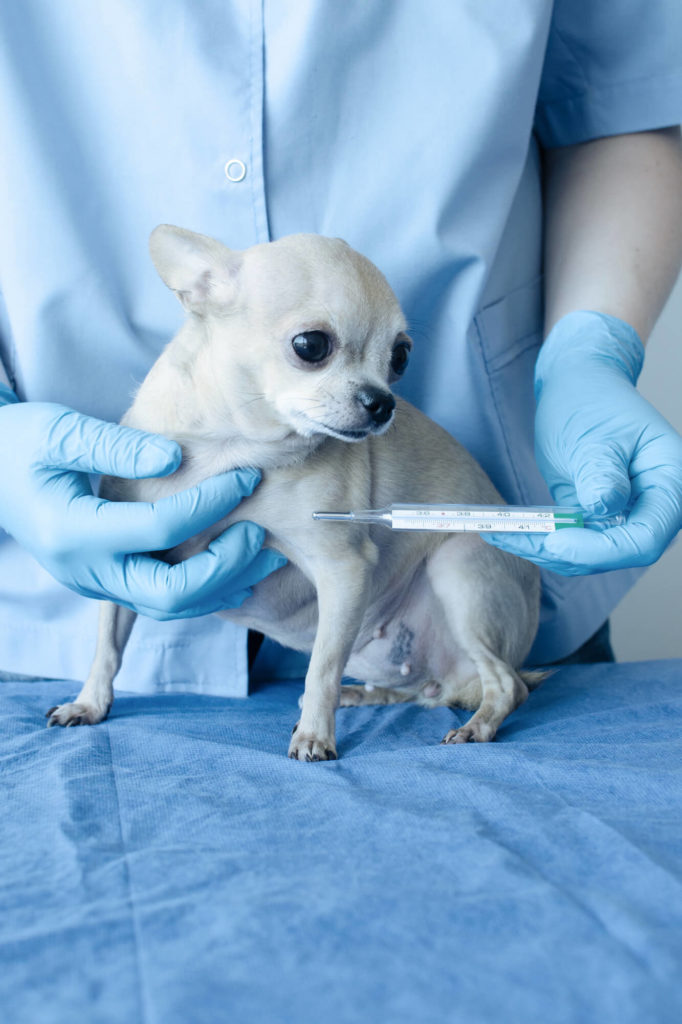
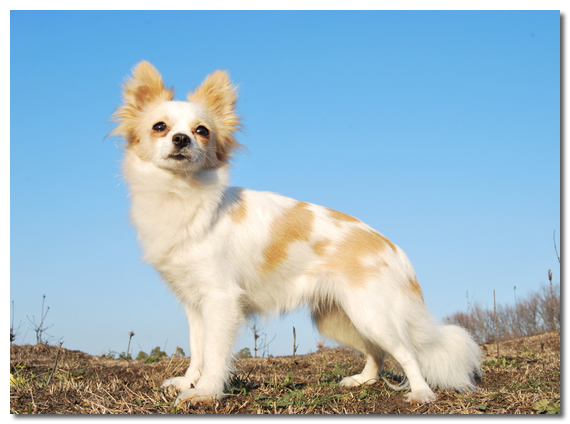


 “The Intelligence of Dogs” author Stanley Coren. Photograph by CaptainPsychology, distributed under a 3.0 CC license.
 A photo of a Border Collie and Afghan Hound, which rank as the most and least intelligent breed, respectively.