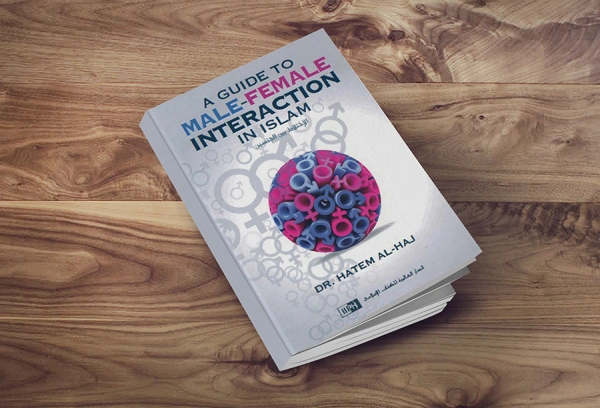
A Guide To Male-Female Interaction In Islam

Image

Dr. Hatem Al-Haj
Language: English | Format: PDF | Pages: 160 | Size: 9 MB

In ‘A Guide to Male-Female Interaction in Islam’, Dr. Hatem Al-Haj tackles some of the most often asked questions about free mixing and intermingling between men and women in Islam, including: are Muslim men allowed to interact with female students, and vice versa, in a virtual classroom? Can a Muslim woman pursue a professional career that necessitates her interaction with men? Is it appropriate for a woman to serve her husband’s guests? Do mixed wedding ceremonies comply with the Sharia? Read this bilingual book to find the answers and more!

Interaction between unrelated members of the opposite sex is inevitable at times. Yet, questions about whether or not it is permissible, and if so, to what extent, need to be asked. Are Muslim men allowed to interact with female students in a virtual classroom, and vice versa? Can Muslim women pursue a professional career which necessitates their interaction with men? Is it appropriate for a woman to serve her husband’s guests? Do segregated wedding ceremonies comply with the Sharia? At times like these, one searches for a text that addresses these contemporary issues, based on the Qur’an and the Sunnah. Dr. Hatem al-Haj has taken a broad view of the subject, keeping in mind the opinions of both categories of scholars: the ones who have taken a stricter stance and the ones who are more flexible in their interpretation. This is a comprehensive and well-researched work, filled with practical advice, from which students and professionals, both male and female will benefit immensely.

الاختلاط مع أفرادٍ من الجنس الآخر من غير الأقارب هو أمر لا مفرّ منه في بعض الأحيان ولكن لا بدّ لنا من التساؤل: هل هذا الاختلاط مسموح ؟ وإذا كان مسموحاً به فإلى أي درجة؟ لا يمكن أن يكون لا بد منه وممنوعًا في آن. أرى أن نقول: “ولكن لا بد من التساؤل عن الأحوال التي يكون فيها جائزًا وتلك التي يكون فيها ممنوعًا، ومتى كان جائزًا، فإلى أي حد، وما هي الآداب التي ينبغي أن تراعى؟” هل يسمح للطلاب الذكور التواصل مع الطالبات في قاعات الدرس الافتراضية؟ هل يجوز للنساء أن يعملن في مهنةٍ تقتضي اختلاطهن بالرجال؟ هل من الملائم للمرأة أن تقوم على خدمة ضيوف زوجها من الرجال؟ هل تتوافق حفلات الأعراس المختلطة مع الشريعة الإسلامية؟ للإجابة عن هذه الأسئلة وغيرها فإننا نحتاج في زماننا هذا إلى نصٍ يعالج هذه الأمور المعاصرة بالاعتماد على القرآن والسنة. وهنا يأتي دور كتاب (الاختلاط بين الجنسين) للدكتور حاتم الحاج والذي ينظرفيه نظر واسعة إلى هذا الموضوع، آخذاً بعين الاعتبار آراءَ الفريقين من العلماء: المغلبين لجانب الحظر والمغلبين لجانب الإباحة. وهذا الكتاب هوثمرة الكثير من الأبحاث المتعمقة والشاملة، وهو مليء بالنصائح العملية التي تفيد كلاً من الطلاب والدارسين، الذكور والإناث على حد سواء. Continue reading

Respond To The Suspicion Of Hijab And The Clothes Of The Muslim Woman

https://futureislam.files.wordpress.com/2012/04/respond-to-the-suspicion-of-hijab-and-the-clothes-of-the-muslim-woman.jpg

Ali Al-Gudairi
Language: English | Format: PDF | Pages: 22 | Size: 3 MB

1-Hijab in Islam

Many Westerners think that hijab (veil) is the symbol of oppression of the Muslim woman. Several western caricaturists depict the Muslim woman typically as one wearing a black «aba›a» : a dress that covers all her body except for her eyes. She is usually fat and sad! The aim behind this is usually to criticize such costume and confirm the image of the oppressed Muslim woman in the western minds! We refuted that image in a previous article «Arabs and Women Slavery» in which we mentioned the reaction of Saudi female students to the comments of Karen Hughes, the Middle East emissary of the American Administration, and how they proved their love of their Islamic costume and hijab. They were proud and had no intention to give this up. However, is hijab an Islamic innovation?

2-Hijab was an Old Jewish Custom

Although Muslim women are the ones that mostly observe the hijab, it is not correct that Islam is the only religion that orders its followers to wear hijab! Laila Lia Bruner, professor of Jewish history at the Jewish University and the visiting professor at Shiva University Institute for Adult Studies indicates that, «the early divine classic literature, Talmud and Midrash, had completely different viewpoints regarding covering woman’s hair. At that time, covering hair was not just a costume or a habit as in the Bible. Rather, it was the rule and regulation for pious women. The later divine literature of the middle ages asserted that issue as a complementary part of Jewish religious rituals.» (1) Hijab, then, was a habit and then a religious obligation on the Jewish woman. The Talmud Encyclopedia asserts this through comparing the opinion of the «mishna», the main source of rabbinic Judaism, and that of the Talmud regarding hijab:

«It seems that the mishna considered covering the hair as a Jewish habit despite that Talmud had already set a Torah rule for that and stated it as an obligation. Moreover, it is interesting that the term ‹dat yahudit› is used only for the behavior of women so that many defined the term as related to women›s modesty in particular.» (2)

Whether covering hair was a Jewish habit or a religious obligation, it is an established fact that was known and widespread in old Jewish societies.

In his book The Jewish Woman in Rabbinic Literature, Rabbi Dr. Menachem M. Brayer, Professor of Biblical Literature at Yeshiva University, indicates that it was the habit of Jewish women to go in public with the head cover which covered at time the whole face except for one eye. (3) He quotes the words of some old famous Rabbis as saying, «it is not the habit of the girls of Israel to go with bare head», «damned be the man who let his wife›s hair to be seen … The woman who keeps her hair bare brings poverty.» The divine law prohibits the recitation of blessings or prayers in the presence of a married woman whose hair is not covered. This is considered as «nakedness»(4). Professor Brier adds that, «during the period of Tanitic the failure of woman to cover her hair was considered as a humiliation of her modesty. She was fined four hundred «zeuzem» for that (zeuzem was about a quarter of a shekel)». He indicates as well that the hijab of the Jewish woman was not always a sign of modesty; at times it was an indication of distinction and luxury for noble women. It also symbolized the non-attainment of the married woman as being a sacred ownership of her husband. (5) Hijab also symbolized self-respect of the woman and he social status. Women of the lower classes used to wear hijab to give the impression that they were of a higher class. Hijab, in fact, was an indication of the noble class and this was the reason prostitutes were prevented from covering their hair in old Jewish society. However, prostitutes often wore a special scarf to look respectable. (6) Continue reading

The Muslim Woman’s Dress According To The Qur’an And Sunnah

http://futureislam.files.wordpress.com/2012/02/the-muslim-woman-s-dress.jpg

Jamal Badawi
Language: English | Format: PDF | Pages: 14 | Size: 4 MB

The Muslim Woman’s Dress according to the Qur’an and Sunnah compiled by Dr. Jamal A. Badawi To some as a subject the Muslim women’s dress may sound trivial. The shari’ah, however, assigns it moral, social, and legal dimensions. One basic requirement to be a true believer according to the Qur’an is to make one’s opinions, feelings, and inclinations subservient to whatever Allah and his Messenger decided. Continue reading

Hijab

https://islamfuture.wordpress.com/wp-content/uploads/2010/11/hijab.jpg

Abdul Aziz Bin Mohammed Al-Dowaish
Language: English | Format: PDF | Pages: 49 | Size: 1 MB

This book talks about the value of the obligation of hijab and to beware of display and unveiling, the characteristics of the Hijab are discussed, bringing the glad tidings promised (by Allah) to those women adhering to it. It also points out the danger of dazzling displays of ornaments and beauty as well as the terrible repercussions in this life and in the hereafter.

Table of Contents:

1. Introduction
2. Definition of the word Hijab
3. Proofs of the obligation of Hijab from Qur’an
4. Proofs of the obligation of Hijab from Sunnah
5. Arguments by those who legalize exposing Muslim Woman’s face
6. Conclusion Continue reading

Hijab: A Religious Symbol?

https://islamfuture.wordpress.com/wp-content/uploads/2010/07/hijab-a-religious-symbol.jpg

Dr. Abu Ameenah Bilal Philips

Dr Bilal Philips talks about the value of the obligation of hijab and to beware of display and unveiling, the characteristics of the Hijab are discussed, bringing the glad tidings promised (by Allah) to those women adhering to it. It also points out the danger of dazzling displays of ornaments and beauty as well as the terrible repercussions in this life and in the hereafter. Continue reading

The Full Hijaab

https://islamfuture.wordpress.com/wp-content/uploads/2010/07/the-full-hijaab.jpg

Shaikh Salim al-Amry

Allah (swt) says: O Prophet! Tell your wives and your daughters and the women of the believers to draw their cloaks (veils) all over their bodies (i.e.screen themselves completely except the eyes or one eye to see the way). That will be better, that they should be known (as free respectable women) so as not to be annoyed. And Allah is Ever OftForgiving, Most Merciful. [Soorah Al-Ahzaab 33.59] Continue reading

Niqaab According To Qur’an And Sunnah

https://islamfuture.wordpress.com/wp-content/uploads/2010/06/niqaab-according-to-qur-an-and-sunnah.jpg

Anonymous
Language: English | Format: PDF | Pages: 25 | Size: 1 MB

The general understanding in Islam regarding Sunnah, is that if the Prophet or any of his wives (RA) or companions (RA) are recorded in authentic hadith to have engaged in an act that is not haram (prohibited) as defined by Qur’an or Sunnah, then the act is declared halal (permissible). If the companions engaged in an act that the Prophet was aware of and did not speak out against, it is halal.

It is well-known that the wives of the Prophet covered their faces any time non-mahram men were near. A woman named Asma, who was not a wife of the Prophet , was also recorded as covering her face. Easily, one can conclude that wearing veil is halal (permissible).

However, Muslims and Muslimahs across the world have been in “hot debate” for centuries, over the issue of whether or not covering the face is obligatory upon a Muslimah. Those who argue that it is not required, point to the use of the word khimar in the Qur’an, and explain that today’s modern khimar does not cover the face, and argue that khimar has never referred to the covering of the face, but only to that of the hair, neck, and bosoms. While one cannot deny the support of Hadith that indicate that the Prophet’s wives wore khimar, one must realize that they also covered their faces at all times in the presence of non-mahram men.

The group of scholars agree that it is a highly recommended act to cover the face. The scholars also agree that a woman must cover her adornment, yet some scholars argue that this does not include the face. Continue reading

The Etiquettes Of Hijab

https://islamfuture.wordpress.com/wp-content/uploads/2010/06/the-etiquettes-of-hijab.jpg

Sheikh Feiz Muhammad

Sheikh Feiz explains the etiquettes of the true Islamic Hijaab. Allah says, “And tell the believing women to reduce [some] of their vision and guard their private parts and not expose their adornment except that which [necessarily] appears thereof and to wrap [a portion of] their headcovers over their chests and not expose their adornment… [24: 31] Continue reading

To Veil Or Not To Veil

https://islamfuture.wordpress.com/wp-content/uploads/2010/06/to-veil-or-not-to-veil.gif

Muhammad Al-Shinawy

By Mohammad Elshinawy. “And say to the believing women that they should lower their gaze and guard their modesty; that they should not display their beauty and ornaments except what must ordinarily appear therof; that they should draw their veils over their bosoms and not display their beauty except to their husbands, their fathers, their husbands’ fathers, their sons, their husbands’ sons, their brothers, or their brothers’ sons or their sisters’ sons, or their women or the servants whom their right hands possess, or male servants free of physical needs, or small children who have no sense of the shame of sex, and that they should not strike their feet in order to draw attention to their hidden ornaments. And O you Believers, turn you all together towards Allah, that you may attain Bliss.” (Quran 24:31). Continue reading

Women Finally On The Shores Of Islam

https://islamfuture.wordpress.com/wp-content/uploads/2010/06/women-finally-on-the-shores-of-islam.jpg

Muhammad Rasheed Al-’Uwayyed
Language: English | Format: PDF | Pages: 108 | Size: 3 MB

Allah Almighty says in the noble Qur’an: “O mankind! Be careful of your duty to your Lord Who created you from a single soul and from it created its mate and from them twain hath spread abroad a multitude of men and women. Be careful of your duty towards Allah in Whom ye claim (your rights) of one another, and toward the wombs (that bare you). Lo! Allah hath been a Watcher over you” (An-Nisaa’: 1)

This Qur’anic verse is from the Surah (chapter),”Women”, which should make all those who accuse Islam of denying women their rights know that there is a chapter in the book of Muslims which shows that they are held in high esteem. Thus, I challenge everyone to bring forth any religious book or law written fourteen thousand years ago, which gave women the same rights as those mentioned in this chapter, and the rest of the Qur’an.

When I was first asked to write the editor’s note on the translation of this book, I thought it was an opportunity for me to send a message to those who think that Islam suppresses women. But on second thoughts, I felt that the words should come from the horse’s mouth.

The reader will therefore learn for himself or herself what these women who embraced Islam have to say. Nearly all of them are well educated, and became Muslims during their search for the truth. The translator (herself a woman) did a good job in rendering this book, which I hope will give a true picture of Islam to non-Muslim, and helps rid Muslim women of the inferiority complex which the materialistic and so-called advanced world has made them to feel.

The new converts have discussed issues which non-Muslim women and Muslim women who suffer from inferiority complex think lower their status. For example, the “Hijab” (veil) is considered by those who misunderstand Islam to be something that makes women hides their beauty. But people must not forget that in those days when christianity was taken very seriously in Europe and other parts of the world, it was unbecoming for a woman to leave her house without a scarf or to wear short dress with short sleeves. Continue reading