Whether you need to tackle the racist uncle or endure the woke niece, there are a couple of debating principles that can stop disagreements from turning into rancorous shouting matches and instead allow conversation to flow as smoothly as the gravy.
Merry Christmas!
“As a rule, the most dangerous ideas are not the ones that divide people but those on which they agree.” – Stephen Vizinczey
Banning any mention of politics or religion at dinner is a boring rule. It’s not dangerous to disagree; it is in fact far more dangerous if everyone is, or appears to be, in total agreement about everything. Whilst agreement on some things can be … well, agreeable, and a nice way to bond with a new acquaintance, the more interesting conversations often arise out of some degree of unalignment: different perspectives, different views, different ways of thinking about the world and the things therein.
And whilst that is fine as a general attitude, the question remains of how exactly to go about it to enable disagreement between the first and second course, without ending up throwing bread rolls at one another? Read on to learn my two chief tips (plus one more) to achieve continued good cheer all the way through to the pudding and port.
Method 1 – Stasis is for Starters
As the smoked salmon or chicken paté makes its tentative way from plate to palate, and the conversation starts bubbling like the cheap Prosecco from Aldi in your glass, and you notice your blue-haired niece, down from university, has a non-meat, non-dairy, non-fish, non-starter on her plate, and she loudly declares she is now a vegan (don’t worry: if she’s a vegan, she will loudly declare it) because she is concerned about the inhumanity of the meat and seafood industries, how do you react if you are strongly in disagreement with her pronouncement?
This is where the concept of stasis comes in handy. The term comes from Greek and literally means a standing still, or what we might call the common ground. In debating, it is the point of agreement before disagreement starts. You are served a stasis when one of the debaters says, “I agree with my opponent that…, but he is wrong to say that…”. You may, for example, say to your niece that you agree with her that it is important and right to treat animals as well and as humanely as possible, and that you respect her making a choice based on principle. And then try to find where she might agree with you. “Would you agree that it is possible to produce animal-based food and other products humanely?”
This question moves the conversation away from the specifics of how food is produced today to the principle of the matter, and will lay bare whether your interlocutor is against animal-based products per se or just against the current methods of production.
If you both agree that it is possible to have humane livestock farming, a constructive conversation can be had on what is a reasonable way to ensure that food and other animal-based products are made in an ethical way.
If, on the other hand, the niece says that no, all forms of animal products are wrong, then you may want to move on to the next course and the next technique. And since at dinner we turn at the changing of courses to the person on the opposite side to converse, let’s reverse the roles:
Method 2 – For the Main Course, a Second Helping of Questions
Your Gen X, or even worse, Boomer, uncle has just said that he would welcome Nigel Farage deporting all those illegal immigrants. You are appalled at having to endure not only Brussels sprouts but also such xenophobic language. Do you confront? Do you educate him? No, that would be an extremely bad idea, which would only invite even stronger disagreement with anything you have to say.
Rather than offering answers and pointing moralistic fingers, Socrates asked his interlocutors a series of probing questions to clarify their beliefs.
Instead you should use the Socratic method. This is a form of dialogue put by Plato in the mouth of the Greek philosopher Socrates (c. 469–399 BCE), where you use disciplined questioning to explore complex ideas, uncover assumptions, and stimulate critical thinking.The Latin name for it is elenchus (ih-leng-kus) from the Greek ἔλεγχος (élenkhos), a term that suggests testing or exposing falsehood through questioning.
Rather than offering answers and pointing moralistic fingers, Socrates asked his interlocutors a series of probing questions to clarify their beliefs. The great thing about this method is that you can uncover more of what the other person thinks, the weaknesses and strengths of his argument or viewpoint, and you may even help him to question some of his own premises and assumptions.
You could start by asking for definitions – what is an illegal vs a legal immigrant, who would qualify for deportation, to where, etc. Keep going to uncover inconsistencies and weaknesses, if any, and as you allow him to speak, at some point you will have earned the right to present your perspective on the issue without interruption.
If voices rise and tempers flare in competition with the flambé Christmas pudding, go back to the first technique: find the brandy sauce of common ground, the stasis, “well, I suppose we can at least agree that…” and then start again from that point.
And remember: the purpose of a debate is almost never to convince your interlocutor. In a formal debate competition, it’s the judges you need to win over; in a debate club the audience; and in an informal conversational discussion you are better off leaving aside any notion of “winning” over or even convincing your sparring partner. My third additional tip would therefore be to avoid trying to change anyone’s mind. If you leave it at exploring the other person’s views and perspectives, and perhaps occasionally sharing your own, you may ironically stand a better chance of actually shifting someone’s thinking than if you try too hard to do so.
And provided there has been enough alcohol, nobody will remember anything the next day, and so you can start the whole thing over afresh.
Very proud to announce the result of 12 months of writing and 35 years of learning: The Really Practical Guide to Debating: How to Win Every Argument That You Don’t Lose is now officially published on Amazon Direct Publishing by LockeStep Publishing, and features a foreword by Distinguished Toastmaster Paul R. Carroll.
Honest, good-faith debating is not all about winning (that would be sophistry), but about having meaningful exchanges of opinions between rational people – something that seems to be in shorter and shorter supply these days.
I hope this book will inspire, entertain, and spur you on to make better arguments, to listen better to other people’s arguments, and perhaps even to come along to a debate at some point!
Before you rush to disagree with someone, ask them questions to not only understand where they are coming from, but so that you may reach a common ground of agreement. This is called “stasis”, the bedrock of standing still before you go separate ways.
It may be something as simple as agreeing about a fundamental value that you share or on what the problem is.
You’ll be amazed how often disagreement turns out to be agreement in disguise, because you are talking about different things but didn’t realise.
Determining a shared point enables you to refer back to it if the discussion starts going off track, and it helps you to build a meaningful exchange of views.
Andrew Doyle, the comedian with a serious side and a doctorate from the University of Oxford, has a new book out, and it’s certainly his most important and serious contribution to the public discourse so far: The New Puritans; How the Religion of Social Justice Captured the Western World.
Andrew Doyle – a serious comedian
Doyle is the creator of the hilarious persona Titania McGrath, originally created as a Twitter account to satirise Wokeness and the excesses of the Social Justice Warriors online. He was a writer for the Jonathan Pie persona and is currently hosting the TV show Free Speech Nation on GB News. Apart from two satirical books under the McGrath persona, and one under the Jonathan Pie persona, Doyle has also writtenFree Speech and Why it Matters (2021).
His new book, on the “religion” of social justice, is a well-written and thoroughly researched critique of the key tenets of the world-view we often call “woke” – a slightly tabloid catch-all phrase – that has influenced so many people in the US but also increasingly here in Britain and Europe, within academia, in our institutions (even the august National Trust and the police) and increasingly politics and the laws.
Doyle is not the first to compare the current woke social justice movement with a religion. John McWorther in his recent bookWoke Racism: How a New Religion Has Betrayed Black America, calls wokeness literally a religion, because, he explains, they have certain core beliefs that you have to accept on faith without evidence, and these you need to state and restate (as a Credo) in order not to be excommunicated from the fold; the movement has certain holy writs which you must read and accept uncritically and certain prophets whose words you must take to heart. Questions are not encouraged but taken as evidence of the “original sin” of White Privilege. But there is no Pope nor a formal hierarchy of accountability, and so the teachings of this “religion” may shift from day to day. As O’Brian says in Orwell’s 1984, “Whatever the Party holds to be the truth, is truth.”, but in this case, even who the party is may shift and change. Dr. McWorther calls it a “catechism of contradiction”.
These contradictions and lack of basis in empirical data and logic are the main weaknesses in a broad cultural movement that contains fourth wave Feminism, intersectionalism, transgender ideology, Critical Race Theory and more, all of which tends to be referred to as “woke” ideology. The great value of Andrew Doyle’s book is to tackle the foundational texts of this “religion” head on and thus “call out” the nakedness of this many-headed Emperor.
Er…yes, it is, actually
The Sources
The book firstly provides an excellent overview of the sources of this approach from the Marxist dialecticism of intersectionalism, through postmodernist thinkers and the Frankfurt school, including Michel Foucault’s notion of language as power and Herbert Marcuse’s idea of “repressive tolerance”, and concludes that there is a direct line from these ideas and today’s “hate speech” laws, which over the past five years have seen 120,000 people getting “non-crime hate incidents” records, which will show up in an enhanced CRB check and bar them from certain jobs, and 3000 people per year arrested for “offensive remarks posted online” (P. 36).
Thought Crime
Although the College of Policing’s guidelines have been amended recently following the Miller vs. College of Policing case, the wording still betrays the subjective nature of these “crimes” – they are quite literally thought crimes, but worse than that, there are no objective criteria for these so-called crimes as they are defined as (my bolding): “A hate crime is any criminal offence which is perceived by the victim or any other person to be motivated by a hostility or prejudice […], and a non-crime hate incident is defined as “Any incident where a crime has not been committed, but where it is perceived by the reporting person or any other person that the incident was motivated by hostility or prejudice“.
This means that something is a crime if someone claims it is a crime; there need not even be a victim, because if “any other person” perceives the words or actions to be “motivated by a hostility or prejudice” that is enough to make it a “hate crime” or indeed a “non-crime hate incident”, but even the use of the wording “perceived by the victim” presupposes there is a victim before there has even been an investigation. Whatever happened to the presumption of innocence? This level of subjectivity as part of legislation and law-enforcement, undermines the Rule of Law and is a direct consequence of accepting ideas from Post-Modernist philosophy into our political and legal discourse.
This is why Doyle’s book is important: his overview, drawing the lines of inspiration and demonstrating where these ideas have gained real influence – including the unintended consequences that are harming real people and society as a whole.
The Holy Texts
It’s worth looking at Doyle’s criticism of some of the key texts that have brought Critical Race Theory to general public attention. As he points out, this “theory” is not a scientific theory in the way this term is commonly understood.
You may be familiar with Karl Popper’s falsification principle, which essentially says that if any theory might be incompatible with one or more possible empirical observations, then it is scientific (it CAN be proven wrong); but a theory which is compatible with all possible observations, either because, as in the case of Marxism, it has been modified to accommodate such observations, or because, as in the case of psychoanalytic theories, it is consistent with all possible observations, is unscientific.
Let’s consider Critical Race Theory on that basis. Doyle refers to data from 2014 to 2019 which show that across all higher education institutions in Britain, 996 formal complaints of racism were made, 367 of which were upheld. That is an average of 1.5 formal complaints per year per institution. But rather than rejoice in the low numbers, Priyamvada Gopal, an academic at Cambridge and proponent of CRT, took the low numbers as proof of a failure by universities in defining racism properly and claimed that students were so “exhausted” from all the racism they face that they just gave up on reporting.
Indeed, as Doyle says, “Through the lens of Critical Race Theory, any challenges to claims of institutional racism may be taken as proof of the structural problems they describe.” (P. 189)
Any disparity of outcome between “race” categories is seen by proponents of CRT as proof of systemic racism.
A recent report by the Commission on Race and Ethnic Disparities actually found that in the UK “pupils from ethnic minority groups consistently outperformed their white peers” with some minority categories doing better than others. (P. 203). Again, rather than celebrating the fact that there was no evidence of racism in the system, the fact of not finding it was taken as proof that it was there by the CRT devotees, such as The Runnymede Trust, who in response to this report published their own saying that society is “deliberately rigged against ethnic minorities”, but produced no empirical evidence to support this claim.
This ran rather counter to their own report from 2000 by professor Bhikhu Parekh, which concluded that race relations in the UK were the best in Europe. Has racism become worse over the intervening 20 years?
The EU’s 2019 report on Discrimination in the European Union “…found that citizens of the United Kingdom are among the least racist in the world”. Similar conclusions were found in a report published in Frontiers in Sociology in 2018, and the EU Agency for Fundamental Rights (“the UK had one of the lowest reported levels of race-related harassment and violence in the 12-country study”).
One of the High Priestesses of CRT, Robin DiAngelo, whose 2018 book White Fragility is one of the sacred texts that has acted as a superspreader for these ideas, dismisses the institutional power of black people such as Colin Powel, Clarence Thomas, Marco Rubio and Barack Obama, because, she claims, they merely support the current system, and any black success is merely seen as proof that the whites are “allowing” some black success in order to protect the status quo.
At the time of writing this, Britain has just seen her first Prime Minister of Indian heritage take the office. An instance of the neo-racialism that CRT/intersectionalism encourages, the Labour MP Nadia Whittome wrote in a since deleted Tweet that this was “not a win for Asian representation” apparently because Mr. Sunak was a successful businessman before becoming a politician. Is it not typically Asian to succeed in business, perhaps?
In other words, as Doyle puts it, “When perceived in this way, no outcome can conceivably exist that would cause the proponents of Critical Race Theory to doubt their own precepts.”
Now, if we hold that up against Popper’s test, that a theory that can be true in any and all circumstances cannot be scientific, it is clear that CRT is not a scientific theory.
That in itself does not mean that it is useless in all circumstances. But it does mean that it must be viewed as a theoretical and/or ideological approach that offers one possible interpretation of reality, rather than a scientific theory that helps us understand reality.
DiAngelo’s racism
The widespread influence of DiAngelo’s book is troubling, especially as Doyle says, she makes assertions without offering any evidence for them. He praises her for her honesty in admitting to her own racism (such as feeling deeply uncomfortable that a picnic she’s invited to may consist of mostly black people) but takes issue with the automatic assumption she makes in her book, namely that her own racism is proof of racism in others.
“[DiAngelo] is projecting her own racism onto the racial demographic to which she belongs.” (P193).
So we are in the deeply ironic situation that a book by a self-confessed racist, in which she accuses other people of being as racist as she is, without any evidence offered, is being used as a foundational text in anti-racism.
More troubling is that this text, as well as texts by others peddling the same non-scientific ideology, such as Ibram X. Kendi and Reni Eddo-Lodge, and a slew of books that Doyle lists, have gained such widespread traction amongst people who ought to know better. Is it fear of being on the “outside” that drives this?
Kneeling in submission is part of most religions, so also this one.
Social Justice
I do have a couple of quibbles with Doyle’d book, firstly on his insistence that all good people are in favour of Social Justice as he defines it. I for one am not; then again, perhaps I am not a good person. He claims the term has been co-opted and misused by the Woke, in a way that lends them legitimacy. His solution is to distinguish between “Liberal Social Justice” and “Critical Social Justice”.
But there is a slight logical discrepancy when he says “…we inadvertently support their cause by adopting their preferred branding” (P. 26), then goes on to say that we should call their version of it “critical social justice” to show that it is connected to Critical Race Theory.
However, a little further down he quotes aforementioned DiAngelo from the 2017 book Is Everyone Really Equal, co-written with Özlem Sensoy, where they make the distinction between “social justice” as commonly understood (which they don’t see as their goal) but instead favour “a ‘critical approach to social justice …’”.
In other words, calling it “Critical Social Justice” may be more accurate, but it is also adopting their preferred branding, which Doyle counselled against.
What is “justice”?
To be fair to Doyle, he very much impressed me when he brought in F.A. Hayek, the Austrian born philosopher and Nobel Prize winning economist, who criticised the concept of social justice in his seminal work Law, Legislation and Liberty.
But I feel Doyle evaded the fundamental point that Hayek brought against social justice as a concept:
“Strictly speaking, only human conduct can be called just or unjust. If we apply the term to a state of affairs, they have meaning only insofar as we hold someone responsible for bringing it about or allowing it to come about. A bare fact, or a state of affairs which nobody can change, may be good or bad, but not just or unjust.” (Law, Legislation and Liberty, Hayek, p. 198).
He goes on to explain that in a free society that is not designed and commanded from above, it makes no sense to talk about “justice” to describe the set of circumstances that result from the otherwise just actions of individuals.
“…since their wholly just actions will have consequences for others which were neither intended nor foreseen, these effects do not thereby become just or unjust.” (Hayek, p. 234).
To call a set of circumstances socially “unjust” and to have a goal for society that is “just”, you have to first agree what these “just” circumstances are; that can, as Hayek points out, only lead us in a more centralised and authoritarian direction.
But what is clear is that the proponents of social justice – whether in the common “liberal” understanding of it that Doyle favours, or in the more “critical” version that DiAngelo puts forward – do indeed “hold someone responsible”, as Hayek puts it, for the inequity between various categories of people in society.
White people are responsible that non-whites are not as wealthy and powerful in white-majority countries, men are responsible for women’s perceived lack of power and influenced, wealthy people are responsible for poor people’s poverty, straight people are responsible for gay people’s lack of perceived normality, non-trans people are responsible for trans people’s marginalisation in society, etc., etc.
And importantly, when someone is responsible, they can be punished for it. This, as Kendi and other argue, can be done through what Americans tend to all “affirmative action”, what in Britain is called “positive discrimination”. I.e. to racially discriminate against whites. As Doyle rightly points out, “In order to oppose racism one mst be opposed to anti-racism.” (P. 201).
The problem is that holding on to a logically inconsistent concept, such as “social justice”, can only help those who wish to spread this peculiar ideology; Doyle would have done better in my view to reject it altogether.
EC Publishing, who provides teaching materials for schools, has produced these completely neutral and objective teaching slides for indoctrinating, sorry, teaching our children.
Political correctness
The second slight objection I have is to what Doyle says about political correctness. He claims that the change in social attitudes to things such as gay marriage and minorities has shifted over time due to the political correctness of the 80s and 90s (P. 88). He goes on to say that whereas a prospective member of Parliament in 1964 could use a racial slur in his campaign material, “…this would be unimaginable thirty years later [and that this is] surely testimony to the success of political correctness.”
Doyle fails to clearly define what he means by “political correctness”, other than to refer to how it tended to manifest itself in the 90s and thereabouts. Various dictionary definitions exist, but the article in Encyclopædia Britannica gives the most thorough exposition of the concept in my view. It’s worth looking at a couple of quotes:
“The term first appeared in Marxist-Leninist vocabulary following the Russian Revolution of 1917. At that time it was used to describe adherence to the policies and principles of the Communist Party of the Soviet Union (that is, the party line).”
It then goes on to explain that the concept developed into meaning that language actively shaped people’s thoughts, a notion that George Orwell so darky satirised in 1984.
“According to the Sapir-Whorf, or Whorfian, hypothesis, our perception of reality is determined by our thought processes, which are influenced by the language we use. In this way language shapes our reality and tells us how to think about and respond to that reality. Language also reveals and promotes our biases. Therefore, according to the hypothesis, using sexist language promotes sexism and using racial language promotes racism.”
Doyle seems to have implicitly accepted this understanding by saying that the pressure to use politically correct language changed attitudes. He does not, however, entertain the possibility that it was perhaps the changing social attitudes that caused language to follow suit.
In other words, I believe he is committing a post hoc ergo propter hoc fallacy of assuming that because two things occurred at the same time, one thing is caused by the other.
My guess is that social attitudes changed from one generation to the next for a number of different reasons and this attitudinal change in turn changed language. With those changes in attitudes certain words, expressions and utterances became unpalatable and this then created a certain social pressure to avoid them.
Political correctness therefore is not about being polite or considerate, it is about trying to change people’s minds by controlling what one is allowed to say, as Orwell said about Newspeak,
“Don’t you see that the whole aim of Newspeak is to narrow the range of thought? In the end we shall make thoughtcrime literally impossible, because there will be no words in which to express it.” (Orwell, 1984).
I will deal with Political Correctness more thoroughly in another article, but for now it is enough to recall how it was impossible in the 90s and early 2000s to argue against multiculturalism, immigration and EU membership without automatically being branded a “racist” and “xenophobe”. This stifled the political debate to such a degree that it gave rise to the BNP and UKIP, the former of which were not representative of many Brits in most aspects, but gained a considerable following because they took people’s worries seriously, something mainstream politicians couldn’t do due to political correctness. The same is true of UKIP, who gained such a following that they threatened the Tory vote, and so were finally successful in achieving a referendum on the matter in 2016, something that had been promised by Labour’s Tony Blair and successive Liberal Democrat leaders for many years, but never delivered on.
As Jonathan Rauch points out, it was once politically incorrect to defend gay marriange and lifestyles, and only the right to free speech gave those who wished to campain for it the opportunity to do so. Political correctness would have seen that debate closed down, not opened up, as Doyle seems to suggest when he refers to a friend laughing at the idea of gay marriage in 2003.
I remember as a young, politically active guy in my native Norway in the early 90s, that gay marriage was discussed and it was not political correctness that caused it to become widely acceptable, but the fact that the younger generation saw marriage mostly as a legal contract between two people, and not primarily as a sacrament. Andrew Sullivan wrote his book about same-sex marriage in 1997, not because it was politically correct at the time – quite the opposite in fact – but his book helped to shift the conversation.
Political correctness is the bleach of societal discourse; it doesn’t open up new intellectual avenues nor does it give a space for discussing difficult and sensitives issues, it simply tries to clean those away from polite society altogether, so that those who dare raise them are ostracised, marginalised and generally put on the naughty step.
It therefore feels too convenient when Doyle says that “…we need to draw a clear distinction between the PC era of the 1990s and the opposition to free speech that has since been enshrined in “hate speech” laws, often now abused by the state to clamp down on controversial opinions.” (P. 90).
That clampdown is exactly what happened back then and it should be remember that the Public Order Act goes back as far as 1986; an act that with its various amendments includes more and more utterances that in a free society should be allowed, such as “Jesus Gives Peace, Jesus is Alive, Stop Immorality, Stop Homosexuality, Stop Lesbianism, Jesus is Lord“. Yet in October 2001 Harry Hammond, a Christian, was arrested and charged under section 5 of said Public Order Act because he had displayed to people in Bournemouth a large sign bearing these words. These WORDS! He had done nothing to no-one. He had not assaulted anyone, nor followed them about shouting it in their ears, he had merely peacefully stood about displaying his opinion in written form. He was fined £300 and ordered to pay costs of £395, for expressing these politically incorrect opinions.
That is punishing thought crime, rather than actual crime, and it is what comes of accepting the premise behind political correctness, namely that by controlling people’s words we control what they are allowed to think and therefore do.
Doyle is closer to the truth when he says “The age of political correctness is over, and we are left struggling with its ugly offspring.” I would say that the age of political correctness is not by any means over, but that its ugly offspring has intensified it and we are living with the logical and necessary consequences of our capitulation to Political Correctness.
More completely neural and objective teaching slides for indoctrination, sorry, teaching our children from EC Publishing, who provides teaching materials for schools in Britain.
Cancelled culture
One way Political Correctness expresses itself these days is in the way people are sometimes successfully “cancelled”, either from certain events, but also their jobs, positions, or as commentators in the media, or dropped by publishers, etc.
Doyle spends a good part of the book discussing “cancel culture” and its chilling effect on the general public discourse as well as academia. As Jonathan Rauch, and Greg Lukianoff and Jonathan Haidt point out in their respective books, The Constitution of Truth and The Coddling of the American Mind, the number of people reporting that they are afraid to speak their mind, and afraid to declare where they stand politically, has increased dramatically on campus, to currently around 60% in America! At the same time the number of conservative leaning academics and professors have gone down significantly both there and over here in Britain.
To those who say that cancel culture isn’t real because look at all these famous people who have been attempted cancelled but who are still around, it is worth remembering what Steven Pinker said about the attempt to have him cancelled; they won’t succeed with people who are well-established or who has tenured positions, but the process will send a signal to those further down the pecking order. Toe the line or you’re next. (Watch video interview with Dr. Pinker here)
Doyle puts it well when he says, “Cancel culture works pre-emptively by fostering a climate in which most people are wary of speaking their minds for fear of misrepresentation, wilful or otherwise.” (Doyle, p. 219).
Crucial contribution
Andrew Doyle’s book is an extremely useful contribution in the on-going “culture war”, not least because he’s able to give an overview of some of the salient issues at hand, in a cogent, knowledgeable and extremely well-written manner.
The book is uncomfortable in what it lays bare, but so beautifully written and scattered with Doyle’s witticisms, drawing on his enormous comic talent, that a topic that could have been overly heavy and depressing, becomes engaging and as light as such a read can be, without compromising the academic quality.
Ayn Rand (1905–1982) is seen by some as a dangerous influence: an amoral wolf disguised as a philosophic chain-smoking grandmother, whose melodramatic pulp fiction draws in generations of young, naïve little Red Reading Hoods who wonder at what big premises she has. By others she is seen as the High Priestess of individual liberty who rose, Venus-like, fully formed out of the revolutionary swamps of Russia and whose writing soars inspirationally above the cesspit of collectivism, Marxism and religious dogma. Both extremes are wrong in my view. Read on for what I hope is a balanced introduction to some of Rand’s ideas and why you should read her.
“Look into my eyes!”
On Rand the philosopher
In my view it is a mistake to see Ayn Rand as a philosopher first who wrote books to illustrate her ideas; I believe she should be seen primarily as a novelist and secondarily as a thinker who worked hard to define the values that informed the fictional universes she created. Her philosophical system, Objectivism, was after all only really developed after the publication of her breakthrough novel The Fountainhead (1943) and never went through the usual cut and thrust of academic work through which knowledge is usually forged, as Jonathan Rauch argues in The Constitution of Knowledge (reviewed here), because Rand for the most part chose to stand aloof from her contemporary professional philosophers.
One reason she gave for not wanting to engage with contemporary academic philosophy was that she believed their fundamental premises, their axioms and basic assumptions about the reality of existence, the nature of reality and of knowledge (metaphysics, ontology and epistemology), meant they had very little meaningful to contribute to the discussion of right and wrong (ethics). As a 17-year old she had been introduced to Nietzsche’s Also sprach Zarathustra and was deeply influenced by his criticism of Christian altruistic morals (Anne C. Heller, Ayn Rand and the world she made, p. 42), although later she became critical of what she saw as Nietzsche’s approval of subjective whim: the “superman” has no more right to sacrifice others to himself than they, the masses, have to sacrifice him to their, she came to believe (Ayn Rand, The Virtue of Selfishness, (1961).
In her biography of Rand, Goddess of the Market (2009), historian Jennifer Burns discusses correspondence between Rand and Isabel Paterson, a conservative novelist and thinker who was an important influence early on in Rand’s writing career. Although Rand had studied philosophy at St. Petersburg, Paterson was concerned that Rand’s foray into philosophy did not have a strong enough foundation in knowledge of what had gone before her. But Rand “…rejected Paterson’s comparison of her to other philosophers, insisting, ‘I have not adopted any philosophy. I have created my own. I do not care to be tagged with anyone else’s labels.'” (P. 127).
Isabel Paterson – a critical friend of Rand
She had some interaction with academic philosophers – not least the great classically liberal thinkers Ludwig Mises and Friedrich Hayek, but rejected the latter for his willingness to contemplate limited government programmes and the former for his acceptance of altruism, which she saw as spiritual cannibalism (Burns 105-106); the thin end of the moral wedge with which collectivists prise open one concession to big government after another.
In the spring of 1960 she struck up a friendship with a college professor of philosophy, John Hospers (Ayn Rand and the World She Made, Anne C. Heller, p. 129). They had long and deep discussions, and Hospers, who went on to become the first presidential candidate for the Libertarian Party in 1972, said she had helped him clarify his thinking on politics and capitalism. But as Heller writes,
“He wasn’t always able to make clear to her how her ideas fit in a historical context or introduce her to new concepts. At that period, ‘she read almost no philosophy at all,‘ he said […]” (Heller, page 330).
Spurred on by her interaction with Hospers, Rand also had discussions with other professional philosophers, such as Martin Lean, a Wittgenstein expert and chair of the Philosophy Department at Brooklyn College. After a reportedly rowdy debate with him he wrote to her saying, “‘For my part I cannot recall having argued with anyone as intellectually dynamic, challenging, and skilled as you since my … Fullbright year at Oxford’ […] ‘It is academic philosophy’s loss that you did not choose this as the field of your concentration‘.” (Burns, pages 186-187).
But these interactions were short-lived, and due to her lack of engagement and reading of other thinkers, Rand’s value as a critic of other philosophers and philosophies is somewhat limited. This, however, does not mean that her contributions in other areas are not valuable, in particular her insistence on the importance of metaphysics and the possibility, indeed necessity, of objective reality and therefore objective truth, as well as her ethical theory.
Moreover, her literary achievement, creating a moral universe based on her own vision, is a massive one – whether one agrees with it or not.
Objective Reality
Apart from the content of her thinking and writing, the fact that she has kindled in thousands of people an interest in philosophy, or at least a philosophical approach to the big (and small) issues of life, is also one of Rand’s great achievements. Her criticism of the tendency within her contemporary culture and philosophy to reject objective reality, something she traced back to Kant’s work, not least his notion of the difference between the thing as it is in itself and the thing as it appears to me (more about that here), is all the more relevant today, as we see not only sandal-clad obscure academics but even celebrities and others talk of “my truth” rather than “the truth”; we see the objective reality of biological sex being undermined by subjective notions of “gender identity”; and we see free speech, textbooks, literature as well as historical figures and much else besides, routinely assessed in terms of how they make certain people feel (especially feeling unsafe or some emotional “harm”, often meaning being made to feel uncomfortable, as discussed in The Coddling of the American Mind by Jonathan Haidt and Greg Lukianoff).
In the essay “The Metaphysical Versus the Man-made“, Rand writes, “The primacy of existence (of reality) is the axiom that existence exists, i.e., that the universe exists independent of consciousness (of any consciousness), that things are what they are, that they possess a specific nature, an identity. The epistemological corollary is the axiom that consciousness is the faculty of perceiving that which exists—and that man gains knowledge of reality by looking outward.” (Published in the essay collection Philosophy; Who Needs It, 1984).
From this line of thinking follows what she says in another essay in the same collection, Philosophical Detection, dealing with the popular catch-phrase It may be true for you, but it’s not true for me (made extra relevant these days after Megan, duchess of Sussex, talked about “my truth” in an interview on an American talk-show):
“Truth is the recognition of reality. (This is known as the correspondence theory of truth.) The same thing cannot be true and untrue at the same time and in the same respect. That catch phrase, therefore, means: a. that the Law of Identity is invalid; b. that there is no objectively perceivable reality, only some indeterminate flux which is nothing in particular, i.e., that there is no reality (in which case, there can be no such thing as truth); or c. that the two debaters perceive two different universes (in which case, no debate is possible). (The purpose of the catch phrase is the destruction of objectivity.)“
There may be technical criticisms to make from the point of view of an academic philosopher, which I am not qualified to make, but I do think that Rand throws down the gauntlet to our own present time: if there is no objective truth, if we cannot perceive reality accurately, if there are only “truths” and “histories” rather than Truth and History, if subjective notions of identity and the perception of the world can be asserted merely on the basis of feeling, and if all language is primarily what some Post-Modern thinkers described as “power-relations”, rather than linguistic expressions of concepts that can be logically deduced and agreed upon, then do we even have the basis for thinking about our world and communicating with each other about it? Is debate even possible? As Steven Pinker says: “Each of us has a motive to prefer our truth, but together we’ve better off with the truth.” (Rationality (2021), p. 315).
Rand’s notion of selfishness(AKA rational self-interest)
This drawing by Edward Sorel perfectly illustrates Sorel’s ignorance of Rand’s philosophy
Rand’s advocacy of “selfishness” as virtue and “altruism” as evil is perhaps the best known and most wilfully misunderstood of her philosophical positions. What did she mean by it?
The conservative philosopher Roger Scruton, in his article Altruism and Selfishness, writes about how Rand in many ways redefines “selfish” to mean also those benevolent things you do to others because you love them, but then criticises this usage of language, saying, “Learning to love your neighbour as yourself is learning to take pleasure in the things that please him, as a mother takes pleasure in the pleasures of her child. To call this “selfishness” is to abuse the language…”
Scruton is right to point out that to redefine a word (selfish) that is deeply engrained in our culture and language as meaning that which is bad and immoral, to meaning something which is good and virtuous, is very problematic; indeed it is in part the source of the lazy assumption that Rand saw as defensible those actions that we tend to call “selfish”. She did not necessarily do so. Rand was alive to this. In her working notes to The Fountainhead (so before she had systematised her philosophy) she wrote:
“I. The first purpose of the book is a defence of egoism in its real meaning, egoism as a new faith. Therefore – a new definition of egoism and its living example.” (Journals of Ayn Rand, p. 77).
Also, in the introduction to the essay collection The Virtue of Selfishness (1961), she writes, “The title of this book may evoke the kind of question that I hear once in a while: ‘Why do you use the word “selfishness” to denote virtuous qualities of character, when that word antagonizes so many people to whom it does not mean the things you mean?’ To those who ask, my answer is: ‘For the reason that makes you afraid of it.'” (page vii).
She goes on to explain that the popular usage of the term is wrong because it equates looking after one’s own interest with evil and looking after someone else’s interest with good, i.e. that the nature of the beneficiary is the criterion; the self: bad, others: good. But, as she goes on to explain: “The evil of the robber does not lie in the fact that he pursues is own interest, but in what he regards as his own interest, not in the fact that he pursues his values, but in what he chose to value […]” (p. ix – my bolding).
It is also worth noting that “ethical egoism” is a term that exists in moral philosophy independent of Ayn Rand’s contribution to ethical theory. The key thing to understand from this theory is the difference between ethical egoism: that it is right to act in one’s own interest, and on the other hand empirical egoism: that people do in fact act according to their self-interest, whatever their professed beliefs or principles may be. Rand’s theory of ethics belong in the first category.
In the essay The Objectivist Ethics, Rand explains:
“The Objectivist ethics proudly advocates and upholds rational selfishness – which means: the values required for man’s survival qua man – which means: the values required for human survival […].“
By “human survival” Rand means life as rational (or thinking) creatures, i.e. with the freedom and need to think, speak and act, and not just for the preservation of biological existence, but also the enjoyment of art and beauty – it is important to stress that Rand did not see a rational person as a humanoid calculation machine, but rather one whose emotional responses to people and things would spring from his values, and that those values would have been carefully chosen or at least filtered. In Rationality Steven Pinker makes a similar point to Rand. He writes, “Rational choice is not a psychological theory of how human beings choose, or a normative theory of what they ought to choose, but a theory of what makes choices consistent with the chooser’s values and each other.” (P. 175).
And what are values? Rand explains that only a living – mortal and vulnerable – creature can have values, “[…] try to imagine an immortal, indestructible robot, an entity which moves and acts, but which cannot be affected by anything, which cannot be changed in any respect, which cannot be damaged, injured or destroyed. Such an entity would not be able to have any values; it would have nothing to gain or to lose […].” (The Virtue of Selfishness, p. 16). Just as Steven Pinker argues, Rand says that values are determined by goals: “‘Value’ is that which one acts to gain and/or keep. The concept ‘value’ is not a primary; it presupposes an answer to the question: of value to whom and for what? It presupposes an entity capable of acting to achieve a goal in the face of an alternative. Where no alternative exists, no goals and no values are possible.”
And that is one reason why the use of force (including government force) is not only immoral but literally inhumane according to Rand: it removes the presence of alternatives that make values possible for a mortal creature – funnily, for someone as anti-religion as Rand was, this is what some Christian theologians argue was the reason why there was in Eden the possibility of sin: man’s obedience to God is worthless if it’s not a real choice.
So to be rationally self-interested, according to Rand, is not about being an unfeeling, Spock-like person who doesn’t care about others, but one who cares based on his defined values. In the essay The Ethics of Emergencies, Rand writes, “Love and friendship are profoundly personal, selfish values: love is an expression and assertion of self-esteem, a response to one’s own values in the person of another“.
How do you arrive at what exactly you should value? Inspired, no doubt, by the Aristotelian concept of eudaimonia, Rand suggests that man’s happiness is his moral goal – which can sound like a licence to follow whatever whim that makes you happy, even if it hurts others. But two important qualifiers need to be taken into account here: 1. Rand condemns the indulging in whims: this is irrational and something that will lead to your destruction sooner or later, and 2. You are not to use other people as means to your happiness.
So if, for example, a great advantage for your business can be had by your tolerating unreasonably high risk levels for the general public (and you can get away with it), is that fine? After all, they are all strangers to you whereas your business may be your life’s work and what makes you happy. Can you sacrifice these strangers’ interest in favour of your own benefit? The answer to this lies in what Rand says in the The Objectivist Ethics:
“The basic social principle of Objectivist ethics is that just as life is an end in itself, so every living human being is an end in himself, not the means to the ends or the welfare of others – and, therefore, that man must live for his own sake, neither sacrificing himself to others nor sacrificing others to himself. To live for his own sake means that the achievement of his own happiness is man’s highest moral purpose.”
The key passage here is, “an end in himself, not the means to the ends or the welfare of others“, a point echoing what Immanuel Kant said, namely that we should never act in such a way that we treat humanity, whether in ourselves or in others, as a means only but always as an end in itself. This means that you do not need to justify your existence in terms of how useful you are to others or to “society” (note the common defence for businesses and successful individuals: “we pay our taxes”); you are not merely a tool for other people’s happiness but also that you should not use others merely as means for your welfare or happiness – the respect for the integrity of the individual cuts both ways.
Those with a cartoonish (mis-)understanding of Rand tend to think that she is favouring Nietzschean supermen trampling all over the weak and worthless common people. Although, as mentioned above, she did study Nietzsche and found his criticism of the Christian “slave morality” compelling, she also rejected his conclusion that the superman can trample over the “common man”. This is well presented in the story of The Fountainhead where ordinary working people who with pride and integrity go as far as their abilities take them, are portrayed in just as positive a light as the brilliant genius Howard Roark.
Right or wrong?
Rand’s stance on the objectivity of reality, the supremacy of reason and the morality of a value-driven self-interest, are every bit as relevant today as it was when she was alive. The usefulness of any theory is usually judged by its ability to tell us something about phenomena in the world, including the ability to make accurate predictions.
She was wrong to suggest that the only difference between the welfare states of Europe and Soviet Russia was time. But she was surely right to point out that technological advancement would be hampered by authoritarian rule, she was prescient in her warnings against the rise of the religious right in America (Burns, p. 191), and her extremely radical views in favour of a woman’s right to abortion has received new currency with the potential re-evaluation of the Roe vs. Wade ruling.
I also believe that she stressed the utter, almost atomised, independence of the individual too much. The father of British Conservatism, Edmund Burke (1729–1797), said in a criticism of the classically Liberal notion of a societal contract between the individual and the state, that it was more useful and true to look at society, not as a contract between those now living and the current state, but between those who went before us, those living now and those yet to be born. In other words: we who live now benefit from what has been handed down to us from our forefathers, and we in turn have the responsibility to hand it on the the next generation in at least as good a condition as we were given it. This is a perspective that speaks to many current issues, including the tearing down of statues and institutions in the name of “social justice”, and the environmental debate – our forefathers gave us this world, we need to pass it on to the younger generations without having messed it up too much.
Unfortunately, many young (and not so young) people today in the “social justice” movement think they have all the answers; they reject traditions and those that have gone before on the grounds of their imperfect views or lives, and they think they alone have the insight and wisdom to rebuild the world anew. This is in certain ways similar to some of Ayn Rand’s followers, who also believe they have all the answers, or at least in Rand’s philosophy, Objectivism, the key to unlock all the answers. They also often don’t value tradition or the collective achievements of institutions, just as the left-wing revolutionaries.
The power of Burke’s formula is that it reflects more perfectly the real world experience of all of us: we benefit (unless we are unlucky) from what our parents gave us and in turn try to help our children. Scientists, in Newton’s famous image, stand on the shoulders of the giants that went before them, and established institutions contain within them the collective memory and wisdom of thousands of individuals and countless generations. We simply are not unmoored individuals floating about in a relationless universe. (Note that Howard Roark, the hero of The Fountainhead, is the only main character with no back story, no family, no history of friends, relations or dependants).
I think Rand as a person truly did not understand or see the value of established traditions and their importance in the maintenance of individual rights in England and the former English colony USA, where English Common Law was adopted. And the Common Law is the formalisation of tradition: as Hayek explains in his seminal work on justice, Law, Legislation and Liberty, a Common Law ruling is about discovering law, not inventing it; i.e. when looking at this specific situation before us, what is the most just solution based on what has gone before, established rights and duties, claims and counter-claims, similar rulings, etc. Law, Hayek argues, is older than legislation.
The Common Law tradition made English society stable, and gave stable property rights, something that many historians, not least Joyce Appelby, believe was crucial in England becoming the wealthiest and most powerful country in earth; the country now holding that position, the USA, has a version of the same legal system.
But all that is not to say that Rand’s individualism is without value, far from it. In a world where the state has the means to become extremely and terrifyingly powerful, as we saw in the inhumane Covid-lockdowns instituted after the model of the Communist regime of China, we need to constantly ask what is the purpose of the state, and what is the proper relationship between the individual and the collective. One does not need to agree with Rand to see that her principled approach, always arguing from first principles, always asking “what are your premises?”, still makes so much of her philosophical writing fresh, interesting and relevant, even decades after she penned them.
Rand’s Fiction Literature
I said at the start that Rand should be seen as a novelist first and philosopher second, and then went on to discuss her philosophy first. Well, that was for a reason: I wanted to dispel a couple of myths, firstly that it is impossible to be a critical friend of Rand; that one must either worship her or denounce her; instead I believe it is possible to find her interesting and to be inspired by the challenging and interesting questions her writing poses without necessarily swallowing whole all the answers she gave. Secondly I also wanted to clear up a common misunderstanding, namely that her defence of “selfishness” meant a defence of what is commonly understood as bad behaviour, which it didn’t and doesn’t.
But it is literature that is my area of competence and as I champion the view that Rand was a novelist first and foremost, I should mention the reasons why one should read her fictional works, and the order in which one should ideally read them:
1. We The Living– Rand’s first novel is a semi-autobiographical story set in post-revolution Russia. The main character is Kira, an independent-minded girl in her late teens who wants to study engineering against the wishes of her parents, but soon finds herself in difficulties due to her lack of party membership or interest in any form of politics. She falls in love with the mysterious Leo, and as they struggle to survive as non-party members, the book lays bare bare the soul-crushing dullness of life under Communism and the struggle of ordinary people to survive, sometimes heroic, sometimes pathetic.
WHY read it? It is a very different story in many ways to her later, more famous works, although some of the themes shine through on the pages. It is well-written, in that almost film-script like style that she would go on to perfect – the characters are interesting and some of them, like Kira’s once heroic uncle, whose great spirit we see slowly ground under the iron heel of Communism, is deeply moving. So is her portrayal of Andrej, the ardent Communist Party member that Kira befriends. His character is sympathetically drawn, it’s rounded in a way Rand’s characters seldom are, and Andrej’s development is one of the most profound of the entire book.
It makes sense to start with this because it gives a better understanding of what and where Rand came from: like her fictional heroine Kira, Rand was born and grew up in St. Petersburg (her given name was Alissa Zinovievna Rosenbaum), and her father had his business confiscated by the Communists. Rand said about the novel that it was her most autobiographical work and it is notable that the tone of the novel carries a sense of vulnerability that her later works do not.
2. Anthem– this is a short story, or novella, that she wrote as she was taking a break from writing The Fountainhead. WHY read it? After laying the foundation with We The Living, this is a nice aperitif to her more philosophically based writing. The story is clearly inspired by Yevgeni Zamyatin’s We (read a comparison here), and is set in a future world that is entirely collectivist. What is interestingly different from this story from almost any other futuristic dystopia, is that this society is not depicted as technologically advanced, quite the contrary: since the global revolution science has gone into reverse, and electricity as well as the use of the personal perpendicular pronoun, “I”, have been lost to humanity. The main character, known only by his number, rediscovers electricity and slowly but surely starts to rediscover his sense of self.
A rather too old Cary Grant as Howard Roark in the film version from 1949
3. The Fountainhead – Rand’s breakthrough novel about the architect Howard Roark, whose fierce independence sees him struggle to be employed as an architect because he refuses to build as his customers wish, unless they give him full creative freedom. He is also undermined by the villainous Ellsworth Toohey, who sees in Roark’s work an unwillingness to conform to a collectivist (low) standard, and therefore a threat to the power of people such as Toohey.
WHY read it? Well, for one it is – whatever one thinks of it – a modern classic. It is also the novel that perhaps best exemplify Rand’s philosophy in the characters and actions of the story. I once heard a philosopher who suggested that Rand was inconsistent because Roark did not follow the demands of the market and Rand was in favour of the market. He had clearly missed the point completely: what Roark exemplifies is both how the ideal person acts, namely guided by his values, not merely material expediency, even if this puts him at odds with society and the market place. Rand is in favour of the market precisely because you may withhold your labour if you don’t consent. Another person, Peter Keating, exemplifies the type who does conform to society’s expectations and the demands of the market whatever he himself may think or feel; he has material success doing this, but he also loses his soul in the process.
Then there is the wonderfully awful Dominique Francon, a dreadful woman who destroys museum pieces so the common man cannot defile them with his uncomprehending eyes. She decides to give Roark the same treatment – she wants do destroy him because she loves him. Keating and Francon represent two different takes on being overly concerned with other people’s opinions. Next is the wonderfully portrayed newspaper magnate Gail Wynand, apparently inspired by William Randolph Hearst and his use of “yellow journalism”, Wynand has many great qualities but his big character flaw is to be too concerned with the masses: he wants to control them, but in the process ends up being controlled by them.
The arch-villain of the book is the highly intelligent and utterly amoral Ellsworth Toohey, partly inspired by the British economist and political scientist Harold Laski. He believes that in order to exert control over the masses, one must undermine their belief in individual greatness and achievement, and Roark’s stubborn independence stands in the way of this project. It is all going very well according to Toohey’s plan, when an unforeseen thing happens: a couple of swindlers wanting a holiday-home property project to fail, hire Roark, believing based on what Toohey has written about him in Wynand’s newspaper, that he is a rotten architect and will create such ugly holiday homes that no-one will want to buy them.
On the pages of The Fountainhead Rand show-cases the script-writing skills she had developed whilst working in Hollywood for Cecil B. DeMille: the characters are larger than life, the surroundings brought to life through carefully scripted mise-en-scene, the dialogue is snappy, often with more than a hint of Bogartesque film-noir. If you only wanted to read one book by Ayn Rand this would have to be the one I would recommend: it sums up her philosophy – not least in the great court-room scene – and it is a cracking read
4. Atlas Shrugged – This is the big one that many quote as a decisive influence on their lives, on par almost with the Bible. It is around 1100 pages, depending on edition, and contains the famous, or infamous, speech that goes on for 60 pages. It was Rand’s final work of fiction and she saw it as her magnum opus, her full and complete statement containing all the main points of her by then developed philosophy, Objectivism.
WHY read it? Whether despite of or because of its philosophical inspiration and great length, the book is a very enjoyable and entertaining read. The basic premise of the story is that collectivism has taken so strongly hold in the USA that some of the greatest minds and talents have decided to withdraw their cooperation as they don’t wish to be under the thumb of lesser men who have wangled positions of power in the government – power that they are very happy to use. As these great minds are on strike, the US slowly descends into decay and chaos.
But not all able-minded people are on-board with the strike. Dagny Taggart, a woman every bit as independent-minded as Dominique Francon, but far more likeable as a character, tries to run her family-owned railway company together with her less able brother to the best of her abilities. This leads her to Hank Rearden, a genius industrialist who is still operating and who has invented a new type of metal that he calls Rearden metal: it is lighter and stronger than any other metal alloy, and Taggart wants to use it for her railway. Hank’s and Dagny’s storylines in the book are truly riveting (no pun intended) as they entwine on their route to the realisation of the evil of contributing to make the current system work.
Apart from the fascination of a story where the great industrialists and business executives are not seen as “robber barons” but creative geniuses who are the drivers and upholders of wealth creation in a free society, the novel is filmatic in its epic scope – in the storytelling Rand seems to have blazed a trail for a form of storytelling that is common these days in series on streaming services such as Netflix and Amazon: multiple characters and storylines woven together by a common thread that only reveals itself gradually as the story is unpacked episode by episode over sometimes several series often containing 15–25 episodes per series. Atlas Shrugged is made up three parts, the three series if you will, each containing ten chapters, or episodes, through which the various heroic characters, such as Francisco d’Anconia, Ragnar Danneskjöld and the mysterious John Galt emerge from the shadows against the backdrop of corruption and degeneration.
R.J. Bidinotto, in his article Atlas Shrugged as Literature, quotes Ayn Rand as saying, “My characters are never symbols, they are merely men in sharper focus than the audience can see with unaided sight […]” It is not only the men and women who are in sharper focus in Rand’s literature, but also the values that she saw as essential for our survival as rational humans beings – not just biological survival, but spiritual survival. The themes she lifts up to our attention are as universal and eternal as human civilization itself – they transcend grubby politics and have relevance whatever your philosophical outlook may be, or especially if you never thought much about it.
An interesting difference to note between The Fountainhead and Atlas Shrugged, is that whereas the former is concerned with how one ought to live in the world and society as it is, the latter is concerned with how society ought to be. Both takes are interesting, but one could say the The Fountainhead has more of a practical value in showing what Rand’s values mean to those who live by them in the world as it is.
In a world where social media make us at once instantly connected and utterly isolated, where collectivism guides the expansion of the state to solve financial, health and environmental problems as well as dealing with the Coronavirus outbreak, and at the same time a form of barren individualism emerges in the online world, where people create their own little “realities” making debate in a shared reality almost impossible, we need Ayn Rand’s insistence on adherence to the Aristotelian notion that A=A: a shared reality exists; we have it in common and logic is the path to knowledge about it, as well as her assertion of the Kantian principle that you are not merely a means to other people’s (or the state’s) end, a cog in the societal machine, but neither should you use others as mere tools to your ends.
There is no reason to be afraid of Ayn Rand, unless you are afraid of thinking.
Free speech activist Jonathan Rauch giving himself a well-deserved hug
Do we live in a post-truth world? Has freedom of expression simply allowed bad ideas to spread like rancid butter on hot toast, seeping into every pore of civilized life, ruining the crunch of truthful exchange of views and turning the Marketplace of Ideas into a chaotic and worthless free-for-all? Many would say ‘yes’ to this and either blithely exploit it or seek to remedy it by attacking what they glibly dub “freeze peach”.
In his engaging book,The Constitution of Knowledge – In Defence of Truth, Jonathan Rauch, the author, journalist and free-speech advocate, seeks to show how we can overcome the inherent weakness in the marketplace of ideas: the risk that the market prefers bad ideas.
In chapter 4 Rauch puts his finger on it when he says “...free speech is necessary […] But free speech is not sufficient.” Free speech is a necessary condition for truth and good ideas to emerge, but something else is needed to ensure that the best ideas come out on top, and this something is a systematic orientation towards reality.
This is easier said than done. In his 2002 book The Blank Slate, the cognitive psychologist Dr. Steven Pinker writes about our evolved ability for self-deception; favoured by evolution because the liar who believes his own lies has the greatest chance of convincing others. Self-deception is moreover often reinforced by others, not least through the satisfaction of belonging to a group of right-thinking persons (also an inclination favoured by evolution according to Pinker: the affiliation to kin and tribe to perpetuate genes and for greater safety).
Rauch, without referencing Pinker, explains that this ability for self-deception has led to a schism, not just in terms of political outlook, but also in terms of how people see reality; what he calls “an epistemic crisis”.
The tendency to identify with a tribe was undermined by the hedonistic individualism of the 80s and 90s, but has in recent years re-emerged as identity politics, supercharged by social media, of which Rauch has much to say, and it’s a problem on the right as well as the left in American politics in particular.
In the U.S. you have at the moment not only the traditional divide between the typical conservative values vs. the more left-liberal values but a much deeper divide between how large swathes of people actually see reality and the world – exemplified by the popularization of post-modern concepts such as the claim that there are several “truths” and that subjective “lived experience” trumps objective, measurable facts.
How can we ensure that, although we may disagree on policies or values, we can at least agree on the facts on the ground, the shared reality (not realities) that we base the premises of our arguments on?
Well, this is where the Constitution of Knowledge comes in, according to Rauch.
Rauch interestingly compares this theoretical construct – or what he calls an “epistemic system” – with the actual constitution of the United States of America:
“The uniting thread [of science and the broad “reality-based community”] is not a common research method or a common body of opinions but a common commitment: to the Constitution of Knowledge. In that respect, the Constitution of Knowledge resembles the U.S. Constitution. […] Both fundamentally are mechanism of public decisionmaking and social adjudication.”
He goes on to say:
“Both are fundamentally liberal inasmuch as they specify a process, not an outcome.”
“[…] the outcome on any day matters less than that the argument [about big or small government] should never be finally settled, ensuring the system remains dynamic and adaptive.”
“The vital ingredients for both systems’ stability? Both are built to institutionalize self-correction.”
“For all their dynamism, the political and the epistemic gain stability by being biased toward continuity and respect for precedent. Both are in that sense not only liberal but conservative.”
Again we can look to Dr. Pinker for a second opinion. In The Blank Slate he writes: “Constitutional democracy is based on a jaundiced theory of human nature, in which “we” are eternally vulnerable to arrogance and corruption. The checks and balances of democratic institutions were explicitly designed to stalemate the often dangerous ambitions of imperfect humans”.
The same appears to be true according to Rauch if “the Constitution of Knowledge” was substituted for “constitutional democracy” in that quote.
One obvious danger with this analogy is that in politics many would say we do not often arrive at the “truth” (whatever that may be in a political context) or even the ideal policies. Compromises, horse-trades and “dirty deals” are legion in the world of toing and froing that is the corridors of power, be they in the US, Britain or any other reasonably well-functioning democracy.
Yet, as Rauch alludes to, the purpose of the political constitution is different, even if similar in some respects, to the Constitution of Knowledge. The political constitution is there to provide stability, to pit, as Madison put it, “ambition against ambition”, so that no one faction gains too much power. As Rauch goes on to say, “Both systems rely on another buffer against radicalism: they are participatory but not populist.”
Importantly, Rauch posits that a political constitution (whether codified or not) can only work if people are committed to be ruled by it. “[…] the written U.S. Constitution is only words on paper; the real Constitution is a dense system of explicit and implicit social rules, many of which are not written down.” This is even more true of Great Britain, where the constitution (such as it is) is a combination of traditions, precedents and customs as well as some written documents, and not one written Constitution.
I was therefore slightly disappointed that in the discussion of “cancel culture” (socially enforced conformity, as Rauch also calls it) the concept of a culture of free speech was not more explicitly highlighted as a necessary prerequisite for an open exchange of ideas. The phrase is mentioned, as is John Stuart Mill’s warning from On Liberty against socially enforced conformity (cancel culture is nothing new), but the phrase and the concept it describes deserves far more attention given to it: free speech (in effect the protection of offensive and/or controversial statements) can exist on paper as a formal right, but can be undermined in its practice by people excessively self-censoring. You cannot protect in law against self-censoring, but the effect of making the marketplace of ideas poorer is just as real. The only bulwark against self-censoring is a culture of tolerance of utterances, or a culture of free speech.
Rauch indirectly discusses this as he cites statistics (and references the scary but excellent book by Jonathan Height and Greg Lukianof, The Coddling of the American Mind, reviewed here) that show that both students and academics are censoring themselves on campus to avoid disapprobation. He references a 2020 study showing that 62% of Americans refrained from saying anything that someone might find “offensive”, an increase of 4 percentage points from 2007. But bad as this is in general society, Rauch bemoans that it is especially bad when it happens in universities:
“The chilling of the intellectual climate on campuses and in classrooms represented not just an unfortunate social development but a catastrophic failure of universities to defend and fulfill their mission.”
A recent criticism of freedom of expression has come from those – especially academics and students – who see speech as an act with the same properties as a physical action. In linguistics, the concept of a “speech act” is well known to those of us who studied linguistics, but in that discipline the term is used to describe something that is done with language, such as apologizing, requesting, complementing, refusing, thanking, etc. Saying “I’m sorry” is the speech-act of apologizing, for example. But this is clearly distinct from the notion of speech as an act: “[…] the “words that wound” doctrine went much further: speech deemed hurtful or oppressive is literally violence or oppression – an act, not an idea.”, writes Rauch.
He goes on to explain that the Constitution of Knowledge cannot allow criticism, offense, or the emotional impact of words to be regarded as violence, because that leads in a couple of steps to science being a human rights violation. (P. 202).
The logic of “words as violence” also has dangerous real-world consequences: “If words are violence, then using physical violence to silence a speaker is justifiable self-defence.” (P. 207), something we have seen several alarming examples of in recent years.
Rauch acknowledges that “…ideas and words can be subjectively hurtful”, and he posits that the Constitution of Knowledge, although it can cannot and should not protect us from ideas, can mitigate the emotional impact of challenging ideas, by pushing us to “… interact civilly, depersonalize our disagreements, listen attentively, substantiate our claims, and wage our controversies through mediated channels like edited journals.”
Rauch also reminds today’s “social justice warriors” that it was not censorship or silencing that won the important victories of the past, whether civil rights or equal rights for women and gays, but precisely the protection against censorship and silencing that the USA has in its legal constitution:
“The biggest breakthrough for gay equality was not the Stonewall riot of 1969; it was the Supreme Court’s ruling in 1958, more than a decade earlier, that the government’s censorship of ONE [a gay magazine] was illegal.”
The ruling, Rauch says, gave the editor “…and other homosexuals the weapon they needed: their voice.”
The enforced conformity of the woke-left is not, according to Rauch, the only threat against the Constitution of Knowledge. The other is what he calls “troll epistemology”, the spewing out of falsehoods or unproven claims – often knowingly and consciously (known as “bullshitting” in the technical parlance) – through social media channels and picked up by mainstream media, crowding out the more fact-based or reality-oriented reporting, in Rauch view.
In this discussion he mainly targets the American right (but not exclusively, just as “cancel culture” is not exclusively left-wing). The proudly designated Troll-In-Chief, Donald Trump, supported by people such as Breitbart’s Steve Bannon, Milos Yannopolis and others come in for particular criticism (note that he does not criticise Trump’s policies, but his use of false or inaccurate claims). Rauch cites Bannon im saying, “The real opposition is the media. And the way to deal with them is to flood the zone with shit.” Worth noting that in the American idion, “shit” can sometimes mean “stuff”, not necessarily rubbish, although both these meanings may very well be intended by Bannon.
Rauch argues that if politicians and people in general do not have a commitment to the Constitution of Knowledge it is difficult to enforce it in a situation where everyone can put out unfiltered nonsense through social media. It was not thus in the good old days, Rauch more or less says, when mainstream media were the gatekeepers for what reached a mass-market in the daily or weekly news, and outside of these you had to print up physical books or pamphlets in order to spread your views or theories.
It is certainly true, as Rauch points out, that the early optimism about how the Internet would usher in a golden age of peace and love by connecting people across borders, has certainly not come to fruition. Instead the Internet has amplified some of the baser instincts of human nature: distrust of the stranger, impulsiveness, the tendency toward tribalism, self-deception, reinforcement of prejudice, etc.
Rauch is of course correct to say that within what is now the traditional media organisations, ethical standards were adopted from the 1920s onwards, leading to what many regard as the golden age of journalism (Rauch himself entered journalism in the late 1970s) and that these ethical standards have no import whatsoever on what is being put out on the various social media channels. This lack of “bullshit” filter is what demagogues and conspiracy theorists can exploit to spread their mal-information and mis-information respectively.
I think Rauch is correct in his diagnosis, but he fails to recognize that a lot of what is spread on social media happens in the vacuum created by a mainstream media that censors its output not merely on the basis of journalistic standards of probity but also on the spurious basis of political correctness.
There have been countless examples of this in Britain, not least in connection with the sexual exploitation of young girls by Muslims in the north of England a few years back, but also recently as identified in this article by Douglas Murray. We have also seen it in the coverage of the Coronavirus pandemic, extensively discussed in Laura Dodsworth book A State of Fear, reviewed here. Another good example is how the theory that the Sars Cov-2 virus could have emerged from a laboratory in Wuhan was shouted down by more or less all mainstream media, not just by stating that it was not at that point the most likely theory (which in fairness it wasn’t), but by vilifying those who entertained the theory as “conspiracy theorists” (which of course some were, but not all).
In this podcast interview with Brendan O’Neill, Rauch turns this last example around to be an example of mainstream media applying the principles of the Constitution of Knowledge to get to the truth in the end: a couple of persistent journalists in established titles carried on digging until they found that it was perfectly feasible that the virus could have escaped by accident.
But although Rauch is correct about this, he does not deal with how media outlets shouted down and vilified people to begin with. Andrew Sullivan gives Rauch a bit more push-back in this podcast conversation, which is really worth listening to, not least because Sullivan is one of those rare centre-ground voices who stands up uncompromisingly for honesty and Enlightenment values in the public discourse. In this blog-article on the Atlanta killings earlier this year, entitled When The Narrative Replaces The News, he shows how journalism, when it becomes the lackeys of ideology, turns out misleading articles that serve the ideology rather than the objective truth that Rauch seeks to serve.
The blog article is behind a paywall, so here is an extensive quote:
“We have yet to find any credible evidence of anti-Asian hatred or bigotry in this man’s history. Maybe we will. We can’t rule it out. But we do know that his roommates say they once asked him if he picked the spas for sex because the women were Asian. And they say he denied it, saying he thought those spas were just the safest way to have quick sex. That needs to be checked out more. But the only piece of evidence about possible anti-Asian bias points away, not toward it.
And yet. Well, you know what’s coming. Accompanying one original piece on the known facts, the NYT ran nine — nine! — separate stories about the incident as part of the narrative that this was an anti-Asian hate crime, fuelled by white supremacy and/or misogyny. Not to be outdone, the WaPo ran sixteen separate stories on the incident as an anti-Asian white supremacist hate crime. Sixteen! One story for the facts; sixteen stories on how critical race theory would interpret the event regardless of the facts. For good measure, one of their columnists denounced reporting of law enforcement’s version of events in the newspaper, because it distracted attention from the “real” motives. Today, the NYT ran yet another full-on critical theory piece disguised as news on how these murders are proof of structural racism and sexism — because some activists say they are.”
Cases such as these are why I have less of an optimistic view than Rauch when it comes to mainstream media these days, or indeed, as Rauch seems to favour, certain social media platforms’ attempt at “fact checking”.
I have myself experienced that Facebook first blocked a post I wished to share, then put various “warnings” across it once I was able to share it. I was not attempting to spread conspiracy theories or misinformation but an article from the Spectator (one of the oldest periodicals in the world and highly respected) about a Danish study on facemasks carried out by 20 senior Danish academics, showing that in a group of 6000 volunteers, 3000 wearing masks and 3000 not, the wearing of them did not make a statistically significant difference for contracting the virus.
“Fact checkers” limiting the spread of facts they don’t like at Facebook
How could “fact checkers” try to block the spreading of such fact-based information? Indeed, if anything, the study is an expression of precisely the sort of thing Rauch talks about: the systematic approach to expanding knowledge by the use of a scientific method. But it didn’t fit the narrative of “us” (the sane people who support mask-wearing) against “them” (the crazy conspiracy theorists who think mask wearing is about social control).
But as Dodsworth points out in her book, media organisations, even worthy old auntie BBC, were during the Covid pandemic guilty of publishing alarmist headlines that often had little or nothing to do with the content in the articles themselves. This click-bait journalism in turn fed the paranoia (or rational concerns if you like) of people who felt increasingly sceptical of the claims that our liberties had to be curtailed by force in order to deal with the virus, and later that we all should take the vaccines. Any questioning of either of these narratives, to use Sullivan’s phrase, was and is still seen by some in mainstream media as expressions of irrational conspiracy theories.
Rauch is of course himself a journalist who has worked in well-established titles in the media world (his biography at the Brookings Institution lists the various publications he has written for), so it is perhaps understandable that he should have great expectations as to the ability of mainstream media organisations to self-correct and get back on the right track, the one guided by the excellent principles Rauch sketches out as the Constitution of Knowledge. But the failure to dig deeper into the failings of mainstream media as it is at the moment is a serious one, not least because Rauch’s medicine – a commitment to the principles of the Constitution of Knowledge – is, I think, the right one. But I think his confidence in the mainstream media is bordering on naive and feels out of touch with the reality he seeks to re-establish in the public discourse.
On social media I think Rauch is broadly right (he spends some time discussing Wikipedia as an example of an internet phenomenon gone right) in terms of the ills, but apart from the technicalities (such as a “delay” button on Twitter) there is little practical that can be done unless people themselves choose to be committed to the principles of the Constitution of Knowledge. He mentions “fact checking” as a positive step, but as I explained above, that can very easily go wrong, if the platform takes an editorial line that aligns with a certain narrative or ideological outlook.
I did enjoy Rauch’s attacks on what he calls socially enforced conformity, aka. cancel culture (or wokeness or political correctness; take your pick), and the final chapter is a powerful exhortation to counter it, called Unmute Yourself: Pushing Back. Apart from the chapter where he outlines the Constitution itself, this was perhaps my favourite part of the book.
Rauch points out that the same postmodern philosophy that lays behind some of the woke-left thinking, also underpins Trumpism:
“Actually, the left understood his [Trump’s] language perfectly well, having done much to invent it. For decades a gaggle of influential academic doctrines – subjectivism, postmodernism, perspectivism, intersectionality, and more – had denigrated the idea of objective accuracy and the privileging of factuality.”
Refreshingly, he inverts one of the mantras of the woke-left: “Check your facts, not your privilege”.
Despite the weak spot on the discussion of mainstream media, the book is a great read – well-argued and beautifully written – for anyone interested in salvaging our public discourse from tribal identitarianism and subjectivism; I hope it gains a wide readership.
As we have started to emerge from the Covid-19 pandemic, eyes blinking, adjusting to the bright sunlight of the “new normal” (whatever that is), it is crucial to take a critical look at what the hell happened. The investigative journalist and documentary film maker Laura Dodsworth has done just that in her hot off the press book, A State of Fear – How the UK Government Weaponised Fear During the Covid-19 Pandemic.
The Ethics of Using Fear
The first thing to say is that this is not a book about the pros and cons of lockdown (although this is also discussed); it is a book about the ethics of deliberately using fear to achieve compliance with government policies. Those who supported lockdown as a public health measure can read this book with just as great interest – if not even greater interest – as those who were less keen on that unprecedented method, not least because so much of the justification for the removal of our liberties was based on fear: the fear of overloading the NHS, the fear of “long Covid”, the fear of dying or suffering severely from Covid, the fear of passing it on to a vulnerable person, etc., etc.
Hey! Matt Hancock, she’s looking at you!
Fear Works
People in this country have been overwhelmingly supportive of lockdown, and this book suggests that the reason for the high level of support is that people were frightened. Sometimes fear is a perfectly rational response to a threat, but the book asks whether the levels of fear in this country have been proportional to the threat represented by the Coronavirus.
Dodsworth points out in the chapter called The Metrics of Fear that “The British public thought 6–8% of people had died from coronavirus – around 100 times the actual death rate based on official figures.” Indeed, Britons had become the most scared people in the world, according to an international study carried out by a team from the University of Cambridge. Was this wrongful and inflated sense of fear intentionally engineered by the government to get the sheep (you and me) to do as we were told?
Interestingly, in the article referenced by the book there is the following line: “Professor Sir David Spiegelhalter, the head of the University of Cambridge’s Winton Centre for Risk and Evidence Communication which carried out the study, has expressed his concern that the UK has become “over anxious” and called for a campaign to get people “to start living again“.”
Low risk for most people
It is worth noting that Dr. Spiegelhalter is one of the leading statistical experts in Britain and the world. And on 21st March 2020, he published an article that enabled me to face the pandemic without undue fear and with a sense of proportion.
In an article called How Much ‘Normal’ Risk Does Covid Represent?, Dr. Spiegelhalter used the then known data to demonstrate that the risk of dying from Covid if you catch it, follows almost exactly the risk you have of dying normally (later, in July that year, on BBC Radio 4’s More or Less, he said that if anything, those figures could be adjusted down for the younger, saying, “[…] everybody under the age of 35 has been more likely to die in a road accident this year than die from Covid”, (ca. 27 mins. into the programme).
According to Dr. David Spiegelhalter’s graph, people under 35 were more at risk of dying in traffic than from Covid – hence the lockdown: to reduce traffic.
In the article he explains, “It’s important to note that all the risks quoted are the average (mean) risks for people of the relevant age, but are not the risks of the average person! This is because, both for COVID and in normal circumstances, much of the risk is held by people who are already chronically ill. So for the large majority of healthy people, their risks of either dying from COVID, or dying of something else, are much lower than those quoted here.”
If the government had presented this to the nation, my guess is that we would not have been the most scared country in the world. So, did the government selectively present data in such a way as to engender maximum fear as a conscious and intended policy aim? According to this book: yes.
Dodgy data
My only doubt about that central claim is that the government at the start of the pandemic seemed to want to downplay the threat to some degree. There were many ordinary people expressing their already existing fears on social media, long before I noticed any systematic attempt by the government to ramp it up. But, as Dodsworth points out, there was a shift in approach in March 2020, which led to the decision to instigate what was supposed to be a 3 week curfew, or “lockdown”, to “squash the sombrero”, in Prime Minister Boris Johnson’s colourful phrase. Since then the government has done its best to prove the Nobel Prize winning economist Milton Friedman right, when he said: “Nothing is so permanent as a temporary government program”.
To justify the continued lockdown(s), the book points out how we were treated to a daily “horror show” of death figures from Covid without any context: i.e. we were not told how many had died in total from all causes (on average 1600 people die every day), we were not told the age profile (average age of those who died with Covid is 82, above the average mortality age), and crucially we were not told how many recovered after having been infected (approx. 97.6% of confirmed cases – obviously there are countless unconfirmed cases, so the real recovery figure is much higher). The book does not suggest an evil conspiracy to hide the figures – they were available on the website of the Office of National Statistics (ONS) – but rather that the government wilfully presented figures selectively to support a certain narrative – one that maximised fear.
Not only did the government hold back any information that could be regarded as reassuring or vaguely “good news”, but the book also highlights various subtle ways in which the government presented data misleadingly. We often hear, for instance, that so and so many people have been “admitted to hospital with Covid.” However, the category “…’patients admitted’ actually includes ‘people admitted to hospital who tested positive for COVID-19 in the 14 days prior to admission, and those who tested positive in hospital after admission […]’“. [My bolding]. This is the government’s own definition, and it means that people who are admitted to hospitals for other reasons, but happen to test positive after admission, or become infected in hospital, are included in the figures presented.
Laura Dodsworth – not afraid to tell it as it is
Why is this important? It has become well-known that around 20–30% of Covid cases in hospitals caught the virus whilst in hospital. In a study by four senior academics, published in The Centre for Evidence-Based Medicine, the problem is laid bare: “In England, South Tees Hospital Trust has had seven separate outbreaks of Covid-19. An inquiry was launched in Tameside as in a small district hospital more than a third of all coronavirus deaths among inpatients in England occurred in a week. It has been found that 150 patients caught coronavirus in hospitals operated by University Hospitals Bristol and Weston Foundation Trust, of which a third died. This itself makes up almost a third of the total of 154 deaths in this trust over the course of the entire pandemic so far.“
In March 2021 the Guardian published an article showing that 20–25% of Covid patients in hospitals caught it whilst being an in-patient. What neither of these two publications mentions, however, is what Dodsworth points out: that the way the government presented the figures, the impression was given that all those in hospital with Covid were infected in the community and then went on to become hospitalised due to the severity of the illness; this is not true, and the difference should have been pointed out to avoid the figures being misleading.
Not that I wish to trivialise infections caught in hospital. As the Guardian article goes on to state, “[…]experts in hospital-acquired infection pointed out that many of those being admitted for other reasons – such as an operation or after a fall or flare-up of an existing medical problem – are frail and vulnerable and have underlying poor health, so would be more likely to die if they did get Covid.”
But that is an issue of poor protection of the vulnerable (where have we heard that before?). Blurring the distinction between hospital-acquired and community-acquired infection is an issue of wilfully presenting data in a misleading way.
The Nightingale Covid Hospital in London – remained the most efficiently run hospital in England, according to Sir Humphrey Appleby. Patients just mess things up.
We are also familiar with the overcounting of deaths, vividly illustrated in the book with the example of a care home resident who died well into her 80s, who “…tested positive for Covid at the end of March 2020, when she had mild symptoms. She recovered, but went on to die in August. A covering doctor who had never met the resident, or seen the body, insisted that Covid must have been a cause of death.” According to the ONS about 50% of all Covid registered deaths are people above the age of 85, so we can only guess how many of these are similar to the case above. The counting method was tidied up eventually, but still includes anyone who dies 28 days after testing positive, even if they die of other causes.
Even the data used to justify the first lockdown, such as the models of professor Neil Ferguson of Imperial College, have been shown to be inaccurate, according to Dodsworth. Professor Ferguson’s model “…assumed no existing immunity to Covid. Since then, six studies have shown T-cell reactivity (which gives protection) from previous coronaviruses in 20% to 50% of people with no known exposure to Covid.” In Ferguson’s defence it could be said that this was not necessarily known at the time. However, Dodsworth also interviews Dr. Knut Wittkowski, former Head of Biostatistics, Epidemiology and Research Design at Rockefeller University, who said to Dodsworth that “...’among scientists, Neil Ferguson does not have any credibility because his predictions are always wrong.‘”
Rather than learn from this, the book points out that the government doubled down on its use of dodgy data. To justify the second lockdown, Chief Medical Officer Chris Whitty and Chief Scientific Adviser Sir Patric Vallance presented a false scenario based on outdated figures that suggested 50,000 cases and 4,000 deaths a day. The use of inaccurate data was criticised by the UK Statistical Authority at the time, and I remember the aforementioned Dr. David Spiegelhalter excoriating Whitty and Vallance over their sloppy use of data. But was it sloppiness or what former Prime Minister Theresa May described as making the figures fit the policy rather than the policy the figures? I think the book makes a strong case for the former.
Not Gilbert & George but Whitty and Vallance – criticised by the UK Statistical Authority for using out of date data to justify lockdown II
Fear as policy
SPI-B is an acronym that stands for Scientific Pandemic Influenza Group on Behaviours (who makes up these names?) and along with a couple of other similar groups that advise on other topics, it feeds advice to the government’s Scientific Advisory Group for Emergencies (SAGE) on how to engender compliant behaviour. Dodsworth was able to interview four members of this group, so central to the management of messaging around behaviour (remember “stay at home, protect the NHS, save lives”?).
Some members of SPI-B would only speak to Dodsworth under promise of anonymity. One of them told her: “There were discussions about fear being needed to encourage compliance and decisions were made about how to ramp up the fear. […] The use of fear has definitely been ethically questionable.” The member went on to say that he or she felt “…we have lost the balance between protecting people from a virus and protecting what makes us human.”
Dodsworth asked all of them “[…] if they had been commissioned to think about helping people manage their fear and the ending of lockdown. A SPI-B paper put forward the idea of elevating fear, so I assumed that they would have considered the exit plan. […] They all seemed surprised to be asked. The idea was obviously not on the table yet.”
As with lockdown itself, it seems that the government went headlong into creating fear to engender compliance, but had no exit strategy. No wonder people are still terrified every time there is a mention of an increase in “cases”, which actually means positive tests (including completely asymptomatic and false positive cases).
The compliant media
Dodsworth is not just casting a critical eye on how the government used fear as a policy. She also discusses how the media in most cases seemed to go along with the government’s narrative almost uncritically at times – with much of the criticism from main-stream media and the official opposition being that the government ought to have locked down sooner and harder and more and longer.
She also points to the fact that many media companies have a reward structure – such as bonuses for number of clicks – that rewards sensationalism and scary headlines that are often not supported by the facts when looked at more closely.
To some degree we expect this from the tabloids and commercial media, which is why the BBC was particularly disappointing for many during the pandemic. “I talked to former BBC journalist Sue Cook. She told me she had been surprised and disappointed by the BBC’s once-sided coverage of Covid, and the lack of vigorous questioning.” The book references the BBC’s Charter, which includes guidelines on how to use language during “...times of terror, war and disaster. One promise is that ‘care is required in the use of language that carries value judgements‘”. Dodsworth goes on to demonstrate that this charter was clearly more honoured in its breach than its observance by the BBC’s editorial teams. This can still be observed – in the last few days I have heard on BBC radio and read on their website that the number of cases (positive tests) are “surging”. This is not a neutral word. “Increasing” would have been reporting in a neutral and objective way, “surging” is dramatizing the news and adding a value judgement that serves to engender an emotional response.
Social media – arbiters of truth?
Social media have also played a role. Thankfully, Dodsworth does not dive too deeply into what can sometimes be a cesspit of unending nonsense, with certainly a lot of misinformation spread on all sorts of issues. But in order to combat this, some social media companies have clearly gone too far in the other direction, and arbitrarily added “fact check” notices on reputable articles, and: “As Silkie Carlo of Big Brother Watch said to me, ‘I have to pinch myself sometimes that doctors have been removed from YouTube for talking about their medical experience of treating patients.‘”
The above mentioned Dr. Knut Wittkowski had his video removed from YouTube after being seen nearly 1.5 million times. In the video Wittkowski expresses his lockdown critical views, but YouTube claimed it “violated” community standards. “Susan Wojcicki, CEO of YouTube, warned that the platform would remove any information about the virus it regarded as ‘problematic’.”
It is strange that the considered opinions of one epidemiologist are considered “problematic” but not those of another. Is this really about controlling the narrative?
Dr. Wittkowski goes on to say that he thought “[…] ‘politicians and media are spreading fear. It goes far beyond what the situation would justify […] like in 1984, it is fear which keeps people in a state where they follow the government. It’s not Oceania and Eurasia anymore, it’s Covid’.”
The government’s new Covid slogan?
#MeToo
Here I can add my own personal experience. On 4th July 2021, as newspapers were reporting on the potential dropping of the mandated wearing of face coverings, I wanted to re-share an article published last year in one of the oldest and most respected magazines in the world, The Spectator. The article is called Landmark Danish study finds no significant effect for facemask wearers, and iswritten by Carl Heneghan, a professor of evidence-based medicine at the University of Oxford and director of the Centre for Evidence-Based Medicine, and Tom Jefferson, a senior associate tutor and honorary research fellow at the Centre for Evidence-Based Medicine, University of Oxford. Not exactly QAnon conspiracy theorists.
The article presents a study conducted by more than 20 Danish academics, using 6000 volunteers, of which 4862 completed the study. Not exactly cranks spewing out unverified opinions. Yet when the article was first published, Facebook presumed to put a “fact check” warning over the post, and when I tried to share it as part of the above mentioned discussion on removing restrictions, Facebook proceeded to block my permission to share links altogether for 24 hours!
Facebook knows best…or not
The reason? Who knows? They don’t give reasons. I can only see two likely explanations: 1. There was an error in the algorithms, or 2. The conclusion of the study, as reported in the article, was not in line with Facebook’s desired narrative: “In the end, there was no statistically significant difference between those who wore masks and those who did not when it came to being infected by Covid-19.“
Dodsworth also interviews one of the leading scientists behind this study, Dr. Henrik Ullum, who since the study has been made Director of Statens Serum Institut (the Danish equivalent of Public Health England). Although he is careful to point out that he has no wish to rock the boat of global pandemic management, he also says “[…[…] ‘we haven’t managed the fear well enough. There has been too much fear. This is a serious epidemic, and we need to do the right things, but it’s not an apocalypse.’“
My experience bears out what the book reveals about how the government either directly used social media (such as through the 77th Brigade, part of the 6th Division of the Army and “[…] specialising in ‘non-lethal forms of psychological warfare“, who is allegedly behind the “trolling” of Twitter users who did not toe the government approved line) or were indirectly supported by “group-think” within big tech companies and mainstream media, most of whom for example deemed the theory of the Coronavirus having escaped from a laboratory in Wuhan as a “conspiracy theory”, until suddenly, when the explanation became increasingly likely and impossible to rule out, as pointed out in this article on the BBC website from May 2021, it wasn’t.
Nudge, nudge, wink, wink
One school of thought that has been very popular within public policy for the last decade or so, the so-called nudge theory, also comes in for criticism, in what I found a less convincing, if still interesting part of the book. Nudge theory became popular precisely because it doesn’t use compulsion, but instead other subtle means to engender the desired outcomes. It is fair to ask, as Dodsworth does, by what right these technocrats and politicians claim to know better what is good for you and for me than we do for ourselves. This is an interesting debate, but in terms of the pandemic, the real question as I see it is whether nudge went out the window in favour of a firm push behind the shoulder blades. If we were nudged during this pandemic, it was with a very sharp bayonet, not a juicy carrot or the painting of flies in urinals to improve men’s aim.
Is the future wearing a face mask?
But it is easy to see the sinister side of nudge as applied during the pandemic: in supermarkets they have marked the floors with big, round dots or circles and lines to mark distance. Whether these measures have any effect in lowering transmission is impossible to measure, but they are visible reminders that keep the paranoia alive. The same thinking is behind the mandating of face coverings, according to Dodsworth:
“[Masks] have turned the UK population into walking billboards that announce we are in a deadly epidemic. […] The unintended consequence of the masks is that they keep the fear alive and modify our behaviour […].“
The doctor will see you now: face masks have been proven to make the wearers feel morally superior to those who don’t wear them
Dodsworth relates a headline on Bloomsberg: “‘We must start planning for a permanent pandemic […] we may never go back to normal.'” Whilst this may sound particularly hysterical, we should remember that almost everybody thought it was inconceivable that people would go along with being locked up in their own homes like prisoners without a fair trial (the above mentioned professor Ferguson – who earned himself the nickname Professor Pantsdown after he himself broke the lockdown rules he recommended to meet up with his married mistress – used the phrase “We couldn’t get away with it in Europe, we thought” and Dodsworth points out that this is a revealing way to put it). Yet people did go along with it and the government did get away with it.
In one of the appendixes Dodsworth quotes from a report by the Centre for Political Studies in Denmark, that stated that “‘Studies […] find that, on average, mandated behavioural changes accounts for only 9% (median 0%) of the total effect on the growth of the pandemic stemming from behavioural changes. The remaining 91% (median 100%) of the effect was due to voluntary behavioural changes.'[…]”.
But don’t people change their behaviour voluntarily because they are afraid?
Is fear a necessary evil?
The question that the book does not answer is whether voluntary measures would work if people did not feel the same level of fear. Dodsworth appears to slightly undermine her own message by telling the story of her friends who invited friends over, but only two at a time and only for drinks, as if the virus had the good sense not to infect people who were merely having a gin & tonic of an evening. They were clearly not overly worried, then. She also refers to the young people who “[…] crowded into parks around the country on 29 March 2021 when restrictions eased[…]”. She frames this in terms of “Fear is not sustainable.” She may be right about that, but another element that enabled people to support lockdown with such enthusiasm was the furlough scheme, through which people were being paid by the government to sit at home – remove the furlough, and the fear might have gone out the window before you could say ‘next pay cheque’. This is an aspect the book fails to take into account or discuss at all.
In my own immediate circle, I observed changes in behaviour among my daughter’s friends, as the urgency of friendship and being together took on greater importance than any worries they might have had about the virus. However, I can also tell stories of teenagers being deeply anxious and of those who were threatened by their own parents that if they don’t follow the rules to the extent of not meeting friends outdoors, their grandparents’ blood will be on their hands. The evil of saying such a thing to your own child is almost beyond comprehension for me as a parent, but it stems directly from the campaigns of fear, telling us that by doing normal things we might “kill granny” or that a cup of coffee could “cost lives”.
There is no treatment of the Hancock affair in this first edition, but it is worth noting that when we see the now, thankfully, former Health Secretary Matt Hancock – one of the main drivers behind the fear propaganda and lockdowns – not taking it terribly seriously himself, it is fairly safe to assume that many people will start to question whether the government really believed its own hype and whether it really was all worth it (spoiler alert: no, it wasn’t).
A bit of a cock-up: former Health Secretary Matt Hancock practising hands, face, space, but not necessarily in that order.
In conclusion then…
My own feeling is that if people did not feel a degree of fear (and were paid by the government to indulge this fear), they would not have taken the guidelines as seriously as they did take the enforced lockdown and other measures. But as I see it, this does not matter. If people are presented with the objective facts, and have the freedom to make their own risk assessment, and having done so choose to take very few precautions, that should be their right – as long as they don’t do anything that knowingly exposes a vulnerable person to undue risk (for example a care home worker who, aware that she has the virus, still goes in to work. I have also discussed the libertarian case for mandating vaccines in another blogpost – although I do not think the current circumstances fulfil the criteria I outlined). If this leads to an overwhelming of the Health Service, then we need to look at how the Health Service is organised and emergency care provided. The Health Service is there to serve the people, not the people the Health Service.
The message of the book is that the overt use of fear was unethical, which I think the book makes a strong case for. But then it also says that nudge is problematic, and that enforced measures do not work anyway. This seems to me to be a little inconsistent and contradictory. The government in this pandemic threw everything and the kitchen sink at the problem, and that was quite possibly an overreaction, not least since Sweden, who took a more measured approach, have seen far fewer excess deaths %-wise than Britain and other countries with very strict lockdowns, and less damage to its economy, children’s education, etc., but Dodsworth appears to want neither nudge nor force nor fear, so what then? Nothing at all? Perhaps not a bad idea, but she doesn’t make this quite explicit, if that is what she means.
To be fair, the book is an excellent presentation of certain problematic aspects of the management of the pandemic, seen from a different point of view than the “should-have-locked-down-sooner & harder“-perspective, which I think is a very necessary and valuable contribution to the post-pandemic conversation that we need to have. I don’t think the book provides all the answers, but then again, that was perhaps not the author’s intention.
All in all: 8/10 sunflowers, and certainly recommended for those who wish to have an informed opinion about the biggest issue for a very long time in politics and society, and one that I think will haunt us for decades to come.
Is NOT the title of Matt Ridley’s latest book. It is in fact the far more optimistic How Innovation Works, befitting the author of The Rational Optimist. As such, one might expect this to be, well, a rationally optimistic take on innovation. For the most part it is. But Ridley also throws down a number of gauntlets (itself an innovation once, I suppose) as well as challenging some of our common preconceptions about innovation.
The first among these to mention is a theme that runs like a red thread, or some might even say red flag, through the book.
The 5th viscount Ridley reading something funny, but is it innovation?
“One of the flaws in the way we recount stories of innovation is that we unfairly single out individuals, ignoring the contribution of lesser mortals.”
Firstly let’s note the difference between “invention” and “innovation”, which Ridley makes clear early on. The former is the discovery or development of a new thing or concept, the latter is the process by which this thing is turned into a practical solution that gains widespread usage in its relevant field. A brilliant invention sitting in a shed is no good to anyone, it is only when it has been applied to a real-world situation, or satiates a need (real or perceived) that the invention becomes a useful innovation. This distinction is crucial, because most inventors are not good innovators, and many innovators are not really inventors at all.
Keeping that in mind, let’s look at the author’s claim that we tend to single out the heroic individuals too much. If I ask you who invented the light bulb, I bet you would answer “Thomas Edison”. You’d be wrong. And you’d be right. He did, but so did, according to Ridley, twenty other people before the 1870s. The light bulb, claims Ridely, “was bound to appear when it did, given the progress of other technologies.” Where Edison was different was in his ability to turn a novel invention into a useful, practical item that actually made a difference to ordinary people’s everyday life. This he did, not by one brilliant insight, but by his and his team of assistants’ putting in thousands of hours of hard work, as Edison famously said, “genius is one percent inspiration and 99 percent perspiration”.
“Let there be light” …said about 20 inventors – but Edison removed the bushel
Nearly all inventions, Ridely argues, from the steam engine, through internal combustion, electricity, the light bulb, aeroplanes, vaccines, clean drinking water, the computer, and so forth, become workable innovations through a long slog of trial and error over time, with one person standing on the shoulders of the giants who went before, in Sir Isaac Newton’s famous metaphorical imagery.
Now, if you are of the “rugged individualist” school of thought, often illustrated by the character in Ayn Rand’s magnum opus Atlas Shrugged Hank Rearden, you may rear up (pun intended) in annoyance and disgust at this. Rearden is an industrialist, inventor and innovator; he develops a new super-steel, Rearden Steel, makes railways out of it, lays the tracks and runs the railroad. Such a character is most unlikely in the real world, if Ridley is to be believed. Yet, the message of his book is not in such diametrical opposition to the Randian world view of Atlas Shrugged as at first it might seem.
In Atlas Shrugged Rearden is opposed tooth and nail by the established players in the steel and railroad industries. They lobby the government to squeeze the life out of his invention and to quell it before it becomes an interruptive invention, to coin Clayton M. Christensen’s phrase, with heavy-handed precautionary regulation. In this Rearden is a most realistic representation of the innovator:
Ridley tells of numerous examples, where new, innovative solutions that could challenge or threaten existing players, were held down and back by heavy-handed regulation enacted by politicians under the influence of existing “crony capitalists”, as Ridley puts it.
It also bears mentioning that the shoulders Newton singled out for standing on were those of giants, not dwarfs. If 21 people invented the lightbulb out of the millions of dullards who didn’t, Rand’s assertion that a few brilliant people move the word forward, is not entirely wrong.
But it is concerning the hindrance of over-zealous regulation you will need to put on shoes with protective toe-caps for all the gauntlets Ridley throws down: he is wisely careful not to enter into the debate about Britain’s membership of the European Union, and he points out the importance of free, international trade, but he also makes two interesting points:
1. Innovations historically seem to flourish in smaller, national countries – even city states – with a well-established framework of just law, peaceful conditions and social and economic freedom. In nearly all the cases where regimes develop into empires, innovation grinds to a halt after a while. One modern exception may be the USA, but Ridley argues that is at least in part due to its federalist structure. I would like to have seen some more discussion of this. Empires can be good at promoting cross-border trade, which we have seen through history, even with our own EU “empire”. Perhaps there is a point when these empires grow too top-heavy and centralized, with too many vested interests in the status quo, at which they tip over into an unhelpful state of governance.
2. Although he does not directly mention the EU in this empire critique, he later in the book deals in some detail with the hindrances and barriers to innovation raised by the EU under the influence of lobbyist, from the issue of GM food to bagless vacuum cleaners, the EU has shown itself as a handy tool for the incumbent with lobbying power to stifle disruptive innovation. (On the bagless vacuum cleaner, the EU decided to test energy efficiency in dust free environments(!), in contrast to international test standards, apparently in order to make German made vacuum cleaners appear as energy efficient as the Dyson vacuum cleaner, and only after a lengthy and expensive legal battle did they finally back down).
The result is, according to Ridely, a famine of innovation creeping across Europe, but also, surprisingly, the USA, with an increasing number of innovators moving away from Silicon Valley due to suffocating regulations. He points out how innovation has been taking off in China and India, and although he does not ignore that China’s political system may in the end collide with the most fundamental requirement for innovation: freedom, he thinks the Old World (including the USA) has grown complacent, fat and self-indulgent, obsessed with over-precaution, laden with top-heavy regulation and slowed by a decline in work ethics.
Innovation tends to take off in societies that work according to the 9-9-6 structure: from 9am to 9pm six days a week. When Britain and the US had this, they led the world; now China has this and is taking the lead.
Another point that I found challenged my prejudices, was that patent law, far from helping innovation, often hinders it. Ridley cites examples of patents being bought and sold as commodities in themselves, throwing a spanner in the works of innovators. He also points out cases where innovation has taken off when patents have lapsed or been released through one means or another. I would proceed very carefully with a discussion of this.
The value of an idea is perhaps the single most important factor in what creates added value and makes capitalism work, an understanding that evaded Karl Marx, focussing as he did on what the labourer physically contributes in the process of production. Ridley references the work of the economist Deidre McCloskey, who uses the term “the innovation economy” as a more accurate descriptive for the economic system we call capitalism.
Ayn Rand, in her essay Patents and Copyrights (in the collection Capitalism: The Unknown Ideal), argues, “Patents and copyrights are the legal implementation of the base of all property rights: a man’s right to the product of his mind.” But she goes on to acknowledge the problem that Ridley identifies in the book, “A patented invention often tends to hamper or restrict further research and development in a given area of science.”
Her conclusion, not too dissimilar to that of Ridley, is that whilst patent laws must offer the originator some protection of the value that lies in an invention or innovation, enabling long-term certainty for investors (Ridley mentions drug companies using many years and millions of pounds in R&D before a new drug can be marketed), it must not offer unjust reward to those who do not have a moral claim to the accruing benefits, and it should avoid, as Rand says, “…infringing the right of others to pursue independent research.”
Unlike physical property, an idea’s intrinsic value is not exhausted by its sharing, indeed its value may increase, Ridley points out, yet the oil in the innovation economy is capital, and if some capital-lubrication does not flow in the direction of the inventor and the innovator, then the cogs will soon cease up.
Ridley had finished this book just as the coronavirus hit our societies with all its panic inducing capability, and he has therefore included an afterword where he discusses innovation in light of the challenges thrown up by Covid-19. Not surprisingly he expects the solution to be an innovation – perhaps an unexpected one. If that sounds optimistic, however, remember that if the examples in his book are anything to go by, this could mean years of hard work before we’re anywhere near an innovative solution.
Champagne was once an innovation – enabled by the better glass bottle technology of England.
Ridley’s message is a most important one to disseminate throughout our society: capitalism and innovation go hand in hand. But the process works best if divorced from politics, so as to avoid too much lobbying leverage by existing players; the system must be open to interruption, and the bureaucracy should be light-handed to support, not stifle innovation.
One last story from the book to illuminate (this pun also intended) this point and to bookend the review with the light bulb: when politicians around 2010, under lobbying pressure from environmental campaigners and producers, decided to phase out the incandescent light bulb, they pushed hard for the compact fluorescent lamp (CFL). Do you remember those? They took forever to come on and were very expensive. According to Ridley, “The cost to Britain alone, of this coerced purchase and the subsidy that accompanied it, has been estimated at about £2.75bn.”
Cue the innovative solution of LED lamps, and we have a light-technology that is now cheap to buy, very inexpensive and energy-efficient to run, and extremely flexible. Ridley compares the CFL policy to the government in 1900 forcing people to buy steam cars rather than waiting for the internal combustion vehicle to develop.
And really lastly: Although I have bought two hard-back copies of this book to give away, I actually listened to this book through the complimentary audio book version you get by trying Audible.co.uk. I felt it right to mention this, because even though it was nice to be able to listen whilst doing other things, I prefer to consume my literature – especially non-fiction – pencil in hand, making notes in the margins and underlining, and so I won’t be going on to a paid subscription. This little commercial is me paying my dues.
And totally lastly: I hope you will support your local bookshop if you still have one. (At the moment the government’s face-mask enforcement policy is putting me off going into my local bookstore, more on that here. So much for getting the economy back on its feet). As pubs do not require face masks, I now have a double excuse for doing a lot of my reading there: no face masks, AND I am supporting the local economy. Happy reading!
Is free speech losing its status as one of the pillars of our supposedly free society? Are words so harmful they must be censored by a politically correct Thought Police before they are unleashed on a fragile populace who are living on the brink of being irreversibly triggered? The academics Greg Lukianoff and Jonathan Haidt seem to suggest that is the risk we are running if we don’t change the way universities, schools and even families are operating.
You Can’t Say That!
When professional provocateurs like Milos Yannopoulos were shouted down or “disinvited” we perhaps did not find it particularly surprising or even troubling. But when an arch feminist like Germaine Greercannot be tolerated at a literary festival and gets disinvited from a debate at Cardiff University, or a social scientist like Charles Murray is met withviolent protests at campus, then something deep down grumbles troublingly.
How about the creation of “safe spaces“, or the insertion of “trigger warnings” in academic material that deal withcertain issues? Or what do you make of the Manchester students who chose topaint overthe poem If by Rudyard Kipling, because they claimed he was a “racist“, or theRhodes Must Fall campaign which has been trying to rewrite history, one cancelled statue at a time, and of course the free speech activist/hate speech enabler (depending on you point of view)Dr. Jordan Peterson who was disinvited by Cambridge University, apparently after having stood next to someone with an objectionable t-shirt? (T-shirts should always be regarded objectionable, in my view).
And perhaps most worryingly of all,a new study, published as I was writing this article, showed that fewer than half of students in Britain consistently support free speech.
According to Lukianoff and Haidt, the situation on campus seems to be: oversensitivity to difficult subjects, including opinions that “[…] go against my dearly and closely held beliefs” as one student put it, (Lukianoff and Haidt, p. 28), overreaction to the use of certain words and phrases, resulting in a culture of “calling out” and “cancelling” of those who hold the “wrong” views or who use the incorrect terminology, engendering fear among the academic staff as well as students, which in turn leads to self-censorship and thus a stifling of free expression, free exploration of ideas and the open exchange of views. One need not be Sherlock Holmes to deduce that this in the long (or even short) term will suffocate scientific work and academic achievements.
“Life in a call-out culture requires constant vigilance, fear, and self-censorship.” (Haidt and Lukianoff, p. 72).
Lukianoff and Haidt have an interesting, if only half right, in my view, analysis of why these sorts of things are happening and thus what needs to be done about them. The book appears to suggest that because children have been overprotected, mollycoddled, refused free play and hothoused for passing exams, they suddenly cannot stand difficult opinions. They compare it to the rise in peanut allergy, which appears to have taken off during a time when parents and schools have over-protected children from exposure to this terrorist of the legume world.
Greg Lukianoff and Jonathan Haidt: friends of the peanut.
Many young people, mostly from middle class families, with little or no experience from the “real world” outside the educational institutions through which they have been processed as so much lean beef, seem to be more susceptible to a culture where they must call on authority figures to step in and sort out anything difficult. These youngsters have been over-protected, and enters – without ma and pa for the first time – an environment they have to manoeuvre on their own, with an insufficient amount of emotional resilience developed.
The authors are also right to consider the growth of university bureaucracy, with admin staff having a perverse incentive to create new roles for themselves, often in response to well-meaning but badly thought out equality legislation and other regulations from central government, combined with the fear of litigation. This, they argue convincingly, has contributed to a culture of “safetyism”, where universities appear to view students as fragile creatures who can be irrevocably damaged if they are confronted with even the whiff of a difficult utterance or situation. Lukianoff and Haidt argue contrary to this view that students, and all young people, are “anti-fragile” as they put it, able to learn from difficulties and grow stronger – if they are allowed to.
They write from experience and with empathy, yet their analysis has, in my view, a central weakness.
If susceptible students and a misguided bureaucracy is one side of the equation, the “demand side” if you wish, what this book skips over rather lightly is the other side of the equation: the “supply side”, or the ideas and ideologies that dominate academia and furnish the intellectual rotten wood from which these problematic attitudes are mushrooming like poisonous fungus.
Is postmodern leftism the real issue?
In his book Fools, Frauds and Firebrands the philosopherRoger Scruton exposes the dark hole in the universe of meaning that left-wing intellectual writing represents and how this ideologically founded gibberish risks sucking not only sound judgement but the ability to make reasoned judgements at all, into an ever heavier centre of gravity from which no light of truth and reason can emerge. About one of the most influential of the new-left intellectuals, Foucault, he says,
“The unifying thread in Foucault’s earlier and most influential work is the search for the secret structures of power. Behind every practice, every institution and behind language itself lies power […]”. (Scruton, p. 99).
The professor of philosophy at Rockford University,Stephen R. C. Hicks, in his entertaining anti-postmodernism polemic Explaining Postmodernism, provide a contribution to understanding what a great number of under-graduates find when bright-eyed and bushy tailed they enter the humanities departments:
“Many [postmodernists] deconstruct reason, truth, and reality because they believe that in the name of reason, truth, and reality Western civilization has wrought dominance, oppression, and destruction. “Reason and power are one and the same,” Jean-François Lyotard states. […] Postmodernism, Frank Lentricchia explains, “seeks not to find the foundation and the conditions of truth but to exercise power for the purpose of social change.”” (Hicks, Stephen R. C.. Explaining Postmodernism: Skepticism and Socialism from Rousseau to Foucault. Ockham’s Razor Publishing / Scholargy. Kindle Edition).
He believed in sweet Foucault.
Unlike their postmodernist colleagues, Lukianoff and Haidt honourably do hold up truth and knowledge as the central values that should be guiding our institutions of learning and research. But they make only a passing attempt at discussing or criticising the intellectual movement of the 20th century that denies that there is such a thing as objective truth at all.
In chapter 3, entitled The Untruth of Us Versus Them: Life Is a Battle Between Good People and Evil People, the authors come the closest to discussing this:
“In a 1965 essay titled “Repressive Tolerance,” Marcuse argued that tolerance and free speech confer benefits on society only under special conditions that almost never exist: absolute equality. He believed that when power differentials between groups exist, tolerance only empowers the already powerful and makes it easier for them to dominate institutions like education, the media, and most channels of communication.” (Haidt and Lukianoff, p. 65).
Perfect conditions for free speech, according to the postmodernists.
They go on to claim, plausibly I think, that this line of thinking has been perpetuated and indeed amplified in recent times by the concept of “intersectionalism”, created by Kimberlé Williams Crenshaw in 1989 and promulgated to a wider audience in her TED talk of 2016.
Intersectionism draws a horizontal line through which a number of intersecting lines are then drawn. Those above the horizontal line are “privileged” (whites, heterosexuals) who can do no right, and those under (women, gays) are “victims” who can do no wrong.
Haidt and Lukianoff believe that certain ways of interpreting intersectionality can risk to “[…] teach people to see bipolar dimensions of privilege and oppression as ubiquitous in social interactions.” (Haidt and Lukianoff, p. 68). In other words, social interactions, such as debates and talks, become battlegrounds for the power struggle mentioned above, rather than opportunities for the exchange of ideas.
The culture of “calling out” and “cancelling” appears to be the reheated version of the cold dish of repudiation, which Roger Scruton points out in the chapter Extinguishing the Light, in his book A Political Philosophy. Scruton explains that the postmodern agenda is not to argue rationally in favour of certain positions, but to render such discussions impossible, and thus to render their refutation impossible. That is why Haidt’s and Lukianoff’s call for the reassertion of the Enlightenment values of free speech, objective truth and rational argumentation will most likely fall on barren ground. As Scruton says,
“The many ‘methods’ of the postmodernist curriculum have one thing in common, which is that they do not argue for their political posture but assume it […]. In this respect they are theological, rather than scientific, theories: theories designed not to establish some belief but to protect that belief from rational criticism.” (R. Scruton, A Political Philosophy, p. 53).
Debate is meaningless, because all that exists is power, so it is force against force until wrongs are righted and equality reigns supreme (who defines these terms and determines when we have arrived, is anyone’s guess).
The reason I believe postmodern leftism is important to consider, is that it helps to complete the analysis of what is going wrong at campus: if there is no truth, only subjective opinions and a power struggle, the behaviour of students and left-wing activists makes perfect perverse sense.
Although Scruton and Hicks belong roughly on the right; Scruton is a traditional British conservative and Hicks a sort of American libertarian, this is emphatically not a traditional left vs. right issue. The authors themselves are of the centre left, and many others of the left have spoken out about this new postmodern leftism (as I call it), including the Marxist intellectual Slavoj Žižek, whose attacks on political correctness – for example in short videos such as this one entitledPolitical Correctness Is a More Dangerous Form of Totalitarianism – has earned him a cult status.
Can Nothing Be Done?
George Orwell wrote much about how language itself can become an ideological weapon, not least with the concept of Newspeak from his eponymous novel 1984. In the essayPolitics and the English Language, he says: “But if thought corrupts language, language can also corrupt thought.”
The power struggles of language, of utterances and of words (e.g. the use of pronouns) do have a kind of purpose. In my view it is not just to control and police the discourse, bad as that is, it is also to control and ultimately change the way you think. As Douglas Murray puts it in his recent book The Madness of Crowds: “[…] we are asked to agree to things which we cannot believe.” (P. 8). If you are not only “banned” from saying certain words, but forced – either legally or socially – to use certain words, you will in effect be forced to think only those thoughts that the permitted words give you expression of.
This is turn risks feeding an explosive backlash reaction that risks becoming a Trojan elephant in the room, filled with Alt-Right maggots that multiply into disease ridden flies that bursts out of the unmentionable animal and poison the atmosphere for debate even further.
Haidt and Lukianoff point out that the much maligned “millennials” actually aren’t as bad as often made out. It was the generation after them, the iGen or Generation Z, who really made the difference in the campus culture when they started arriving there in 2013 (Haidt and Lukianoff, p. 29). They say that unlike in the past, the current crop of students has a tendency to medicalise the reasons for their protests.
“The new thing appears to be the premise that students are fragile. Even those who are not fragile themselves often believe that others are in danger and therefore need protection. There is no expectation that students will grow stronger from their encounters with speech or texts they label “triggering.”” (Haidt and Lukianoff, p. 7).
Based on this they turn their attention to how this generation was brought up differently than the millennials. The main difference is that they were brought up completely connected to the internet, but also, as alluded to above, they were even more over-protected and hothoused for passing exams, etc.
What did they do to deserve it?
The solution therefore, according to Haidt and Lukianoff, is to get parents to toughen up their kids, for young people to take a year out and work before they enter university (not a bad idea in itself) and for universities to commit to upholding a culture of free speech and exploration of ideas. (Greg Lukianoff works with FIRE, an organisation that campaigns for freedom of speech and academic freedom on campuses).
All that is good and laudable, but I fear wholly inadequate. Postmodern leftism has crept into every aspect of academia, penetrated its very foundations like dry rot eating up the edifice from bottom to top, and also entered the real world of politics and business.
I do not think it is only about a generational shift (although that is doubtless a factor), rather it is about reaching critical mass.
The book discusses how universities have almost completely lost all conservative voices that until recently provided a counter balance to the dominant leftism on campus (the ratio of left-wing to conservative professors went from 2 to 1 in the 1990s to 5 to 1 in 2011, (Haidt and Lukianoff, p. 110), (a minority and diversity issue no-one seems too bothered about). Professors and academic staff today are either those who were young around 1968 – the baby-booming flower power generation, who are predominantly left-wing and influenced by the New Left’s postmodern and post-structuralists thinkers – or those taught by these. This has led to an ideological paradigm shift with a new dogma, where conversation is all but impossible outside the stifling restraints of political correctness.
The grave problem with this for our society, is that it has the potential to make meaningful exchanges of ideas impossible, something we have seen in the way political debate has deteriorated in the past few years, as former US president Barack Obama pointed out in his recentattack on the “call out culture”.
If language and discourse are seen as power struggles, utterances become dangerous weapons or ideological shields; not instruments of open exchange and trust, but of fighting and defence, of virtue signalling or denunciation.
Appropriate reaction on hearing an opposing view.
The authors do try to finish on an optimistic note. They quote Steven Pinker from his book Enlightenment Now,which I review in another place on these pages, where he says that things generally have been gradually getting better over time, despite certain temporary setbacks. Haidt and Lukianoff therefore allow themselves to believe that if the advice they give in their book is taken to heart by parents, kids and educational establishments, the wave can be turned and sanity can reign once more.
I genuinely and intensely hope they are right, but fear that the only solution might be a Henry VIII style dissolution of our current social sciences and humanities departments.
This book is an important, valuable and highly readable contribution to the current debate, not least because the authors themselves self-identify (to coin a phrase) as left of centre. It is, however, somewhat inadequate in my view and should have had a stronger and more piercing criticism of what I suspect is the root cause of the problems they discuss: the pernicious influence of postmodern leftism in academia and beyond.
A meandering review of Yoram Hazony’s The Virtue of Nationalism
by William Hagerup
Author, Bible scholar, philosopher, father of nine(!) Yoram Hazony (how does he find the time?)
For years I used to cleave to the simplistic formula that patriotism is good, nationalism is bad.
Growing up in Norway, with the history of German occupation within living memory, it was thought that patriotism is the love of your own country, whereas nationalism is the belief that your own country is better than others. The German occupation was thus seen as a manifestation of rampant nationalism on steroids; what happens when simple patriotism is allowed to become aggressive nationalism, unchecked by the sort of international cooperation represented by the birth of the UN in 1945 and the European Coal and Steel Community in 1956.
This narrative meant that most Norwegians grew up with a dichotomy that seemed perfectly reasonable: love of your own country and its independence on the one hand (as seen in the way our Constitution Day is celebrated every year on the 17th May), and a commitment to international organisations such the WTO, the WHO, the UN and NATO, to maintain a safe world for small nations such as ours to exist and thrive, on the other.
The Norwegian National Day – Constitution Day. Citizen’s processions marches disorderly but ˌgood-naturedly through town centres. Children from local schools make up most of the sauntering marchers.
Things I have read recently have made me think again about the terms “nationalism” and “patriotism”, and what these signifiers, as Saussure called words, actually signify. Most recently the book The Virtue of Nationalism by the Israeli philosopher and Bible scholar (and father of nine!) Yoram Hazony.
Hazony’s strongest line of argument in this book, at least in terms of what I found convincing, is the contrasting of nationalism, not to internationalism, but to imperialism. What nationalism is not, Hazony says, is the belief that your nation is better than everybody else’s and has a right to trample on other nation’s rights. Instead, nationalism is a world order where nation states are left in peace to order their own affairs, unmolested by empires or regimes that transgress national boundaries.
So, what about National Socialism and the nationalistic currents powering various fascist ideologies past and present? Hazony does not discuss this in quite the depth the topic in my view deserves, but he does offer a viable explanation of why the German Third Reich was not so much about nationalism in the sense he uses the term, but about an attempt at empire building that had the domination of other peoples in a German-controlled empire as its end game. It is therefore, Hazony argues, wrong to call National Socialism nationalistic in the proper sense of the term – just like left-wingers claim it is wrong to call it “socialist” in the proper sense of that term. It is truer to think of it as a continuation of past imperialist ambitions.
“For the sake of this universal doctrine, armies were sent out into the world to swallow one nation after another, with the aim of overturning the established order of life in every nation conquered. This was the case in the Thirty Years War […] It was true as well of the Napoleonic Wars […] And it was no less true of the Second World War, in which a German-Nazi Empire aimed at establishing a new order according to its own perverse theory of how mankind’s salvation was to be brought about.”
If anything, National Socialism was anti-nationalistic. In this he seems to be in agreement with Hannah Arendt, who, in her seminal work The Origins of Totalitarianism, writes,
“The Nazis had a genuine and never revoked contempt for the narrowness of nationalism, the provincialism of the nation state, and they repeated time and again that their ‘movement’, international in scope like the Bolshevik movement, was more important to them than any state, which would necessarily be bound to a specific territory.“
Hazony’s argument is that all forms of imperialism, including international federalism, become authoritarian because of the need to impose one central will. And perhaps surprisingly for a conservative thinker, he also includes USA’s international policeman tendencies in this criticism.
Hazony’s presentation of Nationalism as a potentially sound basis for a world order as opposed to the dangers of overreaching imperial projects, is convincing and worth reviving in a current debate where the usage of the expression “white nationalism” to signify racism, continues to tarnish the term “nationalism” and make it more difficult to embrace by the mainstream.
The book has surprisingly little to say about Brexit and Trump and all that, which is perhaps just as well – too much hot air is directed at that double-headed juggernaut at the moment. For a better treatment of those issues I recommend Roger Scruton’s “Where We Are”, reviewed elsewhere on this blog.
Where the book has its most serious weakness in my view, is when Hazony deals with liberalism and his attempts at uncovering the origins of nation states – not once pausing to consider the dangers of the so-called Generation Identity (Discussed in the blog post mentioned above).
He devotes a chapter to criticism of John Locke (1632–1704) and his iconic work The Second Treatise of Government from 1667, which laid out the basic principles that all modern democracies follow, and which was so crucial to the constitution of the USA that Thomas Jefferson was accused of having copied the Declaration of Independence from it.
John Locke, not a vegan.
A central principle for Locke is that the Commonwealth (a 17th century word for the state), should be limited in its scope and power. In order to set those limits one must agree on the state’s purpose. Locke argues that if in a stateless state of nature we are totally free, why would we want to give up that freedom? Because, he says, it is so unsafe that it is better to give up some absolute liberty to protect our “lives, liberties and estates” which Locke together calls property.
He says in chapter IX, “So the great and chief purpose of men’s uniting into commonwealths and putting themselves under government is the preservation of their property.” The important concept that Locke promoted was that of “consent”: we give up some of our absolute liberty (such as the right to revenge ourselves, respecting instead the judgement of an impartial judge) and in return the Commonwealth secures our individual liberty under the guiding principle that the purpose of government is the protection of the individual’s natural right to life, liberty and property.
Hazony writes, “In speaking of “consent”, Locke means that the individual becomes a member of a human collective only because he has agreed to it, and has obligations toward such collectives only if he has accepted them.”
He goes on to say that one does not choose to be born into certain families or circumstances and as such does not give consent to the various ties that such relationships entail.
This is of course true, but Hazony misses the point by a country mile. Locke is attempting to explain how a state – the organisation with the monopoly to use force against, including killing, its citizens – gets its legitimate authority. Locke says it is not from God who authorised Adam and who then passed it down the paternal line to the present King or ruler (which was seriously the argument put forward by Robert Filmer in Patriarcha, and refuted by Locke in his First Treatise of Government), but rather it comes from below, from the people, who give their consent for the reasons stated above. And although it is true that we do not choose the society we are born into, Locke deals with this argument too in chapter VIII:
“But no-one can by any compact whatever bind his children or posterity; for when his son becomes an adult he is altogether as free as the father, so an act of the father can no more give away the liberty of the son than it can give away anyone else‘s liberty.”
Locke then explains that as each person comes into his majority, he gives – usually tacitly and implicitly – his consent by accepting the rules of society, such as the terms of an inheritance or similar. Locke’s main point as I see it, was not so much to say that this is how a state is created (although this is discussed as well), but to say this is how a state is justified.
This point is important because Hazony criticises what he claims is Locke’s views that the nation state comes about by consent; by individuals entering in a compact and agreeing what has later been known as a social contract. He contrasts this view to his own: the emergence of a nation state as an institution happens when the tribes and clans (who in turn consist of families) join together in a larger unity that ends the anarchic wars between these competing clans and tribes, yet remaining small enough to retain “[…] ties of mutual loyalty that have been established among members of a nation […]”.
He compares the “liberal” principle of consent to that of business partners and investors in a company. A nation, on the other hand, is more like a family, he says: you do not choose your family, and the obligations placed upon you do not go away as easily as those of a business partner selling up his shares or quitting a company for a better offer.
George Orwell made a similar comparison in England Your England: “A family with the wrong members in control – that, perhaps, is as near as one can come to describing England in a phrase.”
Hazony claims that the danger of Lockean liberalism’s contractual view of the relationship between citizen and government, is that it can give legitimacy to global, imperial forms of governance. Such an empire does not need to be like a family, as long as it fulfills its contract to protect life, liberty and property.
The problem with this argument is of course that, if an empire indeed did protect life, liberty and property, and so secured our individual freedom against nanny-statism or other abuses of power, that empire would not be such a dreadful thing at all.
But empires are never born out of a genuinely liberal approach: the closest thing to what some may call a liberal empire at the moment, the EU, is in many ways a statist, centralising, even protectionist organisation with top-heavy bureaucratic regulations, very little true democratic accountability and little regard for the freedom of the individual (banning vacuum cleaners of a certain wattage, imposing metric measurements on small business owners, imposing GDPR without proper public debate, protecting farmers against the free market, erecting toll barriers against cheaper imports from outside the EU, destroying employment in the PIGS-countries by undemocratically centralising money policy; for an interesting book on this subject, see here). Yet where the EU does give us genuine liberty: the ability to travel for work, free trade, no internal toll barriers, a more liberal alcohol policy in my native Norway & cetera, it is a wonderful thing that I certainly support.
A queue of unemployed in Greece. Some EU-countries have seen nearly 50% youth unemployment. Unfortunately, bureaucrats were not among the unemployed.
But I suspect there is another motivation behind Hazony’s criticism of liberalism and of his rejection of the protection of life and liberty as a foundation of a consensual nation state.
As he says in the introduction, “Each of us in fact wants and needs something else in addition, which I suggest we call collective self-determination: the freedom of the family, tribe, or nation.” The use of “tribe” here is significant. Scruton, in the above mentioned book, states “It is in contrast with the tribal and religious forms of membership that the nation should be understood.” (Where We Are, p. 61).
Hazony on the other hand seems to see the nation state chiefly as a collection of tribes. “By nation I mean a number of tribes with a shared heritage, usually including a common language or religious traditions […]”.
He further underlines this view by drawing on his knowledge of Jewish scriptures with references to the Tribes of Israel and various quotes from these scriptures.
Not that these are not interesting to some extent. He makes an intriguing point that the imperial mindset is related to Roman Catholicism and the nationalist mindset is related to Protestantism. “For more than a thousand years, Christianity thus aligned itself […] with […] the aspiration of establishing a universal empire of peace and prosperity.“
Against this he puts the nations, such as France, the Netherlands, England and Sweden, who resisted the universal rule of a Holy Empire, and says that the 30 years war was really about nationalism versus imperialism. “It was in the Thirty Years’ War that the concept of a universal Christian empire, which had held sway over the West’s political imagination for thirteen centuries, was decisively defeated.”
But the frequent references to biblical scriptures become a little distracting, or possibly revealing: is the virulent opposition to liberalism actually motivated by the wish for the nation state to be able to enforce on the citizenry religious laws or lifestyle choices?
He claims that under the “Protestant construction” one of the two principles of political life is “The Moral Minimum Required for Legitimate Government“. This includes “public recognition of the one God–roughly, the biblical Ten Precepts given at Sinai […] regarded as a natural law that could be recognized by all men.”As a claim that this was historically a view held, that may be reasonable enough. But later he talks about uncertainty created in the post WWII world due to the “…progressive abandonment of the view that family, sabbath, and public recognition of God are institutions upheld by legitimate government and minimum requirements of a just society (i.e. the first principle).“
Now, I do not entirely disagree with him that a nation needs a degree of cohesiveness to work. We need to share some values, and there can be no doubt that a common language, literary history, even religious traditions, as well as a history of struggles and triumphs do help. But where Scruton is careful to point out the difference between the tribe and the nation, “The first-person plural of nationhood, unlike those of tribe or religion, is intrinsically tolerant of difference” (p. 69, Where We Are), Hazony seems to think the nation is really only important as a place to uphold and enforce the traditions and religious practices of the various tribes within that nation state: “When the tribes of a nation unite to establish a nation state, they bring to this state the familiar and distinctive character of the nation, its language, laws and religious traditions […]”.
He then goes on to talk about national freedom, and after referencing the legend of the Hebrews’ escape from bondage in Egypt via the Red Sea, he goes on to say, “Today, however, because nearly all political thought focuses on the freedom of the individual, the very idea of national freedom has come to seem doubtful.”
Where did Hazony get the impression that the freedom of the individual is particularly important today? Perhaps in the fact that our societies today are more licentious and liberal in matters of lifestyle choices and religious practices? This is of course not a good thing for someone who is religious and socially conservative. And I do think this is where I and Mr. Hazony will have to part company.
If he wants to maintain the “freedom of the nation” in order for the government to impose laws to ban Sunday trading or limit alcohol sales or other religiously motivated lifestyle-laws (in addition to the neo-puritanical bans on smoking in pubs or drug-use we already have), then I will oppose such national freedom. This is where I profoundly believe we need Locke to guide us in terms of what is the point and purpose of government: namely to protect our liberty, not to take it away from us in the interest of “public health” or any other collectivist notion.
In fairness, I should also point out that Hazony does express some admiration for the traditions of liberty in England and America. As he says,
“[…] we see that the freedoms of the individual guaranteed in England and America are not something that the individual simply has “by nature”, but are, on the contrary, the result of an intricate machinery developed through many centuries of trial and error.”
I do agree with this point, but then again, Edmund Burke already made it 230 years ago. It is right to balance theoretical liberalism with the more practical and pragmatic approach of conservatism, but that does not take away the value of the sort of ideas Locke put forward, unless you are afraid what securing individual liberty means for your desire to impose religious laws.
A serious lack in the book is Hazony’s failure to deal with the phenomenon of Generation Identity. This movement says many things that on the surface seems plausible enough, but that, when you investigate it further, appears to be collectivist, tribal identity politics, only from a quasi right-wing perspective. On their website they state among many other things, “We believe in true diversity in which all peoples have a right to preserve and promote their group identity in their homelands.”
You are all individuals! (They beg to differ).
So what they believe in is the rights of “peoples” and “group identity”, not in the rights of the people or individual people, but peoples. To me that is deeply problematic, and it can seem that some of Hazony’s arguments about the “freedom of the nation” would support this line of thinking. That to me would be worrying, and I think Hazony should have at least mentioned this phenomenon in his book and explained his take on it.
On balance the book is certainly worth a read. It is well-written, often in the style of an essay, although perhaps not as well-argued as it could have been. The points Hazony raises are nevertheless important ones for the time we live in, and a useful counterweight to the lazy assumptions that nationalism is always bad and internationalism is always good.
Open and good-natured cooperation between safe and strong independent nations, where the rights of the individual are upheld, is perhaps an ideal worth pursuing. This book is not the final word in the striving towards that, but it is certainly a contribution.
I bought my copy at Red Lion Bookstore, Colchester’s independent bookstore.


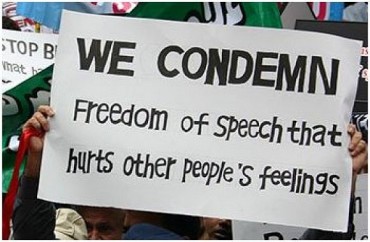
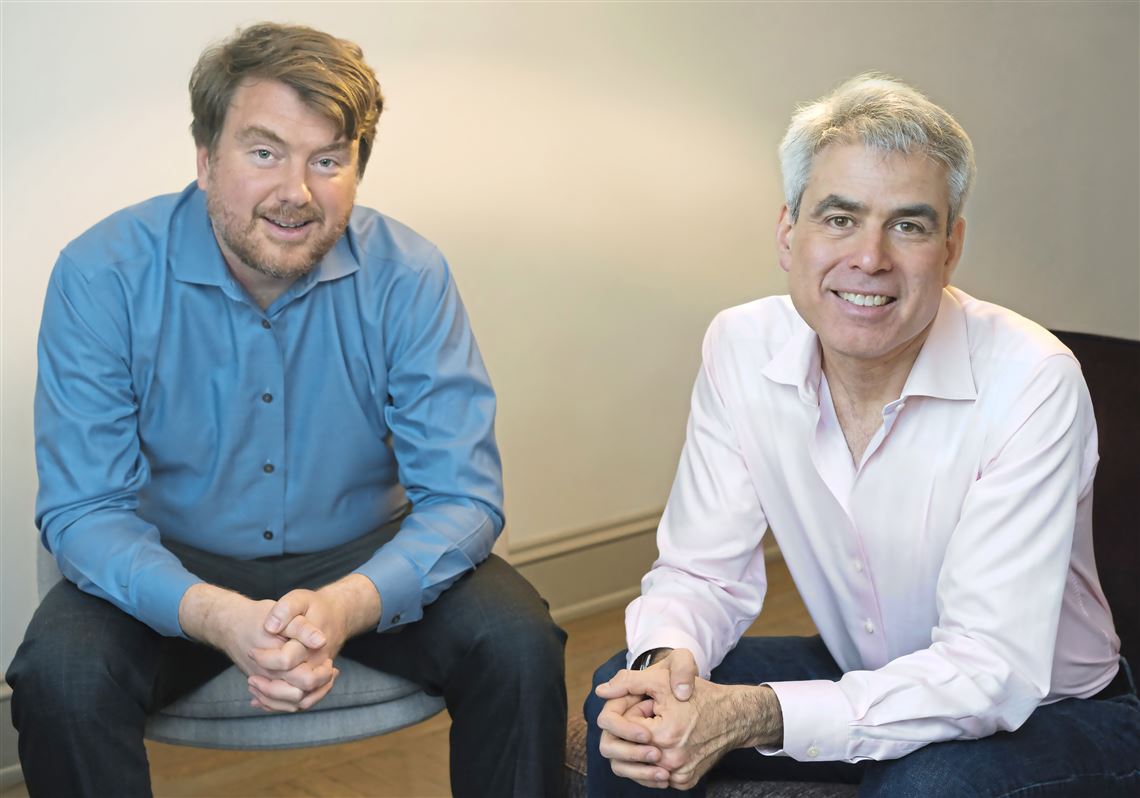
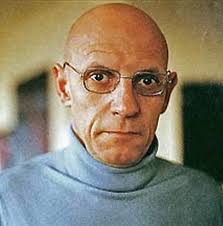

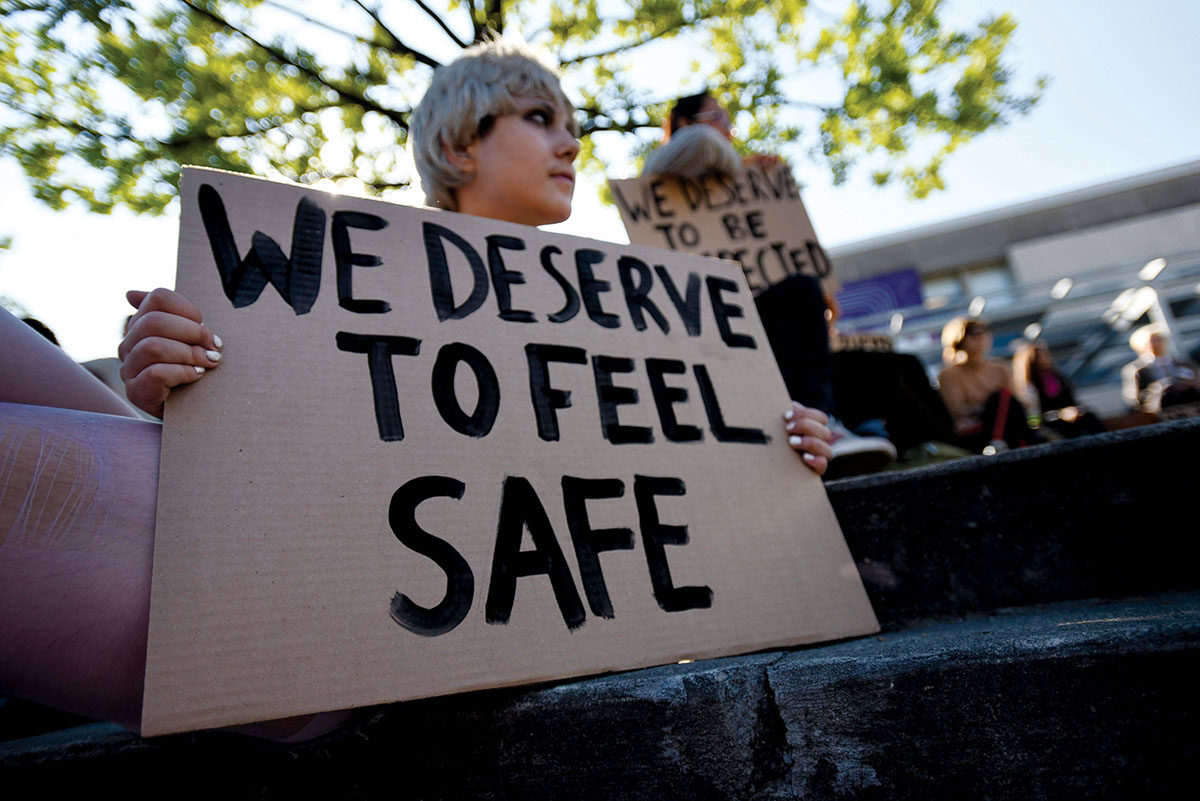


 M.W. Hagerup – Words Matter
