Glimpses of Corsica

Image
Image

Grove Koger

Today’s post originally appeared as part of a longer article in the Spring 2010 issue Boise magazine, edited by Christine Dodd.

□□□

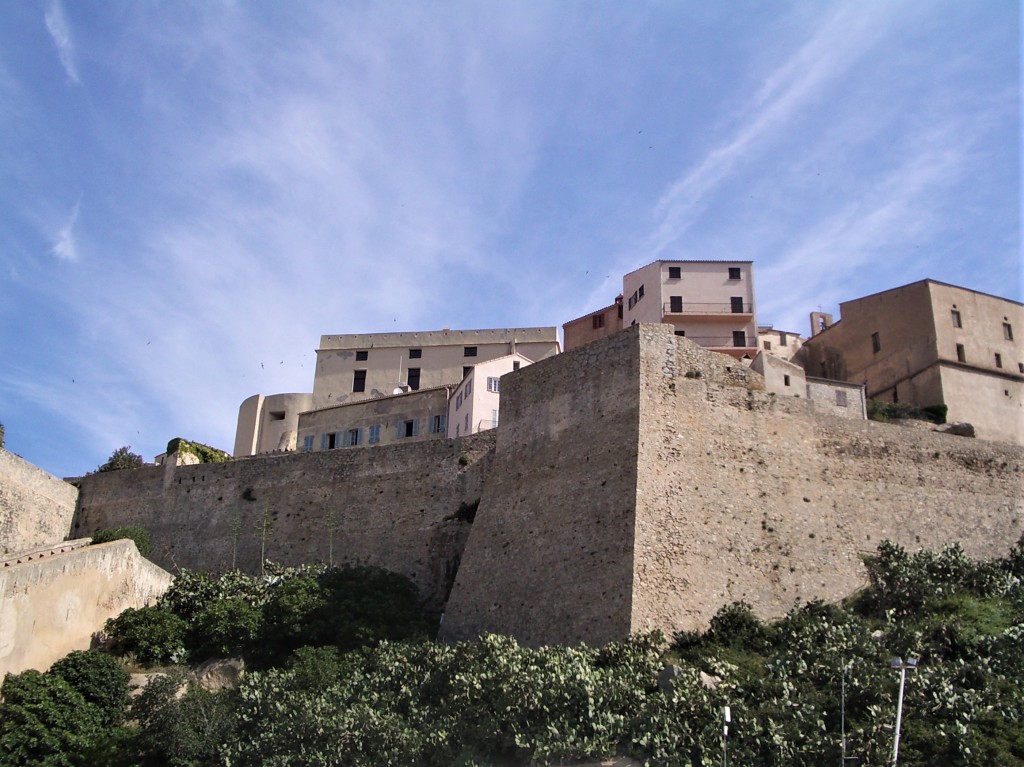
On our visit to the Mediterranean island of Corsica in 2008, Maggie and I stayed several days on the outskirts of the port of Calvi on the northwestern coast of the island. Those in the know claim that Corsica’s 200 or so beaches are the best in France, and that the Gulf of Calvi’s is the best of the lot. Broad and sandy, backed by dense stands of umbrella pine, it follows the voluptuous curve of the gulf’s shoreline for almost four miles, and, like the gulf itself, is dominated by the thirteenth century Genoese citadelle that overlooks the city.
Image

Our little hotel lay only ten minutes’ walk from the beach, and between the two stood a little open-air market, so when the afternoons grew too hot, we shopped for dinner before taking our siesta. Out front, tubs of olives and golden lupini beans glistened in the sun like jewels, while inside was a tantalizing array of individual focaccias and pizzas. Coolers at the back held white wines and bottles of Pietra, Corsica’s chestnut-based beer.
Image

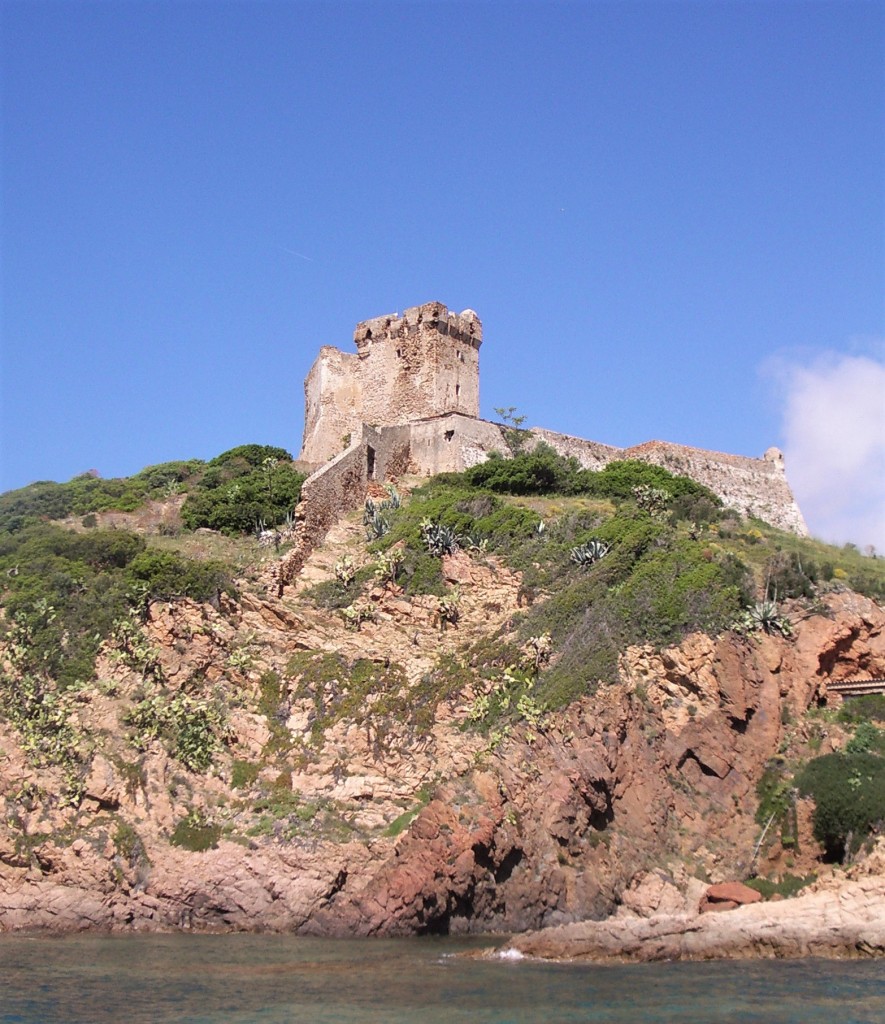
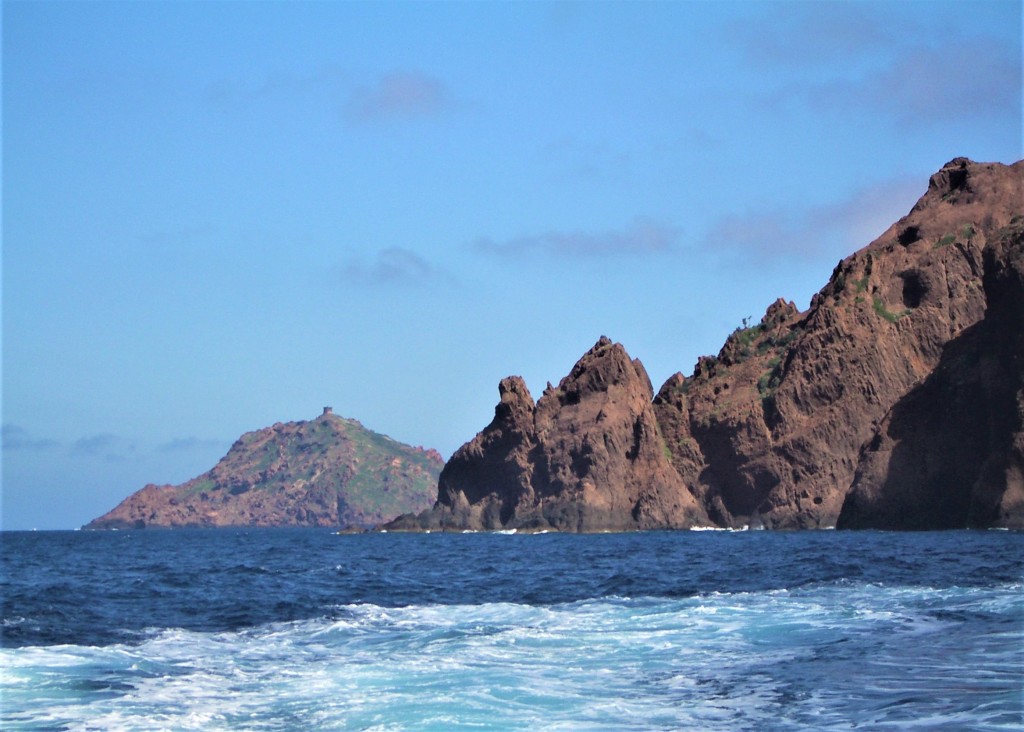
One of the high points of any trip to Corsica is a visit to Scandola, a nature reserve a few miles down the coast. Access to the reserve is limited, so the only practical means of seeing the area is by boat. Our excursion started early one morning in Calvi’s harbor and took us down a coastline that grew progressively wilder and more desolate. Here and there, Genoan watchtowers stared mutely out to sea—reminders that Corsica was part of the far-flung Genoese Empire for five long centuries. Eventually we found ourselves passing along dark grottoes and rusty red rhyolite pinnacles that towered dizzyingly, frighteningly overhead. Gulls shrieked resentfully at our intrusion. The trip had started so early, we realized, so that the little boat could take its time weaving in and out of the phantasmagoria.
Image

After a long, lazy lunch at the tiny fishing village of Girolata, we returned to the boat for a quick trip back to Calvi, where we make a stop at “our” market before settling in for the evening. The spectacular, inhuman beauty of Scandola loomed large in our minds, but we knew that another, reassuringly unspectacular pleasure awaited us. Our room lay at the back of the hotel, and while the immediate prospect from our balcony wasn’t especially noteworthya patch of lawn and a pine grove sheltering a campground—we had learned that a canal along the edge of the property was home to dozens and dozens of frogs. That evening, as the light faded and we ate our dinner, we were serenaded by a throaty, sonorous chorus warming up for the busy night of love that lay ahead.
Image

If you’ve enjoyed today’s post, please share!

Our Once & Future Chestnut

Image
Image

Grove Koger

For today’s post, I’m reprinting an article that I published in the Fall 2008 issue of Boise Journal.

□□□

For Americans, chestnuts are something of an anomaly. On the one hand, they’re familiar and traditional. We all know about those chestnuts roasting on an open fire, don’t we? Yet how many have actually eaten them? Chances are, not many; and for those of us who have, chances are, not often.

A century ago, the answers would have been entirely different. What happened?

The “boundless chestnut woods” that Henry David Thoreau once celebrated stretched over vast tracts of land from Maine southward into Florida and westward into Arkansas. The American Chestnut Foundation estimates that chestnut-rich forests once covered some 200 million acres.

American chestnut trees regularly grew 150 feet all. A specimen with a diameter of 17 feet was recorded in North Carolina in the early years of the last century, and another found in Great Smoky Mountains National Park was measured to be more than 9 feet in diameter 6 feet about the ground. Trees this size could produce as many as 10 bushels or more of nuts, which then might cover the ground beneath the trees four inches deep.  Castanea dentata, as botanists call the American chestnut, was a generous, magnificent giant. By 1940, however, it had virtually disappeared.

Image

Tragedy had struck in the form of a fungus-induced blight. The culprit, Endothia parasitica, had apparently hitchhiked on Chinese chestnut saplings imported from the Far East in 1904 and planted on Long Island. Although the fungus posed little threat to Asian trees, it proved fatal to those growing in North America, sparing only a few isolated groves of European chestnuts in the American West.

The loss of the trees meant much more than the loss of a colorful tradition, however. Hardest hit by the blight were the Appalachian farmers who sold and traded the chestnuts, fed their hogs on them, and harvested the game that foraged on them. The trees were also fine sources of timber, tannic acid (for tanning leather) and honey.

Fortunately, the blight didn’t spell the absolute end of the chestnut culture in the United States. But before we get to that good news, let’s take a wider view.

There are several species in the genus Castanea, but the largest nuts come from the European, or Spanish chestnut, Castanea sativa. The species apparently originated in Iran, and was carried to Southeastern Europe by the Greeks and subsequently spread by the Romans. Specimens can grow to tremendous size and live for centuries, if not millennia. An example known as the Castagnu dî Centu Cavaddi, or Hundred-Horse Chestnut, can be found on the slope of Sicily’s Mount Etna. It’s believed to be between 2,000 and 4,000 years old and once had a circumference of 190 feet, although its massive trunk has long since split into several separate ones. It came by its distinctive name because, according to legend, a company of a hundred horsemen once found shelter beneath its branches during a storm.

Image

Chestnut trees must be at least five to seven years old before they produce. The chestnuts grow inside a prickly burr that splits open in the fall and drops the nuts to the ground, still enclosed in a tough shell and a bitter inner membrane. This is how they’re marketed for a short period of time in many communities around the world.

Sapling American chestnut trees still sprout from the stumps of their long-dead elders, but they routinely die before they reach 10 feet in height. Under the guidance of the American Chestnut Foundation, however, growers are breeding blight-resistant hybrids of American and Chinese chestnuts that can be replanted in the wild.

If chestnuts are marketed in your area, you can eat them raw; however, roasting accentuates their flavor, and it’s usually the first step in sautéing or glazing them. Here’s how: Using the point of a small, sharp knife, cut an X into the flat side of each nut, making sure than you pierce the shell. Then boil the nuts for about five minutes and drain them. Next, place them on an ungreased baking sheet, cut side up, and bake for about 20 minutes at 350 degrees, turning once. After removing the nuts from the heat, wrap them in a towel for a few minutes to cool. You can then peel away the shell (which will have curled open) and rub away the inner membrane with the towel.

Image

Oven-roasted nuts are slightly sweet and slightly mealy, a natural treat whose subtle flavor will grow on you. To enhance that flavor even more, roast them gently over charcoal for 15 to 20 minutes, a technique that imparts a pleasant smokiness. Just score and boil the nuts as above and place them in a cast iron pan over the grill, shaking the pan frequently to stir them. They’re done—and delicious—when their shells curl open.

□□□

The photograph at the top of today’s post was taken by Petr Kratochvil and the second by Richard Revel; both are reproduced courtesy of PublicDomainPictures.net. The painting of the Hundred Horse Chestnut is by Jean-Pierre Houël (1735-1813). The bottom photograph is by makamuki0 (pixabay.com) and is reproduced courtesy of Needpix.com.