


Search


The science of expanding your mind

As humans, we’re shaped by our genetics, as well as our life experiences. They influence how we see the world — and how we engage with the people around us. That unique lens is called a Perception Box™, and each of us lives inside our own.
We can’t escape it. But we can expand it by questioning assumptions and challenging our perceptions.
So where do we begin? At Big Think, we’ve partnered with Unlikely Collaborators to ask better questions. Perception Box™ is a content series grounded in science that explores what becomes possible when we let go of our limiting beliefs and open our minds to a new reality.
Read Less
in partnership with
Read More
Unlikely Collaborators explores the limits of perspective, inviting us to rethink what we believe and how we connect with others.

The art and science of failing well
There’s bad failure — the kind we ignore or hide — and good failure, which becomes data for future progress. Three experts discuss how to tell the difference.


Notable scientists apply their own area of expertise to explore the neuroscience behind Perception Box™.

6mins
One neuroscientist’s deep dive into perception and reality
Everything you experience is filtered through your brain, and everyone’s brain is different. Neuroscientist Christof Koch explains how understanding this can deepen your connection to the world around you.
Unlikely Collaborators

6mins
Trauma makes your world feel small — here’s how to open it up again
Psychiatrist Dr. Bessel van der Kolk discusses key methods for rewiring the brain, kickstarting the healing process, and opening your mind to new perspectives.
Unlikely Collaborators

6mins
A neuroscientist’s guide to building a more positive reality
We’re all assigned a label at some point in our lives. You might be the smart one, the creative one or the lazy one. But is that designation really an […]
Unlikely Collaborators

7mins
How to step out of your inner monologue and understand the world better
Expanding your worldview starts with understanding your brain. Stanford neuroscientist David Eagleman explains.
Unlikely Collaborators
Celebrities untangle the knotted threads of their stories, offering a rare glimpse into what made them who they are today.

7mins
What it means to live urgently, according to death doula Alua Arthur
The New York Times bestselling author and founder of Going With Grace shares how close confrontations with death inspired her to change her life.
Unlikely Collaborators

6mins
How Olympian Gracie Gold finally stopped striving for perfection
She’s a fierce competitor on the ice. But the figure skater’s toughest battle has been accepting her shortcomings and learning to love herself.
Unlikely Collaborators
7mins
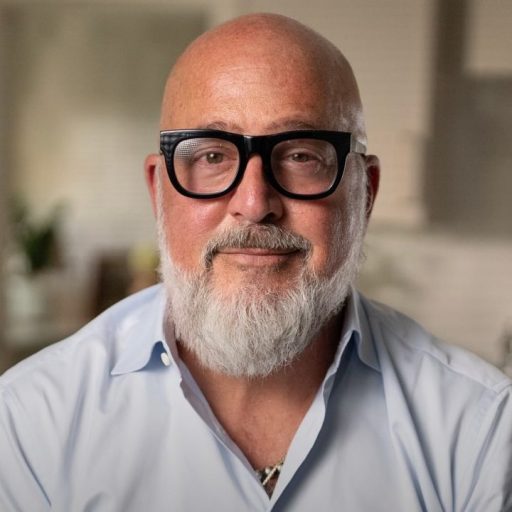
How one moment of shamelessness saved Andrew Zimmern’s life
After decades of drug and alcohol abuse, the chef and television personality labeled himself as an ‘irredeemable human being.’ Everything changed when he found the courage to ask for help.
Unlikely Collaborators

7mins
How record-breaking swimmer Diana Nyad found strength and healing in the water
From anger to awe: How one woman overcame “debilitating trauma” to conquer a near-impossible 53-hour swim at 64.
Each guest answers a series of questions that have been carefully crafted to help them get real with themselves.

8mins
Dhar Mann on failure, fatherhood, and the spreadsheet that changed his life
How the 40-year-old entrepreneur and media mogul learned from his struggles, and why he believes accountability is the real secret to happiness.
Unlikely Collaborators

7mins
Atsuko Okatsuka: Comedy, Chaos, and Finding a Place to Belong
She was searching for perfection – until she discovered what she truly needed by letting go of what didn’t fit.
Unlikely Collaborators

5mins
The art of perception and self-reflection
How the successful marketer used ancient philosophy to overcome modern obstacles and change his mindset.
Unlikely Collaborators

7mins
Navigating autism and loneliness with Kaelynn Partlow
Kaelynn Partlow shares her story about life with autism, ADHD, and dyslexia, and how finding the right diagnosis helped her embrace her neurodivergent identity.
Unlikely Collaborators

Notable scientists and experts explore the neuroscience and psychology behind Perception Box™ in this compilation series.

2mins
3 experts explain your brain’s creativity formula
Our brains weren’t built for the amount of info we deal with now. That’s why scientists have made the case for a “second brain” — a place to dump ideas so you can actually see how they connect later.
Unlikely Collaborators

2mins
Is searching for purpose an inherent human trait? These experts say yes.
From science to philosophy, three perspectives explore why humans can’t stop asking “why.” Our search for purpose, they suggest, is less about finding answers and more about learning how to move forward.
Unlikely Collaborators

3mins
What’s more real: time itself, or your perception of it?
The brain is an “illusion factory.” Here’s what that means for our perception of time.
Unlikely Collaborators

2mins
Want to be more productive? Start by doing less
“In most instances, ‘good enough’ is good enough.” A time management expert, a cognitive scientist, and a psychologist share their takes on productivity, perfectionism, and the harm of hustle culture.
Unlikely Collaborators

6mins
There’s bad failure — the kind we ignore or hide — and good failure, which becomes data for future progress. Three experts discuss how to tell the difference.
Unlikely Collaborators

2mins
Our brains weren’t built for the amount of info we deal with now. That’s why scientists have made the case for a “second brain” — a place to dump ideas so you can actually see how they connect later.
Unlikely Collaborators
2mins
From science to philosophy, three perspectives explore why humans can’t stop asking “why.” Our search for purpose, they suggest, is less about finding answers and more about learning how to move forward.
Unlikely Collaborators
3mins
The brain is an “illusion factory.” Here’s what that means for our perception of time.
Unlikely Collaborators
2mins
“In most instances, ‘good enough’ is good enough.” A time management expert, a cognitive scientist, and a psychologist share their takes on productivity, perfectionism, and the harm of hustle culture.
Unlikely Collaborators

3mins
From neuroscience to philosophy, experts reveal why compassion may be the most important human skill we have.
Unlikely Collaborators

3mins
Philosophy asks if free will is real. Neuroscience reveals why the answer is more complicated than we expected.
Unlikely Collaborators

6mins
Daily habits can help you thrive or quietly turn into addictions. The difference is how your brain handles cues, routines, and rewards. Three experts explain how to work with your wiring instead of against it.
Unlikely Collaborators

3mins
Language is a huge part of human development, even the language we keep to ourselves. Three experts explain how words and beliefs can change our brains and our lives:
Unlikely Collaborators

3mins
Sleeping better helps you think better, which helps you live better. Three experts explain why quality sleep is imperative to brain function, problem solving, communication, and more.
Unlikely Collaborators

7mins
How can the brain — a piece of matter — love? Physics and chemistry explain the material world, but they can’t explain why it feels like something to be alive. This is the mystery of consciousness, according to these experts.
Unlikely Collaborators

2mins
A physician, a psychologist, and a mindfulness teacher explain what stress does to your body and mind, and how to use it to get smarter and stronger.
Unlikely Collaborators

6mins
Everything you experience is filtered through your brain, and everyone’s brain is different. Neuroscientist Christof Koch explains how understanding this can deepen your connection to the world around you.
Unlikely Collaborators

3mins
Biologist Tyler Volk PhD, psychiatrist Bruce Greyson MD, and palliative care physician BJ Miller MD, reveal how confronting mortality can improve the way we live.
Unlikely Collaborators

7mins
A neuroscientist, a psychologist, and a psychotherapist discuss how emotions are stories built from old experiences.
Unlikely Collaborators

2mins
Happiness researchers Robert Waldinger MD, Tal Ben-Shahar PhD, and Peter Baumann explain why the happiest people aren’t happy all the time.
Unlikely Collaborators

3mins
Humans have always had religion. What does this say about our minds? Reza Aslan PhD, Lisa Miller PhD, and Rob Bell MDiv explain.
Unlikely Collaborators

5mins
What happens when the boundaries of “you” disappear? James Fadiman, PhD, Jamie Wheal, and Matthew Johnson, PhD explore how supported experiences with psychoactive drugs can dissolve identity and reveal a deeper reality.
Unlikely Collaborators

2mins
Your body language sends messages before your mouth does. Author Robert Greene and negotiation expert Daniel Shapiro PhD explain the key characteristics of nonverbal power and emotional presence that shape how others perceive you.
Unlikely Collaborators

2mins
Your brain changes when you experience something, and it changes again when you remember it. Two neuroscientists explain what that means for memory, perception, and identity.
Unlikely Collaborators
