About
Machine Learning @ CMU: From Theory to Impact

The Machine Learning Department (MLD) at Carnegie Mellon University advances the science, empirics, and real-world applications of machine learning. For more than 25 years, the department has helped define the field of machine learning and artificial intelligence, consistently driving ideas from foundational research into widely used systems.
A defining characteristic of machine learning at CMU is the speed with which theory becomes practice. As department head Zico Kolter explains, “It’s almost hard to talk about there being a separation between research and applications when it comes to a field like AI and machine learning these days.” Advances move rapidly from core innovation directly to tools that shape industry and society.
Research in the department spans a broad range of domains while remaining grounded in fundamental machine learning innovation. “We really touch on almost everything you can imagine in terms of applications,” Kolter notes, including research at “the intersection of AI and biology, of AI and health, of AI and education.” This work is united by its impact, offering students and faculty the ability to translate theoretical advances into technologies that improve lives.
This focus can potentially connect the MLD department to nearly every discipline across CMU. “AI touches on every single field there is right now,” Kolter says, which makes it impossible to view machine learning in isolation. At CMU, machine learning functions both as a foundational science and as a unifying force, shaping research, education, and real-world impact across the university and beyond.
History of the Machine Learning Department at CMU
The Machine Learning Department at Carnegie Mellon University was founded in the spring of 2006 as the world’s first machine learning academic department. It evolved from the Center for Automated Learning and Discovery (CALD), which was created in 1997 to bring together an interdisciplinary group of researchers with a shared interest in statistics and machine learning.
The first collection of CALD faculty participants came primarily from the Statistics Department and departments within the School of Computer Science. While Statistics Professor Stephen Fienberg and Computer Science Professor Tom Mitchell were the primary faculty involved in creating the center, it also included faculty from philosophy, engineering, business and biological sciences.
CALD launched its first academic offering in 1999, a master’s degree in knowledge discovery and data mining. In 2002, the center introduced a Ph.D. program in computational and statistical learning, while simultaneously converting the master’s program into a secondary master’s available only to CMU Ph.D. students. Once CALD began to offer educational programs, it also began hiring its faculty.
By spring 2006, CALD petitioned the university to convert the center into the Machine Learning Department. In creating the department in 2006, CMU signaled both its belief that machine learning forms a field of enduring academic importance and the university's intention to be a leader in shaping this rapidly developing field.
The Machine Learning Department's research strategy aims to maintain a balance between research into the pure statistical-computational theory of machine learning, and research that invents new algorithms and problem formulations relevant to practical applications.
Our Ph.D. and master’s programs were among the first degree programs in the world to offer specialized training in the field. Today, we offer a Ph.D. in machine learning, as well as joint Ph.D. programs in statistics and machine learning; machine learning and public policy; and neural computation and machine learning. We also offer an undergraduate minor in machine learning and primary and secondary master's degrees.
Our mission is to help lead the development of the discipline of machine learning by performing leading research in the field; by developing and propagating a model academic curriculum for the field; and by helping society benefit from the knowledge gained by the field.
MLD Department Heads
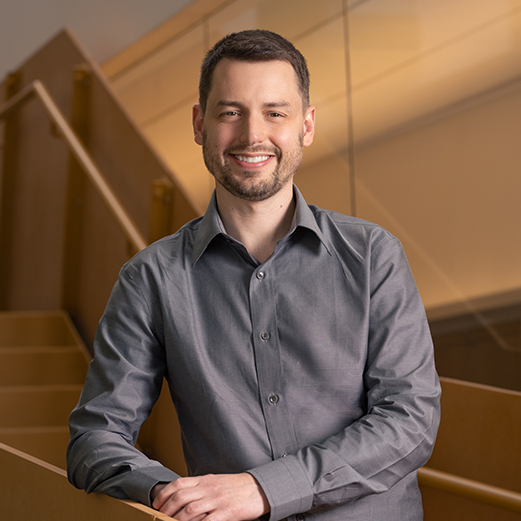
Zico Kolter, 2024 to present.