Wikipedia:Administrators' newsletter/2026/5

Sunday, 26 April 2026 08:06 UTC

News and updates for administrators from the past month (April 2026).

Image

Image Administrator changes

readded ·
removed

Image Interface administrator changes

removed L235
added Chaotic Enby

Image CheckUser changes

removed

Image Oversight changes

removed Moneytrees

Image Guideline and policy news

Image Technical news

  • Changes to user permissions made from Meta are now included in the local user permissions log (T6055)

Image Arbitration

  • The arbitration case SchroCat has been opened. Evidence submissions in this case closed on 15 April.
  • Per a recent motion, appeals of blocks from the conflict-of-interest VRT queue are, by default, appealed on-wiki through the normal unblock process. However, they may be heard by the Committee if COIVRTers disagree on the interpretation of the evidence or believe ArbCom would be better suited to hear the appeal. Administrators are also advised that loosening or lifting such blocks without the consent of someone with access to the queue or ArbCom can be grounds for desysopping.
  • Per a recent motion, restrictions issued directly by the Committee may now be enforced with blocks which work exactly like contentious topic blocks.

Image Miscellaneous


Archives
2017: 01, 02, 03, 04, 05, 06, 07, 08, 09, 10, 11, 12
2018: 01, 02, 03, 04, 05, 06, 07, 08, 09, 10, 11, 12
2019: 01, 02, 03, 04, 05, 06, 07, 08, 09, 10, 11, 12
2020: 01, 02, 03, 04, 05, 06, 07, 08, 09, 10, 11, 12
2021: 01, 02, 03, 04, 05, 06, 07, 08, 09, 10, 11, 12
2022: 01, 02, 03, 04, 05, 06, 07, 08, 09, 10, 11, 12
2023: 01, 02, 03, 04, 05, 06, 07, 08, 09, 10, 11, 12
2024: 01, 02, 03, 04, 05, 06, 07, 08, 09, 10, 11, 12
2025: 01, 02, 03, 04, 05, 06, 07, 08, 09, 10, 11, 12
2026: 01, 02, 03, 04, 05
<<  Previous Archive    —    Current Archive    —    Next Archive  >>
Image

O Teatro Variedades, uma das salas de espectáculo mais emblemáticas de Lisboa, completa este ano 100 anos. Inaugurado em 1926, no Parque Mayer (conhecido como a Broadway lisboeta), marcou a história do teatro português.

Por ele passaram artistas que se tornaram referências do teatro português entre eles, Beatriz Costa, Vasco Santana, Marina Mota e Amália Rodrigues, e foram encenados centenas de espectáculos, desde comédias, revistas, zarzuelas, farsas, a operetas.

Após ter fechado no final da década de 90, reabriu em 2024, renovado e com o mesmo espírito eclético, onde musicais como In the Heights partilham o palco com festivais de música clássica e marionetas.

Wikiconcurso Teatro Variedades

Para dar a conhecer a sua história, foi criado o projecto 100 Anos 100 Entradas, integrado nas celebrações do centenário, que tem com o objectivo de ampliar e melhorar os conteúdos disponíveis na Wikipédia, no Commons e na Wikidata sobre o Teatro Variedades e o Parque Mayer, assim como a preencher lacunas de conhecimento sobre as artes cénicas em Portugal. Contribuindo desta forma para preservação da memória coletiva, promovendo o acesso livre ao conhecimento e o uso de ferramentas digitais abertas.

É também no âmbito deste projecto, que irá decorrer de 27 de Abril, a 27 de Junho, o Wikiconcurso Teatro Variedades, uma competição de edições na Wikipédia em português, na qual a comunidade de editores é convidada, a criar e a melhorar artigos sobre artistas, autores, compositores, figurinistas, cenógrafos e espectáculos que marcaram a história do teatro e da cultura em Portugal, contribuindo desta forma para preservação da memória coletiva, de um espaço que marcou a cultura portuguesa, e que acompanhou as transformações sociais, politicas e culturais de Portugal ao longo de 100 anos.

À semelhança, das oficinas, qualquer pessoa pode participar no concurso, independentemente do seu grau de experiência. Caso nunca tenham editado, ou precisem de apoio, os participantes podem juntar-se às oficinas que irão decorrer até Junho, no café do teatro. No final do concurso, os utilizadores que mais contribuírem receberão prémios. 

Para ficar a saber mais sobre o concurso, como concorrer, prémios e outras informações, basta consultar a página: 

Wikiconcurso Teatro Variedades

The 2026 International Women’s Day (IWD), themed “Give to Gain,” offered a powerful moment for us as a community to pause and reflect on how far we have come through the sacrifices of African women, especially female Wikimedians who have given to us and to their grassroots communities. 

To mark this auspicious celebration, the Africa Wiki Women went beyond a single day of celebration to rolling out a series of activities that grew into a month-long campaign focused on impact and inclusion.

The Africa Wiki Women officially launched the Give to Gain 2026 campaign on 6th March 2026 through a virtual event on Zoom, graced by voices of women givers such as Rejoice Agbi, the Founder of the Heels and Sips Network, Ghana, Obiageli Ezeilo, co-founder of the Wiki For Senior Citizens Network, alongside Carolyn Seaman, Founder and Creative Director of Girls Voices Initiatives. Their presence underscored the importance of sustaining conversations around women’s rights beyond just one day, reinforcing the need for continuous engagement and action.

Image
Africa Wiki Women IWD Launch flyer

With the focus of the campaign on closing the gender gap on Wikipedia and other Wikimedia projects, the launch unveiled the IWD 2026 edit-a-thon with the aim to create new Wikipedia articles and Wikidata items, while adding the “Philanthropist” statement to the Wikidata items of the African Women Philanthropist category based on their various African languages. As usual, the editors/participants were trained for participation through language-based Wikipedia training, which catered to both our English and French communities, alongside Wikidata training.

Africa Wiki Women’s empowerment through support

In February 2026, the Africa Wiki Women rolled out a call for a female organiser themed “Shape the Narrative” for the IWD Campaign. 

This call was to African women in Egypt, Rwanda, Cameroon and Uganda who are Wikimedians and members of the Africa Wiki Women community who have experience as organisers. 

After the review of the applications received for this Call, Julie.Acom was granted the support to host the in-person event in Uganda, and through this selection, the Africa Wiki Women collaborated with the Wikimedia Community User Group Uganda.

The in-person training event held on the 21st of March 2026 in Uganda, Kampala, was led by the female organiser Julie Acom.

Image
Africa Wiki Women’s Call for a female Organizer Flyer for IWD 2026

The event started with an introduction to the Give to Gain Campaign and its objectives, followed by an introduction to Wikimedia Projects by Mr Michael Kaluba from Wikimedia Uganda User Group. From then on, Sandra Aceng trained participants on improving existing articles on African women, guiding them through adding infoboxes. For the second training session, multiple trainers, including Catherine Nambogo, Ivan Ssenkungu, Brenda Ainomugisha, Chris Liberty Owobusingye handled the translation of articles into Luganda, Runyankole/Rukiga languages. Lastly, Leticia Nabunje and Michael Kaluba were trainers for the creation and improvement of Wikidata items.

  • Image
  • Image
  • Image

The opportunity to shine (our fellows’ experience through the IWD 2026 campaign)

The Africa Wiki Women IWD 2026 campaign provided the  LMF Fellows with opportunities to take on more active roles within the program. By moderating training sessions and supporting office hours, they contributed to facilitating discussions and creating inclusive learning spaces for participants.

These roles also offered insight into the planning and coordination required to deliver successful sessions. From preparation to execution, fellows gained a clearer understanding of the structure behind each activity. In addition, involvement in the edit review processes highlighted the level of rigour involved in ensuring quality contributions throughout the campaign.

Overall, the campaign supported both learning and contribution, allowing fellows to build confidence while playing a role in advancing knowledge equity.

Moderating for the first time highlighted the importance of preparation and creating an inclusive space where participants feel engaged.” – Lois

Participating in planning and review processes provided insight into the effort behind the campaign while also introducing new perspectives on the contributions of African women.” – Katie

​​“Participating in the ‘Give to Gain’ campaign allowed me to translate articles and moderate a session, helping improve access to knowledge while strengthening my communication and leadership skills.” –  Emilia

What’s next?

Though the IWD 2026 editathon has ended, the journey of creating impact and bridging the gender based gaps still continues.

Join us to continue to change the narrative through the EditHer Africa Contest, April Edition. Click on the link to register.

Follow us on our social media handles:

On the software supply-chain doom spiral

Friday, 24 April 2026 22:31 UTC

Hackers are pwning packages at an exhausting clip.

But the hacks are hackneyed. What’s new is the doom cycle: Code that steals keys to publish code to steal more keys.

A zombie army of infected code. And AI is making it worse.

GitHub Actions are a trap

Trivy is an open-source security scanner. But if you used Trivy in late March, you had a bad time.

On March 19th, hackers pushed a version of Trivy that tried to smuggle secrets from anywhere it ran. Trivy cited a “misconfiguration” in their continuous integration (CI) system, GitHub Actions.

But the exploit was less a misconfiguration and more a GitHub Actions trap.

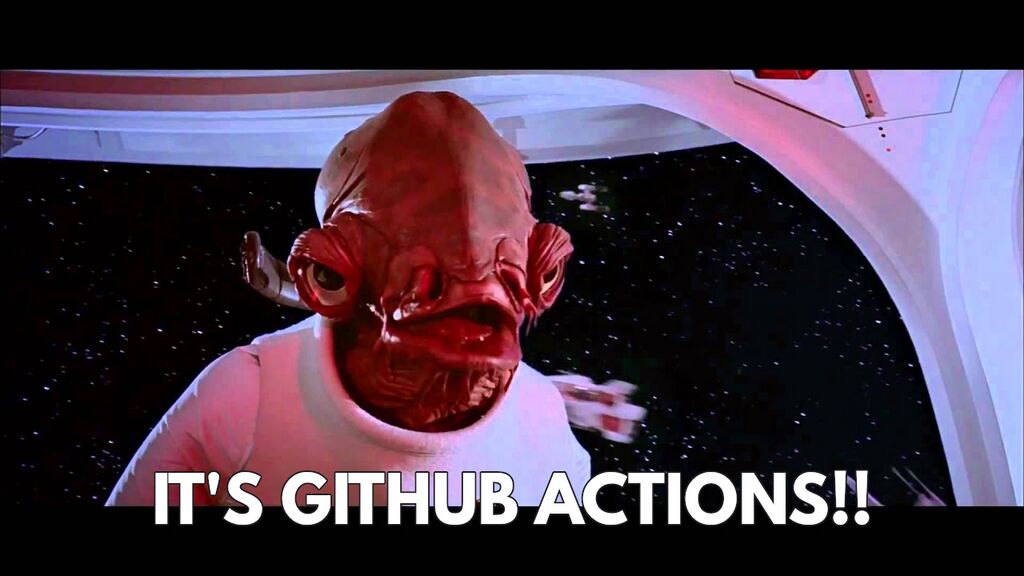
Admiral Ackbar warning about the trap in GitHub Actions

Here’s a simplified version of how Trivy got pwnd1:

# INSECURE. DO NOT USE.
on:
  pull_request_target

jobs:
  check:
    steps:
      - uses: action/checkout@deadbeefdeadbeefdeadbeefdeadbeefdeadbeef
        with:
          ref: refs/pull/${{ github.event.pull_request.number }}/merge
      - uses: ./.github/actions/setup-go
      - uses: some/go-static-analysis@c0ffeec0ffeec0ffeec0ffeec0ffeec0ffeec0ff

At first glance, this code looks fine:

  • No secrets referenced.
  • Third-party actions pinned to an immutable hash.
  • Check out a pull request. Perform some static analysis.

But this code is a verbatim antipattern from a 2021 GitHub blog post titled “preventing pwn requests”:

if the pull_request_target workflow only […] runs untrusted code but doesn’t reference any secrets, is it still vulnerable?

Yes it is

GitHub Security Lab

The problem is pull_request_target:

  • pull_request_target – plunks a nice, juicy GITHUB_TOKEN into the environment.
  • actions/checkout – takes an optional parameter persist-credentials, which removes secrets if set to false. But the default for the parameter is true.

Setting the persist-credentials parameter to false has been an open issue in GitHub Actions since 2021.

Your $HOME is a crime scene

Once hackers had Trivy’s keys, they published a new version of Trivy to steal more keys.

LiteLLM used Trivy in their CI. The same CI they used to publish code to PyPI, the Python software registry. When LiteLLM’s CI ran the compromised Trivy, hackers nabbed their publishing key.

And on March 24th, when Callum McMahon fired up his IDE, his MacBook froze. And that’s how he discovered the LiteLLM hijack.

McMahon’s MacBook was flailing at bad code that hackers snuck into LiteLLM. And the bad code trying to steal credentials:

  • ~/.netrc
  • ~/.aws/credentials
  • ~/.config/gcloud
  • ~/.config/gh
  • ~/.azure
  • ~/.docker/config.json
  • ~/.npmrc
  • ~/.git-credentials
  • ~/.kube/

Files that are typically strewn around $HOME directories, full of tokens and keys, often unencrypted.

AI and the supply chain doom spiral

We’ve dealt with problems like unencrypted credentials, unpinned dependencies, and CI footguns forever.

But AI has accelerated everything, including repeating security mistakes.

On the day of the Trivy compromise, I asked Claude, “how do I scan docker registry images for security vulnerabilities?”

The reply, in part:

CI/CD Integration Example (GitHub Actions with Trivy)

    - name: Scan image for vulnerabilities
      uses: aquasecurity/trivy-action@master

Broken in two ways:

  1. Unpinned references – master is a reference that changes all the time. If hackers zombify the repo, I’d be the first victim.
  2. Active vulnerability – No mention whatsoever of the CVE posted that day. I never asked, so Claude never checked.

Meanwhile, Vercel’s CEO has attributed his company’s recent data breach to a hacker that was “accelerated by AI.” And Anthropic’s latest hype tour includes briefing the US Federal Reserve Chair about vulnerabilities unearthed by their frontier model.

Bad guys with LLMs get superpowers. Good guys with LLMs fall prey to mid-2010’s CI problems.

And the same tool that can root out 27-year-old security problems in OpenBSD, will still tell you to pin your GitHub actions to @master.


  1. My GitHub Actions example is a simpler verison of the action removed in aquasecurity/trivy #10259.↩︎

Image
The process of spinning tullma yarn. Photo by Jisk’a warmi, a participant in the photography challenge

Knowledge and diverse voices are woven together like fabric: intertwined through dialogue. That is why we at Wikimedistas de Bolivia are organizing two conferences on Bolivian Textile and Clothing Cultures as part of the regional WikiFuturo campaign. These events were created with the aim of exploring what has been done and what is currently being done in Bolivia in the field of design, particularly regarding the use of textiles and garment production. At the same time, we seek to open a broader conversation about how we approach fashion and how the social and political context influences design and the trends we adopt in our clothing choices.

On the first day, we revisited the work of Daisy Wende alongside her son, Kenny Wende. During his presentation, Kenny took us on a journey through more than three decades of Daisy’s work, highlighting how political and social changes are reflected in her designs. We were also joined by designer Fátima Molina, founder of Diseñarte, a designer-led design lab that has served as a breeding ground for new talent. This gathering of like-minded perspectives helped us identify how Andean and Indigenous influences continue to permeate fashion in the western part of the country.

Finally, Verónica Avendaño, founder of the digital fashion magazine BOHEM, shared her editorial experience: from preparing photo shoots to working with designers, as well as offering a technical perspective on fashion photography. Her presentation proved particularly valuable, given that a large portion of the audience consisted of photographers. Thus, we wove a narrative thread that offered a brief but meaningful glimpse of design in La Paz, with all its nuances, in the almost idyllic setting of the Flavio Machicado Viscarra Foundation.

This process led to a collective assessment that prompted us to organize a second workshop using a different methodology. This time, we sought to engage directly with the craftspeople who make the garments. To this end, we were joined by Olga Cachi and Marta Apaza, who shared their knowledge of polleras, mantillas, and tullmas—woolen accessories used to secure and adorn braids.

The second day fostered a more fluid dialogue between the presenters and attendees. Our colleague Carlillasa also participated, facilitating the conversation thanks to her prior work with Olga and Marta. During this session, topics such as the processes involved in making the traditional pollera, changes in clothing styles, associated costs, and the reasons behind the transformation of these traditions were discussed. The presenters also noted that this work is not their primary source of income, due to the time and effort involved in hand-sewing.

Daniela shared her career path and reflected on how her training translates into her jewelry work, as well as her transition from printmaking to this field. The conversation allowed for an exploration of her interest in the jewelry worn by women in traditional pollera, the social distinctions between styles such as those associated with “cholita” and “señorita”, and the way these references have influenced her own work.

This is precisely the space we sought to create with this conference: one that allows us to understand not only how we dress or how clothing is designed, but also what lies behind its creation and what meanings it holds, especially in the case of women who wear polleras. How do changing trends manifest in their daily lives? How do they construct their expression of identity and elegance?

Image

Registration for a study on the production of kallawaya textiles by women from the Muñecas province who currently reside in El Alto.

The workshop series represented a departure from the team’s usual work. However, the goal of bringing diverse voices and perspectives to the WikiFuturo campaign was achieved—and even exceeded our expectations. While results typically take time to materialize, we are already seeing encouraging signs: in the photo challenge linked to the workshop series, at least 50% of the participants are new users.

In this way, our contributions to the collective fabric of knowledge continue to take shape, stitch by stitch. We invite you to visit our social media pages to learn more about our work.

Image
EmpowerHer 2026 Edit-a-thon design


Following the launch of the AWA EmpowerHer Fellowship to mark International Women’s Day 2026, the project has delivered measurable progress in addressing the gender and content gaps across Wikimedia platforms.

Project Overview

Focused on documenting notable women from Chad, Ethiopia, and South Sudan, the fellowship brought together both new and experienced contributors through a structured onboarding programme, training sessions, and ongoing office hours. This approach ensured that participants were not only equipped to contribute effectively but were also supported throughout their editing journey.

Key Achievements

Over the course of the project, contributors achieved the following:

These contributions reflect a significant step toward increasing the visibility of African women within global knowledge platforms.

Notable Contributions

Among the articles created were profiles of notable figures, including the current First Lady of South Sudan, Mary Ayen Mayardit and Meseret Manne, the first female coach of the Ethiopian women’s national football team. One article, titled: Rehima Zergaw, was initially nominated for speedy deletion. Following the review, the subject’s notability as a national female footballer was recognised, and the article was retained. This highlights the importance of thorough research and reliable sourcing in content creation.

Community Impact

Beyond content outputs, the fellowship also delivered meaningful community impact. Several contributors, three of whom were new to Wikimedia, shared their experiences during our office hour (for new contributors), describing their first editing experience as both seamless and rewarding. This reflects the effectiveness of the onboarding and support structures put in place throughout the project.

Capacity Building and Leadership Development

The role of trainers was equally significant. Their commitment to guiding participants and delivering training sessions contributed to the overall success of the fellowship. Notably, one of the trainers, Sarah Monday, facilitated a session for the first time, demonstrating the programme’s role in building not just contributors, but also future trainers and community leaders.

Challenges and Lessons Learned

While the project recorded strong outcomes, it was not without challenges. Identifying notable and well-sourced topics initially proved demanding. But as the project progressed, the process became more efficient through structured research.

Exceeding Expectations

One of the highlights of the fellowship is that we exceeded its initial target of 30 articles and items created or improved, demonstrating both the commitment of contributors and the effectiveness of the programme design

Personal Reflection

This fellowship helped me grow personally, especially in how I organise and manage projects. I spent a lot of time conducting in-depth research to identify notable topics and compiled and tracked everything participants contributed throughout the programme. This required me to stay organised, pay attention to details, and be consistent with follow-ups. I also learned how to adapt, solve problems, and communicate more clearly with the team. Overall, it made me more confident in leading and coordinating community activities, and I now have a better approach to handling similar projects in the future.

Conclusion

At its core, the EmpowerHer Fellowship has contributed to strengthening representation on Wikimedia platforms while building a more inclusive and skilled contributor community.

Reflecting on the experience, this project has been both impactful and rewarding. It has reinforced the importance of intentional efforts in closing knowledge gaps and amplifying underrepresented voices.

The progress made through this fellowship underscores a simple but powerful reality: African women deserve to be visible, documented, and celebrated.

Marketing and Information Systems major Tim Qian is a senior at the University of Washington. As part of his Wikipedia assignment, Tim created the new Wikipedia article on the 2008 Shell Bodo Oil Spill.

Tim, creating a brand new Wikipedia article is a big deal! Why did you choose to work on this article? 

In class, we had a reading on Oil Frontiers and the Niger Delta, which was a topic new to me. I remember doing some Wikipedia surfing and eventually coming across a page containing a list of oil spills which referenced the Bodo Oil Spill, but it didn’t have an article of its own at this point. I was really surprised how such a significant spill didn’t have an article, and because I was curious to learn more, I chose to start this article for my Wikipedia project.

How did you choose to approach/organize your work on this article?

My goal for this article was essentially to lay the groundwork so that future Wikipedians could also build on it. For my project, I chose to cover three sections: the spill details, the environmental impacts, and the legal aftermath. I thought these sections would help me meet that goal and give readers a comprehensive overview of the spill.

Tim Qian
Tim Qian. Image courtesy Tim Qian, all rights reserved.

What did you especially want to get right about it? 

Something I especially wanted to get right was the spill details. Data like the volume of oil spilled and the duration are disputed due to systemic factors and differing reports between oil companies and independent investigations, so I made sure to highlight those differences and what each side reported. Through my research, I also learned a lot more about the systemic issues in the relationship between the residents of the Niger Delta and oil companies, and how this remains an ongoing and relevant topic today. I hope readers feel encouraged to learn more and explore other articles related to the Niger Delta.

Did you build any skills along the way? Was the work meaningful for you?

A skill I definitely developed was writing neutrally. Through my research, I also got to explore topics like media framing and environmental justice. It was really meaningful because it taught me a lot about the media landscape, particularly around visibility and why some stories are more visible than others. One of my early questions was why this spill wasn’t as well known as the Exxon Valdez spill, given its similar magnitude? That led me to learn more about how media narratives are framed and to explore the gaps in environmental communications when it comes to highlighting important topics.

How would you describe the power of Wikipedia?

I think Wikipedia is really crucial in shaping awareness and understanding. It’s a completely free encyclopedia with reliable, up-to-date information that is constantly being reviewed and revised by people around the world. The sheer breadth of coverage geographically and across different languages is also so fascinatingly mind-boggling to me. There’s so much one can explore.

What was your favorite part of editing Wikipedia?

I really enjoyed the research process. It allowed me to build a fuller picture of my topic and develop a much deeper understanding of what happened and what the implications might be going forward, since this is still an ongoing situation in terms of litigation, remediation, and geopolitics.

What was your least favorite part? 

I’d say one of the biggest of the biggest challenges I had was writing neutrally as it wasn’t something I was used to. When it comes to writing, I also have the tendency to spend an hour going through the cycle of writing something and deleting it over and over again. A mental heuristic I came up with that ended up being pretty helpful was asking myself who, what, when, why, and how questions. That really helped me get actual content down on the page. 

What advice would you give to other students starting their first Wikipedia assignment?

My advice for students starting their Wikipedia assignment is to surf for a bit and follow your curiosity. Working on an article is an opportunity to explore a topic more deeply, so if it’s something you’re interested in, it can be a lot of fun.


Many thanks to the Guru Krupa Foundation for supporting students to improve STEM content on Wikipedia!

Interested in incorporating a Wikipedia assignment into your course? Visit teach.wikiedu.org to learn more about the free resources, digital tools, and staff support that Wiki Education offers to postsecondary instructors in the United States and Canada.

Wikidata needs an open-source developer to make its geographical query results compatible with GPS devices and other geo-spatial tools. Here’s why…

If you query Wikidata (the database sibling project of Wikipedia) for geographically locatable subjects (say, a list of accredited museums in the UK) the results are returned in a table.

When the data has coordinates, with a single click (on the left-hand menu, in desktop view) the results can also be displayed on a map.

The tabular data can be downloaded (via the right-hand menu) in a number of formats, such as CSV, HTML or JSON.

The Wikidata community would like users to be able also to export the data in one or more GPS-friendly formats. These are not only useful for GPS devices, but are compatible with other mapping and visualisation tools. I opened a ticket for this feature request—in 2019!

A patch to do this, supporting GPX, GeoJSON and KML, has been coded. However, it relies on a number of libraries, which in turn introduce numerous dependencies on other libraries. Because these libraries all need to be security-checked, and maintained, using the patch would be cost-prohibitive. As a result, it has been declined.

We are told that it should be possible to code the conversions directly, so that the libraries are not needed. Or to look at removing what we do not need from those libraries. This “requires a developer with a bit more understanding of the formats to look into it”.

I’m not a developer, and the nuts-and-bolts of this are mysterious to me.

We need someone with the relevant knowledge and experience, willing to work on an open-source fix, for the common good.

Who will step up and take on this pro-bono work?

Update: 18 June 2025—WDQS now offers GeoJSON downloads for results that include coordinates. KML & GPX should follow. See the ticket link, above, or try it for yourself here (works best on desktop; mouse over right-hand edge to get menu with download link).

Update2: 23 April 2026—Data can also be downloaded as GPX or KML (using the first column for name values).

The post Developer needed to make Wikidata’s geographical data compatible with GPS tools appeared first on Andy Mabbett, aka pigsonthewing..

Image

In a significant step toward preserving the rich oral heritage of the Igbo people, the Igbo Wikimedians User Group sponsored a group of creatives called Wiki Voice Visuals who successfully organized Documenting Igbo Proverbs and Building Audio Archives, a Wikimedia project dedicated to the preservation and promotion of Igbo cultural wisdom through the documentation of traditional proverbs (Ilu Igbo) in audio format.

The project was implemented as a hybrid event, combining online collaboration with in-person field activities, bringing together volunteers, community members, and everyday citizens in a shared effort to safeguard a living tradition.

Igbo proverbs occupy a central place in the life of the Igbo people. They are the vehicles through which wisdom is passed from one generation to the next, the language through which elders counsel, communities settle disputes, and identity is affirmed. Yet today, many of these proverbs are gradually disappearing eroded by language shift, rapid urbanization, and the widening gap between generations. What the grandfather knew by heart, the grandchild may never hear.

Project Highlights

This project was launched online on the 4th of April 2026, with the Street and Market Interview Challenge taking place on the 10th of April 2026 in Awka, Anambra State, it ran from 4th up until the 18th of April 2026. The two-week period yielded significant contributions across documentation, audio archiving, and community engagement.

Image

With over 10 dedicated participants, the project was focused on recording Igbo proverbs in audio format and archiving them on open platforms accessible to all, the project ensures that these expressions of collective wisdom are not lost to time but remain alive, searchable, and available to future generations of Igbo speakers, scholars, and cultural custodians wherever they may be in the world.

One of the most vibrant and memorable aspects of the project was the Street and Market Interview Challenge, which took place on the streets and within the bustling stalls of Eke Awka Market in Awka, Anambra State, Nigeria. Volunteers went directly into the heart of the community, approaching Igbo indigenes and inviting them to share a proverb they know in their own words, in their own voice along with its meaning. It was knowledge drawn not from books or classrooms, but from lived experience, from what grandmothers whispered and elders declared at gatherings.

The energy was remarkable. Some participants paused, smiled, and reached deep into memory before speaking. Others needed no prompting at all, offering proverbs with the ease of someone reciting something they had carried their whole life. Each response was a small window into a world of wisdom that has been passed down through generations and in that moment, was being preserved for generations yet to come. It was, by every measure, a wonderful experience a reminder that the knowledge we seek is not always in archives and libraries. Sometimes it lives in the market, in the crowd, in the ordinary person going about their day, waiting only to be asked.

Key Outcomes

Image
  • Enriching the Igbo Wiktionary: Volunteer contributions resulted in 30 new Igbo proverbs being created on the Wiktionary, with 50 new audio recordings attached to their relevant proverb entries giving the written words a living, spoken voice.
  • Enriching Wikimedia Commons: 50 audio recordings of Igbo proverbs were uploaded to Commons, each accompanied by captions and descriptions written in both English and Igbo. A dedicated category Igbo Proverbs was created to house all recordings for easy discovery and access.
  • Fostering Community Growth: The Street and Market Interview Challenge brought the project into public life. Volunteers went into the streets and into Eke Awka market, asking people to share a proverb they know and explain its meaning. Beyond the recordings, the exercise drew new followers to the Igbo Wikimedia social media pages, expanding the community’s reach organically.
  • Improved Volunteer retention: Participants who are part of the newly growing community in this part of Nigeria were taught a new Wikimedia project and were carried along.

Challenges

  • Declining Knowledge of Igbo Proverbs: One of the most significant observations from the field was that a large number of participants; including native Igbo speakers could not readily recall proverbs. This points to a growing generational gap in the transmission of oral traditions and underscores the urgency of this documentation workThe language is alive, but its deeper wisdom is quietly fading.
  • Confusion Between Proverbs and Riddles: A recurring challenge during interviews was participants presenting riddles (gwam gwam gwam) as proverbs (ilu). While both are valuable forms of Igbo oral expression, they are distinct.
Image

Looking Ahead

  • Intensify Documentation Efforts: Given the evident erosion of proverb knowledge among the general public, the project should be scaled up significantly in scope, frequency, and geographic spread. More communities across Igboland should be visited, and the documentation drive should be treated with the urgency it deserves before this knowledge is lost entirely.
  • Develop Strategies to Engage Men on Camera: Future sessions should explore approaches to make male participants more comfortable such as offering audio-only recording options, conducting group interviews where the camera feels less focused on one individual.
  • Take Wiki to the Streets: The project has demonstrated that public spaces markets, motor parks, community squares are rich grounds for engagement. Rather than limiting Wikimedia awareness to schools and institutions, future activations should deliberately target everyday public spaces where people gather. This approach not only yields richer oral content but also introduces Wikipedia and its sister projects to audiences who may never encounter them otherwise.
  • Expand and Elaborate the Project: The enthusiasm expressed by members of the public many of whom urged the team to continue and do more is a strong signal. This project has the potential to grow into something much larger: a structured, ongoing Igbo oral heritage archive that feeds not just Wikimedia but schools, cultural institutions, broadcasters, and researchers. A more elaborate edition with dedicated funding, trained volunteers, and a multi-city rollout should be planned for the next phase.

We invite more Wikimedians, Video editors, Audio editors to join Wiki Voice Visuals future projects. Together, we can showcase our african culture to the world through Audios and Videos.

Join the movement! Create your Wikimedia account today and start contributing.

Important Links

Image

A film may end with a final cut but its story doesn’t. In today’s digital age, cinema continues to live, evolve, and travel long after the credits roll. It moves through archives, platforms, and knowledge systems, shaping how stories are remembered and rediscovered. This powerful idea took center stage during the Nepal International Film Festival (NIFF) 2026, where cinema met the world of open knowledge and digital preservation.

Held from April 2 to 6, 2026 in Kathmandu, Nepal International Film Festival stands as one of Nepal’s premier cinematic platforms. Since its inception in 2018, NIFF has grown into a global meeting ground bringing together filmmakers, artists, and audiences from over 50 countries to celebrate storytelling and foster meaningful dialogue around cinema and society.

Amid screenings and artistic exchanges, a thought-provoking session titled Beyond the Final Cut: Wikipedia, Film Archiving and Internet Feeding offered a deeper look into what happens to films after they leave the screen.

Image

A panel discussion titled: “Beyond the Final Cut: Wikipedia, Film Archiving and Internet Feeding” moderated by Alok Lamsal and presented by Nabin K. Sapkota

The Afterlife of Cinema

Films are often seen as complete once released but in reality, they begin a second life online. This afterlife is shaped by how films are documented, archived, and shared across platforms.

Wikipedia plays a crucial role here. As a global, open-access knowledge platform, it transforms films into structured information capturing details about production, themes, cultural context, and reception. This ensures that films are not just watched, but also remembered, studied, and rediscovered by audiences worldwide.

At NIFF, this perspective challenged filmmakers to rethink their work, not just as visual products, but as knowledge assets.

Film Archiving: Preserving Stories Beyond Screens

Archiving is often misunderstood as simply storing films. In reality, it is about preserving cultural memory. From scripts and posters to interviews and behind-the-scenes documentation, every element contributes to a film’s identity. Archiving – in this sense, is not passive it is an active effort to safeguard heritage.

Image

What made this session particularly impactful was its ability to bridge two worlds: cinema and open knowledge.

Filmmakers were encouraged to think beyond production and distribution to consider:

  • Documentation as part of storytelling
  • Licensing as a tool for accessibility
  • Archiving as a responsibility

As Nepal International Film Festival continues to evolve, it is no longer just a space for showcasing films – it is becoming a platform for rethinking the lifecycle of stories.

This is where platforms like Wikipedia and its sister projects become essential. They act as gateways ensuring that films are searchable, verifiable, and connected to a wider knowledge network.

In an era shaped by AI and data-driven systems, this process becomes even more critical. The internet feeds on structured knowledge and what gets documented today shapes what is learned tomorrow.

Beyond the Final Cut” reminds us that cinema doesn’t end in the editing room. It lives on in archives, in databases, and across the vast landscape of the internet.

From March 23 to April 17, 2026, the “Japan-Korea Friendship Editing Month March 2026“, commemorating Wikipedia’s 25th anniversary, was held online. Since the start of editathon in 2024, Wikimedians from Korea and Japan have deepened their exchanges, including mutual participation in Wikimedia conferences held in both countries last year. And this spring, a four-week international editathon was held. I wrote and revised three articles related to Korea during this editathon, which I would like to introduce.

The World Cup Bridge

Image
World Cup Bridge over the Han River (Glabb, Public domain, via Wikimedia Commons)

While preparing the Japanese Wikipedia page for Editathon, I went to the Commons to look for a suitable photo. That’s when I found this picture of the World Cup Bridge. For me, the World Cup refers to the 2002 Japan-Korea joint FIFA World Cup, and I vividly remember the excitement at the time. There are other World Cups besides soccer, and younger people probably don’t remember the 2002 matches, but I was happy to learn that there is a bridge in Korea named after it. I felt it was a symbol of bridging between the two countries, so I translated the English Wikipedia article into Japanese. I learned from the comments on the article that there is also a bridge with the same name in Yokohama, Japan.

Human Acts

To learn about other countries, I make it a point to read their literary works. Many Korean literary works have been introduced to Japan since ancient times, but this time I picked up Human Acts by Nobel Prize-winning author Han Kang. This 2014 work was translated into Japanese in 2016 and published by CUON inc., a publisher known for introducing Korean literature. While there was already an article about this work on the Japanese Wikipedia, it was rather brief, so I decided to read the book to add to it.

The work is based on the Gwangju Uprising that occurred in South Korea in 1980, but I knew absolutely nothing about the Gwangju Uprising. However, this work depicts what happened there and what became of the people who were there afterward from various perspectives. Also, by carefully reading book reviews, I gradually began to see the author’s position and the state of contemporary Korean literature. I then edited the information obtained from the work, information found through internet searches, and information researched at the library, and added to the original article. I wonder if I have been able to take a step closer to Korea and the Korean people.

Dattan no Uma (The Tatar House)

Korea appears in various ways in Japanese novels. Tsujihara Noboru‘s Dattan no Uma (The Tartar Horse) is set in Edo-period Japan, Korea, and Mongolia, and was published in 2011. I remember eagerly reading it every day when it was serialized in the newspaper before that, and being overwhelmed by its grand scale, so I decided to write an article about it for this Japan-Korea Editathon. I didn’t have the hardcover book on hand, so I borrowed it from the library, but as I turned the pages, the thrilling plot brought back the same excitement, and I ended up buying the paperback version from a used bookstore.

When I looked into book reviews, I found several, so I decided to go to the National Diet Library and read them all. I requested books and magazines to read, and I also checked condensed editions and microfilms in the newspaper reading room, bringing home copies of the articles I needed. I brought my laptop with me, but I got so engrossed in writing another article Human Acts that it was already evening, so I worked from home. I was so happy when I found book reviews by Ikuo Kameyama, a scholar of Russian literature, and Yuko Tanaka, former president of Hosei University and a scholar of Edo culture. When the article I published was selected as a “new article” in Wikipedian’s voting, I was truly glad I participated in this editathon.

Looking at the Editathon page, you can see that many people from both Japan and Korea contributed, creating and adding to numerous articles. It’s wonderful to see this kind of exchange spreading through Wikipedia.

Image

Recently, the issue of restricting access to Wikipedia has been widely discussed again in Indonesia. For some, this may seem like a mere technical issue, simply a website that can’t be opened and can be replaced with other sources. However, for students, university students, and the book lover community, this situation is far more serious because it concerns access to knowledge itself. Wikipedia has long been one of the easiest ways to quickly and freely understand various topics. When access is disrupted or restricted, not only convenience but also learning opportunities are affected. This raises the realization that reading alone is not enough, especially when access to knowledge is not always reliable.

Amidst this situation, the book lover community is starting to take a different stance. They no longer want to be readers dependent on access, but also want to contribute to keeping knowledge alive. WikiLiteratur 2026 exists as a space for that. This collaborative program between KlubWiki Universitas Brawijaya, Readingalam, and Malang Great People introduced Wikipedia not just as a place to find information, but as an open space for sharing. For many participants, this was a new experience that changed their perspective on reading. The two-day event, held from April 10 to 11, 2026, demonstrated how this process works. The first day featured a Wikilatih session introducing the basics of Wikipedia editing, followed by a session reading a non-fiction book brought by each participant. Reading in this context was no longer limited to personal understanding but rather directed towards material to be shared. The second day continued with a discussion session, where participants presented their reading and provided feedback, before finally moving on to editing Wikipedia articles.

However, in practice, participants also immediately faced various challenges. Many newly created accounts experienced editing restrictions, while the available time was insufficient to complete the entire process optimally. Furthermore, access constraints forced some participants to use VPNs to continue accessing and editing Wikipedia. On the other hand, account and activity restrictions also forced the committee to find alternative solutions, such as allowing participants to upload using friends’ accounts. One participant even ended up uploading their contribution together with another participant’s account. Some participants also chose to continue editing after the event concluded due to time and access limitations during the event. This situation demonstrates that even in an open space like Wikipedia, there are still limitations to overcome, both technical and access-related. However, this experience fostered the realization that knowledge is not always easily accessible and, therefore, cannot be simply relied upon as readily available. It needs to be preserved, cultivated, and shared.

WikiLiteratur 2026 ultimately demonstrated that literacy does not stop at reading. In conditions where access to knowledge can be limited, the ability to process and share information becomes increasingly important. The book-loving community holds great potential in this regard, and through programs like WikiLiteratur, this potential is beginning to be channeled into tangible contributions. From reading, then writing, then sharing, book lovers began to take part in the liberation of knowledge, ensuring that knowledge is not only owned by a few people, but remains alive and accessible to everyone.

WikiCon Canberra 2026: Bringing the Community Together

Wednesday, 22 April 2026 12:00 UTC


A weekend full of ideas, conversation and connections across the Australian Wikimedia community
, Belinda Spry.


It was fantastic to bring everyone together for WikiCon Canberra (Kanbarra) 2026 in our nation’s capital, Canberra! What a wonderful weekend full of ideas, conversation and connections across the Australian Wikimedia community.

Image
WikiCon Australia kicking off in the National Film and Sound Archive Theatrette

This year’s program brought together a great mix of sessions, from technical deep dives to broader discussions about policy, culture and where we’re heading next. There was a real sense of curiosity and openness throughout the weekend, with people sharing experiences, testing ideas and learning from each other.

We heard from many participants that the event felt “inclusive and inspiring” and that the balance between practical sessions and bigger-picture conversations worked well. Sessions on topics like AI, Wikidata and evolving community practices sparked thoughtful discussion, while others offered hands-on insights that people are already thinking about applying in their own work, whether that’s editing, organising events, or trying out new tools.

Image
WikiCon Australia 2026 Keynote Terri Janke

One of the highlights was the level of engagement in the rooms. There were some really rich discussions, particularly around the Indigenous Cultural and Intellectual Property (ICIP) and Indigenous Data Sovereignty (IDSov) draft guide, where people emphasised the importance of continuing to build strong relationships with communities and approaching this work with care and respect.

We also heard loud and clear how much people valued the chance to connect in person. As one person put it, “I feel like I’m with my people.” The slightly longer format this year helped, giving more space for conversations to continue beyond sessions and for ideas to develop more naturally. The beautiful courtyard of the National Film and Sound Archive provided a great chance for conversations and connections, mixed with the cool Canberra sunshine.  We’re excited that post-WikiCon, many small groups are starting city meetups with folks in Canberra and Melbourne already booking venues for Wiki get-togethers. Let us know if you are doing this in your area so we can promote it!  Don’t forget you can always jump on our monthly Community calls to keep in touch and share what you’re working on.

We also took a moment to celebrate the people who have helped build and sustain the Wikimedia movement over many years and acknowledge the depth of experience within the community.

Image
Our Wikipedia25 celebration cake being cut by our longest serving Wikimedians.

It was great to recognise two of the longest 'serving' Wiki editors in Australia (out of those at the conference) who were encouraged to cut the Wikipedia birthday cake for us. Both of these Editors Toby and Ash, have been editing for well over 20 years!

Of course, there’s always more to learn. Some sessions felt a little rushed, and there were helpful suggestions about allowing more time for discussion or refining formats so they better match what participants need in the moment. And despite testing the technology and having IT support on hand, we still had some glitches, which we are reviewing.  We really appreciate everyone’s feedback - it’s what helps us keep improving.

A big thank you to everyone who made the weekend what it was - our speakers, facilitators, volunteers, Board members, and all who attended. Your willingness to share, listen and contribute is what makes this community so special.

We’re already looking forward to the next WikiCon Australia!

Related links

Image

Across Ghana, Ramadan is a time of reflection, prayer, and community. It is also a period filled with traditions and practices that are not always well documented online. Wiki Loves Ramadan 2026 created an opportunity to capture and share these moments on Wikimedia platforms.The Dagbani Wikimedians User Group took part in the global Wiki Loves Ramadan 2026 campaign, joining other communities around the world to document Ramadan-related culture and experiences. The contest ran from 16th February to 28th March 2026, attracting volunteers who contributed through media uploads and documentation.

Image

The campaign aimed to reduce gaps in knowledge about Ramadan traditions and Islamic history. It also encouraged participation from underrepresented communities, allowing people to share their stories in ways that reflect their local context and language.

During the contest, more than 20 volunteers actively contributed to the campaign. Contributors focused on uploading images that show how Ramadan is observed in different parts of Ghana. These included moments of prayer, food preparation, community gatherings, and daily life during the fasting period. In total, about 470 images were uploaded to Wikimedia Commons.

Image

The Top Female in the Photo Contest is Wun-nam Rahimatu, while Ibn Dagara is the Top Contributor. In the Edit-a-thon Contest, Tenaciuos Ntaawa is the Top Contributor, followed by Tunteeya1 as the 2nd Top Contributor and SA twenty as the 3rd Top Contributor, with Tenaciuos Ntaawa also is the Top Female Contributor.

Beyond the numbers, the campaign helped bring forward real-life experiences of Ramadan in Ghana. It highlighted the diversity of practices and created space for better representation of Islamic culture on Wikimedia platforms.

Image
Image

Through its participation, the Dagbani Wikimedians User Group contributed to a growing collection of knowledge that promotes cultural understanding, preserves traditions, and ensures that more voices are represented online.

Image

Readers are encouraged to explore the uploaded images on Wikimedia Commons to experience how Ramadan is observed across Ghana and to support the effort of documenting cultural heritage. Contributors and community members are also invited to take part in future Wikimedia campaigns to continue sharing knowledge with the world.

Important Links 

Community Sandbox Sessions

Wednesday, 22 April 2026 09:43 UTC

Season 2

By Rupal Karia – Outreach & Community Coordinator | 22 Apr 2026

We are excited to announce a second season of the virtual Sandbox Session and invite community members to propose sessions they are interested in leading. Community Sandbox Sessions offer a space for community members to share their learning, meet other Wikimedians and try new things. They are volunteer-led events, supported by Wikimedia UK. 

Our first season featured sessions on the Wikidata tool Duplicity, how to edit calmly in controversial areas, a wikisource transcribe-a-thon, smell-related content on Wiki, and being an en.wiki admin!  Huge thanks to all our presenters – Josef Anthony, Femke Njise, Martin Poulter, Lucy Moore, and Harry Mitchell.

The type or format of an event is open; however, we’d like to encourage proposals which go beyond the traditional Wikipedia edit-a-thon. Maybe there is something you do on Wikimedia projects you’d like to do in community with others? Here are some session suggestions.

  • A talk on how to advocate for the release of images from a collection
  • Here’s how I overcame hurdles related to adding under-represented content
  • Let’s add images to Wikipedia from this collection
  • My special niche on Wikimedia projects
  • Let’s spend an hour thanking people on Wikipedia
  • Let’s build a worklist and find reliable sources for this under represented topic on Wikipedia
  • Hints and tips on translation of articles
  • Here’s a cool Wikidata tool I’ve found, let’s try it out
  • How to add structured data to images
  • Add pictures to articles together
  • If you have extended user rights and are involved in the governance of Wikipedia tell us about your role 
  • Here’s how I got this article to Featured Article status

We would love to hear any other ideas that you might have.

Support WMUK can offer 

  • Advice on refining your format
  • Setting up of Event Registration 
  • Event promotion through UK listings & mailing lists
  • Hosting on the WMUK Zoom account / Google Meet
  • Friendly space support from a WMUK staff member (or volunteer) during the event 

Dates and times

Events can take place throughout the year, and can also be on an evening or weekend.  Suggested duration is an hour, but longer (or shorter!) events could be considered. We’re suggesting that these events are online in the first instance, to reach the widest possible audience, and all events should of course be run in line with the Wikimedia UK Safe Space policy.  

If you’re interested in running a session, please submit a proposal here.

Deadline

The initial deadline for submitting proposals is 18th May 2026. If you have any questions, please contact rupal.karia@wikimedia.org.uk

Season 1

By Dr. Sara Thomas – Programme Manager | 24 April 2025

Do you have an idea for a Wiki-learning session?  Have you found something that you’d like to share with other Wikimedians, or an idea that you’d like to try out?  And would you like some help from Wikimedia UK in sharing it? 

In response to feedback from the community around having opportunities to improve Wiki-skills, and connecting with other community members, and as part of the overall training package for 2025, we’re excited to introduce a new strand of event programming, called Community Sandbox Sessions.

We’re looking to programme up to 6 virtual events over the next year, which would be open to all members of the UK community, and supported by Wikimedia UK.  We’re asking community members to propose sessions that you’d like to lead.

Session suggestions

The type or format of any event is open; but we’d like to encourage proposals which go beyond the traditional Wikipedia editathon – for example: 

  • Here’s a cool Wikidata tool I’ve found, let’s try it out
  • Wikisource transcribe-a-thon
  • A talk on how to run backstage pass events
  • Here’s how I got this article to Featured Article status
  • Let’s add images from this collection to Wikipedia
  • A mobile meeting where we take pictures of our local area for Wikimedia Commons
  • Minoritised language work – eg: adding Wikidata labels
  • Building a worklist & finding reliable sources for future events

Dates and times

Events can take place throughout the year, and can also be on an evening or weekend.  Suggested duration is an hour, but longer (or shorter!) events could be considered.  We’re suggesting that these events are online in the first instance, to reach the widest possible audience, and all events should of course be run in line with the Wikimedia UK Safe Space policy.  

Support WMUK can offer 

  • Advice on refining your format
  • Setting up of Event Registration 
  • Event promotion through UK listings & mailing lists
  • Hosting on the WMUK Zoom account / Google Meet
  • Friendly space support from a WMUK staff member (or volunteer) during the event 

This is very much an experiment, and we hope that the format will allow community members to share knowledge and skills, and get to know other UK Wikimedians, as well as test out new ideas!  If you’d be interested in running a session, please submit a proposal here.

Deadline

The initial deadline for submitting proposals is Tuesday 20th May. 

If you have any questions, please contact sara.thomas@wikimedia.org.uk.

The post Community Sandbox Sessions appeared first on Wikimedia UK.

The “Cultural Heritage and Notable Figures” campaign is Wikimedia Ukraine’s annual initiative that brings people together to preserve and promote Ukraine’s cultural heritage on Wikipedia. Participants create and improve articles about historical landmarks and the people who have shaped — and continue to shape — Ukraine.

In the summer 2025, participants created or significantly improved 570 articles, including 137 focused on Crimean Tatar cultural heritage. This is one of the most popular campaigns we run, and it resulted in hundreds of articles that are now accessible to readers and help deepen understanding of Ukraine’s cultural legacy.

Konyky (traditional gingerbread cookies) from one of the regions of Ukraine

Among the newly created and improved articles about heritage sites are entries on the Brotherhood Building of the Assumption Cathedral in Kharkiv and the isars of the Crimean mountains — remains of medieval fortifications, monasteries, and castles located in hard-to-reach areas.

The campaign also included many articles about notable individuals. For example, new articles were created about Ayshe Kokieva, a Crimean Tatar poet and author of children’s literature, and Olgierd Strashynskyi, a conductor and composer from Mariupol. These articles help bring a human dimension to history and culture.

Another important outcome was the creation of articles about lesser-known cultural heritage sites, many of which were previously almost absent from Wikipedia — even for Ukrainian readers. These include castles such as Rohatyn, Pidkamin, Lokachi, Kukilnyk, Mezhyrich, Novo-Chortoryisk, Novo-Chetvertynsk, Kalush, Kamin-Kashyrskyi, Dunaivtsi, and others.

A dedicated part of the campaign focused on Crimean Tatar cultural heritage. Within this category, more than one hundred articles were created about history, culture, architecture, and notable figures of the Crimean Tatar people, an ethnic minority in Ukraine whose home region Crimea was occupied by Russia in 2014. These are often topics with limited available sources and low representation across languages, which makes this work especially important for preserving and increasing their visibility.

Crimean Tatar ceramic works by artist Rustem Skibin.

Jury member Maryna Chala shared her reflection:

“While evaluating articles on Crimean Tatar heritage, I followed formal criteria — structure, sources, style. But sometimes, as you read more closely, you move beyond fact-checking and begin to feel the story itself. This is especially true when contributors work with limited sources, where even the smallest piece of information becomes valuable.
The article that affected me the most was ‘Denial of Crimean Tatars by the Soviet Union.’ It is not just about historical events — it is about the systematic denial of a people’s right to their identity, and an attempt to erase it, something that is still felt by future generations.”

The contest took place during Russia’s ongoing full-scale war in Ukraine. Despite uncertainty and difficult conditions, participants continued their work. This once again shows how important it is to preserve cultural memory, even — and especially — in times like these.

The competition included several award categories: highest-quality contribution, best new articles, best improved articles, best newcomer articles, and a special nomination for Crimean Tatar cultural heritage.

It was especially encouraging to see that some of the best newcomers were graduates of our training program for people aged 55+.

We thank everyone who contributed — participants, the organizing team, and the jury for their thorough and thoughtful work.

We plan to continue this campaign in the future, as there are still many gaps to fill and many stories that deserve to be documented.

You can explore all articles created and improved within the Cultural Heritage and Notable Figures campaign at this link.

Articles submitted to the special nomination dedicated to Crimean Tatar heritage can be found here.

The main campaign page, including information about the winners, is available on the Ukrainian Wikipedia.

Episode 206: Sandra Fauconnier

Tuesday, 21 April 2026 17:43 UTC

🕑 1 hour 3 minutes

Sandra Fauconnier is an art historian by training who works on digital projects in the cultural sector. She has worked at different times for Wikimedia Nederland, the Wikimedia Foundation, and Wikimedia Sverige.

Links for some of the topics discussed:

1Lib1Ref 2026

Tuesday, 21 April 2026 12:00 UTC


Imagine a world where every librarian added just one more reference to Wikipedia.
, Ali Smith. Keywords: 1Lib1Ref


Image

Wikipedia is one of the most-visited sites in the world, remaining steadfast as a reliable source of information, despite rises in AI and misinformation throughout the internet. The need for verified, reliable information has never been greater.

#1Lib1Ref is a global call to action with a simple but powerful premise: Imagine a world where every librarian added just one more reference to Wikipedia.

This year, Wikimedia Aotearoa New Zealand (WANZ) and Wikimedia Australia (WMAU) are once again teaming up to run a joint campaign. From 15 May to 5 June, we’re asking Librarians and Information Professionals to join the campaign, which aims to recruit new editors by getting 1 Librarian to add 1 Reference (or more!) to Wikipedia, helping improve the quality of content for everyone.

Why Librarians?

While Wikipedia is maintained by a dedicated army of volunteer editors, its reliability rests entirely on citations. Librarians and information professionals are the natural guardians of the reliable source, knowing where the facts live, how to navigate databases, and how to spot a credible source from a mile away.

How to Join 1Lib1Ref

The trans-Tasman #1Lib1Ref campaign runs from 15 May to 5 June 2026. Whether you are a seasoned Wiki-expert or have never clicked the "edit" button in your life, there is a place for you.

1. Sign up for the Campaign to have your edits counted on Wikipedia

  • When: 15 May – 5 June 2026
  • The Goal: 1 Librarian + 1 Reference = A more reliable Wikipedia.
  • Who: Librarians, researchers, and anyone with a passion for free knowledge.

2. Join an online workshop

New to editing or need a refresher? We are hosting a series of free online workshops to demonstrate and walk you through the basics of adding reliable and accurate citations, and we'll also delve into using some of Wikipedia's automatic citation tools to help streamline your editing.

In the news

File:Barcelona street art 07.jpg
Mattsjc
cc-by-4.0
50
400
Traffic report

Time to change my galaxy in case, we outta space!

This traffic report is adapted from the Top 25 Report, prepared with commentary by Igordebraga, CAWylie, ValeskaTheLame, I am RedoStone and Bkissin.

Event horizon lost in space, running in a human race (March 23 to 28)

Rank Article Class Views Image Notes/about
1 Dhurandhar: The Revenge Image 3,994,921 Image The sequel to #8 ended its first week in cinemas making $115 million USD globally and breaking box office records in Bollywood, though some, like Dia Mirza criticize the film as part of a trend of jingoism in Bollywood.
2 Project Hail Mary (film) Image 1,421,416 Image From Bollywood to Hollywood, a science fiction film starring Ryan Gosling as a scientist trapped in another star system trying to save our Sun, which was released to overwhelmingly positive critical reviews and managed to top the box office for two straight weeks (both weeks had Pixar's Hoppers as runner-up, and the top 5 also featuring our #1, the drama Reminders of Him, and one of two movies about a woman being hunted by a Satanic cult) to surpass $300 million at the global box office.
3 List of highest-grossing Indian films Image 1,298,055 Image The success of #1 has put it (at the time of writing) at sixth on the list of highest grossing Indian films, third among Hindi language films, and when including #8, the second highest grossing film franchise behind the YRF Spy Universe comprised of movies like Pathaan.
4 2026 Iran war Image 1,253,603 Image Still raging, leading to rockets and drones flying all over the Middle East (doesn't help that along with this Israel also started a conflict with Hezbollah), and the impact on the commerce of petroleum and gas led to a disruption comparable to the 1970s energy crisis.
5 Chuck Norris Image 1,062,322 Image The famed action star left this world, leading to a new batch of Chuck Norris facts like "When Chuck Norris arrived in Heaven, St. Peter had to show him his ID".
6 Deaths in 2026 Image 963,824 Image Looking back over my shoulder
Oh with an aching feeling inside
Cutting me up, deeper and deeper
Fills me with a sadness that I can't hide...
7 Leonid Radvinsky Image 946,605 Image This Ukrainian-American businessman, known for being the majority owner of OnlyFans, died on March 20 at the age of 43. At the time of his death, he was worth $4.7 billion. In 2024 alone, Radvinsky received $701 million in dividends from his ownership of OnlyFans. So we know where you are actually giving your WMF donation money, don't play coy with us!
8 Dhurandhar Image 903,462 Image Part 1 of #1, released last December to astounding box office success even if with mixed reviews. The new one is receiving a similar reception.
9 Robert Mueller Image 799,545 Image The former head of the Federal Bureau of Investigation died on March 20 at the age of 81. A U.S. Marine who served in the Vietnam War, Mueller became FBI director days before the September 11th attacks and led the agency into a new generation of work. Mueller served as FBI director under Presidents George W. Bush and Barack Obama before retiring in 2013. In 2017, Mueller was called out of retirement to serve as the special counsel for the Department of Justice as they investigated Russian interference in the 2016 United States presidential election.
10 Project Hail Mary Image 731,340 Image The science-fiction book by author Andy Weir upon which #2 is adapted/based. First published in 2021, the book has been on the New York Times Best Seller list for 41 weeks as well as a finalist for a Hugo Award for Best Novel.

Fly me to the Moon, and let me play among the stars (March 29 to April 4)

Rank Article Class Views Image Notes/about
1 Artemis II Image 2,568,142 Image Things are too depressing on Earth, let's talk about space! This NASA mission involving a fly-by around the Moon is the first manned space mission to leave low-Earth orbit since Apollo 17 in 1972 and the first to use the new Orion Multi-Purpose Crew Vehicle. The Artemis program (named after the sister of Apollo who was a lunar deity, fixing how the Apollo program was actually baptized after a Sun god) is aimed at returning humans to the lunar surface, because we have done so much good on this planet!
2 Dhurandhar: The Revenge Image 2,430,267 Image One of the ten highest-grossing films of the year so far hails from Bollywood, as its ₹1,658.62 crore earnings translate to $178 million, nearly a sixth from North America, where it hasn't left the box office top 10 even if it's subtitled and nearly four hours long.
3 List of highest-grossing Indian films Image 1,552,447 Image #2, the sequel to last year's Dhurandhar, continues to climb up this list, with it now placing 4th at the time of this writing.
4 Project Hail Mary (film) Image 1,160,313 Image While current human spaceflight is still planning a return to the Moon (#1), in fiction we have Ryan Gosling managing to get to another star system hoping to save the Sun. Taking the best parts of many revered sci-fi works like The Martian (both based on source material by the same author), Interstellar, Sunshine, and Arrival, Project Hail Mary got the approval of reviewers and audiences alike, earning over $400 million worldwide and only ceding the top of the box office to another space traveller down there at #6.
5 2026 Iran war Image 1,107,879 Image This week's distraction from the Epstein files was highlighted by the threat to bomb civilian infrastructure to bring them "back to the Stone Age" and a shootdown of an American F-15 fighter jet. The pilot of the fighter was rescued by American forces following the crash, while the weapon systems officer on the jet was rescued from Iran on April 5.
6 The Super Mario Galaxy Movie Image 993,818 Image Yahoo! Three years after an impressive showing in theaters, our favorite plumber goes cosmic in a sequel that obviously draws much from Super Mario Galaxy (a game that Brie Larson really liked, so it's no surprise the movie makes her the voice of Rosalina) and also features an oft-neglected Nintendo franchise, Star Fox. Like The Super Mario Bros. Movie reviewers were unimpressed with the basic script but audiences embraced how the movie disguises shallowness through a frantic, colorful and funny approach, so it will be no surprise if this repeats as a billion dollar movie – the opening weekend alone was $372 million worldwide!
7 2026 FIFA World Cup Image 948,819 Image We finally got the remaining six out of the 48 football teams that will play all over North America between June and July. In the intercontinental playoffs, there is the belated return of both Democratic Republic of Congo (which was still called Zaire when they played in Germany 1974) and Iraq (still under Saddam Hussein when they went to Mexico 1986, and many are amused at Iraq going to the United States after being an extensive headache). In the European ones, along with spots for Turkey, Sweden and Czech Republic, Bosnia extended the shameful drought of Italy, now the first past World Cup champion to miss three straight tournaments.
8 Deaths in 2026 Image 914,234 Image People, they come together
People, they fall apart
And no one can stop us now
'Cause We Are All Made of Stars...
9 Pam Bondi Image 836,960 Image The United States Attorney General was fired by Trump on April 2. Her tenure was marred by her handling of the Epstein files and the continued erosion of the rule of law in the United States. But at least the Dow is... well, was at 50,000.
10 Lamar Odom Image 830,496 Image The professional basketball player was the subject of a Netflix documentary film as part of their Untold series. The film talks about Odom's rise to fame (including two NBA titles playing alongside Kobe Bryant), his marriage to Khloe Kardashian and his issues off the court, including being found comatose in a Nevada brothel.

And we'll catch that dream together someday soon, we're rising like the Moon (April 5 to 11)

Rank Article Class Views Image Notes/about
1 Artemis II Image 1,710,096 Image The NASA mission around the Moon (featuring a crew of #8, #9, Victor Glover, and Jeremy Hansen) returned to Earth on Friday after a nine-day voyage in space.
2 Dhurandhar: The Revenge Image 1,665,046 Image Like last week, the latest lunar mission is followed by the latest Indian blockbuster and the list that it keeps on climbing (Dhurandhar: The Revenge is now third of all-time, behind Baahubali 2: The Conclusion and Dangal).
3 List of highest-grossing Indian films Image 1,306,870
4 2026 Iran war Image 1,142,404 Image The week had a ceasefire agreement that didn't do much to stop the bloodshed (not helped by Israel's conflict with Hezbollah), leading Iran and the United States to enter further negotiations.
5 Deaths in 2026 Image 894,606 Image Across the stratosphere, a final message
"Give my wife my love," then nothing more
Far beneath the ship the world is mourning
They don't realize he's alive...
6 The Drama (film) Image 890,279 Image The first of three films this year featuring both Robert Pattinson and Zendaya. Before we see them in the distant past and the distant future, here is a contemporary tale about an engaged couple in Massachusetts whose relationship ends up getting tested after an unexpected conversation. Reviews have been generally positive, and while it will probably end up being the lowest grossing Pattinson-Zendaya film this year, has still grossed a healthy $43 million.
7 Project Hail Mary (film) Image 795,143 Image For two straight weeks, the above was third in the box office to two space adventures, this one in second place, and another that couldn't survive in our top 10 one week longer. Both have made over half a billion dollars (there is a Chinese movie with similar numbers, but unlike last year China won't finish with the top spot), with the difference that there was a much warmer reception by viewers and critics alike to the collaboration of Ryan Gosling and a rock alien.
8 Christina Koch Image 742,709 Image One of the astronauts of #1 (and one-time Wikipedian), she is the first woman to leave low-Earth orbit and travel near the Moon. Rounding the Moon she took the Earthset photograph.
9 Reid Wiseman Image 740,015 Image Wiseman was the commander on #1, the first manned lunar mission since the end of the Apollo program. During the mission Wiseman photographed Hello World. Wiseman's wife Carroll died of cancer in 2020 and in memory of her, mission specialist Jeremy Hansen requested that a newly-discovered crater on the Moon be named after her.
10 Donald Trump Image 624,443 Image The US President increased his threats against Iran this week, threatening to destroy all of their civilization if they did not agree to a ceasefire, which is being criticized as incitement of genocide.


Exclusions

  • These lists exclude the Wikipedia main page, non-article pages (such as redlinks), and anomalous entries (such as DDoS attacks or likely automated views). Since mobile view data became available to the Report in October 2014, we exclude articles that have almost no mobile views (5–6% or less) or almost all mobile views (94–95% or more) because they are very likely to be automated views based on our experience and research of the issue. Please feel free to discuss any removal on the Top 25 Report talk page if you wish.

Most edited articles

For the March 20 – April 20 period, per this database report.

Title Revisions Notes
2026 Hungarian parliamentary election 2414 This election dominated European headlines this week, as the sixteen-year reign of American right-wing hero Viktor Orbán and his Fidesz party was replaced by Péter Magyar and his Tisza party. Orbán, who had long pledged to make Hungary an Illiberal democracy, was seen as close to Russian President Vladimir Putin and was often a thorn in the side of European Union leadership. His loss was celebrated across the continent as a constructive way to take care of anti-democratic tyrants, with other countries taking notice.
Deaths in 2026 2309 The deceased of the period include Nicholas Brendon, Valerie Perrine, James Tolkan, Asha Bhosle, Justin Fairfax, Afrika Bambaataa, and Oscar Schmidt.
2026 Iran war 1864 Rockets and drones cause damage, naval blockades cause economic impact worldwide, and peace talks start and fail to relieve worldwide unease about this continuing conflict.
2026 West Bengal Legislative Assembly election 1142 Over 68 million voters in India's fourth most populated state will go to the polls on 23 and 29 April 2026 to elect all 294 members of their Legislative Assembly.
Artemis II 1093 Artemis I flew around the Moon in 2022, its successor had a human crew circling Earth's natural satellite, and Artemis III will test the Human Landing System next year so 2028's Artemis IV can make another Moon landing.
WrestleMania 42 899 WWE's biggest yearly event happened on the April 18 weekend in Las Vegas. Fans complained on the booking which Triple H booking and promoting the match. They were also surprised by return of Paige, but they are not happy with Pat McAfee interfering the match of Cody Rhodes and Randy Orton for the WWE Undisputed Champion match, as well as to Jelly Roll. Maybe Danhausen can curse that (Wikipediahausen by the way).
The Super Mario Galaxy Movie 890 After making over a billion dollars with his first animated movie in 2023, Mario goes cosmic in a sequel that has him joined by characters familiar to fans of both his games (Yoshi, Rosalina, Bowser Jr.... and one in the post-credits scene!) and Super Smash Bros. (Fox McCloud gets more love here than with Nintendo, given there haven't been new Star Fox games in ten years...). Again it's wrecking the box office, with almost $800 million in three weeks, but reception is split between fans who just had fun with the movie, and reviewers and less pleased viewers who complained about the film's unambitious script that trades depth for references and jokes.
List of people from Cincinnati 795 One user is updating the list of famous residents of Ohio's third biggest city, who have included Ted Turner, William Taft and Steven Spielberg.
String Quartets (Schoenberg) 795 After improving opera articles, MONTENSEM moved onto instrumentals with four string quartets by Austrian composer Arnold Schoenberg.
Charles Thau 709 The editor responsible for creating this World War II soldier's biography and making it a Good Article tinkers with it, hoping to soon nominate it for Featured status.
2026 Tamil Nadu Legislative Assembly election 702 Another Indian state holding its legislative elections, set for April 23.
List of game designers 651 Mostly one user's work, with the list growing enough for the article to be split into pages regarding board, pinball, role-playing, and video game designers.
2026 Kerala Legislative Assembly election 646 Elections were held in the South Indian state of Kerala on April 9. The Left Democratic Front, led by the Communist Party of India (Marxist) and incumbent Chief Minister Pinarayi Vijayan are running for an unprecedented third consecutive government, with the opposition United Democratic Front, led by V.D. Satheesan of the Indian National Congress hoping to return to power for the first time since 2011. With over 27 million registered voters, results are not expected until May 4th.
Bigg Boss Marathi season 6 636 One of the many Indian Big Brother versions, won by actress Tanvi Kolte.
Dhurandhar: The Revenge 611 Changing language from Marathi to Hindi, India's third highest-grossing movie ever, with a big chance of climbing to second.
File:Wikimedia Serbia 2008-12-20 4.jpg
Djordje Stakić
CC 3.0 BY-SA
50
400
News and notes

Six Serbian Wikipedia editors banned following controversy about political bias

Image
Serbian Wikipedians celebrate the 20th birthday of their local version of the encyclopedia in Belgrade, February 2023

Six Serbian Wikipedia editors are globally banned from Wikimedia projects following controversy over reported political bias

On March 30, 2026, the Wikimedia Foundation decided to apply a global ban to a group of users who were administrators and highly active editors on the Serbian Wikipedia, some of whom were also active in other Wikimedia projects. Serbian magazine Vreme reported the news, and reached out for further comments to fellow sr.wiki admin and Wikimedia Serbia board member Filip Maljković – known as dungodung on-wiki.

At least six users received a global ban, including:

An anonymous tipster who is an experienced editor of Serbian Wikipedia, told The Signpost that the six banned users are not apparently connected to each other, and did not appear to act as a coordinated political group. While external media mostly interpreted the action as a Wikimedia Foundation ban on an ultra-nationalist cohort, at first glance this group contains a mix of supporters of the Serbian government, and opponents of it, and even people who had a fairly apolitical editorial history. The Signpost has no editorial capacity to interview, explore, read on-wiki discussions, or further investigate. However, there are a few public reactions available on the Serbian Wikipedia:

Image
The Wikimedia Foundation Trust and Safety team published the 2021 Croatian Wikipedia disinformation assessment by an anonymous external expert

Per the WMF Global Ban Policy, global bans from the WMF "are considered a last resort and are generally implemented upon receipt of complaint, investigation, extensive review, and explicit approval by several Foundation staff members", to protect the community and in response to serious violations of their Terms of Use; however, the banning process itself does not automatically indicate any kind of guilt or wrongdoing. Moreover, in contrast with other user-generated content platforms and social media, user account contributions on Wikimedia projects remain fully accessible for examination.

As usual for WMF bans, there is no public case evaluation or explanation, and Maljković told Vreme that neither he nor Wikimedia Serbia have any information about how the bans took place. But it is likely that this decision has been influenced by ongoing controversy about coordinated efforts to promote right-wing bias, nationalist views and historical revisionism on the Serbian Wikipedia. The 2013 Meta-Wiki request for comment on Croatian Wikipedia raised concerns about far-right propaganda on the Croatian Wikipedia, leading to one global ban and an independent report by the WMF itself.

That is the news; now, let's provide some more context on how local projects in this area of the Balkans work. Serbo-Croatian is its own main language; both Serbs and Croats understand it, but Serbs mainly speak Serbian (written in Serbian Cyrillic alphabet), whereas Croats generally speak Croatian (written in Gaj's Latin alphabet). Wikimedia projects have four different local versions – Serbian Wikipedia, Croatian Wikipedia, Bosnian Wikipedia, and Serbo-Croatian Wikipedia – which are 90% mutually understandable among the roughly 20 million speakers of these languages. Due to reasons such as the off-wiki social tension that still resonates from the Yugoslav Wars, users in those communities have often found it challenging to uphold the civility and editorial standards that some other Wikimedia communities have achieved.

Image
Unrelated to this story, here is Tara National Park in Serbia. This photo is from the Wiki Loves Earth campaign.

The Signpost has covered parts of this story from an English Wikipedia community perspective over the years:

The aforementioned 2021 report for the Wikimedia Foundation acknowledged that the Serbian Wikipedia, which currently hosts over 713,000 articles and has just 10 active admins, was also susceptible to nationalist bias and historical revisionism. The authors of the academic paper noted by The Signpost in 2024 asserted that a "cabal [of nationalist editors] seized complete control of the governance of the [Croatian] encyclopedia" through administrative actions such as bans and blocks and "operated a network of fake accounts", i.e. sockpuppets, to retain control.

Some recent news sources have tried to interpret the Wikipedia happenings. A 2024 inquiry published by Vreme questioned the adherence of sr.wiki to neutrality policies, while highlighting several examples of articles that were seemingly influenced by nationalist rhetoric and revisionism, particularly in relation to the Yugoslav Wars and the war crimes committed during them. Another investigation published in 2025 by Belgrade-based magazine Radar also raised concerns about political bias within editorial practices, noting how pages involving the ongoing anti-corruption protests in the country reportedly included language and framing aligned with pro-government narratives.

An anonymous user contacted by Vreme stated that the global bans are "a huge success for freedom of knowledge and opinion" and that the Serbian Wikipedia was used as a tool to "spread radicalism", while also acknowledging that "a lot of work is still needed to repair the damage". Thanks to all the local Wikimedia community members and native speakers who contributed tips, context, and explanations to The Signpost. As is often the case with this newspaper, contributors asked to remain anonymous citing their safety. Anyone who knows more and who wants to speak about this matter is invited to make an article submission for future publication. – BR, O, B

Wikipedia introduces a wide ban on AI-generated article content, with two significant exceptions

Following months of lengthy discussions within the community, on March 20 English Wikipedia officially updated their guideline on writing articles with large language models, effectively banning the use of LLMs to write or expand articles, bar a few exceptions. The news was first reported by 404 Media (free subscription required), followed by The Guardian (at this link), CNET (here) and PC Magazine (here), among others.

Following the update, the guideline now states as follows:

Text generated by large language models (LLMs) such as ChatGPT, Gemini, Claude, DeepSeek, or Grammarly often violates several of Wikipedia's core content policies. For this reason, the use of LLMs to generate or rewrite article content is prohibited, save for these two exceptions:

  1. Editors are permitted to use LLMs to suggest basic copyedits to their own writing, and to incorporate some of them after human review, provided the LLM does not introduce content of its own. Caution is required, because LLMs can go beyond what is asked of them and can change the meaning of the text such that it is not supported by the sources cited.
  2. Editors are permitted to use LLMs to translate articles from another language's Wikipedia into the English Wikipedia, but must follow the guidance laid out at Wikipedia:LLM-assisted translation.

The encyclopedia and its editors have had quite a rocky relationship with AI for a while now: back in June 2025, the Web Team decided to suspend a proposed trial that would have introduced AI-generated summaries on the top of Wikipedia articles, following widespread backlash from the community. Then, in October of the same year, an official WMF report highlighted a worrying decline in traffic on Wikipedia pages due to "the impact of generative AI and social media".

As per the final RfC on the matter, discussions have been in place since December 2025 RfC about replacing WP:NEWLLM with a new guideline that would focus on limiting large-scale, disruptive use of LLMs to generate new content, in order to allow volunteers to save time from further clean-up activities and prevent new users from adding hallucinated sources or other policy-violating content, while also protecting users from unfair accuses. The RfC, first opened by user Chaotic Enby to bring forward a proposal made by fellow user Kowal2701, received SNOW-like consensus towards approval of the amendments, which have now been fully applied to the guideline. – O, B

Active administrator count hits a new low

In prior Signpost coverage, we discussed the declining number of active administrators:

For a time, it looked like the number was stabilizing, perhaps due to the influx of administrators via the administrator elections process around the time of the last Signpost report. However, the number has been declining with this month seeing a drastic drop. Several active administrators low records were set, now down to 411 reported by the tally bot as of writing deadline. – B

Brief notes

Image
CIA World Factbook: no more in print, no more CD editions, no more on the World Wide Web
Image

Wikipedia:Wikipedia Signpost/2026-04-21/In the media

Tuesday, 21 April 2026 00:00 UTC
File:Massachusetts House of Representatives 01.jpg
Lëa-Kim Châteauneuf
CC BY-SA 4.0
75
450
In the media

Could Wikipedia be involved in Massachusetts' proposed social media ban for minors?

Massachusetts House ban on social media could restrict minors from Wikipedia if their definition of social media is too broad

TKTK
"So, does this mean I cannot cheat by going through Wikipedia pages the next time I need to write an essay on State institutions?" - A Massachusetts kid somewhere, probably

On April 9, 2026, the Massachusetts House of Representatives passed a bill, approved on a 129-25 vote, that would significantly restrict social media access by minors in the state; should the state Senate approve the law in its current state, parents would need to provide their consent for 14- and 15-year-olds to use social media, while platforms and social media companies would be required to implement age verification systems in order to prevent users under the age of 14 from having accounts. This would mark a significant jump-up from the Senate's original proposal, passed in July 2025, to just ban cellphone usage during school time, carving out exemptions for students with special needs.

Massachusetts is hardly the first US state attempting to limit children's access to social media – in fact, it would be the 18th state, as noted by The Boston Globe (behind paywall) – but the bill would mark one of the most restrictive policies in the entire country. The news has also been reported by other local media, including GBH, WBUR, Boston Today, and Axios Boston.

Axios reporter Mike Deehan specifically focused on the risks that Wikipedia, among other platforms, would face should the bill come into effect as it is. The proposal currently defines a social media platform as any online service that "displays content primarily generated by users and allows users to create, share and view user-generated content with other users." According to State Rep. Aaron Michlewitz, House Chairman of the Ways and Means Committee, passages like this one were written in order to give State Attorney General Andrea Campbell flexibility in coming up with more specific regulations; however, digital rights group Fight for the Future argues that this definition is so broad it could force lots of sites with user-generated content, including YouTube, Roblox and even Wikipedia, to verify user ages.

Professor Timothy Edgar, who hosts lectures on cybersecurity and online privacy at Harvard Law School, told Axios that "what distinguishes [application of the law to] the big tech social media companies from the rest of the Internet [including Wikipedia] is not actually very clear," and that Mass. lawmakers would need to "think very carefully about the ramifications of what that would mean for innovation on the Internet, and what that would mean for the openness and freedoms that we all enjoy."

Anyway, the bill still needs to be examined and voted on by the Senate, which had focused exclusively on banning cellphones from classrooms, but the fate of the proposal is currently unclear: some politicians and organizations also raised concerns over the risk of retain of government IDs or biometric data by tech companies, outing LGBTQ+ status of minors to unsupportive families and incompatibility with First Amendment – which has been the subject of legal challenges to similar laws in Florida, Louisiana and Ohio. Plus, slight divisions have emerged within the local Democratic Party over the bill, as state Reps. Erika Uyterhoeven and Mike Connolly voted against it, whereas Governor Maura Healey has publicly unveiled a slightly different plan to curb children's access to social media in the state. – B, O

Wikipedia SEO, move over for GEO

Search Engine Land recently acknowledged that "ironclad editorial guardrails" at Wikipedia make it very hard for all sorts of spammers to rely on astroturfing their way to the top of a search engine results page.

Per an excerpt from the article:

Claiming you need a Reddit or Wikipedia strategy [in reference to the Generative Engine Optimization (GEO) spamming strategy, nsp] because they are the most-cited domains overall is like claiming spaghetti carbonara is the most-eaten dish in Italy. Yes, it's ubiquitous and popular, but just because it's everywhere, [it] doesn't mean you should put it on the menu at a high-end steakhouse.

B

LonelyWiki

LonelyWiki is a website that Boing Boing says "shares Wikipedia's most overlooked articles" and "Good News Podcast" by Cards Against Humanity described for a little over three minutes. The article that LonelyWiki presents to the reader is a randomly chosen non-stub that has been viewed fewer than 2,000 times in the past year. The creators say it is "a museum of forgotten knowledge" for the hard work of editors deserving better attention.

This editor visited the site and discovered for the first time Lucile Saunders McDonald, who was credited by her own local newspaper as "the first woman news reporter in all of South America; first woman copy editor in the Pacific Northwest; first woman telegraph editor, courthouse reporter and general news reporter in Oregon; first woman overseas correspondent for a U.S. trade newspaper; first woman on a New York City rewrite desk; second woman journalist in Alaska; and second woman to be a correspondent abroad for The Associated Press". – B

In brief


Do you want to contribute to "In the media" by writing a story or even just an "in brief" item? Edit next week's edition in the Newsroom or leave a tip on the suggestions page.


Wikipedia:Wikipedia Signpost/2026-04-21/Gallery

Tuesday, 21 April 2026 00:00 UTC
File:March_Equinox_2021.jpg
NOAA
pd
300
Gallery

March equinox

The world recently experienced the March equinox. Here are some photos from around the world during the months of March and April, with thanks to the many people who contributed the content that appears here.

Northern Hemisphere

Near the equator

Southern Hemisphere

Wikipedia:Wikipedia Signpost/2026-04-21/Comix

Tuesday, 21 April 2026 00:00 UTC
File:Cutaway sketch of crinoline.gif
Punch (artist unknown)
pd
0
140
560
Comix

Of skirts and articles

Placeholder alt text

Listen, nobody's going to look through such a pretty article to check that the coverage is "significant" enough. And if they do, just scare them off with a bunch of links that mention the topic exactly once. Works every time.

weeklyOSM 821

Sunday, 19 April 2026 10:59 UTC

09/04/2026-15/04/2026

lead picture

[1] From Coordinates to Wall Art: Stylised Map Posters Online | © Yousuf Amanuel | map data © by OpenStreetMap Contributors.

Mapping

  • Comments are requested on this proposal:
    • terminal=yes to consistently map freight terminals and better describe connected transport modes and handled cargo.

Mapping campaigns

  • A new MapRoulette challenge in Germany uses Mapillary-detected traffic signs to identify and add missing access restrictions in OpenStreetMap. The initial focus is on German regulatory signs such as DE:260.

Community

  • Raquel Dezidério blogged about her participation in ‘Mapping Together’, a virtual meeting of the MapYourGrid project, representing the Virtual Institute for Sustainable Development – IVIDES.org (Brazil). The overall objective of the meeting was to demonstrate the structure of Wikidata and discuss improvements to the connection between the MapYourGrid web map, Wikidata, and Wikipedia, which have been adopted to document objects related to the power distribution network map using OpenStreetMap. The project is maintaining the osm-wikidata-toolset repository on GitHub and invites you to map what is missing for your country on OSM.
  • A message from CasGroenigen on the OpenStreetMap Community forum warned of possible incorrect OSM edits related to a Pokémon GO event targeting specific landscape types. Mappers are encouraged to monitor their areas and check suspicious changes using tools such as OSMCha.
  • On Mastodon users have discussed open-source Android apps for cycling, including OsmAnd, CoMaps, BikeRouter, and FitoTrack. The conversation also highlighted a request for a dedicated cycling layer in CoMaps.
  • Pierre-Yves Beaudouin tooted Image that OpenStreetMap is now available as an official icon in FontAwesome. This makes it easier to integrate OSM into web applications and designs.
  • rphyrin noticed that MapComplete’s recent new feature of adding pictures to reviews is very relevant to a September 2025 discussion thread by boramalper regarding a crowd-sourced review service for OpenStreetMap.
  • Andy Townsend explained how vector tile processing performance can be improved by reducing data volume, for example by delaying the display of smaller features. The changes halved tile sizes and highlight the importance of cartographic generalisation for both performance and readability.
  • Christoph Hormann examined the development and use of tags related to the key waterway in OpenStreetMap. Despite regional differences and ambiguities, the analysis shows that the classification, which has evolved over time, remains widely used and functional.
  • Ruslan Fatih, an OpenStreetMap contributor from Kazakhstan, shared ImageImage how he got into OpenStreetMap (and why ‘scary maps’ turned out to be the most useful hobby).

Imports

  • Sweety_Kumar stated on the OpenStreetMap Community Forum that students from IIT Delhi propose importing hydrology data from the CoRE Stack project, such as watersheds and water bodies, into OpenStreetMap. The ultimate goal is to improve accessibility further to enable analysis and collaborative enhancement within the OSM ecosystem.
  • The Kanach Yerevan initiative has proposed importing around 11,000 mapped urban trees into OpenStreetMap, based on volunteer field surveys. The dataset includes species and size information and is planned to be integrated gradually following import guidelines.

Events

  • Bastian Greshake Tzovaras presented how CoMaps can be used for humanitarian use cases with the open technology and innovation working group of Humanitarian OpenStreetMap. The presentation slides are available online.
  • The State of the Map Baltics 2026 conference will take place on Thursday 4 June in Riga, bringing together the OSM and GIS communities from Northern and Eastern Europe. Participation is free and talk submissions are encouraged.
  • thapa prativa reported on Nepal’s Inclusive Mapping Week 2025; at the inaugural event there were over 400 participants who learned, mapped, and collaborated with OpenStreetMap. A key focus was humanitarian mapping and the encouragement of women’s participation in the geospatial space.

Education

  • More than 20 students from a high school in Pesaro (Italy) have mapped their town in OpenStreetMap as part of a school project, making over 30,000 edits within two months. The initiative was proposed by their teacher Galessandroni to promote local mapping through hands-on contribution.

Maps

  • The OpenStreetMap Ops Team reported that the standard map layer on openstreetmap.org is now running OSM Carto version 6.0.0 (we reported earlier).
  • Daniel Dufour wrote, on his LinkedIn account, about the Chattanooga Area Regional Transportation Authority Route 4, a web map created with OpenStreetMap, MapTiler, JavaScript, and maplibre, which traces a route with its stops and buses. The source code is available on GitHub.
  • Steven Feldman has published a map gallery on the KnowWhere portal, showcasing a series of experimental mapping projects. Each project includes reflections on what worked, what didn’t, and tips for others creating their own maps.

OSM in action

  • Hans on the Bike showed that KLM uses OpenStreetMap data in its onboard displays for in flight map visualisations.
  • mackerski described how he used ChatGPT to record GNSS track logs directly from a car browser to map the Dublin Port Tunnel. He worked in collaboration with Guillaume Rischard and the solution was tested on a Tesla model 3 and a Volvo XC90. The experiments show that even without GNSS signals, dead reckoning can produce useful data, and highlighted potential improvements to the OSM track logging workflow.

Open Data

  • The New York MTA has released new open datasets on bus routes and stops, which they have combined with speed data to analyse and visualise bus traffic flow in detail.

Software

  • The BRouter project, a configurable OSM offline router with elevation awareness, announced an upcoming server migration introducing the new lookups.dat version 11.1, additional pseudo-tags, a modernised library, and improved elevation data. The changes can already be tested on a preview server, with a new app version also planned.
  • CoMaps has received a trust score of 9.6 from European & Open Source Alternatives, making it one of the top-rated map alternatives alongside OpenStreetMap.
  • Oliver Wipfli reported on the progress of the open-source Mapterhorn project, which provides global terrain data as PMTiles and is now widely used (we reported earlier). The pipeline uses Copernicus GLO30, a global 30 m resolution dataset, as a baseline and refines it with local models. A new grant from the NLnet Foundation (which distributes funding from the EU Commission) will improve the pipeline to include open aerial imagery, as an extended project titled ‘Mapterhorn Imagery’ .
  • OpenTrafficMap is a new project with a focus on visualising real-time data from traffic signals and C-ITS-enabled vehicles on top of OpenStreetMap. The current focus is on Graz (Austria), where a higher density of tracked signals and vehicles are already available.
  • The OSRM API documentation has been refreshed with a cleaner design that provides easy navigation and covers all six OSRM services: Route, Table, Map Matching, Trip Planning, Nearest, and Tile. OSRM is a high performance routing engine for OpenStreetMap data and one of the most widely used in the world.
  • The GNOME Maps project is working on displaying public transport delays using the Transitous and MOTIS APIs. In addition to scheduled times and real-time updates, status indicators will be taken into account. MOTIS is the acronym for the Modular Open Transportation Information System.
  • Stadia Maps is offering a public preview of traffic-influenced routing based on OpenStreetMap, integrating real-time and historical traffic data. The feature targets use cases where accurate travel times, such as logistics and ride-hailing, are required.
  • The ‘WillCycle GPS Art Generator’ allows users to turn drawings into real-world routes by matching them to roads and paths. It uses BRouter and OpenStreetMap data to generate GPX tracks for creative cycling routes.

Programming

  • Cláudio Tereso demonstrated how OpenStreetMap data can be integrated via the Overpass API into Power BI to create interactive maps of wild swimming locations. Photos and additional information are also included.
  • Thomas Derflinger has developed a Docker container to run your own local Overpass API instance. This stateless Docker container keeps OSM data on your host file system, while providing all the tools needed for data conversion and querying. It includes a simple shell script to download and ingest OSM data and it also runs on Raspberry Pi 5. The container does not implement updates from OSM. We reported on Roland Olbricht’s Docker container earlier and both Kai Johnson and Wiktor Niesiobędzki have their own versions.
  • wielandb’s StreetComplete pull request proposed a new quest to capture the direction in which bicycles may travel on separate pavements and cycleways. The approach considers country-specific rules and visible signage to avoid incorrect data.

Releases

  • [1] Ralph Straumann presented Terraink, a web application for creating stylised map posters based on OpenStreetMap data. It offers extensive customisation options for layout, colours, and content, targeting users who want to design unique maps for print or social media.
  • Version 3.16 of OpenMapTiles brought improvements to the transportation layer, including better road connections, additional path information, and enhanced styling for roads and railways.
  • Version 2026.04.07-8 of CoMaps updated OSM data and fixed several crashes, including issues with routing and edit uploads. It also introduced map style improvements, such as better road and tree visibility, and additional POI information.
  • The April update of Organic Maps introduced elevation profiles for hiking and cycling routes, improved address search (especially in the US), and enabled seamless map rendering across the anti-meridian.
  • MapComplete announced several new features, such as adding pictures to place reviews, a colour-coded maxspeed theme, and updates to the cycle-infra theme.
  • Yohan Boniface has released version 3.7.3 of uMap. This update addressed an issue that occurred when cloning maps, where layer relationships were not copied correctly. In addition, a minor bug in the Docker configuration was fixed, so that nginx is now ready to use right away.
  • OSRM version 26.4.0 brought multiple improvements, including enhancements to routing profiles (e.g., better handling of cycleway=* and sidewalk=* tags) plus various stability and build fixes. It also modernised the release process with automated monthly releases and a new versioning scheme.
  • Marcus Jaschen reported that Bikerouter’s shortlink and QR code service has been migrated to a new server and that a new web service for generating route preview images has been developed. Both changes prepare for an upcoming feature: a built-in route manager that will allow you to store, organise, and restore planned routes on the server.
  • Version 2.0 of Transportflow has been released ImageImage, introducing a ‘radar’ feature that shows areas reachable by public transport within a given time. It is based in part on OpenStreetMap data alongside timetable and real-time information.
  • Alexis Lecanu (aka ravenfeld) released version 1.21.0 of the Baba app, introducing automatic screen orientation based on camera sensors. This improves usability when capturing images, e.g., for Panoramax.
  • Tiri, an independent developer based in Germany, reported on the OpenStreetMap Community forum that he is building Xopoz, an Android GNSS team tracking app for professional field teams, such as mountain guides, search and rescue volunteers, NGO field operations, and adventure tour operators. The app is built entirely on OpenStreetMap data with zero Google dependency and the geolocations are end-to-end encrypted.

OSM in the media

  • The City of Seattle has temporarily removed its official bike map PDF in the wake of new accessibility requirements, according to an article on the Seattle Bike Blog. The article highlighted OpenStreetMap as an alternative, which offers more detailed and up-to-date cycling infrastructure and is continuously improved by the community.

Other “geo” things

  • Attila Bátorfy wrote about Dutch ‘cartocubism’, a forgotten attempt to simplify maps from the interwar period.
  • The website trainjazz.com uses subway train geolocation data to create a dynamic soundscape, where each train represents a musical note. The result is an ever-changing composition that even adapts to the user’s geolocation. Jake Z commented on kottke.org that there is a 10 year old application similar to this called Conductor, on mta.me, developed by Alexander Chen, where the New York subway system is turned into a string instrument.
  • Brilliant Maps has published their ‘Map of Asia Made Up of its National Animals’. A similar map for European countries has also been published. Both maps were created by Ibis_Wolfieand and there is some discussion on Reddit about these maps.
  • The article ‘Real Maps for Imaginary Places: a journey into the cartography of literature’, written by Neely Tucker and published on the Library of Congress’ website, highlighted how maps have long played a key role in literature, from Treasure Island to The Lord of the Rings. These maps help readers understand fictional worlds spatially and make the stories more tangible.

Upcoming Events

Country Where Venue What When
flag Milano Building 4A, Room Fassò – Politecnico di Milano PoliMappers Maptedì Image 2026-04-16
flag Freiburg im Breisgau CCCFR, Adlerstr. 12a, Freiburg (Grethergelände) OSM-Treffen Freiburg/Brsg. Image 2026-04-16
OSMF Engineering Working Group meeting Image 2026-04-17
flag Potsdam Kellermann Potsdamer Mappertreffen Image 2026-04-17
flag Golem, Avane, Empoli Mapping Day ad Empoli Image 2026-04-18
flag Dijital Bilgi Derneği OSM-TR Meet-Up – OSM League Pit-Stop Image 2026-04-18
Mapping Resilience Across the Yamuna Basin (UN Mappers & The FOSS Club India) Image 2026-04-19
flag Chennai Corporation Mapping Party @ Chennai Image 2026-04-19
flag Liège ULiège-RISE Understanding the OpenStreetMap ecosystem Image 2026-04-20
Missing Maps London: (Online) Mid-Month Mapathon [eng] Image 2026-04-21
flag Lyon Tubà Réunion du groupe local de Lyon Image 2026-04-21
flag Derby The Brunswick, Railway Terrace, Derby East Midlands pub meet-up Image 2026-04-21
flag City of London The Globe pub, Moorgate London pub meet-up Image 2026-04-21
flag Bonn Dotty’s 199. OSM-Stammtisch Bonn Image 2026-04-21
flag Chemnitz Kaffeesatz, Chemnitz OSM-Stammtisch Chemnitz Image 2026-04-21
flag Online Lüneburger Mappertreffen (online) Image 2026-04-21
flag Richmond Richmond, VA USA Capital One TPM Summit Global Mapathon Image 2026-04-23
flag Bratislava Prírodovedecká fakulta UK Bratislava Missing Maps mapathon Bratislava #13 Image 2026-04-23
Presentacion de initiative piloto: Capitulos de ONU Mapas Image 2026-04-23
flag Richmond Virtual MapRVA Virtual Map & Yap with LaToya Gray-Sparks, VA DHR Image 2026-04-23
flag Catania Verso Coffice Modifichiamo Wiki e OSM insieme! Image 2026-04-23
UN Mappers Mappy Hour Image 2026-04-24
flag Rapperswil-Jona OST RJ See-Gebäude 6, Rapperswil (SG) 18. Mapathon & Mapping Party Rapperswil 2026 Image 2026-04-24
flag Pinneberg Hamburger Mapping-Spaziergang (in Pinneberg) Image 2026-04-25
flag Grad Zagreb Sveučilište Algebra Bernays, Gradišćanska ulica 24 State of the Map Croatia (DORS/CLUC 2026) Image 2026-04-25
flag Mumbai OSM Mumbai Mapping Party No.9 (Central Line) Image 2026-04-25
flag B of A – EC AM’s Mapathon -Global Service Month Image 2026-04-27
Missing Maps : Mapathon en ligne – CartONG [fr] Image 2026-04-27
flag Brno Kamenice 753/5, Brno, Kamenice 753/5, Brno Dubnový Missing Maps mapathon na Ústavu botaniky a zoologie Image 2026-04-27
flag Stadtgebiet Bremen Online und im Hackerspace Bremen Bremer Mappertreffen Image 2026-04-27
flag Kiel Mango’s, Kiel Kieler Mapper*innentreffen Image 2026-04-28
flag Wien Schlupfwinkel (Kleine Neugasse 10, 1040 Wien) 78. Wiener OSM-Stammtisch Image 2026-04-28
flag Berlin Online OSM-Verkehrswende #74 Image 2026-04-28
flag Hannover Kuriosum OSM-Stammtisch Hannover Image 2026-04-29
flag Düsseldorf Online bei https://meet.jit.si/OSM-DUS-2026 Düsseldorfer OpenStreetMap-Treffen (online) Image 2026-04-29
flag Essen Linuxhotel Essen FOSSGIS-OSM-Communitytreffen im Linuxhotel Image 2026-04-30 – 2026-05-03
flag Stuttgart Großraum Stuttgart MA1PING Image 2026-05-01
flag Augsburg Augsburger Linux-Infotag 2026 Workshop: JOSM – Java OpenStreetMap Editor – Eine Einführung Image 2026-05-02
flag Sovigliana-Vinci Mappando si Vinci! – 2 Maggio 2026 Image 2026-05-02 – 2026-06-02
flag Braunschweig Stratum 0 Braunschweiger Mappertreffen im Stratum 0 Hackerspace Image 2026-05-02
flag नई दिल्ली Jitsi Meet (online) OSM India – Monthly Online Mapathon Image 2026-05-02

Note:
If you like to see your event here, please put it into the OSM calendar. Only data which is there, will appear in weeklyOSM.

This weeklyOSM was produced by HeiGIT, Mateusz Konieczny, MatthiasMatthias, PierZen, Raquel IVIDES DATA, Strubbl, Andrew Davidson, barefootstache, derFred, jcr83, mcliquid.
We welcome link suggestions for the next issue via this form and look forward to your contributions.

I participated in a survey for Wikimedia contributors. The survey was first and foremost about traditional Wikipedia and honestly, there is not much value in my replies.

Over the years I have contributed a lot to many projects. My efforts have to have a purpose otherwise I lose my motivation. It has to have utility, it is what I dream about, it is what I strive for.

Would it not be great when we knew what our community dreams about, what they aim to achieve and as importantly how these dreams might grow into a reality or have grown into realities. Would it not be great when the Wikimedia Foundation builds on what is already there and grows our public, our relevance? It could start with a survey.

Thanks,

       GerardM

Presenting the winners of Wiki Loves Monuments 2025

Saturday, 18 April 2026 14:02 UTC

Wiki Loves Monuments has the pleasure to present the winning photos of the international finale of the contest 2025! The jury completed its work in March 2026, and the winners were announced on April 17 and 18, the International Museum Day.

In 2025 almost 228,000 images have been contributed by about 4,000 photographers in 56 national contests. Up to ten pictures from each of these competitions were nominated to the international finale. For a complete overview of all nominees, winners and runners-up, please take a look at the Winners page on Wikimedia Commons!

A huge thank-you goes out from the international coordination team to the international jury, the national juries and national organizers, and of course to all the photographers that submitted their amazing photos that can now be used on Wikipedia and its sister projects, and everyone that helped make this competition possible!

Moving Plants

Wednesday, 15 April 2026 01:42 UTC
All humans move plants, most often by accident and sometimes with intent. Humans, unfortunately, are only rarely moved by the sight of exotic plants. 

Unfortunately, the history of plant movements is often difficult to establish. In the past, the only way to tell a plant's homeland was to look for the number of related species in a region to provide clues on their area of origin. This idea was firmly established by Nikolai Vavilov before he was sent off to Siberia, thanks to Stalin's crank-scientist Lysenko, to meet an early death. Today, genetic relatedness of plants can be examined by comparing the similarity of DNA sequences (although this is apparently harder than with animals due to issues with polyploidy). Some recent studies on individual plants and their relatedness have provided insights into human history. A study on baobabs in India and their geographical origins in East Africa established by a study in 2015 and that of coconuts in 2011 are hopefully just the beginnings. These demonstrate ancient human movements which have never received much attention from most standard historical accounts.
Image
Inferred trasfer routes for Baobabs -  source

Unfortunately there are a lot of older crank ideas that can be difficult for untrained readers to separate. I recently stumbled on a book by Grafton Elliot Smith, a Fullerian professor who succeeded J.B.S.Haldane but descended into crankdom. The book "Elephants and Ethnologists" (1924) can be found online and it is just one among several similar works by Smith. It appears that Smith used a skewed and misapplied cultural cousin of Dollo's Law. According to him, cultural innovation tended to occur only once and that they were then carried on with human migrations. Smith was subsequently labelled a "hyperdiffusionist", a disparaging term used by ethnologists. When he saw illustrations of Mayan sculpture he envisioned an elephant where others saw at best a stylized tapir. Not only were they elephants, they were Asian elephants, complete with mahouts and Indian-style goads and he saw this as definite evidence for an ancient connection between India and the Americas! An idea that would please some modern-day Indian cranks and zealots.

Image
Smith's idea of the elephant as emphasised by him.
Image
The actual Stela in question
 "Fanciful" is the current consensus view on most of Smith's ideas, but let's get back to plants. 

I happened to visit Chikmagalur recently and revisited the beautiful temples of Belur on the way. The "Archaeological Survey of India-approved" guide at the temple did not flinch when he described an object in the hand of a carved figure as being maize. He said maize was a symbol of prosperity. Now maize is a crop that was imported to India and by most accounts only after the Portuguese reached the Americas in 1492 and made sea incursions into India in 1498. In the late 1990s, a Swedish researcher identified similar  carvings (actually another one at Somnathpur) from 12th century temples in Karnataka as being maize cobs. It was subsequently debunked by several Indian researchers from IARI and from the University of Agricultural Sciences where I was then studying. An alternate view is that the object is a mukthaphala, an imaginary fruit made up of pearls.
 
 
Image
Somnathpur carvings. The figures to the
left and right hold the puported cobs in their left hands.
(Photo: G41rn8)


The pre-Columbian oceanic trade ideas however do not end with these two cases from India. The third story (and historically the first, from 1879) is that of the sitaphal or custard apple. The founder of the Archaeological Survey of India, Alexander Cunningham, described a fruit in one of the carvings from Bharhut, a fruit that he identified as custard-apple. The custard-apple and its relatives are all from the New World. The Bharhut Stupa is dated to 200 BC and the custard-apple, as quickly pointed out by others, could only have been in India post-1492. The Hobson-Jobson has a long entry on the custard apple that covers the situation well. In 2009, a study again raised the possibility of custard apples in ancient India. The ancient carbonized evidence is hard to evaluate unless one has examined all the possible plant seeds and what remains of their microstructure. The researchers however establish a date of about 2000 B.C. for the carbonized remains and attempt to demonstrate that it looks like the seeds of sitaphal. The jury is still out.

Image
Hobson-Jobson has an interesting entry on the custard-apple
 
I was quite surprised that there are not many writings that synthesize and comment on the history of these ideas on the Internet and somewhat oddly I found no mention of these three cases in the relevant Wikipedia article (naturally, fixed now with an entire new section) - pre-Columbian trans-oceanic contact theories

There seems to be value for someone to put together a collation of plant introductions to India along with sources, dates and locations of introduction. Some of the old specimens of introduced plants may well be worthy of further study.

Introduction dates
  • Pithecollobium dulce - Portuguese introduction from Mexico to Philippines and India on the way in the 15th or 16th century. The species was described from specimens taken from the Coromandel region (ie type locality outside native range) by William Roxburgh.
  • Eucalyptus globulus? - There are some claims that Tipu planted the first of these (See my post on this topic).  It appears that the first person to move eucalyptus plants (probably E. globulosum) out of Australia was  Jacques Labillardière. Labillardiere was surprized by the size of the trees in Tasmania. The lowest branches were 60 m above the ground and the trunks were 9 m in diameter (27 m circumference). He saw flowers through a telescope and had some flowering branches shot down with guns! (original source in French) His ship was seized by the British in Java and that was around 1795 or so and released in 1796. All subsequent movements seem to have been post 1800 (ie after Tipu's death). If Tipu Sultan did indeed plant the Eucalyptus here he must have got it via the French through the Labillardière shipment.  The Nilgiris were apparently planted up starting with the work of Captain Frederick Cotton (Madras Engineers) at Gayton Park(?)/Woodcote Estate in 1843.
  • Muntingia calabura - when? - I suspect that Tickell's flowerpecker populations boomed after this, possibly with a decline in the Thick-billed flowerpecker.
  • Delonix regia - when?
  • In 1857, Mr New from Kew was made Superintendent of Lalbagh and he introduced in the following years several Australian plants from Kew including Araucaria, Eucalyptus, Grevillea, Dalbergia and Casuarina. Mulberry plant varieties were introduced in 1862 by Signor de Vicchy. The Hebbal Butts plantation was establised around 1886 by Cameron along with Mr Rickets, Conservator of Forests, who became Superintendent of Lalbagh after New's death - rain trees, ceara rubber (Manihot glaziovii), and shingle trees(?). Apparently Rickets was also involved in introducing a variety of potato (kidney variety) which got named as "Ricket". -from Krumbiegel's introduction to "Report on the progress of Agriculture in Mysore" (1939) [Hebbal Butts would be the current day Airforce Headquarters) 

The following have been listed as pre-1861 introductions in Lal Bagh (from the centenary souvenir, 1957):

Grevillea robusta (1857, presented. by Y. Rohde.)
Araucaria excelsa (1857)
Amherstia nobilis (1859)
Anona muricata
Averrhoa Bilimbi
Poinciana regia
Cassia florida
Carica papaya
Parkinsonia aculeata
Eriobotrya japonica
Casuarina equisetifolia
Castanospermum australe
Araucaria Bidwilli
A. cookii
A. cunninghamii
Cupressus species,
Damara robusta,
Bixa Orellana,
Hibiscus rosasinensis,
Gossypium  barbadense,
Coffea arabica,
Vanilla aromatica,
Pisum sativum,
Arachis hypogaea,
Medicago sativa,
Daucus carota
Brassica oleracea
Lactuca sativa
Solanum tuberosum
Beta vulgaris
Myrtus communis
Corypha umbraculifera
C. australis
Ammomum angustifolium
Macadamia sp.
Podocarpus longifolia
Pinus longiolia,
P. sylvestris,
P. pseudo-strophilus
Allamanda cathartica
Achras sapota
Persea gratissima
Java fig
Swietenia mahogani (mahogany was first introduced into Bengal in 1795 from the West Indies)
litchi
guava
pineapple
tobacco
 
Introduced between 1861 and 1874 
 
Averrhoa carambola
Swietenia mahogani
Parkia biglandulosa
Joannesia princeps (Anda gomesii )
Kigelia pinnata
Crescentia alata
Filicium decipiens
Caesalpinia pulcherrima
Ceratonia siliqua
Magnolia grandiflora
Theobroma cacao
Lantana odorata
Fragaria vesica
Prunus persica
Prunus communis
Pyrus malus
Pyrus communty
Eugenia jambos

After 1874 (by John Cameron)

Boehmeria nivea Hooker (1874)
Coffea liberica
Helianthus annuas Linn, (1875)
Adansonia digitata Linn., from Calcutta
Bursaria spinosa Cav. Tristania conferta R.Br., both from. Adelaide
Clausena Wampi Blanco from Ceylon (1876)
Couroupite guranensis
Enchylaena luxurius,
Bambusa vulgaris from Calcutta (1877)
Prosopis juliflora
Pithecolobium saman from Ceylon
Trapa bispinosa from north India (1878)
Mahinot Glaziovii from the Royal Botanic Garden, Calcutta (1879)
Colvillea racemosa (1880)
Erithryxylum coca
Barringtonia speciosa trom Ceylon (1881)
Cyphonandra  betacea
Cola acuminata (1884)
Artocarpus incisa (1886)
Castanea vulgaris
Hevea Spruccana
Carissa edulis from Kew
Sechium edule from Ceylon1
Monstera deliciosa from Kew
Myroxylon penniferum from Kew
Glycine hispida
Landolphia watsoni from Kew (1887)
Albizzia moluccana from the Moluccas (1892)
Paspalum notatum from Calcutta (1900)

Further reading
  • Johannessen, Carl L.; Parker, Anne Z. (1989). "Maize ears sculptured in 12th and 13th century A.D. India as indicators of pre-columbian diffusion". Economic Botany 43 (2): 164–180.
  • Payak, M.M.; Sachan, J.K.S (1993). "Maize ears not sculpted in 13th century Somnathpur temple in India". Economic Botany 47 (2): 202–205. 
  • Pokharia, Anil Kumar; Sekar, B.; Pal, Jagannath; Srivastava, Alka (2009). "Possible evidence of pre-Columbian transoceanic voyages based on conventional LSC and AMS 14C dating of associated charcoal and a carbonized seed of custard apple (Annona squamosa L.)" Radiocarbon 51 (3): 923–930. - Also see
  • Veena, T.; Sigamani, N. (1991). "Do objects in friezes of Somnathpur temple (1286 AD) in South India represent maize ears?". Current Science 61 (6): 395–397.
  • Rangan, H., & Bell, K. L. (2015). Elusive Traces: Baobabs and the African Diaspora in South Asia. Environment and History, 21(1):103–133. doi:10.3197/096734015x1418317996982 [The authors however make a mistake in using Achaya, K.T. Indian Food (1994) who in turn cites Vishnu-Mittre's faulty paper for the early evidence of Eleusine coracana in India. Vishnu-Mittre himself admitted his error in a paper that re-examined his specimens - see below]
Dubious research sources
  • Singh, Anurudh K. (2016). "Exotic ancient plant introductions: Part of Indian 'Ayurveda' medicinal system". Plant Genetic Resources. 14(4):356–369. 10.1017/S1479262116000368. [Among the claims here are that Bixa orellana was introduced prior to 1000 AD - on the basis of Sanskrit names which are assigned to that species - does not indicate basis or original dated sources. The author works in the "International Society for Noni Science"! ] 
  • The same author has rehashed this content with several references and published it in no less than the Proceedings of the INSA - Singh, Anurudh Kumar (2017) Ancient Alien Crop Introductions Integral to Indian Agriculture: An Overview. Proceedings of the Indian National Science Academy 83(3). There is a series of cherry-picked references, many of the claims of which were subsequently dismissed by others or remain under serious question. In one case there is a claim for early occurrence of Eleusine coracana in India - to around 1000 BC. The reference cited is in fact a secondary one - the original work was by Vishnu-Mittre and the sample was rechecked by another bunch of scientist and they clearly showed that it was not even a monocot - in fact Vishnu-Mittre himself accepted the error - the original paper was Vishnu-Mittre (1968). "Protohistoric records of agriculture in India". Trans. Bose Res. Inst. Calcutta. 31: 87–106. and the re-analysis of the samples can be found in - Hilu, K. W.; de Wet, J. M. J.; Harlan, J. R. Harlan (1979). "Archaeobotanical Studies of Eleusine coracana ssp. coracana (Finger Millet)". American Journal of Botany. 66 (3):330–333. Clearly INSA does not have great peer review and have gone with argument by claimed authority.
    Image
  • PS 2019-August. Singh, Anurudh, K. (2018). Early history of crop presence/introduction in India: III. Anacardium occidentale L., Cashew Nut. Asian Agri-History 22(3):197-202. Singh has published another article claiming that cashew was present in ancient India well before the Columbian exchange - with "evidence" from J.L. Sorenson of a sketch purportedly made from a Bharhut stupa balustrade carving - the original of which is not found here and a carving from Jambukeshwara temple with a "cashew" arising singly and placed atop a stalk that rises from below like a lily! He also claims that some Sanskrit words and translations (from texts/copies of unknown provenance or date) confirm ancient existence. I accidentally asked about whether he had examined his sources carefully and received a rather interesting response which I find very useful as a classic symptom of the problems of science in India. More interestingly I learned that John L. Sorenson is well known for his affiliation with the Church of Jesus Christ of Latter-day Saints and apparently part of Mormon foundations is the claim that Mesoamerican cultures were of Semitic origin and much of the "research" of their followers have attempted to bolster support for this by various means. Below is the evidence that A.K.Singh provides for cashew in India.
  •  
Image

Image
Worth examining the motivation of Sorenson through the life of a close associate  -  here

Teaching with Wikipedia for the first time can be a daunting prospect. Adopting any new pedagogical endeavor takes time, planning, and careful thought, and the Wikipedia assignment has the added complexity of a public-facing project. Wiki Education regularly turns to its incredible returning faculty to provide firsthand advice to new faculty considering running a Wikipedia assignment, but often these individuals have been teaching with Wikipedia for many years. Their experience and expertise are invaluable to our program, but their long tenure with the program means that they may not quite remember what it was like to do the project for the first time. 

And that’s why in March, we hosted a Speaker Series webinar to feature faculty who taught with Wikipedia for the first time in the fall term, giving us the opportunity to capture and share their firsthand perspectives while their experiences were fresh.

Several of our panelists explained that they decided to adopt the Wikipedia assignment because of its far-reaching impact. As Jennifer Bernstein of Texas Tech University put it, “Microsoft Word is where ideas go to die.” Unlike a traditional writing assignment, student contributions to Wikipedia have the potential to be read by millions and more than that, their work lives on beyond the class.

March 2026 Speaker Series panelists
Top (L-R): Allison Marsh, Jennifer Bernstein. Bottom (L-R): Taneisha Means, Rodrigo Pedroza Llinas.

We often refer to the Wikipedia assignment as an open pedagogical resource. This isn’t simply because students are engaging in the construction of openly accessible knowledge, but because the Wikipedia editing community itself takes on a pedagogical role. While speaking about the Wikipedia assignment and AI, Allison Marsh of the University of South Carolina remarked that when her students get feedback from the Wikipedia community, the lessons she’s trying to impart hit home in a way that she alone cannot achieve. There’s an extra layer of accountability baked into the Wikipedia assignment that both motivates students and reinforces learning outcomes.

While the public-facing nature of the project serves to inspire many students, it can also engender anxiety, something several faculty on the panel had to grapple with as they introduced the project to their students. 

To address any nerves, Rodrigo Pedroza Llinas of Kenyon College assured his students that this was the first time he was learning to edit Wikipedia as well, and that they would all learn together. In fact, this is a common refrain among faculty — that they learn alongside their students, creating an atmosphere of collegiality and mentorship in their class. 

While some students may feel anxious about contributing to Wikipedia, Dr. Bernstein offered a different perspective. 

“One thing that really attracted me was that it was an inspiration,” said Bernstein. “It was a positive story that I could tell students. I feel that students feel like they’re drowning in information, information inaccuracy, they’re barraged by AI, anxiety, and searching for truth. In this assignment, they’re interacting in a safe, supportive, collaborative space that through working together, we make information better rather than worse.”

In an increasingly unstable information landscape, Wikipedia may offer students solid footing and reassurance that they can play a positive role in crafting and sharing knowledge.

The panelists readily acknowledged the challenges of teaching with Wikipedia for the first time, but remarked on how well-supported they were by Wiki Education. “The dashboard has this great little button that says ‘Get Help’,” explained Marsh. “If you hit that button, someone from Wiki Education’s staff will get back to you amazingly quickly to answer your questions.” 

In addition to Wiki Education’s support, Dr. Taneisha Means of Vassar College offered other strategies that proved helpful, such as multiple rounds of peer review and having her students meet with a social science librarian to help them as they began their research. Dr. Pedroza Llinas mentioned that he built in regularly scheduled time to meet with his students about the Wikipedia assignment to quickly head off any issues as they arose.

And the Wikipedia assignment not only benefits students, but has positive outcomes for faculty as well. 

“I would say for me as a person who studies democracy and representation and thinks about political inequality, I’m really excited always for my students to introduce me to new people, policies, and historical moments,” remarked Means. 

Faculty often comment on how grading the Wikipedia assignment is more enjoyable and that they too learn new concepts and ideas as their students delve into their contributions.

If you’re thinking of running a Wikipedia assignment for the first time, consider Bernstein’s reflection: 

“It’s really well scaffolded, the Wiki Education team is incredible, and it’s really flexible,” said Bernstein. “It can be scaled to face-to-face, online, asynchronous, synchronous, and different learner levels. I would just say there’s a lot of ways and options to easily modify it using the interface that’s already there to serve your needs.”

Thank you again to our amazing March webinar panelists. We look forward to welcoming more faculty to the Wiki Education community next term!

Join our next Speaker Series webinar tomorrow, April 15!

Earth Day, Every Day: Preserving Biodiversity on Wikipedia
Wednesday, April 15, 2026
11 am Pacific / 2 pm Eastern
Zoom Registration


Interested in incorporating a Wikipedia assignment into your course? Visit teach.wikiedu.org to learn more about the free resources, digital tools, and staff support that Wiki Education offers to postsecondary instructors in the United States and Canada.

weeklyOSM 820

Sunday, 12 April 2026 11:53 UTC

02/04/2026-08/04/2026

lead picture

[1] An assessment of neighbourhoods using OpenStreetMap data | © L_J_R | map data © by OpenStreetMap Contributors.

Mapping

  • Comments on the following proposal have been requested:
  • The following proposals are up for a vote:
    • man_made=cable_landing_station, to standardise the mapping of submarine cable landing station locations in OpenStreetMap. The tag is intended to more accurately help map this important infrastructure for international data connections (voting until 14 April 2026).
    • aerodrome:classification=*, to classify aerodromes more precisely according to their use and significance (e.g. international, regional, or local) (voting until 16 April 2026).

Community

  • SeverinGeo, one of the French editors on weeklyOSM, has started a subjective review of weeklyOSM on Mastodon threads in French, English, and Portuguese, highlighting relevant information or extending articles with commentary.
  • Pieter Vander Vennet provided an overview of the reviews made using MapComplete (2026 edition). Most reviews are located in Europe and focus on categories such as food, shops, and leisure activities.
  • Engelbert Modo published Image, on LinkedIn, about a new initiative titled ‘CityMAPPER Externship 2026’, which aims to develop local capacity on mapping with OpenStreetMap and using open data, with initial focus on urban mapping in Cameroon. This initiative is a pilot project of the UN Mappers, a programme of the United Nations Global Service Centre, and has the sponsorship of the companies IVIDES DATA and TomTom, and the NGOs Humanitarian OpenStreetMap Team, GeOsm Family, and Geospatial Girls and Kids. You can read a prospectus of the UN Mappers Chapters Programme, the umbrella of the local initiatives.
  • JDL09Organic, in a diary entry, presented Image a collection of Android apps for mobile mapping, including StreetComplete, Every Door, and MapComplete. The post provides a practical overview of their use cases and differences for efficient mapping on the go.
  • juminet provided Image an overview of mapping photovoltaic installations in Wallonia and explains the correct usage of tags such as power=plant and power=generator. The analysis identifies several thousand mapped installations while highlighting gaps, especially in smaller setups.
  • mbuege shared his experience capturing 360° imagery for Panoramax and has created a wiki page with tips on equipment and workflows. The guide is intended to be expanded and improved collaboratively by the community.
  • watson reported ImageImage on the discovery of a previously unmapped island in the Weddell Sea, which is now being discussed and mapped in OpenStreetMap. The community is debating the correct representation and positioning, as the feature is gradually added to maps and datasets.

Events

  • Around 100 students at Brigham Young University took part in a mapathon to contribute OpenStreetMap data for humanitarian purposes. During the event, more than 13,000 features were mapped, mainly in regions such as South Africa and Myanmar.
  • The organisers of State of the Map 2026 in Paris have opened their call for presentations, workshops, and panels, with a submission deadline of 27 April 2026. Contributions are invited across topics such as mapping, software development, community, and data analysis.
  • Manuel is offering ImageImage a workshop on the JOSM editor at the Augsburg Linux Days 2026 on Saturday 2 May, which will teach beginner and advanced users how to edit OpenStreetMap data. While using practical examples and exercises, the participants will learn how to work efficiently and error-free with the editor.

OSM research

  • HeiGIT and the Federal Agency for Cartography and Geodesy have investigated how OSM data quality affects routing outcomes. Thirty city-to-city routes were computed across several countries and benchmarked against Google Maps, Bing, Apple Maps, and Graphhopper using two criteria: distance and travel time.

Maps

  • [1] L_J_R presented, via their OSM user diary, Strado, a web map that scores neighbourhoods across 50 European cities using OpenStreetMap data. Based on around 78 million POIs, it uses an H3 grid to analyse liveability and activity. There is also a city dashboard where you can browse all cities with their neighbourhood rankings.
  • Frederik Ramm reported that Geofabrik now provides GeoPackage files alongside shapefiles, combining multiple layers into a single file. The datasets have also been expanded with new content such as administrative boundaries, protected areas, and additional POIs previously only available in paid datasets.
  • Users can explore the application built using python-maps-vis that visualises river basins and watersheds across North and South America on an interactive map.

OSM in action

  • Carlos Carrasco, the developer behind NIMBY Rails, a game with a railway design simulator that allows users to plan and build railway networks on real-world geography, has announced a shift away from the proprietary file format in favour of open standards, specifically Protomaps PMTiles and MapLibre MLT. The change is intended to make it easier for players to generate their own in-game map files.
  • The OSRM project noticed that both OSRM and the OpenStreetMap project are properly credited in the Tesla Model Y owner’s manual.

Open Data

  • HeiGIT introduced OpenAccessLens, a platform analysing global accessibility to healthcare and education based on OpenStreetMap and openrouteservice. The open dataset is intended to support research, humanitarian work, and policy-making.

Software

  • Craig announced that Wandrer, an OpenStreetMap-data-based exploration game, now has ‘100% routing’ tools which lets you create in one go a route covering every road in an area.
  • Tobias Knerr introduced, on the OSM Community forum, the OSM2World Object Viewer, a viewer that allows inspection of individual OSM objects in 3D, such as buildings, highways, waterslides, German traffic signs, and more than 200 other types of OSM objects. It fully supports Simple 3D Buildings, fetches up-to-date data on demand, and even enables local tag edits with instant visual feedback.
  • The project OpenCourseMaps has introduced a web-based editor designed specifically for mapping golf courses in OpenStreetMap, thus reducing the complexity of doing this in a general purpose editor. It aims to engage golfers in detailed mapping of features such as fairways, greens, and bunkers while ensuring correct OSM tagging and geometry. The YouTube video explains how to map with the editor.
  • Michael Reichert presented Wamy (an acronym for ‘Where are my ways’), a prototype of a web map which reconstructs and maps the ways deleted from OpenStreetMap in Germany, Austria, and Switzerland. It displays geometries of ways removed since 12 September 2012 (when OpenStreetMap changed its licence to the Open Data Commons Open Database Licence). It is helping to reveal changes in the dataset and potential conflicts around path usage. You can read more in the ‘About’ section.

Programming

  • Sander de Snaijer presented ‘Map Gesture Controls’, browser-native hand gesture controls for OpenLayers, powered by MediaPipe and without a backend. A JavaScript library enables gesture-based interactions for web maps and the project enhances map usability with more intuitive controls, especially for touch and trackpad input. The source is available from the GitHub project map-gesture-controls, under a MIT licence.
  • Marcos Dione described, in his OSM user diary, a small Python 3 script that scans a local osm2pgsql database for rare and likely wrong tag values and opens the affected objects in the editor for manual review. The approach deliberately targets the long tail of uncommon errors, so corrections can be made directly and in a controlled way. The errors include typos, street names instead of type, and some others.
  • Ralph Straumann described on Spatialists – geospatial news, a demo workflow by Riccardo Klinger, which converts OpenStreetMap street network data into vector tiles using GDAL/OGR and integrates them into ArcGIS Enterprise. The pipeline runs on Kubernetes in the ArcGIS Notebook Server. You can read the tutorial on LinkedIn.
  • The new iD tagging schema release v6.16.0 includes 34 new icons, 4 new presets (shop=piercing, amenity=kitchen, natural=arete, advertising=sign), new matching fields in various presets, fixes of bad text, avoidance of iD issues, and more.
  • Tom Hodson outlined his experience of compiling and running a local copy of the Overpass API on a Mac.

Releases

  • Kevin Ratzel introduced Map2Go, a new OpenStreetMap editor for iOS, designed to simplify on-site data collection through suggestions and favourites. The app is currently in early beta and available for testing via TestFlight.
  • The OSM-based web map Cartes.app is now available in English (in addition to the original French version), as announced by maelito2000 in the OSM Community forum. Further translations are planned, while current performance issues are caused by the overloaded Overpass instances.
  • The DBeaver Community Release 26.0.2 has fixed the ‘access blocked’ error in Spatial Viewer when loading OpenStreetMap tiles and provided other improvements. It is now using a local web server and your firewall might ask you to accept the connection to this server. DBeaver is a free, open-source database management tool which connects to PostgreSQL/PostGIS and other geospatial (and non-geospatial) databases, including MariaDB, DuckDB, MySQL, and SQL Server.
  • Zeke Farwell announced that the josm-strava-heatmap version 6 updates the extension to work with Strava’s current heatmap site and cookie requirements for imagery access. Unfortunately this means support for iD editor had to be removed, but you can use the julcnx/strava-heatmap-extension instead, which was designed to be used with iD.
  • Rphyrin announced the release of Altilunium LocationPad v26.4.6, introducing several features aimed at addressing personal pain points encountered in the past. This lightweight web app has its focus on mapping, labelling, and revisiting meaningful places on an OpenStreetMap-based map. Designed for quick place logging, personal mapping, and spatial note-taking without accounts. The source is available on GitHub.
  • Tracestrack has introduced Tracesmap, a new iOS app for recording and uploading GNSS traces to OpenStreetMap. The app supports multiple map styles and aims to contribute to improving OSM data quality.
  • Pablo Brasero reported on the OSM Community forum (in posts [1] and [2]) about the multiple updates to the OpenStreetMap.org website made in March 2026, including UI refinements, better small-screen layouts, and upgrade of iD to version 2.39.5. They have also introduced anti-abuse measures such as Cloudflare Turnstile on sign up and laid groundwork for a future notification system.
  • Zkir released version 2.0 of their UrbanEye3D, a JOSM plugin, which significantly improves 3D rendering of OSM data directly within the editor. New features include a 2D ground layer, tree visualisation, and improved background processing for large datasets.

Did you know that …

  • … there is a special offer for AI companies: in exchange for a modest donation to the OpenStreetMap project, the donor company will receive a direct download link to OSM data in a machine-friendly format. For a larger donation, the OpenStreetMap Ops Team will provide the full history data via a fresh weekly torrent download, under the ODbL licence.

OSM in the media

  • Arshak Ahamed wrote about how the delivery company they work for in Oman has replaced Google Maps with OSM-based services, in order to stop paying $8,000 a month.
  • In a blog post, PeopleForBikes described how mapathons help update bicycle infrastructure in OpenStreetMap and improve the accuracy of their City Ratings. Around 60 participants from North America have learned how to use iD and JOSM to map bike lanes, speed limits, and key destinations.

Other “geo” things

  • Jet Lag: The Game is a travel competition video series by Wendover Productions channel. Every season is built around a game format that is tailored to its filming location, while taking into account regional geography and available modes of transportation. The challenges vary widely, including tasks such as claiming territories across countries or continents, circumnavigating the globe by air, playing large-scale tag, racing between a country’s northernmost and southernmost points, and staging cross-country games of hide-and-seek, among others.
  • Jake Godin reported that the access to open source visuals of the current Iran conflict, which has spread to many parts of the Middle East, continues to be sporadic. In past conflicts satellite imagery has provided a vital overview of potential damage to infrastructure, but nowadays imagery from commercial providers is becoming increasingly restricted and expensive. After the war in Gaza (began in 2023), Bellingcat introduced a free tool authored by University College London lecturer and Bellingcat contributor, Ollie Ballinger, that was able to estimate the number of damaged buildings in a given area. Bellingcat is now introducing an updated version of the open source tool, the Iran Conflict Damage Proxy Map, focused on destruction in Iran and the wider Gulf region, which can be freely accessed.

Upcoming Events

Country Where Venue What When
flag Berlin Wikimedia e.V. Tempelhofer Ufer 23-24,10963 Berlin OSM Hackweekend Berlin-Brandenburg 04/2026 Image 2026-04-11 – 2026-04-12
flag Armadale Park Cafe Social Mapping Sunday: Armadale Train Station Image 2026-04-12
flag Milano Editathon e mapathon alla Milano Marathon 2026 Image 2026-04-12
flag Antwerpen Camera’s in kaart brengen Image 2026-04-12
flag København Cafe Bevar’s OSMmapperCPH Image 2026-04-12
flag Meerut Haldiram’s, Garh Road, Meerut OSM Delhi Mapping Party No.28 (Meerut) Image 2026-04-12
Missing Maps : Mapathon en ligne – CartONG [fr] Image 2026-04-13
flag Grenoble La Turbine Atelier d’avril 2026 du groupe local de Grenoble Image 2026-04-13
flag 臺北市 MozSpace Taipei OpenStreetMap x Wikidata Taipei #87 Image 2026-04-13
flag Salt Lake City Woodbine Food Hall OSM Utah Monthly Map Night Image 2026-04-14
flag Online Mappy Hour OSM España Image 2026-04-14
flag München Echardinger Einkehr Münchner OSM-Treffen Image 2026-04-14
flag Hamburg Online (Link s. Wiki) Hamburger Mappertreffen Image 2026-04-14
flag Oloron Sainte Marie Une cartopartie dédiée à la mobilité durable dans les Montagnes Béarnaises Image 2026-04-15
flag Oloron-Sainte-Marie – La Friche Cartopartie à Oloron-Sainte-Marie – Projet SYSTOUR Image 2026-04-15
flag MJC de Vienne Rencontre des contributeurs de Vienne (38) Image 2026-04-15
Online Mapathon von ÄRZTE OHNE GRENZEN Image 2026-04-15
flag Karlsruhe Chiang Mai Stammtisch Karlsruhe Image 2026-04-15
flag Freiburg im Breisgau CCCFR, Adlerstr. 12a, Freiburg (Grethergelände) OSM-Treffen Freiburg/Brsg. Image 2026-04-16
OSMF Engineering Working Group meeting Image 2026-04-17
flag Potsdam Kellermann Potsdamer Mappertreffen Image 2026-04-17
flag Golem, Avane, Empoli Mapping Day ad Empoli Image 2026-04-18
flag Dijital Bilgi Derneği OSM-TR Meet-Up – OSM League Pit-Stop Image 2026-04-18
flag Chennai Corporation Mapping Party @ Chennai Image 2026-04-19
flag Liège ULiège-RISE Understanding the OpenStreetMap ecosystem Image 2026-04-20
Missing Maps London: (Online) Mid-Month Mapathon [eng] Image 2026-04-21
flag Lyon Tubà Réunion du groupe local de Lyon Image 2026-04-21
flag Chemnitz Kaffeesatz, Chemnitz OSM-Stammtisch Chemnitz Image 2026-04-21
flag Derby The Brunswick, Railway Terrace, Derby East Midlands pub meet-up Image 2026-04-21
flag Bonn Dotty’s 199. OSM-Stammtisch Bonn Image 2026-04-21
flag City of London The Globe pub, Moorgate London pub meet-up Image 2026-04-21
flag Online Lüneburger Mappertreffen (online) Image 2026-04-21
flag Richmond Richmond, VA USA Capital One TPM Summit Global Mapathon Image 2026-04-23
flag Bratislava Prírodovedecká fakulta UK Bratislava Missing Maps mapathon Bratislava #13 Image 2026-04-23
flag Richmond Virtual MapRVA Virtual Map & Yap with LaToya Gray-Sparks, VA DHR Image 2026-04-23
flag Tours Étape 84 Rencontre locale Touraine Image 2026-04-23
flag Catania Verso Coffice Modifichiamo Wiki e OSM insieme! Image 2026-04-23
flag Rapperswil-Jona OST RJ See-Gebäude 6, Rapperswil (SG) 18. Mapathon & Mapping Party Rapperswil 2026 Image 2026-04-24
flag Pinneberg Hamburger Mapping-Spaziergang (in Pinneberg) Image 2026-04-25
flag Mumbai OSM Mumbai Mapping Party No.9 (Central Line) Image 2026-04-25
flag B of A – EC AM’s Mapathon -Global Service Month Image 2026-04-27
flag Brno Kamenice 753/5, Brno, Kamenice 753/5, Brno Dubnový Missing Maps mapathon na Ústavu botaniky a zoologie Image 2026-04-27
Missing Maps : Mapathon en ligne – CartONG [fr] Image 2026-04-27

Note:
If you like to see your event here, please put it into the OSM calendar. Only data which is there, will appear in weeklyOSM.

This weeklyOSM was produced by MatthiasMatthias, Raquel IVIDES DATA, Strubbl, Andrew Davidson, barefootstache, derFred, izen57, mcliquid, s8321414.
We welcome link suggestions for the next issue via this form and look forward to your contributions.

You may know MSF as Doctors without borders. They are not beholden to the whims of politicians. They provide emergency medical care in too many countries, in countries ravaged by war like Palestina, Lebanon, Iran, Sudan.. 

On 2 April 2026, a drone attack struck the Al-Jabalain hospital in White Nile state, Sudan. Seven medical staff were killed. It is shocking and at the time I predicted that it would not be covered in the news. It did not. 

What to do? I read the MSF website and learned about a disease called Noma. In 2023 noma was added to the World Health Organization's list of neglected tropical diseases. I am in the process of deepening the information about Noma in Wikidata. It involves tagging papers with "noma", attributing papers to people. Finding new papers and adding them as well. For a recent "systematic scoping review" I am adding all the citations, adding many more papers relevant to the subject. It results in an informative Scholia on the subject

When the news is this bad, doing something positive is a way to cope.

Thanks,

       GerardM