The Musette: Mango Chutney

Image

As a huge Indian food fan I love exploring and creating a wide range of chutneys out of fruits, nuts, vegetables and a whole host of spices.  This mango chutney recipe is one of my favorites. Chutney dates back to 500 BC and generally consists of fruit, vinegar, and sugar cooked down to a reduction. The word “chutney” is derived from the Sanskrit word caṭnī, meaning to lick.  In other words, finger-lickin’ good!

Ingredients (makes 1500ml)

      • 1 tbsp coconut oil (neutral tasting)
      • 3 tsp fresh ginger, finely minced
      • 3 fat garlic cloves, finely minced
      • 1 red chili, finely minced
      • 1 tsp ground coriander
      • 1/2 tsp ground cumin
      • 1/2 tsp mustard seeds
      • 1/2 tsp turmeric
      • 1/2 tsp cardamom seeds
      • 6 whole cloves
      • 2 star anis
      • 1/2 tsp ground cinnamon
      • 1/2 tsp fine sea salt
      • 1500g (10 cups) mango, grated or diced
      •  400g (2 cups) white granulated sugar
      • 240ml (1 cup) white wine vinegar

Method

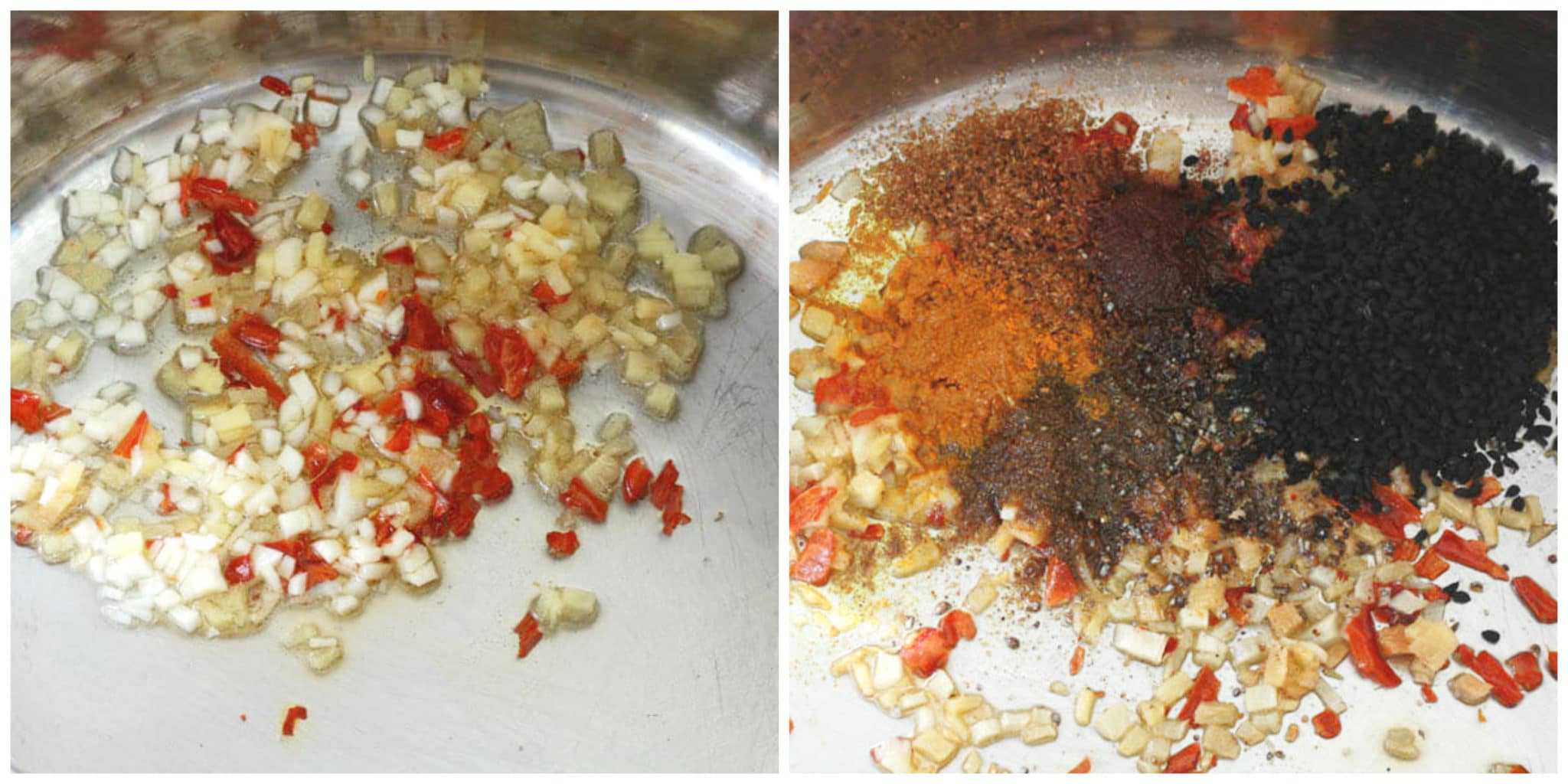
cooking garlic ginger spices

1. Heat the oil over medium-high in a large sauce pan. Saute the ginger, garlic and red chilies for a minute. Add the spices and saute for another minute or so.

Image

2. Add the diced mangoes, sugar, salt and vinegar and stir to combine. Bring it to a rapid boil and reduce to medium-low. Steady simmer for 1 hour. Remove from heat and allow it to cool. If you prefer smaller chunks, use a potato masher to mash the mixture to the desired consistency.

Image

3. For storage, chutney will keep for up to 2 months in the fridge because of the high acidity or for several months in the freezer. For best results let the chutney sit for a few days before using to allow the flavors to develop and mellow.

Friday’s Tall Tales #149

Whenever I photograph a door or gate I wonder about its provenance, who and what has happened across said door or gate, and what lies beyond. 

I thought I might pick one from my sextet of Thursday’s Doors and tell you a bit more about it or……maybe even weave a story about it.

ImageI snapped this door while wandering around in Cotignac last year. The plants look rather sad but I love the weathered honeyed stone. There’s an entryphone to the right of the door indicating that this is most likely residential property.

Looking at the photos I took either side of this one, I suspect this building is in the Cours Gambetta which embodies the gentle rhythm and art of Provençal living. It is an enchanting place where one can linger beneath the shade of plane trees, savouring a morning coffee while browsing the news, or enjoying a convivial pause with family or friends over lunch in one of its many restaurants.

Cotignac Photo Gallery, by Provence Beyond

The Cours stretches between two remarkable fountains: one beside a large washhouse, the other, strikingly beautiful, hailing from Aix-en-Provence. This latter fountain once adorned the gardens of the Dominican convent before being sold during the Revolution, following the confiscation of Church property. Installed here since 1850, its four white marble faces represent the seasons of the year.

The neatly aligned houses of Cours Gambetta once made up the bourgeois district of the village, built in 19th century at a time when local industries and workshops were flourishing, contributing to Cotignac’s economic expansion. Nowadays, it’s very much a tourist hot spot.


Flora and Fauna Friday #149

This post is my weekly homage to my parents who both took pleasure in having a beautiful garden. In particular, they loved sitting and watching the wild life enjoy their garden.Image


Thursday doors #330

Image

I’m still featuring Spanish, Italian and French doors from my trips last year.

Image

Image

Image

Image

Image

Image

Thursday Doors is a weekly feature allowing door lovers to come together to admire and share their favourite door photos from around the world. Feel free to join in the fun by creating your own Thursday Doors post each week and then sharing your link in the comments’ on Dan’s site, anytime between Thursday morning and Saturday noon (North American Eastern Time).

I’m Legal Again

Since moving to France, I’ve managed to navigate French bureaucracy with ease apart from exchanging my UK driving licence for a French one. This has definitely been a bit of a shaggy dog story.

My beloved, having moved from Germany to France, held a German driving licence which expired a few years after we’d settled. My UK driving licence had fortunately been re-registered at my parents’  address after we’d sold our property in London. This turned out to be a masterstroke.

Guide complet du permis de conduire : démarches et conseils 2025

The exchange of licences took place in person at the Court of Justice in Grasse. We turned up with the required paperwork and, three weeks later, my beloved received his new licence. I didn’t because I’d translated my marriage certificate myself – not allowed. No, it needed to be translated by a court certified translator. Haven’t made that mistake again!

By the time I’d secured a certified translation which, I should add, word for word was exactly the same as my DIY one, the process had moved to Nantes. Undeterred, I filled in all the forms, again, and sent everything off to Nantes by recorded delivery and waited, and waited, and waited.

About nine months after I’d sent everything off, the UK voted to exit the EU. As part of the agreement between France and UK covering those of us who’d legged it prior to Brexit, new procedures were put in place covering exchange of British driving licences. They needed to be exchanged only within six months of their expiration.

So, six months to the day of its expiration, I completed the paperwork, this time online. I immediately received confirmation that my paperwork had been received, was correct and had been forwarded to the relevant department. Everytime I checked on my dossier’s progress, it was recorded as being “in progress.”  Until it wasn’t.

The day after my UK licence expired, I received a text message informing me that the French authorities couldn’t exchange an expired UK licence. What was a girl to do?

My parents had passed away but fortunately my younger sister had “bought” their property and had received my DVLA licence renewal which I duly completed and received a new licence. I promptly forwarded a copy of this to the French authorities but they were adament. Exchange could only take place within 6 months of its expiration.

Recognising that the wheels in this particular department ground exceedingly slow, the French authorities extended the date of exchange to within 12 months of the licence expiration date. On the due date, I duly completed the online forms. Once again, they were acknowledged and remained “in progress” until October when further documents were requested. Again, I uploaded these and waited.

My UK licence expired and then, the day after, the French authorities asked me to send them my UK licence. A month after they received it – I sent it recorded delivery – I received a message to say that my French licence would be sent to me within the next three weeks. Hurrah! Meanwhile, I had paperwork showing that my licence was in the process of being exchanged should I, for any reason, have needed proof of my ability and legality to continue driving.


Postcard from Marrakech

Taking a quick break from Art Deco this week because we finally bit the bullet and visited Morocco in February. Unfortunately, SleazyJet flights leave Nice at six o’clock in the morning. Guess who spent the three hour flight fast asleep?

The Kingdom of Morocco is the most westerly of the North African countries known as the Maghreb – “the West”. It has Atlantic and Mediterranean coastlines, a rugged mountain interior and a history of independence not shared by its neighbours.

Its culture is a blend of Arab, Berber, European and African influences.

Morocco was a French protectorate between 1912 and 1956. Since independence, Morocco has remained relatively stable and wields significant influence in both Africa and the Arab world.
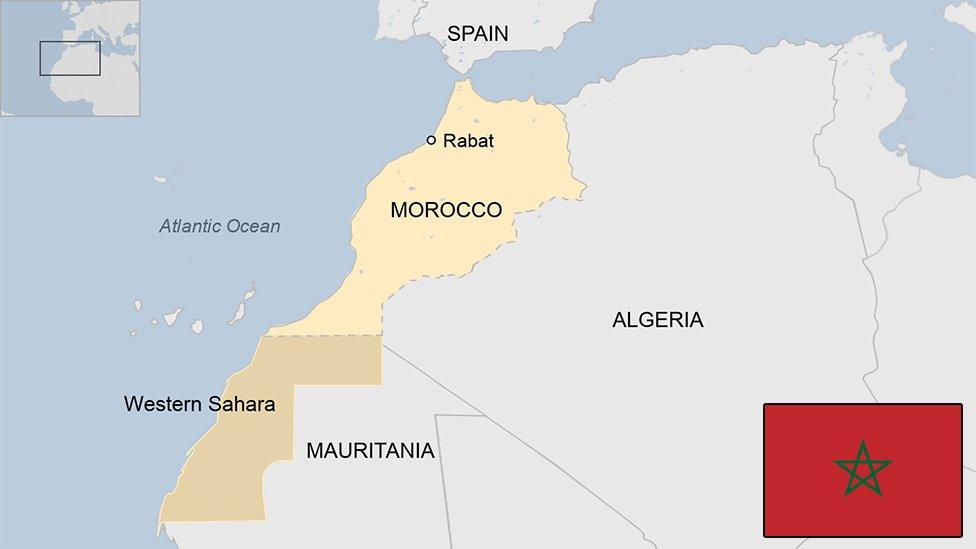
Map of Morocco

In 1975, Morocco annexed the former Spanish colony of Western Sahara. Since then it has been the subject of a long-running territorial dispute between Morocco and its indigenous Sahrawi people.

France and Morocco may be 1,800km (1,125 miles) apart, but they share a history that spans over a millennium, including Morocco-based pirates trading French slaves, a 20th century European conquest filled with brutal battles and rebellions, and a close trading relationship across several sectors in the present day.

How it all began

Image

Marrakech was founded in mid-11th century by Yūsuf ibn Tāshufīn of the dynasty of the Almoravids, and it served as the Almoravid capital until it fell to the Almohads in 1147. In 1269 Marrakech passed to the control of the Marīnids, whose preferred capital was the northern city of Fès. Although Marrakech flourished while serving as the capital under the Saʿdīs in the 16th century, the succeeding ʿAlawite rulers resided more often at Fès or Meknès; however, the Alawites continued to use Marrakech as a military post.

In 1912 Marrakech was captured by the religious leader Aḥmad al-Ḥībah, who was defeated and driven out by French forces commanded by Col. Charles M.E. Mangin. Under the French protectorate (1912–56), Marrakech was for many years administered by the Glaoui family, the last of whom, Thami al-Glaoui, was the chief instigator of the deposition of Muḥammad V in 1953.

Image

Surrounded by a vast palm grove, Marrakech’s Medina, a UNESCO World Heritage site founded in 1070, is its vibrant, walled “old city.” Known as the “Red City”  for its 19 km (12 miles) ramparts of beaten clay, which were built during the residence of the Almohads.

Image

Among the surviving gates to the medina, the stone Bab Agnaou is particularly notable. The Medina is a bustling maze of souks, workshops, historic palaces and the central Jemaa el-Fnaa square.
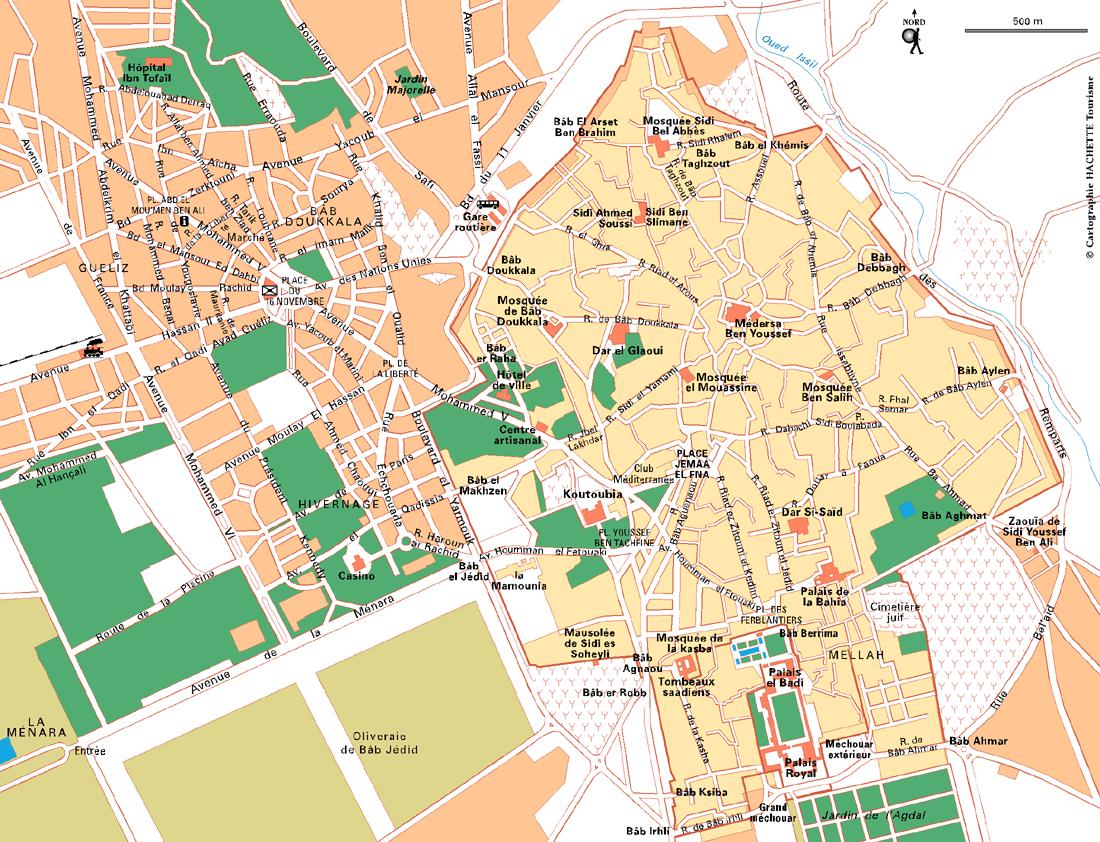
https://www.alksar.com/wp-content/uploads/2017/06/carte_marrakech_vue_generale_gare_palais_mosquee.jpg

Rather than walk around the Medina, we used one of the many friendly tax drivers to give us a tour. This is what we saw:-

The 19th century Bahia Palace showcases intricate Moroccan tilework (zellige), carved wood, and serene courtyards. It’s currently undergoing a much-needed renovation but it’s still possible to visit.

EL Badi Palace  is a stunning example of 16th century Moroccan architecture and culture. It’s a testament to the grandeur of the Saadian Dynasty and the beauty of Moroccan art and design. Like the Bahia Palace, it too is undergoing much-needed renovation.

The Royal Palace of Marrakech is not open to the public, but it’s certainly worth a drive around its perimeter. It’s the largest palace in Morroco and has been used as winter quarters by royal families for centuries.
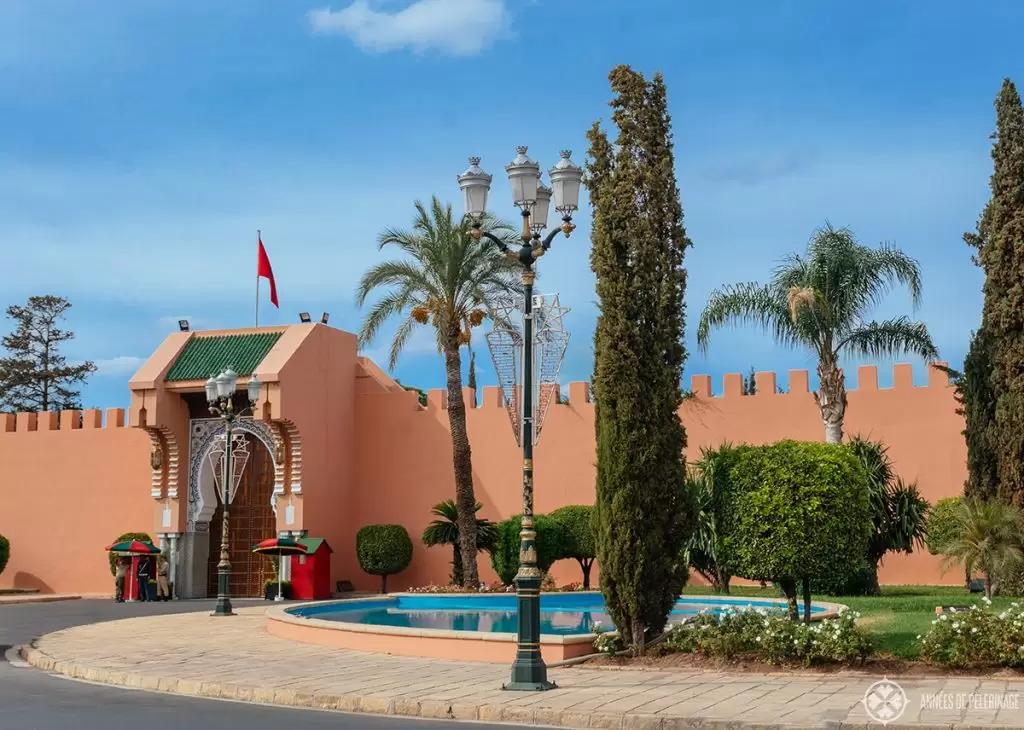
Royal Palace of Marrakech - Marrakech, Marrakesh

Ben Youssef Madrasa is a former Islamic college renowned for its stunning architectural detail and central courtyard.

The Slat Al Azama Synagogue (Lazama) was founded in 1492 and operates as both a synagogue and a small museum.

The lavish Saadian tomb complex, filled with Italian Carrara marble and gilded honeycomb muqarnas, was almost lost to history, but was thankfully uncovered by aerial photography in 1917 – and has been a colourful, intricately tiled crowd-pleaser ever since.
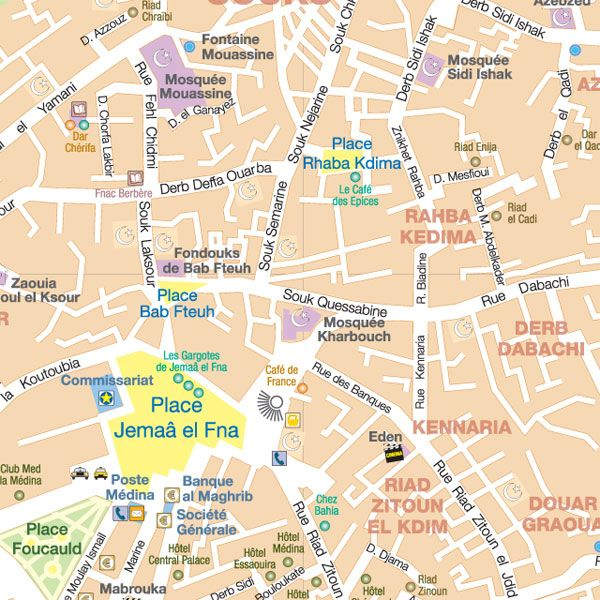
Jemaa El Fnaa Square Marrakech | History, Culture, Snakes, Description

Jemaa el-Fnaa is the Medina’s central square and “beating heart,” famous for its transition from a daytime market to an evening open-air festival featuring storytellers, musicians, and food stalls.

Image

The Koutoubia Mosque is a 12th century landmark with a 77 metre (252 ft) minaret that serves as a primary navigation point throughout the medina.
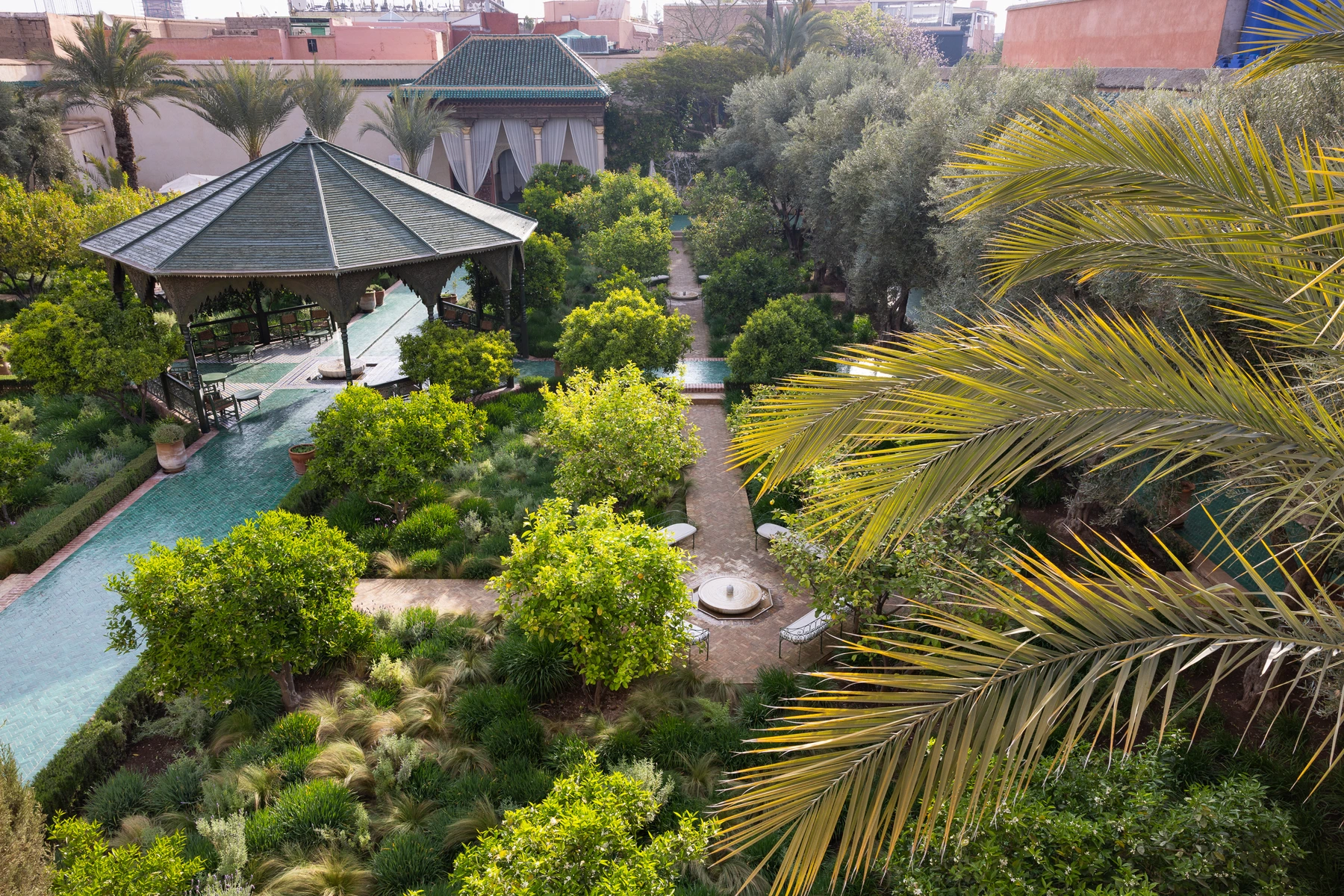
Le Jardin Secret

Tucked away in the medina, Le Jardin Secret is a cluster of majestic Arab-Andalusian and Moroccan palaces, centring around a meticulously restored Islamic garden – which is often a metaphor for ‘heaven’ in Arabic scripture.

We enjoyed a quick taxi ride north-west of central to arrive at the up-market Ville Nouvelle neighbourhood, where a trio of cultural delights awaited us. First up is Jardin Majorelle, a botanical garden created by the French painter Jacques Majorelle in 1923 which became known for its striking splashes of ‘Majorelle blue’.

By 1947, Majorelle had opened the garden to the public, but it eventually fell into disrepair. Thankfully, in 1980, it was saved from developers by Yves Saint Laurent and his partner Pierre Bergé, who set about restoring it. The Pierre Bergé Museum of Berber Arts can be found inside the garden and showcases the clothing, jewellery and homewares of the Berber people through a collection of 600 objects.

Finally — and fittingly — the neighbouring Yves Saint Laurent Museum is a tribute to the designer’s life, work and enduring love of the Red City. Designed by French architectural firm Studio KO, the building itself is a highlight. Tickets can only be purchased in advance and I would suggest buying a combined ticket with entrance no later than 09:30 am.

Guide de Gueliz Marrakech – Meilleures choses à faire, manger et voir en 2026

Gueliz, which brims with art deco buildings, trendy bars and eateries, and a buzzing art scene, is just a few streets over. Here, set just a few minutes’ walk apart, are MACMA (the Museum of Moroccan Art and Culture), contemporary gallery Comptoir des Mines and independent exhibition space Loft, which champions emerging talents from across North Africa.

We stayed in a hotel outside of the Medina and woke up bright and early — around 6.30am, to be precise — when the call for prayer echoes through the city. While our hotel met all of our requirements, we did dine at other hotels. We headed to Amanjena, a ten minute drive out of town, for dinner. The food was fine but we loved its  bewitchingly cinematic features: archways framed by sweeping drapes, stately palms and tall terracotta pillars.

We also ate at La Mamounia – gorgeous grounds –  and enjoyed cocktails  a la Alfred Hitchcock at La Mamounia’s low-lit Le Churchill bar, where jazz plays late into the night.

We also dined at the Royal Mansour – my favourite – and wandered around the hotel’s sumptious grounds.

Fashion designer Yves Saint Laurent once said:

Before Marrakech, everything was black. This city taught me colour

After spending a few days here, we understand exactly what he meant. The Red City, with its serpentine alleyways, bustling souks, dramatic light and ancient architecture, is a riot for the senses. It was a haven for bohemian spirits in the 1960s and 70s, attracting everyone from The Beatles to The Rolling Stones — a legacy which continues to shape Marrakech’s youthful and friendly culture today.

Musical Monday: Soundtracks #13

Image

I’ve reported on a whole variety of songs: ones by artists I’ve seen live, covers, duets and those deemed iconic. I’m now turning my attention to what might be called “Soundtracks”  specialised musical compositions, often instrumental or lyrical, designed to establish the mood and identity of TV shows and films, typically played during opening or closing credits, and those used in advertisements.

How about the soundtrack to 1998 film Saving Private Ryan?

The album was produced by composer John Williams who’d worked many times with the film’s director, Steven Spielberg. Recorded in Symphony Hall, Boston, Massachusetts, the scores were performed by the Boston Symphony Orchestra, with two of the ten compositions featuring vocals from the Tanglewood Festival Chorus. The soundtrack runs for just over an hour, while the film itself lasts over two hours.

Throughout the compositions, brass (especially French Horns), and strings were used to evoke a variety of emotions and tones. The soundtrack received mixed reviews from critics, but was still nominated for several major awards, of which it won the Grammy Award for Best Instrumental Composition Written for a Motion Picture or for Television.

Soundtrack opener “Hymn to the Fallen” received some radio play, in particular on the United States holidays Veterans Day and Memorial Day. The soundtrack was remastered and reissued as a commemorative twentieth anniversary edition in 2018.

As always, don’t forget to let me know your thoughts.

The Numbers Game 38, Monday 20 April, 2026

Today’s lucky number yielded 131 photos from which I’ve selected 6 at random.

Image
My godson Zeno
Image
Isola 2000
Image
Antibes
Image
Townsville, Queensland
Image
Whitehaven Beach
Image
Basilica of Santa Maria del Coro, San Sebastian

The challenge is kindly hosted by Life Lessons – a blog by Judy Dykstra-Brown

To play along, go to your WP Media file and type that number (241) into the search bar. Then post a selection of the photos you find including that number and post a link to your blog in Judy’s Numbers Game blog of the day – easy!

French Fancies: Cire Trudon

Image

Said to be the oldest surviving candlemaker in France – perhaps even the world – Cire Trudon has survived through the ups and downs of history and lives on to tell the tales of colourful characters who shaped the past. From the products and packaging, to the hand-poured techniques and expressive scents, each candle has its own story to tell.

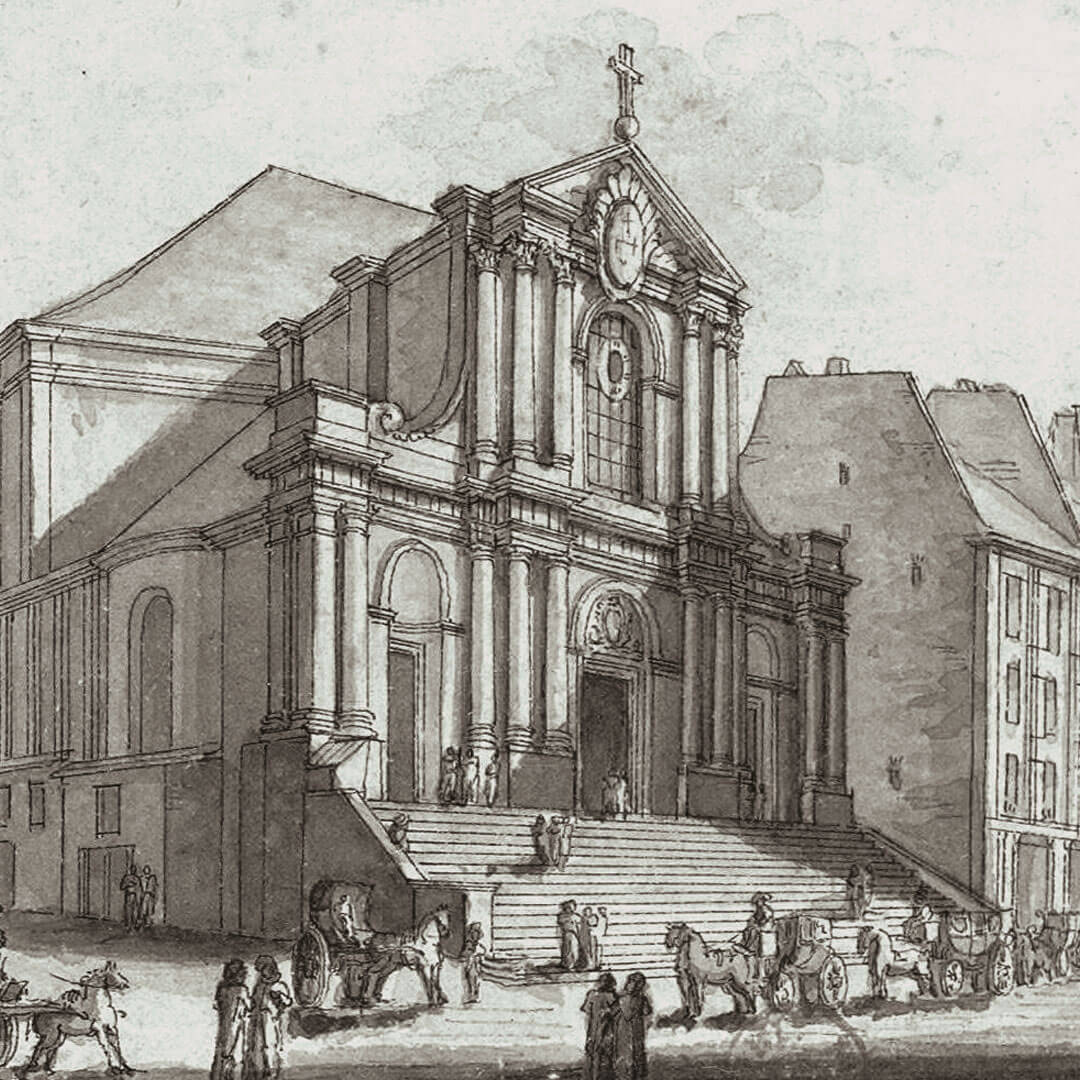
Cire Trudon began with one man in the year 1643; his name was Claude Trudon and from his boutique on rue Saint Honoré, he operated a grocery and candle business, supplying local homes and parishes with candles during the rein of Louis XIV. A generation later, Trudon’s reputation had flourished, supplying candles to the largest cathedrals in Paris as well as to the royal court.

How it all began

Image

In 1643, a salesman named Claude Trudon arrived in Paris and became the owner of a shop on Saint-Honoré, which provided its customers with wax, candles for any domestic use, as well as church candles to the neighbouring Saint Roch parish. The candles were homemade, developing and building on a specific manufacturing process. On the eve of the reign of Louis XIV, M. Trudon established his first family-owned factory which was to bear his name and make a fortune for his heirs.

Image

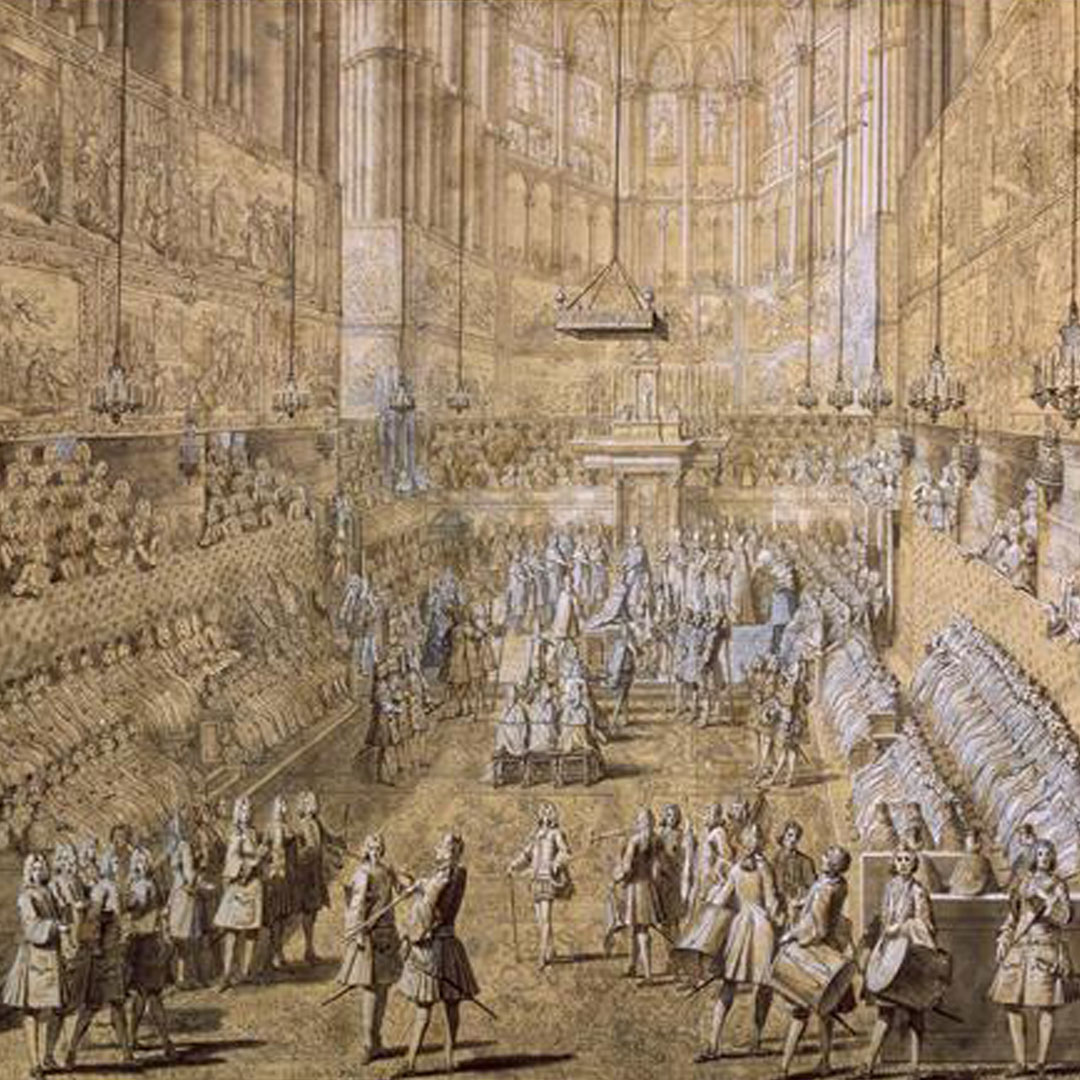
Claude’s son Jacques took over, becoming a grocer and wax producer and joined the Versailles royal court in 1687 as the apothecary and distiller to Queen Marie -Thérèse.

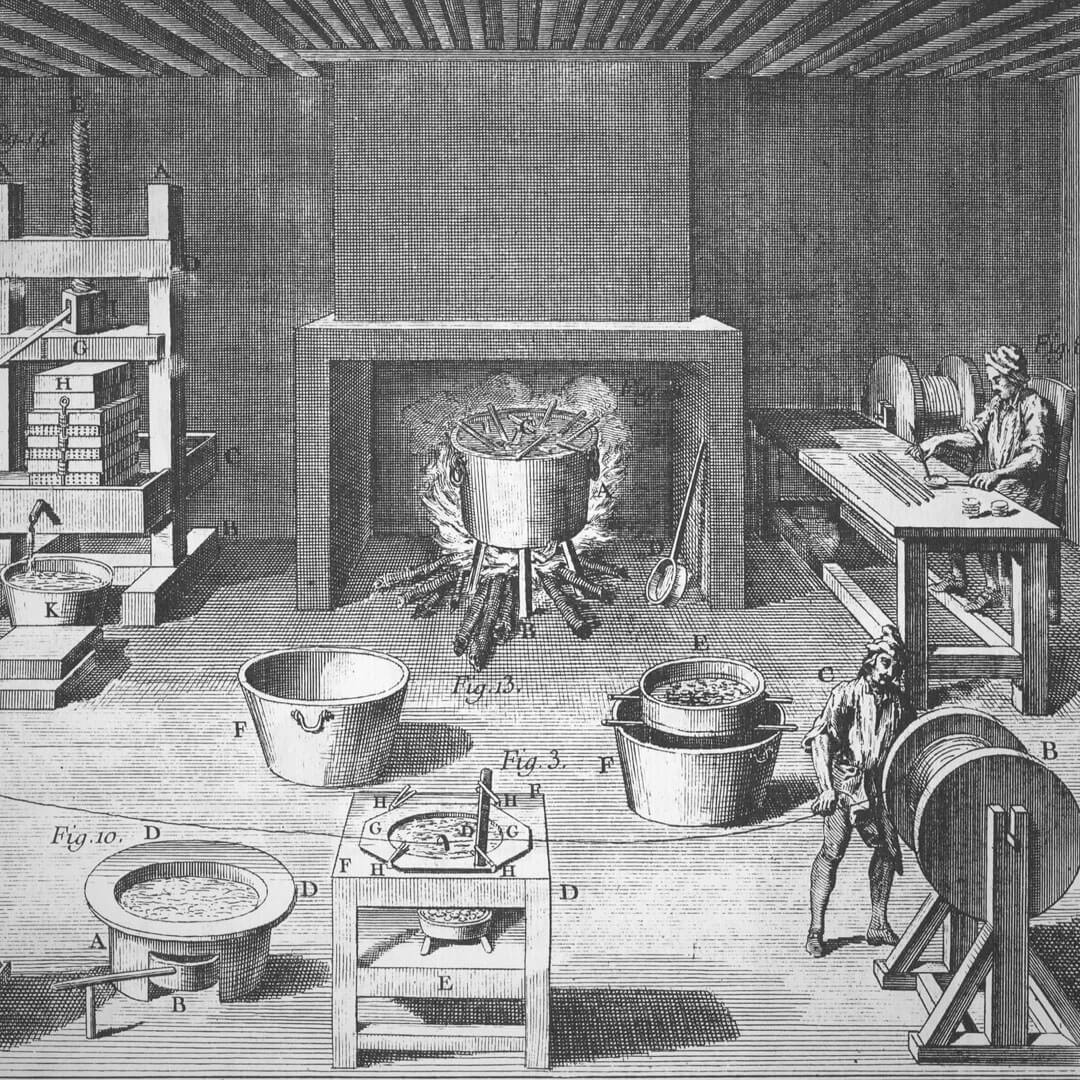
At the time, the production process included carefully collecting wax from the hive and bleaching it through a series of pure water baths that washed off all the impurities. Dried in the open air, the wax was whitened by sunlight.

In 1737, Jérôme Trudon, purchased one of the most famous wax producing factories of the time  belonging to Lord Pean de Saint Gilles who was then the official wax provider to the King. Drawing on the family expertise, Jérôme devoted his skills to the development of a vast factory where he produced a wax of the highest quality. The factory also imported the finest cotton to make wicks whose combustion was clean and regular. The Trudon candles, so white and so perfect, could burn for hours without crackling; their flame neither trembled nor smoked.

Image

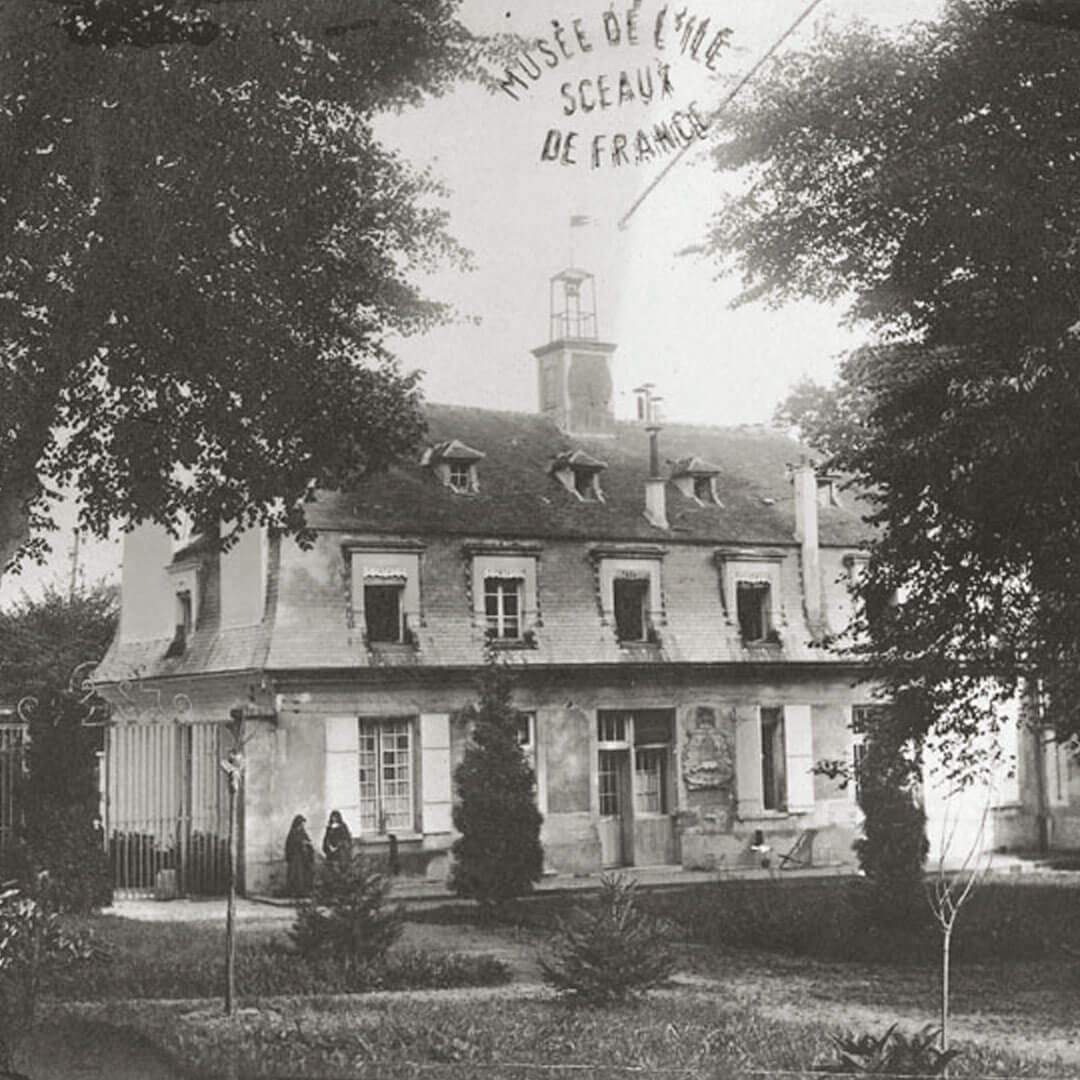
Maison Trudon furnished candles to the royal court, cathedrals and churches all over France. More than one hundred people worked at the time in a very large building – now registered in the French inventory of historical monuments – in the city of Antony, Hauts-de-Seine. Its Latin motto and its blazon are engraved in stone on the factory building: a depiction of hives and bees bordered by the saying: Deo regique laborant (“they work for God and for the King” — they meaning the bees).

Image

Cire Trudon supplied Versailles castle until the end of the monarchy. During his captivity, Louis XVI used the candles of his royal wax manufacturer. The blazon and the motto would be hidden under a layer of mortar to avoid the furies of the Revolution.

Image

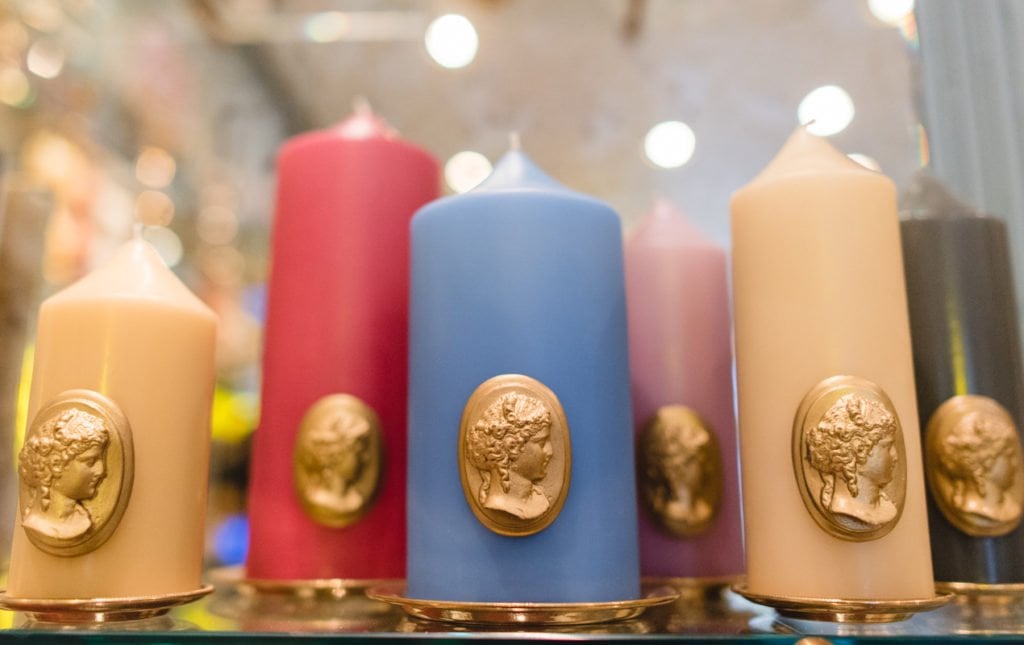
Somewhat surprisingly, Cire Trudon survived the tumultuous French Revolution and continued serving the Imperial court of Napoleon I. In fact, as a birthday gift, the Emperor gave his newborn son a pillar candle adorned with a gold profile medallion, and similar candles are still made by Cire Trudon today.

Cire Trudon Candle Boutique in Paris - Paris Perfect Blog

These candles must have been truly special if they managed to stick around through everything the 18th and 19th centuries threw at them: political, economic, moral and industrial revolutions couldn’t tear this company down. One reason for that is their superb quality.

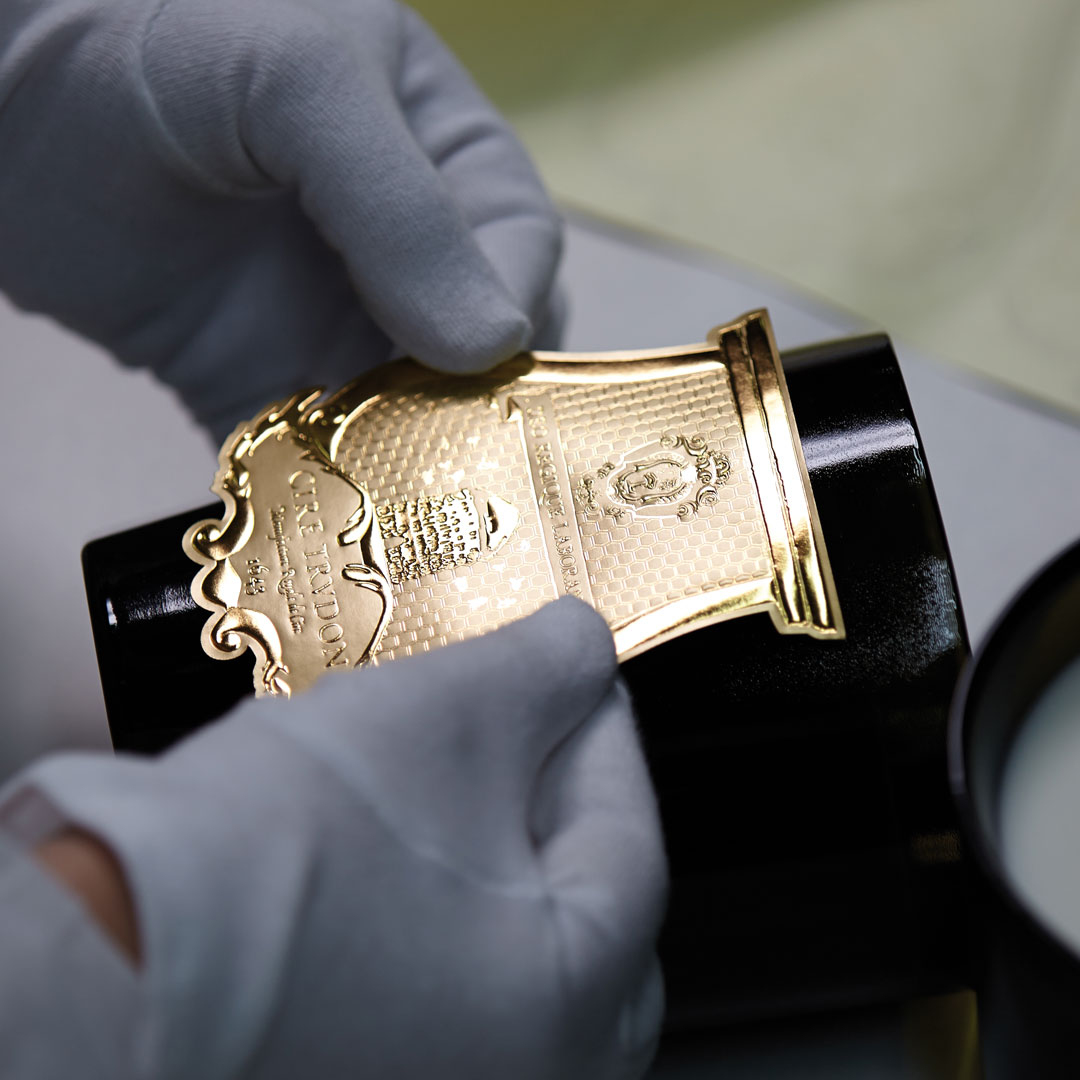
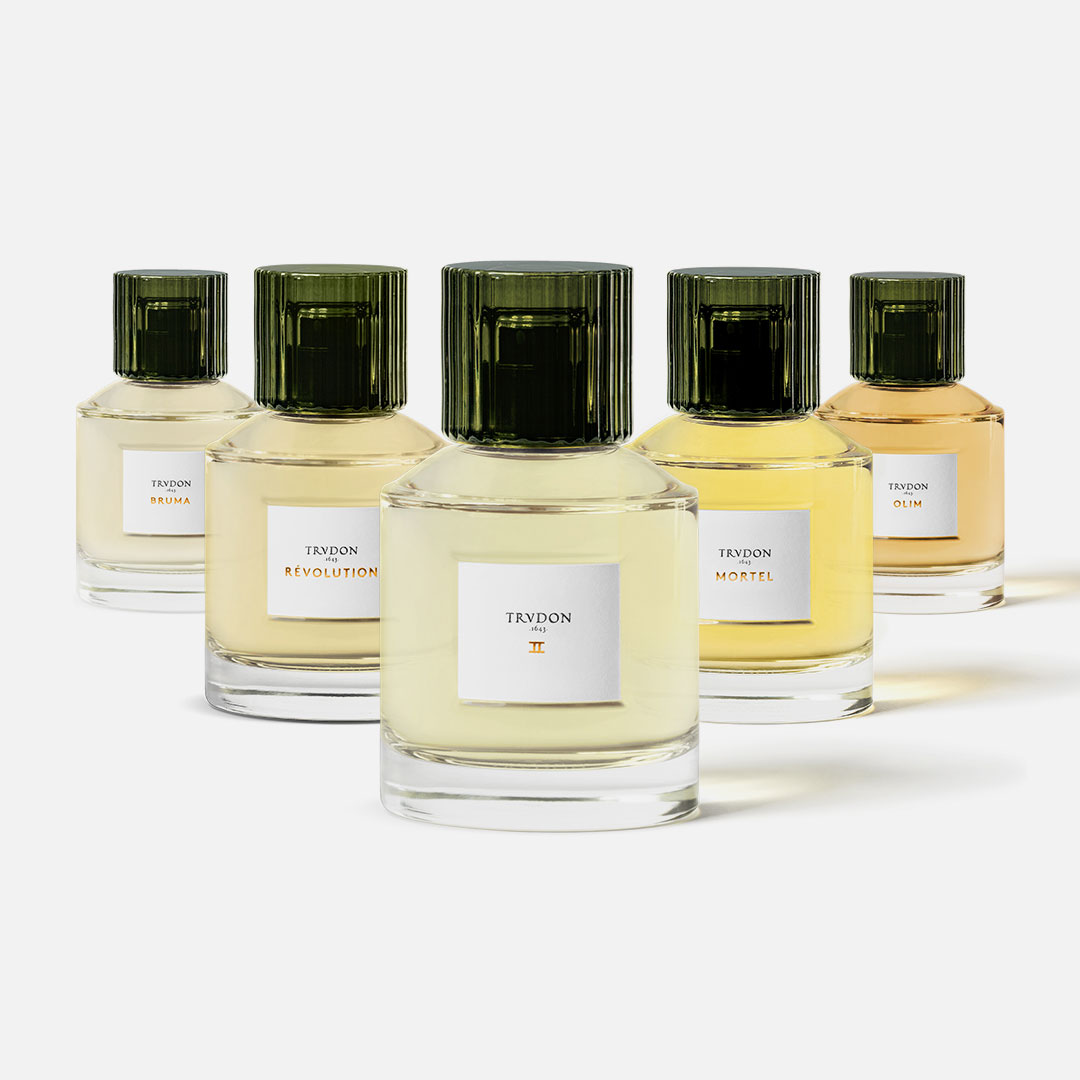
Fast-forward to 21st century, and the company was officially re-branded as Cire Trudon, specialising in scented candles. It enlists the expertise of well-known “noses” to formulate scents that tell a story, and each candle is still hand-poured to maintain the quality that the company was originally known for back in Claude Trudon’s day.

Cire Trudon - The Oldest Candlemaker in Paris - Paris Perfect

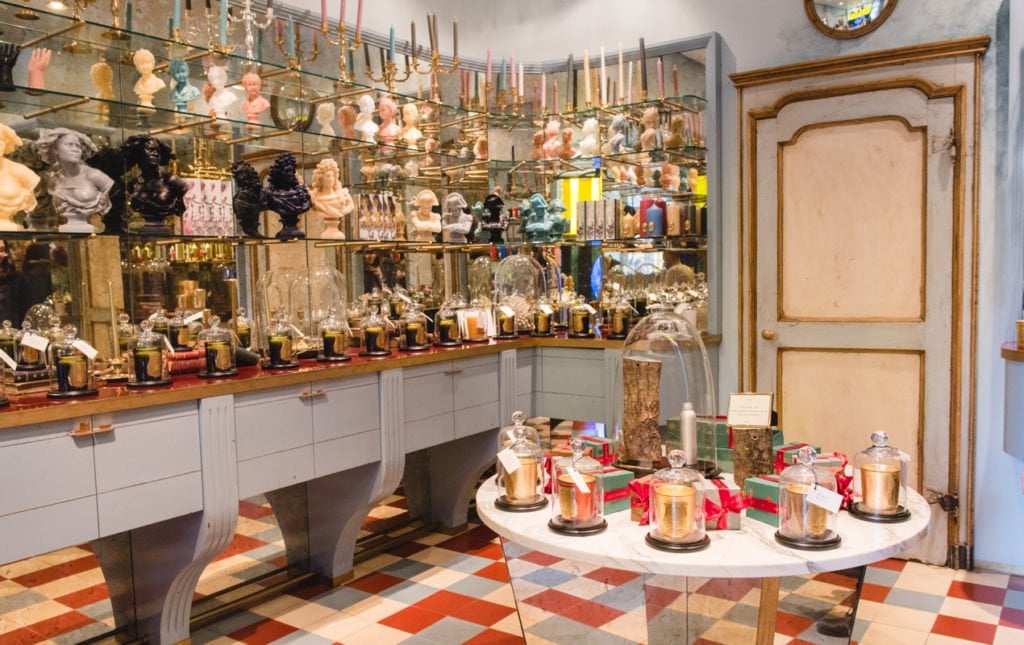
Cire Trudon has two boutiques in Paris, plus a corner in the Bon Marché department store. The boutique featured here is the Right Bank shop, in the heart of the Marais district. It has a very old-world, Versailles-inspired interior, with antique books, mercury mirrors covering all the walls, and a faded blue wall color that feels very French. The boutique near Saint Sulpice church is a bit sleeker and a hint more modern.

Image

Image

Cire Trudon still maintains records of its recipes and the wrought iron tools used in the wax whitening process and its 17th century pans. The moulds used to form candles bearing the royal blazons still remain: “cierge pascal pour la Chapelle du Roy à Versailles, Bougies de nuit pour le Roy…” (“Easter candle church for the Royal Chapel in Versailles, night candle for the King…”)

Image

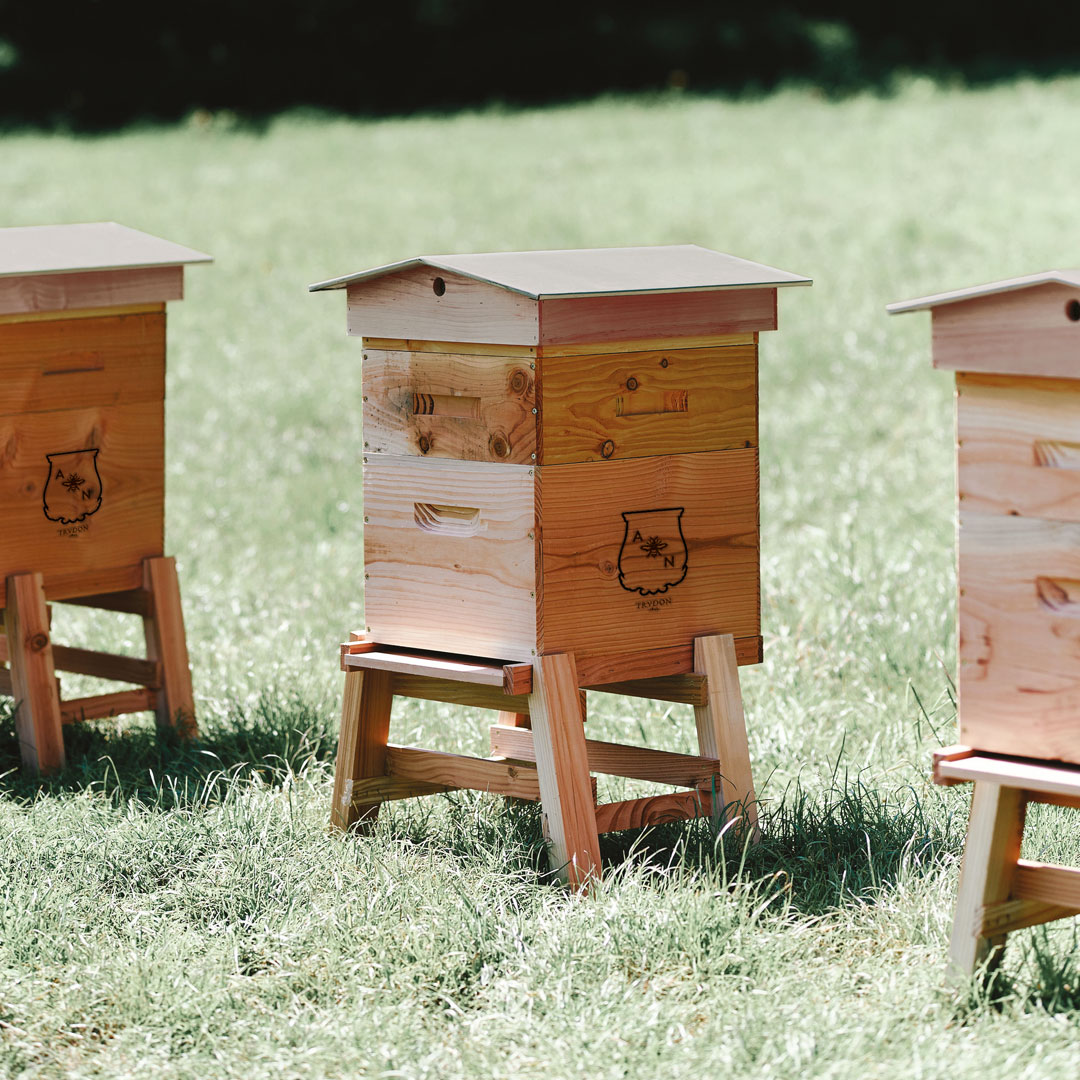
Unsurprisingly, in close partnership with local institutions, Trudon is committed to preserving Perche’s biodiversity. Located in Mortagne-au-Perche (Normandy) since 1901, Trudon is part of the Perche regional Nature Park. The Nature Park’s mission is to protect the environment, through actions that help preserve its biodiversity, raise awareness of and devotion to the local patrimony.Trudon has launched a bee conservation programme in collaboration with the Orne Dark Bee Conservancy and the Perche regional Nature Park.

The Orne Dark Bee Conservatory is a key player in the Nature Park. Its main goal is to monitor the genetic pool of the local dark bee populations, in conditions that resemble as closely as possible life in the wild. This commitment seeks to guarantee the bee’s presence as a vital pollinator and the gradual reintroduction of this hardy species. Maison Trudon has joined forces with the Orne Dark Bee Conservatory, because it feels as strongly as the conservatory about the values of conservation and good beekeeping practices as they relate to the life habits of the dark bee.

All images courtesy of Cire Trudon

The Musette: US Style Pancakes

Image

These US style pancakes are fluffy, made with whole food, simple ingredients like whole grain oats and Greek yogurt, and packed with protein and fibre – just what the doctor ordered!

And, even better, they’re so easy to make. Everything goes into the blender and whips up in seconds, ready to pour and cook. Plus, you can make ahead and store them in the fridge and /or freezer. I left the measurements in cups as that’s how I make them.

Ingredients (serves 3)

  • 2 cups rolled oats
  • 1 tsp baking powder
  • 1 tsp bicarb (baking) soda
  • pinch fine sea salt
  • 1 cup plain Greek yogurt
  • 1/2 cup plant-based milk
  • 2 organic medium eggs
  • 1 tbsp maple syrup
  • 1 tsp vanilla extract

Method

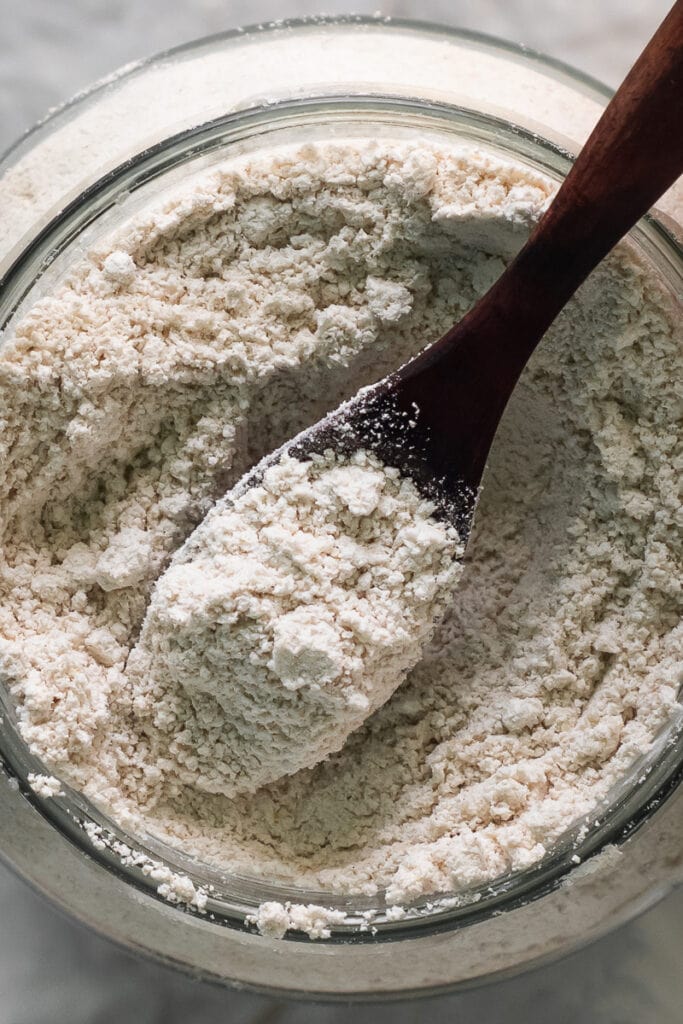
1. Add all the dry ingredients to a high speed blender or food processor. Blend on high for 30-60 seconds until oats have formed a fine flour.

Close up fine and fluffy oat flour with a spoonful being scooped out.

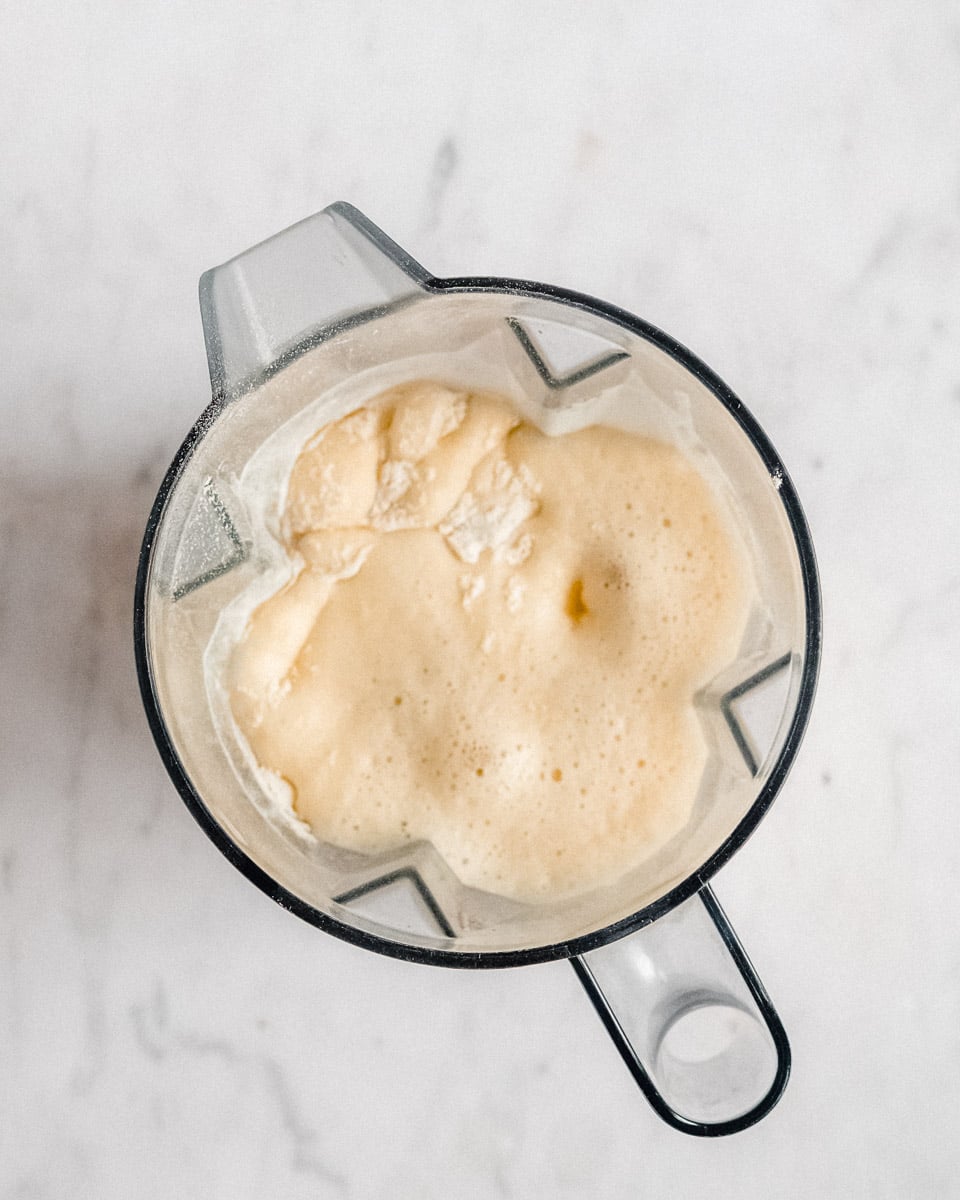
2. Add wet ingredients and blend until smooth, stopping to scrape down the sides as needed.

Almond Milk Crepes (easy & dairy-free) - Wholefood Soulfood Kitchen

3. Heat a crepe/frying pan over medium heat. Lightly coat with butter.

American Pancakes {Easy & Fluffy}

4. Add 1/4 cup batter per pancake to the hot pan. Cook for 2-3 minutes on one side until pancakes begin to puff up and the underside is golden brown. Flip and cook for an additional 1-2 minutes on the other side until golden brown. Be sure to wipe out excess pancake mixture from the pan in between batches.

Pancakes — Erin Jeanne McDowell

5. Serve however your heart desires!

6. Once cooled, store leftover pancakes in an airtight container in the fridge for up to 4 days. You can freeze these pancakes too!

Sheree’s Handy Hints

1. If serving the pancakes with something savoury, I swap out the Greek yogurt for blended cottage cheese and add the maple syrup afterwards.

Fluffy Bacon Pancakes

2. I often make these with  a combination of 11/2 cups oat flour and 1/2 cup almond flour, particularly if I’m adding a handful of blueberries and 1 tsp of fresh lemon zest.

Anytime Fluffy Blueberry Pancakes

3. My OH likes his topped with caramel, bananas and cinnamon.

Easy Banana Pancake Recipe - Butter Love & Salt

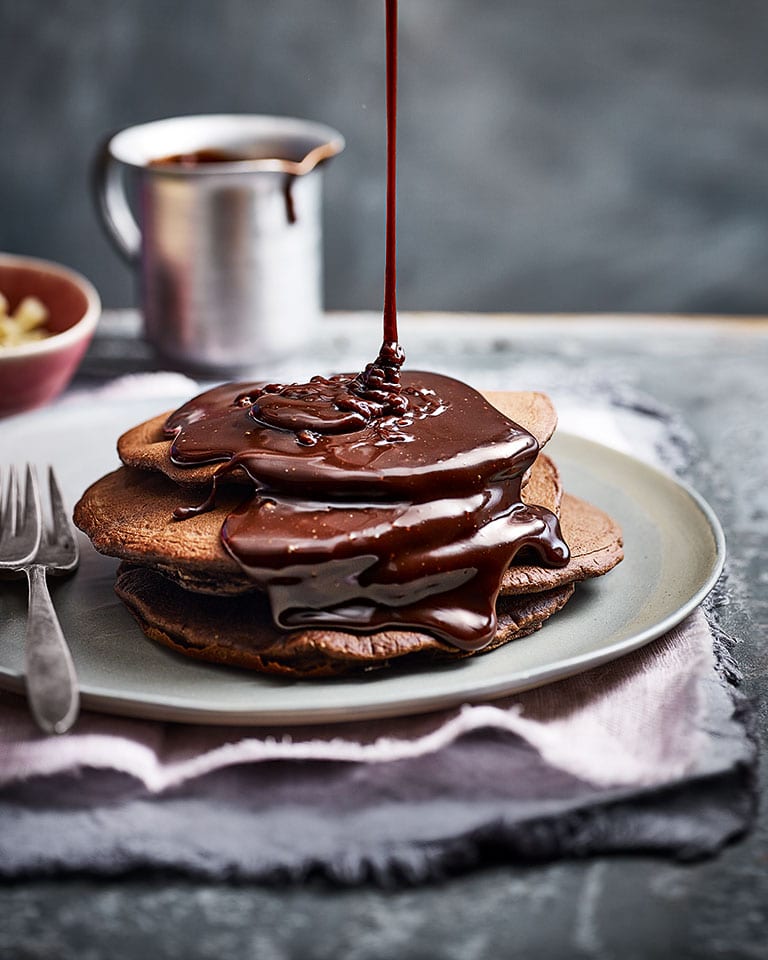
4. He’s not adverse to my chocolate version with 2 tbsp of cocoa powder, pinch of espresso powder, grated bittersweet chocolate with more chocolate sauce..

Double chocolate pancake stack