


 Report an issue with this product or seller


































Google has open sourced "how" they do everything. This book is about “how Google runs code”. Systems engineers should pair this book with “Site Reliability Engineering” (from Google) on “how Google runs infra”. Senior org leaders should minimally read the first part (Culture) pairing with “Work Rules” (Laszlo bock on “how Google leads”). Security Engineers should buy the very recent “Building Secure and Reliable Systems” on “how Google implements defense”. Executives should read “How Google Works” by Eric Schmidt on - “how Google works ”!
First, It is admirable how the company wants to spread its hard-earned wisdom. Thank you! Many places do many things exceptionally well - but the earnestness to coach and educate others is an extreme rarity - a version of Survivorship Bias - among the “Big Techs”. Collectively, these five books, “Top N” Google Tech Talks (check YouTube) and - depending on your role - coding best practices (check their site) are collectively a combination of top notch combined technical and business education in itself.
Very rarely I give a 5-star rating to a technical book, but SEaG is completely worth the two weeks I immersed myself into learning Culture, Processes and Tools of Google Software Teams. The writers are deeply knowledgable, passionate about their crafts and offer insight after insight into topics ranging from human psychology to the flaws of over-embracing mock testing.
Not targeting on algorithm, language, tools or libraries, it focuses on “Software Engineering” as a system, i.e., stuff that is not taught at any school. The book disambiguates “programming” from “engineering”, and walks through the hardest engineering challenge - how to scale.
It also offers a treasure of insights and ideas from how Google made a billion lines of code change at one time, or how its automated tests could successfully process 50,000 change requests a day, or how Google Production System is perhaps one of the best machines humans ever engineered. Even if you are working nowhere near Google scale, the book covers a lot of fundamentals, especially on how to sustainably develop software and make objective trade-offs while doing so. I would very highly recommend SEaG to any engineering leader trying to improve her team's game. For developers, the four extensive chapters on testing should alone be worth the entry price.
Notes from the "Culture" - first of three - part of the book (most of these should be organization agnostic) -
---------------------------------------------------------------------------------------------------------------------------
Software Engineering is “Programming integrated over time”. From a reverse lens, code thus becomes a derivative of Software Engineering.
A project is sustainable if for the expected life span of the software, you are capable of reactive to valuable changes for either business or technical reasons.
The higher the stakes, the more imperfect the trade-off value metrics.
Your job as a leader is to aim for sustainability and managing scaling costs for the org, the product and the development workflow.
Hyperbolic Discounting - when we start coding, our implicit life-span assignment to the code is often in hours or days. As the late 90s joke went - WORA - Write Once, Run Away!
Hyrum’s Law: With a sufficient number of users of an API, all observable behavior of your system will depend on a random person doing a random thing. Conceptually similar to entropy - your system will inevitably progress to a high degree of disorder, chaos and instability. I.e., all abstractions are leaky.
Two spectrums of code - one way is hacky and clever, another is clean and maintainable. The most important decision is to ensure which way the codebase leans. It is programming if ‘clever’ is a complement, and software engineering if ‘clever’ is an accusation!
Google's SRE book talks about the complexity of managing one of the most complex machines created by humankind - Google Production system. This book focuses on the organization scale and processes to keep that machine running over time.
Scaling an org means sublinear scaling with regard to human interactions.
The Beyoncé rule: “If you liked it, you should have put a CI test on it”. i.e., if an untested change caused an incident, it is not the change’s fault.
An average Software Engineer produces a constant number of lines of code per unit time.
Treat whiteboard markers as precious goods. Well functioning teams use them a lot!
60-70% developers build locally. But Google built its own distributed build system. Ultimately, even the distributed build gets bloated - Jevon’s Paradox -- consumption of a resource increase as a response to greater efficiency in its use.
Humans are mostly a collection of intermittent bugs.
Nobody likes to be criticized, especially for things that aren’t finished.
DevOps in one sentence: Get feedback as early as possible, run tests as early as possible, think about security & production environments as early as possible - also known as “left shifting”.
Many eyes make all bugs shallow. Make reviews mandatory.
Three Pillars of Social Interaction - Humility, Respect, Trust.
Relationships always outlast projects.
You have two paths to choose from - one, learn, adapt and use the system; two, fight it steadily, as a small undeclared war, for the whole of your life.
Good Postmortem output - Summary, Timeline, Proximate Cause, Impact, Containment (Y/N), Resolved (Y/N) and Lessons Learned.
Psychological safety is the biggest thing in leading teams - take risks and learn to fail occasionally.
Software engineering is multi person development of multi-version programs,
Understand Context before Changing things - Chesterton’s Fence is a good mental model.
Google tends toward email-based workflows by default.
Being an expert and being kind are not mutually exclusive. No brilliant jerks!
Testing on the toilet (tips) and Learning on the Loo (productivity) are single-page newsletters inside toilet stalls.
1-2% of Google engineers are readability (Code Review tool) reviewers. They have demonstrated capability to consistently write clear, idiomatic and maintainable code for a given language. Code is read far more than it is written. Readability (review tool at Google) is high cost - trade-off of increased short-term review latency and upfront costs for long-term payoffs of higher-quality code.
Knowledge is the most important, though intangible, capital for software engineering org.
At a systemic level, encourage and reward those who take time to teach and broaden their expertise beyond (a) themselves, (b) team, and (c) organizations.
On diversity - Bias is the default; Don’t build for everyone. Build with everyone; Don’t assume equity; measure equity throughout your systems.
A good reason to become tech lead or manager is to scale yourself.
First rule of management? “Above all, resist the urge to manage.” Cure for “management disease” is a liberal application of “servant leadership”, assume you’re the butler.
Traditional managers worry about how to get things done, whereas great managers worry about what things get done (and trust their team to figure out how to do it).
Being manager - “sometimes you get to be the tooth fairy, other times you have to be the dentist”.
Managers, don’t try to be everyone’s friend.
Hiring: A hires A, while B hires C players.
Engineers develop an excellent sense of skepticism and cynicism but this is often a liability when leading a team. You would do well to be less vocally skeptical while “still letting your team know you’re aware of the intricacies and obstacles involved in your work”.
As a leader - Track Happiness - best leaders are amateur psychologists; Let your team know when they’re doing well; It’s easy to say “yes” to something that’s easy to undo; Focus on intrinsic motivation through autonomy, mastery and purpose; Delegation is really difficult to learn as it goes against all our instincts for efficiency and improvement.
Three “always” of leadership - Always be Deciding, Always be Leaving, Always be Scaling.
“Code Yellow” is Google’s term for “emergency hackathon to fix a critical problem”.
Good Management = 95% observation and listening + 5% making critical adjustments in just the right place.
To scale, aim to be in “uncomfortably exciting” space.
All your means of communication - email, chat, meetings - could be a Denial-of-Service attack against your time and attention. You are the “finally” clause in a long list of code blocks!
In pure reactive mode, you spend every moment of your life on urgent things, but almost none of it is important. Mapping a path through the forest is incredibly important but rarely ever urgent.
Your brain operates in natural 90-minute cycles. Take breaks!
Give yourself permission to take a mental health day.
Everyone has a goal to be “data driven”, but we often fall to the trap of “anecdata”.
Google uses GSM (Goals/Signals/Metrics) framework to select metrics to measure engineering productivity.
QUANTS - 5 components of productivity
Quality of code; Attention from engineers; Intellectual Complexity; Tempo (how quickly can engineers accomplish something) and velocity (how fast they can push their release out); Satisfaction
Quantitative metrics are useful because they give you power and scale. However, they don’t provide any context or narrative. When quantitative and qualitative metrics disagree, it is because the former do not capture the expected result!
Let go of the idea of measuring individuals and embrace measuring the aggregate. Before measuring productivity, ask whether the result is actionable. If not, it is not worth measuring.
Customers who viewed this item also viewed
FREE delivery Tuesday, April 28

FREE delivery Tuesday, April 28

FREE delivery Thursday, April 30
FREE delivery Thursday, April 30

Download the free Kindle app and start reading Kindle books instantly on your smartphone, tablet, or computer - no Kindle device required.
Read instantly on your browser with Kindle for Web.
Using your mobile phone camera - scan the code below and download the Kindle app.

Follow the author
Get new release updates & improved recommendations
Something went wrong. Please try your request again later.
Frequently bought together

This item: Software Engineering at Google: Lessons Learned from Programming Over Time
$36.49
Get it as soon as Tuesday, Apr 28
In Stock
+
$59.99
Get it as soon as Tuesday, Apr 28
In Stock
+
$26.39
Get it as soon as Tuesday, Apr 28
In Stock
Total price: $00
To see our price, add these items to your cart.
Choose items to buy together.
Deals on related products
Page 1 of 1Start over
From the brand

-

Software Development
-
Software Architecture
-
Software Engineering
-
More From O'Reilly
-
Sharing the knowledge of experts
O'Reilly's mission is to change the world by sharing the knowledge of innovators. For over 40 years, we've inspired companies and individuals to do new things (and do them better) by providing the skills and understanding that are necessary for success.
Our customers are hungry to build the innovations that propel the world forward. And we help them do just that.
From the Publisher

From the Preface
This book is titled Software Engineering at Google. What precisely do we mean by software engineering? What distinguishes “software engineering” from “programming” or “computer science”? And why would Google have a unique perspective to add to the corpus of previous software engineering literature written over the past 50 years?
The terms “programming” and “software engineering” have been used interchangeably for quite some time in our industry, although each term has a different emphasis and different implications. University students tend to study computer science and get jobs writing code as “programmers.”
About the author

Related products with free delivery on eligible orders
Sponsored | Try Prime for unlimited fast, free shipping
Page 1 of 1Start over
Customers say
Customers find the book insightful and recommend it for software engineers, with one noting that valuable information can be found in the details. Moreover, the writing quality receives positive feedback, with one customer highlighting that each chapter is written by company experts. However, the value for money receives mixed reviews, with several customers finding it not worthwhile.
AI Generated from the text of customer reviews
Select to learn more
23 customers mention content, 19 positive, 4 negative
14 customers mention informative, 13 positive, 1 negative
Lots of great knowledge that Googlers have been gracious to share.Read more
Contents of the book are thorough and helpful.Read more
...but the good bits are found in the details, and there's a good amount of specific advice and references to tools to go with it....Read more
Very practical, useful guides for software organizations....Read more
5 customers mention writing quality, 5 positive, 0 negative
Very well written book. It really covers the tech, human and org aspects around scaling....Read more
...The authors are quite accomplished, making this book appealing to buy at first, but that appeal wore off quickly.Read more
...The writers are deeply knowledgable, passionate about their crafts and offer insight after insight into topics ranging from human psychology to the...Read more
...Each chapter is written by company experts and covers 25 timely topics ranging from code testing to dependency management, from continual...Read more
5 customers mention value for money, 2 positive, 3 negative
too much meaningless definition, looks very academia but offers little valueRead more
...Worth a buy and feel more prepared and informed then before this purchase! Great book!Read more
...The time I spent reading the book was not worthwhile.Read more
...the four extensive chapters on testing should alone be worth the entry price....Read more

Chesterton's Fence, Beyoncé Rule and 1 billion line Change List - How Google does it at scale
Google has open sourced "how" they do everything. This book is about “how Google runs code”. Systems engineers should pair this book with “Site Reliability Engineering” (from Google) on “how Google runs infra”. Senior org leaders should minimally read the first part (Culture) pairing with “Work Rules” (Laszlo bock on “how Google leads”). Security Engineers should buy the very recent “Building Secure and Reliable Systems” on “how Google implements defense”. Executives should read “How Google Works” by Eric Schmidt on - “how Google works ”! First, It is admirable how the company wants to spread its hard-earned wisdom. Thank you! Many places do many things exceptionally well - but the earnestness to coach and educate others is an extreme rarity - a version of Survivorship Bias - among the “Big Techs”. Collectively, these five books, “Top N” Google Tech Talks (check YouTube) and - depending on your role - coding best practices (check their site) are collectively a combination of top notch combined technical and business education in itself. Very rarely I give a 5-star rating to a technical book, but SEaG is completely worth the two weeks I immersed myself into learning Culture, Processes and Tools of Google Software Teams. The writers are deeply knowledgable, passionate about their crafts and offer insight after insight into topics ranging from human psychology to the flaws of over-embracing mock testing. Not targeting on algorithm, language, tools or libraries, it focuses on “Software Engineering” as a system, i.e., stuff that is not taught at any school. The book disambiguates “programming” from “engineering”, and walks through the hardest engineering challenge - how to scale. It also offers a treasure of insights and ideas from how Google made a billion lines of code change at one time, or how its automated tests could successfully process 50,000 change requests a day, or how Google Production System is perhaps one of the best machines humans ever engineered. Even if you are working nowhere near Google scale, the book covers a lot of fundamentals, especially on how to sustainably develop software and make objective trade-offs while doing so. I would very highly recommend SEaG to any engineering leader trying to improve her team's game. For developers, the four extensive chapters on testing should alone be worth the entry price. Notes from the "Culture" - first of three - part of the book (most of these should be organization agnostic) - --------------------------------------------------------------------------------------------------------------------------- Software Engineering is “Programming integrated over time”. From a reverse lens, code thus becomes a derivative of Software Engineering. A project is sustainable if for the expected life span of the software, you are capable of reactive to valuable changes for either business or technical reasons. The higher the stakes, the more imperfect the trade-off value metrics. Your job as a leader is to aim for sustainability and managing scaling costs for the org, the product and the development workflow. Hyperbolic Discounting - when we start coding, our implicit life-span assignment to the code is often in hours or days. As the late 90s joke went - WORA - Write Once, Run Away! Hyrum’s Law: With a sufficient number of users of an API, all observable behavior of your system will depend on a random person doing a random thing. Conceptually similar to entropy - your system will inevitably progress to a high degree of disorder, chaos and instability. I.e., all abstractions are leaky. Two spectrums of code - one way is hacky and clever, another is clean and maintainable. The most important decision is to ensure which way the codebase leans. It is programming if ‘clever’ is a complement, and software engineering if ‘clever’ is an accusation! Google's SRE book talks about the complexity of managing one of the most complex machines created by humankind - Google Production system. This book focuses on the organization scale and processes to keep that machine running over time. Scaling an org means sublinear scaling with regard to human interactions. The Beyoncé rule: “If you liked it, you should have put a CI test on it”. i.e., if an untested change caused an incident, it is not the change’s fault. An average Software Engineer produces a constant number of lines of code per unit time. Treat whiteboard markers as precious goods. Well functioning teams use them a lot! 60-70% developers build locally. But Google built its own distributed build system. Ultimately, even the distributed build gets bloated - Jevon’s Paradox -- consumption of a resource increase as a response to greater efficiency in its use. Humans are mostly a collection of intermittent bugs. Nobody likes to be criticized, especially for things that aren’t finished. DevOps in one sentence: Get feedback as early as possible, run tests as early as possible, think about security & production environments as early as possible - also known as “left shifting”. Many eyes make all bugs shallow. Make reviews mandatory. Three Pillars of Social Interaction - Humility, Respect, Trust. Relationships always outlast projects. You have two paths to choose from - one, learn, adapt and use the system; two, fight it steadily, as a small undeclared war, for the whole of your life. Good Postmortem output - Summary, Timeline, Proximate Cause, Impact, Containment (Y/N), Resolved (Y/N) and Lessons Learned. Psychological safety is the biggest thing in leading teams - take risks and learn to fail occasionally. Software engineering is multi person development of multi-version programs, Understand Context before Changing things - Chesterton’s Fence is a good mental model. Google tends toward email-based workflows by default. Being an expert and being kind are not mutually exclusive. No brilliant jerks! Testing on the toilet (tips) and Learning on the Loo (productivity) are single-page newsletters inside toilet stalls. 1-2% of Google engineers are readability (Code Review tool) reviewers. They have demonstrated capability to consistently write clear, idiomatic and maintainable code for a given language. Code is read far more than it is written. Readability (review tool at Google) is high cost - trade-off of increased short-term review latency and upfront costs for long-term payoffs of higher-quality code. Knowledge is the most important, though intangible, capital for software engineering org. At a systemic level, encourage and reward those who take time to teach and broaden their expertise beyond (a) themselves, (b) team, and (c) organizations. On diversity - Bias is the default; Don’t build for everyone. Build with everyone; Don’t assume equity; measure equity throughout your systems. A good reason to become tech lead or manager is to scale yourself. First rule of management? “Above all, resist the urge to manage.” Cure for “management disease” is a liberal application of “servant leadership”, assume you’re the butler. Traditional managers worry about how to get things done, whereas great managers worry about what things get done (and trust their team to figure out how to do it). Being manager - “sometimes you get to be the tooth fairy, other times you have to be the dentist”. Managers, don’t try to be everyone’s friend. Hiring: A hires A, while B hires C players. Engineers develop an excellent sense of skepticism and cynicism but this is often a liability when leading a team. You would do well to be less vocally skeptical while “still letting your team know you’re aware of the intricacies and obstacles involved in your work”. As a leader - Track Happiness - best leaders are amateur psychologists; Let your team know when they’re doing well; It’s easy to say “yes” to something that’s easy to undo; Focus on intrinsic motivation through autonomy, mastery and purpose; Delegation is really difficult to learn as it goes against all our instincts for efficiency and improvement. Three “always” of leadership - Always be Deciding, Always be Leaving, Always be Scaling. “Code Yellow” is Google’s term for “emergency hackathon to fix a critical problem”. Good Management = 95% observation and listening + 5% making critical adjustments in just the right place. To scale, aim to be in “uncomfortably exciting” space. All your means of communication - email, chat, meetings - could be a Denial-of-Service attack against your time and attention. You are the “finally” clause in a long list of code blocks! In pure reactive mode, you spend every moment of your life on urgent things, but almost none of it is important. Mapping a path through the forest is incredibly important but rarely ever urgent. Your brain operates in natural 90-minute cycles. Take breaks! Give yourself permission to take a mental health day. Everyone has a goal to be “data driven”, but we often fall to the trap of “anecdata”. Google uses GSM (Goals/Signals/Metrics) framework to select metrics to measure engineering productivity. QUANTS - 5 components of productivity Quality of code; Attention from engineers; Intellectual Complexity; Tempo (how quickly can engineers accomplish something) and velocity (how fast they can push their release out); Satisfaction Quantitative metrics are useful because they give you power and scale. However, they don’t provide any context or narrative. When quantitative and qualitative metrics disagree, it is because the former do not capture the expected result! Let go of the idea of measuring individuals and embrace measuring the aggregate. Before measuring productivity, ask whether the result is actionable. If not, it is not worth measuring.
Top reviews from the United States
There was a problem filtering reviews. Please reload the page.
- Reviewed in the United States on June 3, 2020Format: PaperbackVerified Purchase
Google has open sourced "how" they do everything. This book is about “how Google runs code”. Systems engineers should pair this book with “Site Reliability Engineering” (from Google) on “how Google runs infra”. Senior org leaders should minimally read the first part (Culture) pairing with “Work Rules” (Laszlo bock on “how Google leads”). Security Engineers should buy the very recent “Building Secure and Reliable Systems” on “how Google implements defense”. Executives should read “How Google Works” by Eric Schmidt on - “how Google works ”!
Chesterton's Fence, Beyoncé Rule and 1 billion line Change List - How Google does it at scale
Reviewed in the United States on June 3, 2020
First, It is admirable how the company wants to spread its hard-earned wisdom. Thank you! Many places do many things exceptionally well - but the earnestness to coach and educate others is an extreme rarity - a version of Survivorship Bias - among the “Big Techs”. Collectively, these five books, “Top N” Google Tech Talks (check YouTube) and - depending on your role - coding best practices (check their site) are collectively a combination of top notch combined technical and business education in itself.
Very rarely I give a 5-star rating to a technical book, but SEaG is completely worth the two weeks I immersed myself into learning Culture, Processes and Tools of Google Software Teams. The writers are deeply knowledgable, passionate about their crafts and offer insight after insight into topics ranging from human psychology to the flaws of over-embracing mock testing.
Not targeting on algorithm, language, tools or libraries, it focuses on “Software Engineering” as a system, i.e., stuff that is not taught at any school. The book disambiguates “programming” from “engineering”, and walks through the hardest engineering challenge - how to scale.
It also offers a treasure of insights and ideas from how Google made a billion lines of code change at one time, or how its automated tests could successfully process 50,000 change requests a day, or how Google Production System is perhaps one of the best machines humans ever engineered. Even if you are working nowhere near Google scale, the book covers a lot of fundamentals, especially on how to sustainably develop software and make objective trade-offs while doing so. I would very highly recommend SEaG to any engineering leader trying to improve her team's game. For developers, the four extensive chapters on testing should alone be worth the entry price.
Notes from the "Culture" - first of three - part of the book (most of these should be organization agnostic) -
---------------------------------------------------------------------------------------------------------------------------
Software Engineering is “Programming integrated over time”. From a reverse lens, code thus becomes a derivative of Software Engineering.
A project is sustainable if for the expected life span of the software, you are capable of reactive to valuable changes for either business or technical reasons.
The higher the stakes, the more imperfect the trade-off value metrics.
Your job as a leader is to aim for sustainability and managing scaling costs for the org, the product and the development workflow.
Hyperbolic Discounting - when we start coding, our implicit life-span assignment to the code is often in hours or days. As the late 90s joke went - WORA - Write Once, Run Away!
Hyrum’s Law: With a sufficient number of users of an API, all observable behavior of your system will depend on a random person doing a random thing. Conceptually similar to entropy - your system will inevitably progress to a high degree of disorder, chaos and instability. I.e., all abstractions are leaky.
Two spectrums of code - one way is hacky and clever, another is clean and maintainable. The most important decision is to ensure which way the codebase leans. It is programming if ‘clever’ is a complement, and software engineering if ‘clever’ is an accusation!
Google's SRE book talks about the complexity of managing one of the most complex machines created by humankind - Google Production system. This book focuses on the organization scale and processes to keep that machine running over time.
Scaling an org means sublinear scaling with regard to human interactions.
The Beyoncé rule: “If you liked it, you should have put a CI test on it”. i.e., if an untested change caused an incident, it is not the change’s fault.
An average Software Engineer produces a constant number of lines of code per unit time.
Treat whiteboard markers as precious goods. Well functioning teams use them a lot!
60-70% developers build locally. But Google built its own distributed build system. Ultimately, even the distributed build gets bloated - Jevon’s Paradox -- consumption of a resource increase as a response to greater efficiency in its use.
Humans are mostly a collection of intermittent bugs.
Nobody likes to be criticized, especially for things that aren’t finished.
DevOps in one sentence: Get feedback as early as possible, run tests as early as possible, think about security & production environments as early as possible - also known as “left shifting”.
Many eyes make all bugs shallow. Make reviews mandatory.
Three Pillars of Social Interaction - Humility, Respect, Trust.
Relationships always outlast projects.
You have two paths to choose from - one, learn, adapt and use the system; two, fight it steadily, as a small undeclared war, for the whole of your life.
Good Postmortem output - Summary, Timeline, Proximate Cause, Impact, Containment (Y/N), Resolved (Y/N) and Lessons Learned.
Psychological safety is the biggest thing in leading teams - take risks and learn to fail occasionally.
Software engineering is multi person development of multi-version programs,
Understand Context before Changing things - Chesterton’s Fence is a good mental model.
Google tends toward email-based workflows by default.
Being an expert and being kind are not mutually exclusive. No brilliant jerks!
Testing on the toilet (tips) and Learning on the Loo (productivity) are single-page newsletters inside toilet stalls.
1-2% of Google engineers are readability (Code Review tool) reviewers. They have demonstrated capability to consistently write clear, idiomatic and maintainable code for a given language. Code is read far more than it is written. Readability (review tool at Google) is high cost - trade-off of increased short-term review latency and upfront costs for long-term payoffs of higher-quality code.
Knowledge is the most important, though intangible, capital for software engineering org.
At a systemic level, encourage and reward those who take time to teach and broaden their expertise beyond (a) themselves, (b) team, and (c) organizations.
On diversity - Bias is the default; Don’t build for everyone. Build with everyone; Don’t assume equity; measure equity throughout your systems.
A good reason to become tech lead or manager is to scale yourself.
First rule of management? “Above all, resist the urge to manage.” Cure for “management disease” is a liberal application of “servant leadership”, assume you’re the butler.
Traditional managers worry about how to get things done, whereas great managers worry about what things get done (and trust their team to figure out how to do it).
Being manager - “sometimes you get to be the tooth fairy, other times you have to be the dentist”.
Managers, don’t try to be everyone’s friend.
Hiring: A hires A, while B hires C players.
Engineers develop an excellent sense of skepticism and cynicism but this is often a liability when leading a team. You would do well to be less vocally skeptical while “still letting your team know you’re aware of the intricacies and obstacles involved in your work”.
As a leader - Track Happiness - best leaders are amateur psychologists; Let your team know when they’re doing well; It’s easy to say “yes” to something that’s easy to undo; Focus on intrinsic motivation through autonomy, mastery and purpose; Delegation is really difficult to learn as it goes against all our instincts for efficiency and improvement.
Three “always” of leadership - Always be Deciding, Always be Leaving, Always be Scaling.
“Code Yellow” is Google’s term for “emergency hackathon to fix a critical problem”.
Good Management = 95% observation and listening + 5% making critical adjustments in just the right place.
To scale, aim to be in “uncomfortably exciting” space.
All your means of communication - email, chat, meetings - could be a Denial-of-Service attack against your time and attention. You are the “finally” clause in a long list of code blocks!
In pure reactive mode, you spend every moment of your life on urgent things, but almost none of it is important. Mapping a path through the forest is incredibly important but rarely ever urgent.
Your brain operates in natural 90-minute cycles. Take breaks!
Give yourself permission to take a mental health day.
Everyone has a goal to be “data driven”, but we often fall to the trap of “anecdata”.
Google uses GSM (Goals/Signals/Metrics) framework to select metrics to measure engineering productivity.
QUANTS - 5 components of productivity
Quality of code; Attention from engineers; Intellectual Complexity; Tempo (how quickly can engineers accomplish something) and velocity (how fast they can push their release out); Satisfaction
Quantitative metrics are useful because they give you power and scale. However, they don’t provide any context or narrative. When quantitative and qualitative metrics disagree, it is because the former do not capture the expected result!
Let go of the idea of measuring individuals and embrace measuring the aggregate. Before measuring productivity, ask whether the result is actionable. If not, it is not worth measuring.
Images in this review
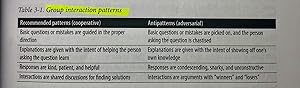


- Reviewed in the United States on December 19, 2020Format: PaperbackVerified Purchase
If you already are an experienced Software Engineer, then you probably have a pretty good notion of what you'll find in this book from the cover.
General good notions with emphasis on durability and some actionable advice
Reviewed in the United States on December 19, 2020
Many of the topics are off the beaten path but the good bits are found in the details, and there's a good amount of specific advice and references to tools to go with it.
Throughout the book the authors emphasize the benefits of having a long-term perspective when writing code, documentation and processes. That, I think, applies to many organizations regardless of size.
Many developers nowadays have access to may tools that were largely inaccessible outside of large organizations a decade and a half ago like GitHub (which provides a PR interface for example, as opposed to just being a bare-bones, pure-Git remote repo) and CI.
This book covers other practices that I think are maturing and should become more widely accessible in the coming years.
The only criticism I have is that I believe the book could have been a bit shorter had the editors elaborated less on some parts that read like boilerplate.
Images in this review


Top reviews from other countries
- J JamesReviewed in the United Kingdom on February 16, 2022
Fascinating read
Format: PaperbackVerified Purchase - RowanGReviewed in Australia on January 17, 2024
Long-winded, quite repetitive, some helpful nuggets
Format: KindleVerified Purchase - AdevReviewed in France on April 14, 2020
instructive, applied, complete.
Format: KindleVerified Purchase