Image

SEGA Music To MODfile, (Semi)Automatically

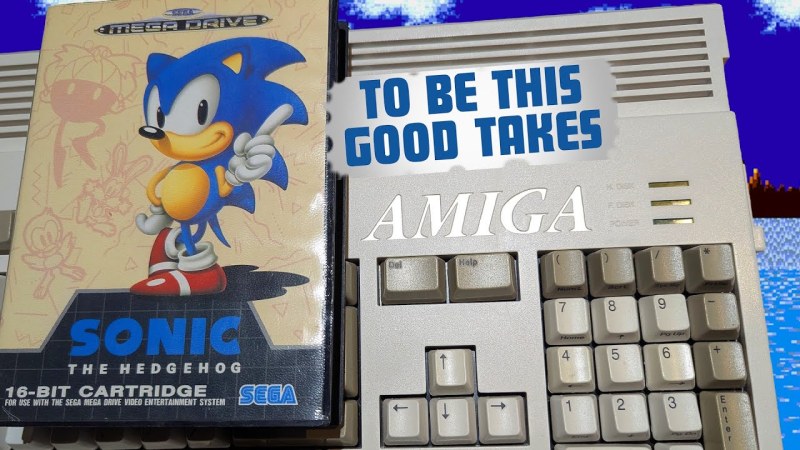
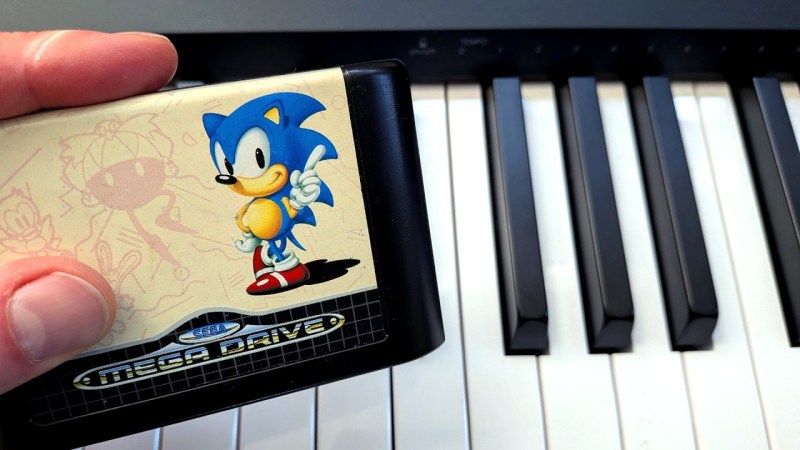
One thing SEGA’s MegaDrive/Genesis and the Commodore Amiga had in common was–aside from the Motorola 68000 processor– being known for excellent music in games. As [reassembler] continues his quest to de-assemble Sonic: The Hedgehog and re-assemble the code to run on Amiga, getting the music right is a key challenge. Rather than pull MIDI info or recreate the sound by ear, [reassembler] has written a program called Sonic2MOD to automatically take the assembly file music from the MegaDrive cartridge and turn it into an Amiga-style MODfile. He’s also made a video about it that you’ll find embedded below.

Of course how music gets made differs widly on the two systems. Amiga, famously has Paula, a custom ASIC designed for sampling, allowing you to play four eight-bit voices. The Sega, of course, has that glorious FM-synthesis chip from Yamaha synthesizing five channels of CD-quality sound and one channel of sample. It’s not as well known, but the Sega also has a bonus TI-compatible programmable sound chip (PSG) that can handle 3 square-wave tone channels and one noise channel. That’s ten total channels to the Amiga’s four, and CD-quality to 8-bit voices. Knowing all that, we were very curious how close to SEGA’s original music [reassembler] could get on the Amiga.

Before he could show us, [reassembler] needed to decode the SMPS files used on Sonic: The Hedgehog and many other MegaDrive games. Presumably he could have gotten a MIDI file online somewhere– there are oodles– but the goal was to reverse engineer Sonic from its cartridge for the Amiga, not download a lot of resources from the web. SMPS is a sort of programing language for sound, telling the Yamaha and PSG chips what to do.

In some ways, it’s not unlike the Amiga’s MOD format, which programmatically specifies how to play the sampled voices also stored in the file. Translating from one to another is a matter of reading the SMPS files, extracting the timing, volume, vibrato, et cetera, and translate that into a form the MOD file can use. Then [reassembler] needed to generate samples, which was an added hiccup because the Amiga can only handle 3 octaves vs the seven of the SEGA’s FM synthesizer. He’s able to solve this simply by generating multiple samples to span the Yamaha chip’s range, though, again, at only 8-bit fidelity. It doesn’t sound half bad.

What about the four-channel limit? That’s where a bit of artistry comes in; the automated tool produces MOD files with more voices, which MOD trackers can handle at increased computational load. Computational load you don’t need when trying to play a game. Scaling down the soundtrack to the Amiga’s limits is something [reassembler] already has practice with from his famous OutRun port, though, so we’re sure he’ll get it done.

All of this effort just to match the Mega Drive makes us appreciate what a capable little computer the Sega console was; why, you can even check your stocks with it! We’ve already featured [reassembler]’s Sonic port once before, but this music tool was interesting enough we couldn’t help ourselves coming back to it. The ability to play MOD files were pretty impressive when the Amiga came out, but nowadays all you need is a ten-cent microcontroller.

Continue reading “SEGA Music To MODfile, (Semi)Automatically”
Image

Lazarustorm Lets A PiStorm Live Outside Your Old Amiga

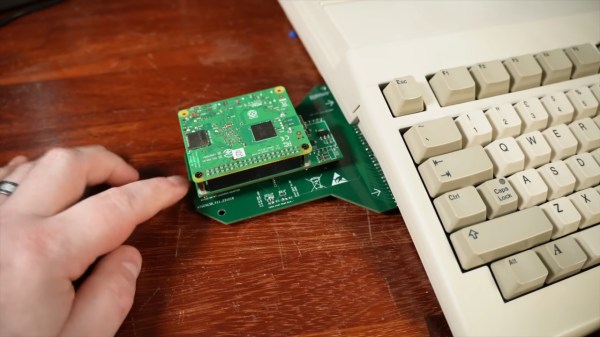
The PiStorm is nothing new; if you’re familiar with the retrocomputer scene, you’ve probably heard of it. By replacing the 68k processor in an old Amiga (or some models of Atari) the PiStorm accelerator gives a multiple order of magnitude speedup. It’s even a reversable mod, plugging in where the original CPU was. What’s not to love? Well, some people would simply prefer to keep their original CPUs in place. [TME Retro] has a video highlighting the solution for those people: the Lazarustorm by [arananet].

It makes perfect sense to us– back in the day, you could plug a whole x86 PC-compatible ‘sidecar’ into your Amiga, so why not a PiStorm? The whole bus is right there for the taking.The Lazarusstorm, as a project, is bog simple compared to the PiStorm itself. A PCB and the connectors to get it plugged into the expansion port on the Amiga side, and the connectors to plug the PiStorm into it on the other. A couple of jumpers and a few passives, and that’s it. [TME Retro] also took the time to come up with a case for it, which sits on felt feet to relieve stress on the PCBs. It’s a nice bit of CAD, but we rather wish he’d done it in beige.

As for the upgraded Amiga, it runs just as fast as it would had the 68k been replaced with a Pi3 and PiStorm internally, which is to say it’s practically a supercomputer by 1980s standards. You get the SD card to serve as a hard drive and can even access the internet via modern WiFi, something Commodore engineers likely never expected an A500 to do. Of course, just connecting to the network is only half the battle when getting these retro machines online. When these accelerators were new, the 68k emulation ran on top of Linux, but now that the EMU68k project has it bare metal and even faster.

This isn’t the first Raspberry-flavoured slice of Amiga sidecar we’ve featured: here’s one running Spotify. If you haven’t got an Amiga, there’s a PiStorm for the FPGA-based MiniMig, too. Continue reading “Lazarustorm Lets A PiStorm Live Outside Your Old Amiga”

A photo of the PiStorm68K circuit board

PiStorm68K Offers Supercharged Retro Amiga Experience

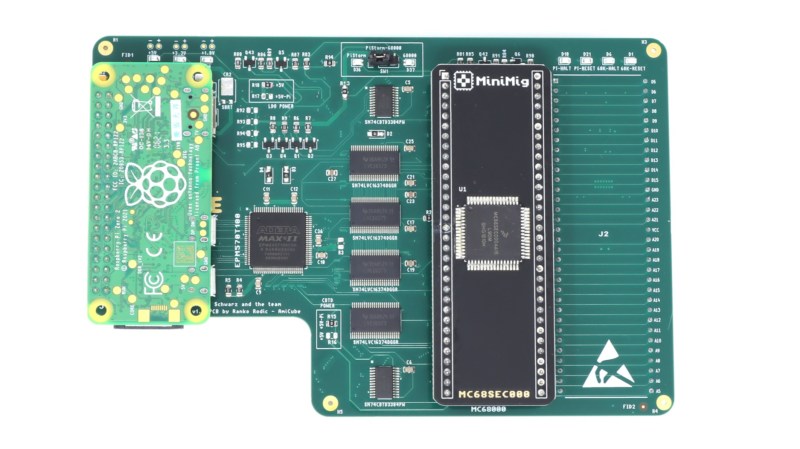
[AmiCube] has announced their new PiStorm68K special edition MiniMig accelerator board. This board was developed to replace the 68000 CPU in a MiniMig — a recreation of the original Amiga chipset in an FPGA allowing a real genuine 68000 CPU to operate.

The PiStorm68K itself can host a real genuine 68000 CPU but it can also host various Raspberry Pi models which can do emulation of a 68000. So if you combine a PiStorm68K with a MiniMig you can, at your option, boot into an emulated environment with massively increased performance, or you can boot into an original environment, with its reliable and charming sluggishness.

In the introduction video below, [AmiCube] uses the SYSINFO utility software to compare the CPU speed when using emulation (1531 MIPS) versus the original (4.47 MIPS), where MIPS means Millions of Instructions Per Second. As you can see the 68000 emulated by the Raspberry Pi is way faster than the original. The Raspberry Pi also emulates a floating-point unit (FPU) which the original doesn’t include and a memory management unit (MMU) which isn’t used.

If you’re interested in old Amiga tech you might also like to read about Chip Swap Fixes A Dead Amiga 600 or The Many-Sprites Interpretation Of Amiga Mechanics.

Continue reading “PiStorm68K Offers Supercharged Retro Amiga Experience”

Image

The Many-Sprites Interpretation Of Amiga Mechanics

The invention of sprites triggered a major shift in video game design, enabling games with independent moving objects and richer graphics despite the limitations of early video gaming hardware. As a result, hardware design was specifically built to manipulate sprites, and generally as new generations of hardware were produced the number of sprites a system could produce went up. But [Coding Secrets], who published games for the Commodore Amiga, used an interesting method to get this system to produce far more sprites at a single time than the hardware claimed to support.

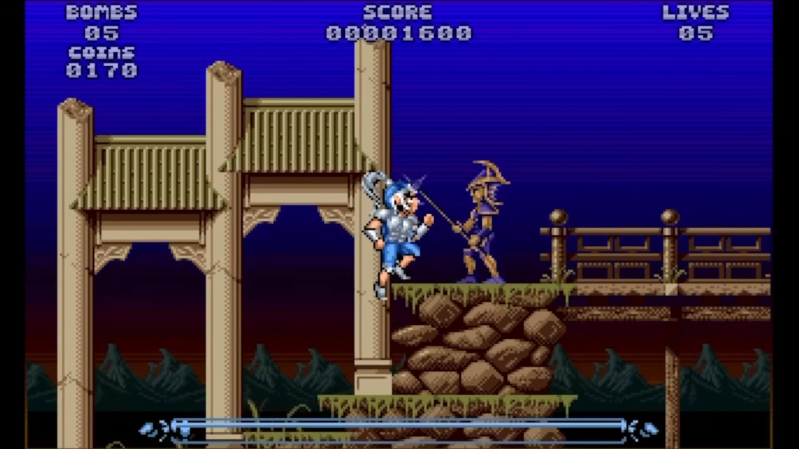
This hack is demonstrated with [Coding Secrets]’s first published game on the Amiga, Leander. Normally the Amiga can only display up to eight sprites at once, but there is a coprocessor in the computer that allows for re-drawing sprites in different areas of the screen. It can wait for certain vertical and horizontal line positions and then execute certain instructions. This doesn’t allow unlimited sprites to be displayed, but as long as only eight are displayed on any given line the effect is similar. [Coding Secrets] used this trick to display the information bar with sprites, as well as many backgrounds, all simultaneously with the characters and enemies we’d normally recognize as sprites.

Of course, using built-in hardware to do something the computer was designed to do isn’t necessarily a hack, but it does demonstrate how intimate knowledge of the system could result in a much more in-depth and immersive experience even on hardware that was otherwise limited. It also wasn’t free to use this coprocessor; it stole processing time away from other tasks the game might otherwise have to perform, so it did take finesse as well. We’ve seen similar programming feats in other gaming projects like this one which gets Tetris running with only 1000 lines of code.

Continue reading “The Many-Sprites Interpretation Of Amiga Mechanics”

Image

Chip Swap Fixes A Dead Amiga 600

The Amiga 600 was in its day the machine nobody really wanted — a final attempt to flog the almost original spec 68000 platform from 1985, in 1992. Sure it had a PCMCIA slot nobody used, and an IDE interface for a laptop hard drive, but it served only to really annoy anyone who’d bought one when a few months later the higher-spec 1200 appeared. It’s had a rehabilitation in recent years though as a retrocomputer, and [LinuxJedi] has a 600 motherboard in need of some attention.

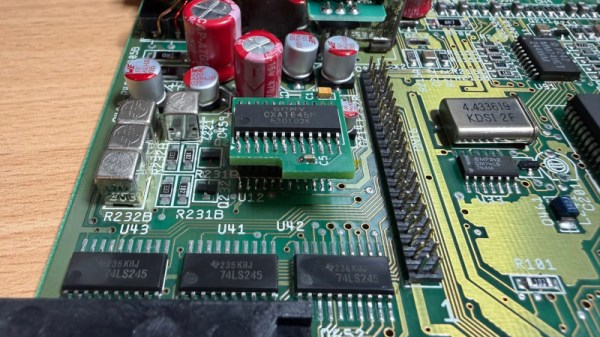
As expected for a machine of its age it can use replacement electrolytic capacitors, and its reset capacitor had bitten the dust. But there’s more to that with one of these machines, as capacitor leakage can damage the filter circuitry surrounding its video encoder chip. Since both video and audio flow through this circuit, there was no composite video to be seen.

The hack comes in removing the original chip rather than attempt the difficult task of replacing the filter, and replacing it with a different Sony chip in the same series. It’s nicely done with a connector in the original footprint, and a small daughterboard. The A600 lives again, but this time it won’t be a disappointment to anyone.

If you want to wallow in some Amiga history as well as read a rant about what went wrong, we have you covered.

Image

Off-Axis Rotation For Amiga-Themed Levitating Lamp

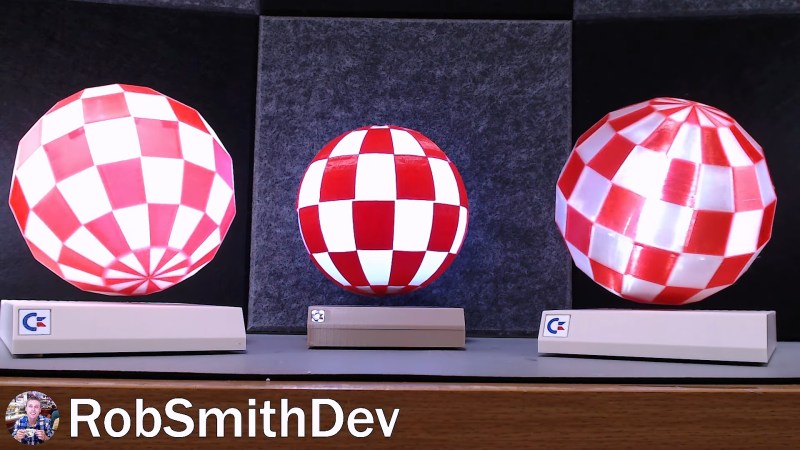
Do you remember those levitating lamps that were all the rage some years ago? Floating light bulbs, globes, you name it. After the initial craze of expensive desk toys, a wave of cheap kits became available from the usual suspects. [RobSmithDev] wanted to make a commemorative lamp for the Amiga’s 40th anniversary, but… it was missing something. Sure, the levitating red-and-white “boing” ball looked good, but in the famous demo, the ball is spinning at a jaunty angle. You can’t do that with mag-lev… not without a hack, anyway.

Continue reading “Off-Axis Rotation For Amiga-Themed Levitating Lamp”

Image

Blue Hedgehog, Meet Boing Ball: Can Sonic Run On Amiga?

The Amiga was a great game system in its day, but there were some titles it was just never going to get. Sonic the Hedgehog was one of them– SEGA would never in a million years been willing to port its flagship platformer to another system. Well, SEGA might not in a million years, but [reassembler] has started that process after only thirty four.

Both the SEGA Mega Drive (that’s the Genesis for North Americans) and Amiga have Motorola 68k processors, but that doesn’t mean you can run code from one on the other: the memory maps don’t match, and the way graphics are handled is completely different. The SEGA console uses so-called “chunky” graphics, which is how we do it today. Amiga, on the other hand, is all about the bitplanes; that’s why it didn’t get a DOOM port back in the day, which may-or-may not be what killed the platform.

In this first video of what promises to be a series, [reassembler] takes us through his process of migrating code from the Mega Drive to Amiga, starting specifically with the SEGA loading screen animation, with a preview of the rest of the work to come. While watching someone wrestle with 68k assembler is always interesting, the automation he’s building up to do it with python is the real star here. Once this port is done, that toolkit should really grease the wheels of bringing other Mega Drive titles over.

It should be noted that since the Mega Drive was a 64 colour machine, [reassembler] is targeting the A1200 for his Sonic port, at least to start. He plans to reprocess the graphics for a smaller-palette A500 version once that’s done. That’s good, because it would be a bit odd to have a DOOM-clone for the A500 while being told a platformer like Sonic is too much to ask. If anyone can be trusted to pull this project off, it’s [reassembler], whose OutRun: Amiga Edition is legendary in the retro world, even if we seem to have missed covering it.

If only someone had given us a tip off, hint hint.

Continue reading “Blue Hedgehog, Meet Boing Ball: Can Sonic Run On Amiga?”