Image

US FCC Prohibits Approval Of New Foreign-Made Consumer Routers

The US Federal Communications Commission (FCC) is tasked with regulating both wired and wireless communications, which also includes a national security component. This is how previously the FCC tossed networking gear made by Huawei and foreign-manufactured drones onto its Covered List, effectively banning it from sale in the US. Now foreign-made consumer routers have been added to this list, barring explicit conditional approval on said list that would exempt them during a ‘transition phase’.

As per the FCC fact sheet, this follows after determination by an interagency body that such routers “pose unacceptable risks to the national security of the United States [..]”. This document points us to the National Security Determination PDF, which attempts to lay out the reasoning. In it is noted that routers are an integral part of every day life, and compromised routers are a major risk factor, ergo it follows that only US-manufactured routers are to be trusted.

These – so far fictional – US-manufactured consumer routers would have to feature ‘trusted supply chains’, which would seem to imply onshoring a large industrial base, though without specifying how deep this would have to go it’s hard to say what would be involved. The ‘supporting evidence’ section also only talks about firmware-related vulnerabilities, which would imply that US firmware developers do not produce CVEs.

Continue reading “US FCC Prohibits Approval Of New Foreign-Made Consumer Routers”
Image

Ethernet For Hackers: Equipment Exploration

Last time, we talked about the surface-level details of Ethernet. They are fundamental to know for Ethernet hacking, but they’re also easy to pick up from bits and pieces online, or just from wiring up a few computers in your home network. Now, there’s also a bunch of equipment and standards that you will want to use with Ethernet – easy to find whether used or new, and typically as easy to work with. Let’s give you a few beacons!

Routers And Switches

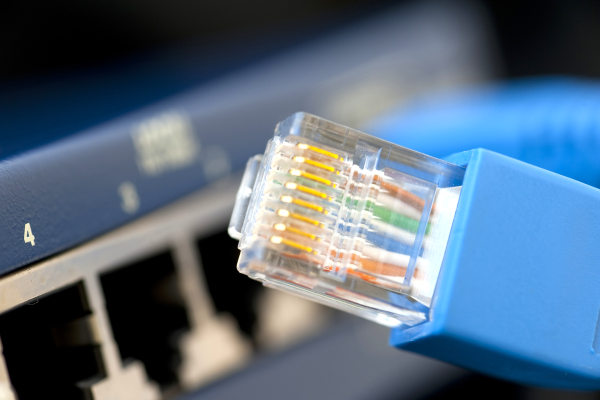
Whenever you see a box with a few Ethernet ports, it’s either referred to as a router, or a switch, sometimes people will even use the word “hub”! Fortunately, it’s simpler than it may seem. A router is a smart device, typically with an OS, that ties two or more networks together – routing packers from one network to another, and typically taking care of things like handing out local IP addresses via DHCP. A switch merely helps Ethernet devices exchange packets between each other on the same level – it’s typically nowhere near as smart as a router gets. Oftentimes, a home router will contain a switch inside, so that you can plug in multiple of your home devices at once. That’s the main difference – a switch merely transmits packets between Ethernet-connected devices, while a router is a small computer taking care of packet forwarding between networks and possibly including an Ethernet switch on the side.
Continue reading “Ethernet For Hackers: Equipment Exploration”

Image

UPnP, Vulnerability As A Feature That Just Won’t Die

UPnP — in a perfect world it would have been the answer to many connectivity headaches as we add more devices to our home networks. But in practice it the cause of a lot of headaches when it comes to keeping those networks secure.

It’s likely that many Hackaday readers provide some form of technical support to relatives or friends. We’ll help sort out Mom’s desktop and email gripes, and we’ll set up her new router and lock it down as best we can to minimise the chance of the bad guys causing her problems. Probably one of the first things we’ll have all done is something that’s old news in our community; to ensure that a notorious vulnerability exposed to the outside world is plugged, we disable UPnP on whatever cable modem or ADSL router her provider supplied.

Continue reading “UPnP, Vulnerability As A Feature That Just Won’t Die”

In Car WiFi

Image
You may have already heard that Chrysler is planning to provide in-car wireless internet access to its vehicles. If not, expect to hear more about it later this year when the requisite hardware becomes a sales-floor option, or next year when it becomes factory standard for some cars.

We can’t say it’s a bad idea, it’s just not a new one. Plenty of commercial portable routers are available, but they still need a modem and data plan to provide internet access. For internet access and wireless routing, look to [Nate True]’s cellphone-router combo, which uses a spare Nokia cellphone and a highly modded Wi-Fi router running OpenWRT. [True] has made it easy by providing the instructions and necessary custom code, but it seems like a lot of effort for a relatively slow connection. We think the original Stompbox is still the most fun since it has the speed of commercial devices and an open x86 OS to modify.