
Today's Starliner Media Update
Full audio recording. My question starts at 46:00
 Keith’s note: During the post-launch media briefing yesterday I was not allowed to ask a question even though I was listed by PAO as being online. Today I was last on the list (happens a lot) and there was a technical problem (ahem) so I had to repeat my question. I am not totally certain that everyone heard what I asked. Telecons are not something NASA has figured out how to do yet.
Otherwise not much in the way of news. Starliner will land tomorrow morning at White Sands around 7:57 a.m. EST. Boeing does not know why the Starliner’s clock could not get the right data from the Atlas V, and the spacecraft is performing flawlessly.
NASA Television to Air Boeing Starliner Spacecraft Landing



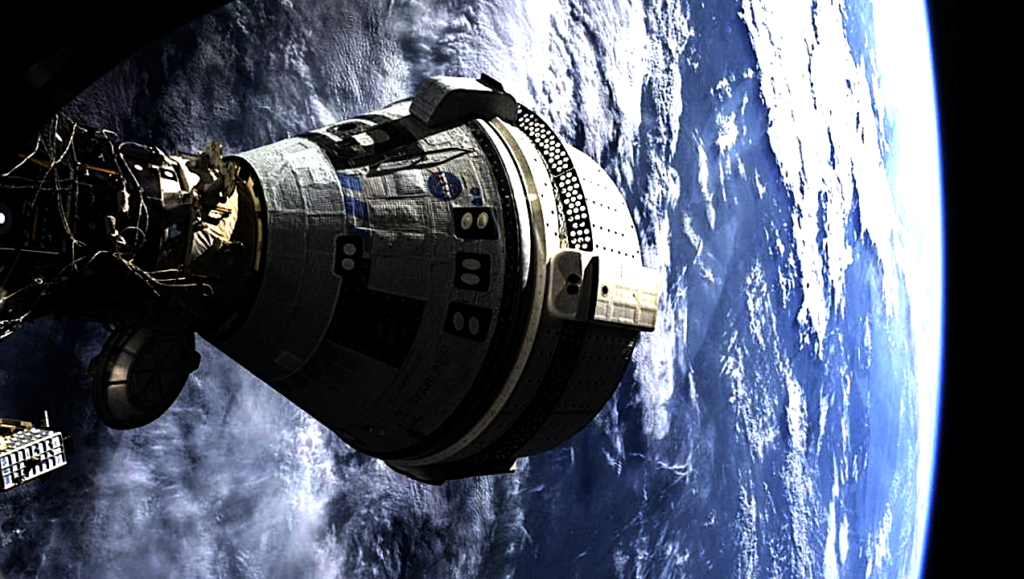




Here’s another question…How can they say that a live crew could have saved the mission when it is unlikely that a malfunctioning spacecraft would have been allowed to approach the station, crew or no crew, fuel of no fuel?
There are many many “malfunctions” and if the vehicle had been go for rendezvous – it could have done one. Sounds like it did not have enough attitude control fuel and so rendezvous was called off.
When you say “malfunctioning spacecraft” you have to specify what was malfunctioning – these are complex systems. When I worked on Shuttle we worked many “malfunctions” while completing major parts of the mission.
Even today it is not a sure thing to launch a vehicle – so they checked off a lot of their goals. Let’s see how the rest of the mission goes.
I remember back in the day Cargo Dragon suffered a couple of glitches IIRC. On one occasion the berthing attempt failed (sensor issue). The software for the sensor was reset, the Dragon went around again and successfully berthed. On another occasion a valve jammed disabling some super dracos. The engineers organized a ‘fuel slam’ to unblock the valve. It worked and the mission continued. SpaceX got lucky and dodged 2 bullets. Boeing was unlucky and got caught out.
Draco. The Dragon cargo vehicle doesn’t have Super Dracos. But yes, they’ve had in flight problems. I’m not sure any spacecraft, with or without crew, has ever flown without a single glitch or problem. The real trick is how people deal with them.
Perhaps unintentional but may of the comments keep turning to straw man arguments, as if anyone has said that only a squeaky clean perfect in every way spacecraft can approach ISS, regardless of whether any problems exhibited are fully understood and considered safe. All that has been said is that in this particular case, a spacecraft on its maiden flight which exhibited repeated uncommanded RCS firings in the first few minutes of its flight would be highly scrutinized about being allowed to dock with ISS unless it was known for sure that the problem is understood and solved.
Yet nothing along those lines was ever mentioned in the initial press conference at least that I heard, it only seemed to be framed as simply a question of fuel. Causing myself and a few others to wonder if it was realistic to expect ISS managers to allow docking when the cause of the control problem with the new spacecraft was still not confirmed.
Things have since changed since those comments were posted as Boeing has now confirmed that the MET problem appears to be the sole problem and they seem sure that although root cause has still not been determined, it is no more complex than grabbing the wrong data from Atlas.
With that knowledge and what eventually became two full days of successful on-orbit operation, if Starliner had still been in orbit and had enough fuel I’m sure there would be movement towards resuming the mission including docking. So in the end it looks like it really was the fuel loss during the anomaly that wound up preventing docking.
By the time Shuttle was flying to ISS it had flown nearly one hundred times. Any problems that cropped up after launch but prior to ISS docking could be understood relatively quickly and determined if they posed any risk to the station. Starliner on the other hand is a brand new spacecraft on its maiden flight which had a major malfunction of its autonomous control system just minutes after launch. I think there would be much less of a chance of building enough certainly in the cause of the problem and assessing potential risk for them to consider docking with ISS.
In fact with astronauts on board it seems more likely to me that they would have immediately aborted the mission since they would have still been on the suborbital trajectory which was designed exactly for that reason to allow a quick return to Earth at a preplanned site in case of any critical problems that occurred in the first few minutes after launch. The control system problem occurred with only minutes to decide whether the spacecraft was safe to continue the mission, and the astronauts likely would have been directed to shut off the automatic system and then manually orient the spacecraft for reentry. Maybe after landing and determining the cause they would have realized that it had actually not been life threatening for the crew, but to paraphrase an old aviation saying, it’s better to be on the ground wishing you had done the orbital insertion burn than to be in orbit wishing you hadn’t.
Well, the Saturn V carrying Apollo 12 got hit by lightning and all the telemetry went crazy for a minute or so. They didn’t abort, they just had a smart guy who told the crew to hit a reset button. Yes, I am playing fast and lose with the details. And yes, the NASA of 2019 isn’t the same as the NASA of 1969. And Boeing isn’t the same either.
I think it was more than just the cultural difference of fifty years, although that was likely a factor. Apollo 12 was the ninth flight of an Apollo capsule, counting the three unmanned flights, so there would have been more confidence in making quick determinations from the data regarding the health of the spacecraft.
Also after the lightning strikes the Saturn V was performing fine as the IU had been unaffected. The problem was that the capsule displays and telemetry gave the impression that the entire command module system had gone haywire, leading towards an abort decision. The real contribution of John Aaron was not just knowing about the SCE switch, what was really even more important is that he recognized a pattern in the garbled displays from a previous sim where the SCE was not receiving sufficient power. The SCE processed data that went to the instruments and telemetry. This insight led Aaron to realize that what appeared to everyone else to be multiple system failures was actually a single and simple “display” problem that could be quickly fixed with the now infamous suggestion to “Try (setting) SCE to AUX”. This cleared up the instruments and telemetry and the mission continued, a decision based on confidence that the problem had been single and now solved and the rest of the system was observed to be functioning normally.
However with Starliner it wasn’t a display issue, the capsule was actually doing wrong things like thruster firings it wasn’t supposed to be doing at that time, and failing to perform the orbit insertion burn. Eventually someone in Starliner mission control had the John Aaron type of insight moment, when they realized that all of the craziness actually had a pattern, it was as if the capsule thought it was in a different part of the timeline. This insight led to the realization that the MET was wrong and simply had to be reset. My assertion, or at least theory not knowing the timeline, is that they didn’t figure this out until well past the few minutes they had available to decide whether to manually command the orbit insertion or simply allow the spacecraft to continue on its planned reentry trajectory. As far as I know they issued the orbit insertion command prior to having figured out what was causing the capsule to act crazy. Now if their John Aaron was as fast acting as the real John Aaron had been in terms of diagnosing and correcting the problem, and had figured out in the few available minutes that the system was fine it was just the clock that was wrong, then yes they might have given the crew a go for manual orbit insertion.
Another (possibly) interesting insight from podcast “The Orbital Mechanics” who noticed the incessant thruster firings.
Here I am falling into non-engineering babble speak, forgive me: imagine a line running through the center of the craft, front to back, and so on the centerline of the craft.
The craft is to maintain this line, through use of thrusters. However, at certain times, the craft is given larger amount of departure: it can swing more widely. Other times, as when approaching a docking maneuver, the swinging must be near zero.
So. The craft was observed attempting to bring the departure under control, and perhaps to zero, at a time when it was not necessary and as it appears not even possible, leading to thrusters reacting madly, but properly.
Perhaps a more learned person can substitute proper terms. Nonetheless, this would be consistent with the clock issue.
That’s called a “dead band”, and they are very common in control systems. The thermostat in your house has one. When you set it to 72 degrees, it doesn’t turn the heat on when the temperature falls to 71.999 deg. or off when it climbs to 72.001 deg. If it did, it would be cycling off and on all the time. That would wear the system out (as well as being very annoying.) It probably has a one degree dead band and switches at 71.5 and 72.5 deg. when set to 72.
Spacecraft attitude control thrusters definitely have dead bands, and they are dialed up and down depending on pointing requirements. Setting too tight a dead band will use extra fuel, potentially lots of extra fuel is something’s putting additional torques on the vehicle. I can imagine ways that could have been a problem for the Starliner flight. But I can’t connect all the dots, and I’d rather not guess based on the available information. That might unfairly imply someone made a serious mistake. (Ok. Someone did make a serious mistake, but I don’t want to imply anything about who or exactly what.)
I’m willing to bet a large sum that you’ve never flown on an airplane without at least one single broken part. And commercial aviation is insanely safe. One of the main points of having a crew is to deal with unexpected problems. If they can’t be trusted to reset a clock, what’s the point of having astronauts around at all?
I thought I heard the that gap in communications was not because of a gap between communication satellite coverage but because the capsule pointed the antenna in the wrong direction because it didn’t know what time it was because ground control couldn’t tell it because they weren’t in communication. Or something like that.
Boeing doesn’t put much in the way of design specs on their web page, but that doesn’t seem right to me. Even CubeSats have omni-directional antennas. It’s low gain and usually just a backup, but it’s a pretty pervasive practice to have one and automatically switch to it if there’s a loss of signal on the primary.
So they are landing it in the dark, two and half hours before local sunrise. Guess there won’t be much of any video to see… Did they show the re-entry path?
Yeah. I wish they waited for daylight, but…
I’m sure NASA asked Boeing to spring for a couple of infrared cameras to follow the capsule during reentry & landing.
The weather forecast is showing partly cloudy, so I hope they will be able to get some good images.
NASA certainly has IR assets, which they’ve used for Orion and shuttle. This whole mission has been in the dark figuratively speaking.
A data interpretation or transfer problem seems like a significant issue, one significant enough to require another test flight before putting humans on board. I get that we want to start flying astronauts on American ships as soon as possible and that Boeing likely wants badly to beat SpaceX on that point, but have Boeing and NASA forgotten the downsides to “go fever”? I would hope that the lessons of the past would inform decisions about what’s next on the flight schedule for the Atlas V/CST-100 stack.
So— they opted for the first ever full-up Starliner rentry and landing to be a night landing ? I guess having visible action video for engineering and documentary purposes is not important.
There is another opportunity at midday. Just sayin’
NASA TV will be covering the landing:
December 22, 2019
MEDIA ADVISORY M19-143
NASA Television to Air Boeing Starliner Spacecraft Landing
NASA and Boeing will provide live coverage of the landing on Sunday, Dec. 22, of the company’s CST-100 Starliner spacecraft, on return from its Orbital Flight Test for NASA’s Commercial Crew Program.
Starliner will execute a deorbit burn at 7:23 a.m. EST to begin its return to Earth, headed for a parachute-assisted landing at 7:57 a.m. at White Sands Space Harbor in New Mexico. NASA Television and the agency’s website will provide mission coverage ahead the spacecraft reentry and landing beginning at 6:45 a.m.
NASA and Boeing will host a postlanding news conference at 10 a.m. with:
NASA Administrator Jim BridenstineJim Chilton, senior vice president of Boeing’s Space and Launch DivisionSteve Stich, deputy manager of NASA’s Commercial Crew Program
The uncrewed Starliner spacecraft launched on a United Launch Alliance (ULA) Atlas V rocket Friday, Dec. 20, from Space Launch Complex 41 at Cape Canaveral Air Force Station in Florida.
Though Starliner did not reach the planned orbit or dock to the space station as planned, Boeing still was able to complete a number of test objectives. Teams from NASA, Boeing and ULA worked quickly to ensure the spacecraft was in a stable orbit and preserved enough fuel for multiple landing opportunities.
I just read a Tweet by Jonathon McDowell that said the the Mission Elapst Timer was off by 11 hours.
Jonathan is a wonderful guy and very accurate but a tweet is NOT a complete story and is nothing to base a decision on. Now if we could only convince a large part of our electorate of that.