Buy New
-26%
$12.52$12.52
FREE delivery Tuesday, April 28 on orders shipped by Amazon over $35
Advertisement
Advertisement
Ships from: Amazon.com Sold by: Amazon.com
Used - Very Good
$5.67$5.67
FREE delivery April 30 - May 4
Advertisement
Advertisement
Ships from: GREENWORLD BOOKS Sold by: GREENWORLD BOOKS
Sorry, there was a problem.
There was an error retrieving your Wish Lists. Please try again.Sorry, there was a problem.
List unavailable.
Download the free Kindle app and start reading Kindle books instantly on your smartphone, tablet, or computer - no Kindle device required.
Read instantly on your browser with Kindle for Web.
Using your mobile phone camera - scan the code below and download the Kindle app.
Follow the author
OK
In the Beginning...was the Command Line Paperback – November 9, 1999
Purchase options and add-ons
This is "the Word" -- one man's word, certainly -- about the art (and artifice) of the state of our computer-centric existence. And considering that the "one man" is Neal Stephenson, "the hacker Hemingway" (Newsweek) -- acclaimed novelist, pragmatist, seer, nerd-friendly philosopher, and nationally bestselling author of groundbreaking literary works (Snow Crash, Cryptonomicon, etc., etc.) -- the word is well worth hearing. Mostly well-reasoned examination and partial rant, Stephenson's In the Beginning... was the Command Line is a thoughtful, irreverent, hilarious treatise on the cyber-culture past and present; on operating system tyrannies and downloaded popular revolutions; on the Internet, Disney World, Big Bangs, not to mention the meaning of life itself.
- Print length160 pages
- LanguageEnglish
- PublisherWilliam Morrow Paperbacks
- Publication dateNovember 9, 1999
- Dimensions5.25 x 0.36 x 8 inches
- ISBN-109780380815937
- ISBN-13978-0380815937
Frequently bought together

Customers who viewed this item also viewed
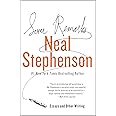
Some Remarks: Essays and Other Writing – A Brilliant Collection on Science and Technology from Newton to Star WarsPaperbackFREE Shipping on orders over $35 shipped by AmazonGet it as soon as Tuesday, Apr 28
Just for Fun: The Story of an Accidental RevolutionaryPaperbackFREE Shipping on orders over $35 shipped by AmazonGet it as soon as Tuesday, Apr 28Only 6 left in stock - order soon.
AnathemMass Market PaperbackFREE Shipping on orders over $35 shipped by AmazonGet it as soon as Tuesday, Apr 28
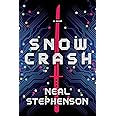
Snow Crash: A NovelPaperbackFREE Shipping on orders over $35 shipped by AmazonGet it as soon as Tuesday, Apr 28
CryptonomiconPaperbackFREE Shipping on orders over $35 shipped by AmazonGet it as soon as Tuesday, Apr 28
Interface: A NovelPaperbackFREE Shipping on orders over $35 shipped by AmazonGet it as soon as Tuesday, Apr 28
Customers also bought or read
- Some Remarks: Essays and Other Writing – A Brilliant Collection on Science and Technology from Newton to Star Wars
Paperback$9.99$9.99Delivery Tue, Apr 28 - The Diamond Age: Or, a Young Lady's Illustrated Primer (Bantam Spectra Book)
Paperback$12.80$12.80Delivery Tue, Apr 28 - The Cathedral & the Bazaar: Musings on Linux and Open Source by an Accidental Revolutionary
Paperback$21.85$21.85Delivery May 8 - 12 - The Elements of Computing Systems, second edition: Building a Modern Computer from First Principles
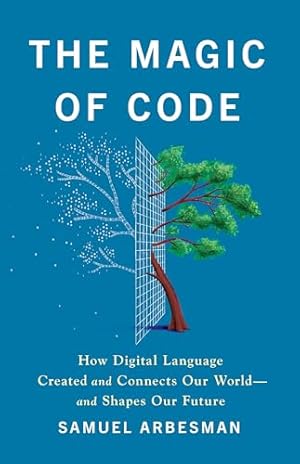
Paperback$40.38$40.38FREE delivery Tue, Apr 28 - The Magic of Code: How Digital Language Created and Connects Our World―and Shapes Our Future
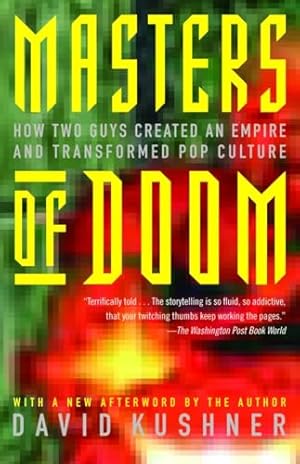
Hardcover$18.68$18.68Delivery May 4 - 7 - Masters of Doom: How Two Guys Created an Empire and Transformed Pop Culture
Paperback$11.34$11.34Delivery Tue, Apr 28 - Palo Alto: A History of California, Capitalism, and the World
Paperback$22.99$22.99Delivery Tue, Apr 28 - The Irrational Decision: How We Gave Computers the Power to Choose for Us
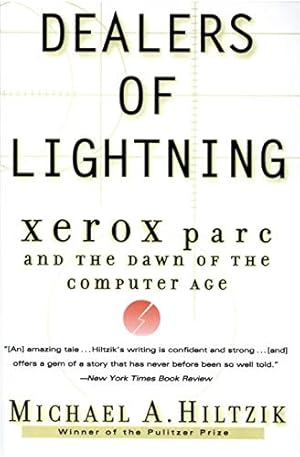
Just releasedHardcover$27.91$27.91Delivery Tue, Apr 28 - Dealers of Lightning: Xerox PARC and the Dawn of the Computer Age
Paperback$10.47$10.47Delivery Tue, Apr 28 - Tools for Thought: The History and Future of Mind-Expanding Technology
Paperback$48.12$48.12FREE delivery Tue, Apr 28 - The Fabric of Reality: The Science of Parallel Universes--and Its Implications
Paperback$14.78$14.78Delivery Tue, Apr 28 - Efficient Linux at the Command Line: Boost Your Command-Line Skills
Paperback$37.53$37.53FREE delivery Tue, Apr 28 - iWoz: Computer Geek to Cult Icon: How I Invented the Personal Computer, Co-Founded Apple, and Had Fun Doing It
Paperback$15.25$15.25Delivery Tue, Apr 28 - The Cuckoo's Egg: Tracking a Spy Through the Maze of Computer Espionage
Paperback$16.82$16.82Delivery Tue, Apr 28 - Termination Shock: A Thriller about a Near-Future Dealing with Fallout from Environmental Disaster
Paperback$13.49$13.49Delivery Tue, Apr 28 - The Idea Factory: Bell Labs and the Great Age of American Innovation
Paperback$12.46$12.46Delivery Tue, Apr 28 - Seeing Like a State: How Certain Schemes to Improve the Human Condition Have Failed (Veritas Paperbacks)
Paperback$20.46$20.46Delivery May 18 - Jun 11
From the Publisher
Some Remarks
|
In the Beginning...Was the Command Line
|
|
|---|---|---|
|
Add to Cart
|
Add to Cart
|
|
| Customer Reviews |
4.4 out of 5 stars 210
|
4.2 out of 5 stars 490
|
| Price | $9.99$9.99 | $12.52$12.52 |
| no data |
Editorial Reviews
Amazon.com Review
Stephenson is a techie, and he's writing for an audience of coders and hackers in Command Line. The idea for this essay began online, when a shortened version of it was posted on Slashdot.org. The book still holds some marks of an e-mail flame gone awry, and some tangents should have been edited to hone his formidable arguments. But unlike similar writers who also discuss technical topics, he doesn't write to exclude; readers who appreciate computing history (like Dealers of Lightning or Fire in the Valley) can easily step into this book.
Stephenson tackles many myths about industry giants in this volume, specifically Apple and Microsoft. By now, every newspaper reader has heard of Microsoft's overbearing business practices, but Stephenson cuts to the heart of new issues for the software giant with a finely sharpened steel blade. Apple fares only a little better as Stephenson (a former Mac user himself) highlights the early steps the company took to prepare for a monopoly within the computer market--and its surprise when this didn't materialize. Linux culture gets a thorough--but fair--skewering, and the strengths of BeOS are touted (although no operating system is nearly close enough to perfection in Stephenson's eyes).
As for the rest of us, who have gladly traded free will and an intellectual understanding of computers for a clutter-free, graphically pleasing interface, Stephenson has thoughts to offer as well. He fully understands the limits nonprogrammers feel in the face of technology (an example being the "blinking 12" problem when your VCR resets itself). Even so, within Command Line he convincingly encourages us as a society to examine the metaphors of technology--simplifications that aren't really much simpler--that we greedily accept. --Jennifer Buckendorff
From Library Journal
Copyright 1999 Reed Business Information, Inc.
Review
From the Back Cover
This is "the Word" -- one man's word, certainly -- about the art (and artifice) of the state of our computer-centric existence. And considering that the "one man" is Neal Stephenson, "the hacker Hemingway" (Newsweek) -- acclaimed novelist, pragmatist, seer, nerd-friendly philosopher, and nationally bestselling author of groundbreaking literary works (Snow Crash, Cryptonomicon, etc., etc.) -- the word is well worth hearing. Mostly well-reasoned examination and partial rant, Stephenson's In the Beginning... was the Command Line is a thoughtful, irreverent, hilarious treatise on the cyber-culture past and present; on operating system tyrannies and downloaded popular revolutions; on the Internet, Disney World, Big Bangs, not to mention the meaning of life itself.
About the Author
Neal Stephenson is the #1 New York Times bestselling author of the novels Termination Shock, Fall; or, Dodge in Hell, The Rise and Fall of D.O.D.O. (with Nicole Galland), Seveneves, Reamde, Anathem, The System of the World, The Confusion, Quicksilver, Cryptonomicon, The Diamond Age, Snow Crash, Zodiac, and the groundbreaking nonfiction work In the Beginning . . .Was the Command Line. He lives in Seattle, Washington.
Product details
- ASIN : 0380815931
- Publisher : William Morrow Paperbacks
- Publication date : November 9, 1999
- Edition : First Paperback Edition
- Language : English
- Print length : 160 pages
- ISBN-10 : 9780380815937
- ISBN-13 : 978-0380815937
- Item Weight : 2.31 pounds
- Dimensions : 5.25 x 0.36 x 8 inches
- Best Sellers Rank: #209,939 in Books (See Top 100 in Books)
- #151 in Computers & Internet Humor
- #172 in Software Development (Books)
- #441 in Humor Essays (Books)
- Customer Reviews:
About the author

NEAL STEPHENSON is the #1 New York Times bestselling author of the novels Termination Shock, Fall; or, Dodge in Hell, The Rise and Fall of D.O.D.O. (with Nicole Galland), Seveneves, Reamde, Anathem, The System of the World, The Confusion, Quicksilver, The Diamond Age, Snow Crash, Zodiac, the groundbreaking nonfiction work In the Beginning . . . Was the Command Line, and Some Remarks, a collection of short fiction and nonfiction. He lives in Seattle, Washington.
Related products with free delivery on eligible orders
Customer reviews
Customer Reviews, including Product Star Ratings help customers to learn more about the product and decide whether it is the right product for them.
To calculate the overall star rating and percentage breakdown by star, we don’t use a simple average. Instead, our system considers things like how recent a review is and if the reviewer bought the item on Amazon. It also analyzed reviews to verify trustworthiness.
Learn more how customers reviews work on AmazonCustomers say
Generated from the text of customer reviewsSelect to learn more
Top reviews from the United States
There was a problem filtering reviews. Please reload the page.
- Reviewed in the United States on June 13, 2025Format: KindleVerified PurchaseThe author looks at the development of the operating system in a practical way. The author shows the history and the development of the command line, but also explains the practicality of the GUI. And the importance of the GUI in making the computer a commodity item.
- Reviewed in the United States on December 25, 2005Format: PaperbackVerified PurchaseIn the Beginning...Was the Command Line
Originally published in 1999, Neal's essay on operating systems is, like most of his writing, multilayered and filled with palatable prose and a thought provoking potpourri of information that, especially in the case of this essay in book form, often requires rereading for proper digestion.
Neal has a lot to say in Command Line.
First and foremost, I walked away with the following impression: in the world of Neal, Windows is a necessary but doomed operating system. Neal explains why as only he can. He also tells you why Apple is doomed and Microsoft might be. Furthermore, Neal explains that there are better operating systems available and makes a case for why you might want to try them out: they are free, and they don't crash. These two operating systems are Linux, which is a variant of UNIX and BeOS, which is the product of a mad Frenchman but which has many merits that outweigh the product's French origins.
Command Line is filled with memorable statements that sometimes border on or are in all actuality, profound.
For instance - "Contemporary culture is a two-tiered system, like the Morlocks and the Eloi in H.G. Wells The Time Machine, except it has been turned upside down. In The Time Machine, the Eloi were an effete upper class supported by lots of subterranean Morlocks who kept the technological wheels turning. But in our world, it's the other way round. The Morlocks are in the minority, and they are running the show, because they understand how everything works. The much more numerous Eloi learn everything they know from being steeped from birth in electronic media directed and controlled by book-reading Morlocks. That many ignorant people could be dangerous if they got pointed in the wrong direction, and so we've evolved a popular culture that is (a) almost unbelievably infectious, and (b) neuters every person who get infected by it, by rendering them unwilling to make judgments and incapable of taking stands."
In other words, Neal is saying, there are the people who read the book and there are the people who only watch the movie that is made about the book, and the people who read the book are the people who really know what the author was saying. The people who watch the movie don't really get it, because they get the filtered version, the dumbed down version, the version built for mass consumption by those who are less intelligent or perhaps just not as focused.
Command Line isn't for everyone. It's for Morlocks, or those who want to be Morlocks. If you've never owned a pocket protector, opened your computer case up or tinkered with the innards of any of the plethora of electronic devices you own, then you probably won't consume this book with relish, as I did.
Now, if you've stuck with my review to this paragraph, you likely are the type who will enjoy Command Line. Most importantly, you are, in all probability, the type to ponder on and eventually benefit from Neal's closing, in which he compares God to an engineer and remind his readers that, "if you don't like having your choices made for you, you should start making your own."
I came away from reading Command Line thoroughly convinced that I need to explore BeOS when I return from the war I'm currently fighting. And of course, I will continue making my own choices whenever possible, rather than letting others make them for me.
Update: Since I wrote the review I've been talking to people and reading Neal's web site. Two things are apparent to me: a) the book is very dated and b) Macintosh made the very smart decision to move their OS to a UNIX based product. This book will still be a highly enjoyable read if you have the soul of a nerd, as I do.
- Reviewed in the United States on December 21, 2001Format: PaperbackVerified PurchaseAs a hardware/software engineer I have worked with MS-DOS, Windows, MacOS, and UNIX for many years. Reading this fairly short, critical, and sometimes hysterically funny essay was an enjoyable experience, albeit I had some major reservations about some of Neal's suppositions and conclusions.
Stephenson presents, first of all, a rather simplified version of the history of PC computing world and the operating systems that have helped define and advance (or impede) the development of the PC from something that only a geek could love to a ubiquitous near-appliance. His definition of what an operating system is matches what most programmers, using common sense, would call an operating system: a suite of low level tools that perform the mundane tasks of interpreting what an application wants to do to the physical realm of reading/writing memory, disk files, displaying graphics, etc. This is not a trivial point, as the current insistence by Microsoft that its operating system is inclusive of web browsers, audio/video players, and other application-level programs is a key item in its anti-trust defense. However, Stephenson bypasses the relevance of this in favor of defining the differences between the MacOS, Windows, UNIX, and BeOS. For this purpose he uses a highly useful (and sometimes funny) metaphor defining each OS as a car dealership, each of whom sells their type of product to a different type of customer.
One of his major points is the idea that an OS is a saleable product, even though in essence it is nothing but a long string of 1's and 0's, information only, and not a physical item, represents a paradigm shift, on the order of trying to sell a car's driving interface (steering wheel, brakes, etc) as a product separate from, and having intrinsic value in its own right, the car itself. Given the obvious nonsense of this separation in the case of the car, he makes the case that operating systems should all eventually be given away free, ala Linux, and that businesses that depend on OS income are treading a very dangerous path.
He shows a definite preference for those OSs that allow the user to 'get under the hood' and tweak its operating parameters, such as Linux, and includes a long discourse on the whole concept of simplified, pre-packaged interfaces as culturally defining/defined, including some good analogies with what Disney does to make complex, detailed subjects immediately comprehensible to Joe Six-Pack.
All of this makes for easy, enjoyable reading, whether you are a power user or just someone who wants to send e-mails. But his conclusions about which OS is best and the future direction of OS evolution is definitely skewed towards the power user, someone who is comfortable in dealing with all the inner complexities of computers and software. As such, he sometimes forgets that computers are a tool (even though he devotes a section to different levels of tools in terms of quality , power and user skill levels), of no use to the user except insofar as they provide something that user wants and needs, and it is that end result the user wants, at the absolute minimum of fuss on his part.
A thought provoking essay, whether you agree with him or not.
- Reviewed in the United States on November 4, 2012Format: KindleVerified PurchaseBeing only 25 years old, I grew up somewhere in the middle of the OS's lifetime. This book was educational for someone who takes advantage of modern OSes, and it also sheds light on the blissful console command times. I struggle with GUIs often, and the author highlights the pros and cons of the introduction of them. He also compares the for-profit business model of selling OSes versus open source which I was well aware of, but he makes points I had not considered before.
As a computer person and programmer, I really enjoyed the content and writing style.
Top reviews from other countries
-
Cliente AmazonReviewed in Spain on November 19, 20195.0 out of 5 stars Muy bueno.
Format: PaperbackVerified PurchaseGenial. Un clasico.
R. G. MilnerReviewed in the United Kingdom on January 9, 20055.0 out of 5 stars An excellent read although somewhat dated.
Format: PaperbackVerified PurchaseThis is an excellent book, a very entertaining and worthwhile read if you are at all interested in modern computer operating systems.
However, like all computer science books, the technological aspect of it has already dated considerably, reducing its relevance as a survey. This is of course inevitable in such a fast-moving field. I would be very interested to read an updated edition taking into account the current situation in the OS marketplace.
Stephenson primarily contrasts Windows(tm), Linux, MacOS and BeOS. Out of these systems, BeOS is basically dead, MacOS has undergone a sea change (to a considerable extent building on BeOS and Linux), Linux has grown in sophistication and user-friendliness, and Windows is... still basically Windows with some extra knobs on it.
The book should not be ignored, though. The fundamental issue Stephenson comments on - whether it's possible to control complex equipment through simplified interfaces - is never going to disappear. It's also an entertaining read simply for the author's wonderful use of language.
thibaudReviewed in France on October 13, 20094.0 out of 5 stars Once upon a time, there was no Windows...
Format: PaperbackVerified PurchaseThe book is a really well written in-depth look at the way we see a computer. The author takes the case of the Personal Computer and the history behind OSeses like BEoS, PCDOS, MS Dos and Windows. It can be considered obsolete and out of date if you do not really pay attention to what a computer is and what it is not. It is actually universal if you take a step back and see down the line on how things can be or could have been. The chapter about the GUI was a good analysis about what our PCs might have been today if people were more thorough about making a decision based on something else than just mere looks. Overall this book is easy to read and while it gets theoretically detailed about notions that most of computer users have forgotten or will never need to know, it is really interesting and never a bore.
-
PerseusReviewed in Germany on February 2, 20095.0 out of 5 stars "Brevity is the soul of wit"
Format: PaperbackVerified Purchase"In the Beginning was the Command Line" ist ein kompaktes Essay, in dem sich Neal Stephenson auf SEHR ironische Weise mit der Geschichte von Betriebsystemen auseinandersetzt: Ohne Wissen der meisten Benutzer tobt schon seit Jahren ein Kampf zwischen zwei ganz unterschiedlichen Bedienkonzepten.
Auf der einen Seite: Die Verfechter der grafischen Benutzeroberflächen (Buttons, Menüs, Regler usw.). Alles soll möglichst "schön" aussehen und Einsteiger animieren.
Auf der anderen Seite: Die Puristen. Die Programmierer. Sie bevorzugen die direkte Kontrolle über den Computer, eben die Kommandozeile.
Mit diesem Gegensatz als Aufmacher führt Stephenson den Leser nicht nur in die Funktionsweise von Betriebsystemen ein (was auch für einige Lacher sorgt; lassen Sie sich von den "Auto"-Metaphern überraschen, die in keinem Buch über EDV fehlen dürfen), sondern spannt sogar noch den Bogen für (ein wenig) Kritik an der westlichen Konsumgesellschaft ("Morlocks" vs. "Eloi").
In einem Wort: Herrlich.
[Das Buch kann auch von weniger technisch veranlagten Lesern verstanden werden; jene sind sogar meines Erachtens die Zielgruppe, denn Stephenson möchte nicht zuletzt auch erläutern, wie sich unser Umgang mit dem Computer verändert hat.]
Zubair ShaikhReviewed in India on August 10, 20251.0 out of 5 stars Outdated and irrelevant
Format: PaperbackVerified PurchasePrint quality is very good. Better than most paperback.
The book is also freely available on the web.
The book has biases and the author has not done much research.
The essay is outdated and irrelevant.
Not recommended.