Customers who viewed this item also viewed
Buy New
$12.99$12.99
FREE delivery Thursday, April 30 on orders shipped by Amazon over $35
Advertisement
Advertisement
Ships from: Amazon.com Sold by: Amazon.com
Used - Very Good
$7.38$7.38
FREE delivery May 4 - 7
Advertisement
Advertisement
Ships from: GreatBookDealz Sold by: GreatBookDealz
Sorry, there was a problem.
There was an error retrieving your Wish Lists. Please try again.Sorry, there was a problem.
List unavailable.
Download the free Kindle app and start reading Kindle books instantly on your smartphone, tablet, or computer - no Kindle device required.
Read instantly on your browser with Kindle for Web.
Using your mobile phone camera - scan the code below and download the Kindle app.
Follow the author
OK
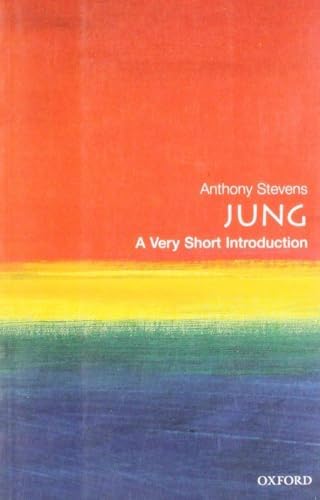
Jung: A Very Short Introduction 1st Edition
Purchase options and add-ons
About the Series: Combining authority with wit, accessibility, and style, Very Short Introductions offer an introduction to some of life's most interesting topics. Written by experts for the newcomer, they demonstrate the finest contemporary thinking about the central problems and issues in hundreds of key topics, from philosophy to Freud, quantum theory to Islam.
- ISBN-109780192854582
- ISBN-13978-0192854582
- Edition1st
- PublisherOxford University Press
- Publication dateJune 7, 2001
- LanguageEnglish
- Dimensions7 x 0.5 x 4.43 inches
- Print length192 pages
Frequently bought together

Similar items that may deliver to you quickly
Freud: A Very Short IntroductionPaperbackFREE Shipping on orders over $35 shipped by AmazonGet it as soon as Thursday, Apr 30
Psychoanalysis: A Very Short IntroductionPaperbackFREE Shipping on orders over $35 shipped by AmazonGet it as soon as Thursday, Apr 30Only 20 left in stock (more on the way).
Plato: A Very Short IntroductionPaperbackFREE Shipping on orders over $35 shipped by AmazonGet it as soon as Thursday, Apr 30Only 17 left in stock (more on the way).
Philosophy of Mind: A Very Short IntroductionPaperbackFREE Shipping on orders over $35 shipped by AmazonGet it as soon as Thursday, Apr 30
Quantum Theory: A Very Short IntroductionPaperbackFREE Shipping on orders over $35 shipped by AmazonGet it as soon as Thursday, Apr 30
Hegel: A Very Short IntroductionPaperbackFREE Shipping on orders over $35 shipped by AmazonGet it as soon as Thursday, Apr 30
Customers also bought or read
- Inner Work: A Four-Step Journey to Self-Transformation, Unearthing Subconscious Strengths, and Interpreting Dreams with Jungian Psychology
Paperback$7.49$7.49Delivery Thu, Apr 30 - Freud and Beyond: A History of Modern Psychoanalytic Thought
Paperback$19.99$19.99Delivery Thu, Apr 30 - Jung - The Key Ideas: Teach Yourself: An introduction to Carl Jung’s pioneering work on analytical psychology, dreams, and the collective unconscious
Paperback$16.99$16.99Delivery Thu, Apr 30 - Knowledge in a Nutshell: Classical Philosophy: The Complete Guide to the Founders of Western Philosophy, Including Socrates, Plato, Aristotle, and Epicurus
Paperback$10.39$10.39Delivery Thu, Apr 30
From the Publisher
Editorial Reviews
Review
Book Description
About the Author
Product details
- ASIN : 0192854585
- Publisher : Oxford University Press
- Publication date : June 7, 2001
- Edition : 1st
- Language : English
- Print length : 192 pages
- ISBN-10 : 9780192854582
- ISBN-13 : 978-0192854582
- Item Weight : 2.31 pounds
- Dimensions : 7 x 0.5 x 4.43 inches
- Best Sellers Rank: #132,665 in Books (See Top 100 in Books)
- #49 in Medical Psychoanalysis
- #61 in Jungian Psychology (Books)
- #74 in Popular Psychology Psychoanalysis
- Customer Reviews:
About the author

Discover more of the author’s books, see similar authors, read book recommendations and more.
Products related to this item
Customer reviews
Customer Reviews, including Product Star Ratings help customers to learn more about the product and decide whether it is the right product for them.
To calculate the overall star rating and percentage breakdown by star, we don’t use a simple average. Instead, our system considers things like how recent a review is and if the reviewer bought the item on Amazon. It also analyzed reviews to verify trustworthiness.
Learn more how customers reviews work on AmazonCustomers say
Generated from the text of customer reviewsSelect to learn more
Reviews with images
Good concise introduction to Jung
Top reviews from the United States
There was a problem filtering reviews. Please reload the page.
- Reviewed in the United States on November 20, 2018Format: PaperbackVerified PurchaseThe Very Short Introduction runs the gamut in quality. This has to be the best in that I've read in the series. I claim this no only because it Stevens presents a very clear and accessible exposition of Jungian concepts and principles, but also because Stevens is a great writer. His writing rises to the level of literature in its expression and use of words and metaphors. You are therefore exposed not just to Jung's genius but also to Stevens' writing prowess. This book has encouraged not only to delve more into Jung but to do so as much as possible through Stevens.

- Reviewed in the United States on December 7, 2014Format: PaperbackVerified PurchaseI have enjoyed a dozen books in the ‘Very Short Introduction’ series but I must say this one on Jung is the best I’ve come across. You will not find a clearer presentation of the life and psychology of Carl Jung. Quite an accomplishment since Jung’s approach to the psyche and therapy is revolutionary and multifaceted. Since the subjects covered in this short introduction are so rich in content, for the purposes of this review here are a few quotes along with my comments, starting with Jung’s break with his teacher and mentor in the world of psychoanalysis – Sigmund Freud.
“As time passed, Jung’s differences with Freud became harder to conceal. Two of Freud’s basic assumptions were unacceptable to him: (1) that human motivation is exclusively sexual and (2) that the unconscious mind is entirely personal and peculiar to the individual.” ---------- Turns out, this is the difference for Jung that made all the difference. In Jung’s view, we humans have many reasons for doing what we do well beyond the boundaries of sexuality. And also, the human unconscious taps into the entire range of experiences we have developed as a species over millions of years
“Moreover, beneath the personal unconscious of repressed wishes and traumatic memories, posited by Freud, Jung believed there lay a deeper and more important layer that he was to call the collective unconscious, which contained in potenitia the entire psychic heritage of mankind. . . . The existence of this ancient basis of the mind had first been hinted to him as a child when he realized that there were things in his dreams that came from somewhere beyond himself. Its existence was confirmed when he studied the delusions and hallucinations of schizophrenic patients and found them to contain symbols and images which also occurred in myths and fairy-tales all over the world. --------- Again, Jung acknowledged there is a personal component to the unconscious realm we encounter in our dreams, but this is only the start: there is an ocean of unconscious energy deeper and wider than the personal – the collective unconscious. Thus, Jung’s lifelong fascination with symbols, such as mandalas, numbers, mythic animals, light-infused and shadowy superhuman presences.
“What distinguishes the Jungian approach to developmental psychology from virtually all others is the idea that even in old age we are growing toward realization of or full potential. . . . aging was not a process of inexorable decline but a time for the progressive refinement of what is essential. ‘The decisive question for a man is: is he related to something infinite or not?’ ---------- A critical difference from Freud: what happens in our psyche isn’t always about working out our relationship with our mother and father buried in our personal past; rather, every stage in the human cycle, childhood, adolescence, young adulthood, middle age, old age, has its own powerful psychic energies and challenges. It is our task to accept the challenges at each stage of our life to reach the full flowering of our humanity. Thus, for Jung, psychotherapy isn’t so much about curing illness as it is about personal growth.
“Jung held it to be the business of the psychologist to investigate the collective unconscious and the functional units of which it is composed – the archetypes, as he eventually called them. Archetypes are ‘identical psychic structures common to all’, which together constitute ‘the archaic heritage of humanity’. ---------- The author devotes two entire chapters to Jung’s archetypes: the Self, the ego, the shadow, the persona, the anima/amimus. And, what is an archetype? By way of example, we read: “One example which Jung frequently quoted was that of a schizophrenic patient who told him that if he stared at the sun with half-closed eyes he would see that the sun had a phallus and that this organ was the origin of the wind. Years later Jung came across a Greek text describing an almost identical vision.’ In other words, the archetype images we encounter in dreams belong to a common dream language we share will all humans, including our prehistoric ancestors and peoples of all world cultures and societies. And, according to Jung, these archetypical images can be understood as promptings to encourage our growth.
“In working on a dream the starting-point for Jung was not interpretation but ‘amplification’ – that is, to enter into the atmosphere of the dream to establish its mood as well as the detail of its images and symbols, in such a way as to amplify the experience of the dream itself. Then its impact on consciousness is enhanced. ---------- Dreams are central to Jungian analysis. And if you are interested in pursuing Jung’s vision of what it means to live a full human life, reading this small book would be a great place to start.
- Reviewed in the United States on January 19, 2018Format: KindleVerified PurchaseJungian writers are usually complex beings with complex language, a high level of education, abstraction and symbolic understanding. Probably that is why the attract like-minded people, but not everybody wanting to know a bit about Jung is prepared for the complexity and depth of Jungian everyday talk. If you know nothing about Jungian Psychology and want to start from the foundations without having to go through bothersome highly complex language, this is your book.
This basic introduction has everything you need to know about Jung, the man, how his life and personality shaped his contribution to Psychology and Science in general, the basic concepts and themes of Jung's approach to the human psyche, mental illness, psychoanalytical practice, his troublesome relationship with Freud and his supposed pro-nazism. The chapter on Dreams perhaps the weakest part, mostly because the dreams chosen from Jung seem a bit complex and too symbolic for a book that tries to be approachable and addressed to the general public.
The language used is concise, approachable with the bare minimum technicalities, yet, with enough depth to make you understand the basics on which to build your knowledge about Jung and Jungian Psychology.
This is a good Kindle edition with good-quality photos, but the final index is not linked, unfortunately.
4.0 out of 5 starsJungian writers are usually complex beings with complex language, a high level of education, abstraction and symbolic understanding. Probably that is why the attract like-minded people, but not everybody wanting to know a bit about Jung is prepared for the complexity and depth of Jungian everyday talk. If you know nothing about Jungian Psychology and want to start from the foundations without having to go through bothersome highly complex language, this is your book.Good concise introduction to Jung
Reviewed in the United States on January 19, 2018
This basic introduction has everything you need to know about Jung, the man, how his life and personality shaped his contribution to Psychology and Science in general, the basic concepts and themes of Jung's approach to the human psyche, mental illness, psychoanalytical practice, his troublesome relationship with Freud and his supposed pro-nazism. The chapter on Dreams perhaps the weakest part, mostly because the dreams chosen from Jung seem a bit complex and too symbolic for a book that tries to be approachable and addressed to the general public.
The language used is concise, approachable with the bare minimum technicalities, yet, with enough depth to make you understand the basics on which to build your knowledge about Jung and Jungian Psychology.
This is a good Kindle edition with good-quality photos, but the final index is not linked, unfortunately.
Images in this review
- Reviewed in the United States on May 28, 2024Format: KindleVerified PurchaseExcellent introduction to the man that laid down a foundation for understanding of analysis. Even with his quirks and faults an immensely more likable guy with more holistic methods than sex fixated Freud. The author does a great job of making the man and his methods understandable and able to be followed.
- Reviewed in the United States on August 9, 2013Format: KindleVerified PurchaseAnyone not familiar with Jungian psychology should read this very short introduction. Not only are Jung’s ideas interesting in themselves, but are crucial to a modern understanding of the complexities of the human psyche (the mind/soul). Religious apologists should take particular note.
Jung’s ideas are very well presented. It is as if the author (Anthony Stevens) has immersed himself in Jung’s writings to such a degree that he is able to present the key ideas better than Jung was able to do himself.
The book starts with biographical notes that are crucial to understanding the development of Jung’s ideas throughout his lifetime. Not only are the early years described, especially Jung’s relationship with his parents, but due weight is given to the importance of the interactions that occurred between Jung and his contemporary colleagues most notably Sigmund Freud.
This short introduction is not only a delight to read, it makes Jung’s ideas particularly accessible. I strongly recommend it.
John Atherton
Samoa.
- Reviewed in the United States on December 28, 2024Format: KindleVerified PurchaseJust like it says, a short introduction. Does a great job exposing the reader to a complex individual that had a relatively significant impact within the circles of mental health and philosophy.
- Reviewed in the United States on October 27, 2020Format: PaperbackVerified PurchaseAn outstanding introduction to Jung's work and life. I needed a concise yet informative intro to his major studies and concepts and it is exactly what I got, enough to have a general and conversant understanding of Jungian psychology. The reading only encouraged me to now dive into his actual works, but I will be better prepared by having a roadmap into to navigate his oeuvre.
Top reviews from other countries
-
Gabriela GonzálezReviewed in Mexico on December 5, 20195.0 out of 5 stars Bien
Format: KindleVerified PurchaseBien
-
Jorge Vidal de la FuenteReviewed in Spain on April 12, 20265.0 out of 5 stars muy útil y profundo si lees con atención
Format: KindleVerified PurchaseCon poco te llevas una idea estupenda del Jung. Creo que merece la pena. Algo más de los conceptos clave estaría bien
CneilReviewed in the United Kingdom on October 13, 20155.0 out of 5 stars Life-changing, magnificent summary of Jung
Format: KindleVerified PurchaseIt would not be an exaggeration to describe the encounter with Jung's ideas as utterly transmogrifying. This not insubstantial book is extremely well-written, and a delight to read. It manages to perfectly couple anecdotes and major biographical information with the ideas developed by Jung. A key focus in the book is how Jung came into a relationship with Freud but later developed courage enough to part ways. Jung's well-known confrontation with his consciousness followed, and he afterward found new clarity in developing his magnificent theories of psychology, psychoanalysis and treatment, and the book also explains Jung's revolutionary approach to patient care and analysis.
The explanations of archetypes, persona, the shadow and Jung's exegesis of dreams and myths are stunningly clear. Yet throughout, the author does not compromise on academic rigour of language and style, providing large numbers of quotes from the collected works of Jung, and others. The author confronts all the common objections to Jung's ideas, making reference to his correspondence and life events. The book comes full circle in relating aspects of Jung's own personality and childhood experiences to his breakthroughs.
I wholeheartedly recommend this wonderful book as an excellent summary of Jung.
Christopher J. RothReviewed in Canada on January 16, 20195.0 out of 5 stars Brilliant
Format: KindleVerified PurchaseVery informative. Gave a good history, and also convincingly explained some of Jung's more challenging ideas (like the collective unconscious).
-
ClaireReviewed in France on April 11, 20165.0 out of 5 stars une belle façon de rencontrer Jung
Un excellent ouvrage dur Jung, sa vie, son oeuvre.je crois que ceux qui souhaitent découvrir Jung peuvent commencer par "Ma vie" et enchainer par celui-ci. Vivant, se lit comme un roan