eXtensible Markup
Language
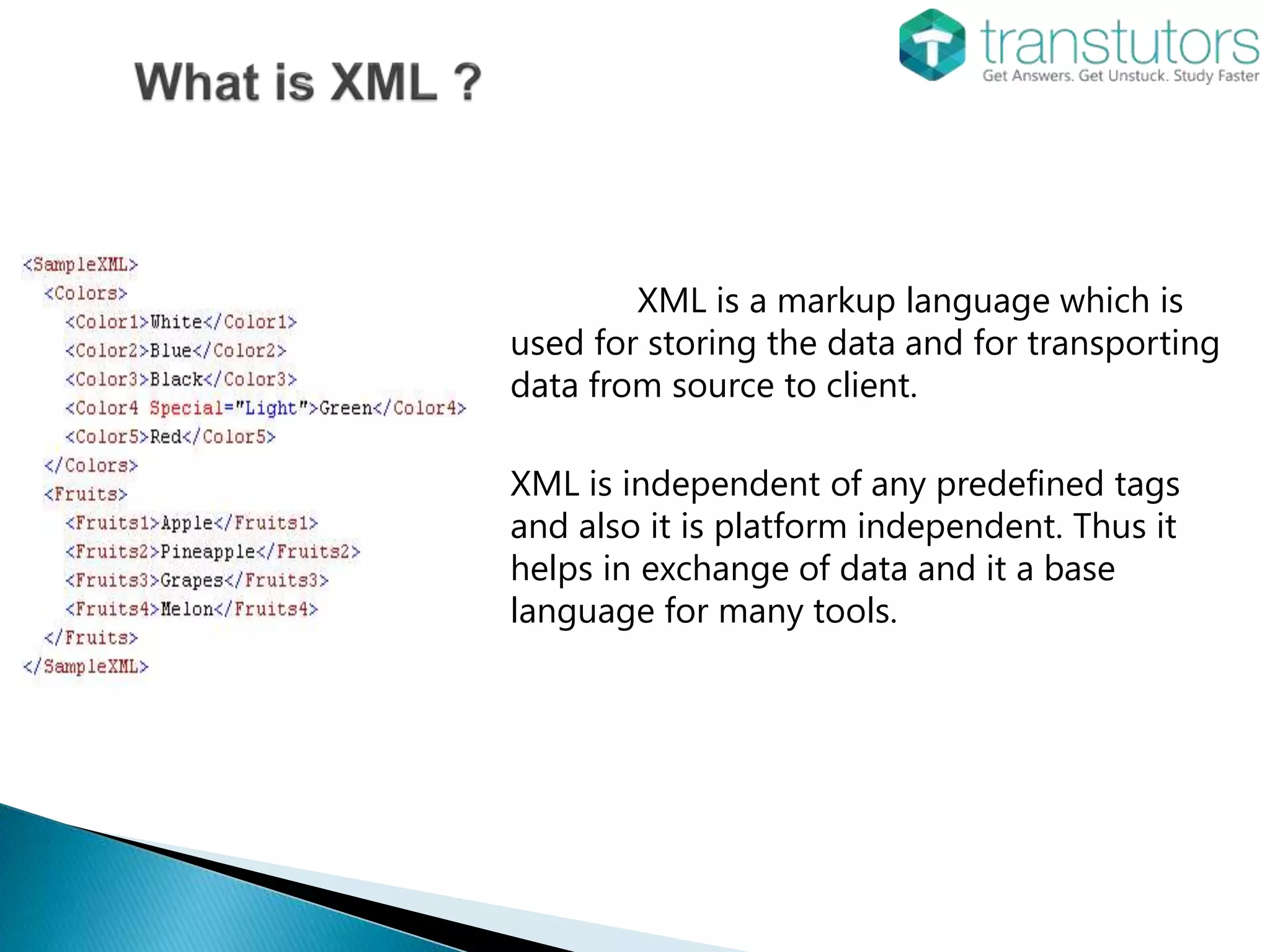
XML is a markup language which is
used for storing the data and for transporting
data from source to client.
XML is independent of any predefined tags
and also it is platform independent. Thus it
helps in exchange of data and it a base
language for many tools.
XML consists of the following components:
1. XML tags : tells the scope of an element. It can be a start tag,
end tag or empty tag
2. Elements and attributes: component between start and end
tag is an element. Element may further consists of attributes
1. XML Editor : It is used to write, edit and read XML.
2. XML Formatter : It is used to format and correct the
formatting errors in an XML making the file more readable.
3. XML Validators: It validates an XML document for XML syntax
rules and the schema.
4. XML Parsers : It accesses and modify an XML. Examples of
XML parsers are SAX parsers, DOM parsers and pull parsers.
XML and HTML differ in the way they process data. HTML
focuses on how data looks thus mostly used in designing of
web pages. However, XML focuses of storage of data. It
describes data and hence used for transporting data between
two or more entities
XHTML keeps the goods of both HTML and XML. It is a well
written language making it a stable language.
SOAP is a xml based protocol which is used for transporting
messages and data for web services. It enables applications to
connect to a remote procedure and communicate with it.
REST is an architectural style which depends on another
protocol to create web services. It not only supports XML but
also supports json and plain text. REST is easy to maintain as
compared to SOAP as there is no WSDL contract in between the
client and server.
Hey Friends,
This was just a summary on XML. For more detailed
information on this topic, please type the link given below
or copy it from the description of this PPT and open it in a
new browser window.
http://www.transtutors.com/homework-help/computer-
science/xml.aspx

XML | Computer Science

  • 1.
  • 2.
    XML is amarkup language which is used for storing the data and for transporting data from source to client. XML is independent of any predefined tags and also it is platform independent. Thus it helps in exchange of data and it a base language for many tools.
  • 3.
    XML consists ofthe following components: 1. XML tags : tells the scope of an element. It can be a start tag, end tag or empty tag 2. Elements and attributes: component between start and end tag is an element. Element may further consists of attributes
  • 4.
    1. XML Editor: It is used to write, edit and read XML. 2. XML Formatter : It is used to format and correct the formatting errors in an XML making the file more readable. 3. XML Validators: It validates an XML document for XML syntax rules and the schema. 4. XML Parsers : It accesses and modify an XML. Examples of XML parsers are SAX parsers, DOM parsers and pull parsers.
  • 5.
    XML and HTMLdiffer in the way they process data. HTML focuses on how data looks thus mostly used in designing of web pages. However, XML focuses of storage of data. It describes data and hence used for transporting data between two or more entities XHTML keeps the goods of both HTML and XML. It is a well written language making it a stable language.
  • 6.
    SOAP is axml based protocol which is used for transporting messages and data for web services. It enables applications to connect to a remote procedure and communicate with it. REST is an architectural style which depends on another protocol to create web services. It not only supports XML but also supports json and plain text. REST is easy to maintain as compared to SOAP as there is no WSDL contract in between the client and server.
  • 7.
    Hey Friends, This wasjust a summary on XML. For more detailed information on this topic, please type the link given below or copy it from the description of this PPT and open it in a new browser window. http://www.transtutors.com/homework-help/computer- science/xml.aspx