-
-
hero_banner
-
features_overview
-
workflow_diagram


Inspiration
I've always been passionate about automation systems—even before the AI revolution. When I invested $1,000 in a blogging course, I quickly realized the painful truth: creating quality content requires massive manual work. From researching recipes, writing SEO-optimized articles, designing Pinterest graphics, to scheduling posts—it was overwhelming.
As a die-hard Google products fan (especially Google Apps Script!), I thought: "Why not automate the entire workflow?" That's when AI Recipe Automator was born—a project that started as small automation scripts and evolved into a full AI-powered content pipeline.
What it does
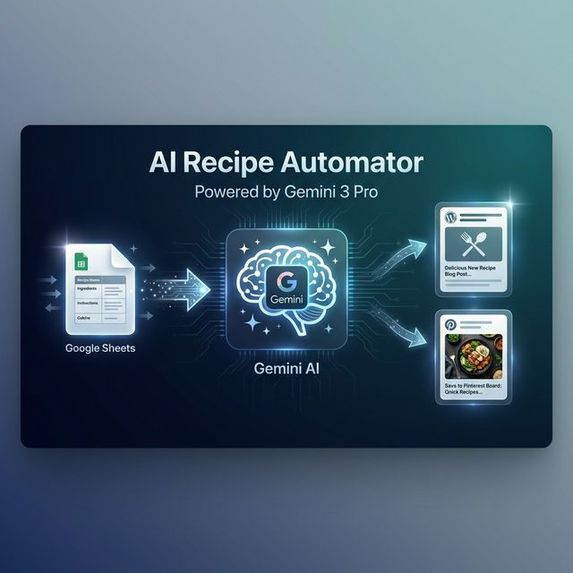
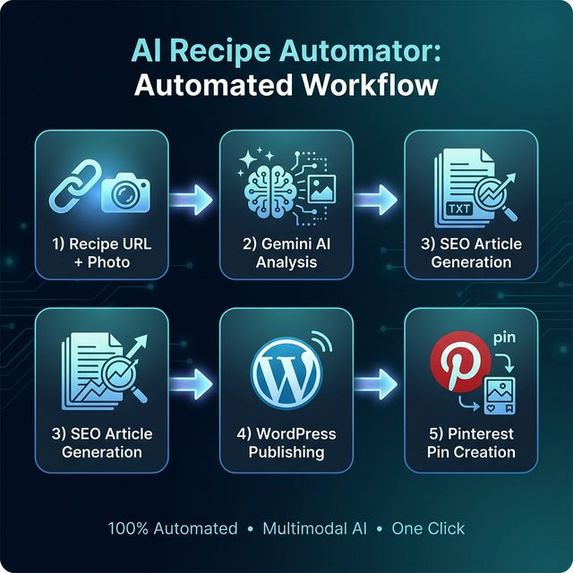
AI Recipe Automator transforms a simple food photo into:
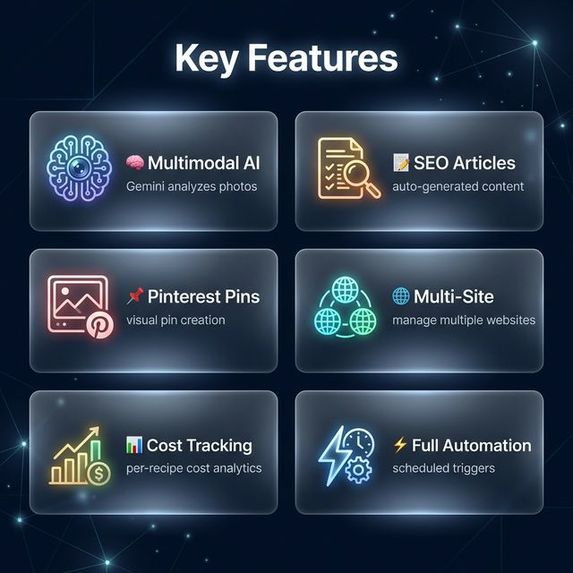
- 📝 SEO-optimized WordPress articles with structured recipe data
- 🎨 Custom Pinterest graphics generated by AI
- 📌 Auto-published Pinterest pins with optimized descriptions
- 📊 Cost tracking for every AI generation
All managed from a single Google Sheets interface—no coding required for daily use.
How I built it
The entire system runs on Google Apps Script (GAS), leveraging:
- Gemini 3 Pro Preview: Analyzes recipe images, extracts ingredients, generates structured article content with vision capabilities
- Gemini 2.5 Flash: Fast text generation for Pinterest descriptions and SEO titles
- Replicate (Flux Kontext): AI image generation to create clean, text-free Pinterest visuals from recipe photos
- WordPress REST API: Automated article publishing with WP Recipe Maker integration
- Pabbly Connect: Webhook orchestration for Pinterest API integration
- Google Slides: Template-based image generation as an alternative to AI
Challenges I faced
Pinterest API limitations: Pinterest doesn't allow direct pin creation via API for personal accounts. I solved this using Pabbly Connect as an intermediary.
Large numeric ID handling: Pinterest IDs are 19+ digits, which JavaScript rounds due to floating-point limitations. Fixed by forcing string conversion before JSON parsing.
Google Drive URL compatibility: External APIs couldn't access Drive files. Implemented automatic URL transformation to direct download links.
Multi-account management: The system now supports multiple Pinterest accounts and WordPress sites from a single spreadsheet.
What I learned
- The power of combining multiple AI models for different tasks
- That Google Apps Script is incredibly underrated for building production-ready automation
- How to architect a modular codebase that's easy to extend
What's next
- Instagram Reels auto-publishing (already in progress!)
- TikTok integration
- AI-powered A/B testing for Pinterest descriptions
Built With
- flux-ai
- gemini-2.5-flash
- gemini-3-pro
- google-apps-script
- google-sheets
- google-slides
- pabbly-connect
- replicate
- rest-api
- wordpress


Log in or sign up for Devpost to join the conversation.