-
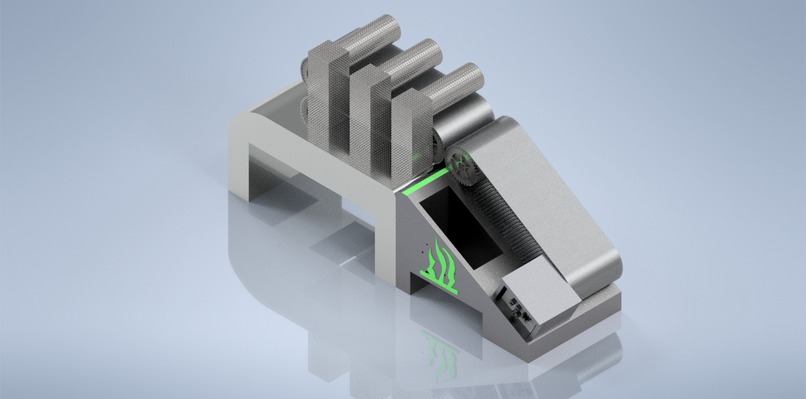
With conveyer belts made out of mesh to filter out the water as waves it our system, the algae is collected and pressed to dry them.
-
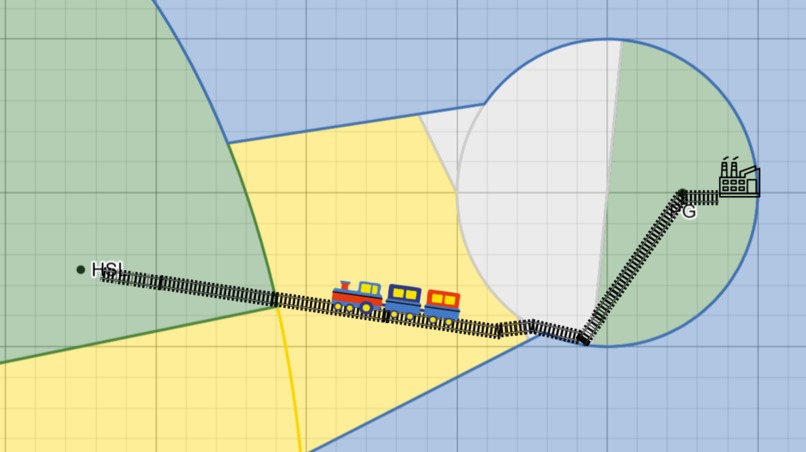
A Map of the desired path of movement of our system.
-
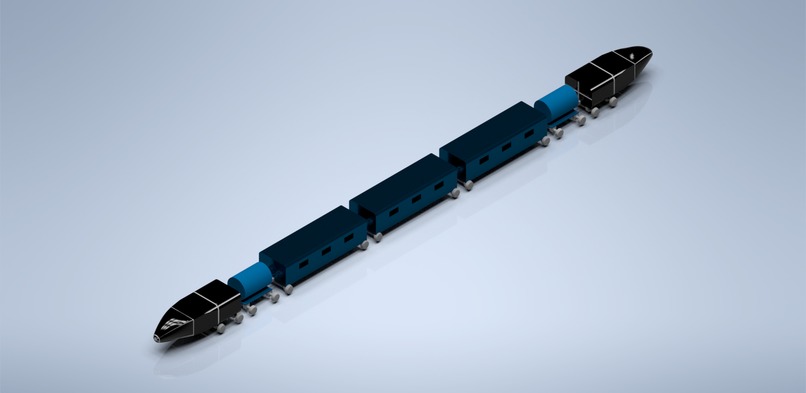
A Model of the train, built to break and reduce drag and air resistence.


Inspiration
Given the harsh weather conditions of the terrains mentioned in the problem, we concluded that the most suitable approach to transporting the patients in a safe manner would be a railway system, as opposed to previous ideas we had considered, such as land, ocean, or aviation vehicles. This is primarily what inspired us to approach this problem with a railway system.
What it does
Our system is designed to carry about 9 patients, 6 doctors, and 1200L of algae fuel within the span of 40 minutes from the rightmost shore of the island to HSL. Within 24 hours, our railway system is capable of transporting roughly 158 patients.
How we built it
After conducting extensive research regarding the design of high-speed railway systems, algae collection methods, and different modes of power generation, we designed an aerodynamic train to transport nearly 200 patients every 24 hours.
Challenges we ran into
Weight:
Considering the inefficiency of algae as a fuel type as opposed to E10 gas, it was crucial to consider the power generation of pulling capacity of our design. We based our power generation system on a typical V8 engine, and it was critical to conduct research regarding the pulling capacity of such a system. We were able to conclude that the engine would be capable of pulling the weight of our system.
Power Generation:
Originally, we had a slightly different approach to transporting the patients and doctors across the mountain, using a gondola-like system. Although after extensive calculations, we concluded that this system, with the weight of patients, doctors, and extra fuel, would need an extensive power supply that was unfeasible to be generated with the algae fuel, and further would be unfeasible with solar power due to the limited day and night cycle of Thodelandia.
Cost:
Cost was a critical consideration in our design. For example, we originally considered using solar energy to power the train system, although with further calculations, we concluded that to complete half of the journey, an area of roughly 36000 square meters of solar panels would be needed, which would be unfeasible in terms of cost.
Accomplishments that we're proud of
We are particularly proud of the design of our algae collection system. We took inspiration from typical wastewater trash-collecting systems, which use a conveyor belt-like system to carry waste out of the water.
What we learned
After working together to solve this problem, we learned that with every solution or idea generated, there come numerous more flaws and issues that must be considered. We learned that no design is perfect, and every design can be fully different and be justified to solve the problem at hand.
What's next for Algae Express
Expansion of algae collection and its use as fuel and further implementation of railway systems to transport patients, supplies, etc.
Built With
- autodesk
- canva
- powerpoint
- solidworks


Log in or sign up for Devpost to join the conversation.