-
-
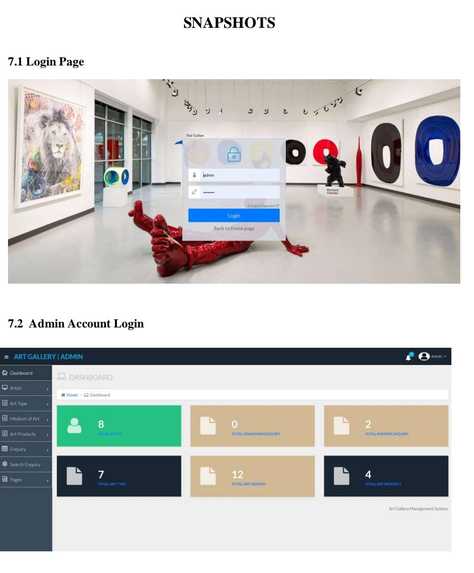
Login Page , Admin Account Login Page
-
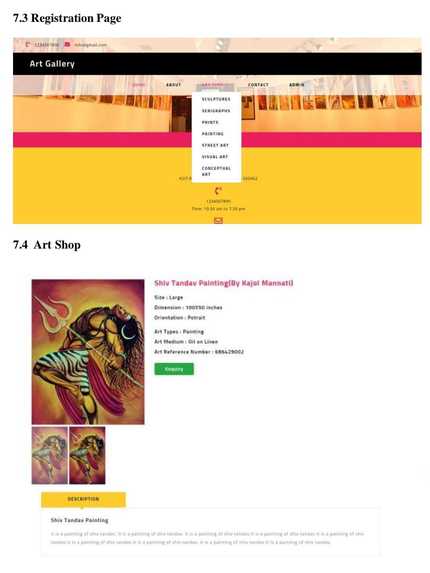
Registration Page , Art shopping Page
-
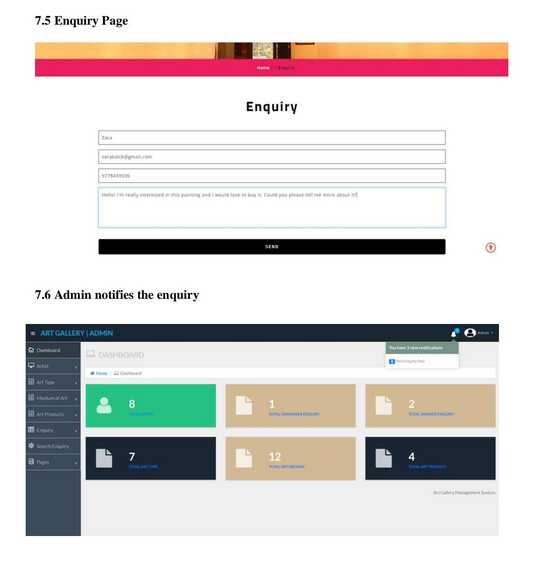
Enquiry Page and Amin notifies the enquiry
-
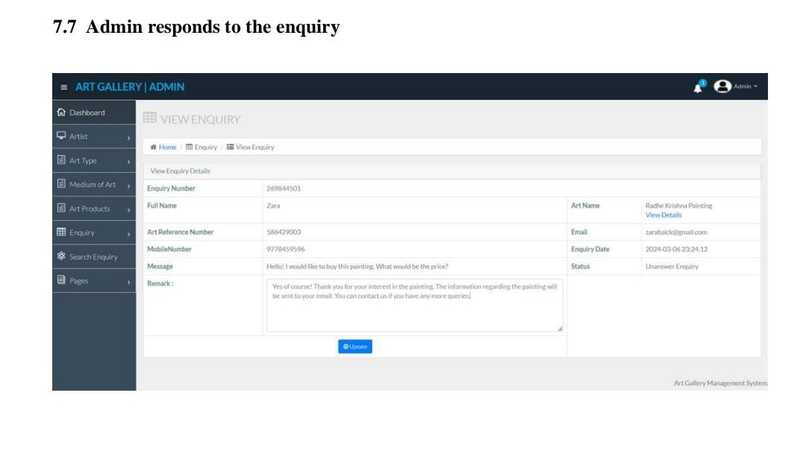
Admin responds to the enquiry


INSPIRATION The inspiration for the Art Gallery Database Management System stemmed from my passion for art and technology. I wanted to create a bridge between these two fields by developing a tool that could help art galleries manage their collections, artist information, and exhibition schedules more efficiently. This project aimed to address the challenges art galleries face in cataloging, tracking, and showcasing artworks.
LEARNING Throughout this project, I gained significant insights into database management, including the design and implementation of relational databases using SQL. I also learned about front-end and back-end integration, user interface design, and the importance of user-friendly navigation. Understanding the intricacies of data normalization and the importance of data integrity were key takeaways.
DEVELOPMENT The project was built using a combination of technologies: SQL for the database, Python for back-end logic, and HTML/CSS with JavaScript for the front-end interface. I started by designing the database schema, ensuring it could handle various entities such as artworks, artists, and exhibitions. Next, I developed the back-end to handle CRUD operations and then created a responsive front-end to allow users to interact with the system seamlessly.
CHALLENGES One of the main challenges was ensuring data consistency and integrity while allowing for flexibility in the database schema to accommodate diverse art pieces and exhibitions. Another challenge was creating an intuitive user interface that catered to non-technical users. Debugging and testing the system to handle real-world scenarios also required significant effort and iterative improvements.


Log in or sign up for Devpost to join the conversation.