-
-
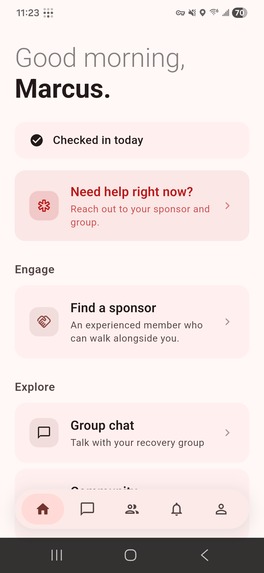
The home screen, with a check-in, encouragement, and help.
-
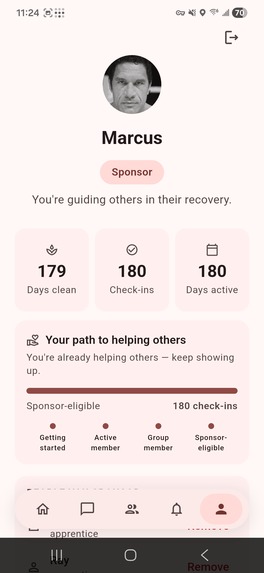
The profile page, which features your metrics and recovery journey.
-
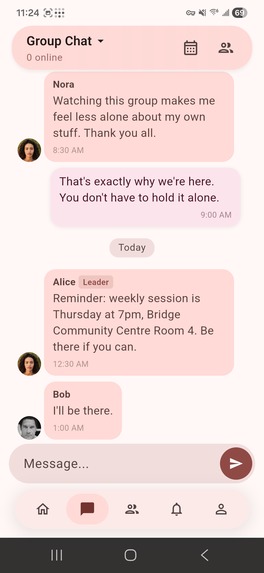
The group chat where you can engage with your small group of peers who have the same addiction.
-
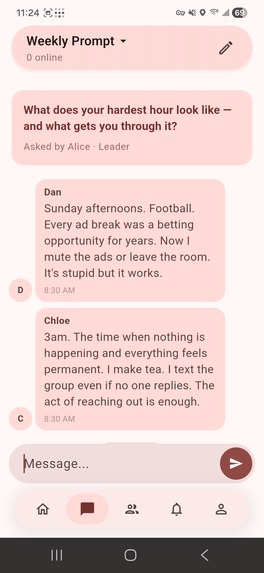
The weekly prompt, which refreshes every week and is asynchronous for deeper responses.
-
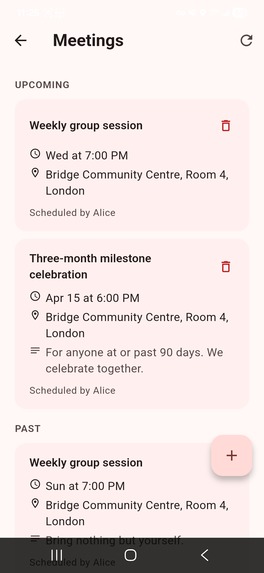
In person meetings for the group; they are option, but a huge step in the recovery journey.
-
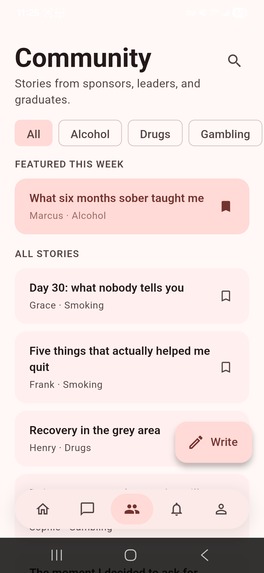
The community page which features stories from all around the globe from people who are struggling just like you.
-
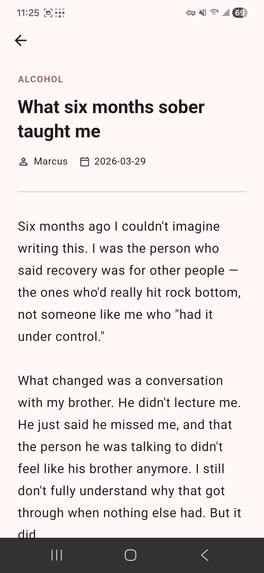
A story from a user.
-
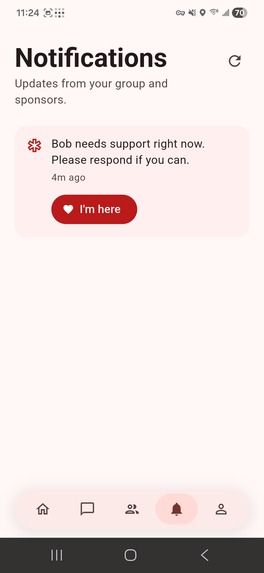
The notifications page and a sponsor's view of the panic button.
-
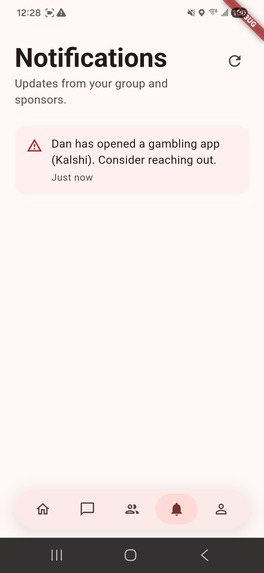
The app notif feature: https://youtube.com/shorts/Ss4XCuhO-9I?feature=share


Core sections
More than 1 in 6 US adults and adolescents had a substance use disorder in 2022, federal survey finds - CNN
"When the Supreme Court struck down the federal ban on sports betting in 2018, Americans legally wagered less than $5 billion on sports annually. Last year, they bet $150 billion .... Today 90% of bets are placed on phones" - statnews
"Disturbingly, research shows that children are first exposed to porn between ages 9-13, with 93% of teen boys and 62% of teen girls reporting exposure to internet pornography." - addictionresource
Headlines like these inspired us to build Axillium. The modern app ecosystem is engineered to extract time, money, and real human connection from our generation, and it is working. People closest to us are struggling with addiction, and the tools available to them were built by the same industry profiting off their attention. We wanted to build something different: a nonprofit, community-driven platform with one goal, not engagement, but recovery. No algorithms. No monetized pain. Just the support structure people actually need to heal and reconnect.
The Core Mechanic
Axillium's primary goal is simple: get you offline and into real community. Every feature is built around that exit.
Anonymous by Default New users enter read-only -- no account, no pressure. You can browse local chat rooms and read stories from people who have been exactly where you are. We want you to know two things before you do anything else: you are not alone, and there is nothing to be ashamed of.
Apprentice When you are ready, creating a profile unlocks your voice. You can contribute to weekly guided prompts and group chats -- structured conversations designed to ease you into community, not throw you into it.
Sponsor Connection Shortly after joining, we prompt you to choose a dedicated sponsor -- a real person you can call in your darkest moments. Not a chatbot. Not a hotline. Someone who has been where you are and chose to stay in the community to give back.
Becoming a Sponsor After meeting certain milestones, you can apply to sponsor someone else. We believe in a principle borrowed from recovery itself: you keep what you have by giving it away.
Build Your Own Community Users can create geotagged communities around any addiction they feel deserves a support network -- because not every struggle fits a predefined category.
Challenges
As neither of us are licensed psychologist, we spent significant time in the early hours thinking carefully about how to structure a system that genuinely serves people in recovery rather than just mimicking one. Getting that foundation right mattered more to us than moving fast.
On the technical side, Android emulator setup proved to be a persistent obstacle -- an issue that resurfaced at the worst possible time as the deadline approached. Flutter was also new territory for both of us, and learning it under time pressure was a real test of our ability to adapt quickly.
What's Next
One feature we began exploring late in the hackathon was app usage tracking -- alerting a sponsor if a user's phone behavior suggests a relapse may be coming. We believe this is worth pursuing seriously. Modern addiction and smartphone use are deeply intertwined, and that same phone can become a tool for prevention if used intentionally.
We also want to move beyond our foundational design philosophy and integrate established recovery frameworks (12-step, SMART Recovery, CBT-based approaches) so that community leaders can select the methodology that best fits their group at any given time.
Finally, we want to give sponsors and community leaders direct access to empirical research within the app itself. Recovery outcomes improve when the people guiding others are informed. That resource should not require a Google search to find.
Technical sections
Frontend
- Flutter (Dart) — cross-platform mobile UI
- Kotlin — native Android platform channels (app usage detection, location)
Backend
- Go + Gin — REST API
- SQLite + GORM — database and migrations
Key Libraries
- Geolocator — GPS-based proximity detection
- WorkManager — background task scheduling (Android)
- OpenStreetMap Overpass API — bar/venue lookup (no API key)


Log in or sign up for Devpost to join the conversation.