-
-
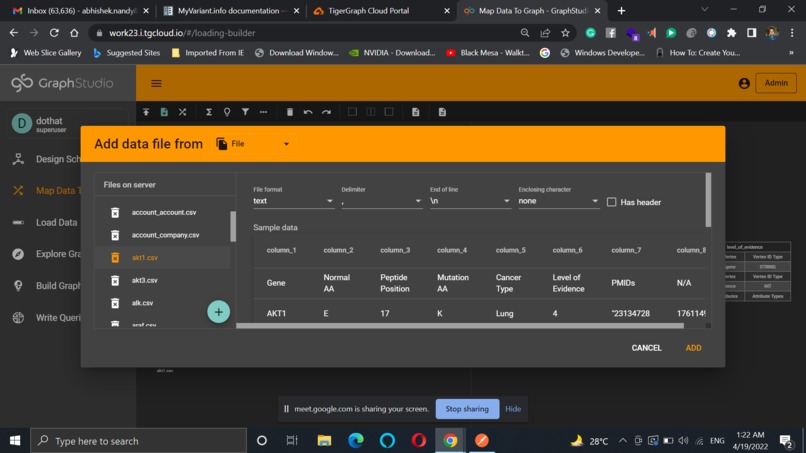
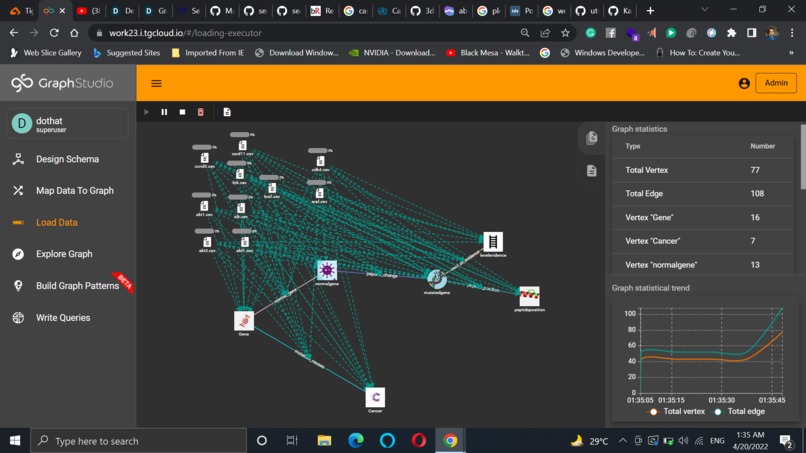
Adding the csv files
-
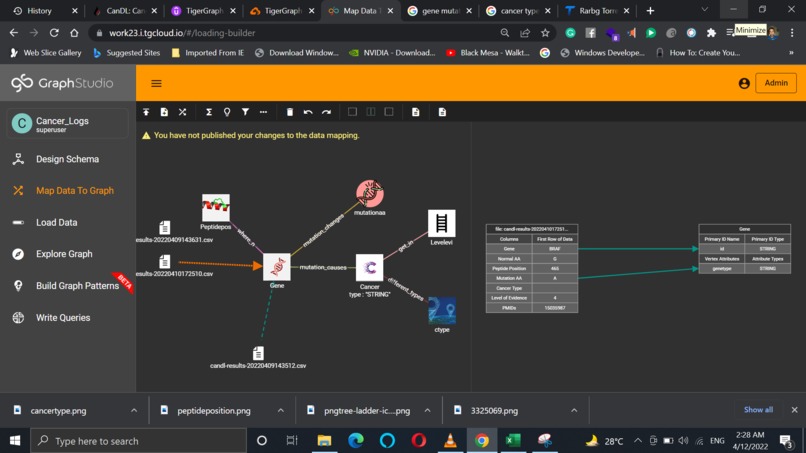
mapping the data in schema
-
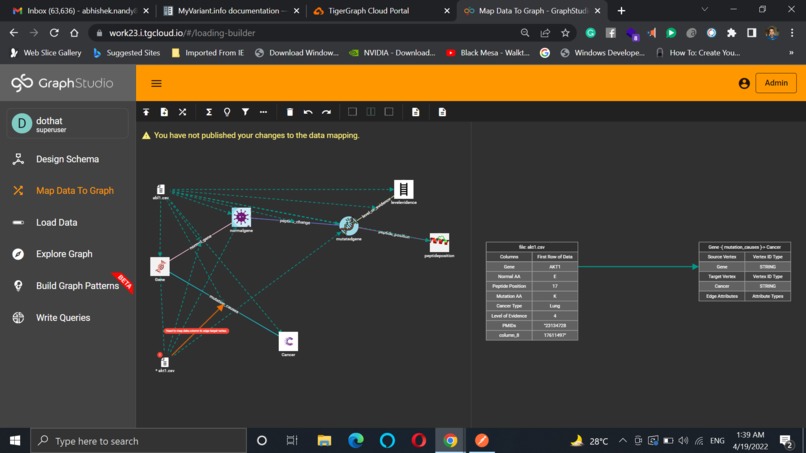
Mapping data work
-
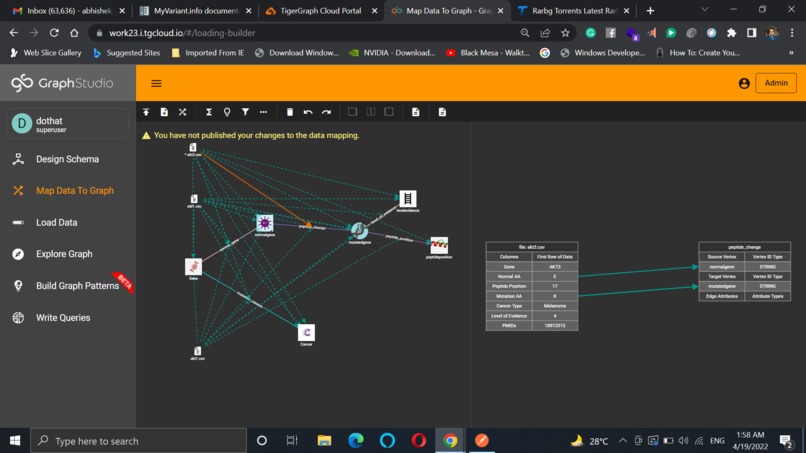
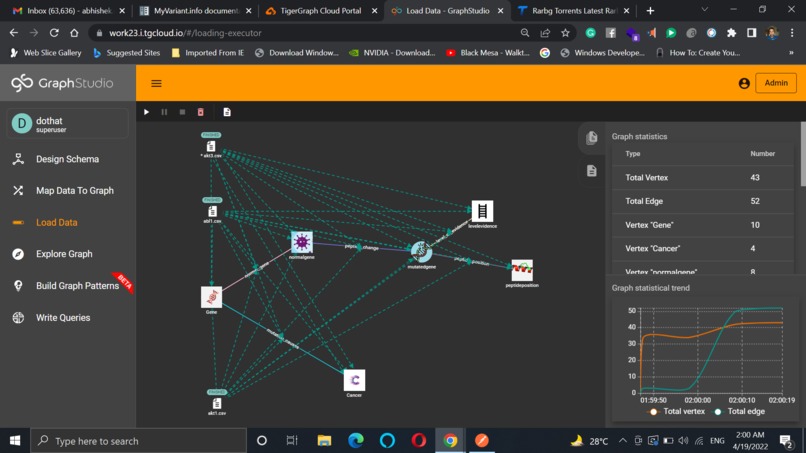
More on mapping the data
-
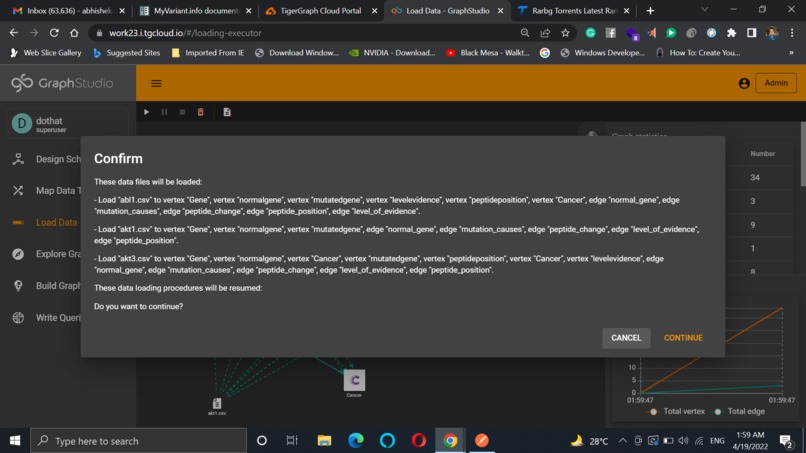
Updating Vertices and edges in the schema
-
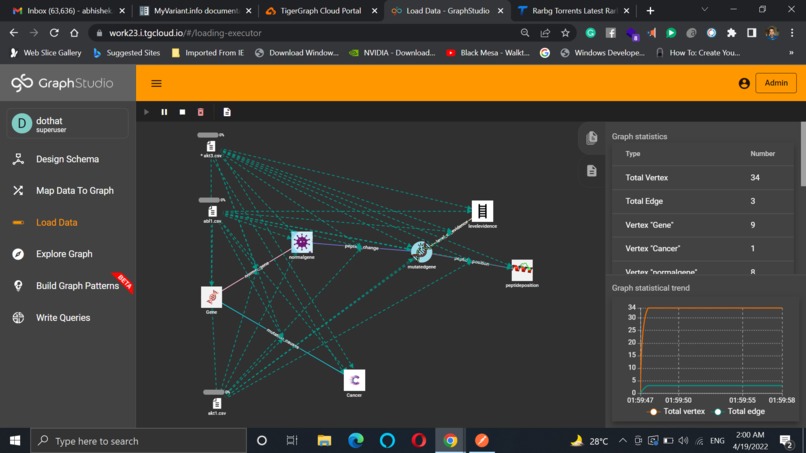
The different CSV files
-
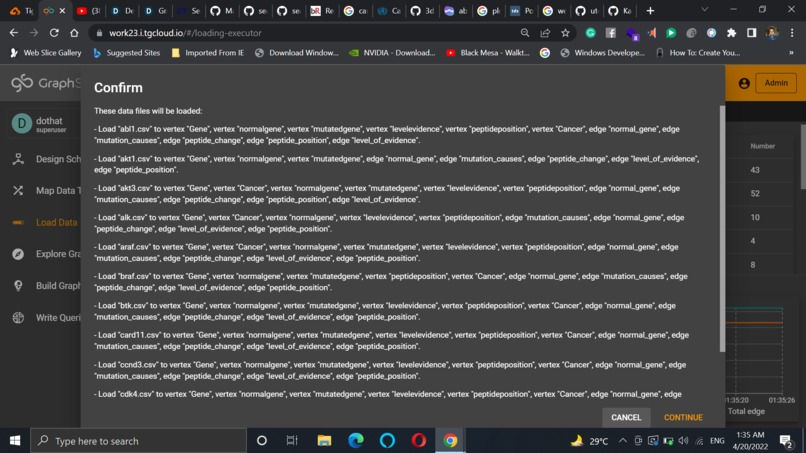
Updation of graph schema
-
-


Inspiration
Cancer is a disease that affects many people around the globe.
The problem
Almost half – 46% in 2017 – of all people who die from cancer are 70 or older. Another 41 percent are between 50 and 69 years old – so that 87% of all cancer victims are older than 50 years.
The distribution of deaths across the age spectrum has changed notably since 1990. The share of deaths which occur in those aged over 70 has increased by 8 percentage points, whilst the share in those aged 50-69 and 15-49 has fallen.
Collectively, children and adolescents under 14 years old account for around one percent of cancer deaths — this equates to around 110,000 children per year.
Cancer is a leading cause of death worldwide, accounting for nearly 10 million deaths in 2020 (1). The most common in 2020 (in terms of new cases of cancer) were:
breast (2.26 million cases); lung (2.21 million cases); colon and rectum (1.93 million cases); prostate (1.41 million cases); skin (non-melanoma) (1.20 million cases); and stomach (1.09 million cases). The most common causes of cancer death in 2020 were:
lung (1.80 million deaths); colon and rectum (916 000 deaths); liver (830 000 deaths); stomach (769 000 deaths); and breast (685 000 deaths). Each year, approximately 400 000 children develop cancer. The most common cancers vary between countries. Cervical cancer is the most common in 23 countries
What it does
This is a comprehensive Tigergraph database for annotating driver and passenger mutations in terms of Cancer. The application allows us to view the relationship between gene mutation and cancer. Currently, we have shown gene mutations for these variants
- ABLF1
- AKT3
- AKT1
- ALK
- ARAF
- BRAF
- BTK
- CARDL1
- CCND3
These are generally between main vertices gene and cancer The main vertices in the tigergraph database are
- GENE
- NORMAL GENE
- MUTATED GENE
- LEVEL OF EVIDENCE
- PEPTIDE POSITION
- CANCER
There are edges too.
These relationships hold the key as we are able to go through the entire structure of the graph
Levels of Evidence Tier 1: Alteration has matching FDA approved or NCCN recommended therapy Tier 2: Alteration has matching therapy based on evidence from clinical trials, case reports, or exceptional responders. Tier 3: Alteration predicts for response or resistance to therapy based on evidence from pre-clinical data (in vitro or in vivo models) Tier 4: Alteration is a putative oncogenic driver based on functional activation of a pathway
How we built it
We have used two approaches
- The graph-driven approach where we created the schema from scratch using CanDL database.
- Next we also implemented a python notebook where we consumed the API from my variant database and then created a graph from it. We plan to make it a web app.
Challenges we ran into
The Database schema creation was tough as we had to work out how we can create linkages between cancer variants and mutated genes. The mapping of the data was vital it was tough also.
Days of getting started
I had to study day in and day out on a topic that has hurt so many people around me so that I can contribute to this area. For me, the first thing was the Youtube Challenge from Tigergraph very good information it had. Next was jotting down your problem area and what you are working on? I didn't find the statement but yes I was determined to do something with Cancer and hence the journey started
iteration

Next was schema iteration I started up with pen and paper sketching through all the details and then I came up with this particular structure.

Again I started with more changes to the schema as I was designing it from CanDL database so I had to spend more time getting it corrected.

Something I tried and failed Graphistry docker Image

I had made up my mind on completing it but somehow luck didn't support me probably more learnings and more contribution.
Accomplishments that we're proud of
Understanding TigerGraph Schema it was very essential to know how to create the schema design
What we learned
Graph Databases More on Oncology data
What's next for Cancer Variant Analyser
A complete web app implementation
The Entire experience
Ultimately it boiled down to the point where this proverb from Legendary Martin Luther King still prevails If you can't fly then run, if you can't run then walk, if you can't walk then crawl, but whatever you do, you have to keep moving forward
That's the final update.

Built With
- candl
- myvariant
- python
- tigergraph


Log in or sign up for Devpost to join the conversation.