-
home
-
https://drive.google.com/file/d/1vNiEVzIYOMpHWBXq1Ows2z8DJ2d3FRUG/view?usp=sharing


Title: CommunityFlow
Problem: When local crises occur (e.g., extreme weather flooding, sudden transit strikes, or major infrastructure maintenance), city planners often make top-down routing decisions based on static maps, not human behavior. This leads to secondary bottlenecks, confusion, and equitable access issues (e.g., vulnerable neighborhoods being cut off from hospitals). Citizens feel frustrated and powerless because they have no say in how their city adapts to disruptions.
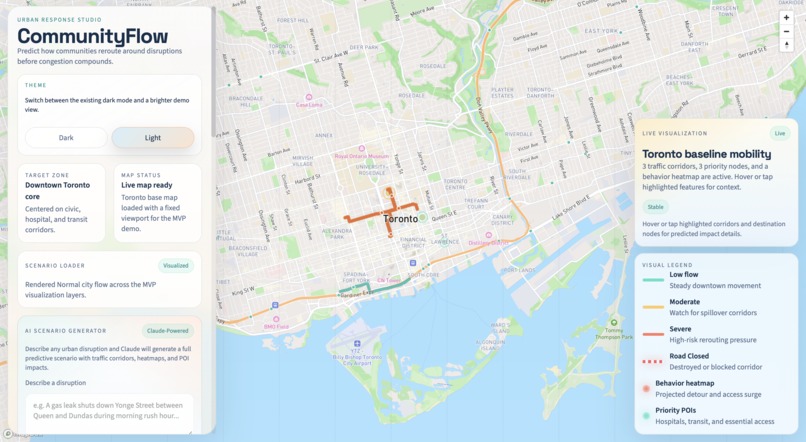
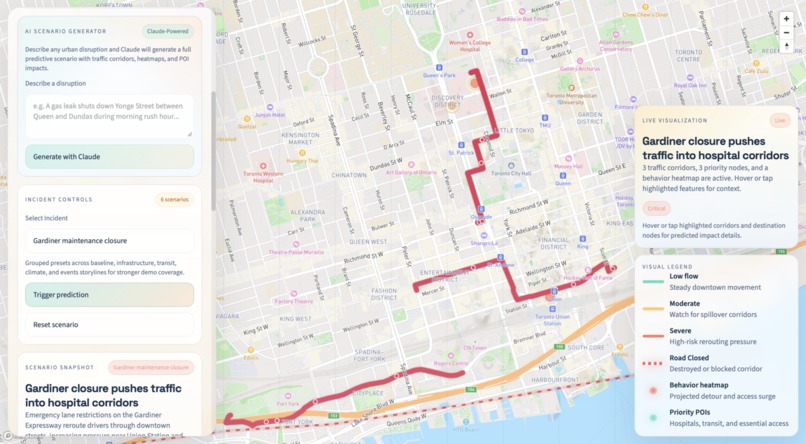
Solution: I am building CommunityFlow, an interactive, AI-driven predictive mapping tool designed for local city councils and community organizers. Instead of just showing "current traffic," it simulates how a specific community will organically react to a sudden disruption. By inputting a scenario (e.g., "Main Street bridge is closed for emergency repairs"), the AI models behavioral shifts—like surges toward alternative hospital routes or increased foot traffic in residential detours.
Project proposal: I want to develop an app that predicts how people would behave in case something happens, with focused on traffic maps and city traffic. For instance, I want to know once something happens (say covid pandemic, or just changing/maintaining a route) then predicts what people would do and how their behaviours may change, for example, they may take some routes more, since they want to go to a specific place such as hospital or they need to avoid a route because it is under maintenance; this would change the traffic patterns and decision makers should carefully consult them before making any decision.
Specification: I want this to be shown in a beautiful UI that can show the traffic and predict how it would be and what would be people's behaviour once that incident happens. This should be able to visualize everything beautifully. I also want the panel to be interactive. This project would help governments to get ready for future incidents and once they happened, know how to handle that and how to behave.


Log in or sign up for Devpost to join the conversation.