-
-
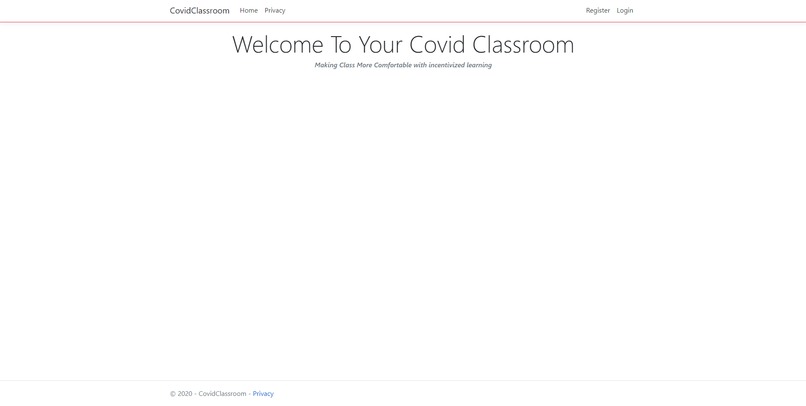
Index page
-
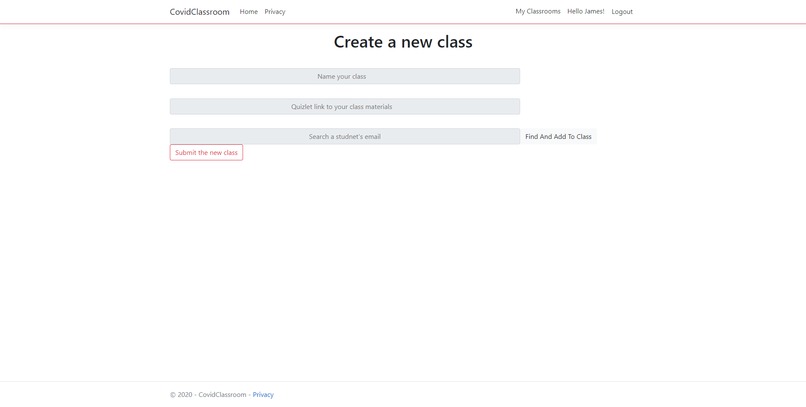
A teacher's page for uploading and creating classes
-
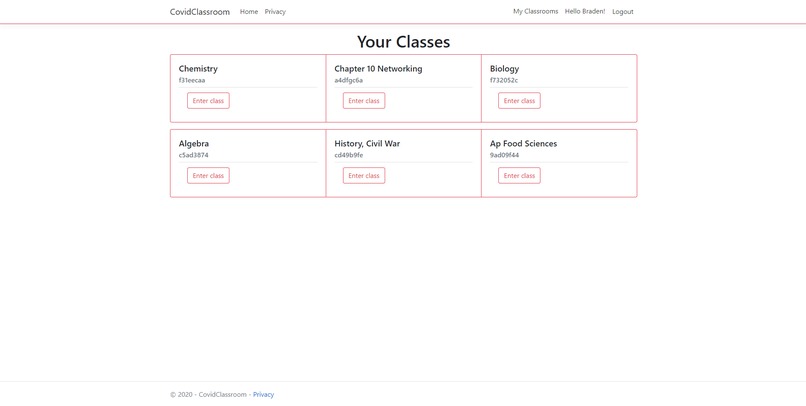
A student's class management page
-
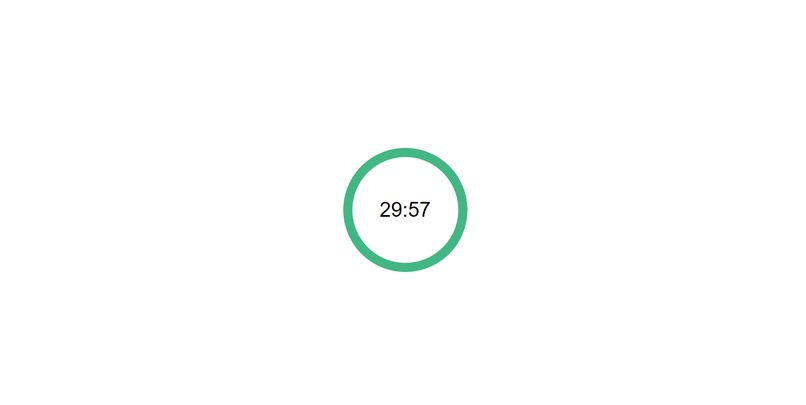
The timer for how long the student has their reward
-
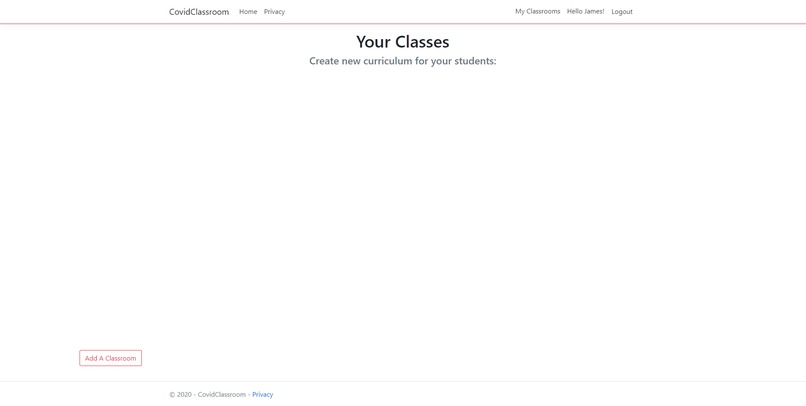
An empty classes page for a teacher
-
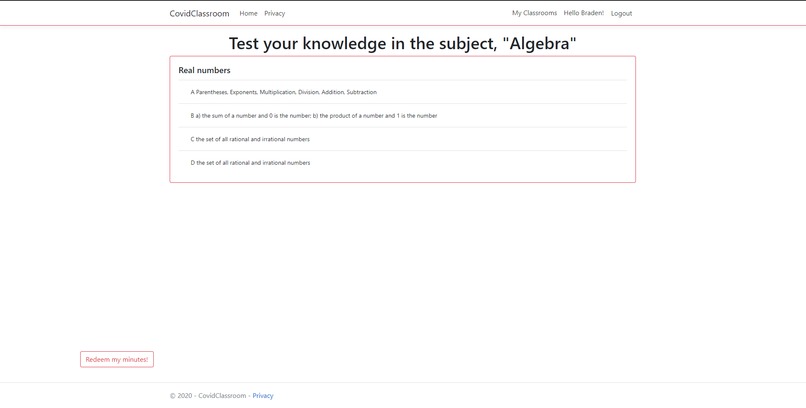
A testing session
-
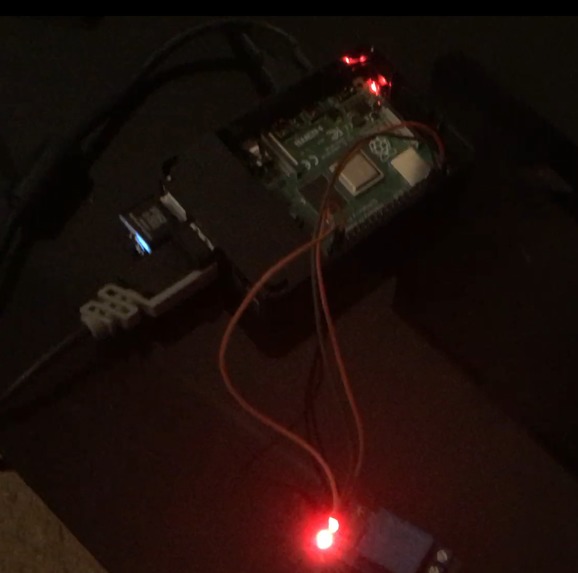
The webserver responsible for relay control


Inspiration
Our inspiration came from not only our own experiences, but also our peers who have had a hard time readjusting to online learning. As stressful as it can be for us, it can be even more hard for younger children who don’t know how to deal with isolated learning. We wanted to find a way to take this unnecessary load off of their young minds and allow them to gain a rewarding experience while gaining more information.
What it does
COVID Classroom is a learning platform that scrapes quizlet sets and teaches kids in a way that they’re more comfortable with. It is essentially a simulated classroom that uses an award system where the user has to study x amount of sets before a smart device allows them to turn on their video games, social media, etc. It holds kids accountable for the work that they put in, which allows them to be more focused with what their learning while being able to do fun snippets of the other things they enjoy. It provides a balance for cohesive learning. In the site, teachers can manage the classes they own along with the students in them, students are notified when they get added to a class. When they enter that class experience, a flash card type test is given, with immediate feedback. Each time a student answers correctly, they are given 15 more minutes on their device. When they feel like it is time for them to redeem the time, they can click a button on the class page, bringing them to a timer page along with posting a get request to the smart device api. This turns on a relay that controls the student's device, and shuts off after the timer.
How We built it
For Covid Classroom, we wanted the architecture to represent a teacher:student hierarchy. In order to do this, we created extensions of the default IdentityUser class to create a teacher and student class. The web scraping algorithm implemented used headers and get requests to obtain and parse quizlet sets into flashCard data types, holding the definition and the term. classroom classes were bound to these flashCard sets, along with their teacher and the list of students in them. When a student enters the testing environment, they are given a flashcard along with 4 random options from other cards. This was done through a shuffling algorithm along with the implementation of a static random class. SignalR was used in the testing page in order to supply real time updates every time the user answers. Websockets and get posts were used to apply the student's saved minutes to the raspberry pi webserver, which used RaspberryPi.Net to control GPIO pins on a relay.
Challenges we ran into
We had challenges learning how to come together to do our tasks when we are so far apart. However, we made sure to communicate effectively on how we will carry out our tasks, which allowed us to get our finished product! Another huge issue we ran into on the development side was the abstraction of student and teacher user classes, initially we had attempted the solution that allows generic functions for either student or teacher, but due to time and energy needing to be spent in other areas, went with a solution of implementing both non-abstractly.
Accomplishments that we’re proud of
We are proud that we were able to work together in such a short amount of time and get so much done. We are really proud of how the testing page ended up, it seemed to be the right amount of comfort and engagement that we were really going for.
What we learned
We learned how how to work together cohesively while being so far away from each other, and we learned how to designate tasks that best fit each of our skill levels. One of the members of our team was inexperienced with coding. However we found ways that still allowed her to contribute to our final product.
What's next for COVID Classroom
Even after the pandemic subsides, this platform can continue to be used for younger students to learn. We will migrate to online databases and publish online so that real students can utilize us, along with some UI tweaks to make it more pleasing :)


Log in or sign up for Devpost to join the conversation.