-
-
-
-
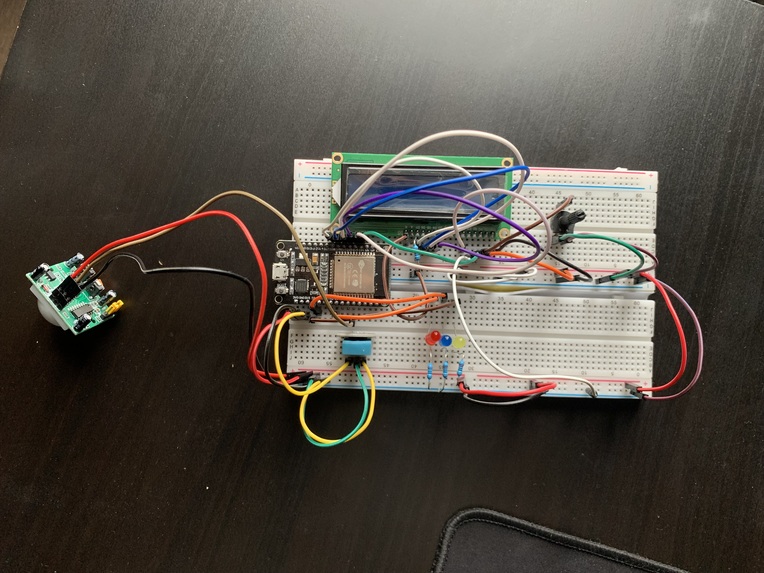
Prototyping Breadboard
-
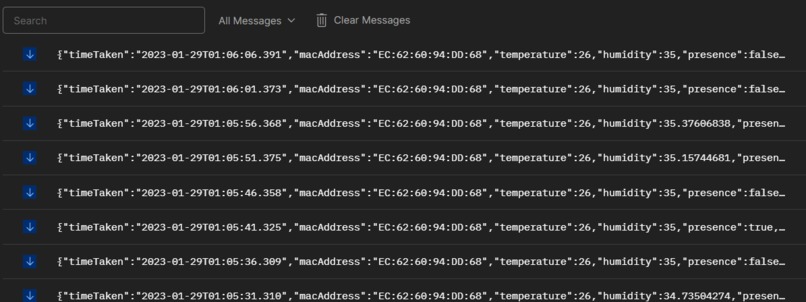
WebSocket Data


Inspiration
Ecoleafy was inspired by the desire to create a sustainable and energy-efficient future. With the increasing need for smart homes, the team saw an opportunity to build a system that could help households reduce and be more aware of their carbon footprint and save on energy costs. The members of our team, being all in Computer Engineering and wanting to specialize in the Hardware field, we were particularly motivated to take on this challenge.
What it does
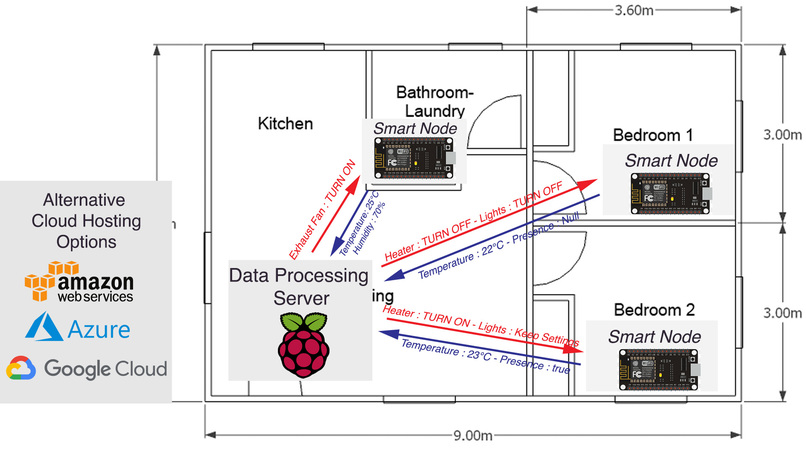
Ecoleafy is a comprehensive IOT ecosystem that includes smart nodes for each room in the house. These nodes contain sensors such as presence sensors, humidity sensors, and temperature sensors, as well as switches and relays to control various devices such as the AC, heater, lights, and more. The system connects to a central back-end server that manages each nodes. This back-end server can automatically take decisions such as shutting off the lights, or the heater if no activity was recorded in the room for more than 30 minutes for example.
How we built it
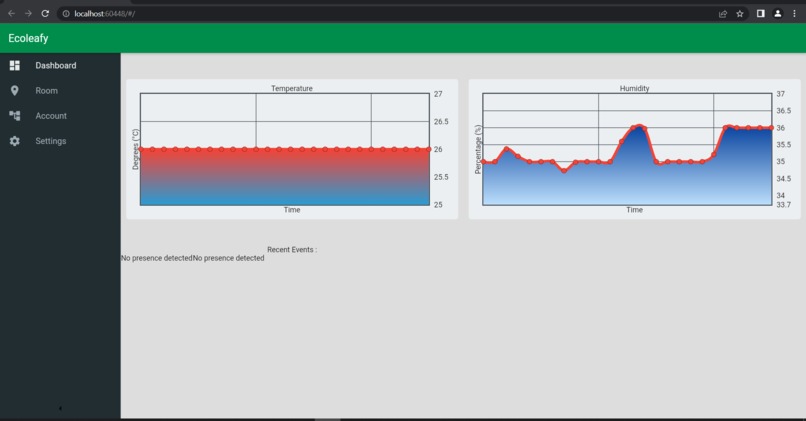
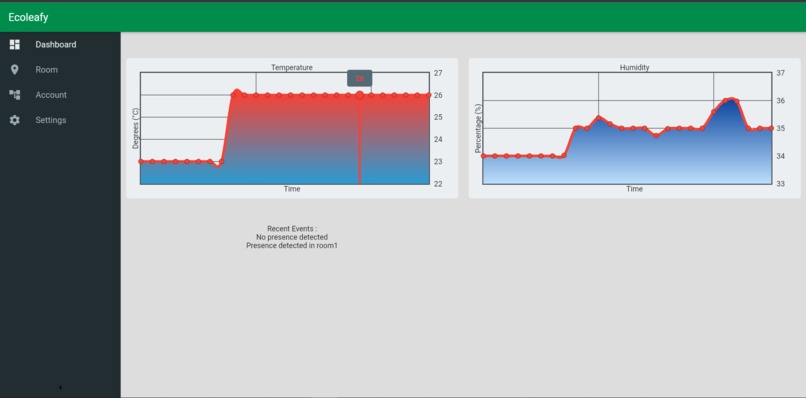
We built Ecoleafy as a comprehensive IOT ecosystem that includes smart nodes for each room in the house, connected to a central back-end server using Java, Spring, WebSockets, and MongoDB. The frontend was built using Flutter and Dart, providing a seamless user experience for web, mobile or desktop. The hardware nodes, which include presence sensors, humidity sensors, temperature sensors, switches, and relays, were developed using ESP32 microcontrollers and coded in C++. We aimed to beat the price of a Google Learning Nest Thermostat (329$ CAD) and its non-learning version (179$ CAD). Our final price per node is estimated to be at 11.60$ CAD before adding an enclosure (which could be 3D printed). This includes the MCU (ESP32), LCD screen, 4 relays, presence/motion, temperature and humidity sensors. You also need one Hub to host the server which could use a raspberry pi (45$ CAD) and the alternative would be a cloud subscription service.
Challenges we ran into
One of the biggest challenges we faced was ensuring that the system would be plug-n-play if you wanted to add new nodes to your network. The other biggest challenge was the front-end development since most of us had no front-end dev experience prior to this project. We also had to ensure that the system was scalable and could handle a large number of connected devices.
Accomplishments that we're proud of
We are proud of this being our first Hackaton devpost. The seamless integration of hardware and software components is another achievement that we're proud of.
What we learned
We learned that building an IOT ecosystem is a complex and challenging process, but with the right team, it is possible to create a functional and innovative system. We also gained valuable experience in developing secure and scalable systems, as well as in using various technologies such as Java, Spring, Flutter, and C++. We also now understand the importance of having a front-end developer.
What's next for Ecoleafy
We will be seeking ways to improve Ecoleafy and make it even more effective in reducing energy consumption. In the future, we could plan to expand the system to include new features and functionalities, such as integration with other smart home devices and machine learning algorithms for more efficient energy management. We are also exploring ways to make Ecoleafy more accessible to a wider audience with its low cost of entry.


Log in or sign up for Devpost to join the conversation.