-
-
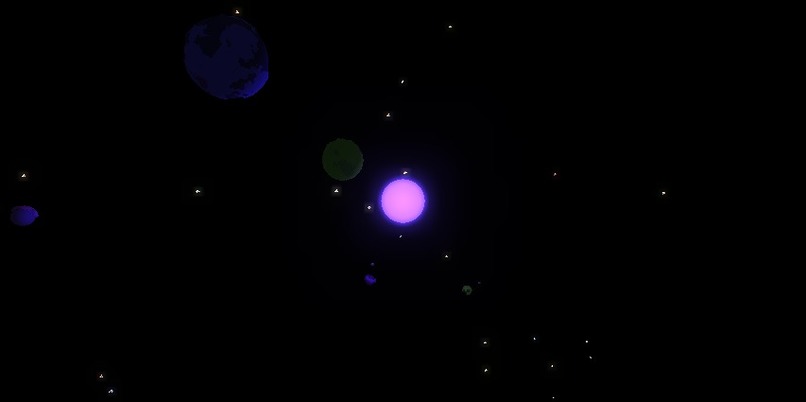
Generated 1
-
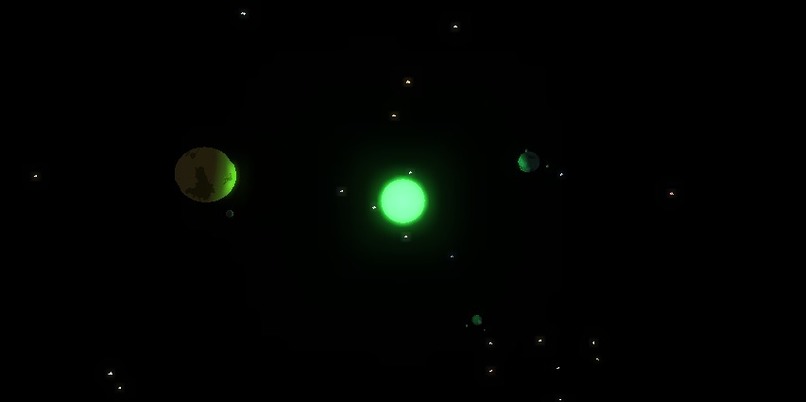
Generated 2
-
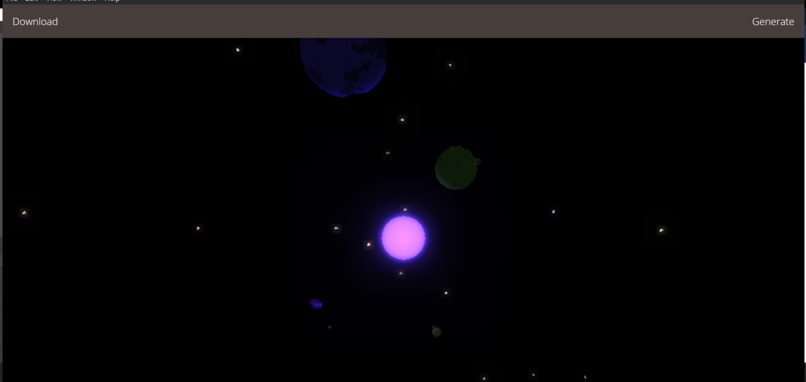
UI


Inspiration
We were inspired by the procedural generation of aesthetically-pleasing planets in works such as Planetarium(https://managore.itch.io/planetarium). We hoped to scale this idea further by creating entire procedurally-generated solar systems with working physics.
What it does
Aside from being generally pleasing to watch, the program acts as a bare-bones proof-of-concept for a procedural content system for video game development; every time a user presses the “Generate” button, a brand new solar system is born. We’ve added functionality to save and share screen captures of our algorithmic solar system.
How we built it
We built a Typescript application using Electron and Three.js, all packaged and built with Webpack. Planets were generated using three dimensional fractal noise and were simulated with physics.
Challenges we ran into
We were unfamiliar with the tech stack and the technologies were clashing together. It took a significant amount of time to connect everything in the beginning and allow them to work well together.
Accomplishments that we're proud of
We are very proud of the beautiful results we get
What we learned
We learned a lot about procedural generation, graphical programming, and using new technologies.
What's next for Galaxy Garden
We had a vision of turning this concept into a game by adding a progression system as well as more interactivity such as sharing with your friends your galaxies and allowing you to import other galaxies.


Log in or sign up for Devpost to join the conversation.