-
-
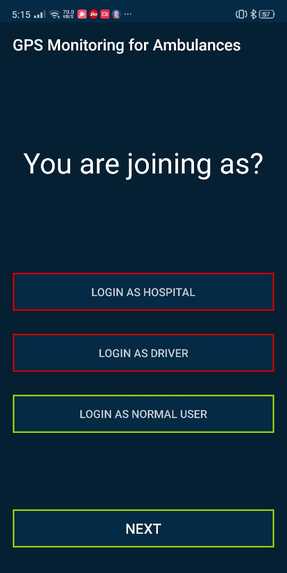
Menu
-
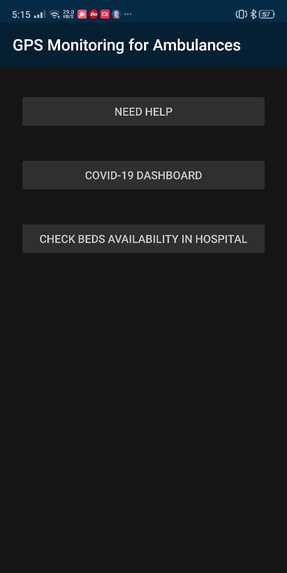
User Dashboard
-
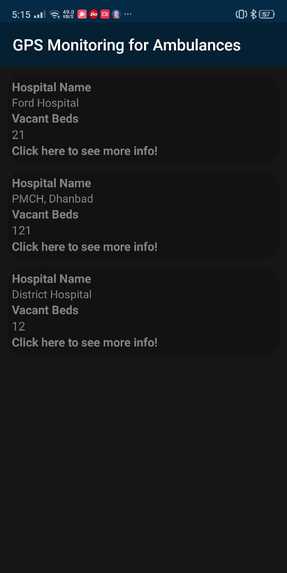
Nearby Hospital List
-
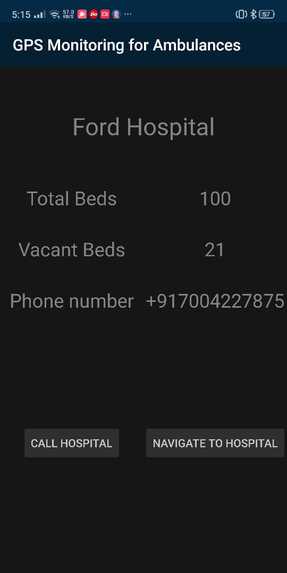
Hospital Information
-
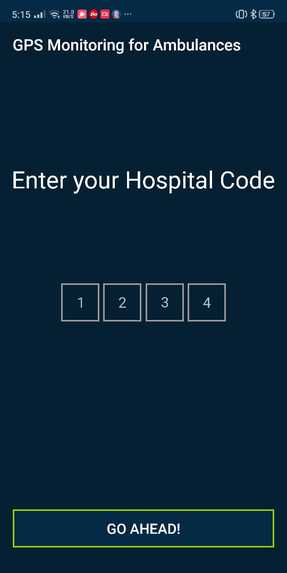
Hospital code entry
-
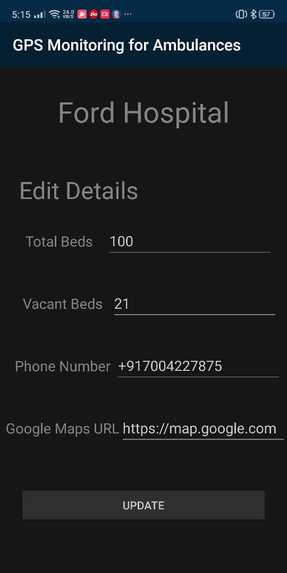
Hospital Dashboard
-
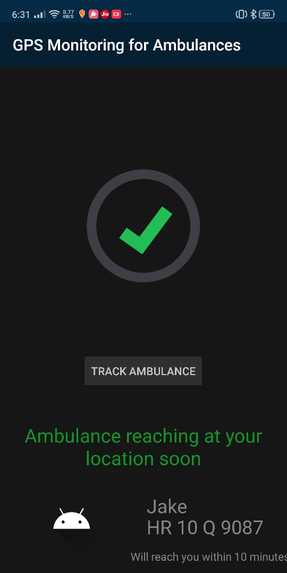
Booking Ambulance
-
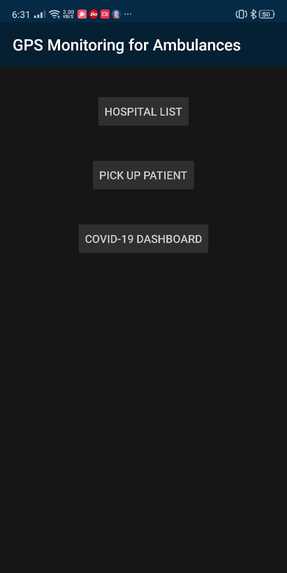
Driver's Dashboard
-
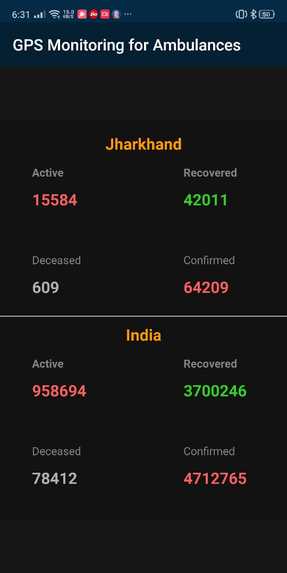
COVID-19 Dashboard
-
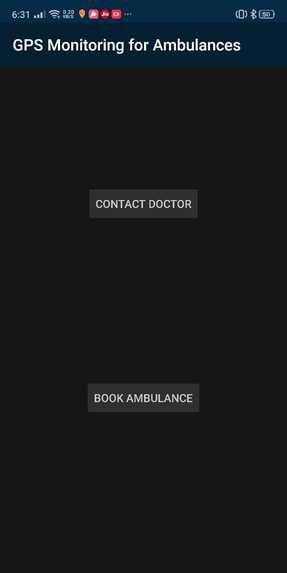
Help Section
-
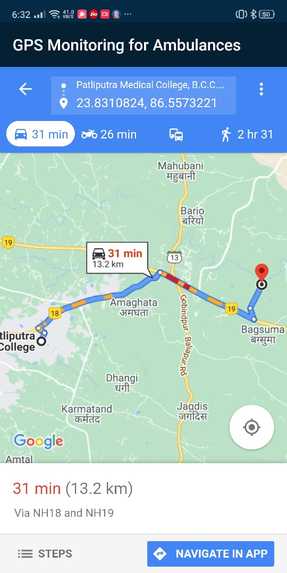
Real Time Tracking using Radar.io


Inspiration + Need Statement + Cases where it can be used
Whole world is going through a pandemic, as a virus called “COVID-19” has attacked on our planet. As the virus’s velocity is increasing drastically, So is a surge in the number of people recovering from COVID-19 and because of it most of the hospitals are either full or have very less number of vacant beds, This leads to issues when a patient tries to get into a hospital but the beds are already full, In case, if the patient’s health is very serious then it can become a huge issue. So, we need an efficient tracking system. This app helps us to track the number of vacant beds in different hospitals.
After solving this problem, there is one more problem, that problem is traffic! Even if the ambulance driver has the information about the nearest hospital where beds are available, still, traffic would cause delay. This app also helps to track nearest hospital and the best way to reach there via Radar.io
In case, Someone needs help and needs to contact doctor in case of emergency, the user can reach out doctor directly using the Contact Doctor Feature via Zoom.
What it does
It provides data about current COVID-19 cases.
It helps you to book ambulance to reach out hospital ASAP
It helps hospital and user both to track the ambulance.
In case of ambulance driver, The driver can track the nearest hospital and the best way to reach there.
Ambulance drivers can also track the hospital and the place from where they need to pick up the patient.
The patient can directly get in touch with the doctor.
It shows the number of vacant beds in different hospitals.
How We built it
Ingredients (Skills) that we used:
Android Studio
Kotlin
XML
Gradle
Cutlery (SDKs for location/ AI/ Storage) we used:
Radar.io
Google Cloud
Toppings (Animations/ Design):
Lottie Animation
Figma
Chaos PIN design
First, we designed the dish(app) and then implemented that design in Android Studio using XML, then we added functionalities using kotlin. Then we added toppings over it, like the success
Challenges We ran into
Radar.io documentation was not up-to-mark and we didn’t have any experienced teammate.
The app failed a lot of times while testing, there were a lot of times when I thought we won’t be able to complete the project on time, but we did it!
Accomplishments that I'm proud of
We completed this project in 40 hours (Saturday to Sunday) even though we were new to Radar.io and none of us worked on this kind of project ever before. We were able to add most of the functionalities that we wanted to add, even more than that, we added some extra functionalities that made the app more efficient and informative.
What We learned
We learnt a lot about Radar.io, None of us ever worked on this API ever before, So, This was something new for me and my team also. We used a new language 'Kotlin' to make our project, This is also something new that we tried.
What's next for GPS Monitoring for Ambulances
I think we will add more features and reach out government bodies to get it implemented in real-life so that everyone can reach the right hospital at the right time. I think this will save many lives too as there are several cases where the patient don’t reach the hospital at time!
Built With
- android
- android-studio
- figma
- firebase
- google-cloud
- kotlin
- lottie-animation
- radar.io
- xml


Log in or sign up for Devpost to join the conversation.