-
-
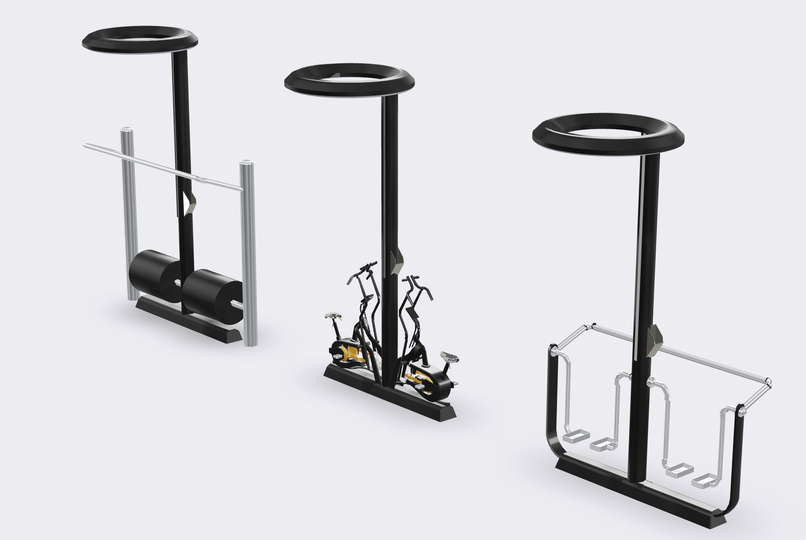
Product's 3D Models
-
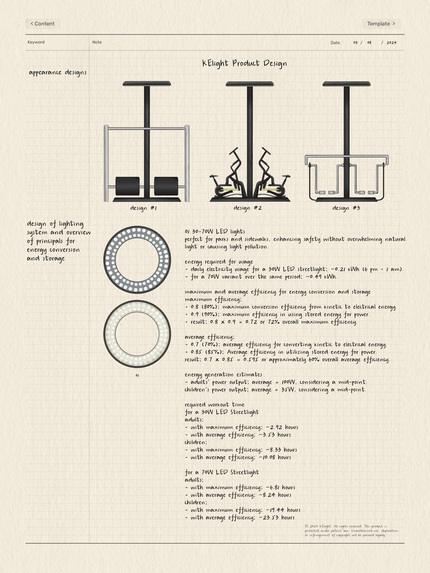
Product's Blueprint #1
-
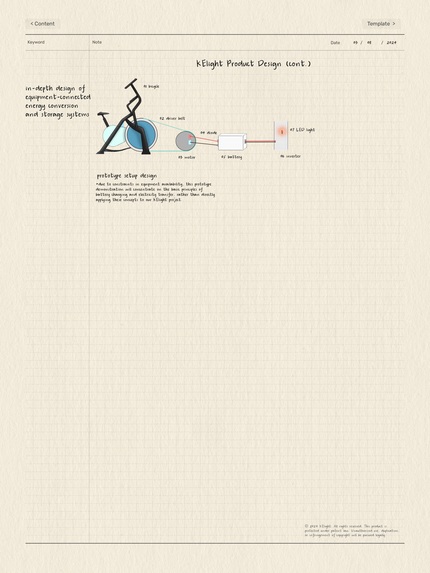
Product's Blueprint #2
-
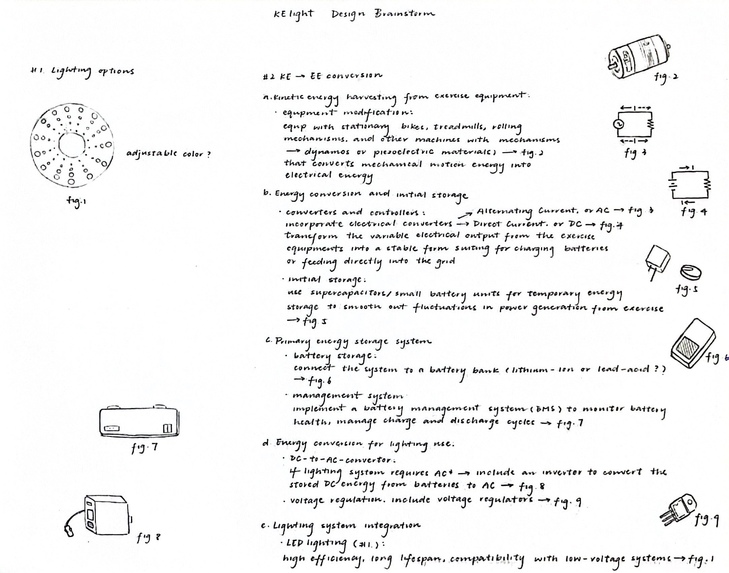
Product's Sketch
-
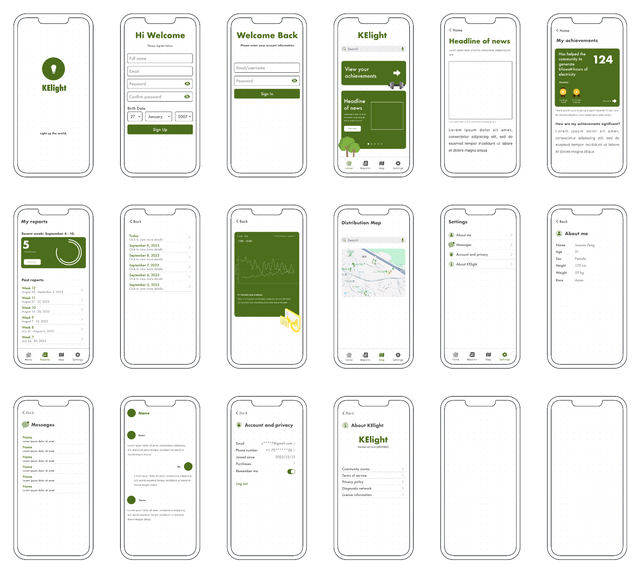
Product's User Interface Designs and Page Layout


KElight
Inspiration
The traditional infrastructure for street lighting, predominantly powered by non-renewable sources, has long been associated with considerable environmental and financial implications. A comprehensive assessment unveils that under the scenario of a 1-kilometer road equipped with 50 conventional street lights, the anticipated cost per unit spans from $7,000 to $10,000 over a duration of eight years. This cost analysis underscores the substantial burden imposed by conventional street lighting systems. A contrasting perspective emerges upon considering solar-powered LED streetlights, which exhibit enhanced efficiency, durability, and luminosity, thereby representing a promising alternative. However, the transition towards solar-powered LED solutions necessitates addressing critical challenges associated with battery replacements and panel disposal to truly foster sustainability. It is within this context that KElight emerges as a pioneering initiative, poised to redefine street lighting infrastructure through sustainable design principles.
What it does
KElight, with its innovative design philosophy, spearheads a paradigm shift in sustainable lighting solutions by harnessing fitness-generated kinetic energy. This ingenious approach offers a multifaceted solution characterized by durability, cost-effectiveness, and energy efficiency, while concurrently promoting community engagement and mitigating adverse environmental impacts. KElight's sustainable lighting revolutionizes public spaces with 30-70W LED lights, ideal for parks and sidewalks, using the principle of permanent magnetism for energy conversion. This system ensures safety without contributing to light pollution or overpowering natural light, requiring just 0.21 kWh for a 30W light and 0.49 kWh for a 70W light daily, between 6 pm and 1 am. With energy conversion efficiencies up to 72% maximum and about 60% on average, adults can power these lights through exercise—requiring approximately 2.92 to 3.53 hours for a 30W light and 6.81 to 8.24 hours for a 70W light, depending on efficiency. This melds fitness with eco-consciousness, providing a tangible path to reducing environmental impact through innovative energy use.
How we built it
The conceptualization and realization of KElight involved a meticulous engineering process aimed at leveraging fitness-generated kinetic energy to power street lights. To ensure feasibility, we constructed models using a diverse range of materials, including carbon steel, carbon fiber, aluminum, gallium arsenide, and polycarbonate. These materials were carefully selected to provide structural integrity, versatility, recyclability, and enhanced impact resistance, reflecting our commitment to sustainability and inclusivity. KElight's innovative fitness lineup, comprising the fitness bicycle, rolling mechanism, and airwalker, embodies our dual objectives of enabling effective workouts and promoting accessible fitness solutions. Through Shape3D, we selected materials and tested feasibility, while employing Photoshop and Procreate for 2D designs. Additionally, our app design, developed using Mockup, ensures seamless integration and a user-friendly interface, facilitating interaction with the KElight system.
Challenges we ran into
The journey towards the development of KElight was punctuated by various challenges, chief among them being equipment limitations that impeded a comprehensive demonstration of the street lamp's functionality. In response, our team directed efforts towards refining the design to enhance realism and reliability, thereby ensuring the feasibility and efficacy of the proposed sustainable lighting solution.
Accomplishments
The KElight project stands as a testament to the collective achievements of our multidisciplinary team, marked by significant milestones in various domains encompassing 2D and 3D design, website development, and user interface design. These accomplishments serve as tangible evidence of our unwavering commitment to innovation and sustainability within the realm of street lighting infrastructure.
What we learned
The journey embarked upon by the KElight team facilitated profound insights into the intricate dynamics of harnessing kinetic energy for sustainable applications. Beyond technical learnings, our collaborative endeavor underscored the paramount importance of teamwork and interdisciplinary collaboration. Through rigorous engagement in physics research, graphic design, 3D modeling, and website development, we cultivated a diverse skill set reflective of our dedication to effective communication and problem-solving.
What's next for KElight
Looking ahead, the trajectory of KElight entails the deployment of large-scale lighting structures equipped with fitness tools in various urban settings. This strategic initiative, aimed at promoting physical well-being and sustainability, underscores our commitment to fostering healthier and more environmentally conscious communities. Furthermore, considerations pertaining to optimal placement in locales characterized by favorable weather conditions and minimal insect activity, alongside the integration of drought-tolerant vegetation, ensure that KElight's contributions extend beyond mere illumination to encompass holistic ecosystem benefits. Additionally, the ongoing development of KElight encompasses the construction of an intuitive user interface, further enhancing accessibility and user engagement with the sustainable lighting infrastructure.
Contact Us
For inquiries and partnership opportunities, please email us at contact@kelight.org. Follow us on Instagram for updates and announcements.




Log in or sign up for Devpost to join the conversation.