-

Our vision for the Magic Mirror
-
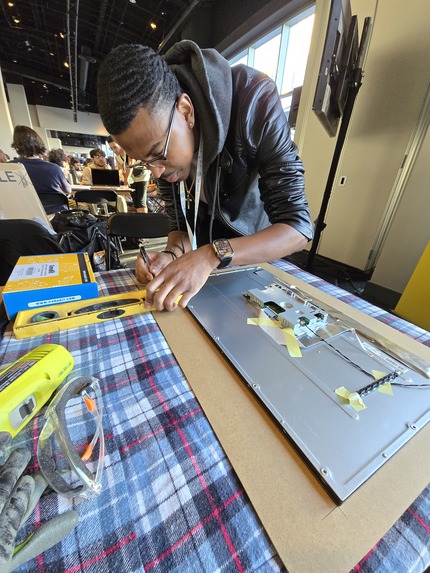
DJ tracing out the monitor outline to cut
-
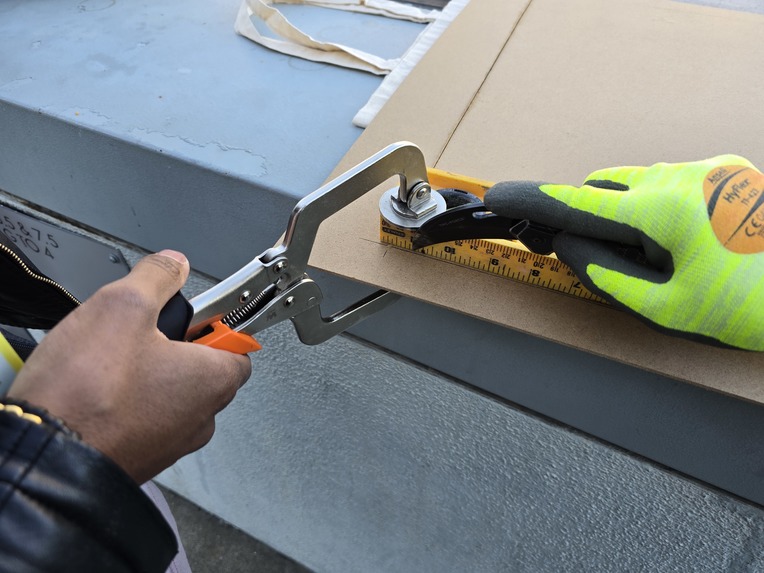
Cutting the cardboard with a karambit with caution
-
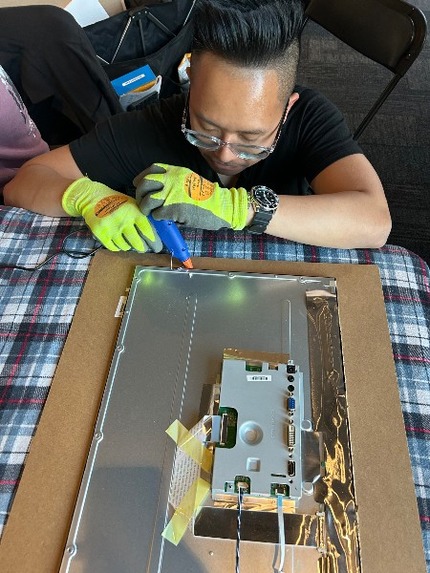
Tri hot gluing the stripped monitor to the cardboard brace
-
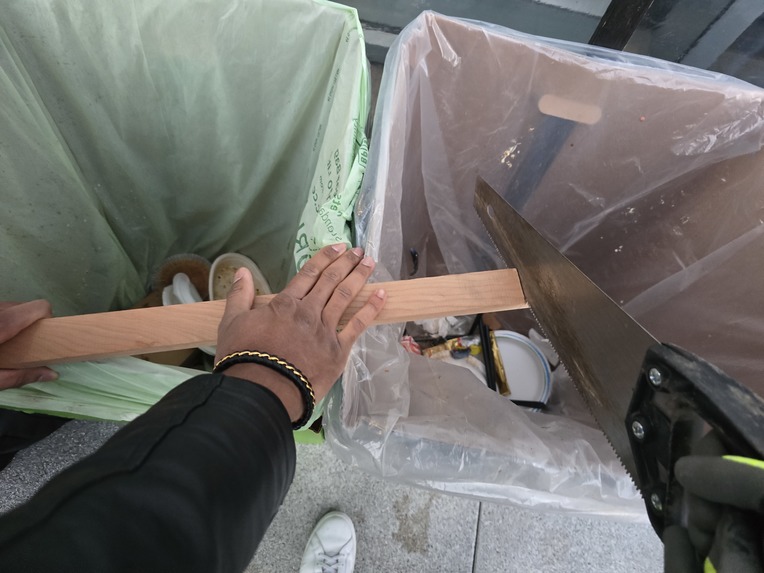
Hand sawing lumber for our support pieces behind the monitor
-
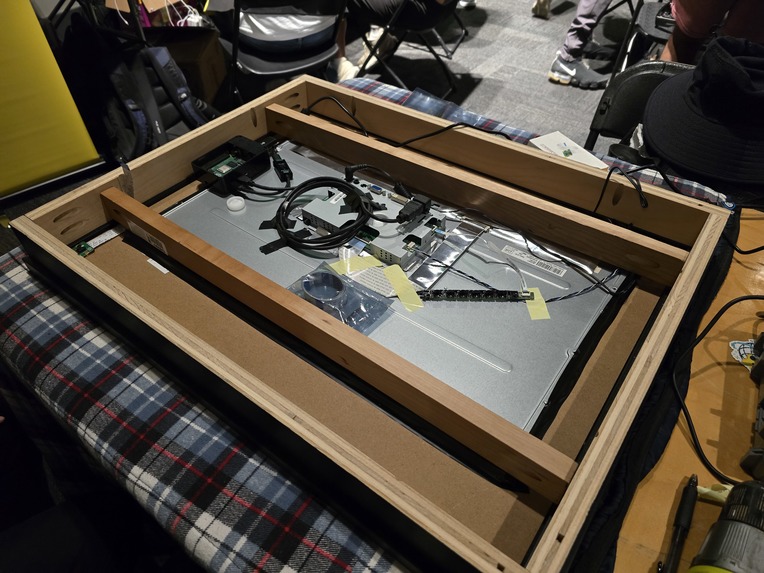
Under the hood of our integrated smart mirror unit
-
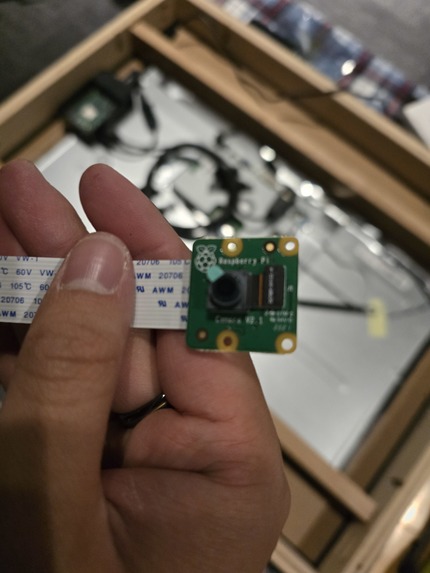
Raspberry Pi Camera module for a future project ;)


Inspiration
Shrek is love, Shrek is life. Inspired by the Magic Mirror in the Dreamworks classic, we crafted this smart mirror from scratch, powered by a Raspberry Pi via a monitor looking through a 1-way glass.
What it does
Our intention for this project was to build something beautiful and modern to display in our home. This mirror provides an elegant interface to view your favorite widgets (weather, stocks, calendar, etc). The Raspberry Pi features a microphone and camera module for hands-free interaction. If you ever wanted to feel what Lord Farquaad felt like in Shrek, this is the next best solution!
How we built it
We started with a 3-D blueprint of the wooden computer frame and housing. This provided the dimensions needed to rip the lumber lengthwise with a table saw and cut the wood widthwise with a circular saw. From there, we used the Kreg Pocket Hole Jig to drill angled corner holes to join the wood pieces into a rectangle. Finally, we fastened the picture frame and supporting rectangle frame together.
In the middle layer, we replaced the stock transparent glass with a 1-way mirror that lets you see your reflection but also light from the monitor behind it. For the monitor, we stripped all the plastic pieces to leave only the screen and sandwiched everything together.
Finally, we designed the mirror's interface with the open-source library MagicMirror. The documentation provided many modular 3rd party widgets that are plug-and-play for the mirror's interface.
Challenges we ran into
The primary challenges we encountered were during the initial phases of woodworking and during the final stages of using the Alexa module. We underestimated the width of the supporting wood required to not have the wood screws crack the wood. Our initial prototype had a width of 1.5", and the wood screws split the lumber right at the corner. Widening the beams to 2" solved this problem.
Our second main challenge nearing the completion of the project is the integration of the Alexa Assistant and its corresponding MagicMirror module. The debugging process for physical hardware items presents a new dimension of things that can go wrong. In addition, some terminal commands were outdated and bottlenecked us from proceeding.
Accomplishments that we're proud of
This was our first Raspberry Pi and woodworking project! As Computer Science majors, this was our first opportunity to work with hardware and integrate the full-stack experience of the user interface, accessing backend APIs, and housing the technology in a presentable package. For a two-person team, we've successfully built an integrated and modern piece of fine furniture in 48 hours.
What we learned
We learned how to craft lumber and code all in a new platform of the Raspberry Pi. This was a phenomenal hands-on project!
What's next for Mirror Mirror On The Wall
We have a Raspberry Pi Camera module attached and on standby! We're looking forward to precisely drilling the camera port and using OpenCV to allow users to interact with the mirror through gestures and voice.
Built With
- debian
- javascript
- linux
- magic-mirror
- nasa
- raspberry-pi
- unix


Log in or sign up for Devpost to join the conversation.