-
-
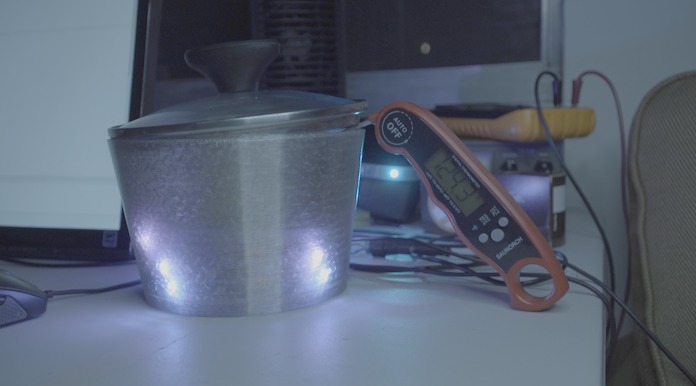
Archie hitting just over 124 degrees inside the warming chamber with the lid on
-
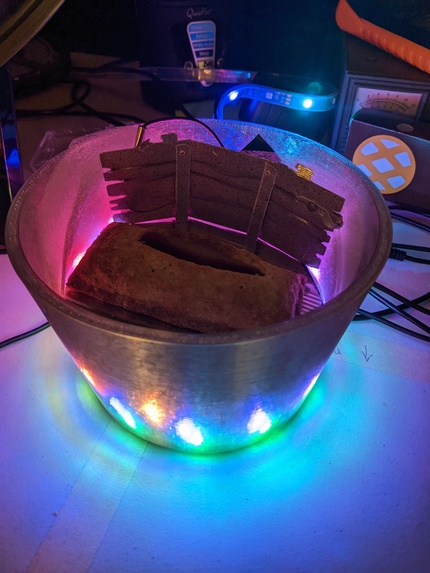
Archie heating a McCafe Strawberry Pie above the Raspberry Pi computer held below
-
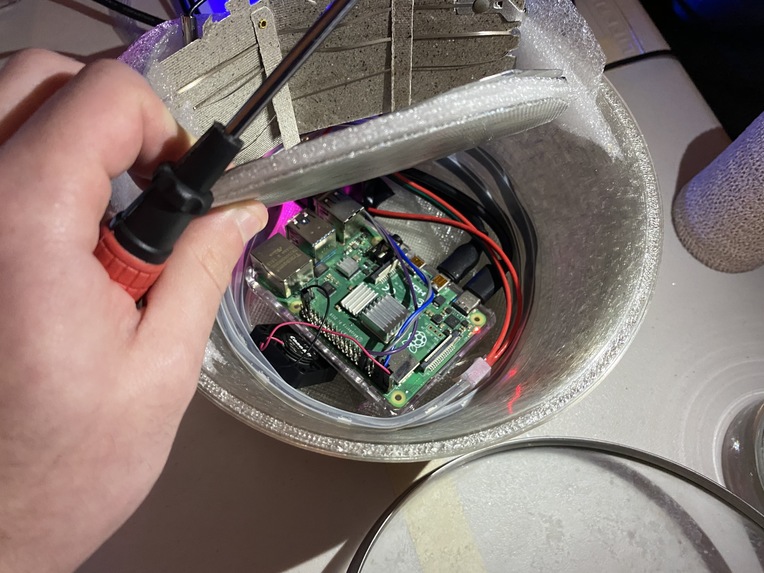
A peek under the hood at the Pi running the show and related circuitry
-
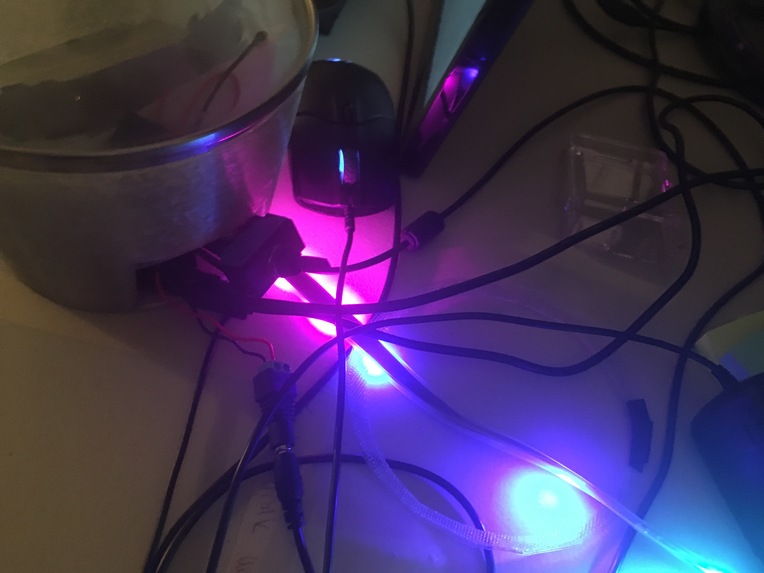
A look at Archie's rear I/O
-
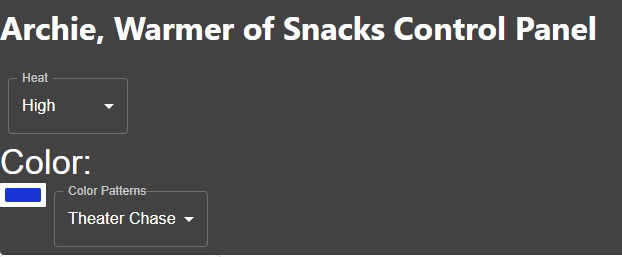
A screenshot of the control center that runs in your web browser
-
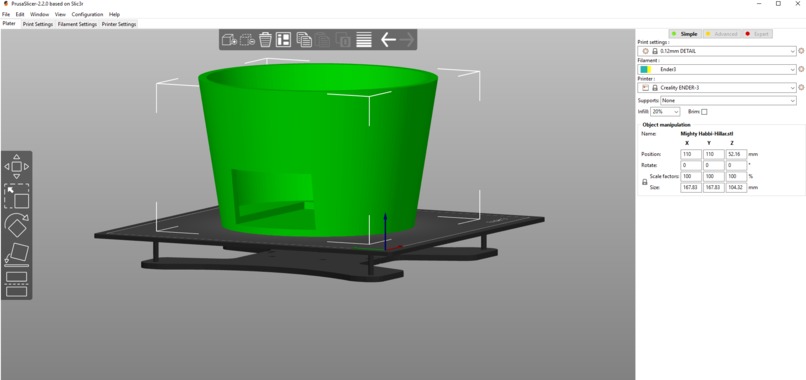
Archie's body in 3D printing software
-
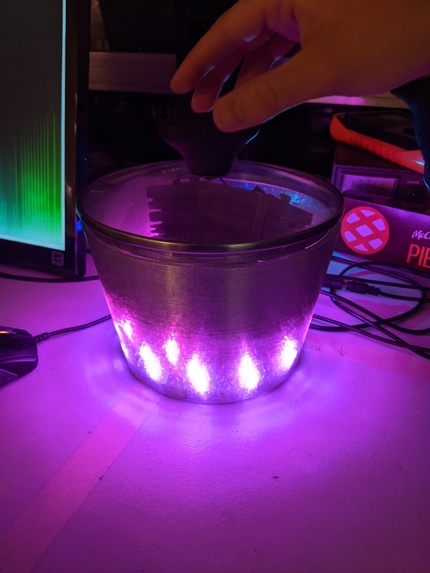
Archie with their lid on, trapping the heat inside, making it more powerful
-
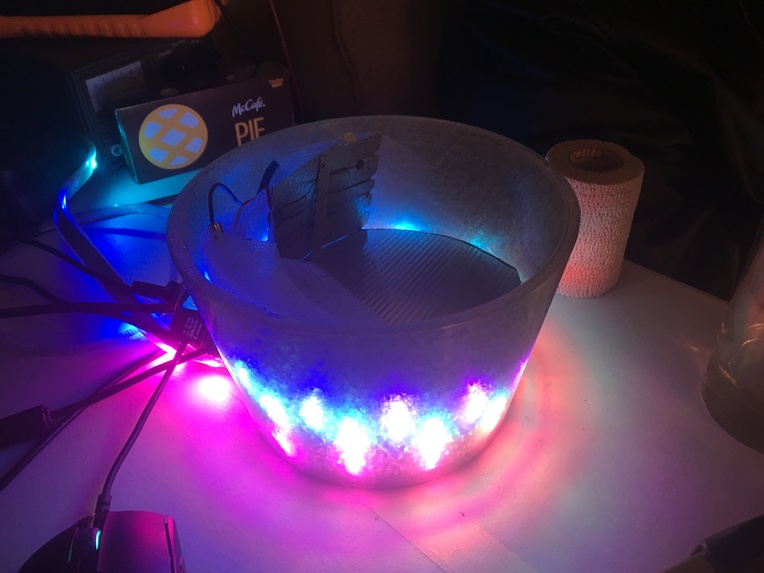
Archie just vibing


DOMAIN.COM SUBMISSION: hotpiesinyour.space
Inspiration
If you haven't seen by now, the KFConsole has taken the internet by storm. As a group of college students who don't have the resources to just go out and buy a gaming rig that costs thousands, we thought to ourselves - 'how can we have this delicious piece of tech without having to empty our pockets?'
What it does
Named for Archimedes, credited with deriving and approximation of pi, Archie, Warmer of Snacks is our valiant attempt to take back desktop computer cookery from big chicken and put it into the hands of well deserving engineers. Our open source design uses a custom modeled and tinted 3D printed shell to house the warming chamber separated from our microcomputer, keeping all our electronic components nice and cool. Business on the bottom, party on top (or in our case, Pi on the bottom, pie on top)!
Speaking of Pi, our next level embedded Linux rig sports the top of the line performance with the Raspberry Pi 4B 4GB. Best in its class, the Pi 4B sports 4K HDMI out, 4GB DDR4 RAM, and a 64 bit quad core ARM processor. This beast of a microcomputer hosts our custom command center software for controlling the individually addressable RGB lights thanks to the rpi-ws281x library and monitoring temperatures.
How we built it
We designed the shell in TinkerCAD and sliced using PrusaSlicer, before sending it to our Ender 3 to print overnight Friday into Saturday morning. Our Raspberry Pi handles the RGB light strip and the command center software. Our heating system uses a shard of the heating element of a toaster that is given a 12V 2A power source that heats the metal, and therefore heating the warming chamber up to 200°F, but can be consistently be held at a crisp 120°F, an ideal temperature for keeping food warm.
Challenges we ran into
-We tried to use a MOSFET to do variable power/heat using a duty cycle, but this limited our instantaneous power level and total energy output, so instead we decided to power the heating element using a separate 12V power supply
-The toaster heating element was a little fragile (and hard to use) considering we found it at a thrift store for $4, but we got it to work after some coaxing
-Making everything fit was a tight squeeze
Accomplishments that we're proud of
-Sticking it to 'Big Chicken'
-Getting the warming chamber to get to and stay at a reasonable temperature and not heat up the lower chamber hosting the more fragile electronics oam is a bad insulator
-Putting this all together in one weekend, while Cooler Master/KFC must've taken months to make theirs.
What we learned
-EXACTLY how much better a warm McCafe pie is than a cold one
-Toasters solve everything, apparently
-Plastic foam is a bad insulator
-RGB makes everything better
What's next for Archie, Warmer of Snacks
-Variable power delivery
-Bigger chamber
-More sensors/monitoring
Built With
- 3dprinting
- domain.com
- ender3
- flask
- python
- react
- rgb
- rpi-ws281x
- toaster




Log in or sign up for Devpost to join the conversation.