-
-

Logo
-
Landing Page
-
Landing Page
-
-
-
-
-
-
-
-
-


Inspiration
Project management often feels like a second full-time job. Between hunting down blockers in Slack, synthesizing GitHub PRs for a standup, and manually drafting sprint plans, developers spend hours just talking about work instead of doing it. We wanted to build a "Pilot" that doesn't just track tasks but actively orchestrates them—connecting the dots between fragmented tools like Monday.com, Slack, and GitHub to create a single, living source of truth.
What it does
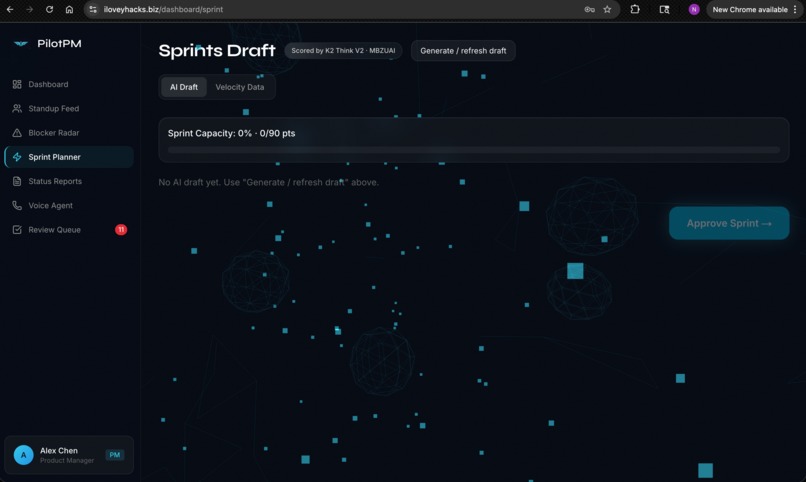
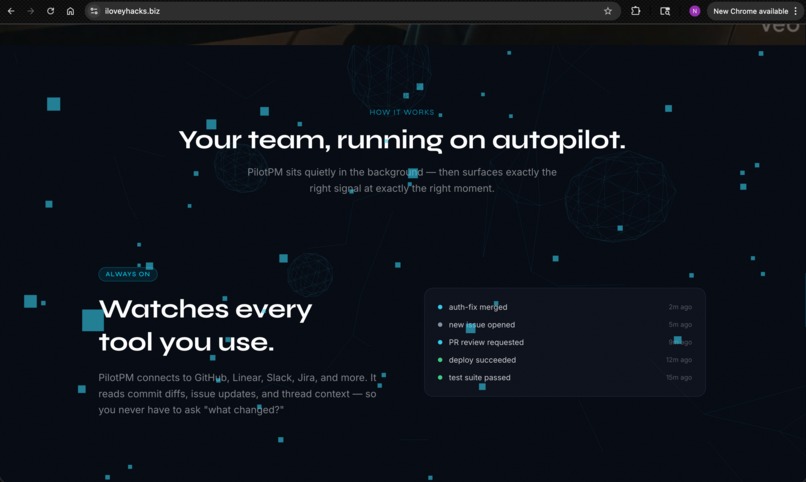
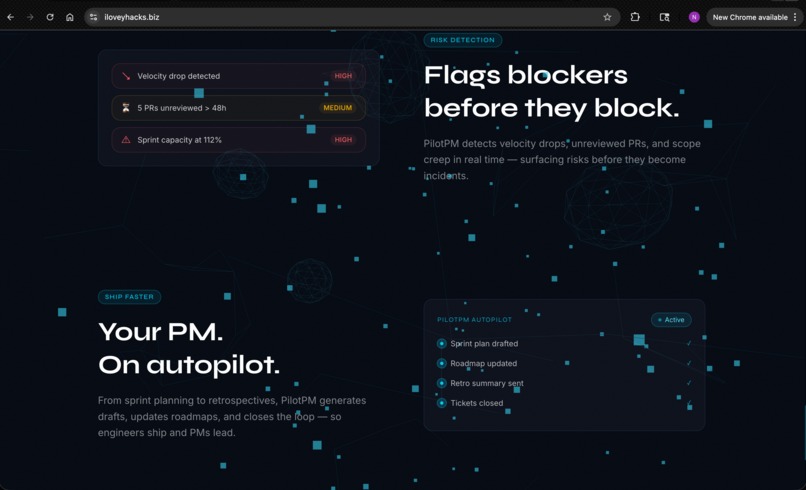
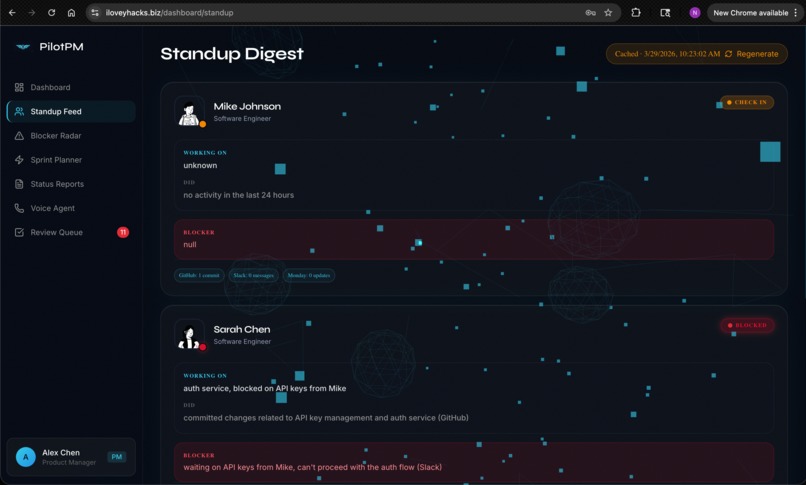
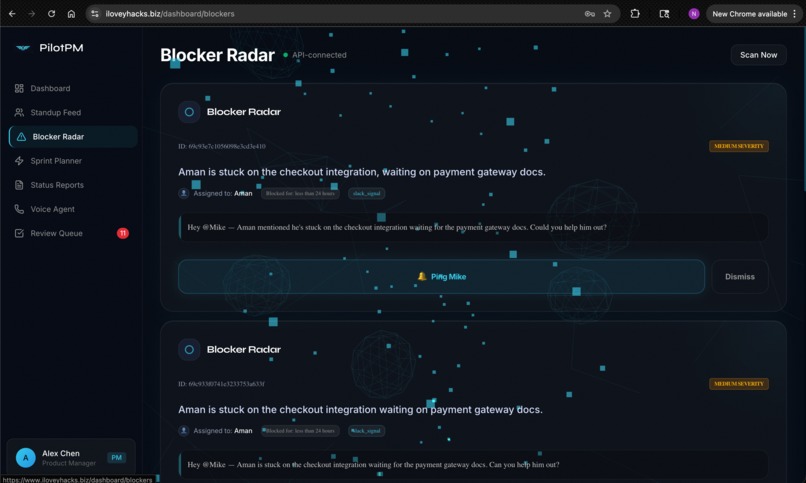
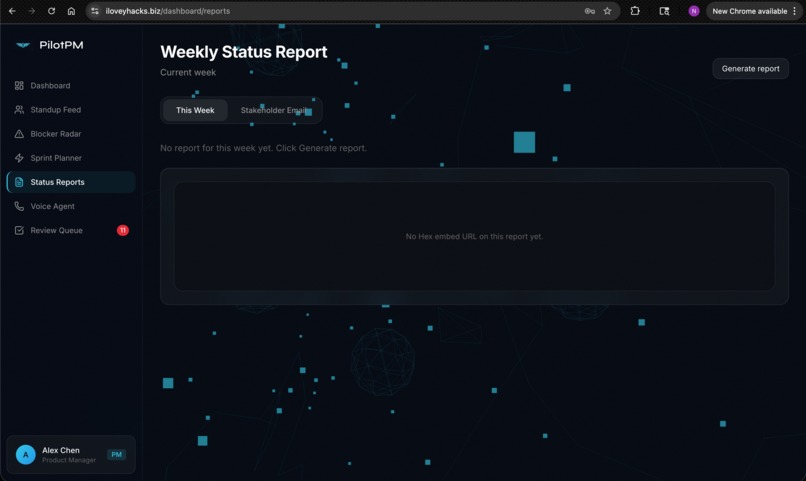
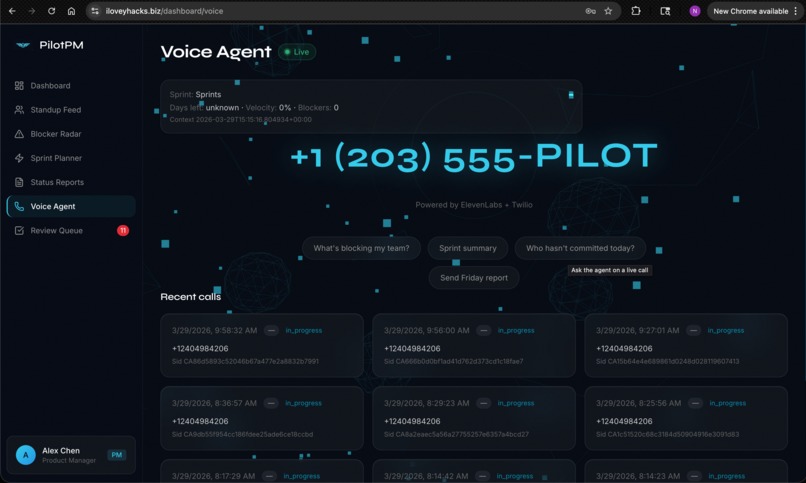
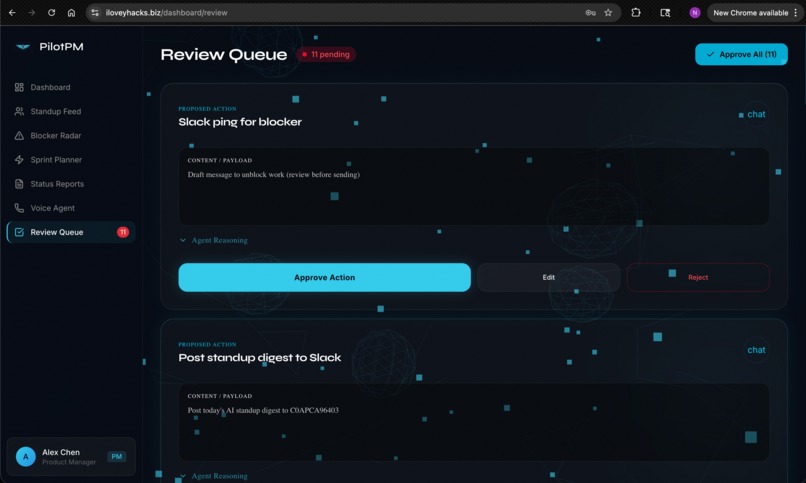
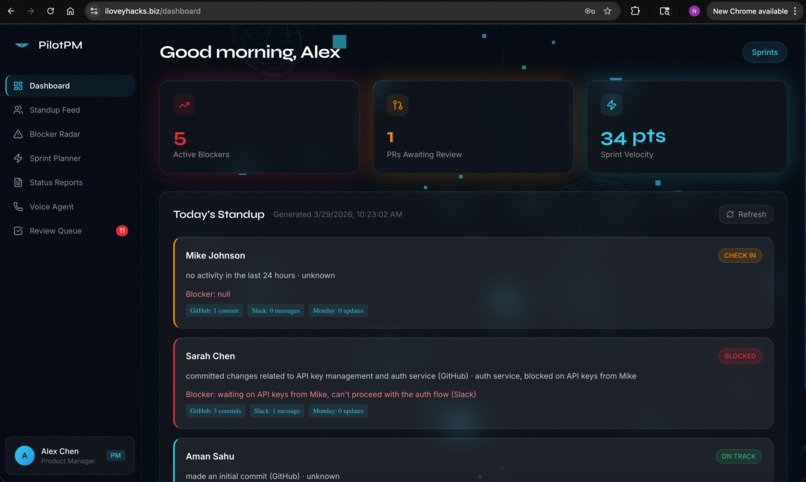
PilotPM is an AI Project-Management Orchestrator that acts as an intelligent layer over your existing stack. Its core features include: Standup Digests: Automatically generates per-engineer status updates and blockers from GitHub, Slack, and Monday.com data. Blocker Radar: Scans PR ages and Slack messages every 15 minutes to identify and "ping" potential project stalls before they become crises. Sprint Autopilot: Uses the K2 Think V2 model to draft and score sprint tickets based on team capacity and utilization. Voice Agent: A Twilio and ElevenLabs-powered AI agent that team members can actually call to get a live briefing on project status, sprint health, and active blockers. Human-in-the-Loop Review: To ensure AI doesn't go rogue, all external actions (like posting to Slack or emailing stakeholders) are staged in a review queue for human approval.
How we built it
We built a robust, full-stack application designed for real-time data processing: Backend: A FastAPI application (Python 3.11+) using Motor for asynchronous MongoDB interactions and APScheduler for managing automated "agentic" jobs. Frontend: A modern, high-performance dashboard built with Next.js 16, React 19, and Tailwind CSS, featuring smooth UI transitions via Framer Motion. Intelligence Layer: We utilized a "Shared Context Layer" that fetches data from GitHub, Slack, and Monday.com in parallel, building a project snapshot every 15 minutes. LLMs: The project utilizes Lava as a forward proxy, Gemini as a fallback, and the specialized K2 Think V2 (MBZUAI-IFM) for complex sprint scoring. Voice Infrastructure: Integrated Twilio webhooks with ElevenLabs Conversational AI to turn project data into natural, telephony-based conversations.
Challenges we ran into
Telephony Synchronization: Getting the ElevenLabs agent to accurately "speak" the live project context required a complex register-call flow. We had to ensure dynamic variables like the pilotpm_context were injected into the Twilio WebSocket at the exact moment of the inbound call. CORS & Environment Management: Managing a monorepo across different deployment platforms (Railway for the API and Vercel for the frontend) led to significant CORS hurdles, requiring strict JSON-based origin validation. Data Consistency: Building a "world model" from three different APIs (GitHub, Slack, Monday) meant handling rate limits and data sanitization to ensure the AI didn't hallucinate status reports based on stale info.
Accomplishments that we're proud of
The Review Queue: We successfully implemented a "Human-in-the-Loop" gate that prevents AI side effects from hitting Slack or email without a green light, balancing automation with safety. Sprint Scoring: Leveraging K2 Think V2 to not just list tickets, but to analyze capacity and utilization (capping at 110%) to prevent team burnout. Real-time Context: Creating a system where the Voice Agent knows exactly what happened in a Slack channel or GitHub PR just 15 minutes ago.
What we learned
Agentic Workflows: We learned how to move from simple "one-off" AI prompts to a persistent "Context Layer" that serves multiple features simultaneously. Voice AI: Gained deep experience in TwiML, WebSockets, and the intricacies of low-latency TTS (Text-to-Speech) for professional telephony environments. Monorepo Deployment: Mastered the coordination of a Python backend and a TypeScript frontend within a single repository, specifically managing cross-platform environment variables.
What's next for PilotPM
Native Execution Workers: Moving beyond the review queue to allow "Approve-to-Execute" automation for complex tasks like creating GitHub issues or Monday boards directly. Deeper Integrations: Adding support for more developer tools like Jira, Linear, or Hex for deeper technical analytics. Advanced Voice Features: Implementing outbound calling so the AI can proactively "call" a developer to get a status update if a blocker is detected on the radar.


Log in or sign up for Devpost to join the conversation.