-
-

Our Logo
-
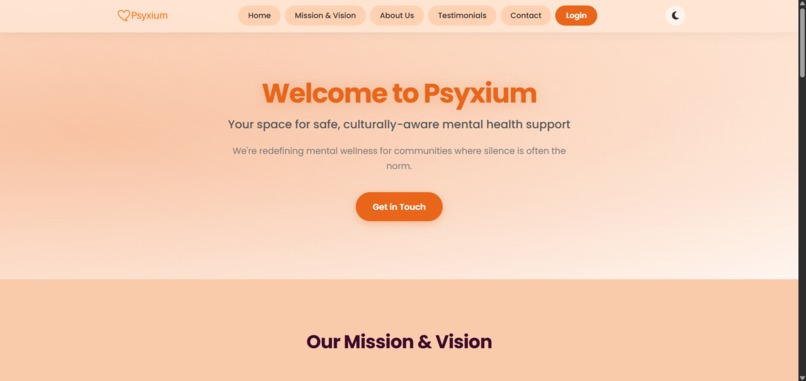
Our landing page (Day theme)
-
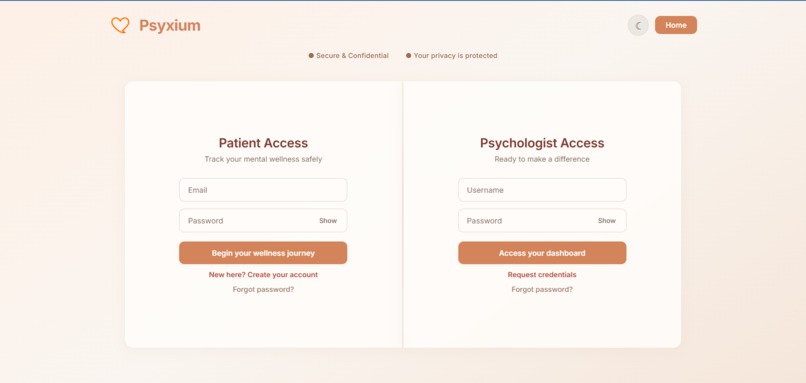
Our login page (Day theme)
-
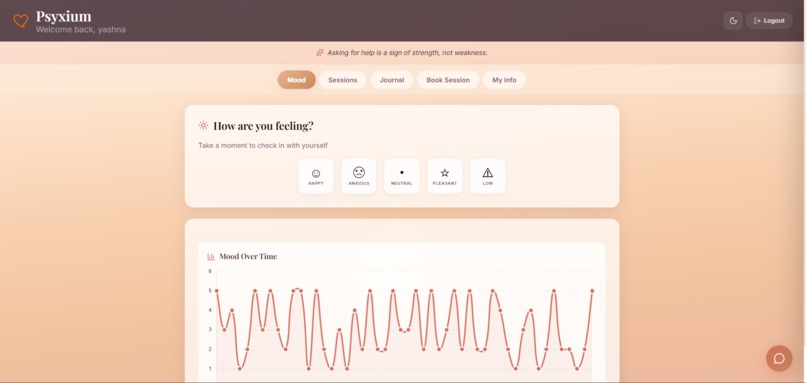
Patient Dashboard (Day theme)
-
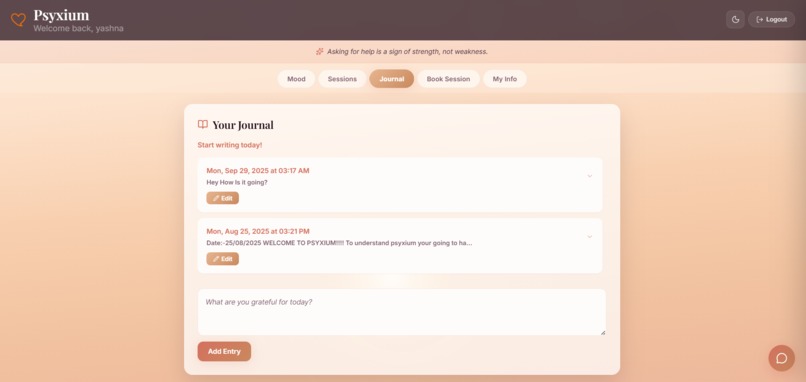
Private Journal (Day theme)
-
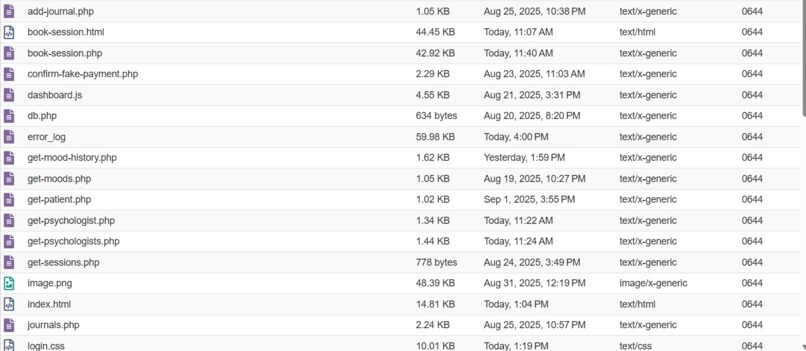
CPANEL File setup 1
-
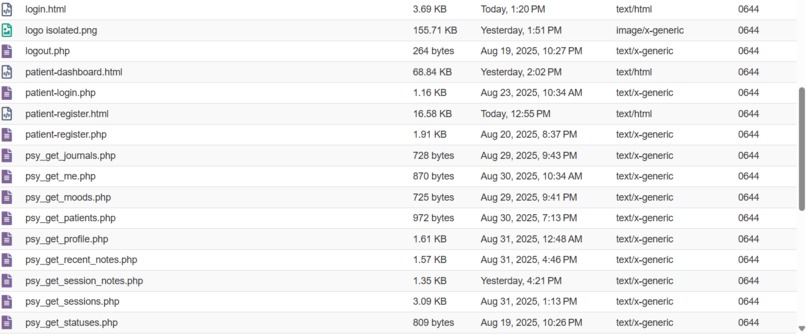
CPANEL File setup 2
-
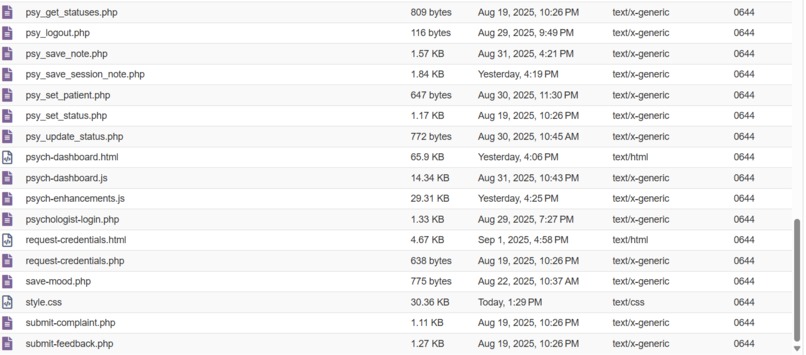
CPANEL File setup 3
-
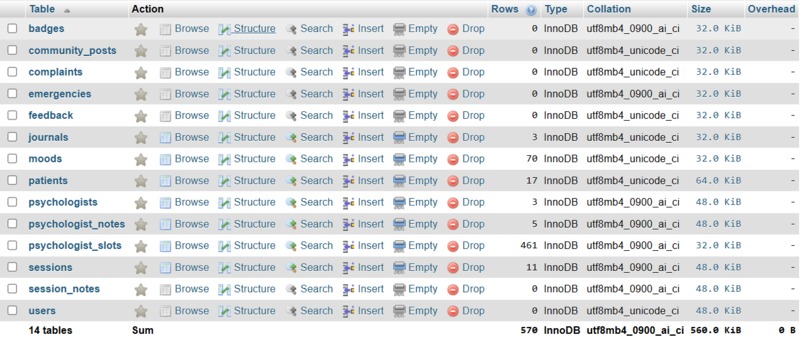
CPANEL Database Setup


Inspiration
Psyxium started from a phase of my life I don’t really talk about much.
When I was 16, I was in India preparing for JEE. That’s where things started going downhill for me mentally. I was burnt out, constantly stressed, and honestly just tired all the time. But every time I tried to explain it, it was brushed off. My parents thought I was making excuses. My teachers kept saying I was smart and I would manage. No one really stopped to understand what I was going through.
I used to sit at night and just cry, alone. It sounds small now, but at that age, it felt like everything was collapsing. Before that, I was always a calm, chill student. I did well without pushing myself too hard. That sudden shift into intense pressure messed with me. I became irritated, frustrated, and at one point I even started resenting my own parents.
That feeling of having no safe space to just say “I’m not okay” stayed with me. Psyxium comes from that exact gap. Not from theory, but from something I went through myself.
What it does
Psyxium is built to give people a space I wish I had back then.
It allows users to track how they feel, write things down without overthinking, and slowly build awareness of their mental state. There’s journaling with streaks, mood logging, and the ability to schedule sessions with psychologists.
There’s also a rule-based AI that listens when someone just wants to talk and flags things if something seems off, so a psychologist can step in.
On the psychologist side, they’re not just guessing. They can actually see patterns, mood trends, session history, and add private notes that help them understand the patient better over time.
It’s not trying to replace therapy. It’s trying to make reaching it easier.
How we built it
Psyxium didn’t start here. This is probably my third version of it.
I first pitched the idea during my first semester in the UAE at Sandooq Al Watan and made it to the finals. That was the first time I realized this idea actually connects with people.
Then I built an initial prototype around May. Later, it got selected in the ICESCO Appathon Top 50, which was honestly a big moment for me. But if I’m being real, that version was not good. The code was messy, the UI felt generic, and the architecture was all over the place. It worked, but it wasn’t something I could scale or be proud of long term.
When this hackathon came up, it kind of brought that motivation back. I decided I’m not just going to improve it, I’m going to fix it properly.
I rebuilt most of the flow using HTML, CSS, and JavaScript on the frontend, and PHP with MySQL on the backend. I restructured how data moves through the system, cleaned up connections between features, and migrated data from the older version into a more organized setup.
I also added basic security improvements like SQL injection protection and rate limiting, which I had completely overlooked before.
A lot of features had to be rebuilt from scratch because they were poorly connected earlier. The patient dashboard especially is something I spent time refining, with journaling, streaks, and a cleaner experience overall.
I mainly built everything solo. Also, having access to Lovable helped a lot in speeding up UI improvements and iterations.
Challenges we ran into
The hardest part wasn’t building new features. It was fixing my own old mistakes.
The data flow was messy, and trying to reorganize it during a hackathon was painful. There were moments where things just didn’t connect, and I had to rethink entire sections.
I also had to make a tough call to drop pseudo-anonymous identities. I really wanted that feature in, because it directly solves the fear of being judged, but I couldn’t implement it properly in time. I didn’t want to include something half-baked just for the sake of it.
Time pressure was constant, and honestly, finishing it felt like luck as much as effort.
Accomplishments that we're proud of
Getting Psyxium into the ICESCO Appathon Top 50 is something I’m genuinely proud of. It showed me that this isn’t just an idea in my head, it actually has value.
Reaching the finals in Sandooq Al Watan earlier also gave me that initial push.
But beyond recognitions, what I’m most proud of is this version itself. Taking something that was honestly messy and turning it into a cleaner, more structured system in such a short time.
It’s not perfect, but it finally feels like a solid foundation.
What we learned
This whole journey changed how I look at building things.
I realized that having an idea is easy, but structuring it properly is the real challenge. Clean architecture matters way more than I thought, especially when things start growing.
I also understood how important it is to design for how people feel, not just what they do. Especially in something like mental health, the smallest design choices matter.
And probably the biggest thing, knowing when to stop. Not every feature needs to be forced in. A stable core is always better.
What's next for PSYXIUM
There’s still a lot I want to do with Psyxium.
The first thing is properly implementing pseudo-anonymous identities, because that solves a real problem I personally faced. I also want to strengthen the backend, improve security further, and make the platform more reliable overall.
Real-time communication, better AI support, and smoother session flows are also things I want to work on.
But beyond features, I want to take this further than just a project. I genuinely feel like something like Psyxium is needed right now. Too many people are dealing with things silently.
If this can help even a few people speak up earlier than I did, that’s already worth it.
Note: Psyxium was developed as a hackathon proof of concept under strict time constraints. Some features, such as pseudo-anonymous identities, are part of the roadmap and were intentionally deferred to ensure a stable and well-structured core system.


Log in or sign up for Devpost to join the conversation.