-
-
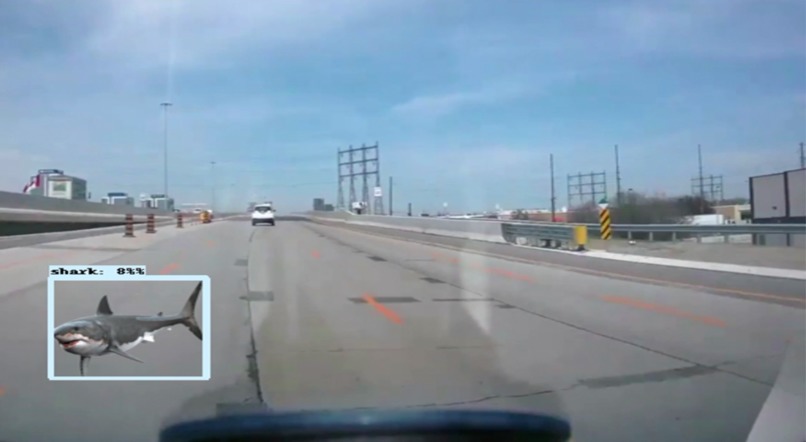
Screenshot of the program in action.
-
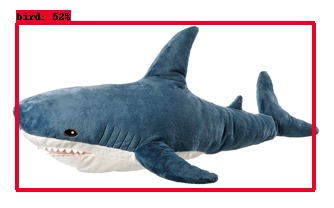
Challenges we ran into. Behold! A bird.


Inspiration
Driving can be very dangerous. It can be even more dangerous if there were sharks on the road. Luckily, we have prepared a solution for this.
What it does
This program captures a video, and uses machine learning to detect the location of sharks on the road.
How we built it
This is built using two machine learning models. One for identifying potential road sharks, and one for identifying if it is indeed a shark.
Challenges we ran into
We discovered halfway through the project that unfortunately the COCO 2017 dataset which is commonly used to detect objects, does not contain images of sharks, causing them to be identified as a variety of animals and objects. To solve this, we combined this with the utilization a different classifier that was previously trained with a different dataset which includes a variety of sharks, which was used to verify that potential images of sharks were actually sharks.
Accomplishments that we're proud of
We were able to create an object-detection machine learning project with limited knowledge of the subject and the program works with somewhat accurate results.
What we learned
This was our first time implementing object-detection using Tensorflow in a totally 100% real-world application.
Also, sharks closely resemble airplanes, birds, people, and surfboards.
What's next for Shark on the Road
• Currently the video runs a bit slower than we would like it to and we would like to find a way to speed it up.
• Increasing the accuracy of our shark detection would certainly reduce the amount of shark-related vehicle accidents using our program.
• We could also instruct the driver whether to turn left or right to steer clear of the shark(s).
Road video credit: https://youtu.be/OoxjCXJSavM
Built With
- opencv
- tensorflow


Log in or sign up for Devpost to join the conversation.