-
-
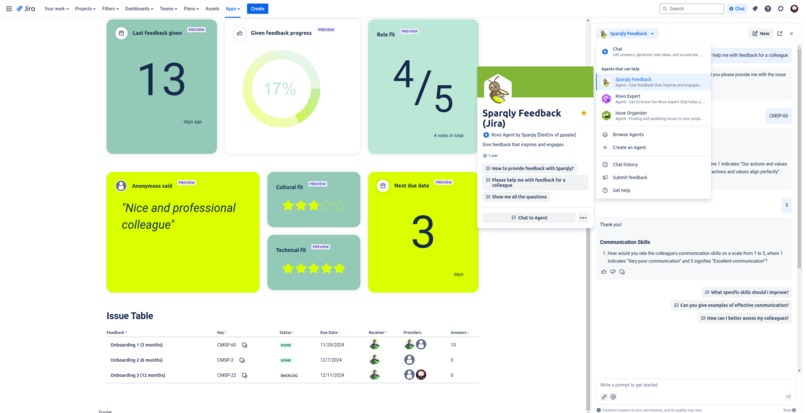
Sparqly Rovo chat agent
-
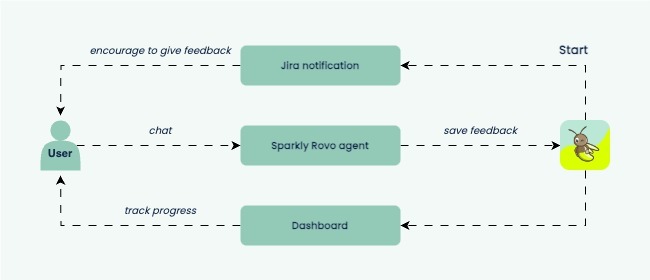
User workflow
-
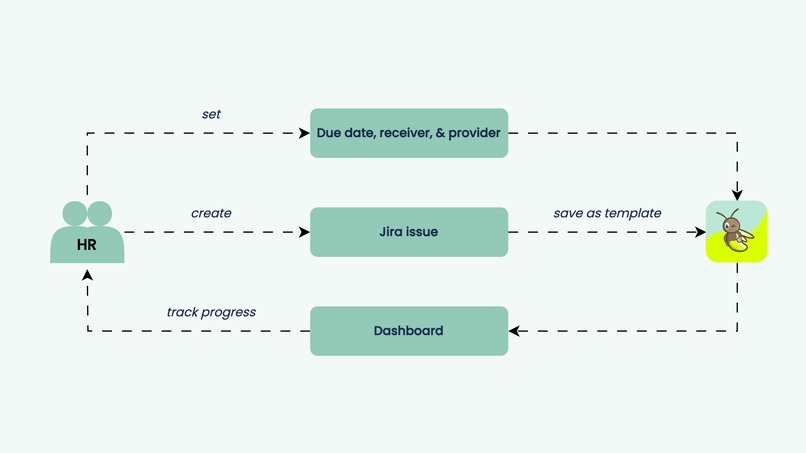
HR workflow
-
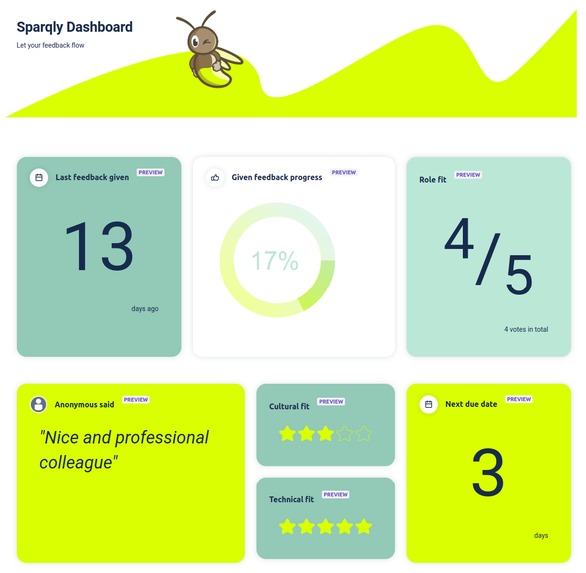
Sparqly dashboard
-
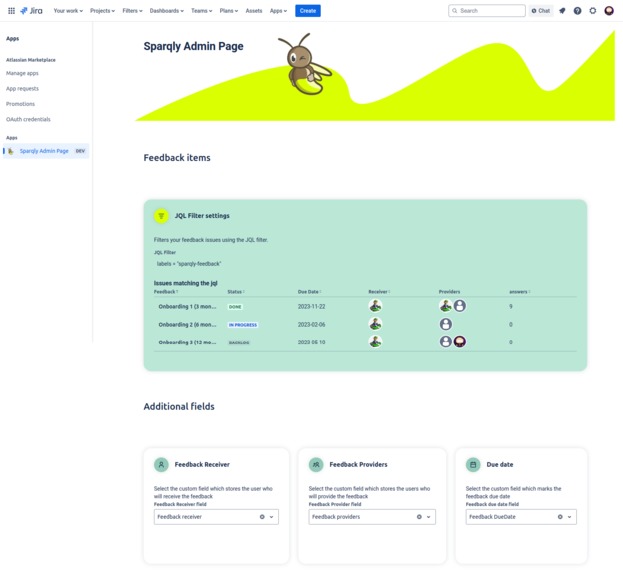
Sparqly admin page
-
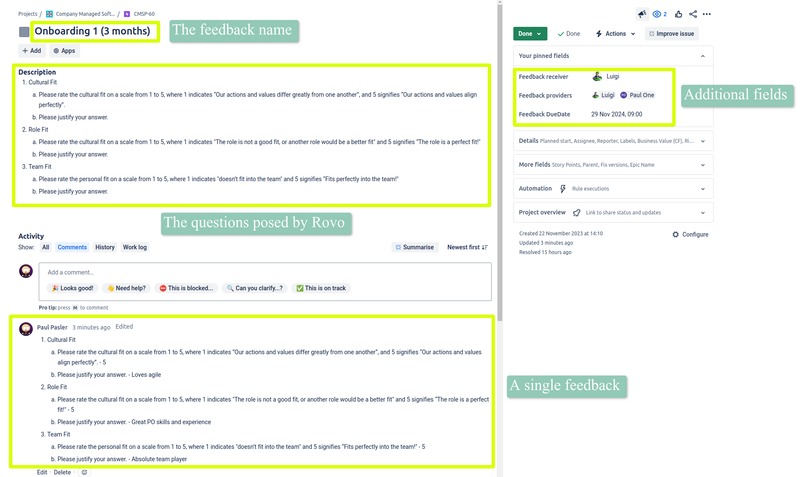
Feedback item = Jira issue
-
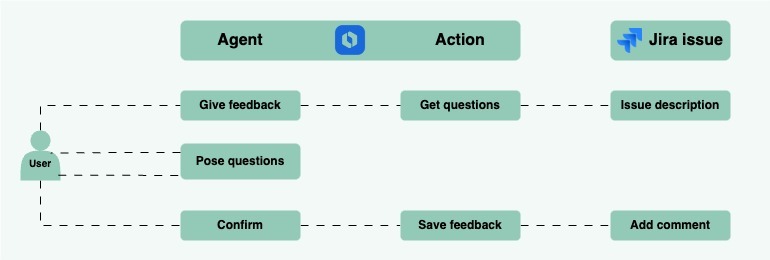
Technical flow of chat agent


Inspiration
In our organization, feedback was a manual, time-consuming process. Tools like Google Forms or email meant extra effort for HR managers and team leads, who were already juggling multiple responsibilities. From creating forms to chasing responses, the process added unnecessary strain.
Standalone solutions like survey administration or human resources management tools offer advanced features, but required our teams to leave Jira, making adoption difficult. Feedback felt like a chore, not a seamless part of daily work. Employees also found it hard to track feedback or stay motivated to give feedback regularely.
We saw the need for a better solution—one that streamlined feedback and fit naturally into Jira. That’s how Sparqly came to life.
What Sparqly does
Sparqly is designed to be more than just a feedback tool—it’s a solution that seamlessly integrates feedback into existing Jira workflows, helping HR teams and employees engage in a simple, automated feedback process.
With Sparqly, HR managers can automate feedback processes, eliminate manual reminders, and streamline tracking—all in one place—Jira! This is done by setting feedback due dates, assigning providers and receivers, and tracking progress via a simple dashboard. As shown in the workflow below, this integration makes managing feedback efficient and straightforward.

After receiving a Jira notification, users can chat with Atlassian’s Rovo AI—or, in Sparqly’s case, the Sparqly Rovo agent—to provide feedback in natural language. This process is designed to be engaging, motivating users to share their thoughts. Once feedback is provided, users can track their progress and goals on the Sparqly dashboard. This workflow can be seen in the diagram below.

Sparqly simplifies feedback management, improves tracking, and boosts engagement, making feedback a natural and valuable part of team growth.
Find the docs here: https://sparqly.wikipage.io
How we built it
Our app is built on Forge, fully utilizing Atlassian's ecosystem without external services ("Runs on Atlassian"). We focused on using built-in features, avoiding new fields or views.
While we had prior experience with Forge, we challenged ourselves to explore features aligned with our concept. We researched Forge's latest modules and APIs, taking a step-by-step approach to set up the project.
We combined proven features, innovative methods, and early access program (EAP) capabilities to create a cutting-edge app. Key components include a Jira admin page and a global dashboard tailored to different roles.
We constantly revisited even basic features to find better, more efficient solutions, balancing research, experimentation, and delivery within a tight timeline.
For interactive AI functionality, we used Rovo's new Forge modules, Agent and Action, allowing feedback through dynamic dialogs. We also added internationalization, enabling multilingual support. And used the current EAP UI Kit module "Frame".

Challenges we ran into
As with any new endeavor, we encountered some hurdles along the way. The initial challenges were minor, such as typos or missing configurations, which occasionally slowed us down. As we moved into more advanced usage, we occasionally ran into limitations with EAP features—but these provided valuable feedback we could share with Atlassian.
Our biggest challenge was refining the Rovo agent's prompts. While integrating the modules was straightforward, addressing edge cases and managing unexpected inputs or responses required thoughtful problem-solving and iteration.
What we learned
Beyond product discovery, we gained valuable technical insights as Forge rapidly evolved. Atlassian’s clear documentation and community support helped us overcome challenges quickly.
One key takeaway was working with Rovo, which involved not just technical implementation but also mastering prompt engineering. Precision, clear examples, and understanding context were essential for accurate data.
A standout feature is that no actions are executed without user confirmation, ensuring transparency and trust in the AI.
We prioritized documenting our learnings, sharing feedback, and engaging with Atlassian teams, resulting in posts on the Community and LinkedIn. You can find these insights in our Forge feedback ticket: FRGE-1588.
What's next for Sparqly
Sparqly is evolving into more than just a feedback tool—it's becoming a central hub that connects feedback providers with HR teams. In upcoming releases, HR will be able to create customized surveys with templates, streamlining the feedback process. Feedback access will be restricted to HR only, ensuring privacy and security.
Once feedback is submitted, Sparqly will intelligently analyze and summarize responses, providing HR teams with actionable insights to guide decision-making.
To further empower HR managers, we’re introducing an HR agent in future updates. This feature will leverage AI to assist with feedback summaries, contextual analysis of responses, and tailored insights for each issue, helping HR teams make informed decisions faster and more effectively.
Additionally, because we store feedback data in Jira’s standard fields, Sparqly will seamlessly integrate with other parts of the Atlassian ecosystem, in line with Atlassian’s vision of a unified "system of work." This will allow feedback data to be easily accessed and used in Confluence, enabling automatic summaries for performance reviews and transparent reporting.


Log in or sign up for Devpost to join the conversation.