-
-
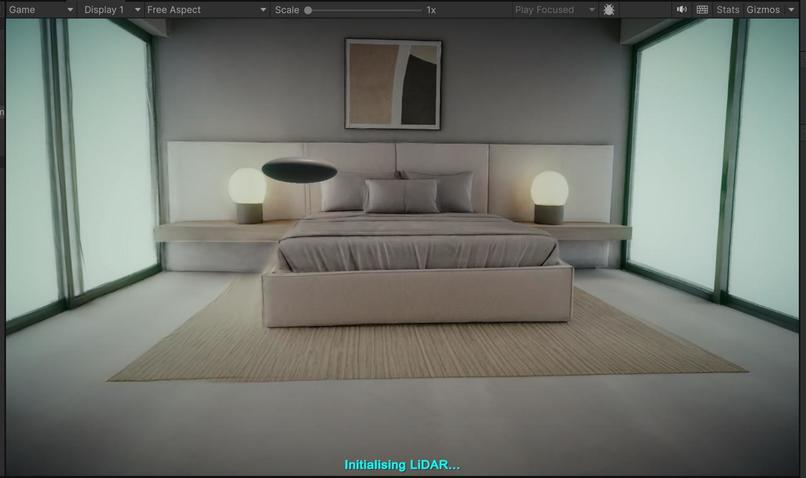
Demo Step 1: Initialization
-
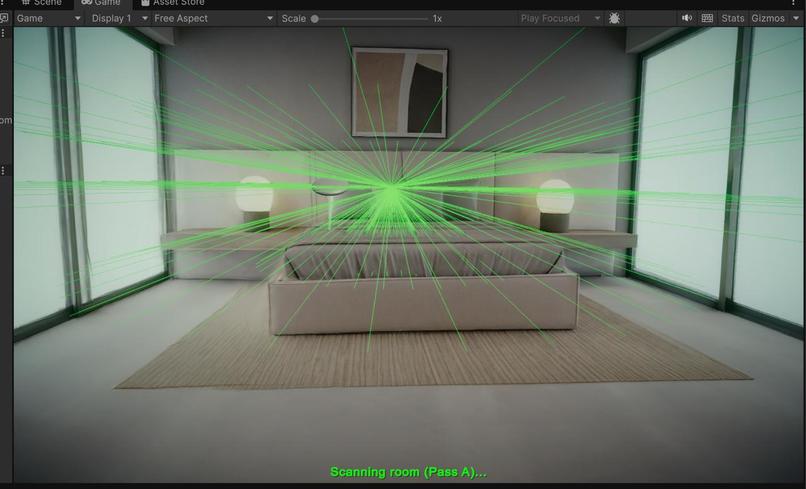
Demo Step 2: Scanning
-
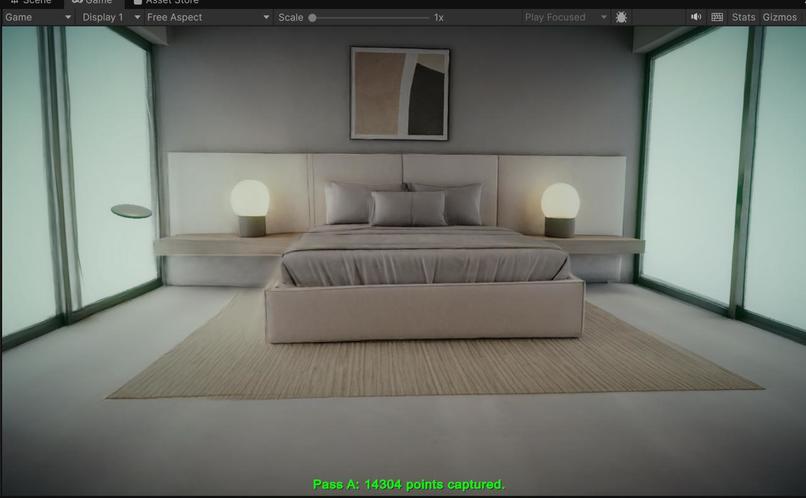
Demo Step 3: Capturing
-
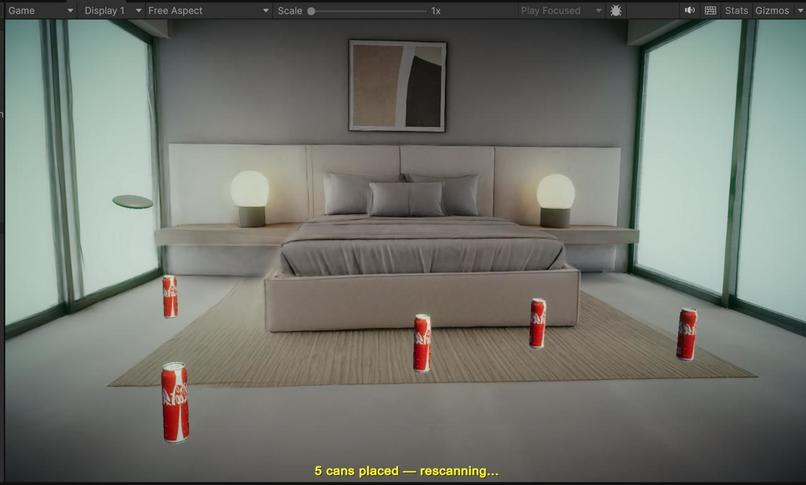
Demo Step 4: Placing Cans
-
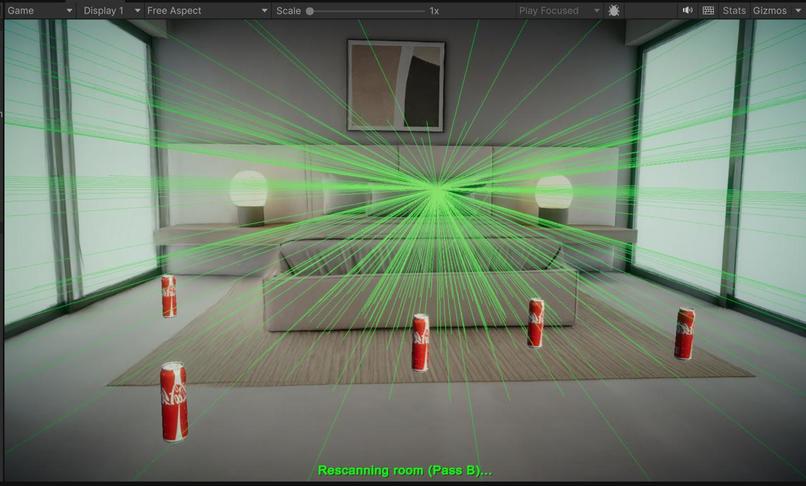
Demo Step 5: Rescanning
-
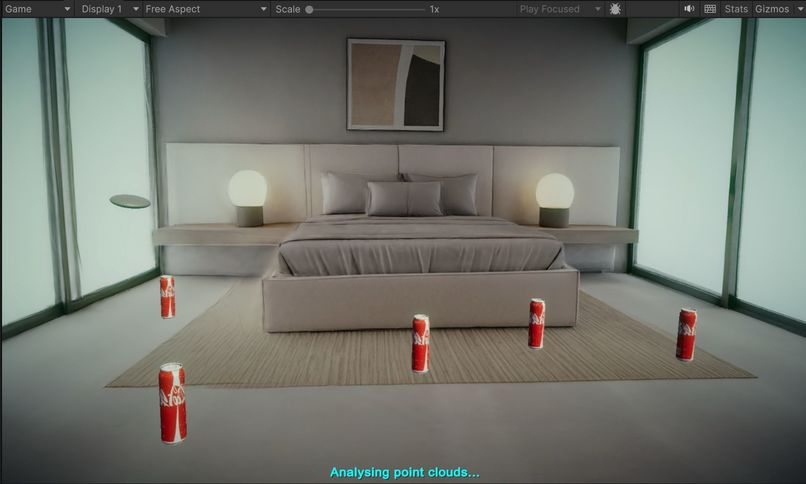
Demo Step 6: Analysis
-
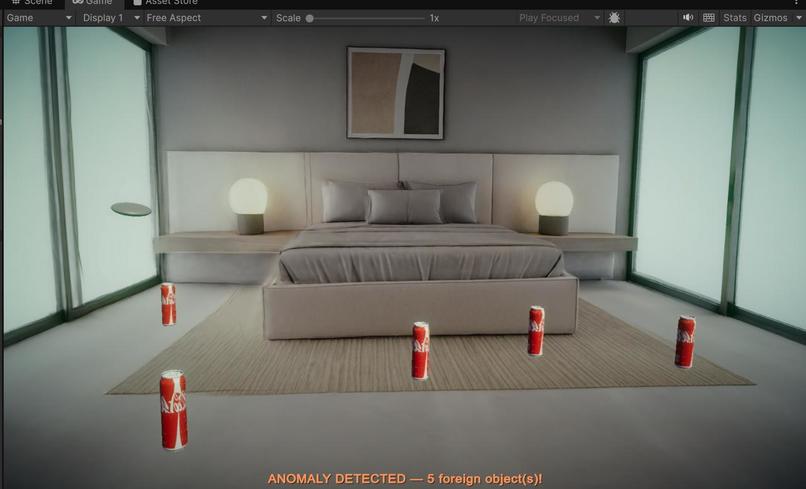
Demo Step 7: Detection
-
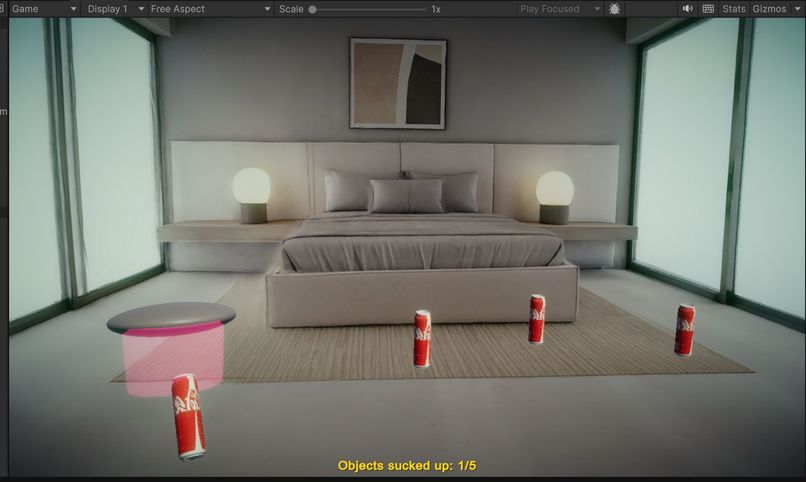
Demo Step 8: Cleaning
-
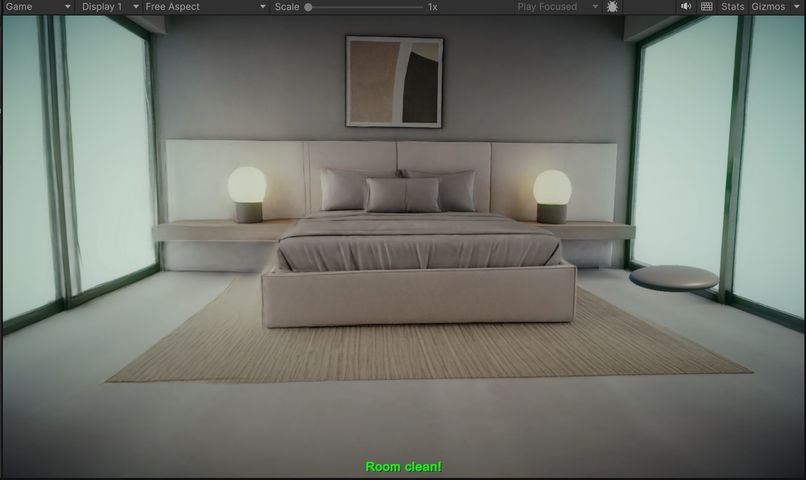
Demo Step 9: Final State


Inspiration
Traditional robotic cleaner scrub every inch of the floor. The path planning strategy focuses on how to cover the entire cleaning area. However, a cleaner may only need to carefully clean the contaminated area and double check the environment status. If a cleaner is smart enough to target the area of interest, it takes less time and energy to finish cleaning the same area.
Beyond indoor spaces such as rooms, we believe this concept could extend to outdoor environments as well. If drones could autonomously travel to places like parks or areas that are difficult or unsafe for people to access, and collect specific objects or perform cleaning tasks, it could help create a safer and more convenient future for humans.
What it does
Unlike conventional robot vacuum cleaners, the UFO Vacuum imagines a future cleaning device that can perceive space in three dimensions. By understanding the environment volumetrically, it can identify and target debris more efficiently, saving both energy and time. We were inspired to imagine what a next-generation cleaning system might look like if it could truly “see” and understand the world as a 3D space.
How we built it
To explore and visually validate this idea, we built and tested the prototype using Unity and the Pico emulator, allowing us to experiment with the interaction and demonstrate the core concept.
Challenges we ran into
- Object Separation in Models: The Gaussian splat generated from Marble (the world model) is imported into Unity as a single object, making it difficult to interact with individual elements.
- False Positive Detections: Due to the limitations of 3D point cloud comparison, the algorithm occasionally identifies "ghost" cans that do not exist in the environment.
Accomplishments that we're proud of
- Path Optimization: Developed an agent capable of calculating the most efficient path to clear all cans within the demo.
- Functional Detection: Successfully implemented a working object detection algorithm based on 3D point cloud comparison.
What we learned
- Multi-Model Integration: Gained experience using multiple world models, such as Marble and Mashy AI, to generate assets and components within a simulated environment.
- VR Development: Learned how to configure the PICO emulator environment for testing.
- Potential Real-World Applications of World Models: World models were useful for exploring and visually validating the feasibility of the future cleaning prototype our team envisioned. If a world model could construct and update the environment in real time, a drone would be able to detect environmental changes instantly and perform its tasks more efficiently. However, since current world models do not yet provide real-time world generation capabilities, we were not able to demonstrate this aspect in our demo.
What's next for UFO Vacuum
- Algorithm Refinement: We plan to upgrade our detection system by replacing simple comparisons with a 3D semantic segmentation algorithm.
- Real-World Testing: Deploy the detection software onto a physical drone to validate its accuracy in a non-simulated environment.


Log in or sign up for Devpost to join the conversation.