Research
Namastex.ai npm Packages Hit with TeamPCP-Style CanisterWorm Malware
Malicious Namastex.ai npm packages appear to replicate TeamPCP-style Canister Worm tradecraft, including exfiltration and self-propagation.
Questions? Call us at (844) SOCKET-0
Quickly evaluate the security and health of any open source package.
gitbook-start-plugin-iaas-ull-es-ericlucastania
1.0.35
by alu0100786330
Live on npm
Blocked by Socket
The module performs intrusive operations: it silently appends code into the project's gulpfile.js and executes shell commands that delete files, create SSH keys, and add the generated public key to a remote user's authorized_keys, thereby granting passwordless access. While this may be intended as deployment automation, these behaviors constitute a high-risk pattern (possible backdoor capability and supply-chain modification). Use with caution; review and manual approval are required before running in any environment.
camouchat-whatsapp
0.7.2
Live on pypi
Blocked by Socket
This supply-chain component strongly matches a WhatsApp Web harvesting framework: it generates executable JS that enumerates chats/contacts/groups, dumps comprehensive message/chat/contact fields from in-memory models and IndexedDB, converts binary/media to base64, and installs a real-time listener that forwards full new-message dumps into a Python callback. No explicit network exfiltration is visible in this fragment, but the collected artifacts (including media) are exfil-ready and the architecture is surveillance-like. Treat this module as high-risk unless you have strong assurance of authorized, tightly-scoped use and review of the Python callback’s handling.
@copilot-web-widgets/common-core-sdk
1.6.0
by vitorfhc
Live on npm
Blocked by Socket
High-risk unsolicited data exfiltration: the module gathers local project, user, host, and network information at load time and posts it to a hardcoded Discord webhook. This behavior is privacy-invasive and consistent with a supply-chain backdoor. Actionable recommendations: (1) Do not use or require this package; remove it from projects. (2) Revoke the exposed webhook URL and any associated credentials. (3) Audit systems where this package was installed or required for possible data leakage. (4) Replace with a trusted implementation that requires explicit, documented opt-in telemetry and uses controlled endpoints. (5) If this package was published to a registry, report/takedown and investigate the publisher.
doe
0.3.25
Live on cargo
Blocked by Socket
This code contains clear keylogging behavior on Windows: it installs a global low-level keyboard hook and persists keystrokes to files (hidden file './.press_release_callback' and cache/listen_all.bin). That is a high-risk capability (unauthorized capture and storage of user input). There is extensive use of unsafe FFI to WinAPI which increases risk. There is no network exfiltration shown here, but local storage of keystrokes enables later theft. If you did not expect keyboard capture in this dependency, treat it as malicious/unauthorized and remove or audit thoroughly. For other platforms the module provides synthetic key events (xdotool/core_graphics) which is less concerning but combined with the Windows keylogger functionality makes the package dangerous.
fsd
0.1.569
Removed from pypi
Blocked by Socket
This module zips a local directory and uploads it to a specific S3 bucket. The code contains hardcoded AWS credentials and a hardcoded bucket name, which is a severe security issue and could enable data exfiltration if these credentials are valid. There are additional problems: a likely return-value bug (undefined variable s3_ke), possible insufficient path-safety around symlinks, and verbose logging of paths. There is no evidence of obfuscation or active payloads like reverse shells or eval-based code execution. Treat this package as high-risk until credentials are removed/rotated and the code is corrected and reviewed.
Live on pypi for 5 days and 5 hours before removal. Socket users were protected even while the package was live.
n8n-nodes-xkwqpzrt-jmflhvbn-dsyocgxwmkelpt
0.0.2
Live on npm
Blocked by Socket
The fragment is intentionally obfuscated and includes a runtime deobfuscation (RC4-like) plus an integrity/anti-tamper check. In the provided code there is no evidence of network exfiltration, credential harvesting, file-system or process manipulation, or other direct malicious actions. However, because strings are decrypted at runtime and the fragment is truncated, it is not possible to confirm there are no malicious behaviors elsewhere that rely on these decrypted strings. Recommend deobfuscating all strings and scanning the entire package (especially deobfuscated literals) for network calls, dynamic eval/Function, filesystem/child-process use, or hard-coded secrets before trusting the package.
azure-graphrbac
16.3.1000
Removed from npm
Blocked by Socket
The code exhibits clear signs of malicious behavior by exfiltrating system information and file contents to external servers without user consent. This poses a significant security risk.
Live on npm for 10 minutes before removal. Socket users were protected even while the package was live.
psak
0.5.6.0
Live on pypi
Blocked by Socket
This Python module implements a Slowloris-style denial-of-service attack. It opens and holds many simultaneous HTTP or HTTPS connections to a user-specified host and port, sending only partial headers to exhaust the target’s resources. It optionally monkey-patches socket.socket to route traffic through a SOCKS5 proxy (default 127[.]0[.]1:8080) and enters an endless loop of keep-alive header sends and socket recreation. There is no credential harvesting or stealth; its sole purpose is to overwhelm and disrupt a server without explicit authorization.
@codebit-programando-solucoes/codebit-llm-coderag
1.1.78
by ksfreitas
Live on npm
Blocked by Socket
The fragment is a strongly obfuscated CommonJS bootstrap that merges multiple local modules into exports and contains explicit sandbox-escape/global-object retrieval via `constructor('return this')()`, plus additional constructor-based dynamic invocation gadgets. While the snippet does not directly reveal exfiltration or system modification, the combination of obfuscation, anti-analysis branching, and dynamic execution primitives is a serious supply-chain red flag. A full review of the required local modules (`./llm`, `./util`, and the other computed require target) is required to confirm whether data theft, persistence, or network activity occurs.
flowpad
0.2.7
Live on pypi
Blocked by Socket
This code fragment provides highly privileged “desktop mode” actions driven directly by HTTP request input. The _desktop_open_terminal function enables OS/terminal execution of attacker-controlled commands across macOS/Windows/Linux, which is effectively remote command execution if the endpoints are reachable by untrusted callers. Additionally, client-controlled paths are used for filesystem read/write of JSON content and for opening external resources via OS handlers, with only weak visible path confinement in this snippet. There is no clear authentication/authorization, command allowlisting, or robust sandboxing shown here; security therefore depends on surrounding controls (authz, network exposure, and strict confinement inside read_files/write_files/get_host).
themeone-event
71.71.77
by elprofessors
Removed from npm
Blocked by Socket
While running a script like 'ping.js' may not inherently be malicious, the suppression of output can be suspicious, as it may hide harmful actions being performed by the script.
Live on npm for 13 days, 15 hours and 16 minutes before removal. Socket users were protected even while the package was live.
dof-dss/nicsdru_unity_theme
0.1.63
Live on composer
Blocked by Socket
The package.json appears to be a normal frontend starter kit with many common build and lint scripts. The main security concern is the install script that runs npm install inside node_modules/nicsdru_unity_theme — this will execute lifecycle scripts for that dependency and any of its transitive dependencies, which is a supply-chain risk. While nothing shown directly downloads or executes remote code, the behavior enables execution of unreviewed third-party install scripts and therefore increases the risk of untrusted code execution or other malicious lifecycle actions. Review the nicsdru_unity_theme package (and its transitive dependencies) and its install/postinstall scripts before running npm install in a privileged environment.
bluelamp-ai
0.45.3
Live on pypi
Blocked by Socket
This module intentionally conceals executable Python source inside a base64-encoded, zlib-compressed blob and then executes it at import time. That pattern prevents meaningful static review and is a strong supply-chain/security red flag. Treat this file as high risk: do not run it in trusted environments until the decompressed payload is inspected and its behavior is validated. Immediate, isolated analysis of the decoded payload is required to determine whether the code is benign or malicious.
dziplib
1.0.0
Removed from pypi
Blocked by Socket
This file executes an opaque, compressed Python payload at runtime using exec(), which is a high-risk and suspicious pattern in a dependency. Although the wrapper contains no external input sources itself, the exec() of hidden code prevents audit and could enable any malicious action. Treat the package as high security risk: do not use in production until the decompressed payload has been inspected and deemed safe. Immediate remediation: decompress and analyze the payload in a sandbox; if unknown, remove or block the package.
Live on pypi for 11 hours and 40 minutes before removal. Socket users were protected even while the package was live.
four-flap-meme-sdk
1.9.32
by paulalsop
Live on npm
Blocked by Socket
This code performs expected batch signing of 'subscribe' contract calls but also constructs and signs a native-value transfer that moves funds (profitPerAddress per subscriber + gas cost) from one subscriber's wallet to getProfitRecipient(). This transfer is not explicit in the function name and is most likely malicious or at minimum deceptive. Treat this as a high-risk backdoor: do not provide private keys to this code or broadcast returned signedTransactions without auditing getProfitRecipient(), understanding where profitPerAddress comes from, and obtaining explicit consent from affected wallets.
admin10001
1.0.256
by rank121
Removed from npm
Blocked by Socket
This preinstall script is malicious: it collects environment variables, local scripts, Docker overlay metadata, potentially sensitive configuration and key files, and other artifacts and attempts to POST them to an external server. This is a data-exfiltration/backdoor behavior and poses a critical security risk. Do not install this package; remove any artifacts and investigate any systems where it executed.
Live on npm for 2 hours and 5 minutes before removal. Socket users were protected even while the package was live.
misp-stix
20241220
Removed from pypi
Blocked by Socket
The fragment descriptively documents known ransomware behaviors (shadow-copy deletion and recovery-option disabling) associated with Clop. It represents high-risk patterns that should flag potential supply-chain misuse if such capabilities are embedded in a package, but it is not itself executable code. Treat as critical threat signaling rather than a direct exploit payload.
Live on pypi for 4 hours and 9 minutes before removal. Socket users were protected even while the package was live.
@onekeyfe/cross-inpage-provider-injected
2.2.64
by 1keyfe
Live on npm
Blocked by Socket
Best-matching report: Report 3 (with Report 1 close behind). The fragment shows strong indicators of supply-chain sabotage: it globally hijacks React useContext and overrides Object.keys to inject/alter Hyperliquid order/builder metadata at runtime, conditionally activated via host/URL gating. Combined with wildcard postMessage and persistent storage, this is consistent with stealth manipulation of trading/transaction behavior rather than benign utility code. Recommend treating the dependency as malicious/sabotaging until verified against upstream and integrity-checked (hash/tarball), and consider runtime instrumentation to confirm order payload mutation.
github.com/milvus-io/milvus
v0.10.3-0.20211003131755-d8d87e4bebd5
Live on go
Blocked by Socket
This code implements an insecure, unauthenticated RPC mechanism that allows remote clients to cause arbitrary code execution and exfiltrate files/system information. Using pickle over an untrusted network and invoking methods by client-supplied names are severe supply-chain/backdoor risks. Do not deploy or reuse this code in production; it should be treated as a backdoor/untrusted remote-execution component unless wrapped with strong authentication, authorization, sandboxing, and safe serialization.
cdp-agentkit-nodejs
1.0.0
by avinashkumaray
Removed from npm
Blocked by Socket
The script is designed to send sensitive information about the user and system to an external server, indicating a high level of malicious behavior.
Live on npm for 14 days, 12 hours and 40 minutes before removal. Socket users were protected even while the package was live.
ailever
0.3.150
Live on pypi
Blocked by Socket
This script is a high-risk launcher: it unconditionally fetches Python code from a hardcoded remote repo and executes it locally via a shell-invoked Python process while passing unsanitized user inputs directly into the shell command. Even if the upstream repository is currently benign, the pattern enables trivial supply-chain compromise and shell injection. Mitigations: remove runtime download-and-exec; if fetching is necessary, pin and verify cryptographic hashes or signatures, validate content, avoid os.system (use subprocess with argument lists or importlib), sanitize inputs, and add error handling and logging. Treat this module as unsafe in security-sensitive environments until hardened.
pt-validate
20.99.99
by rustyellowstone
Removed from npm
Blocked by Socket
The code exhibits behavior consistent with data exfiltration by sending system information over the network via DNS lookups to a suspicious domain. The use of hexadecimal encoding suggests an attempt to obfuscate the data being sent.
Live on npm for 3 days, 15 hours and 6 minutes before removal. Socket users were protected even while the package was live.
dhemrdhs60015
1.250917.11920
by ongtrieuhau861.001
Live on npm
Blocked by Socket
This file implements an unattended update mechanism that fetches and installs .tgz archives from unverified remote sources—both the npm registry (registry[.]npmjs[.]org) and a configurable Firebase-style database URL—by downloading, extracting them into the application directory and then restarting PM2-managed processes. Because there is no cryptographic signature or checksum validation beyond a simple version check, a compromised registry account or database endpoint could deliver arbitrary code to every host running this updater. Additionally, on startup the script gathers extensive system and package metadata—including public IP (via api[.]ipify[.]org), local IP addresses, hostname, OS/platform, Node.js version, CPU/memory statistics, load averages, working directory and package.json fields—and posts it to a configurable Discord webhook endpoint (discordapp[.]com). This behavior poses both a supply-chain risk and a telemetry/privacy exposure risk, as sensitive host information is sent to an external service without explicit user consent or granular control.
usaa-textarea
1.2.1
by w00dr0w
Removed from npm
Blocked by Socket
The script collects information like the hostname, home directory, current working directory, and IP addresses. It then sends this data as a series of DNS requests to a custom DNS server.
Live on npm for 2 minutes before removal. Socket users were protected even while the package was live.
gitbook-start-plugin-iaas-ull-es-ericlucastania
1.0.35
by alu0100786330
Live on npm
Blocked by Socket
The module performs intrusive operations: it silently appends code into the project's gulpfile.js and executes shell commands that delete files, create SSH keys, and add the generated public key to a remote user's authorized_keys, thereby granting passwordless access. While this may be intended as deployment automation, these behaviors constitute a high-risk pattern (possible backdoor capability and supply-chain modification). Use with caution; review and manual approval are required before running in any environment.
camouchat-whatsapp
0.7.2
Live on pypi
Blocked by Socket
This supply-chain component strongly matches a WhatsApp Web harvesting framework: it generates executable JS that enumerates chats/contacts/groups, dumps comprehensive message/chat/contact fields from in-memory models and IndexedDB, converts binary/media to base64, and installs a real-time listener that forwards full new-message dumps into a Python callback. No explicit network exfiltration is visible in this fragment, but the collected artifacts (including media) are exfil-ready and the architecture is surveillance-like. Treat this module as high-risk unless you have strong assurance of authorized, tightly-scoped use and review of the Python callback’s handling.
@copilot-web-widgets/common-core-sdk
1.6.0
by vitorfhc
Live on npm
Blocked by Socket
High-risk unsolicited data exfiltration: the module gathers local project, user, host, and network information at load time and posts it to a hardcoded Discord webhook. This behavior is privacy-invasive and consistent with a supply-chain backdoor. Actionable recommendations: (1) Do not use or require this package; remove it from projects. (2) Revoke the exposed webhook URL and any associated credentials. (3) Audit systems where this package was installed or required for possible data leakage. (4) Replace with a trusted implementation that requires explicit, documented opt-in telemetry and uses controlled endpoints. (5) If this package was published to a registry, report/takedown and investigate the publisher.
doe
0.3.25
Live on cargo
Blocked by Socket
This code contains clear keylogging behavior on Windows: it installs a global low-level keyboard hook and persists keystrokes to files (hidden file './.press_release_callback' and cache/listen_all.bin). That is a high-risk capability (unauthorized capture and storage of user input). There is extensive use of unsafe FFI to WinAPI which increases risk. There is no network exfiltration shown here, but local storage of keystrokes enables later theft. If you did not expect keyboard capture in this dependency, treat it as malicious/unauthorized and remove or audit thoroughly. For other platforms the module provides synthetic key events (xdotool/core_graphics) which is less concerning but combined with the Windows keylogger functionality makes the package dangerous.
fsd
0.1.569
Removed from pypi
Blocked by Socket
This module zips a local directory and uploads it to a specific S3 bucket. The code contains hardcoded AWS credentials and a hardcoded bucket name, which is a severe security issue and could enable data exfiltration if these credentials are valid. There are additional problems: a likely return-value bug (undefined variable s3_ke), possible insufficient path-safety around symlinks, and verbose logging of paths. There is no evidence of obfuscation or active payloads like reverse shells or eval-based code execution. Treat this package as high-risk until credentials are removed/rotated and the code is corrected and reviewed.
Live on pypi for 5 days and 5 hours before removal. Socket users were protected even while the package was live.
n8n-nodes-xkwqpzrt-jmflhvbn-dsyocgxwmkelpt
0.0.2
Live on npm
Blocked by Socket
The fragment is intentionally obfuscated and includes a runtime deobfuscation (RC4-like) plus an integrity/anti-tamper check. In the provided code there is no evidence of network exfiltration, credential harvesting, file-system or process manipulation, or other direct malicious actions. However, because strings are decrypted at runtime and the fragment is truncated, it is not possible to confirm there are no malicious behaviors elsewhere that rely on these decrypted strings. Recommend deobfuscating all strings and scanning the entire package (especially deobfuscated literals) for network calls, dynamic eval/Function, filesystem/child-process use, or hard-coded secrets before trusting the package.
azure-graphrbac
16.3.1000
Removed from npm
Blocked by Socket
The code exhibits clear signs of malicious behavior by exfiltrating system information and file contents to external servers without user consent. This poses a significant security risk.
Live on npm for 10 minutes before removal. Socket users were protected even while the package was live.
psak
0.5.6.0
Live on pypi
Blocked by Socket
This Python module implements a Slowloris-style denial-of-service attack. It opens and holds many simultaneous HTTP or HTTPS connections to a user-specified host and port, sending only partial headers to exhaust the target’s resources. It optionally monkey-patches socket.socket to route traffic through a SOCKS5 proxy (default 127[.]0[.]1:8080) and enters an endless loop of keep-alive header sends and socket recreation. There is no credential harvesting or stealth; its sole purpose is to overwhelm and disrupt a server without explicit authorization.
@codebit-programando-solucoes/codebit-llm-coderag
1.1.78
by ksfreitas
Live on npm
Blocked by Socket
The fragment is a strongly obfuscated CommonJS bootstrap that merges multiple local modules into exports and contains explicit sandbox-escape/global-object retrieval via `constructor('return this')()`, plus additional constructor-based dynamic invocation gadgets. While the snippet does not directly reveal exfiltration or system modification, the combination of obfuscation, anti-analysis branching, and dynamic execution primitives is a serious supply-chain red flag. A full review of the required local modules (`./llm`, `./util`, and the other computed require target) is required to confirm whether data theft, persistence, or network activity occurs.
flowpad
0.2.7
Live on pypi
Blocked by Socket
This code fragment provides highly privileged “desktop mode” actions driven directly by HTTP request input. The _desktop_open_terminal function enables OS/terminal execution of attacker-controlled commands across macOS/Windows/Linux, which is effectively remote command execution if the endpoints are reachable by untrusted callers. Additionally, client-controlled paths are used for filesystem read/write of JSON content and for opening external resources via OS handlers, with only weak visible path confinement in this snippet. There is no clear authentication/authorization, command allowlisting, or robust sandboxing shown here; security therefore depends on surrounding controls (authz, network exposure, and strict confinement inside read_files/write_files/get_host).
themeone-event
71.71.77
by elprofessors
Removed from npm
Blocked by Socket
While running a script like 'ping.js' may not inherently be malicious, the suppression of output can be suspicious, as it may hide harmful actions being performed by the script.
Live on npm for 13 days, 15 hours and 16 minutes before removal. Socket users were protected even while the package was live.
dof-dss/nicsdru_unity_theme
0.1.63
Live on composer
Blocked by Socket
The package.json appears to be a normal frontend starter kit with many common build and lint scripts. The main security concern is the install script that runs npm install inside node_modules/nicsdru_unity_theme — this will execute lifecycle scripts for that dependency and any of its transitive dependencies, which is a supply-chain risk. While nothing shown directly downloads or executes remote code, the behavior enables execution of unreviewed third-party install scripts and therefore increases the risk of untrusted code execution or other malicious lifecycle actions. Review the nicsdru_unity_theme package (and its transitive dependencies) and its install/postinstall scripts before running npm install in a privileged environment.
bluelamp-ai
0.45.3
Live on pypi
Blocked by Socket
This module intentionally conceals executable Python source inside a base64-encoded, zlib-compressed blob and then executes it at import time. That pattern prevents meaningful static review and is a strong supply-chain/security red flag. Treat this file as high risk: do not run it in trusted environments until the decompressed payload is inspected and its behavior is validated. Immediate, isolated analysis of the decoded payload is required to determine whether the code is benign or malicious.
dziplib
1.0.0
Removed from pypi
Blocked by Socket
This file executes an opaque, compressed Python payload at runtime using exec(), which is a high-risk and suspicious pattern in a dependency. Although the wrapper contains no external input sources itself, the exec() of hidden code prevents audit and could enable any malicious action. Treat the package as high security risk: do not use in production until the decompressed payload has been inspected and deemed safe. Immediate remediation: decompress and analyze the payload in a sandbox; if unknown, remove or block the package.
Live on pypi for 11 hours and 40 minutes before removal. Socket users were protected even while the package was live.
four-flap-meme-sdk
1.9.32
by paulalsop
Live on npm
Blocked by Socket
This code performs expected batch signing of 'subscribe' contract calls but also constructs and signs a native-value transfer that moves funds (profitPerAddress per subscriber + gas cost) from one subscriber's wallet to getProfitRecipient(). This transfer is not explicit in the function name and is most likely malicious or at minimum deceptive. Treat this as a high-risk backdoor: do not provide private keys to this code or broadcast returned signedTransactions without auditing getProfitRecipient(), understanding where profitPerAddress comes from, and obtaining explicit consent from affected wallets.
admin10001
1.0.256
by rank121
Removed from npm
Blocked by Socket
This preinstall script is malicious: it collects environment variables, local scripts, Docker overlay metadata, potentially sensitive configuration and key files, and other artifacts and attempts to POST them to an external server. This is a data-exfiltration/backdoor behavior and poses a critical security risk. Do not install this package; remove any artifacts and investigate any systems where it executed.
Live on npm for 2 hours and 5 minutes before removal. Socket users were protected even while the package was live.
misp-stix
20241220
Removed from pypi
Blocked by Socket
The fragment descriptively documents known ransomware behaviors (shadow-copy deletion and recovery-option disabling) associated with Clop. It represents high-risk patterns that should flag potential supply-chain misuse if such capabilities are embedded in a package, but it is not itself executable code. Treat as critical threat signaling rather than a direct exploit payload.
Live on pypi for 4 hours and 9 minutes before removal. Socket users were protected even while the package was live.
@onekeyfe/cross-inpage-provider-injected
2.2.64
by 1keyfe
Live on npm
Blocked by Socket
Best-matching report: Report 3 (with Report 1 close behind). The fragment shows strong indicators of supply-chain sabotage: it globally hijacks React useContext and overrides Object.keys to inject/alter Hyperliquid order/builder metadata at runtime, conditionally activated via host/URL gating. Combined with wildcard postMessage and persistent storage, this is consistent with stealth manipulation of trading/transaction behavior rather than benign utility code. Recommend treating the dependency as malicious/sabotaging until verified against upstream and integrity-checked (hash/tarball), and consider runtime instrumentation to confirm order payload mutation.
github.com/milvus-io/milvus
v0.10.3-0.20211003131755-d8d87e4bebd5
Live on go
Blocked by Socket
This code implements an insecure, unauthenticated RPC mechanism that allows remote clients to cause arbitrary code execution and exfiltrate files/system information. Using pickle over an untrusted network and invoking methods by client-supplied names are severe supply-chain/backdoor risks. Do not deploy or reuse this code in production; it should be treated as a backdoor/untrusted remote-execution component unless wrapped with strong authentication, authorization, sandboxing, and safe serialization.
cdp-agentkit-nodejs
1.0.0
by avinashkumaray
Removed from npm
Blocked by Socket
The script is designed to send sensitive information about the user and system to an external server, indicating a high level of malicious behavior.
Live on npm for 14 days, 12 hours and 40 minutes before removal. Socket users were protected even while the package was live.
ailever
0.3.150
Live on pypi
Blocked by Socket
This script is a high-risk launcher: it unconditionally fetches Python code from a hardcoded remote repo and executes it locally via a shell-invoked Python process while passing unsanitized user inputs directly into the shell command. Even if the upstream repository is currently benign, the pattern enables trivial supply-chain compromise and shell injection. Mitigations: remove runtime download-and-exec; if fetching is necessary, pin and verify cryptographic hashes or signatures, validate content, avoid os.system (use subprocess with argument lists or importlib), sanitize inputs, and add error handling and logging. Treat this module as unsafe in security-sensitive environments until hardened.
pt-validate
20.99.99
by rustyellowstone
Removed from npm
Blocked by Socket
The code exhibits behavior consistent with data exfiltration by sending system information over the network via DNS lookups to a suspicious domain. The use of hexadecimal encoding suggests an attempt to obfuscate the data being sent.
Live on npm for 3 days, 15 hours and 6 minutes before removal. Socket users were protected even while the package was live.
dhemrdhs60015
1.250917.11920
by ongtrieuhau861.001
Live on npm
Blocked by Socket
This file implements an unattended update mechanism that fetches and installs .tgz archives from unverified remote sources—both the npm registry (registry[.]npmjs[.]org) and a configurable Firebase-style database URL—by downloading, extracting them into the application directory and then restarting PM2-managed processes. Because there is no cryptographic signature or checksum validation beyond a simple version check, a compromised registry account or database endpoint could deliver arbitrary code to every host running this updater. Additionally, on startup the script gathers extensive system and package metadata—including public IP (via api[.]ipify[.]org), local IP addresses, hostname, OS/platform, Node.js version, CPU/memory statistics, load averages, working directory and package.json fields—and posts it to a configurable Discord webhook endpoint (discordapp[.]com). This behavior poses both a supply-chain risk and a telemetry/privacy exposure risk, as sensitive host information is sent to an external service without explicit user consent or granular control.
usaa-textarea
1.2.1
by w00dr0w
Removed from npm
Blocked by Socket
The script collects information like the hostname, home directory, current working directory, and IP addresses. It then sends this data as a series of DNS requests to a custom DNS server.
Live on npm for 2 minutes before removal. Socket users were protected even while the package was live.
Socket detects traditional vulnerabilities (CVEs) but goes beyond that to scan the actual code of dependencies for malicious behavior. It proactively detects and blocks 70+ signals of supply chain risk in open source code, for comprehensive protection.
Possible typosquat attack
Known malware
Unstable ownership
Git dependency
GitHub dependency
AI-detected potential malware
HTTP dependency
Obfuscated code
Suspicious Stars on GitHub
Telemetry
Critical CVE
High CVE
Medium CVE
Low CVE
Unpopular package
Minified code
Bad dependency semver
Wildcard dependency
Socket optimized override available
Deprecated
Unmaintained
Explicitly Unlicensed Item
License Policy Violation
Misc. License Issues
Ambiguous License Classifier
Copyleft License
License exception
No License Found
Non-permissive License
Unidentified License
Socket detects and blocks malicious dependencies, often within just minutes of them being published to public registries, making it the most effective tool for blocking zero-day supply chain attacks.
Socket is built by a team of prolific open source maintainers whose software is downloaded over 1 billion times per month. We understand how to build tools that developers love. But don’t take our word for it.

Nat Friedman
CEO at GitHub

Suz Hinton
Senior Software Engineer at Stripe
heck yes this is awesome!!! Congrats team 🎉👏

Matteo Collina
Node.js maintainer, Fastify lead maintainer
So awesome to see @SocketSecurity launch with a fresh approach! Excited to have supported the team from the early days.

DC Posch
Director of Technology at AppFolio, CTO at Dynasty
This is going to be super important, especially for crypto projects where a compromised dependency results in stolen user assets.

Luis Naranjo
Software Engineer at Microsoft
If software supply chain attacks through npm don't scare the shit out of you, you're not paying close enough attention.
@SocketSecurity sounds like an awesome product. I'll be using socket.dev instead of npmjs.org to browse npm packages going forward

Elena Nadolinski
Founder and CEO at Iron Fish
Huge congrats to @SocketSecurity! 🙌
Literally the only product that proactively detects signs of JS compromised packages.

Joe Previte
Engineering Team Lead at Coder
Congrats to @feross and the @SocketSecurity team on their seed funding! 🚀 It's been a big help for us at @CoderHQ and we appreciate what y'all are doing!

Josh Goldberg
Staff Developer at Codecademy
This is such a great idea & looks fantastic, congrats & good luck @feross + team!
The best security teams in the world use Socket to get visibility into supply chain risk, and to build a security feedback loop into the development process.

Scott Roberts
CISO at UiPath
As a happy Socket customer, I've been impressed with how quickly they are adding value to the product, this move is a great step!

Yan Zhu
Head of Security at Brave, DEFCON, EFF, W3C
glad to hear some of the smartest people i know are working on (npm, etc.) supply chain security finally :). @SocketSecurity

Andrew Peterson
CEO and Co-Founder at Signal Sciences (acq. Fastly)
How do you track the validity of open source software libraries as they get updated? You're prob not. Check out @SocketSecurity and the updated tooling they launched.
Supply chain is a cluster in security as we all know and the tools from Socket are "duh" type tools to be implementing. Check them out and follow Feross Aboukhadijeh to see more updates coming from them in the future.

Zbyszek Tenerowicz
Senior Security Engineer at ConsenSys
socket.dev is getting more appealing by the hour

Devdatta Akhawe
Head of Security at Figma
The @SocketSecurity team is on fire! Amazing progress and I am exciting to see where they go next.

Sebastian Bensusan
Engineer Manager at Stripe
I find it surprising that we don't have _more_ supply chain attacks in software:
Imagine your airplane (the code running) was assembled (deployed) daily, with parts (dependencies) from internet strangers. How long until you get a bad part?
Excited for Socket to prevent this

Adam Baldwin
VP of Security at npm, Red Team at Auth0/Okta
Congrats to everyone at @SocketSecurity ❤️🤘🏻

Nico Waisman
CISO at Lyft
This is an area that I have personally been very focused on. As Nat Friedman said in the 2019 GitHub Universe keynote, Open Source won, and every time you add a new open source project you rely on someone else code and you rely on the people that build it.
This is both exciting and problematic. You are bringing real risk into your organization, and I'm excited to see progress in the industry from OpenSSF scorecards and package analyzers to the company that Feross Aboukhadijeh is building!
Questions? Call us at (844) SOCKET-0
Secure your team's dependencies across your stack with Socket. Stop supply chain attacks before they reach production.
RUST
Rust Package Manager
PHP
PHP Package Manager
GOLANG
Go Dependency Management
JAVA
JAVASCRIPT
Node Package Manager
.NET
.NET Package Manager
PYTHON
Python Package Index
RUBY
Ruby Package Manager
SWIFT
AI
AI Model Hub
CI
CI/CD Workflows
EXTENSIONS
Chrome Browser Extensions
EXTENSIONS
VS Code Extensions
Attackers have taken notice of the opportunity to attack organizations through open source dependencies. Supply chain attacks rose a whopping 700% in the past year, with over 15,000 recorded attacks.
Nov 23, 2025
Shai Hulud v2
Shai Hulud v2 campaign: preinstall script (setup_bun.js) and loader (setup_bin.js) that installs/locates Bun and executes an obfuscated bundled malicious script (bun_environment.js) with suppressed output.
Nov 05, 2025
Elves on npm
A surge of auto-generated "elf-stats" npm packages is being published every two minutes from new accounts. These packages contain simple malware variants and are being rapidly removed by npm. At least 420 unique packages have been identified, often described as being generated every two minutes, with some mentioning a capture the flag challenge or test.
Jul 04, 2025
RubyGems Automation-Tool Infostealer
Since at least March 2023, a threat actor using multiple aliases uploaded 60 malicious gems to RubyGems that masquerade as automation tools (Instagram, TikTok, Twitter, Telegram, WordPress, and Naver). The gems display a Korean Glimmer-DSL-LibUI login window, then exfiltrate the entered username/password and the host's MAC address via HTTP POST to threat actor-controlled infrastructure.
Mar 13, 2025
North Korea's Contagious Interview Campaign
Since late 2024, we have tracked hundreds of malicious npm packages and supporting infrastructure tied to North Korea's Contagious Interview operation, with tens of thousands of downloads targeting developers and tech job seekers. The threat actors run a factory-style playbook: recruiter lures and fake coding tests, polished GitHub templates, and typosquatted or deceptive dependencies that install or import into real projects.
Jul 23, 2024
Network Reconnaissance Campaign
A malicious npm supply chain attack that leveraged 60 packages across three disposable npm accounts to fingerprint developer workstations and CI/CD servers during installation. Each package embedded a compact postinstall script that collected hostnames, internal and external IP addresses, DNS resolvers, usernames, home and working directories, and package metadata, then exfiltrated this data as a JSON blob to a hardcoded Discord webhook.
Questions? Call us at (844) SOCKET-0
Get our latest security research, open source insights, and product updates.

Research
Malicious Namastex.ai npm packages appear to replicate TeamPCP-style Canister Worm tradecraft, including exfiltration and self-propagation.

Product
Explore exportable charts for vulnerabilities, dependencies, and usage with Reports, Socket’s new extensible reporting framework.

Product
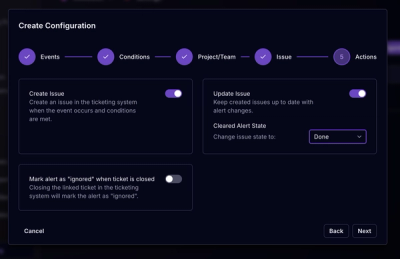
Socket for Jira lets teams turn alerts into Jira tickets with manual creation, automated ticketing rules, and two-way sync.